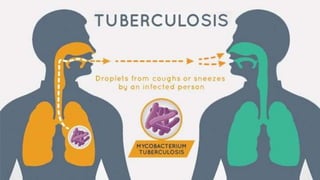
PULMONARY
TUBERCULOSIS
Presented by:
Sonam
INTRODUCTION
Tuberculosis is a worldwide, chronic communicable
bacterial disease.
Tuberculosis disease is the outcome of the fight
between virulence of the organism and resistance of
the body.
Tuberculosis (TB) is an infectious disease that
primarily affects the lung parenchyma.
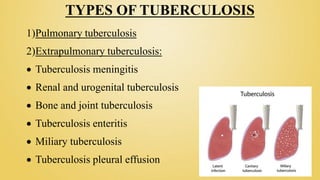
TYPES OF TUBERCULOSIS
1)Pulmonary tuberculosis
2)Extrapulmonary tuberculosis:
 Tuberculosis meningitis
 Renal and urogenital tuberculosis
 Bone and joint tuberculosis
 Tuberculosis enteritis
 Miliary tuberculosis
 Tuberculosis pleural effusion
EPIDEMIOLOGY
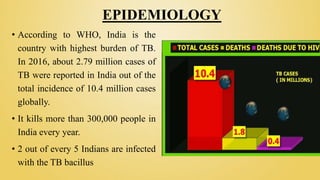
• According to WHO, India is the
country with highest burden of TB.
In 2016, about 2.79 million cases of
TB were reported in India out of the
total incidence of 10.4 million cases
globally.
• It kills more than 300,000 people in
India every year.
• 2 out of every 5 Indians are infected
with the TB bacillus
Contd…..
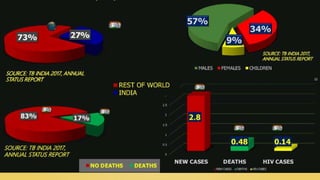
• The estimated TB incidence in India is 27 lakhs. It kills more than
300,000 people in India every year. In 2018, RNTCP was able to
achieve a notification of 21.5 lakh. This is a 16% increase as
compared to 2017 and the highest so far.
• The population largely remain similar with majority of the affected
individuals being in the age group of 15-69 years and 2/3rd being
males. HIV co-infection among TB was nearly fifty thousand cases
amounting to TB HIV coinfection rate of 3.4%.
AGENT
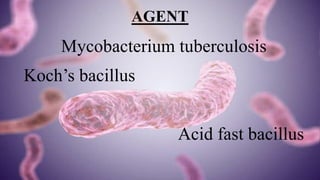
Mycobacterium tuberculosis
Koch’s bacillus
Acid fast bacillus
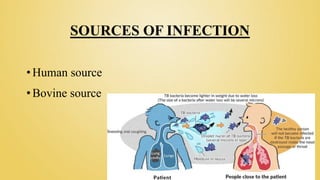
SOURCES OF INFECTION
• Human source
• Bovine source
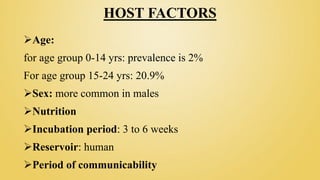
HOST FACTORS
Age:
for age group 0-14 yrs: prevalence is 2%
For age group 15-24 yrs: 20.9%
Sex: more common in males
Nutrition
Incubation period: 3 to 6 weeks
Reservoir: human
Period of communicability
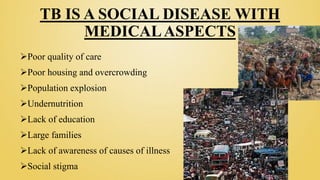
TB IS A SOCIAL DISEASE WITH
MEDICALASPECTS
Poor quality of care
Poor housing and overcrowding
Population explosion
Undernutrition
Lack of education
Large families
Lack of awareness of causes of illness
Social stigma
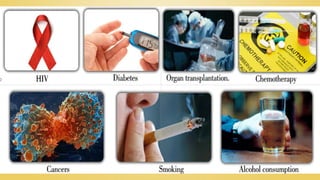
Close contact with someone who has active TB
Immunocompromised status
Substance abuse
Any person with inadequate health care
Preexisting medical conditions
Institutionalization
Health care worker performing high-risk activities
ASSESSMENT AND DIAGNOSTIC EVALUATION
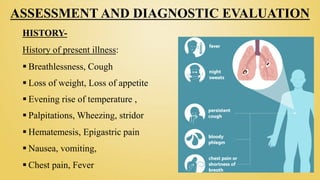
HISTORY-
History of present illness:
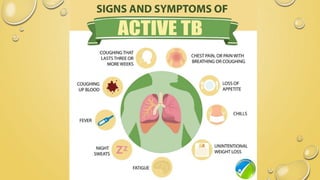
 Breathlessness, Cough
 Loss of weight, Loss of appetite
 Evening rise of temperature ,
 Palpitations, Wheezing, stridor
 Hematemesis, Epigastric pain
 Nausea, vomiting,
 Chest pain, Fever
.
History of past illness: Blood transfusion, heart transplantation, cardiac
bypass grafting, trauma, metabolic disorder, any toxin intake
Personal history: Food habits, any habit of cigarette smoking or alcohol
use or drug use
Family history: Disorder of respiratory system such as COPD,
pulmonary TB, etc.
Occupational history
Medical history: Previous history of surgery and medications if patient
is taking or any drug allergy and previous hospitalization history
Surgical history
.
PHYSICAL
EXAMINATION-
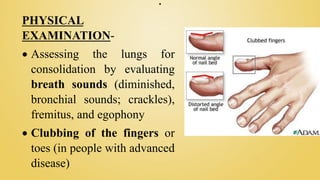
 Assessing the lungs for
consolidation by evaluating
breath sounds (diminished,
bronchial sounds; crackles),
fremitus, and egophony
 Clubbing of the fingers or
toes (in people with advanced
disease)
.
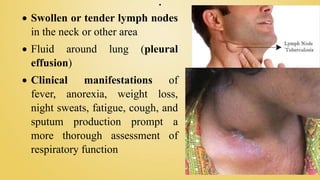
 Swollen or tender lymph nodes
in the neck or other area
 Fluid around lung (pleural
effusion)
 Clinical manifestations of
fever, anorexia, weight loss,
night sweats, fatigue, cough, and
sputum production prompt a
more thorough assessment of
respiratory function
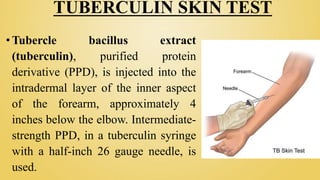
TUBERCULIN SKIN TEST
•Tubercle bacillus extract
(tuberculin), purified protein
derivative (PPD), is injected into the
intradermal layer of the inner aspect
of the forearm, approximately 4
inches below the elbow. Intermediate-
strength PPD, in a tuberculin syringe
with a half-inch 26 gauge needle, is
used.
.
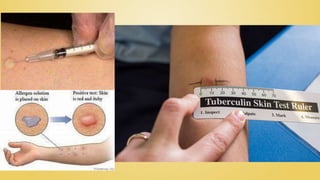
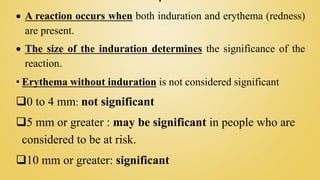
 A reaction occurs when both induration and erythema (redness)
are present.
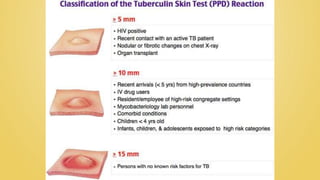
 The size of the induration determines the significance of the
reaction.
• Erythema without induration is not considered significant
0 to 4 mm: not significant
5 mm or greater : may be significant in people who are
considered to be at risk.
10 mm or greater: significant
ABSENCE OF EVIDENCE OF
DISEASE IS NOT THE
EVIDENCE OF ABSENCE OF
DISEASE
 A significant reaction indicates past exposure to M.
Tuberculosis or vaccination with bacille calmette-guérin
(BCG) vaccine.
.
Rapid tests for TB include :
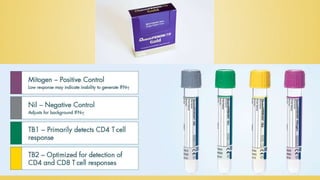
The QuantiFERON-TB gold in tube test (QFT-GIT),
The T-SPOT TB test (t-spot), and
The Xpert MTB/RIF.
.
•QuantiFERON-TB gold test (QFT-G) test
It is an enzyme linked immunosorbent assay (ELISA) that
detects the release of interferon-gamma by white blood
cells when the blood of a patient with TB is incubated with
peptides similar to those in M. Tuberculosis. The results of
the QFT-G test are available in less than 24 hours and are
not affected by prior vaccination with BCG.
.
Drug susceptibility testing- for all patients, the initial M.
Tuberculosis isolate should be tested for drug resistance, drug
susceptibility patterns should be repeated at 3 months for
patients who do not respond to therapy
Other test may include:
 Biopsy of the affected tissue
 Bronchoscopy
 Chest CT scan
 Thoracocentesis
PRESUMPTIVE TB CASE
DEFINITION
• Cough >2 weeks
• Fever> 2 weeks
• Significant weight loss
• Hemoptysis
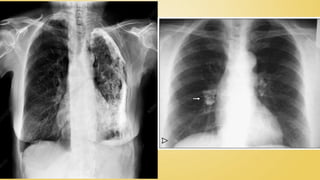
• Any abnormality in chest radiography
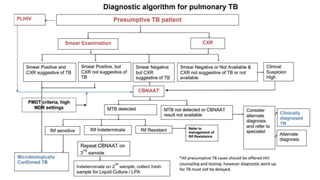
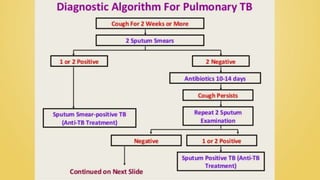
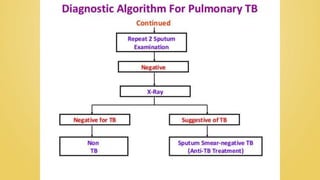
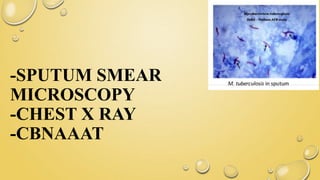
-SPUTUM SMEAR
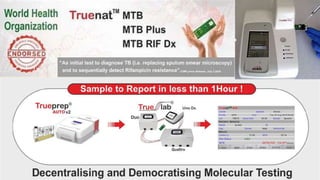
MICROSCOPY
-CHEST X RAY
-CBNAAAT
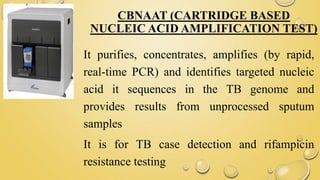
CBNAAT (CARTRIDGE BASED
NUCLEIC ACID AMPLIFICATION TEST)
It purifies, concentrates, amplifies (by rapid,
real-time PCR) and identifies targeted nucleic
acid it sequences in the TB genome and
provides results from unprocessed sputum
samples
It is for TB case detection and rifampicin
resistance testing
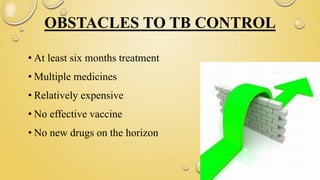
OBSTACLES TO TB CONTROL
• At least six months treatment
• Multiple medicines
• Relatively expensive
• No effective vaccine
• No new drugs on the horizon
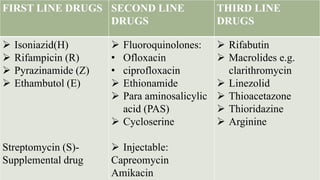
FIRST LINE DRUGS SECOND LINE
DRUGS
THIRD LINE
DRUGS
 Isoniazid(H)
 Rifampicin (R)
 Pyrazinamide (Z)
 Ethambutol (E)
Streptomycin (S)-
Supplemental drug
 Fluoroquinolones:
• Ofloxacin
• ciprofloxacin
 Ethionamide
 Para aminosalicylic
acid (PAS)
 Cycloserine
 Injectable:
Capreomycin
Amikacin
 Rifabutin
 Macrolides e.g.
clarithromycin
 Linezolid
 Thioacetazone
 Thioridazine
 Arginine
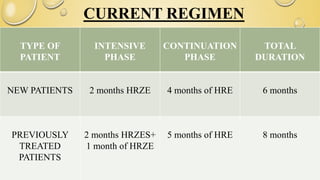
CURRENT REGIMEN
TYPE OF
PATIENT
INTENSIVE
PHASE
CONTINUATION
PHASE
TOTAL
DURATION
NEW PATIENTS 2 months HRZE 4 months of HRE 6 months
PREVIOUSLY
TREATED
PATIENTS
2 months HRZES+
1 month of HRZE
5 months of HRE 8 months
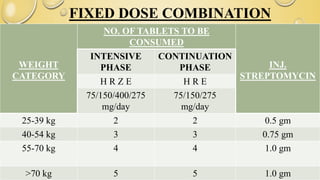
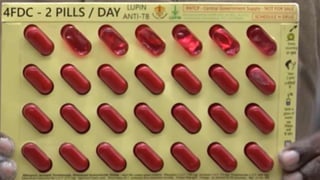
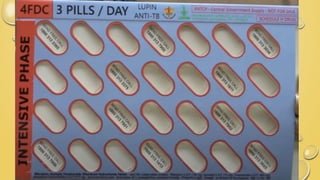
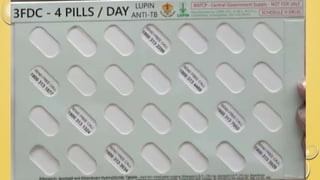
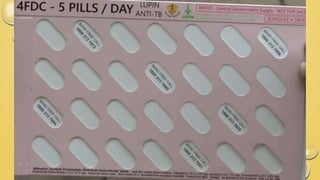
FIXED DOSE COMBINATION
WEIGHT
CATEGORY
NO. OF TABLETS TO BE
CONSUMED
INJ.
STREPTOMYCIN
INTENSIVE
PHASE
CONTINUATION
PHASE
H R Z E H R E
75/150/400/275
mg/day
75/150/275
mg/day
25-39 kg 2 2 0.5 gm
40-54 kg 3 3 0.75 gm
55-70 kg 4 4 1.0 gm
>70 kg 5 5 1.0 gm
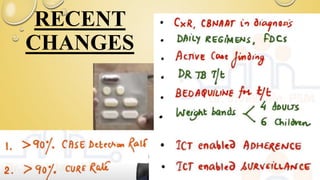
RECENT
CHANGES
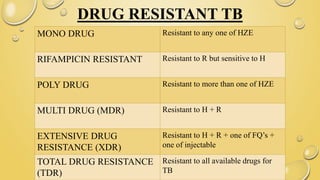
DRUG RESISTANT TB
MONO DRUG Resistant to any one of HZE
RIFAMPICIN RESISTANT Resistant to R but sensitive to H
POLY DRUG Resistant to more than one of HZE
MULTI DRUG (MDR) Resistant to H + R
EXTENSIVE DRUG
RESISTANCE (XDR)
Resistant to H + R + one of FQ’s +
one of injectable
TOTAL DRUG RESISTANCE
(TDR)
Resistant to all available drugs for
TB
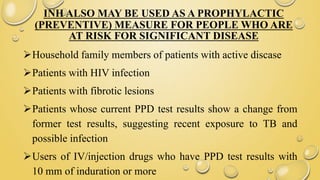
INH ALSO MAY BE USED AS A PROPHYLACTIC
(PREVENTIVE) MEASURE FOR PEOPLE WHO ARE
AT RISK FOR SIGNIFICANT DISEASE
Household family members of patients with active discase
Patients with HIV infection
Patients with fibrotic lesions
Patients whose current PPD test results show a change from
former test results, suggesting recent exposure to TB and
possible infection
Users of IV/injection drugs who have PPD test results with
10 mm of induration or more
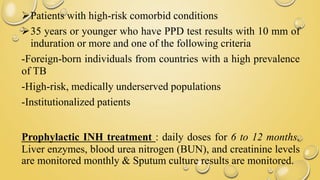
Patients with high-risk comorbid conditions
35 years or younger who have PPD test results with 10 mm of
induration or more and one of the following criteria
-Foreign-born individuals from countries with a high prevalence
of TB
-High-risk, medically underserved populations
-Institutionalized patients
Prophylactic INH treatment : daily doses for 6 to 12 months.
Liver enzymes, blood urea nitrogen (BUN), and creatinine levels
are monitored monthly & Sputum culture results are monitored.
DOTS
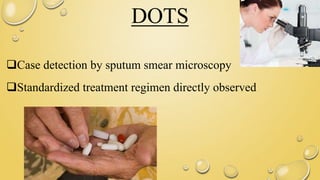
Case detection by sputum smear microscopy
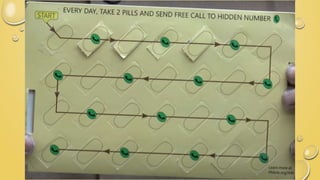
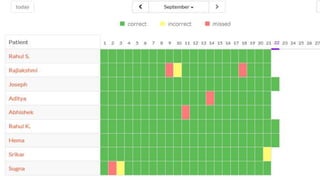
Standardized treatment regimen directly observed
Regular drug supplies
Government commitment
A standardized recording and reporting system
ADVANTAGES OF DOTS
•Cure rate as high as 95 percent
•Guarantees quicker and surer
relief from the disease
•It has changed the lives of 17 lakh
patients in India
RNTCP (REVISED NATIONAL
TUBERCULOSIS CONTROL
PROGRAMME)
•National TB program (NTP)- 1962- BCG vaccination
and TB treatment
•In 1978, BCG vaccination was shifted under the
expanded program on immunization (EPI).
.
• The WHO declared TB as a global emergency(1996)- (DOTS)
• NTP  Revised National TB Control program (RNTCP)
• DOTS was officially launched as the RNTCP strategy in 1997
and by the end of 2005 the entire country was covered under the
program
.
• RNTCP has released a ‘National Strategic Plan for
tuberculosis 2017-2025’ (NSP)
• According to the NSP TB elimination have been integrated
into the four strategic pillars of “detect – treat – prevent –
build” (DTPB).
• National Tuberculosis elimination program (NTEP)
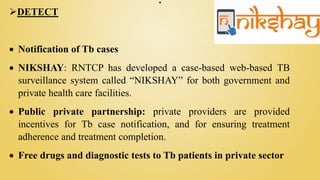
.
DETECT
 Notification of Tb cases
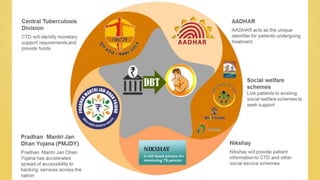
 NIKSHAY: RNTCP has developed a case-based web-based TB
surveillance system called “NIKSHAY” for both government and
private health care facilities.
 Public private partnership: private providers are provided
incentives for Tb case notification, and for ensuring treatment
adherence and treatment completion.
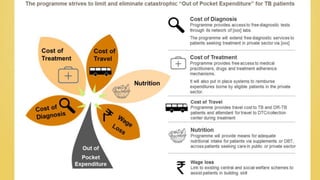
 Free drugs and diagnostic tests to Tb patients in private sector
.
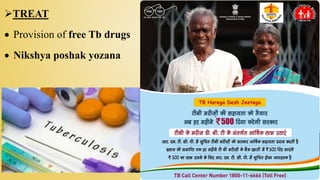
TREAT
 Provision of free Tb drugs
 Nikshya poshak yozana
.
PREVENT
 Contact tracing
 Isoniazid preventive therapy (IPT)
 BCG vaccination
 air-borne infection control measures at health care
facilities
 Addressing social determinants of TB like poverty,
malnutrition, urbanization, indoor air pollution, etc. Require
inter departmental/ ministerial coordinated activities and the
program is proactively facilitating this coordination
.
BUILD:
• Health system strengthening for TB control under the
national strategic plan 2017-2025 is recommended in the
form of building and strengthening enabling policies,
empowering institutions and human resources with enhanced
capacities.
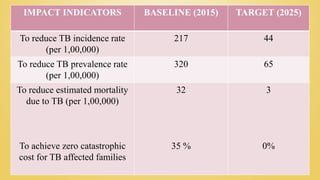
IMPACT INDICATORS BASELINE (2015) TARGET (2025)
To reduce TB incidence rate
(per 1,00,000)
217 44
To reduce TB prevalence rate
(per 1,00,000)
320 65
To reduce estimated mortality
due to TB (per 1,00,000)
To achieve zero catastrophic
cost for TB affected families
32
35 %
3
0%
.
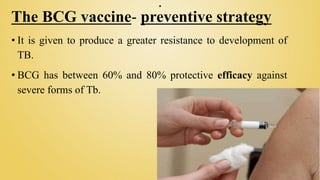
The BCG vaccine- preventive strategy
• It is given to produce a greater resistance to development of
TB.
• BCG has between 60% and 80% protective efficacy against
severe forms of Tb.
.
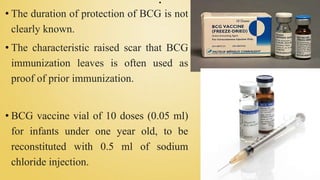
• The duration of protection of BCG is not
clearly known.
• The characteristic raised scar that BCG
immunization leaves is often used as
proof of prior immunization.
• BCG vaccine vial of 10 doses (0.05 ml)
for infants under one year old, to be
reconstituted with 0.5 ml of sodium
chloride injection.
DIETARY MANAGEMENT
Three meals should be taken each day consisting of juices and
fresh fruits like pineapples, melons, oranges, peaches, grapes,
and apples.
For drinks, unsweetened plain water or lemon water can be
taken either cold or hot.
glass of milk with each meal.
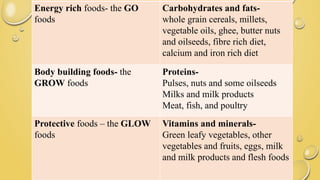
Energy rich foods- the GO
foods
Carbohydrates and fats-
whole grain cereals, millets,
vegetable oils, ghee, butter nuts
and oilseeds, fibre rich diet,
calcium and iron rich diet
Body building foods- the
GROW foods
Proteins-
Pulses, nuts and some oilseeds
Milks and milk products
Meat, fish, and poultry
Protective foods – the GLOW
foods
Vitamins and minerals-
Green leafy vegetables, other
vegetables and fruits, eggs, milk
and milk products and flesh foods
.
Avoid:
alcohol as it can make the condition worse and bring
about other complications.
foods like pickles, condiments, sauces, refined cereals,
pies, puddings, refined sugar, white bread, tinned and
canned foods, and caffeinated beverages.
tea, coffee, white flour and products made from them,
refined foods, fried foods, flesh foods
NURSING MANAGEMENT
Diagnosis: ineffective airway clearance related to secretions
present in tracheobronchial tree
Goal: promoting airway clearance
Diagnosis: improper medication adherence and compliance
related to side effects of drugs or long-term treatment plan
Goal: promoting adherence to treatment regimen and teaching
about the side effects of drugs and maintaining compliance
.
Diagnosis: activity intolerance and imbalanced nutrition, less
than body requirement related to the sign and symptoms due to
pulmonary tuberculosis
Goal: promoting activity and adequate nutrition
Diagnosis: risk of transmission related to unhygienic
practices and improper disposal of tissue or coughing
and sneezing
Goal: preventing transmission of tuberculosis infection
COMPLICATIONS
 Bones: spinal pain and joint destruction may result from TB that
infects bones (TB spine or potss spine)
 Brain (meningitis)
 Liver or kidneys
 Heart (cardiac tamponade)
 Pleural effusion
 TB pneumonia
 Serious reactions to drug therapy ( hepatotoxicity,
hypersensitivity)
RECOMMENDATIONS FOR PREVENTING
TRANSMISSION OF TUBERCULOSIS IN
HEALTH CARE SETTINGS
Early identification and treatment of persons with active
TB
A. Maintain a high index of suspicion for TB to identify cases
rapidly.
B. Promptly initiate effective multidrug anti-TB therapy
based on clinical and drug-resistance surveillance data
.
Prevention of spread of infectious droplet nuclei by source
control methods and by reduction of microbial contamination
of indoor air
A. Initiate AFB isolation precautions immediately
AFB isolation precautions :
• use of a private room with negative pressure in relation to
surrounding areas
• Air from the room should be exhausted directly to the outside.
• The use of ultraviolet lamps and/or high-efficiency particulate
air filters to supplement ventilation may be considered.
.
B. Persons entering the AFB isolation room should use
disposable particulate respirators that fit snugly around the
face.
C. Continue AFB isolation precautions until there is clinical
evidence of reduced infectiousness (i.e., Cough has
substantially decreased and the number of organisms on
sequential sputum smears is decreasing). If drug resistance is
suspected or confirmed, continue AFB precautions until the
sputum smear is negative for AFB.
D. Use special precautions during cough-inducing procedures.
.
Surveillance for TB transmission
A. By routine, periodic tuberculin skin testing. Recommend
appropriate preventive therapy for HCWS when indicated.
B. Maintain surveillance for TB cases among patients and HCW’s.
C. Promptly initiate contact investigation procedures among
HCWs, patients, and visitors
Recommend appropriate therapy or preventive therapy for
contacts with disease or tb infection without current disease.
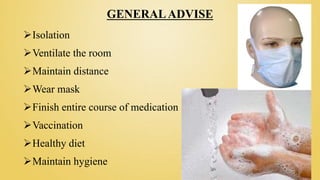
GENERALADVISE
Isolation
Ventilate the room
Maintain distance
Wear mask
Finish entire course of medication
Vaccination
Healthy diet
Maintain hygiene
CONCLUSION
• Pulmonary tuberculosis is an bacterial infection of the lungs that can
cause a range of symptoms, including chest pain, breathlessness, and
severe coughing. Pulmonary tuberculosis can be a life threatening
condition if a person does not receive treatment on time. People with
active tuberculosis can spread the bacteria through droplet infection,
by sneezing or coughing.
• Compliance to the treatment is the most important concern for people
with pulmonary tuberculosis because drug resistance is a common
issue that develops and creates problem in getting treated accurately
and early.
BIBLIOGRAPHY
 Brunner and suddharths. Textbook of medical and surgical nursing. 13th edition vol. I.
.New delhi: reed elsevier india pvt. Ltd.; 2014. Pg. No. 580-596
 Lewis. Medical surgical nursing. Assessment and management of clinical problems. Vol.
I. 2015. New delhi. Elsevier pg. No. 461-493
 Joyce M. Black and jane hokanson; medical surgical nursing; volume 2, 8th edition, reed
elsevier, india pvt.
 Https://www.Lung.Org/lung-health-disease/lung-disease-lookup/tiberculosis/symptoms-
diagnosis
 Faqs :: central TB division (tbcindia.Gov.In)
 WHO | what is DOTS?
 Revised national tuberculosis control programme | national health portal of india
(nhp.Gov.In)
Research :
Saktiawati, antonia M I et al. “Impact of food on the pharmacokinetics of first-line anti-tb drugs
in treatment-naive TB patients: a randomized cross-over trial.” The journal of antimicrobial
chemotherapy vol. 71,3 (2016): 703-10. Doi:10.1093/jac/dkv394
 Kısa, bektaş et al. “Tuberculosis screening and efficacy of prophylaxis in contacts of patients
with pulmonary tuberculosis.” “Akciğer tüberkülozu temaslılarında hastalanma ve koruyucu
tedavinin etkinliği.” Tuberkuloz ve toraks vol. 64,1 (2016): 27-33. Doi:10.5578/tt.9167
.
THANK
YOU

Pulmonary TB (Tuberculosis) PPT SlideShare

  • 1.
  • 2.
    INTRODUCTION Tuberculosis is aworldwide, chronic communicable bacterial disease. Tuberculosis disease is the outcome of the fight between virulence of the organism and resistance of the body. Tuberculosis (TB) is an infectious disease that primarily affects the lung parenchyma.
  • 3.
    TYPES OF TUBERCULOSIS 1)Pulmonarytuberculosis 2)Extrapulmonary tuberculosis:  Tuberculosis meningitis  Renal and urogenital tuberculosis  Bone and joint tuberculosis  Tuberculosis enteritis  Miliary tuberculosis  Tuberculosis pleural effusion
  • 5.
    EPIDEMIOLOGY • According toWHO, India is the country with highest burden of TB. In 2016, about 2.79 million cases of TB were reported in India out of the total incidence of 10.4 million cases globally. • It kills more than 300,000 people in India every year. • 2 out of every 5 Indians are infected with the TB bacillus
  • 7.
    Contd….. • The estimatedTB incidence in India is 27 lakhs. It kills more than 300,000 people in India every year. In 2018, RNTCP was able to achieve a notification of 21.5 lakh. This is a 16% increase as compared to 2017 and the highest so far. • The population largely remain similar with majority of the affected individuals being in the age group of 15-69 years and 2/3rd being males. HIV co-infection among TB was nearly fifty thousand cases amounting to TB HIV coinfection rate of 3.4%.
  • 8.
  • 10.
    SOURCES OF INFECTION •Human source • Bovine source
  • 11.
    HOST FACTORS Age: for agegroup 0-14 yrs: prevalence is 2% For age group 15-24 yrs: 20.9% Sex: more common in males Nutrition Incubation period: 3 to 6 weeks Reservoir: human Period of communicability
  • 12.
    TB IS ASOCIAL DISEASE WITH MEDICALASPECTS Poor quality of care Poor housing and overcrowding Population explosion Undernutrition Lack of education Large families Lack of awareness of causes of illness Social stigma
  • 14.
    Close contact withsomeone who has active TB Immunocompromised status Substance abuse Any person with inadequate health care Preexisting medical conditions Institutionalization Health care worker performing high-risk activities
  • 18.
    ASSESSMENT AND DIAGNOSTICEVALUATION HISTORY- History of present illness:  Breathlessness, Cough  Loss of weight, Loss of appetite  Evening rise of temperature ,  Palpitations, Wheezing, stridor  Hematemesis, Epigastric pain  Nausea, vomiting,  Chest pain, Fever
  • 19.
    . History of pastillness: Blood transfusion, heart transplantation, cardiac bypass grafting, trauma, metabolic disorder, any toxin intake Personal history: Food habits, any habit of cigarette smoking or alcohol use or drug use Family history: Disorder of respiratory system such as COPD, pulmonary TB, etc. Occupational history Medical history: Previous history of surgery and medications if patient is taking or any drug allergy and previous hospitalization history Surgical history
  • 20.
    . PHYSICAL EXAMINATION-  Assessing thelungs for consolidation by evaluating breath sounds (diminished, bronchial sounds; crackles), fremitus, and egophony  Clubbing of the fingers or toes (in people with advanced disease)
  • 21.
    .  Swollen ortender lymph nodes in the neck or other area  Fluid around lung (pleural effusion)  Clinical manifestations of fever, anorexia, weight loss, night sweats, fatigue, cough, and sputum production prompt a more thorough assessment of respiratory function
  • 22.
    TUBERCULIN SKIN TEST •Tuberclebacillus extract (tuberculin), purified protein derivative (PPD), is injected into the intradermal layer of the inner aspect of the forearm, approximately 4 inches below the elbow. Intermediate- strength PPD, in a tuberculin syringe with a half-inch 26 gauge needle, is used.
  • 25.
    .  A reactionoccurs when both induration and erythema (redness) are present.  The size of the induration determines the significance of the reaction. • Erythema without induration is not considered significant 0 to 4 mm: not significant 5 mm or greater : may be significant in people who are considered to be at risk. 10 mm or greater: significant
  • 26.
    ABSENCE OF EVIDENCEOF DISEASE IS NOT THE EVIDENCE OF ABSENCE OF DISEASE  A significant reaction indicates past exposure to M. Tuberculosis or vaccination with bacille calmette-guérin (BCG) vaccine.
  • 27.
    . Rapid tests forTB include : The QuantiFERON-TB gold in tube test (QFT-GIT), The T-SPOT TB test (t-spot), and The Xpert MTB/RIF.
  • 28.
    . •QuantiFERON-TB gold test(QFT-G) test It is an enzyme linked immunosorbent assay (ELISA) that detects the release of interferon-gamma by white blood cells when the blood of a patient with TB is incubated with peptides similar to those in M. Tuberculosis. The results of the QFT-G test are available in less than 24 hours and are not affected by prior vaccination with BCG.
  • 30.
    . Drug susceptibility testing-for all patients, the initial M. Tuberculosis isolate should be tested for drug resistance, drug susceptibility patterns should be repeated at 3 months for patients who do not respond to therapy Other test may include:  Biopsy of the affected tissue  Bronchoscopy  Chest CT scan  Thoracocentesis
  • 31.
    PRESUMPTIVE TB CASE DEFINITION •Cough >2 weeks • Fever> 2 weeks • Significant weight loss • Hemoptysis • Any abnormality in chest radiography
  • 35.
  • 37.
    CBNAAT (CARTRIDGE BASED NUCLEICACID AMPLIFICATION TEST) It purifies, concentrates, amplifies (by rapid, real-time PCR) and identifies targeted nucleic acid it sequences in the TB genome and provides results from unprocessed sputum samples It is for TB case detection and rifampicin resistance testing
  • 39.
    OBSTACLES TO TBCONTROL • At least six months treatment • Multiple medicines • Relatively expensive • No effective vaccine • No new drugs on the horizon
  • 40.
    FIRST LINE DRUGSSECOND LINE DRUGS THIRD LINE DRUGS  Isoniazid(H)  Rifampicin (R)  Pyrazinamide (Z)  Ethambutol (E) Streptomycin (S)- Supplemental drug  Fluoroquinolones: • Ofloxacin • ciprofloxacin  Ethionamide  Para aminosalicylic acid (PAS)  Cycloserine  Injectable: Capreomycin Amikacin  Rifabutin  Macrolides e.g. clarithromycin  Linezolid  Thioacetazone  Thioridazine  Arginine
  • 41.
    CURRENT REGIMEN TYPE OF PATIENT INTENSIVE PHASE CONTINUATION PHASE TOTAL DURATION NEWPATIENTS 2 months HRZE 4 months of HRE 6 months PREVIOUSLY TREATED PATIENTS 2 months HRZES+ 1 month of HRZE 5 months of HRE 8 months
  • 42.
    FIXED DOSE COMBINATION WEIGHT CATEGORY NO.OF TABLETS TO BE CONSUMED INJ. STREPTOMYCIN INTENSIVE PHASE CONTINUATION PHASE H R Z E H R E 75/150/400/275 mg/day 75/150/275 mg/day 25-39 kg 2 2 0.5 gm 40-54 kg 3 3 0.75 gm 55-70 kg 4 4 1.0 gm >70 kg 5 5 1.0 gm
  • 43.
  • 44.
    DRUG RESISTANT TB MONODRUG Resistant to any one of HZE RIFAMPICIN RESISTANT Resistant to R but sensitive to H POLY DRUG Resistant to more than one of HZE MULTI DRUG (MDR) Resistant to H + R EXTENSIVE DRUG RESISTANCE (XDR) Resistant to H + R + one of FQ’s + one of injectable TOTAL DRUG RESISTANCE (TDR) Resistant to all available drugs for TB
  • 45.
    INH ALSO MAYBE USED AS A PROPHYLACTIC (PREVENTIVE) MEASURE FOR PEOPLE WHO ARE AT RISK FOR SIGNIFICANT DISEASE Household family members of patients with active discase Patients with HIV infection Patients with fibrotic lesions Patients whose current PPD test results show a change from former test results, suggesting recent exposure to TB and possible infection Users of IV/injection drugs who have PPD test results with 10 mm of induration or more
  • 46.
    Patients with high-riskcomorbid conditions 35 years or younger who have PPD test results with 10 mm of induration or more and one of the following criteria -Foreign-born individuals from countries with a high prevalence of TB -High-risk, medically underserved populations -Institutionalized patients Prophylactic INH treatment : daily doses for 6 to 12 months. Liver enzymes, blood urea nitrogen (BUN), and creatinine levels are monitored monthly & Sputum culture results are monitored.
  • 47.
    DOTS Case detection bysputum smear microscopy Standardized treatment regimen directly observed
  • 48.
    Regular drug supplies Governmentcommitment A standardized recording and reporting system
  • 49.
    ADVANTAGES OF DOTS •Curerate as high as 95 percent •Guarantees quicker and surer relief from the disease •It has changed the lives of 17 lakh patients in India
  • 59.
    RNTCP (REVISED NATIONAL TUBERCULOSISCONTROL PROGRAMME) •National TB program (NTP)- 1962- BCG vaccination and TB treatment •In 1978, BCG vaccination was shifted under the expanded program on immunization (EPI).
  • 60.
    . • The WHOdeclared TB as a global emergency(1996)- (DOTS) • NTP  Revised National TB Control program (RNTCP) • DOTS was officially launched as the RNTCP strategy in 1997 and by the end of 2005 the entire country was covered under the program
  • 61.
    . • RNTCP hasreleased a ‘National Strategic Plan for tuberculosis 2017-2025’ (NSP) • According to the NSP TB elimination have been integrated into the four strategic pillars of “detect – treat – prevent – build” (DTPB). • National Tuberculosis elimination program (NTEP)
  • 62.
    . DETECT  Notification ofTb cases  NIKSHAY: RNTCP has developed a case-based web-based TB surveillance system called “NIKSHAY” for both government and private health care facilities.  Public private partnership: private providers are provided incentives for Tb case notification, and for ensuring treatment adherence and treatment completion.  Free drugs and diagnostic tests to Tb patients in private sector
  • 63.
    . TREAT  Provision offree Tb drugs  Nikshya poshak yozana
  • 66.
    . PREVENT  Contact tracing Isoniazid preventive therapy (IPT)  BCG vaccination  air-borne infection control measures at health care facilities  Addressing social determinants of TB like poverty, malnutrition, urbanization, indoor air pollution, etc. Require inter departmental/ ministerial coordinated activities and the program is proactively facilitating this coordination
  • 67.
    . BUILD: • Health systemstrengthening for TB control under the national strategic plan 2017-2025 is recommended in the form of building and strengthening enabling policies, empowering institutions and human resources with enhanced capacities.
  • 68.
    IMPACT INDICATORS BASELINE(2015) TARGET (2025) To reduce TB incidence rate (per 1,00,000) 217 44 To reduce TB prevalence rate (per 1,00,000) 320 65 To reduce estimated mortality due to TB (per 1,00,000) To achieve zero catastrophic cost for TB affected families 32 35 % 3 0%
  • 69.
    . The BCG vaccine-preventive strategy • It is given to produce a greater resistance to development of TB. • BCG has between 60% and 80% protective efficacy against severe forms of Tb.
  • 70.
    . • The durationof protection of BCG is not clearly known. • The characteristic raised scar that BCG immunization leaves is often used as proof of prior immunization. • BCG vaccine vial of 10 doses (0.05 ml) for infants under one year old, to be reconstituted with 0.5 ml of sodium chloride injection.
  • 72.
    DIETARY MANAGEMENT Three mealsshould be taken each day consisting of juices and fresh fruits like pineapples, melons, oranges, peaches, grapes, and apples. For drinks, unsweetened plain water or lemon water can be taken either cold or hot. glass of milk with each meal.
  • 73.
    Energy rich foods-the GO foods Carbohydrates and fats- whole grain cereals, millets, vegetable oils, ghee, butter nuts and oilseeds, fibre rich diet, calcium and iron rich diet Body building foods- the GROW foods Proteins- Pulses, nuts and some oilseeds Milks and milk products Meat, fish, and poultry Protective foods – the GLOW foods Vitamins and minerals- Green leafy vegetables, other vegetables and fruits, eggs, milk and milk products and flesh foods
  • 74.
    . Avoid: alcohol as itcan make the condition worse and bring about other complications. foods like pickles, condiments, sauces, refined cereals, pies, puddings, refined sugar, white bread, tinned and canned foods, and caffeinated beverages. tea, coffee, white flour and products made from them, refined foods, fried foods, flesh foods
  • 75.
    NURSING MANAGEMENT Diagnosis: ineffectiveairway clearance related to secretions present in tracheobronchial tree Goal: promoting airway clearance Diagnosis: improper medication adherence and compliance related to side effects of drugs or long-term treatment plan Goal: promoting adherence to treatment regimen and teaching about the side effects of drugs and maintaining compliance
  • 76.
    . Diagnosis: activity intoleranceand imbalanced nutrition, less than body requirement related to the sign and symptoms due to pulmonary tuberculosis Goal: promoting activity and adequate nutrition Diagnosis: risk of transmission related to unhygienic practices and improper disposal of tissue or coughing and sneezing Goal: preventing transmission of tuberculosis infection
  • 77.
    COMPLICATIONS  Bones: spinalpain and joint destruction may result from TB that infects bones (TB spine or potss spine)  Brain (meningitis)  Liver or kidneys  Heart (cardiac tamponade)  Pleural effusion  TB pneumonia  Serious reactions to drug therapy ( hepatotoxicity, hypersensitivity)
  • 79.
    RECOMMENDATIONS FOR PREVENTING TRANSMISSIONOF TUBERCULOSIS IN HEALTH CARE SETTINGS Early identification and treatment of persons with active TB A. Maintain a high index of suspicion for TB to identify cases rapidly. B. Promptly initiate effective multidrug anti-TB therapy based on clinical and drug-resistance surveillance data
  • 80.
    . Prevention of spreadof infectious droplet nuclei by source control methods and by reduction of microbial contamination of indoor air A. Initiate AFB isolation precautions immediately AFB isolation precautions : • use of a private room with negative pressure in relation to surrounding areas • Air from the room should be exhausted directly to the outside. • The use of ultraviolet lamps and/or high-efficiency particulate air filters to supplement ventilation may be considered.
  • 81.
    . B. Persons enteringthe AFB isolation room should use disposable particulate respirators that fit snugly around the face. C. Continue AFB isolation precautions until there is clinical evidence of reduced infectiousness (i.e., Cough has substantially decreased and the number of organisms on sequential sputum smears is decreasing). If drug resistance is suspected or confirmed, continue AFB precautions until the sputum smear is negative for AFB. D. Use special precautions during cough-inducing procedures.
  • 82.
    . Surveillance for TBtransmission A. By routine, periodic tuberculin skin testing. Recommend appropriate preventive therapy for HCWS when indicated. B. Maintain surveillance for TB cases among patients and HCW’s. C. Promptly initiate contact investigation procedures among HCWs, patients, and visitors Recommend appropriate therapy or preventive therapy for contacts with disease or tb infection without current disease.
  • 83.
    GENERALADVISE Isolation Ventilate the room Maintaindistance Wear mask Finish entire course of medication Vaccination Healthy diet Maintain hygiene
  • 84.
    CONCLUSION • Pulmonary tuberculosisis an bacterial infection of the lungs that can cause a range of symptoms, including chest pain, breathlessness, and severe coughing. Pulmonary tuberculosis can be a life threatening condition if a person does not receive treatment on time. People with active tuberculosis can spread the bacteria through droplet infection, by sneezing or coughing. • Compliance to the treatment is the most important concern for people with pulmonary tuberculosis because drug resistance is a common issue that develops and creates problem in getting treated accurately and early.
  • 86.
    BIBLIOGRAPHY  Brunner andsuddharths. Textbook of medical and surgical nursing. 13th edition vol. I. .New delhi: reed elsevier india pvt. Ltd.; 2014. Pg. No. 580-596  Lewis. Medical surgical nursing. Assessment and management of clinical problems. Vol. I. 2015. New delhi. Elsevier pg. No. 461-493  Joyce M. Black and jane hokanson; medical surgical nursing; volume 2, 8th edition, reed elsevier, india pvt.  Https://www.Lung.Org/lung-health-disease/lung-disease-lookup/tiberculosis/symptoms- diagnosis  Faqs :: central TB division (tbcindia.Gov.In)  WHO | what is DOTS?  Revised national tuberculosis control programme | national health portal of india (nhp.Gov.In)
  • 87.
    Research : Saktiawati, antoniaM I et al. “Impact of food on the pharmacokinetics of first-line anti-tb drugs in treatment-naive TB patients: a randomized cross-over trial.” The journal of antimicrobial chemotherapy vol. 71,3 (2016): 703-10. Doi:10.1093/jac/dkv394  Kısa, bektaş et al. “Tuberculosis screening and efficacy of prophylaxis in contacts of patients with pulmonary tuberculosis.” “Akciğer tüberkülozu temaslılarında hastalanma ve koruyucu tedavinin etkinliği.” Tuberkuloz ve toraks vol. 64,1 (2016): 27-33. Doi:10.5578/tt.9167
  • 88.