Downloaded 184 times



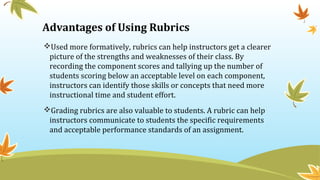
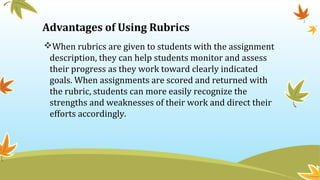


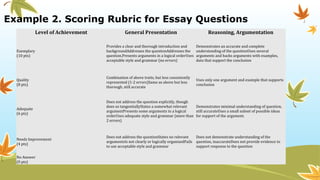


This document discusses rubrics, which are scoring tools that teachers use to assess student learning. A rubric lays out clear criteria and standards tied to learning objectives to evaluate student performance. Developing and communicating rubrics prior to assignments makes the grading process transparent. Rubrics provide several advantages, including ensuring consistent grading over time, reducing grading time, and helping students understand expectations. While rubrics require upfront work, they can improve the reliability and consistency of scoring, as well as engage students in self-assessment.


