Roles of Assessment in
making Classroom
Instructional Decision
Title
• Assessment enhances learning in
the instructional processes if the
result provides feedbacks to both
students and teachers.
• The information obtained from the
assessment is used to evaluate the
teaching methodologies and
strategies of the teacher.
Title
• It is also used to make teaching decisions.
• The result of assessment is used to
diagnose the learning problems of the
students.
The Four Roles of Assessment
used in Instructional Process
• Placement Assessment
– The purpose of placement assessment is
to determine the prerequisite skills, degree
of mastery of the course the best mode of
learning.
FORMATIVE ASSESSMENT
It is a type of assessment used to
monitor the learning progress of the
students during instruction. The
purpose of formative assessment are
the following:
continuous feedback
Indentify learning errors
Modifying instruction
Improve both learning and instruction
• This is used to diagnose the students’
learning difficulties during instruction.
DIAGNOSTIC ASSESSMENT
• Summative Assessment
A type of assessment usually given at the
end of a course unit. The purposes of
summative assessment are to determine the
following:
Instructional objectives achieved
Certify the students mastery
Provide information for judging
Effectiveness of instruction
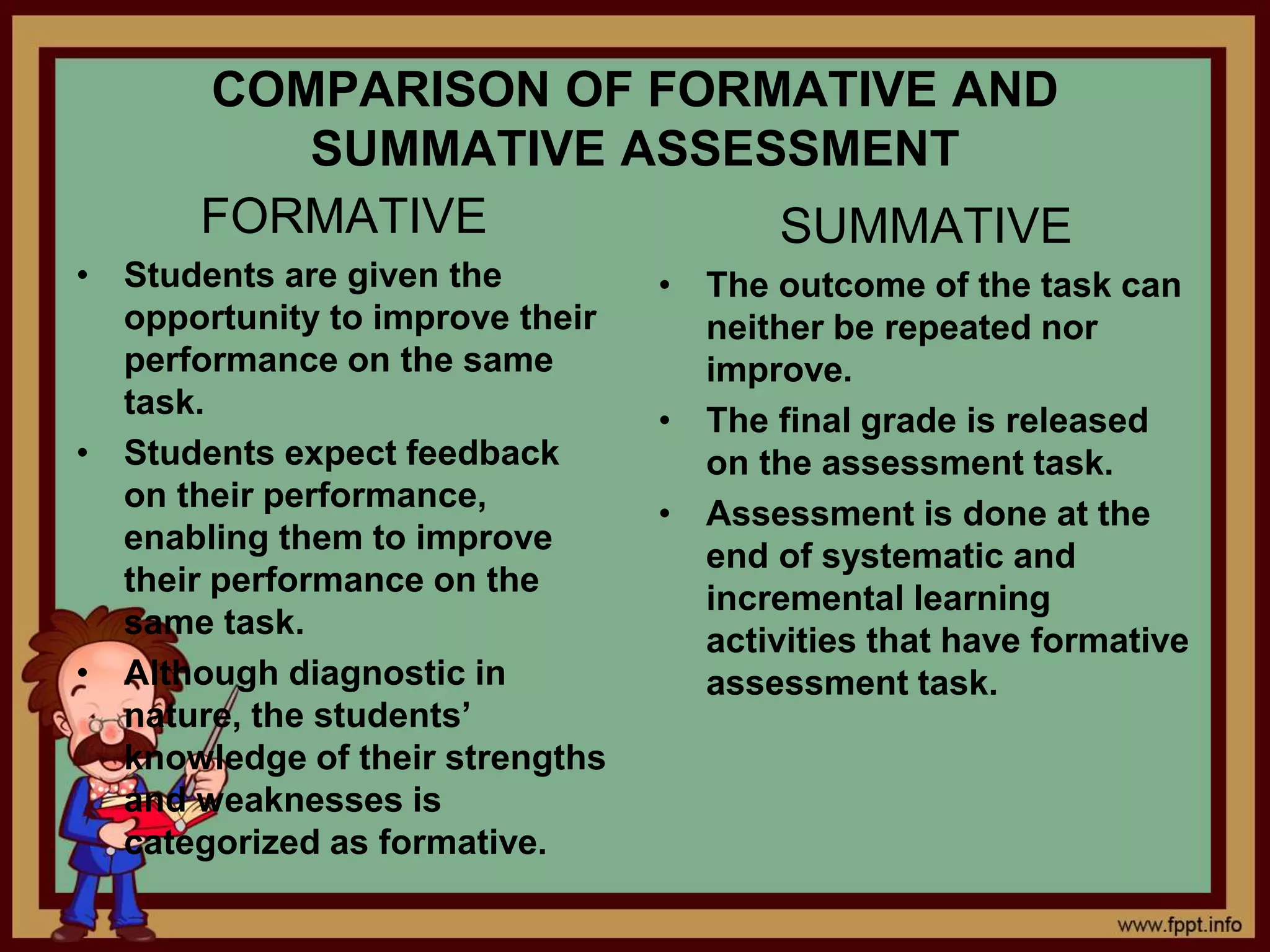
COMPARISON OF FORMATIVE AND
SUMMATIVE ASSESSMENT
FORMATIVE
• Students are given the
opportunity to improve their
performance on the same
task.
• Students expect feedback
on their performance,
enabling them to improve
their performance on the
same task.
• Although diagnostic in
nature, the students’
knowledge of their strengths
and weaknesses is
categorized as formative.
SUMMATIVE
• The outcome of the task can
neither be repeated nor
improve.
• The final grade is released
on the assessment task.
• Assessment is done at the
end of systematic and
incremental learning
activities that have formative
assessment task.
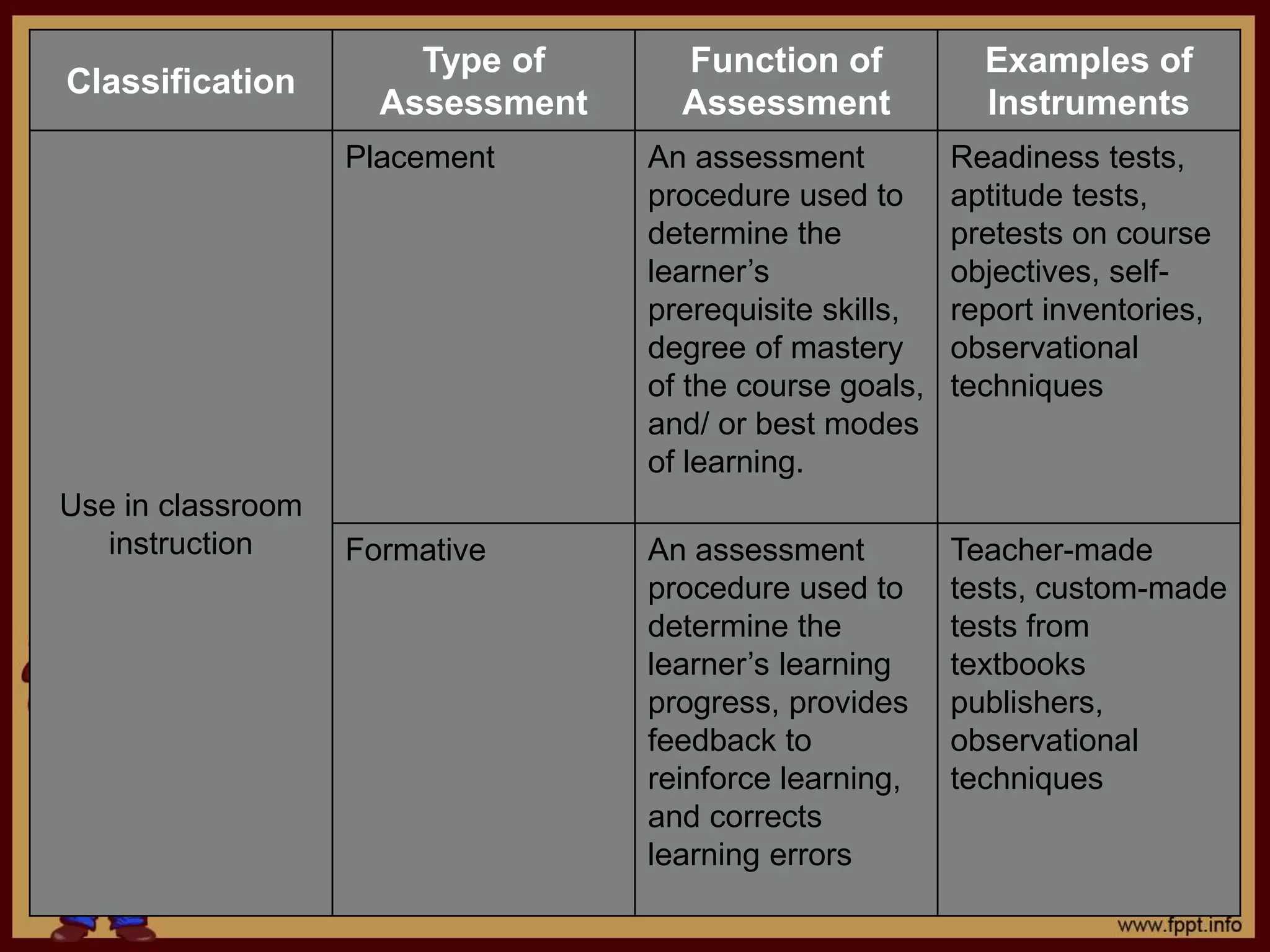
Classification
Type of
Assessment
Function of
Assessment
Examples of
Instruments
Use in classroom
instruction
Placement An assessment
procedure used to
determine the
learner’s
prerequisite skills,
degree of mastery
of the course goals,
and/ or best modes
of learning.
Readiness tests,
aptitude tests,
pretests on course
objectives, self-
report inventories,
observational
techniques
Formative An assessment
procedure used to
determine the
learner’s learning
progress, provides
feedback to
reinforce learning,
and corrects
learning errors
Teacher-made
tests, custom-made
tests from
textbooks
publishers,
observational
techniques
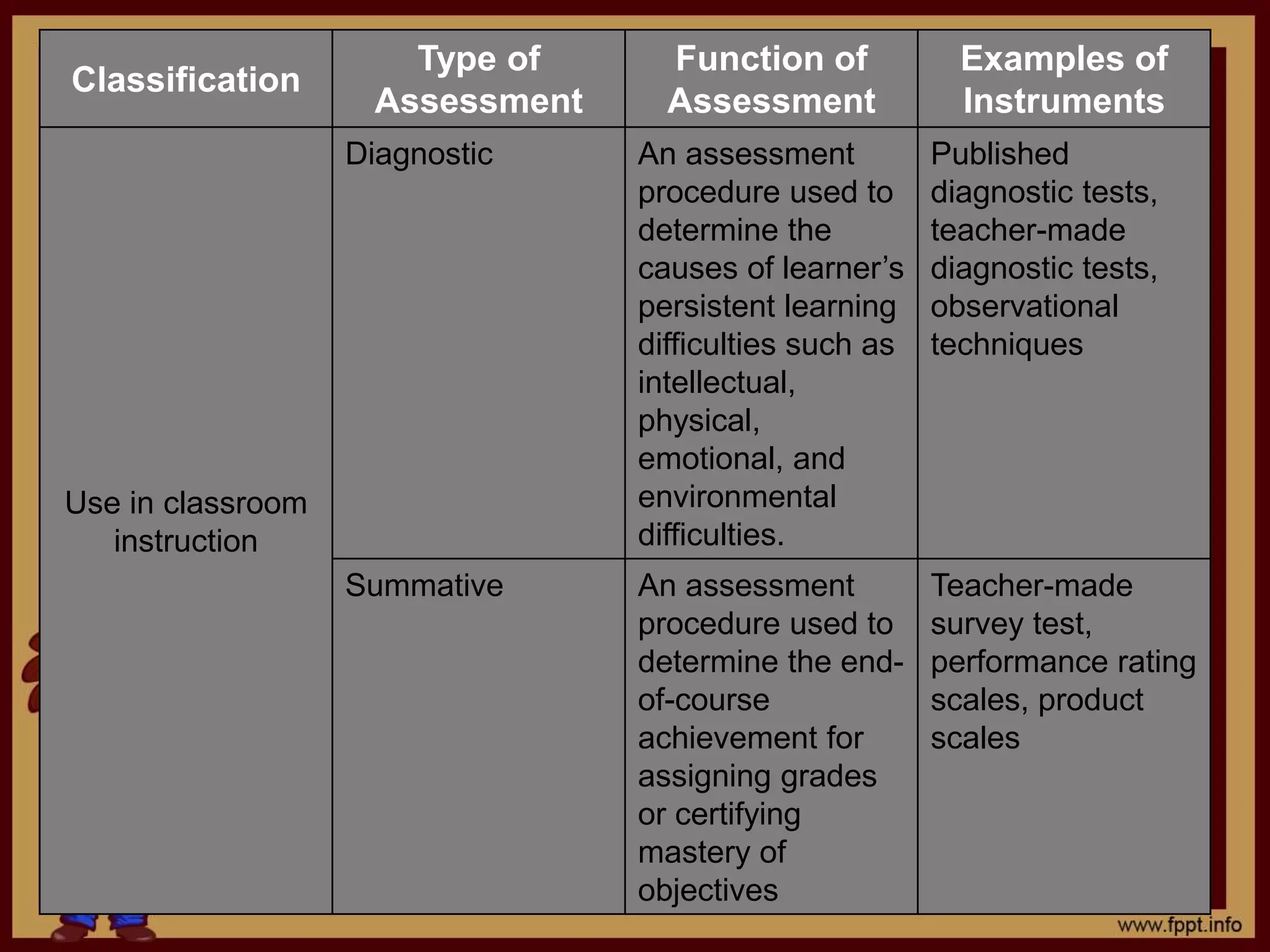
Classification
Type of
Assessment
Function of
Assessment
Examples of
Instruments
Use in classroom
instruction
Diagnostic An assessment
procedure used to
determine the
causes of learner’s
persistent learning
difficulties such as
intellectual,
physical,
emotional, and
environmental
difficulties.
Published
diagnostic tests,
teacher-made
diagnostic tests,
observational
techniques
Summative An assessment
procedure used to
determine the end-
of-course
achievement for
assigning grades
or certifying
mastery of
objectives
Teacher-made
survey test,
performance rating
scales, product
scales
Norm- and Criterion-
Referenced Interpretation
1. Norm-referenced Interpretation
It is used to describe students
performance according to relative
position in some known group. In this
method of interpretation it is assumed
that the level of performance of will
not vary much from one class to
another class.
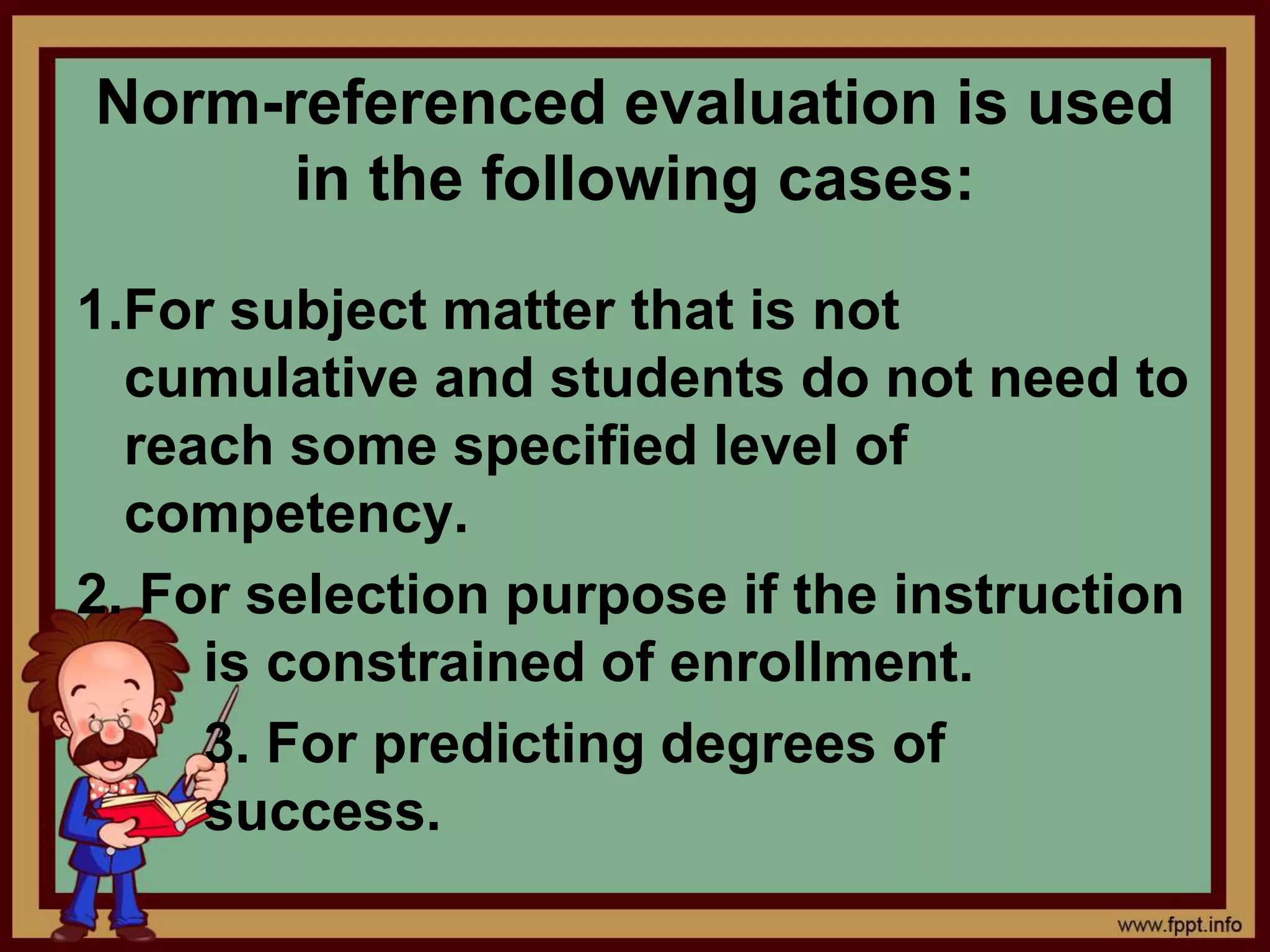
Norm-referenced evaluation is used
in the following cases:
1.For subject matter that is not
cumulative and students do not need to
reach some specified level of
competency.
2. For selection purpose if the instruction
is constrained of enrollment.
3. For predicting degrees of
success.
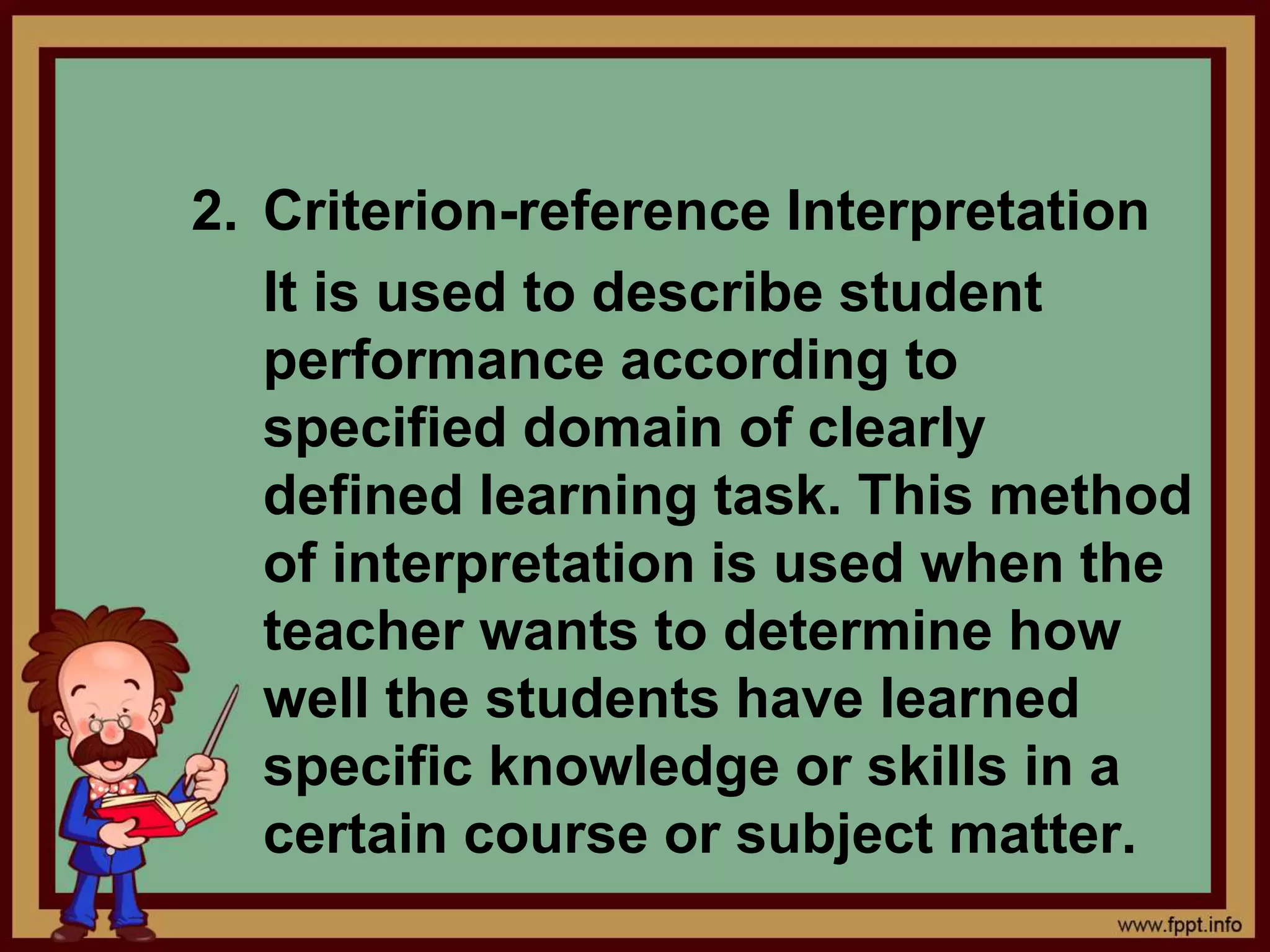
2. Criterion-reference Interpretation
It is used to describe student
performance according to
specified domain of clearly
defined learning task. This method
of interpretation is used when the
teacher wants to determine how
well the students have learned
specific knowledge or skills in a
certain course or subject matter.
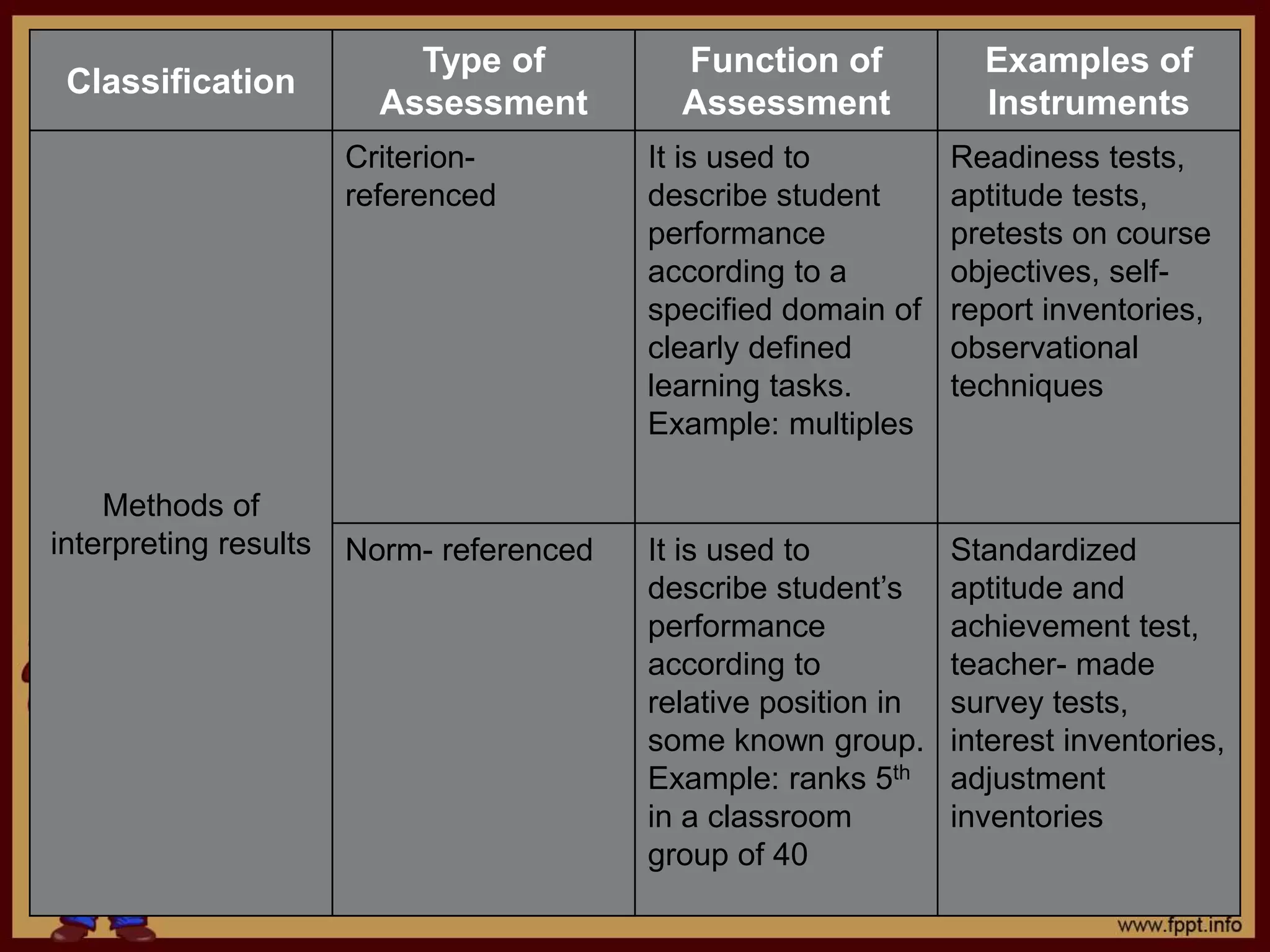
Classification
Type of
Assessment
Function of
Assessment
Examples of
Instruments
Methods of
interpreting results
Criterion-
referenced
It is used to
describe student
performance
according to a
specified domain of
clearly defined
learning tasks.
Example: multiples
Readiness tests,
aptitude tests,
pretests on course
objectives, self-
report inventories,
observational
techniques
Norm- referenced It is used to
describe student’s
performance
according to
relative position in
some known group.
Example: ranks 5th
in a classroom
group of 40
Standardized
aptitude and
achievement test,
teacher- made
survey tests,
interest inventories,
adjustment
inventories
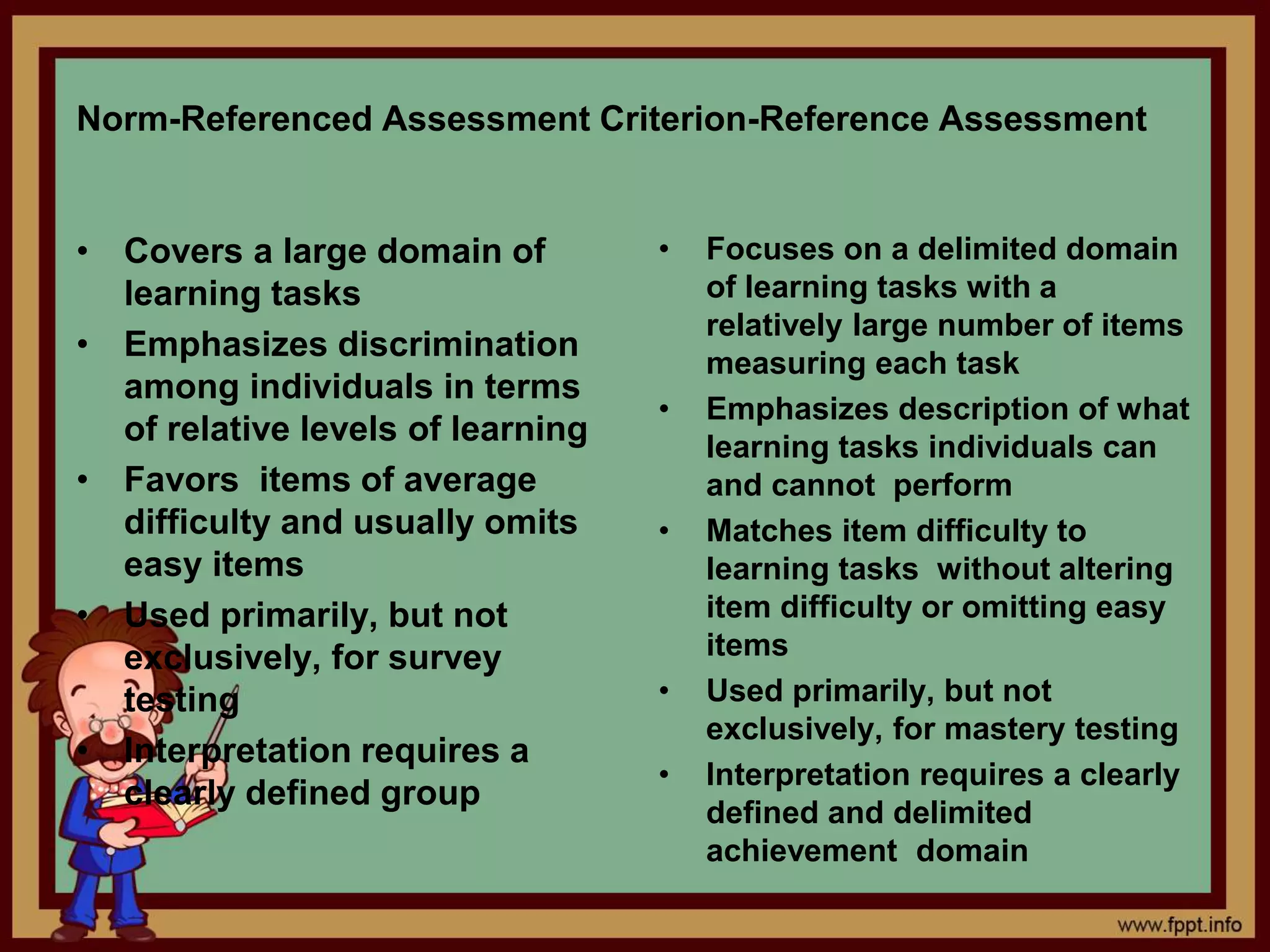
Norm-Referenced Assessment Criterion-Reference Assessment
• Covers a large domain of
learning tasks
• Emphasizes discrimination
among individuals in terms
of relative levels of learning
• Favors items of average
difficulty and usually omits
easy items
• Used primarily, but not
exclusively, for survey
testing
• Interpretation requires a
clearly defined group
• Focuses on a delimited domain
of learning tasks with a
relatively large number of items
measuring each task
• Emphasizes description of what
learning tasks individuals can
and cannot perform
• Matches item difficulty to
learning tasks without altering
item difficulty or omitting easy
items
• Used primarily, but not
exclusively, for mastery testing
• Interpretation requires a clearly
defined and delimited
achievement domain
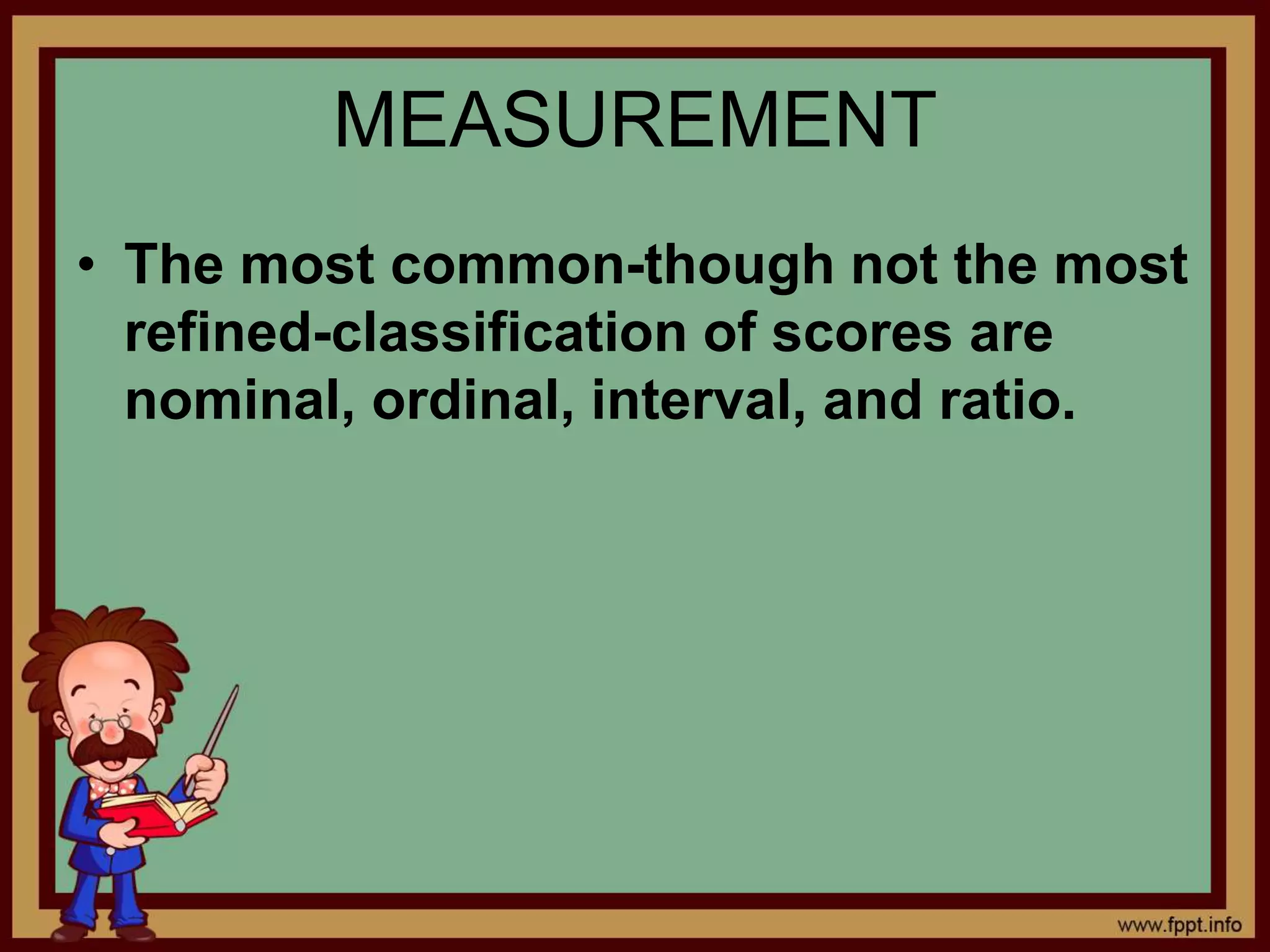
MEASUREMENT
• The most common-though not the most
refined-classification of scores are
nominal, ordinal, interval, and ratio.

Roles of Assessment in Making Classroom Instructional Decision

  • 1.
    Roles of Assessmentin making Classroom Instructional Decision
  • 2.
    Title • Assessment enhanceslearning in the instructional processes if the result provides feedbacks to both students and teachers. • The information obtained from the assessment is used to evaluate the teaching methodologies and strategies of the teacher.
  • 3.
    Title • It isalso used to make teaching decisions. • The result of assessment is used to diagnose the learning problems of the students.
  • 4.
    The Four Rolesof Assessment used in Instructional Process
  • 5.
    • Placement Assessment –The purpose of placement assessment is to determine the prerequisite skills, degree of mastery of the course the best mode of learning.
  • 6.
    FORMATIVE ASSESSMENT It isa type of assessment used to monitor the learning progress of the students during instruction. The purpose of formative assessment are the following: continuous feedback Indentify learning errors Modifying instruction Improve both learning and instruction
  • 7.
    • This isused to diagnose the students’ learning difficulties during instruction. DIAGNOSTIC ASSESSMENT
  • 8.
    • Summative Assessment Atype of assessment usually given at the end of a course unit. The purposes of summative assessment are to determine the following: Instructional objectives achieved Certify the students mastery Provide information for judging Effectiveness of instruction
  • 9.
    COMPARISON OF FORMATIVEAND SUMMATIVE ASSESSMENT FORMATIVE • Students are given the opportunity to improve their performance on the same task. • Students expect feedback on their performance, enabling them to improve their performance on the same task. • Although diagnostic in nature, the students’ knowledge of their strengths and weaknesses is categorized as formative. SUMMATIVE • The outcome of the task can neither be repeated nor improve. • The final grade is released on the assessment task. • Assessment is done at the end of systematic and incremental learning activities that have formative assessment task.
  • 10.
    Classification Type of Assessment Function of Assessment Examplesof Instruments Use in classroom instruction Placement An assessment procedure used to determine the learner’s prerequisite skills, degree of mastery of the course goals, and/ or best modes of learning. Readiness tests, aptitude tests, pretests on course objectives, self- report inventories, observational techniques Formative An assessment procedure used to determine the learner’s learning progress, provides feedback to reinforce learning, and corrects learning errors Teacher-made tests, custom-made tests from textbooks publishers, observational techniques
  • 11.
    Classification Type of Assessment Function of Assessment Examplesof Instruments Use in classroom instruction Diagnostic An assessment procedure used to determine the causes of learner’s persistent learning difficulties such as intellectual, physical, emotional, and environmental difficulties. Published diagnostic tests, teacher-made diagnostic tests, observational techniques Summative An assessment procedure used to determine the end- of-course achievement for assigning grades or certifying mastery of objectives Teacher-made survey test, performance rating scales, product scales
  • 12.
    Norm- and Criterion- ReferencedInterpretation 1. Norm-referenced Interpretation It is used to describe students performance according to relative position in some known group. In this method of interpretation it is assumed that the level of performance of will not vary much from one class to another class.
  • 13.
    Norm-referenced evaluation isused in the following cases: 1.For subject matter that is not cumulative and students do not need to reach some specified level of competency. 2. For selection purpose if the instruction is constrained of enrollment. 3. For predicting degrees of success.
  • 14.
    2. Criterion-reference Interpretation Itis used to describe student performance according to specified domain of clearly defined learning task. This method of interpretation is used when the teacher wants to determine how well the students have learned specific knowledge or skills in a certain course or subject matter.
  • 15.
    Classification Type of Assessment Function of Assessment Examplesof Instruments Methods of interpreting results Criterion- referenced It is used to describe student performance according to a specified domain of clearly defined learning tasks. Example: multiples Readiness tests, aptitude tests, pretests on course objectives, self- report inventories, observational techniques Norm- referenced It is used to describe student’s performance according to relative position in some known group. Example: ranks 5th in a classroom group of 40 Standardized aptitude and achievement test, teacher- made survey tests, interest inventories, adjustment inventories
  • 16.
    Norm-Referenced Assessment Criterion-ReferenceAssessment • Covers a large domain of learning tasks • Emphasizes discrimination among individuals in terms of relative levels of learning • Favors items of average difficulty and usually omits easy items • Used primarily, but not exclusively, for survey testing • Interpretation requires a clearly defined group • Focuses on a delimited domain of learning tasks with a relatively large number of items measuring each task • Emphasizes description of what learning tasks individuals can and cannot perform • Matches item difficulty to learning tasks without altering item difficulty or omitting easy items • Used primarily, but not exclusively, for mastery testing • Interpretation requires a clearly defined and delimited achievement domain
  • 17.
    MEASUREMENT • The mostcommon-though not the most refined-classification of scores are nominal, ordinal, interval, and ratio.