Field Study 5
Episode4
On Scoring Rubrics
My Target
In this Episode, I must be able to examine
different types of scoring rubrics used by my
Resource Teachers and relate them to
assessment of student learning
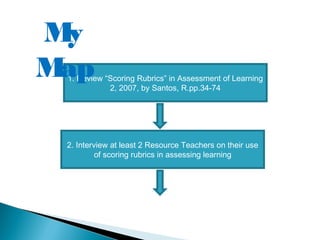
1. Review “Scoring Rubrics” in Assessment of Learning
2, 2007, by Santos, R.pp.34-74
2. Interview at least 2 Resource Teachers on their use
of scoring rubrics in assessing learning
My
Map
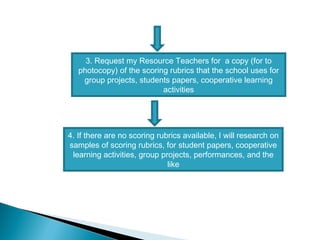
4. If there are no scoring rubrics available, I will research on
samples of scoring rubrics, for student papers, cooperative
learning activities, group projects, performances, and the
like
3. Request my Resource Teachers for a copy (for to
photocopy) of the scoring rubrics that the school uses for
group projects, students papers, cooperative learning
activities
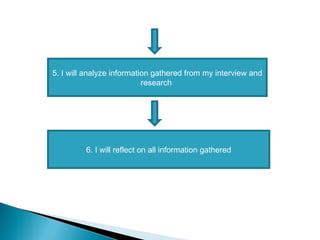
6. I will reflect on all information gathered
5. I will analyze information gathered from my interview and
research
My Tools
Interview of my Resource
Teachers
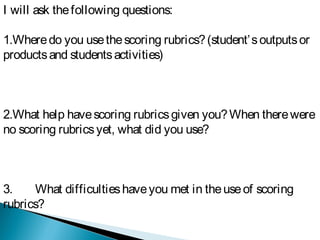
I will ask thefollowing questions:
1.Wheredo you usethescoring rubrics?(student’soutputsor
productsand studentsactivities)
2.What help havescoring rubricsgiven you?When therewere
no scoring rubricsyet, what did you use?
3. What difficultieshaveyou met in theuseof scoring
rubrics?
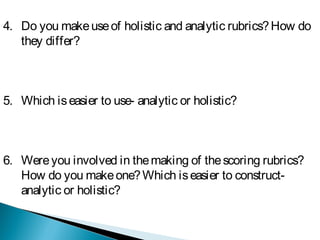
4. Do you makeuseof holistic and analytic rubrics?How do
they differ?
5. Which iseasier to use- analytic or holistic?
6. Wereyou involved in themaking of thescoring rubrics?
How do you makeone?Which iseasier to construct-
analytic or holistic?
Research
I will research thefollowing:
o Typesof rubrics
o When to userubrics
o How to construct rubrics
o Advantagesand disadvantagesof scoring rubrics
My Analysis
1.What benefitshavescoring rubricsbrought to theteaching –
learning process?
2.How arescoring rubricsrelated to portfolio assessment?
3.To get themost from scoring rubrics, what should beobservablein
themaking and theuseof scoring rubrics?
My Reflections
Reflect on this: Scoring Rubrics: Boon or
Bane?
My Portfolio
Comeup with onescoring rubric for a
student product (e.g. paragraph or themewritten) and
another for astudent activity such asacooperative
learning activity)

Episode 4

  • 1.
  • 2.
    My Target In thisEpisode, I must be able to examine different types of scoring rubrics used by my Resource Teachers and relate them to assessment of student learning
  • 3.
    1. Review “ScoringRubrics” in Assessment of Learning 2, 2007, by Santos, R.pp.34-74 2. Interview at least 2 Resource Teachers on their use of scoring rubrics in assessing learning My Map
  • 4.
    4. If thereare no scoring rubrics available, I will research on samples of scoring rubrics, for student papers, cooperative learning activities, group projects, performances, and the like 3. Request my Resource Teachers for a copy (for to photocopy) of the scoring rubrics that the school uses for group projects, students papers, cooperative learning activities
  • 5.
    6. I willreflect on all information gathered 5. I will analyze information gathered from my interview and research
  • 6.
    My Tools Interview ofmy Resource Teachers
  • 7.
    I will askthefollowing questions: 1.Wheredo you usethescoring rubrics?(student’soutputsor productsand studentsactivities) 2.What help havescoring rubricsgiven you?When therewere no scoring rubricsyet, what did you use? 3. What difficultieshaveyou met in theuseof scoring rubrics?
  • 8.
    4. Do youmakeuseof holistic and analytic rubrics?How do they differ? 5. Which iseasier to use- analytic or holistic? 6. Wereyou involved in themaking of thescoring rubrics? How do you makeone?Which iseasier to construct- analytic or holistic?
  • 9.
    Research I will researchthefollowing: o Typesof rubrics o When to userubrics o How to construct rubrics o Advantagesand disadvantagesof scoring rubrics
  • 10.
    My Analysis 1.What benefitshavescoringrubricsbrought to theteaching – learning process? 2.How arescoring rubricsrelated to portfolio assessment? 3.To get themost from scoring rubrics, what should beobservablein themaking and theuseof scoring rubrics?
  • 11.
    My Reflections Reflect onthis: Scoring Rubrics: Boon or Bane?
  • 12.
    My Portfolio Comeup withonescoring rubric for a student product (e.g. paragraph or themewritten) and another for astudent activity such asacooperative learning activity)