Anup K Singh, PhD
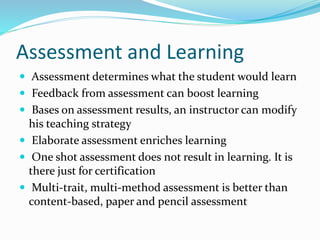
Assessment and Learning
 Assessment determines what the student would learn
 Feedback from assessment can boost learning
 Bases on assessment results, an instructor can modify
his teaching strategy
 Elaborate assessment enriches learning
 One shot assessment does not result in learning. It is
there just for certification
 Multi-trait, multi-method assessment is better than
content-based, paper and pencil assessment
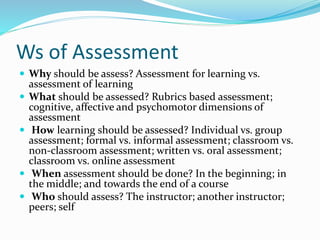
Ws of Assessment
 Why should be assess? Assessment for learning vs.
assessment of learning
 What should be assessed? Rubrics based assessment;
cognitive, affective and psychomotor dimensions of
assessment
 How learning should be assessed? Individual vs. group
assessment; formal vs. informal assessment; classroom vs.
non-classroom assessment; written vs. oral assessment;
classroom vs. online assessment
 When assessment should be done? In the beginning; in
the middle; and towards the end of a course
 Who should assess? The instructor; another instructor;
peers; self
Rubrics and Assessment
 Rubrics are the attributes of learning
 It helps the instructor to be clear and focussed in the
process of assessment
 It must be related to learning outcomes of the course
 There are different levels of each attributes
 Each level can be assigned a range of marks to
differentiate the performance of students
 Easier to develop for essays and assignments
 Each assessment components should have some
rubrics
Rubrics and Assessment
 Rubrics are the attributes of learning
 It helps the instructor to be clear and focussed in the
process of assessment
 It must be related to learning outcomes of the course
 There are different levels of each attributes
 Each level can be assigned a range of marks to differentiate
the performance of students
 Easier to develop for essays and assignments
 Each assessment components should have some rubrics

Educational Systems in the 80s
 Annual examination system
 One instructor teaches, another teacher sets the
examination paper and third one assesses the answer sheet
 Total reliance on paper and pencil test, with some practical
examinations
 As a result, focus was on rote learning and examination
orientation
 Both learning and assessment were individual based
 Students had slow start in the beginning of the academic
year and worked at the end for success in examinations
Reforms in the Educational System
 From annual system to semester system
 Two semester end examinations in lieu of one annual
examination
 Semester end examinations are supplemented by
continuous evaluation
 Continuous evaluation consists of quizzes,
assignments, projects, etc.
 Focus on accreditation that emphasises outcome-
based education
Current Issues in Assessment
 A weaker relationship between learning outcomes and
assessment
 No right of the student to know how he has been assessed
and graded
 Lack of transparency in assessment system
 Regulator and prompt feedback on assessed work is
missing
 New philosophy with old systems
 Little use of authentic assessment
 Classroom Assessment Techniques (CATs) are rare
 No involvement of students in the assessment process
Contd…
 Most systems are still based on marks
 Grading is generally criterion based
 Lesser stress on formative assessment (i.e., assessment
for learning)
 As a result, there is a less focus on improvement in
learning on a continuous basis
 Students hardly receive feedback to improve their
learning
 Very less use of informal and alternative assessment
Issues in Grading
 For effective assessment, both criterion-referenced grading
and norm-referenced grading are necessary
 Pass/fail grading is required in some courses
 Various components of continuous evaluation measure
different competencies. Therefore, they need to be graded
separately
 All assessed works need not be graded
 Grading should take care some dip in the performance of
students; and, develop system to support the student in
such a situation.
 Flexibility in programme grading is needed
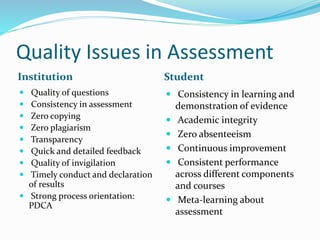
Quality Issues in Assessment
Institution Student
 Quality of questions
 Consistency in assessment
 Zero copying
 Zero plagiarism
 Transparency
 Quick and detailed feedback
 Quality of invigilation
 Timely conduct and declaration
of results
 Strong process orientation:
PDCA
 Consistency in learning and
demonstration of evidence
 Academic integrity
 Zero absenteeism
 Continuous improvement
 Consistent performance
across different components
and courses
 Meta-learning about
assessment
Assessment and IT
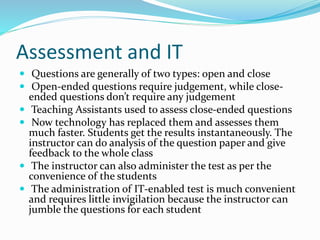
 Questions are generally of two types: open and close
 Open-ended questions require judgement, while close-
ended questions don’t require any judgement
 Teaching Assistants used to assess close-ended questions
 Now technology has replaced them and assesses them
much faster. Students get the results instantaneously. The
instructor can do analysis of the question paper and give
feedback to the whole class
 The instructor can also administer the test as per the
convenience of the students
 The administration of IT-enabled test is much convenient
and requires little invigilation because the instructor can
jumble the questions for each student
National Level Testing
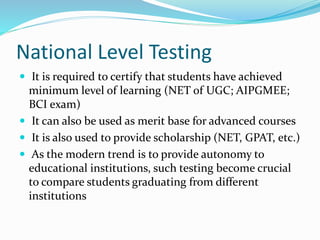
 It is required to certify that students have achieved
minimum level of learning (NET of UGC; AIPGMEE;
BCI exam)
 It can also be used as merit base for advanced courses
 It is also used to provide scholarship (NET, GPAT, etc.)
 As the modern trend is to provide autonomy to
educational institutions, such testing become crucial
to compare students graduating from different
institutions
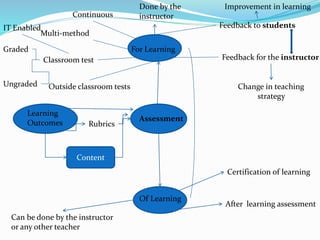
Assessment
For Learning
Of Learning
Learning
Outcomes
Content
Feedback to students
Feedback for the instructor
Continuous
Multi-method
Classroom test
Outside classroom tests Change in teaching
strategy
Improvement in learning
Graded
Ungraded
Certification of learning
After learning assessment
Can be done by the instructor
or any other teacher
Done by the
instructor
Rubrics
IT Enabled

Issues in Assessment

  • 1.
  • 2.
    Assessment and Learning Assessment determines what the student would learn  Feedback from assessment can boost learning  Bases on assessment results, an instructor can modify his teaching strategy  Elaborate assessment enriches learning  One shot assessment does not result in learning. It is there just for certification  Multi-trait, multi-method assessment is better than content-based, paper and pencil assessment
  • 3.
    Ws of Assessment Why should be assess? Assessment for learning vs. assessment of learning  What should be assessed? Rubrics based assessment; cognitive, affective and psychomotor dimensions of assessment  How learning should be assessed? Individual vs. group assessment; formal vs. informal assessment; classroom vs. non-classroom assessment; written vs. oral assessment; classroom vs. online assessment  When assessment should be done? In the beginning; in the middle; and towards the end of a course  Who should assess? The instructor; another instructor; peers; self
  • 4.
    Rubrics and Assessment Rubrics are the attributes of learning  It helps the instructor to be clear and focussed in the process of assessment  It must be related to learning outcomes of the course  There are different levels of each attributes  Each level can be assigned a range of marks to differentiate the performance of students  Easier to develop for essays and assignments  Each assessment components should have some rubrics
  • 5.
    Rubrics and Assessment Rubrics are the attributes of learning  It helps the instructor to be clear and focussed in the process of assessment  It must be related to learning outcomes of the course  There are different levels of each attributes  Each level can be assigned a range of marks to differentiate the performance of students  Easier to develop for essays and assignments  Each assessment components should have some rubrics 
  • 6.
    Educational Systems inthe 80s  Annual examination system  One instructor teaches, another teacher sets the examination paper and third one assesses the answer sheet  Total reliance on paper and pencil test, with some practical examinations  As a result, focus was on rote learning and examination orientation  Both learning and assessment were individual based  Students had slow start in the beginning of the academic year and worked at the end for success in examinations
  • 7.
    Reforms in theEducational System  From annual system to semester system  Two semester end examinations in lieu of one annual examination  Semester end examinations are supplemented by continuous evaluation  Continuous evaluation consists of quizzes, assignments, projects, etc.  Focus on accreditation that emphasises outcome- based education
  • 8.
    Current Issues inAssessment  A weaker relationship between learning outcomes and assessment  No right of the student to know how he has been assessed and graded  Lack of transparency in assessment system  Regulator and prompt feedback on assessed work is missing  New philosophy with old systems  Little use of authentic assessment  Classroom Assessment Techniques (CATs) are rare  No involvement of students in the assessment process
  • 9.
    Contd…  Most systemsare still based on marks  Grading is generally criterion based  Lesser stress on formative assessment (i.e., assessment for learning)  As a result, there is a less focus on improvement in learning on a continuous basis  Students hardly receive feedback to improve their learning  Very less use of informal and alternative assessment
  • 10.
    Issues in Grading For effective assessment, both criterion-referenced grading and norm-referenced grading are necessary  Pass/fail grading is required in some courses  Various components of continuous evaluation measure different competencies. Therefore, they need to be graded separately  All assessed works need not be graded  Grading should take care some dip in the performance of students; and, develop system to support the student in such a situation.  Flexibility in programme grading is needed
  • 11.
    Quality Issues inAssessment Institution Student  Quality of questions  Consistency in assessment  Zero copying  Zero plagiarism  Transparency  Quick and detailed feedback  Quality of invigilation  Timely conduct and declaration of results  Strong process orientation: PDCA  Consistency in learning and demonstration of evidence  Academic integrity  Zero absenteeism  Continuous improvement  Consistent performance across different components and courses  Meta-learning about assessment
  • 12.
    Assessment and IT Questions are generally of two types: open and close  Open-ended questions require judgement, while close- ended questions don’t require any judgement  Teaching Assistants used to assess close-ended questions  Now technology has replaced them and assesses them much faster. Students get the results instantaneously. The instructor can do analysis of the question paper and give feedback to the whole class  The instructor can also administer the test as per the convenience of the students  The administration of IT-enabled test is much convenient and requires little invigilation because the instructor can jumble the questions for each student
  • 13.
    National Level Testing It is required to certify that students have achieved minimum level of learning (NET of UGC; AIPGMEE; BCI exam)  It can also be used as merit base for advanced courses  It is also used to provide scholarship (NET, GPAT, etc.)  As the modern trend is to provide autonomy to educational institutions, such testing become crucial to compare students graduating from different institutions
  • 14.
    Assessment For Learning Of Learning Learning Outcomes Content Feedbackto students Feedback for the instructor Continuous Multi-method Classroom test Outside classroom tests Change in teaching strategy Improvement in learning Graded Ungraded Certification of learning After learning assessment Can be done by the instructor or any other teacher Done by the instructor Rubrics IT Enabled