Standards-Based
Curriculum
Prepared by:
Hina Kaynat
Content
• What is a standard?
• Types of standards
• characteristics for a quality curriculum standards
• The 5 C’s
• Teacher and Learner Roles
• Some characteristics of Standards-based
classroom
What is a standard?
• A statement of what students should know and be
able to do and demonstrate at the end of the
process at each level.
• The Standards can be used as a reference point
for planning, teaching and learning programs, and
for assessing student progress.
Synonyms
: learning outcomes, learning objectives,
learning targets, competencies
Standards should be clear, straightforward,
observable, measurable, and well-articulated.
What is a Standards Based
Curriculum, (SBC)?
• A Standards Based curriculum is a body of
knowledge and set of competencies that form the basis for
a quality education.
• It defines what students should know, understand
and be able to do and includes the accompanying teaching
content.
Cont.….
• In education, the term standards-based
refers to systems of instruction,
assessment, grading, and academic
reporting that are based on students
demonstrating, understanding or mastery of
the knowledge and skills they are expected
to learn as they progress through their
education.
Types of standards:
are statements about what learners should know
and be able to do with contents.
show us how the learners
have achieved the standards targeted. They refer
to how learners are meeting a standard and show
the learner’s progress towards meeting a standard.
These standards tell us
how well learners should perform
Content standards
:
Performance standards:
Proficiency Standards:
characteristics for a quality
curriculum standards:
• Standards are connected to community needs and student
needs
• Empower teachers
• Based on principled procedures
• Flexible and able to change
• Includes time lines for student's learning, development, and
growth
• Describes a whole curriculum
• Hidden curriculum is considered
• Identifies big ideas, concepts, and outcomes
• Includes assessment: formative, summative, diagnosis, and
generative
• Includes ways to satisfy accountability
Standards-Based Approach
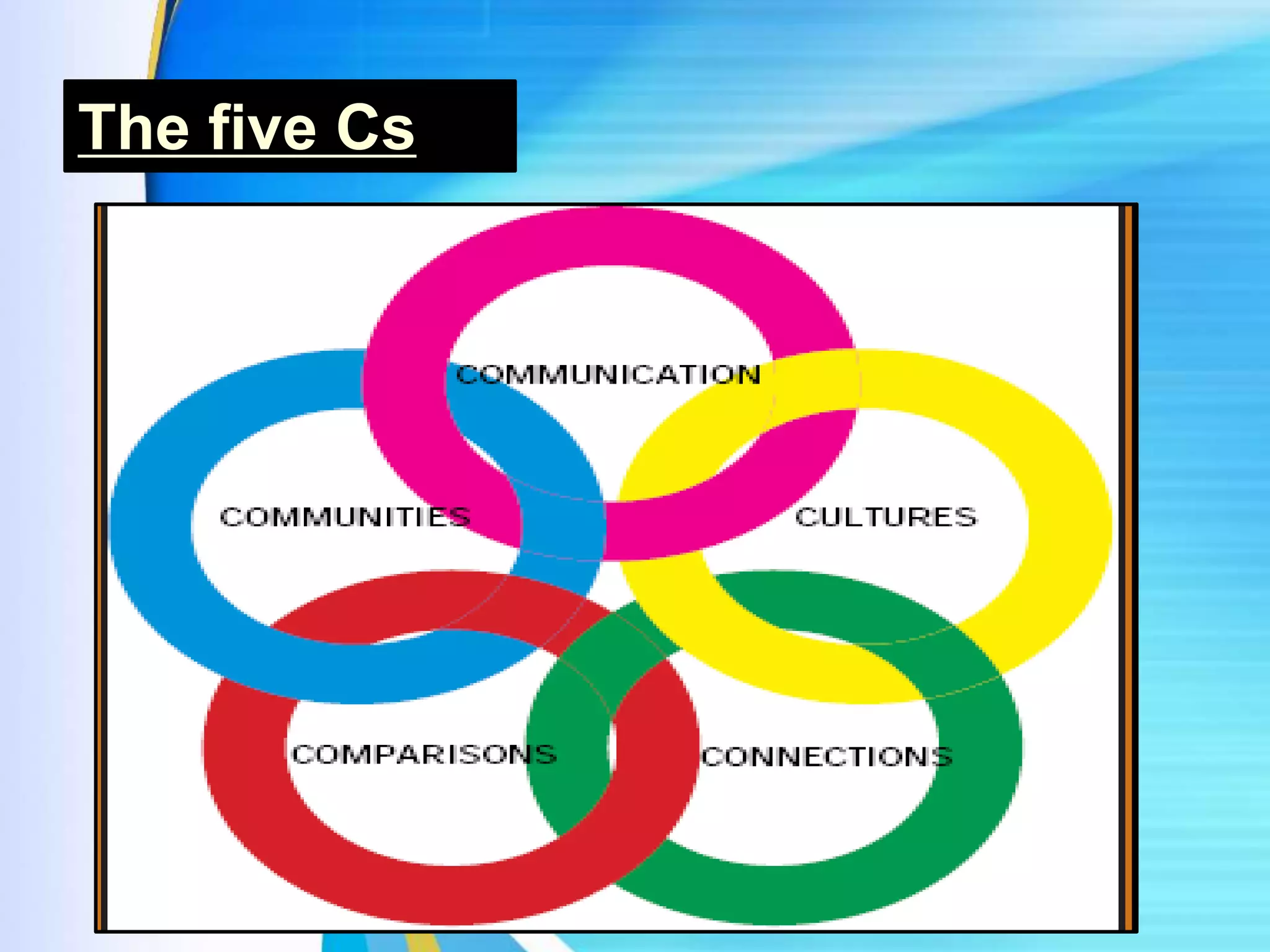
The five Cs
The SBA is concerned with developing the following
five areas:
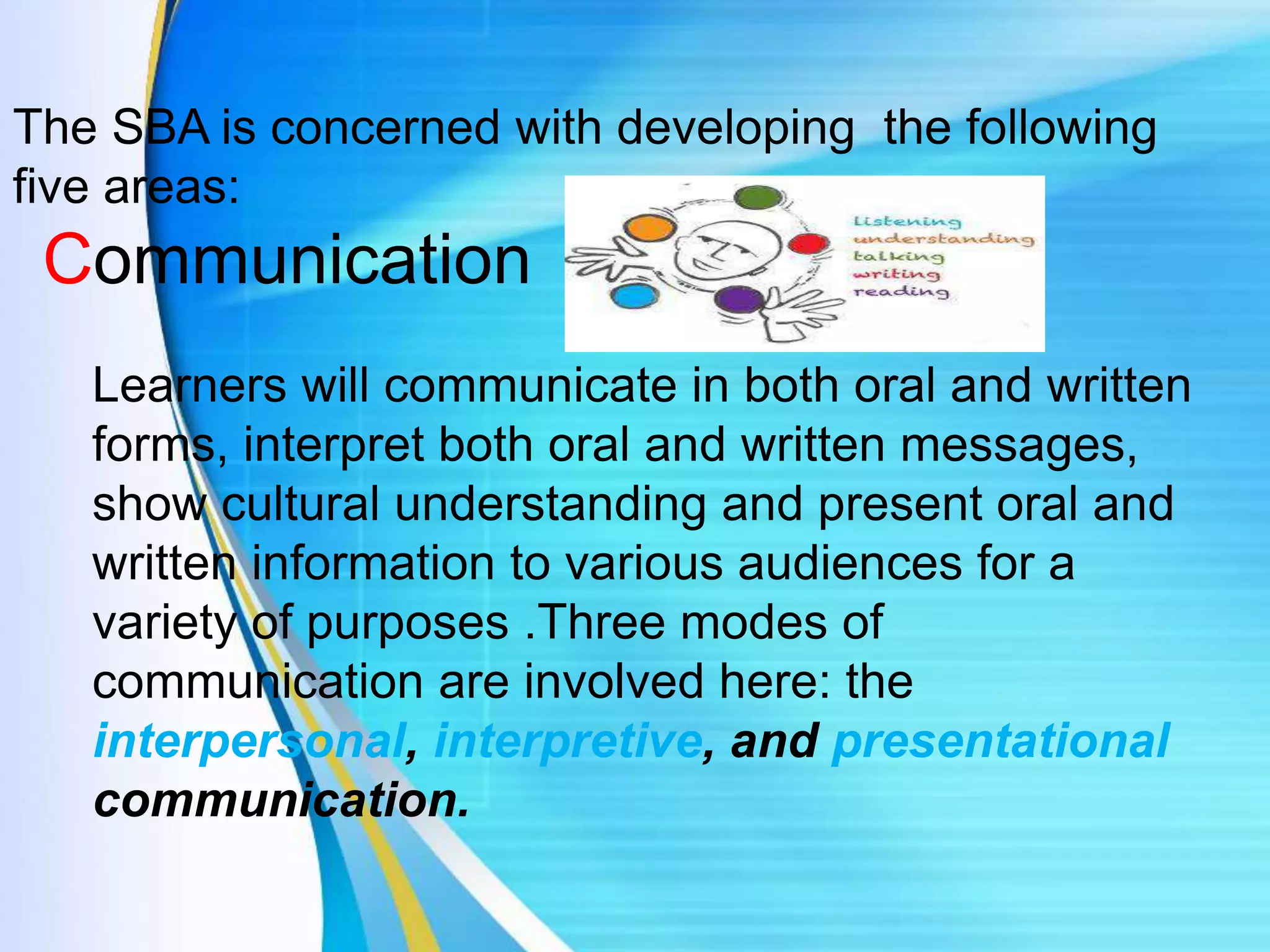
Communication
Learners will communicate in both oral and written
forms, interpret both oral and written messages,
show cultural understanding and present oral and
written information to various audiences for a
variety of purposes .Three modes of
communication are involved here: the
interpersonal, interpretive, and presentational
communication.
Culture
Learners will gain deeper understanding
of their culture(s) and other cultures in
terms of their perspectives (e.g. values,
ideas, attitudes, etc.), practices (pattern
of social interactions), and products (e.g.
books, laws, music, etc).
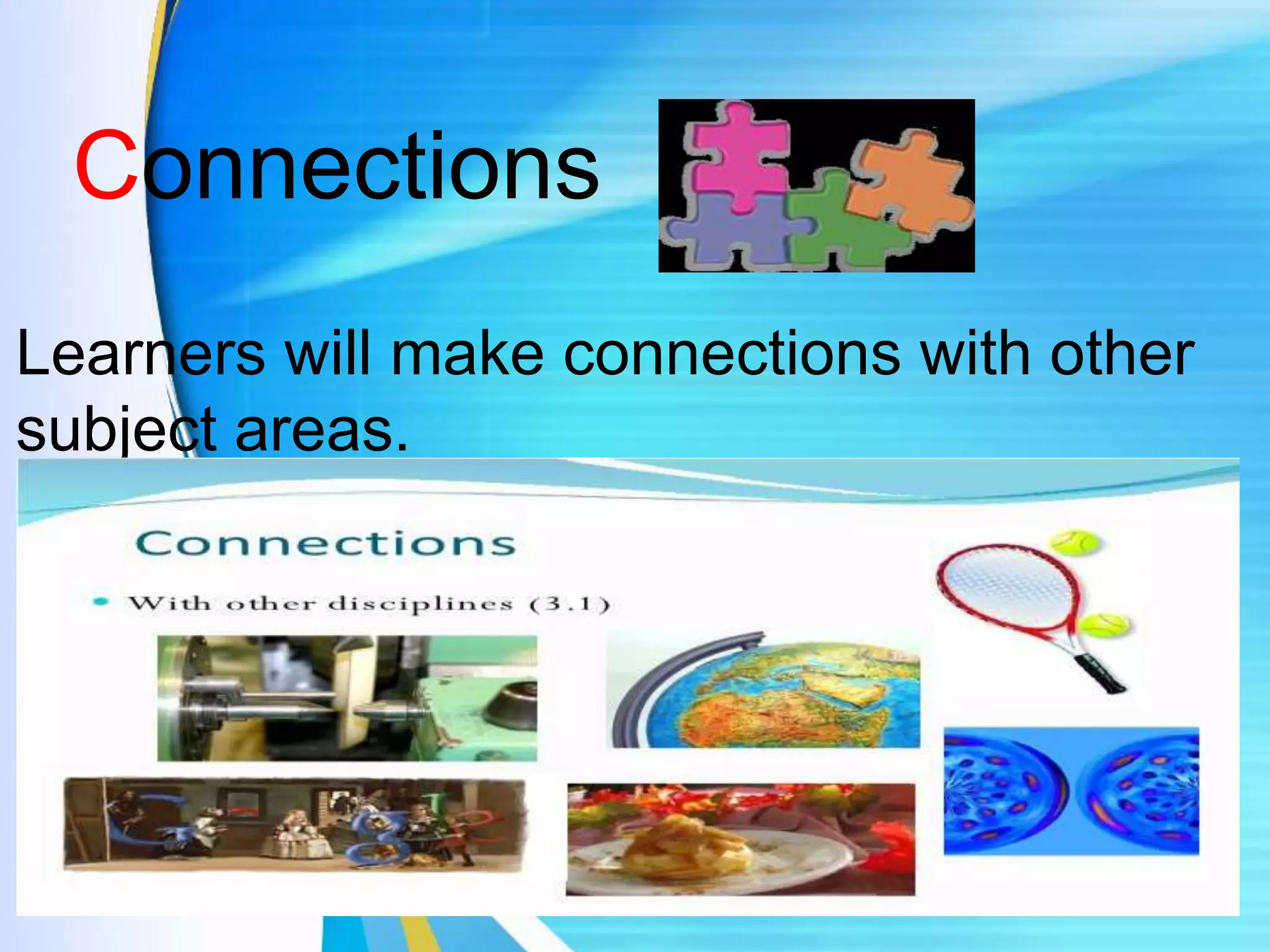
Connections
Learners will make connections with other
subject areas.
Comparison
Learners will gain awareness of cross-
cultural similarities and differences (in
terms of both languages and culture).
Communities
Learners will extend their learning
experiences from the EFL classroom
to the outside world through activities
such as the use of the internet. They
will therefore be made aware that they
live in a global world..
Some characteristics of Standards-based classroom
 Classroom climate is characterized by respectful behaviors, routines,
and discourse.
 Classroom practices and instruction honor the diversity of interests,
needs, and strengths of all learners.
 The teacher ensures that all components of the lesson (e.g., learning
activities, assessment, homework) contribute to the lesson objectives
and to student mastery of the standard(s).
 Learning time is maximized for all students.
 Instruction activates students’ prior knowledge and experience, and
supplies background knowledge.
 Students respond to opportunities provided by the teacher to make
connections between the lesson and personal experience.
References:
 American Association for the Advancement of Science. (2000). Middle grades
mathematics textbooks: A benchmarks-based evaluation. Washington,DC.
 Nind, M., Rix, J., Sheehy, K., & Simmons, K. (2013). Curriculum and Pedagogy
in Inclusive Education: Values Into Practice. Routledge.
Retrieved January 4, 2007, from
http://search.proquest.com/openview/d68cd8a10068dd2f8f
61a22d3dada4bc/1?pq-origsite=gscholar
Standards based curriculum

Standards based curriculum

  • 1.
  • 2.
    Content • What isa standard? • Types of standards • characteristics for a quality curriculum standards • The 5 C’s • Teacher and Learner Roles • Some characteristics of Standards-based classroom
  • 3.
    What is astandard? • A statement of what students should know and be able to do and demonstrate at the end of the process at each level. • The Standards can be used as a reference point for planning, teaching and learning programs, and for assessing student progress. Synonyms : learning outcomes, learning objectives, learning targets, competencies Standards should be clear, straightforward, observable, measurable, and well-articulated.
  • 5.
    What is aStandards Based Curriculum, (SBC)? • A Standards Based curriculum is a body of knowledge and set of competencies that form the basis for a quality education. • It defines what students should know, understand and be able to do and includes the accompanying teaching content.
  • 6.
    Cont.…. • In education,the term standards-based refers to systems of instruction, assessment, grading, and academic reporting that are based on students demonstrating, understanding or mastery of the knowledge and skills they are expected to learn as they progress through their education.
  • 7.
    Types of standards: arestatements about what learners should know and be able to do with contents. show us how the learners have achieved the standards targeted. They refer to how learners are meeting a standard and show the learner’s progress towards meeting a standard. These standards tell us how well learners should perform Content standards : Performance standards: Proficiency Standards:
  • 8.
    characteristics for aquality curriculum standards: • Standards are connected to community needs and student needs • Empower teachers • Based on principled procedures • Flexible and able to change • Includes time lines for student's learning, development, and growth • Describes a whole curriculum • Hidden curriculum is considered • Identifies big ideas, concepts, and outcomes • Includes assessment: formative, summative, diagnosis, and generative • Includes ways to satisfy accountability
  • 9.
  • 10.
  • 11.
    The SBA isconcerned with developing the following five areas: Communication Learners will communicate in both oral and written forms, interpret both oral and written messages, show cultural understanding and present oral and written information to various audiences for a variety of purposes .Three modes of communication are involved here: the interpersonal, interpretive, and presentational communication.
  • 12.
    Culture Learners will gaindeeper understanding of their culture(s) and other cultures in terms of their perspectives (e.g. values, ideas, attitudes, etc.), practices (pattern of social interactions), and products (e.g. books, laws, music, etc).
  • 14.
    Connections Learners will makeconnections with other subject areas.
  • 15.
    Comparison Learners will gainawareness of cross- cultural similarities and differences (in terms of both languages and culture).
  • 16.
    Communities Learners will extendtheir learning experiences from the EFL classroom to the outside world through activities such as the use of the internet. They will therefore be made aware that they live in a global world..
  • 17.
    Some characteristics ofStandards-based classroom  Classroom climate is characterized by respectful behaviors, routines, and discourse.  Classroom practices and instruction honor the diversity of interests, needs, and strengths of all learners.  The teacher ensures that all components of the lesson (e.g., learning activities, assessment, homework) contribute to the lesson objectives and to student mastery of the standard(s).  Learning time is maximized for all students.  Instruction activates students’ prior knowledge and experience, and supplies background knowledge.  Students respond to opportunities provided by the teacher to make connections between the lesson and personal experience.
  • 18.
    References:  American Associationfor the Advancement of Science. (2000). Middle grades mathematics textbooks: A benchmarks-based evaluation. Washington,DC.  Nind, M., Rix, J., Sheehy, K., & Simmons, K. (2013). Curriculum and Pedagogy in Inclusive Education: Values Into Practice. Routledge. Retrieved January 4, 2007, from http://search.proquest.com/openview/d68cd8a10068dd2f8f 61a22d3dada4bc/1?pq-origsite=gscholar