

Grading
System
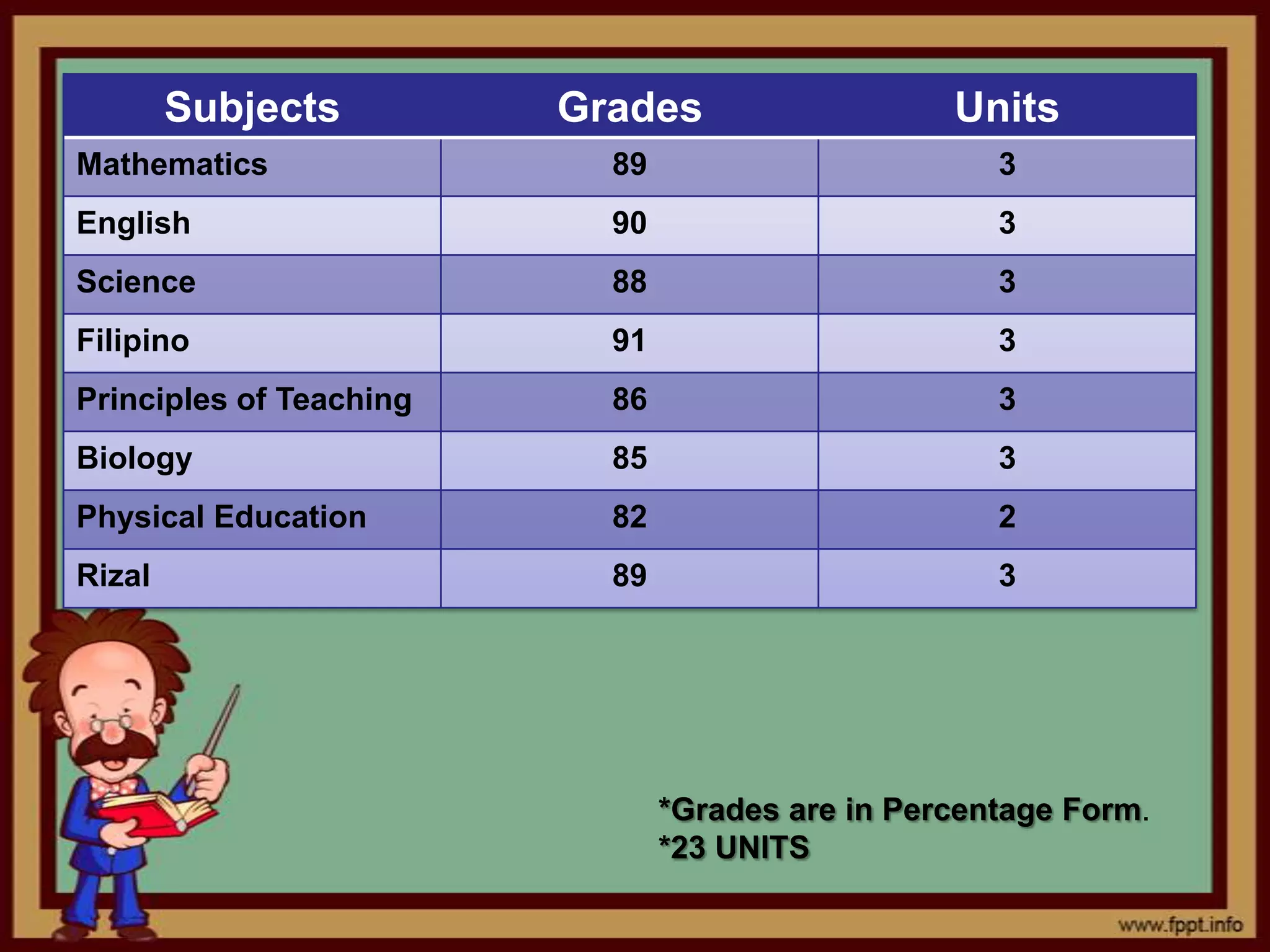
Subjects

Grades

Units

Mathematics

89

3

English

90

3

Science

88

3

Filipino

91

3

Principles of Teaching

86

3

Biology

85

3

Physical Education

82

2

Rizal

89

3

*Grades are in Percentage Form.
*23 UNITS
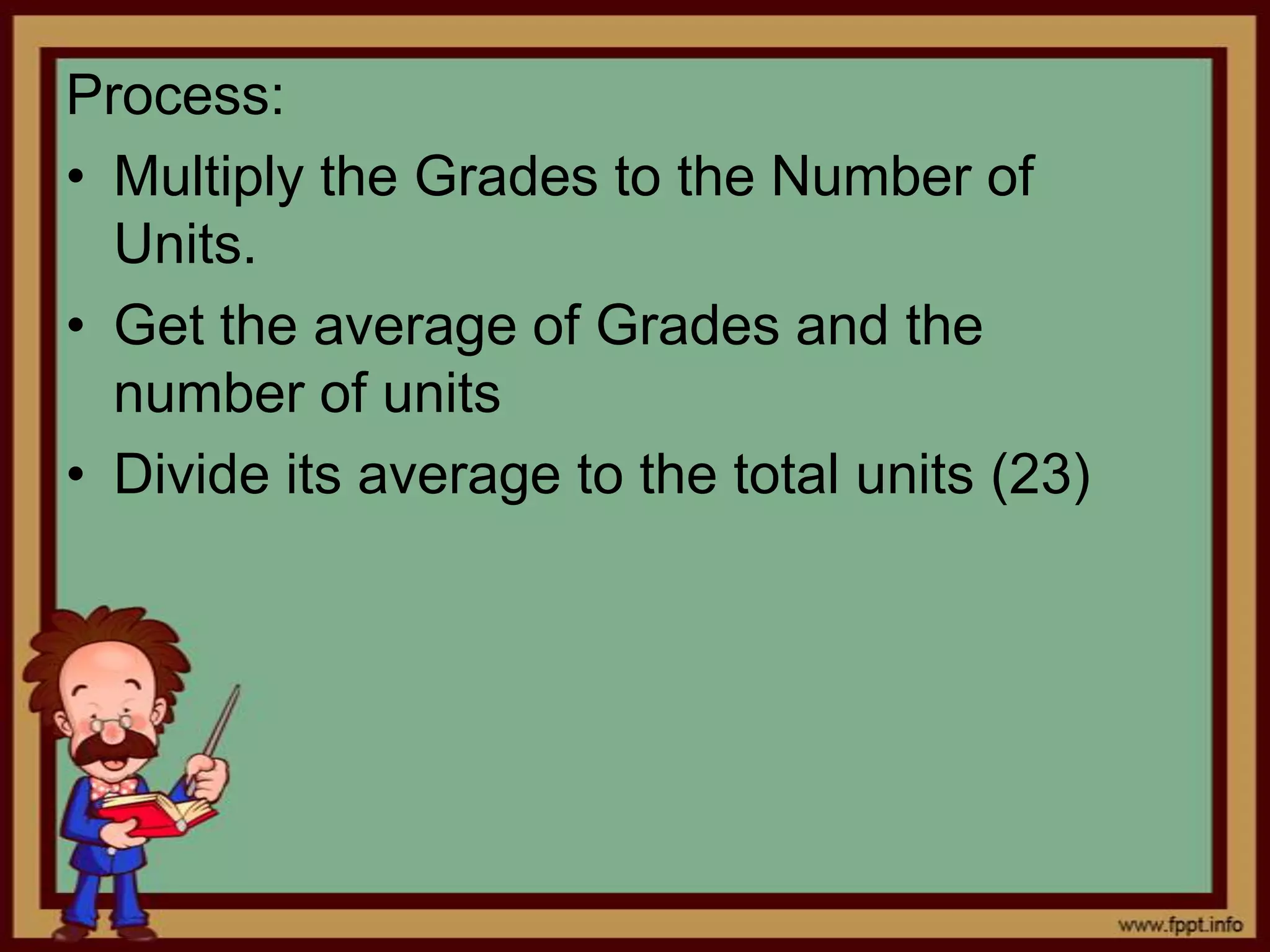
Process:
• Multiply the Grades to the Number of
Units.
• Get the average of Grades and the
number of units
• Divide its average to the total units (23)
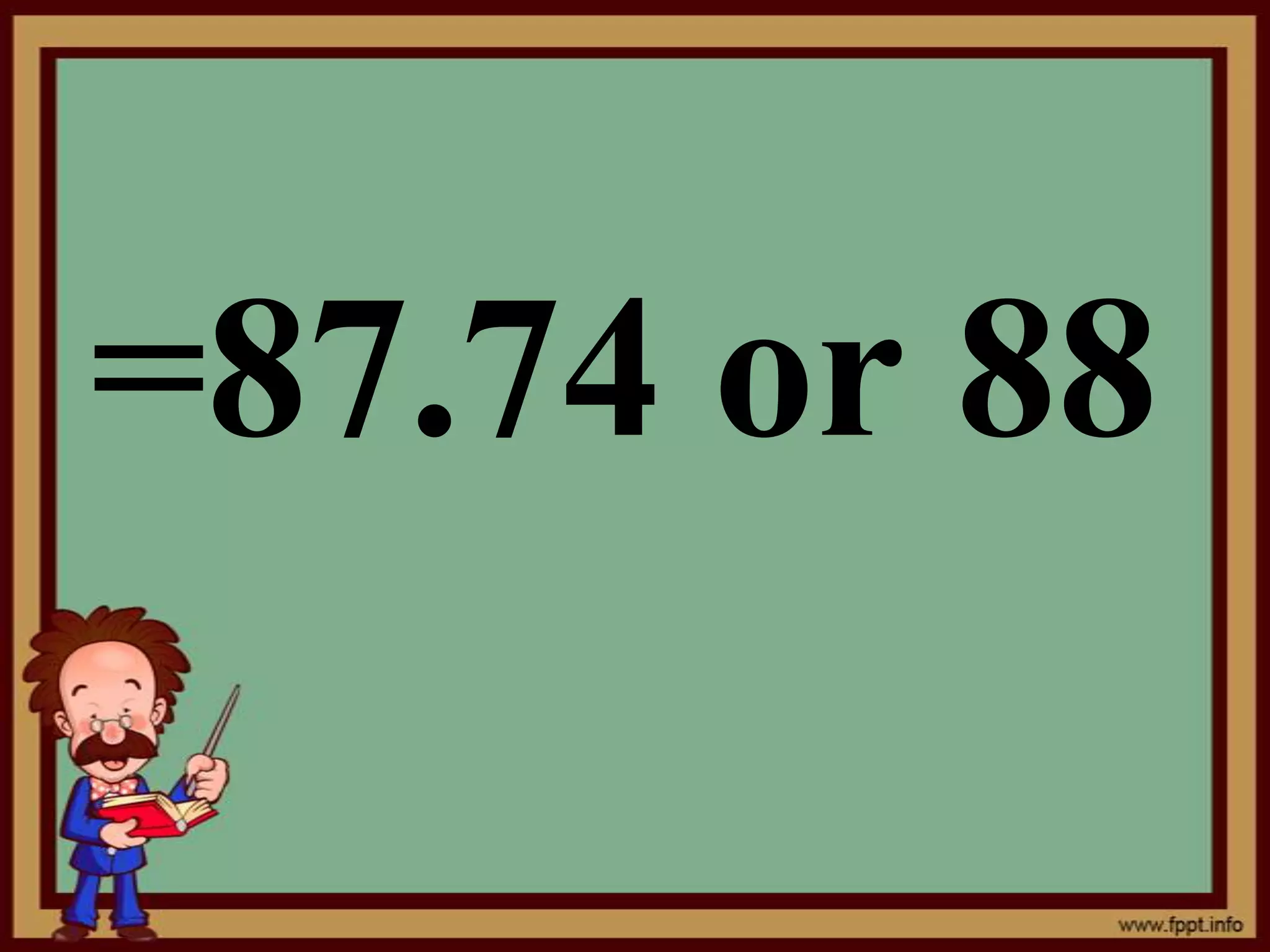
=87.74 or 88
Decision Making- perhaps the most critical
teaching skills

* The key to being a good teacher lies in the
decisions that the teachers make.
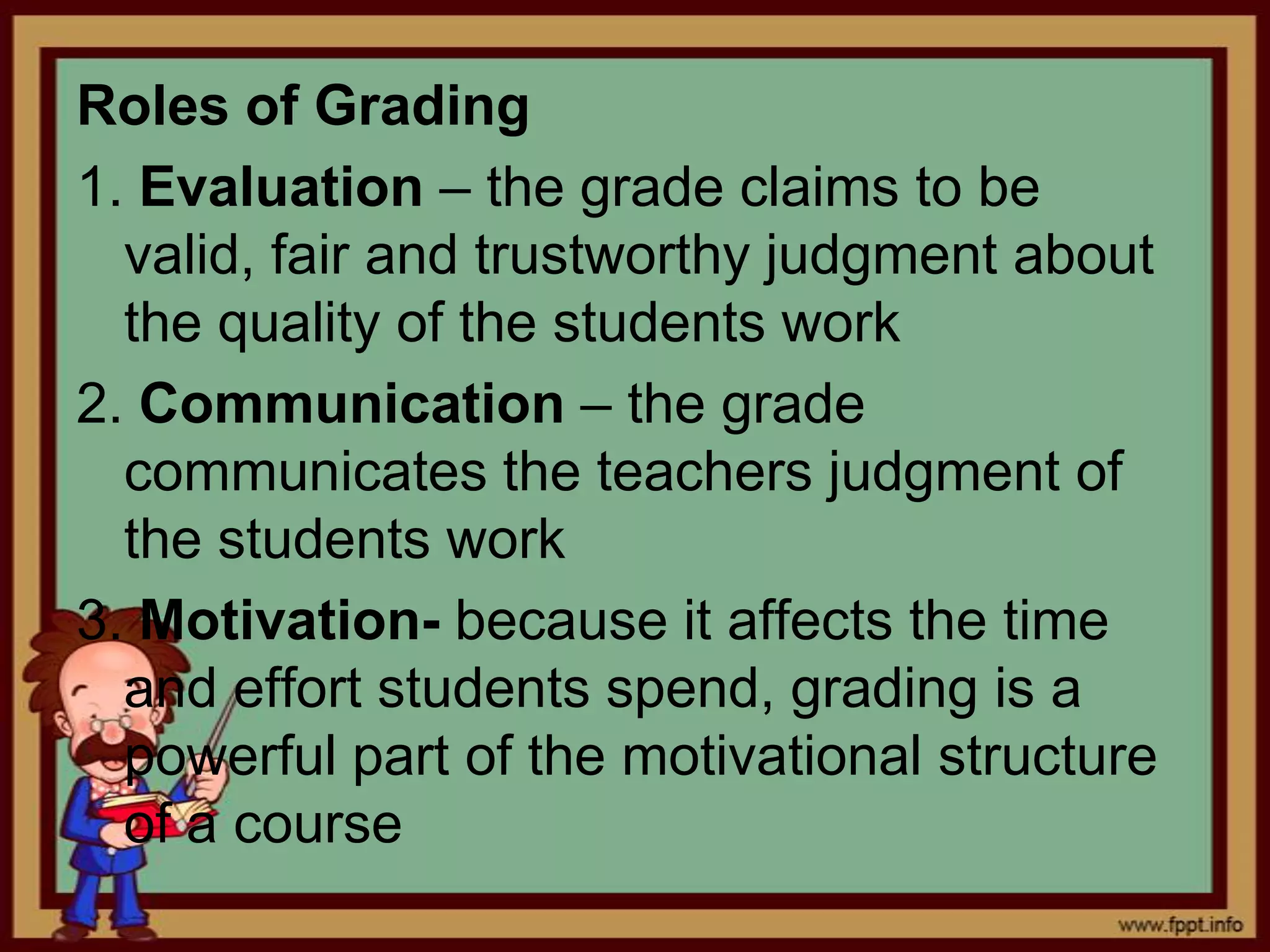
Roles of Grading
1. Evaluation – the grade claims to be
valid, fair and trustworthy judgment about
the quality of the students work
2. Communication – the grade
communicates the teachers judgment of
the students work
3. Motivation- because it affects the time
and effort students spend, grading is a
powerful part of the motivational structure
of a course
4. Organization – a grade helps mark
transitions, bring closure and focus efforts
for both teachers and students
Teachers need to :
• Establish clear and thoughtful criteria and
standards to students work
• Exercise professional judgment
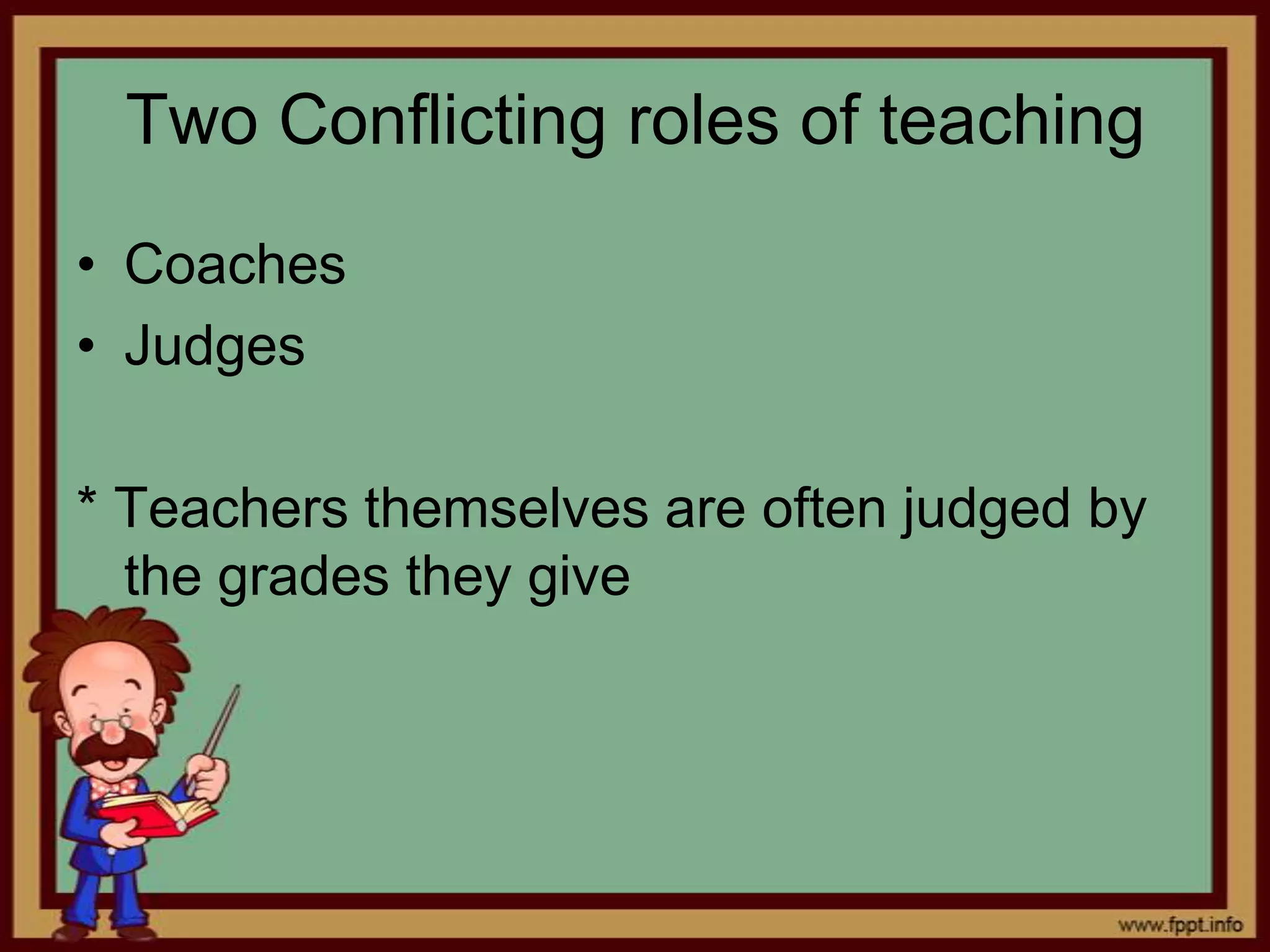
Two Conflicting roles of teaching
• Coaches
• Judges
* Teachers themselves are often judged by
the grades they give
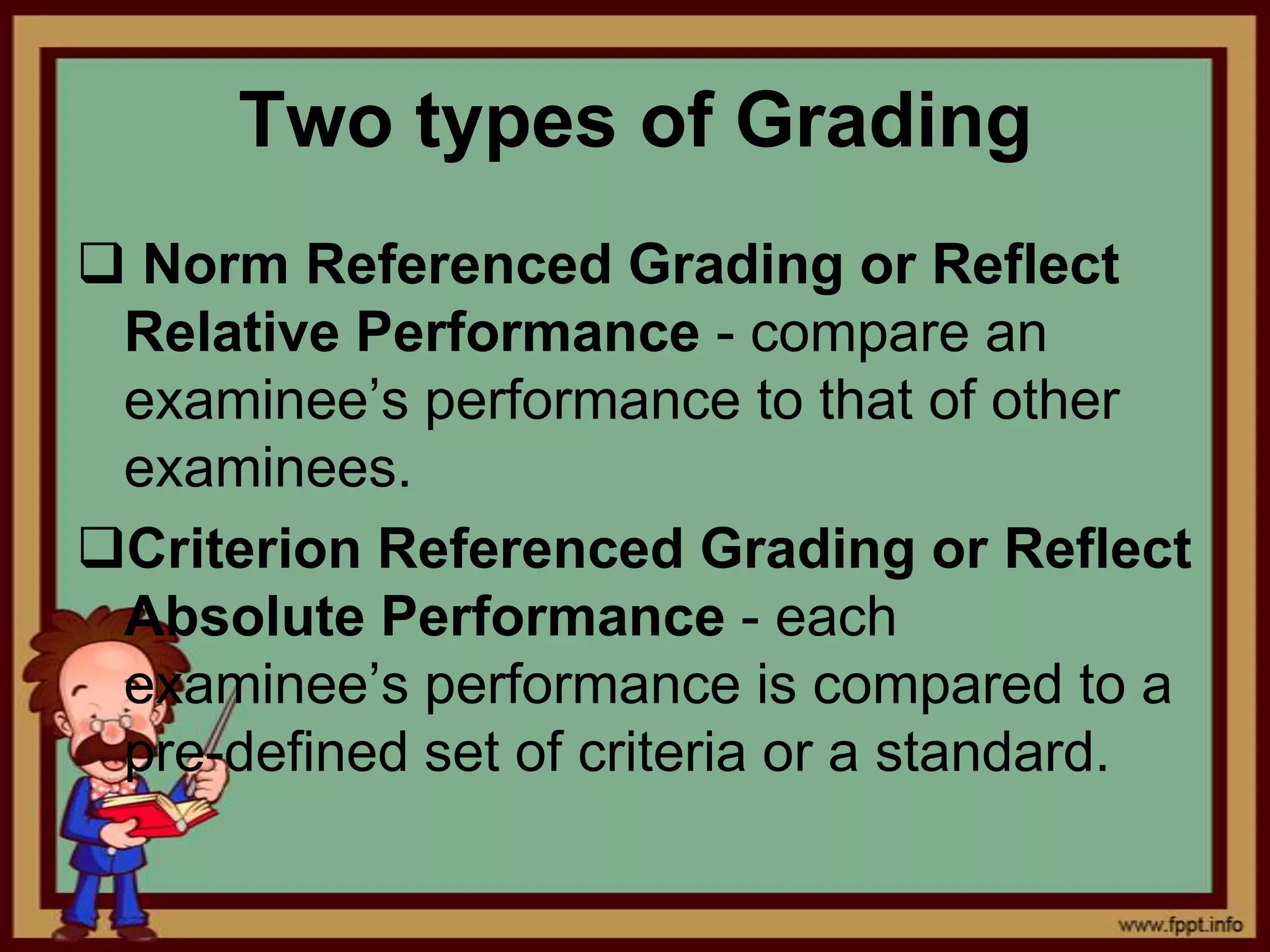
Two types of Grading
 Norm Referenced Grading or Reflect
Relative Performance - compare an
examinee’s performance to that of other
examinees.
Criterion Referenced Grading or Reflect
Absolute Performance - each
examinee’s performance is compared to a
pre-defined set of criteria or a standard.
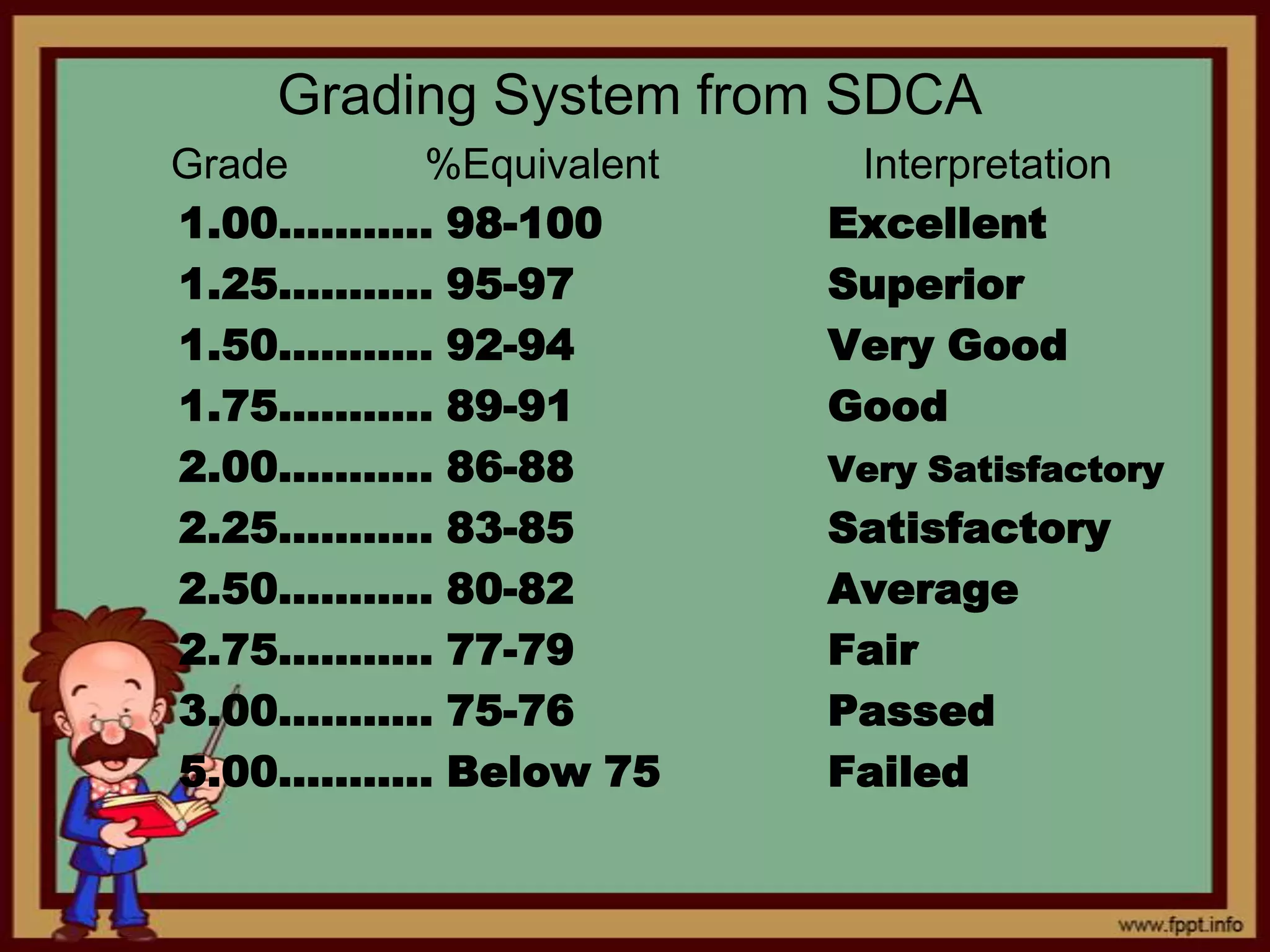
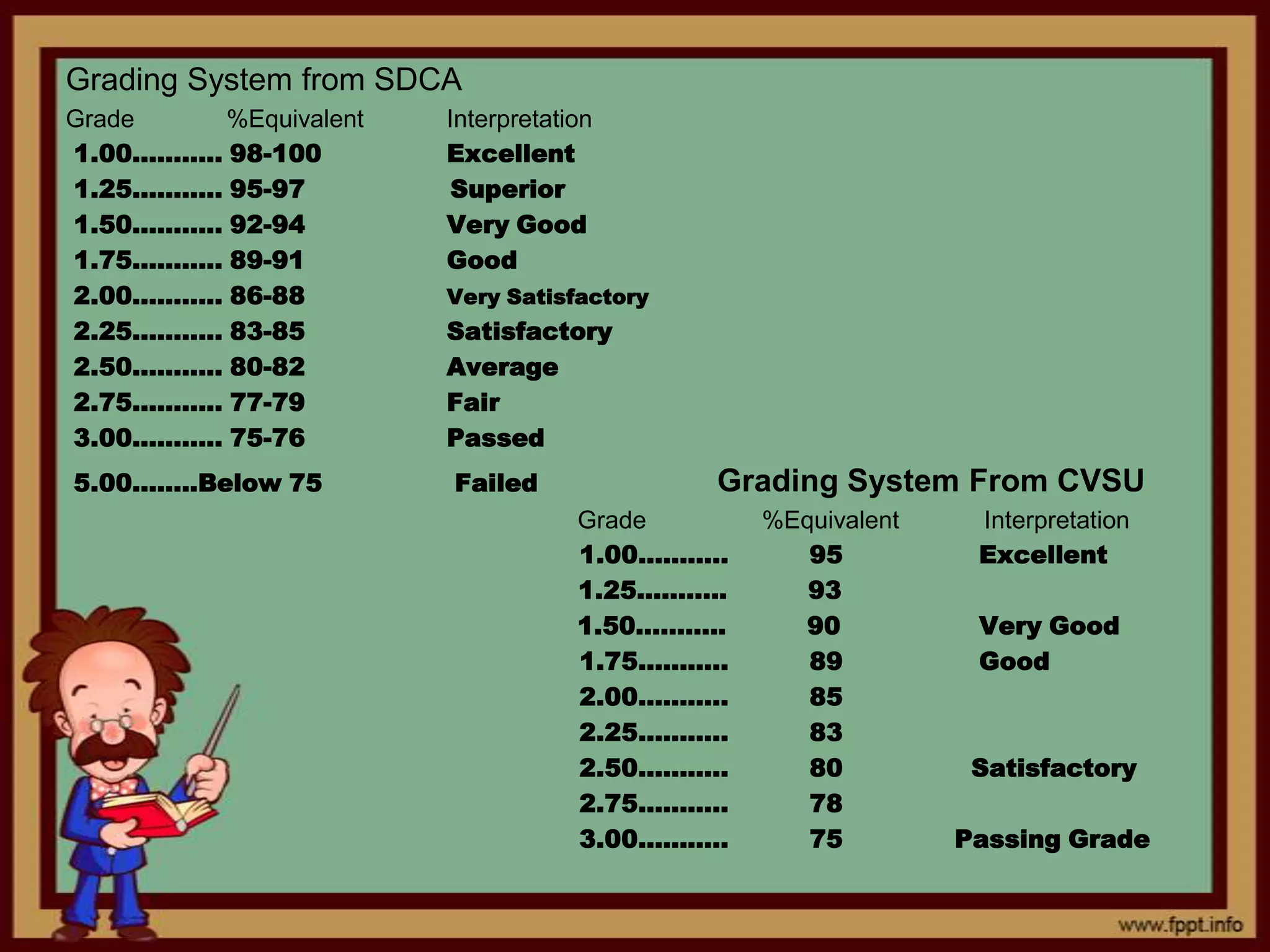
Grading System from SDCA
Grade
%Equivalent
1.00……….. 98-100
1.25……….. 95-97
1.50……….. 92-94
1.75……….. 89-91
2.00……….. 86-88
2.25……….. 83-85
2.50……….. 80-82
2.75……….. 77-79
3.00……….. 75-76
5.00……….. Below 75

Interpretation
Excellent
Superior
Very Good
Good
Very Satisfactory

Satisfactory
Average
Fair
Passed
Failed
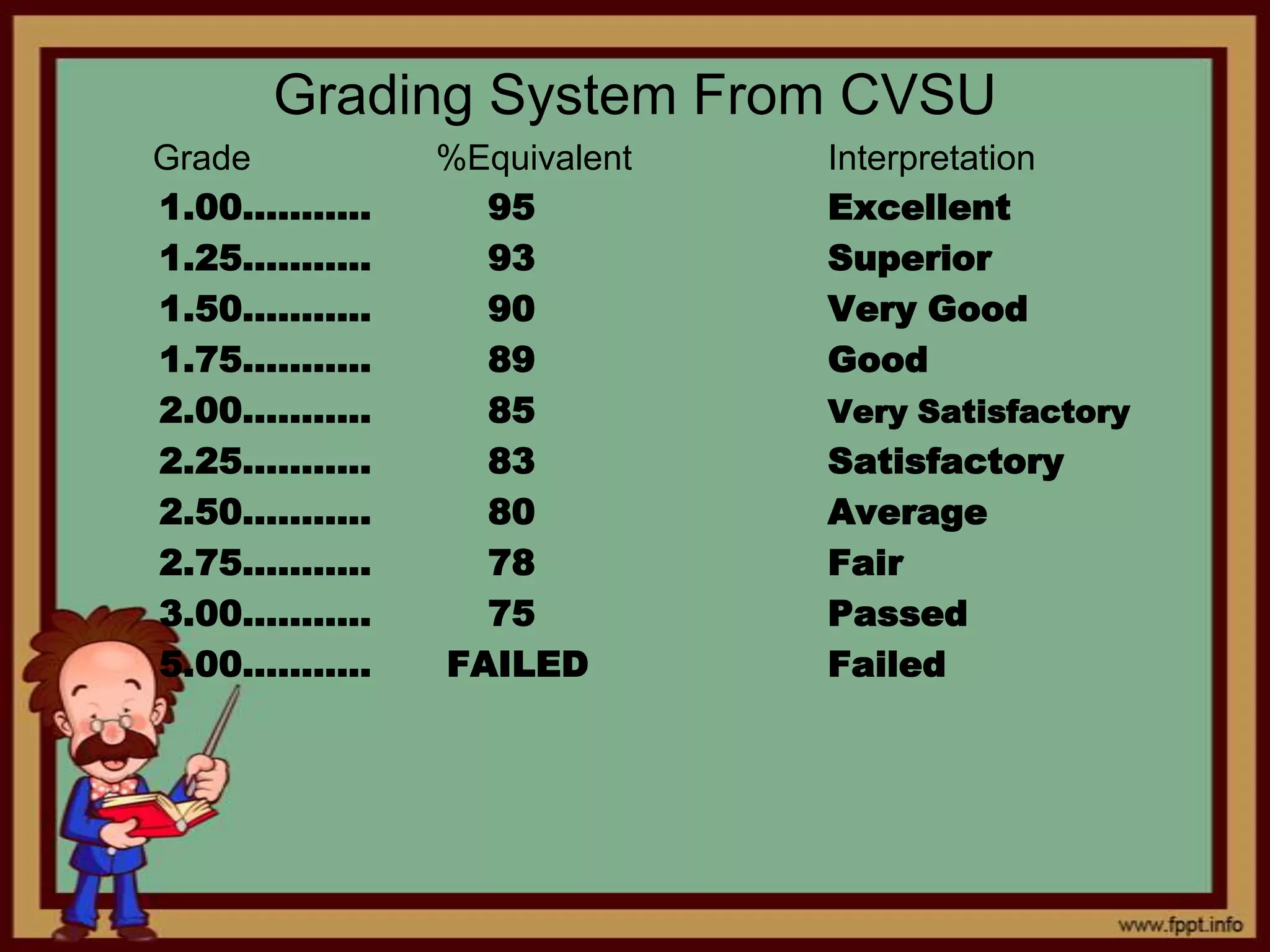
Grading System From CVSU
Grade
1.00………..
1.25………..
1.50………..
1.75………..
2.00………..
2.25………..
2.50………..
2.75………..
3.00………..
5.00………..

%Equivalent
95
93
90
89
85
83
80
78
75
FAILED

Interpretation
Excellent
Superior
Very Good
Good
Very Satisfactory

Satisfactory
Average
Fair
Passed
Failed
Grading System from SDCA
Grade
%Equivalent
1.00……….. 98-100
1.25……….. 95-97
1.50……….. 92-94
1.75……….. 89-91
2.00……….. 86-88
2.25……….. 83-85
2.50……….. 80-82
2.75……….. 77-79
3.00……….. 75-76
5.00……..Below 75

Interpretation
Excellent
Superior
Very Good
Good
Very Satisfactory

Satisfactory
Average
Fair
Passed
Failed

Grading System From CVSU
Grade
1.00………..
1.25………..
1.50………..
1.75………..
2.00………..
2.25………..
2.50………..
2.75………..
3.00………..

%Equivalent
95
93
90
89
85
83
80
78
75

Interpretation
Excellent
Very Good
Good

Satisfactory
Passing Grade
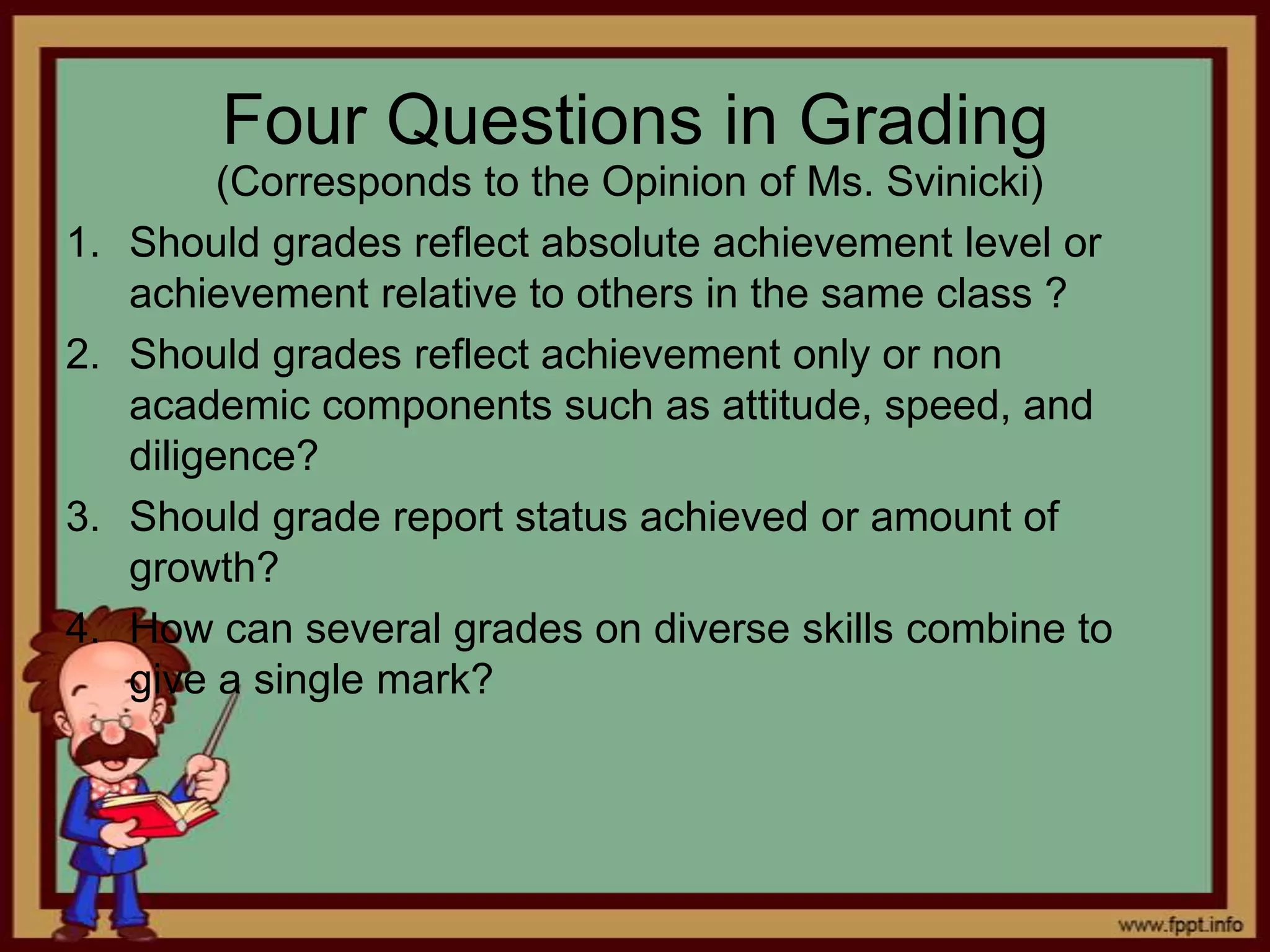
Four Questions in Grading
1.

2.

3.
4.

(Corresponds to the Opinion of Ms. Svinicki)
Should grades reflect absolute achievement level or
achievement relative to others in the same class ?
Should grades reflect achievement only or non
academic components such as attitude, speed, and
diligence?
Should grade report status achieved or amount of
growth?
How can several grades on diverse skills combine to
give a single mark?
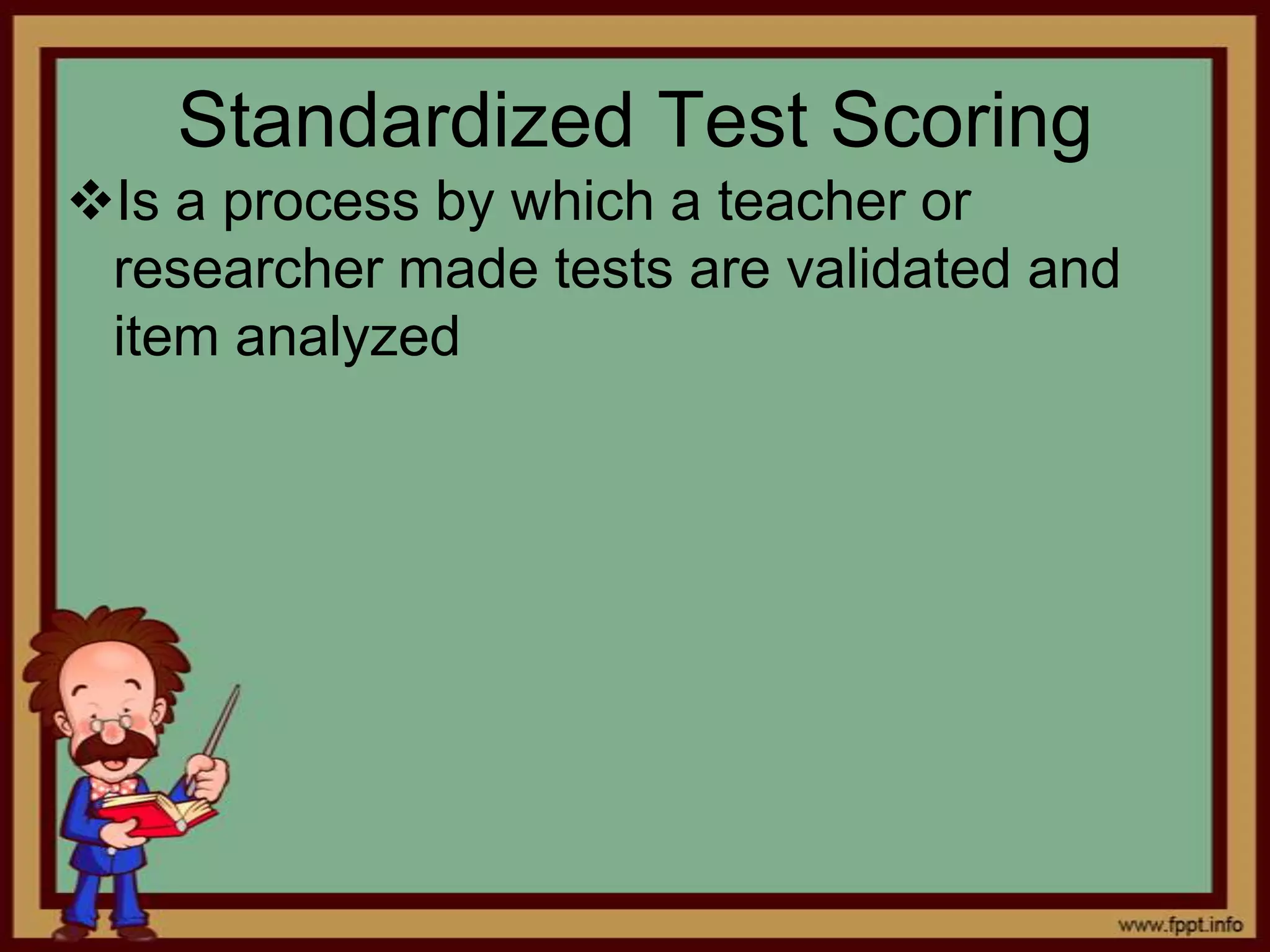
Standardized Test Scoring
Is a process by which a teacher or
researcher made tests are validated and
item analyzed
Two Types of Grading System
Used in the Philippines
1) Cumulative Grading System – the grade
of a student in a grading period equals his
current grading period grade equals his
current grading period grade which is
assumed to have the cumulative effects
of the previous grading periods
2) Averaging Grading System- the grade of
the student in a particular grading period
equals the average of the grades obtained
in the prior grading periods and the
current grading period.

Grading system

  • 1.
  • 2.
  • 3.
    Process: • Multiply theGrades to the Number of Units. • Get the average of Grades and the number of units • Divide its average to the total units (23)
  • 4.
  • 5.
    Decision Making- perhapsthe most critical teaching skills * The key to being a good teacher lies in the decisions that the teachers make.
  • 6.
    Roles of Grading 1.Evaluation – the grade claims to be valid, fair and trustworthy judgment about the quality of the students work 2. Communication – the grade communicates the teachers judgment of the students work 3. Motivation- because it affects the time and effort students spend, grading is a powerful part of the motivational structure of a course
  • 7.
    4. Organization –a grade helps mark transitions, bring closure and focus efforts for both teachers and students Teachers need to : • Establish clear and thoughtful criteria and standards to students work • Exercise professional judgment
  • 8.
    Two Conflicting rolesof teaching • Coaches • Judges * Teachers themselves are often judged by the grades they give
  • 9.
    Two types ofGrading  Norm Referenced Grading or Reflect Relative Performance - compare an examinee’s performance to that of other examinees. Criterion Referenced Grading or Reflect Absolute Performance - each examinee’s performance is compared to a pre-defined set of criteria or a standard.
  • 10.
    Grading System fromSDCA Grade %Equivalent 1.00……….. 98-100 1.25……….. 95-97 1.50……….. 92-94 1.75……….. 89-91 2.00……….. 86-88 2.25……….. 83-85 2.50……….. 80-82 2.75……….. 77-79 3.00……….. 75-76 5.00……….. Below 75 Interpretation Excellent Superior Very Good Good Very Satisfactory Satisfactory Average Fair Passed Failed
  • 11.
    Grading System FromCVSU Grade 1.00……….. 1.25……….. 1.50……….. 1.75……….. 2.00……….. 2.25……….. 2.50……….. 2.75……….. 3.00……….. 5.00……….. %Equivalent 95 93 90 89 85 83 80 78 75 FAILED Interpretation Excellent Superior Very Good Good Very Satisfactory Satisfactory Average Fair Passed Failed
  • 12.
    Grading System fromSDCA Grade %Equivalent 1.00……….. 98-100 1.25……….. 95-97 1.50……….. 92-94 1.75……….. 89-91 2.00……….. 86-88 2.25……….. 83-85 2.50……….. 80-82 2.75……….. 77-79 3.00……….. 75-76 5.00……..Below 75 Interpretation Excellent Superior Very Good Good Very Satisfactory Satisfactory Average Fair Passed Failed Grading System From CVSU Grade 1.00……….. 1.25……….. 1.50……….. 1.75……….. 2.00……….. 2.25……….. 2.50……….. 2.75……….. 3.00……….. %Equivalent 95 93 90 89 85 83 80 78 75 Interpretation Excellent Very Good Good Satisfactory Passing Grade
  • 13.
    Four Questions inGrading 1. 2. 3. 4. (Corresponds to the Opinion of Ms. Svinicki) Should grades reflect absolute achievement level or achievement relative to others in the same class ? Should grades reflect achievement only or non academic components such as attitude, speed, and diligence? Should grade report status achieved or amount of growth? How can several grades on diverse skills combine to give a single mark?
  • 14.
    Standardized Test Scoring Isa process by which a teacher or researcher made tests are validated and item analyzed
  • 15.
    Two Types ofGrading System Used in the Philippines 1) Cumulative Grading System – the grade of a student in a grading period equals his current grading period grade equals his current grading period grade which is assumed to have the cumulative effects of the previous grading periods
  • 16.
    2) Averaging GradingSystem- the grade of the student in a particular grading period equals the average of the grades obtained in the prior grading periods and the current grading period.