• is a Swedish botanist
who developed a 7-level
(taxa) classification
system based on
similarities between
organisms
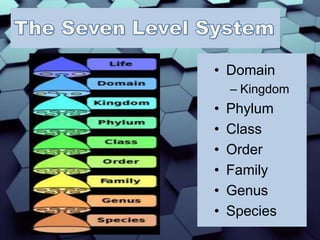
• Domain
– Kingdom
• Phylum
• Class
• Order
• Family
• Genus
• Species
• are the broadest taxonomic
classification of living organisms
• The three Domains:
• Archaea
• Bacteria
• Eukarya
• Archaea
–Archaebacteria
• Bacteria
–Eubacteria
• Eukarya
–Protist
–Fungi
–Plantae
–Animalia
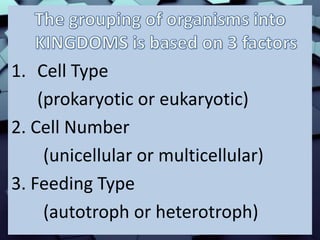
1. Cell Type
(prokaryotic or eukaryotic)
2. Cell Number
(unicellular or multicellular)
3. Feeding Type
(autotroph or heterotroph)
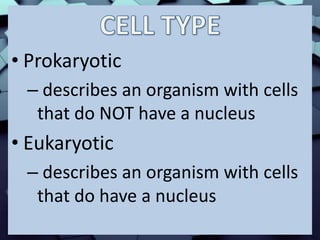
• Prokaryotic
– describes an organism with cells
that do NOT have a nucleus
• Eukaryotic
– describes an organism with cells
that do have a nucleus
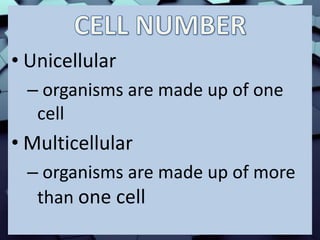
• Unicellular
– organisms are made up of one
cell
• Multicellular
– organisms are made up of more
than one cell
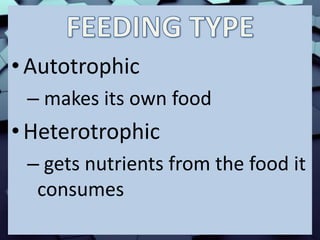
•Autotrophic
– makes its own food
•Heterotrophic
– gets nutrients from the food it
consumes
“extreme bacteria”
• Cell Type
–Unicellular
• Cellular Organization
–Prokaryotic
• Mode of nutrition
–Autotrophic or Heterotrophic
Means that some species are autotrophs and
some are heterotrophs
“extreme bacteria”
• Reproduction
– asexual
• Cell Wall
– cell walls without peptidoglycan
• Habitat
– live in extreme habitats such as hot springs, geysers,
volcanic hot pools, brine pools, black smokers
“extreme bacteria”
• Archaebacteria can live deep in the
ocean near geothermal vents called
black smokers
• There is no light, so they carry out
chemosynthesis instead of
photosynthesis
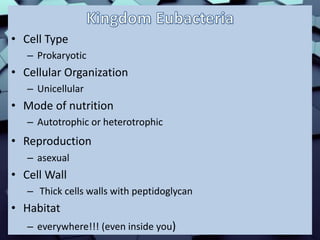
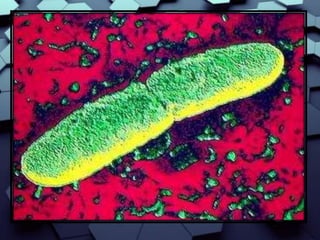
• Cell Type
– Prokaryotic
• Cellular Organization
– Unicellular
• Mode of nutrition
– Autotrophic or heterotrophic
• Reproduction
– asexual
• Cell Wall
– Thick cells walls with peptidoglycan
• Habitat
– everywhere!!! (even inside you)
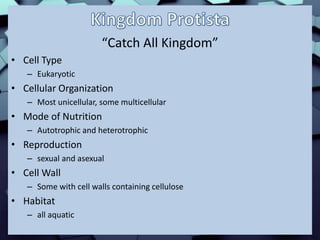
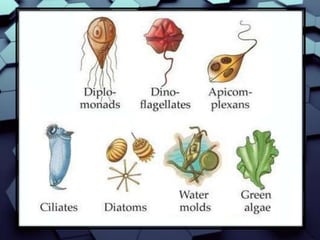
“Catch All Kingdom”
• Cell Type
– Eukaryotic
• Cellular Organization
– Most unicellular, some multicellular
• Mode of Nutrition
– Autotrophic and heterotrophic
• Reproduction
– sexual and asexual
• Cell Wall
– Some with cell walls containing cellulose
• Habitat
– all aquatic
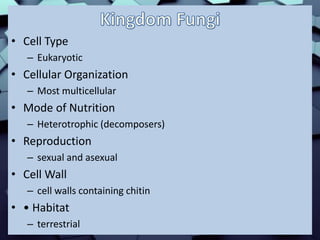
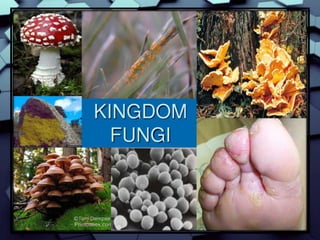
• Cell Type
– Eukaryotic
• Cellular Organization
– Most multicellular
• Mode of Nutrition
– Heterotrophic (decomposers)
• Reproduction
– sexual and asexual
• Cell Wall
– cell walls containing chitin
• • Habitat
– terrestrial
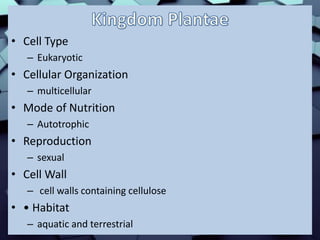
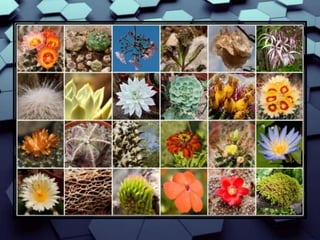
• Cell Type
– Eukaryotic
• Cellular Organization
– multicellular
• Mode of Nutrition
– Autotrophic
• Reproduction
– sexual
• Cell Wall
– cell walls containing cellulose
• • Habitat
– aquatic and terrestrial
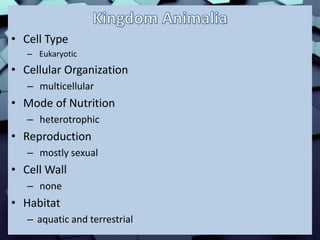
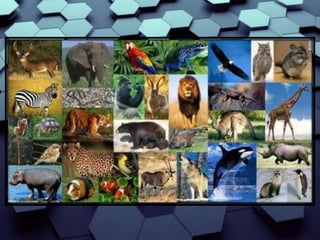
• Cell Type
– Eukaryotic
• Cellular Organization
– multicellular
• Mode of Nutrition
– heterotrophic
• Reproduction
– mostly sexual
• Cell Wall
– none
• Habitat
– aquatic and terrestrial
Taxonomy
Taxonomy

Taxonomy

  • 3.
    • is aSwedish botanist who developed a 7-level (taxa) classification system based on similarities between organisms
  • 4.
    • Domain – Kingdom •Phylum • Class • Order • Family • Genus • Species
  • 5.
    • are thebroadest taxonomic classification of living organisms • The three Domains: • Archaea • Bacteria • Eukarya
  • 6.
    • Archaea –Archaebacteria • Bacteria –Eubacteria •Eukarya –Protist –Fungi –Plantae –Animalia
  • 7.
    1. Cell Type (prokaryoticor eukaryotic) 2. Cell Number (unicellular or multicellular) 3. Feeding Type (autotroph or heterotroph)
  • 8.
    • Prokaryotic – describesan organism with cells that do NOT have a nucleus • Eukaryotic – describes an organism with cells that do have a nucleus
  • 9.
    • Unicellular – organismsare made up of one cell • Multicellular – organisms are made up of more than one cell
  • 10.
    •Autotrophic – makes itsown food •Heterotrophic – gets nutrients from the food it consumes
  • 11.
    “extreme bacteria” • CellType –Unicellular • Cellular Organization –Prokaryotic • Mode of nutrition –Autotrophic or Heterotrophic Means that some species are autotrophs and some are heterotrophs
  • 12.
    “extreme bacteria” • Reproduction –asexual • Cell Wall – cell walls without peptidoglycan • Habitat – live in extreme habitats such as hot springs, geysers, volcanic hot pools, brine pools, black smokers
  • 13.
    “extreme bacteria” • Archaebacteriacan live deep in the ocean near geothermal vents called black smokers • There is no light, so they carry out chemosynthesis instead of photosynthesis
  • 15.
    • Cell Type –Prokaryotic • Cellular Organization – Unicellular • Mode of nutrition – Autotrophic or heterotrophic • Reproduction – asexual • Cell Wall – Thick cells walls with peptidoglycan • Habitat – everywhere!!! (even inside you)
  • 17.
    “Catch All Kingdom” •Cell Type – Eukaryotic • Cellular Organization – Most unicellular, some multicellular • Mode of Nutrition – Autotrophic and heterotrophic • Reproduction – sexual and asexual • Cell Wall – Some with cell walls containing cellulose • Habitat – all aquatic
  • 19.
    • Cell Type –Eukaryotic • Cellular Organization – Most multicellular • Mode of Nutrition – Heterotrophic (decomposers) • Reproduction – sexual and asexual • Cell Wall – cell walls containing chitin • • Habitat – terrestrial
  • 21.
    • Cell Type –Eukaryotic • Cellular Organization – multicellular • Mode of Nutrition – Autotrophic • Reproduction – sexual • Cell Wall – cell walls containing cellulose • • Habitat – aquatic and terrestrial
  • 23.
    • Cell Type –Eukaryotic • Cellular Organization – multicellular • Mode of Nutrition – heterotrophic • Reproduction – mostly sexual • Cell Wall – none • Habitat – aquatic and terrestrial