Classifying LifeClassifying Life
 There are over 2 million known speciesThere are over 2 million known species
of organisms.of organisms.
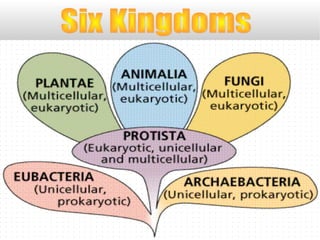
 All life is classified into 6 majorAll life is classified into 6 major
kingdoms.kingdoms.
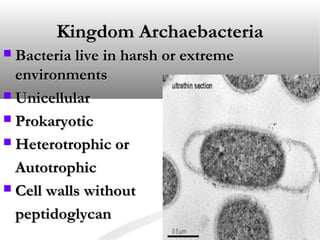
Kingdom ArchaebacteriaKingdom Archaebacteria
 Bacteria live in harsh or extremeBacteria live in harsh or extreme
environmentsenvironments
 UnicellularUnicellular
 ProkaryoticProkaryotic
 Heterotrophic orHeterotrophic or
AutotrophicAutotrophic
 Cell walls withoutCell walls without
peptidoglycanpeptidoglycan
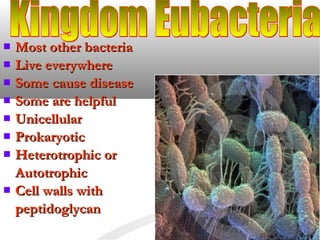
 Most other bacteriaMost other bacteria
 Live everywhereLive everywhere
 Some cause diseaseSome cause disease
 Some are helpfulSome are helpful
 UnicellularUnicellular
 ProkaryoticProkaryotic
 Heterotrophic orHeterotrophic or
AutotrophicAutotrophic
 Cell walls withCell walls with
peptidoglycanpeptidoglycan
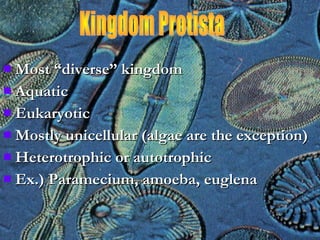
 Most “diverse” kingdomMost “diverse” kingdom
 AquaticAquatic
 EukaryoticEukaryotic
 Mostly unicellular (algae are the exception)Mostly unicellular (algae are the exception)
 Heterotrophic or autotrophicHeterotrophic or autotrophic
 Ex.) Paramecium, amoeba, euglenaEx.) Paramecium, amoeba, euglena
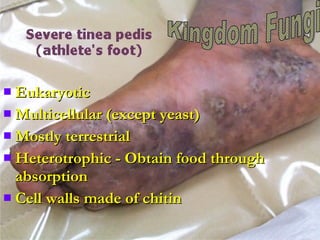
 EukaryoticEukaryotic
 Multicellular (except yeast)Multicellular (except yeast)
 Mostly terrestrialMostly terrestrial
 Heterotrophic - Obtain food throughHeterotrophic - Obtain food through
absorptionabsorption
 Cell walls made of chitinCell walls made of chitin
 Eukaryotic and multicellularEukaryotic and multicellular
 Cell walls made ofCell walls made of cellulosecellulose
 AutotrophicAutotrophic
 ChloroplastsChloroplasts
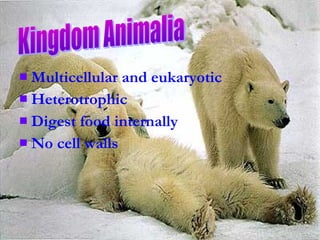
 Multicellular and eukaryotic
 Heterotrophic
 Digest food internally
 No cell walls
 What do the following words have in common?What do the following words have in common?
 chien, inu, perro.chien, inu, perro.
 In science, each species is given a “scientificIn science, each species is given a “scientific
name.”name.”
 Ex.)Ex.) Canis familiarisCanis familiaris (scientific name for dog).(scientific name for dog).
 UniversalUniversal
 Latin.Latin.
 System of naming called “binomial nomenclature”System of naming called “binomial nomenclature”
 Carolus LinnaeusCarolus Linnaeus
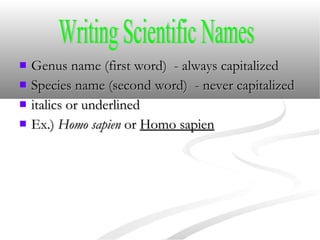
 Genus name (first word) - always capitalizedGenus name (first word) - always capitalized
 Species name (second word) - never capitalizedSpecies name (second word) - never capitalized
 italics or underlineditalics or underlined
 Ex.)Ex.) Homo sapienHomo sapien oror Homo sapienHomo sapien
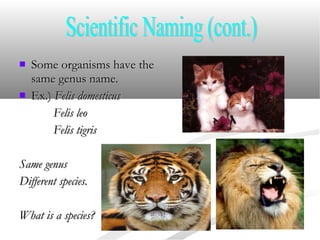
 Some organisms have theSome organisms have the
same genus name.same genus name.
 Ex.)Ex.) Felis domesticusFelis domesticus
Felis leoFelis leo
Felis tigrisFelis tigris
Same genusSame genus
Different species.Different species.
What is a species?What is a species?

Classifying life

  • 2.
    Classifying LifeClassifying Life There are over 2 million known speciesThere are over 2 million known species of organisms.of organisms.  All life is classified into 6 majorAll life is classified into 6 major kingdoms.kingdoms.
  • 4.
    Kingdom ArchaebacteriaKingdom Archaebacteria Bacteria live in harsh or extremeBacteria live in harsh or extreme environmentsenvironments  UnicellularUnicellular  ProkaryoticProkaryotic  Heterotrophic orHeterotrophic or AutotrophicAutotrophic  Cell walls withoutCell walls without peptidoglycanpeptidoglycan
  • 5.
     Most otherbacteriaMost other bacteria  Live everywhereLive everywhere  Some cause diseaseSome cause disease  Some are helpfulSome are helpful  UnicellularUnicellular  ProkaryoticProkaryotic  Heterotrophic orHeterotrophic or AutotrophicAutotrophic  Cell walls withCell walls with peptidoglycanpeptidoglycan
  • 6.
     Most “diverse”kingdomMost “diverse” kingdom  AquaticAquatic  EukaryoticEukaryotic  Mostly unicellular (algae are the exception)Mostly unicellular (algae are the exception)  Heterotrophic or autotrophicHeterotrophic or autotrophic  Ex.) Paramecium, amoeba, euglenaEx.) Paramecium, amoeba, euglena
  • 7.
     EukaryoticEukaryotic  Multicellular(except yeast)Multicellular (except yeast)  Mostly terrestrialMostly terrestrial  Heterotrophic - Obtain food throughHeterotrophic - Obtain food through absorptionabsorption  Cell walls made of chitinCell walls made of chitin
  • 8.
     Eukaryotic andmulticellularEukaryotic and multicellular  Cell walls made ofCell walls made of cellulosecellulose  AutotrophicAutotrophic  ChloroplastsChloroplasts
  • 9.
     Multicellular andeukaryotic  Heterotrophic  Digest food internally  No cell walls
  • 10.
     What dothe following words have in common?What do the following words have in common?  chien, inu, perro.chien, inu, perro.
  • 11.
     In science,each species is given a “scientificIn science, each species is given a “scientific name.”name.”  Ex.)Ex.) Canis familiarisCanis familiaris (scientific name for dog).(scientific name for dog).  UniversalUniversal  Latin.Latin.  System of naming called “binomial nomenclature”System of naming called “binomial nomenclature”  Carolus LinnaeusCarolus Linnaeus
  • 12.
     Genus name(first word) - always capitalizedGenus name (first word) - always capitalized  Species name (second word) - never capitalizedSpecies name (second word) - never capitalized  italics or underlineditalics or underlined  Ex.)Ex.) Homo sapienHomo sapien oror Homo sapienHomo sapien
  • 13.
     Some organismshave theSome organisms have the same genus name.same genus name.  Ex.)Ex.) Felis domesticusFelis domesticus Felis leoFelis leo Felis tigrisFelis tigris Same genusSame genus Different species.Different species. What is a species?What is a species?