• As livingthings are
constantly being
investigated, new
attributes are
revealed that affect
how organisms are
placed in a standard
classification system.
3.
• The groupingof organisms into
KINGDOMS is based on 3 factors:
⚬1. Cell Type (prokaryotic or
eukaryotic)
⚬2. Cell Number (unicellular or
multicellular)
⚬3. Feeding Type (autotroph or
heterotroph)
4.
1. Cell Type-The presence or
absence of cellular structures
such as the nucleus,
mitochondria, or a cell wall
Prokaryotes or Eukaryotes
3ʳᵈ Criteria forKingdom Divisions
Feeding Type - How the organisms get their food
⚬Autotroph or Producer
Make their own food
⚬Heterotroph or Consumer
Must eat other organisms to survive
Includes decomposers – those that eat
dead matter!
13.
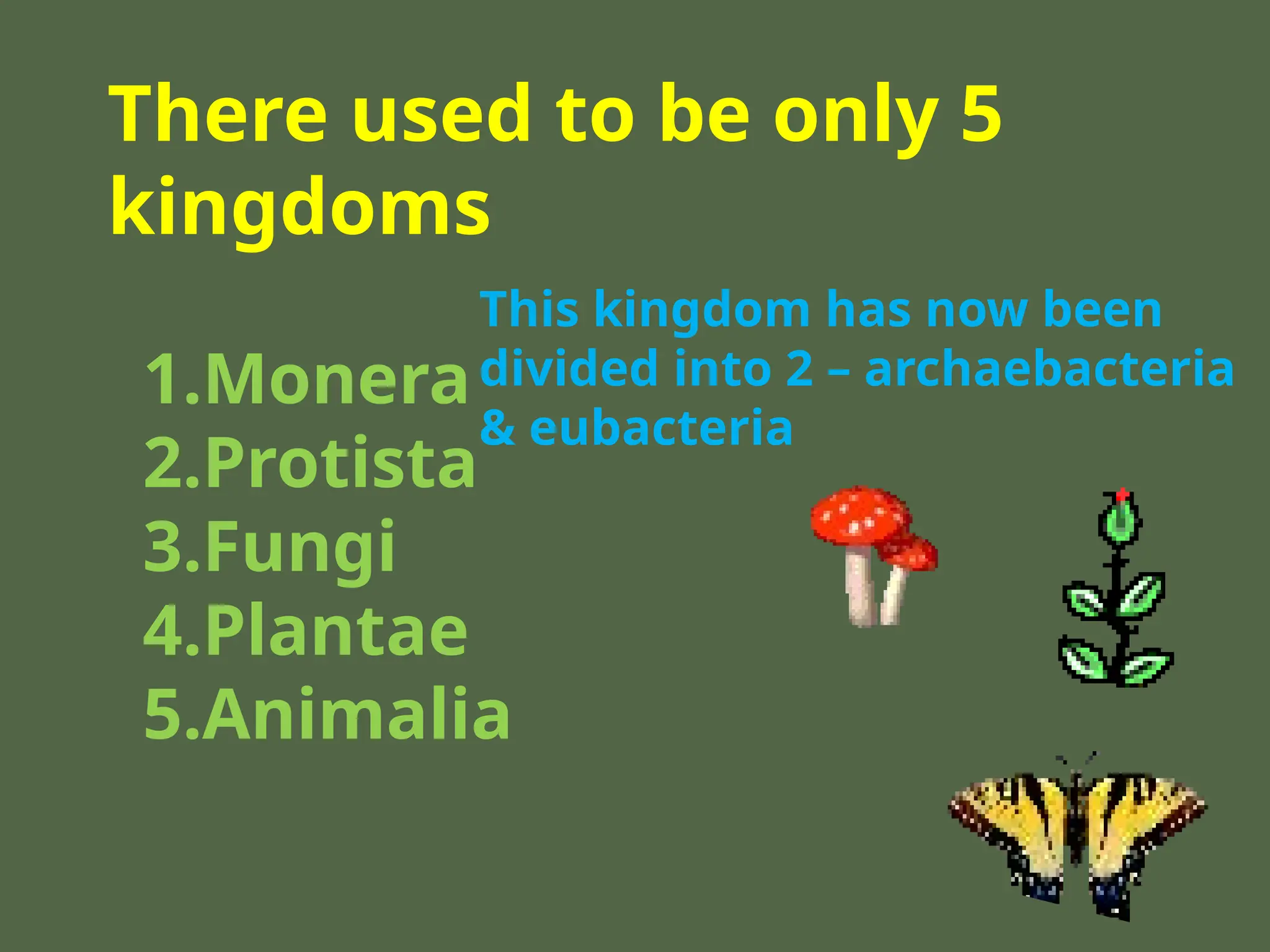
There used tobe only 5
kingdoms
1.Monera
2.Protista
3.Fungi
4.Plantae
5.Animalia
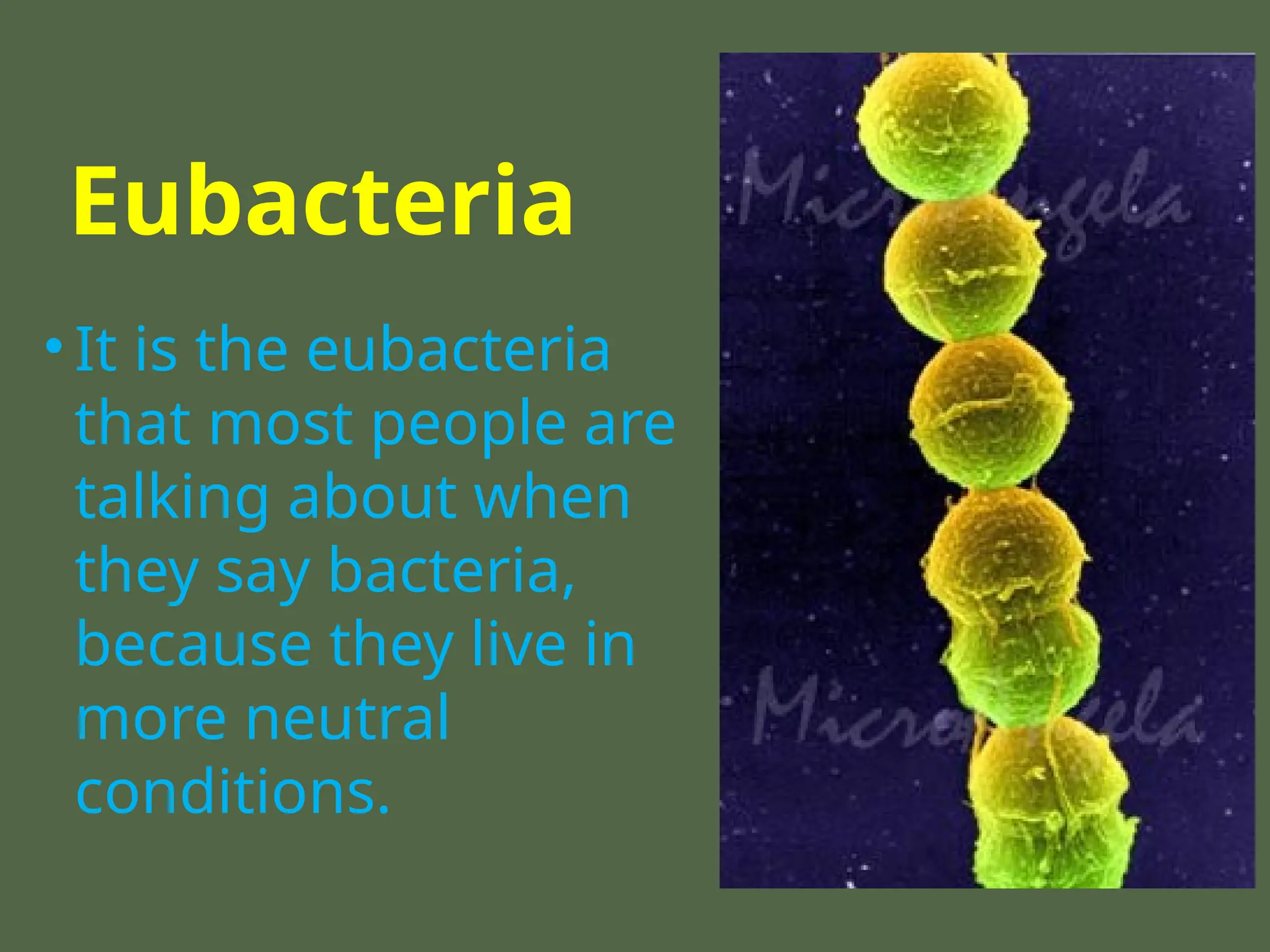
This kingdom has now been
divided into 2 – archaebacteria
& eubacteria
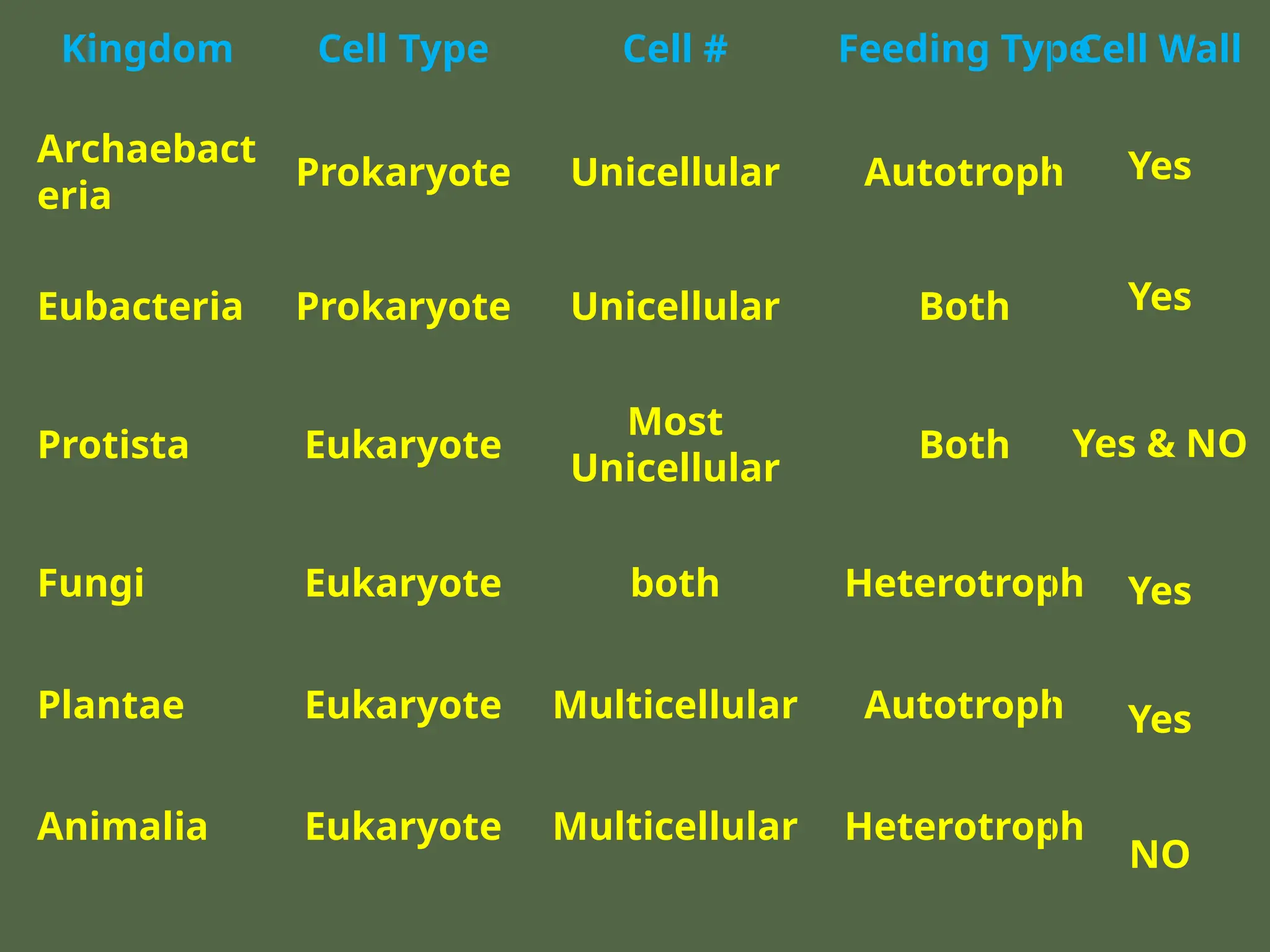
Kingdom Cell TypeCell # Feeding Type
Archaebact
eria
Prokaryote Unicellular Autotroph
Eubacteria Prokaryote Unicellular Both
Protista Eukaryote
Most
Unicellular
Both
Fungi Eukaryote both Heterotroph
Plantae Eukaryote Multicellular Autotroph
Animalia Eukaryote Multicellular Heterotroph
Cell Wall
Yes
Yes
Yes & NO
Yes
Yes
NO
16.
Moneran Protist FungusPlant Animal
One-celled
Has a
nucleus
more
complex
than
monera
Most are
many-
celled
Many-
celled
Vertebrates
invertebrates
Many-
Celled
2 main
Groups
Vascular
Non-
vascular
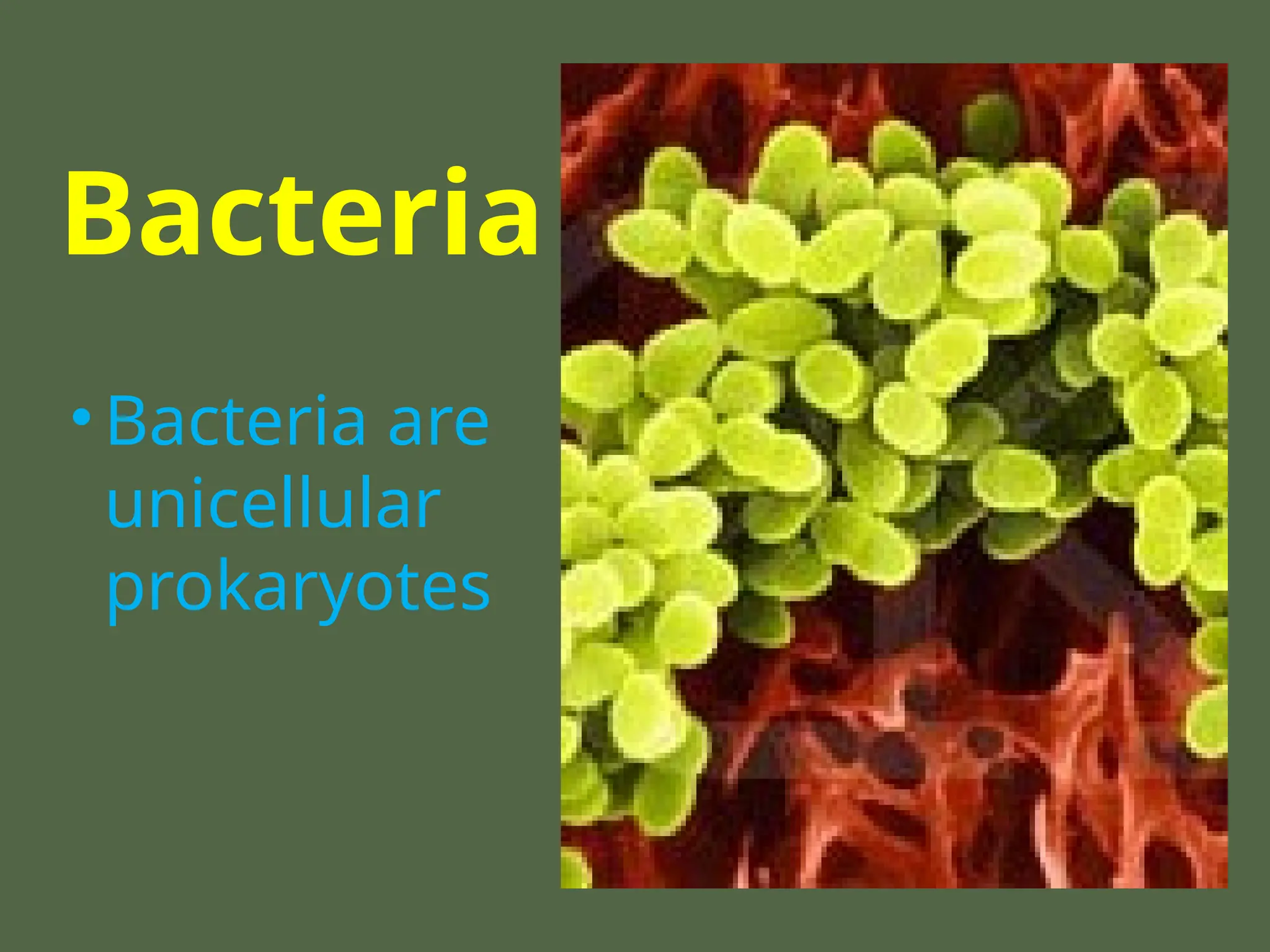
Bacteria Paramecium
One-celled
with no
membrane
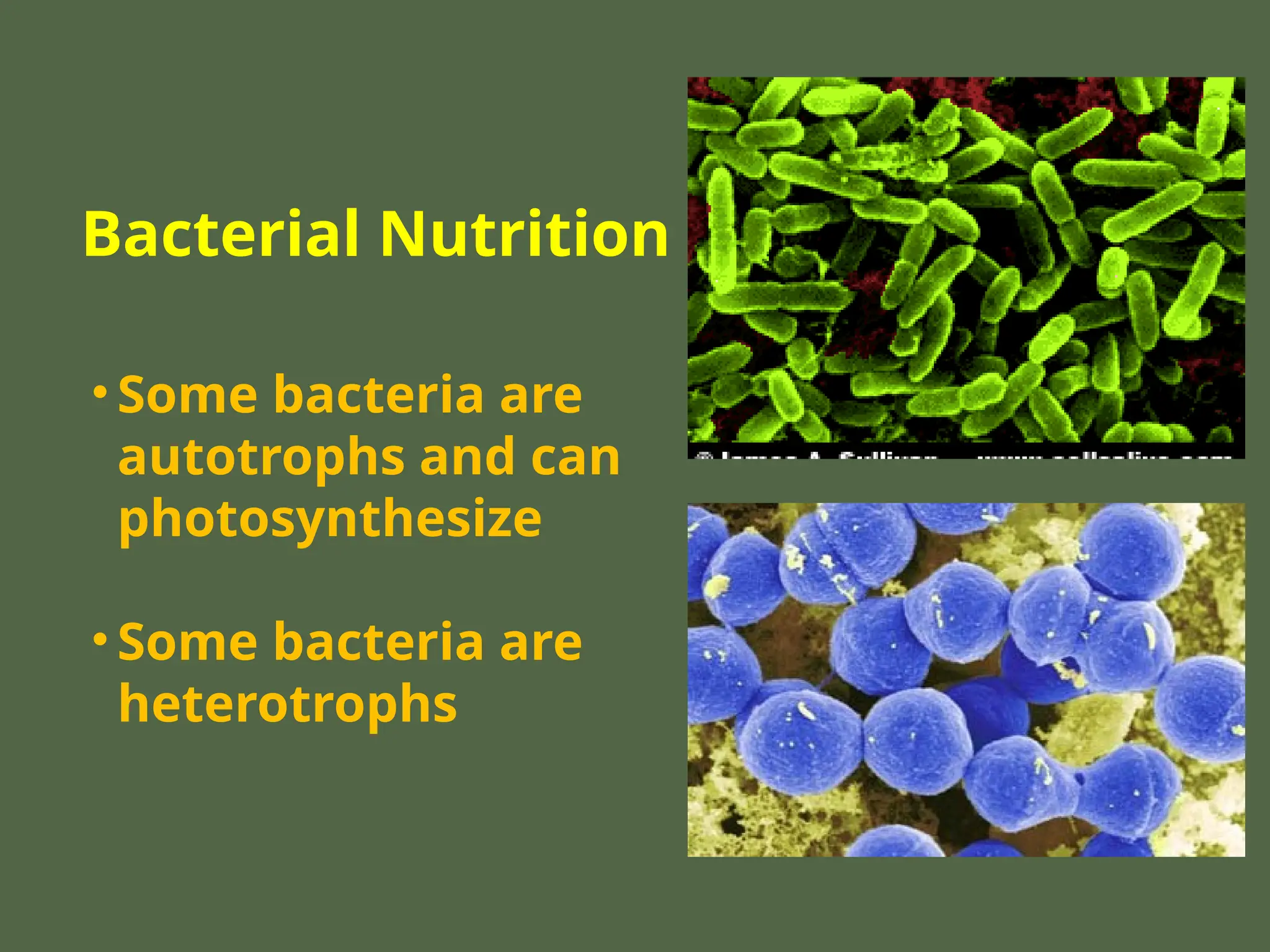
Bacterial Nutrition
• Somebacteria are
autotrophs and can
photosynthesize
• Some bacteria are
heterotrophs
28.
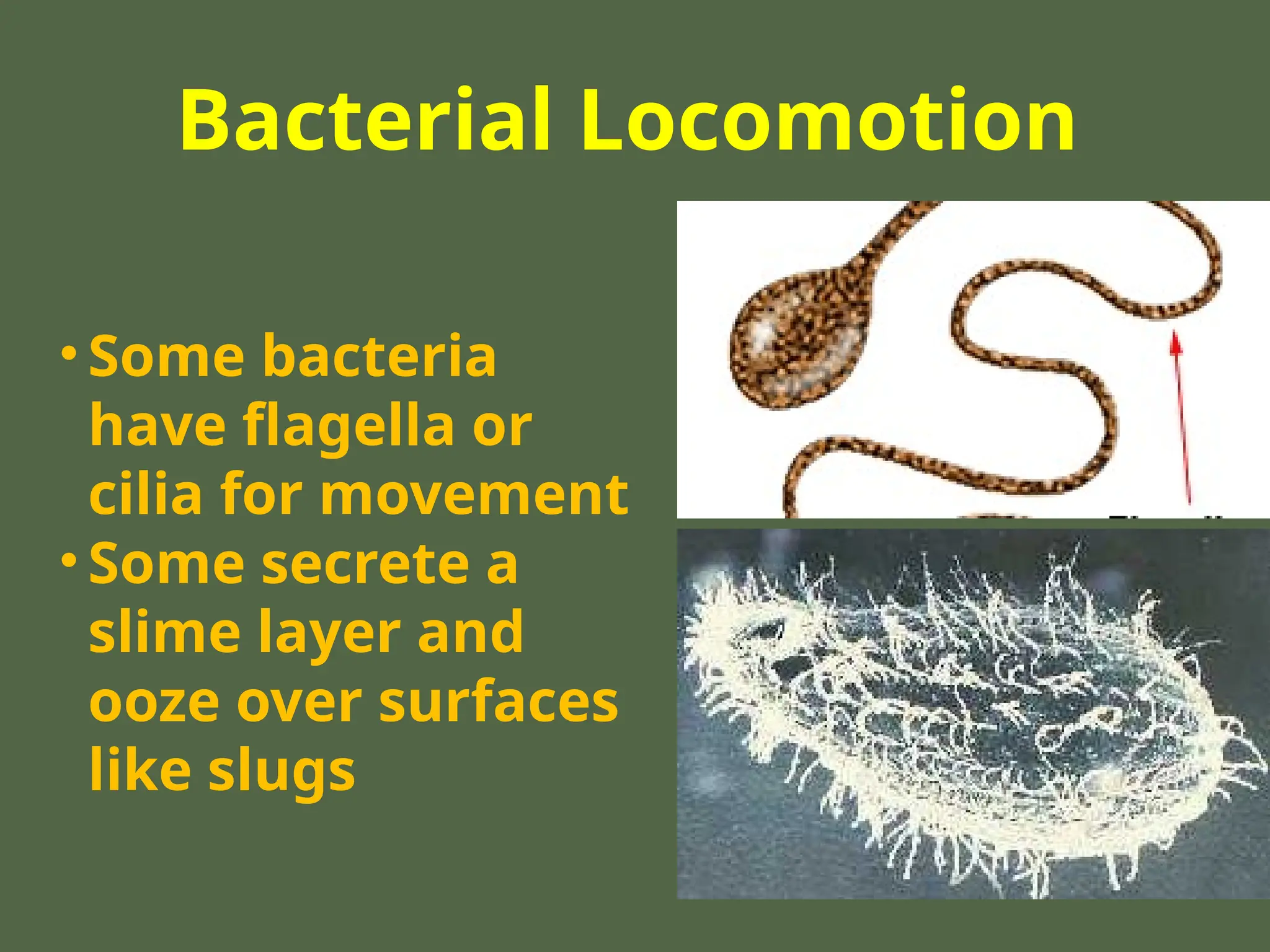
Bacterial Locomotion
• Somebacteria
have flagella or
cilia for movement
• Some secrete a
slime layer and
ooze over surfaces
like slugs
29.
Protists
• Protists includemany
widely ranging
microbes, including
slime molds, protozoa
and primitive algae.
Odds & Ends
Kingdom
30.
Protista Kingdom
• Thereare animal-like, fungus-like,
and plant-like protists
• Some are beneficial
• Some protists can cause diseases in
humans, such as:
31.
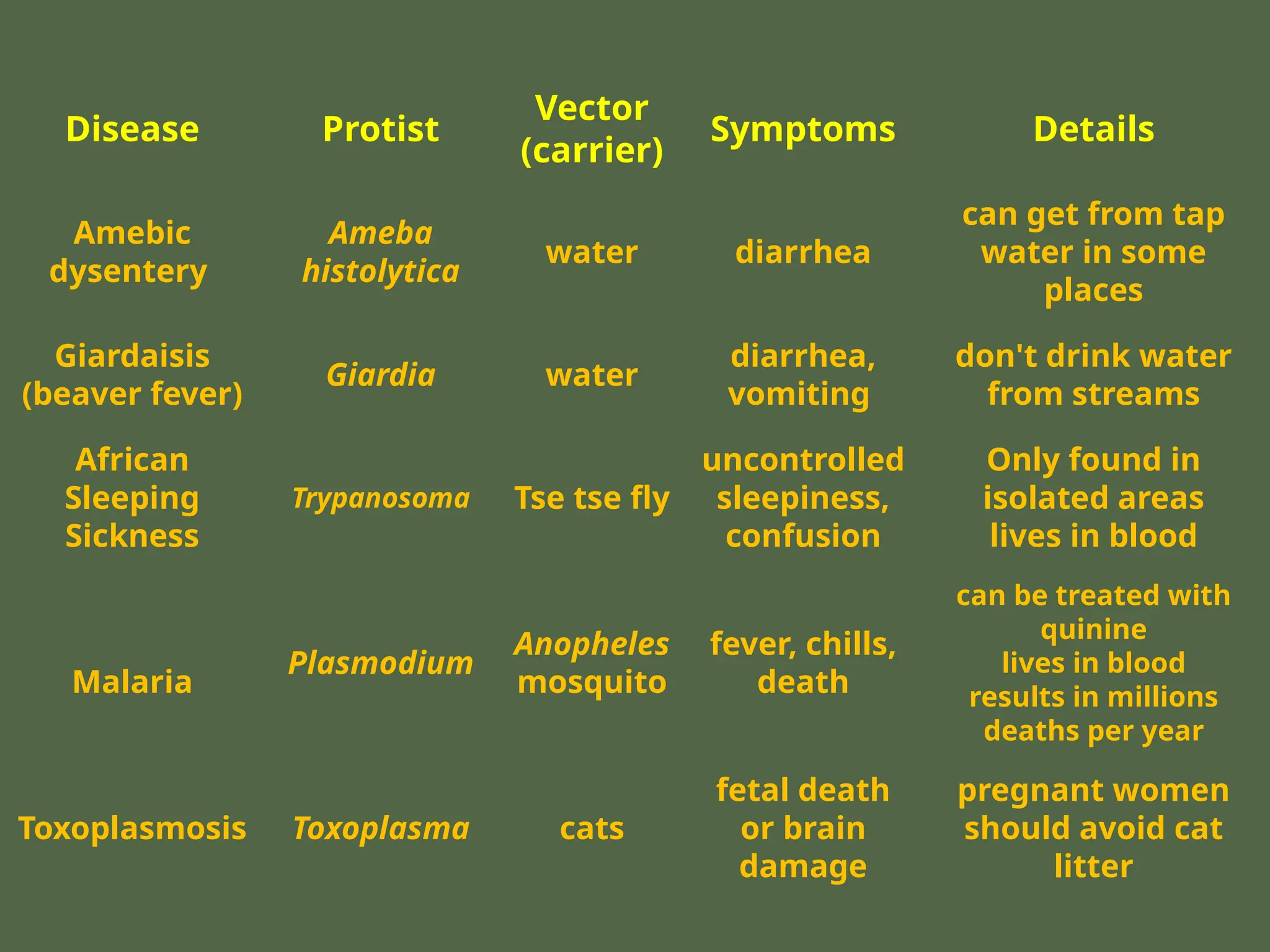
Disease Protist
Vector
(carrier)
Symptoms Details
Amebic
dysentery
Ameba
histolytica
waterdiarrhea
can get from tap
water in some
places
Giardaisis
(beaver fever)
Giardia water
diarrhea,
vomiting
don't drink water
from streams
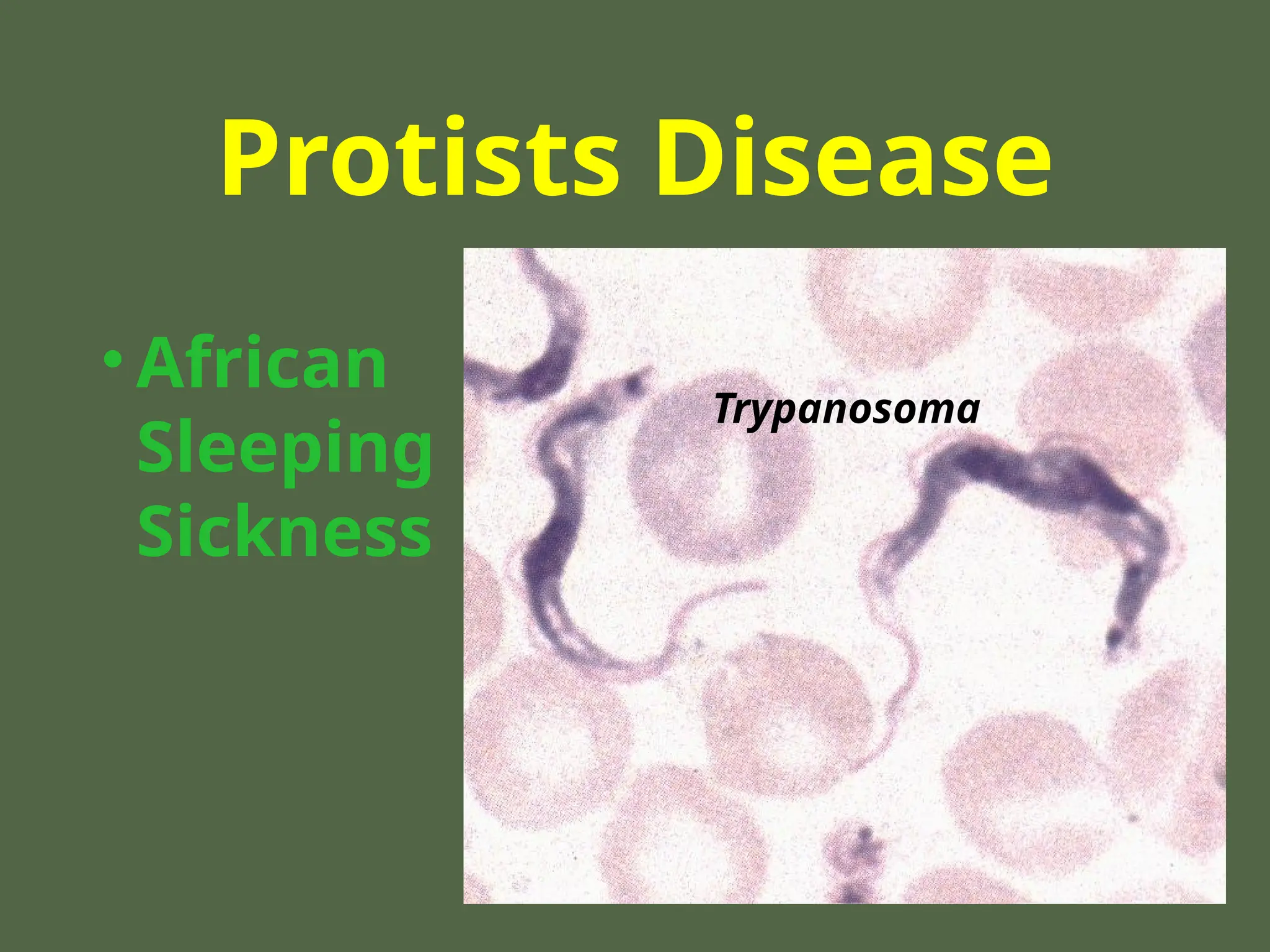
African
Sleeping
Sickness
Trypanosoma Tse tse fly
uncontrolled
sleepiness,
confusion
Only found in
isolated areas
lives in blood
Malaria
Plasmodium
Anopheles
mosquito
fever, chills,
death
can be treated with
quinine
lives in blood
results in millions
deaths per year
Toxoplasmosis Toxoplasma cats
fetal death
or brain
damage
pregnant women
should avoid cat
litter
Fungi Kingdom
• TheKingdom
Fungi includes
some of the most
important
organisms.
• By breaking down
dead organic
material, they
continue the cycle
of nutrients
through
ecosystems.
40.
Fungi
• All fungiare
eukaryotic
• They may be
unicellular or
multicellular
• All fungi have
a cell wall
Unicellular
(yeast)
Multicellular
41.
Fungi
• Fungi canbe very
helpful and
delicious
• Many antibacterial
drugs are derived
from fungi
Penicillin
42.
Fungi
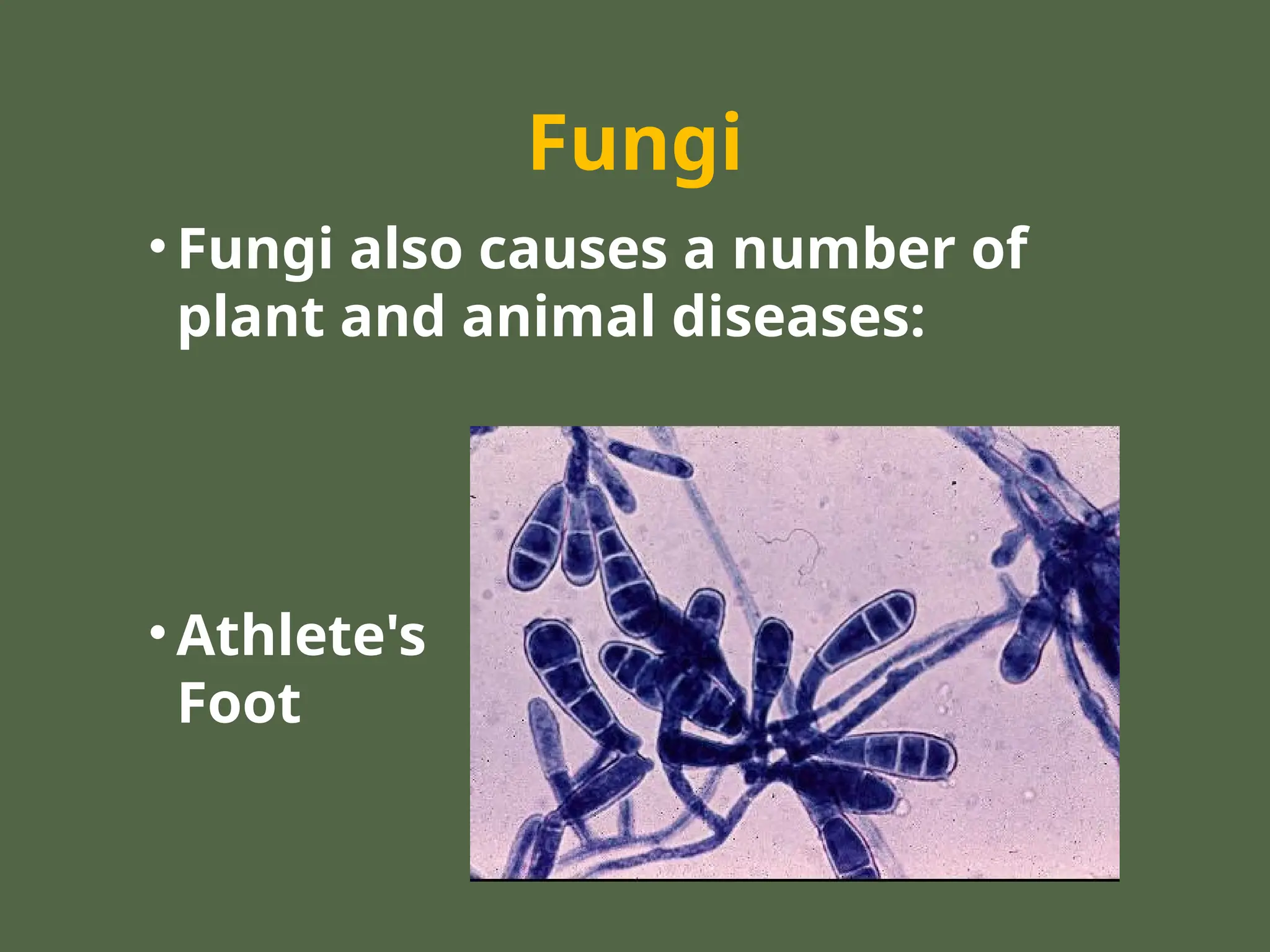
• Fungi alsocauses a number of
plant and animal diseases:
• Athlete's
Foot
Fungi Locomotion
• Fungiare
stationary
• They have root-
like structures
that they use for
attachment
45.
Fungi Nutrition
• Allfungi are
heterotrophs
- Saprophytes-get their
nutrients from dead organic
matter
- Mutualists – live
symbiotically
- Parasites – absorb from a
host, eventually killing the
host
46.
There are 4main types
of Fungi
(classified by how
they reproduce)
1.Zygospore
(Zygosporangia)
common bread molds
reproduce by “spores”-
asexual reproduction!
47.
There are 4main types of
Fungi
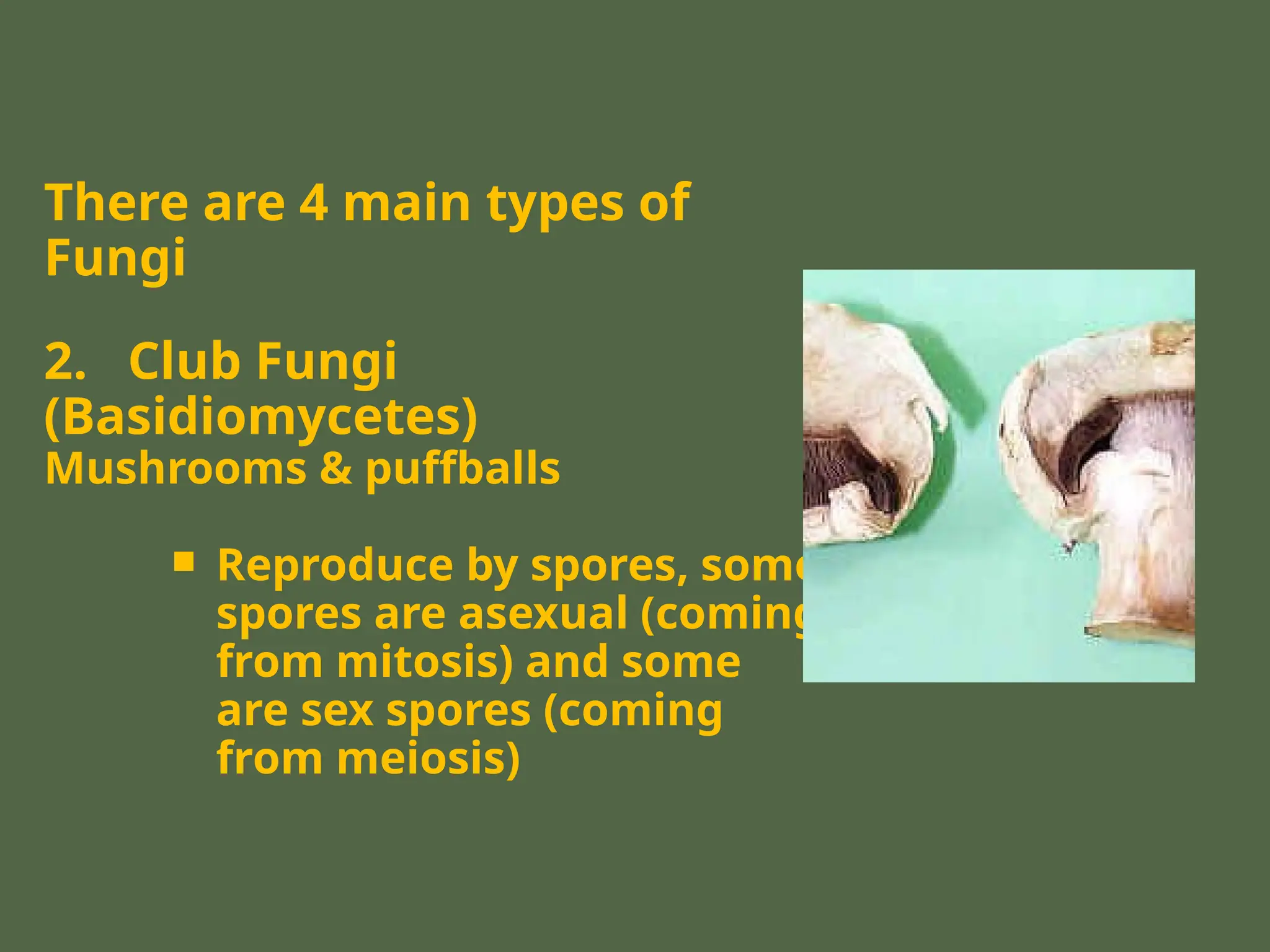
2. Club Fungi
(Basidiomycetes)
Mushrooms & puffballs
■ Reproduce by spores, some
spores are asexual (coming
from mitosis) and some
are sex spores (coming
from meiosis)
48.
There are 4main
types of Fungi
3. Sac Fungi
(Ascomycetes)
Yeast – reproduce by
“budding” = asexual
method
49.
There are 4main types of Fungi
4. Imperfect Fungi (Deuteromycetes)
Pharmaceutically
important!
⚬Fungi on oranges from
which penicillin is
extracted
COMMERCIALLY important!
⚬Fungi accounts for the
blue vein in blue cheese!
⚬Used to make soy sauce.
50.
Plant Kingdom
• Allplants are
multicellular,
their cells
having a cell
wall, and…
• they are
autotrophs
51.
• 4 importantplant groups
are the:
Mosses
(Bryophytes)
Ferns
(Pteridophytes)
Conifers
(Gymnosperms)
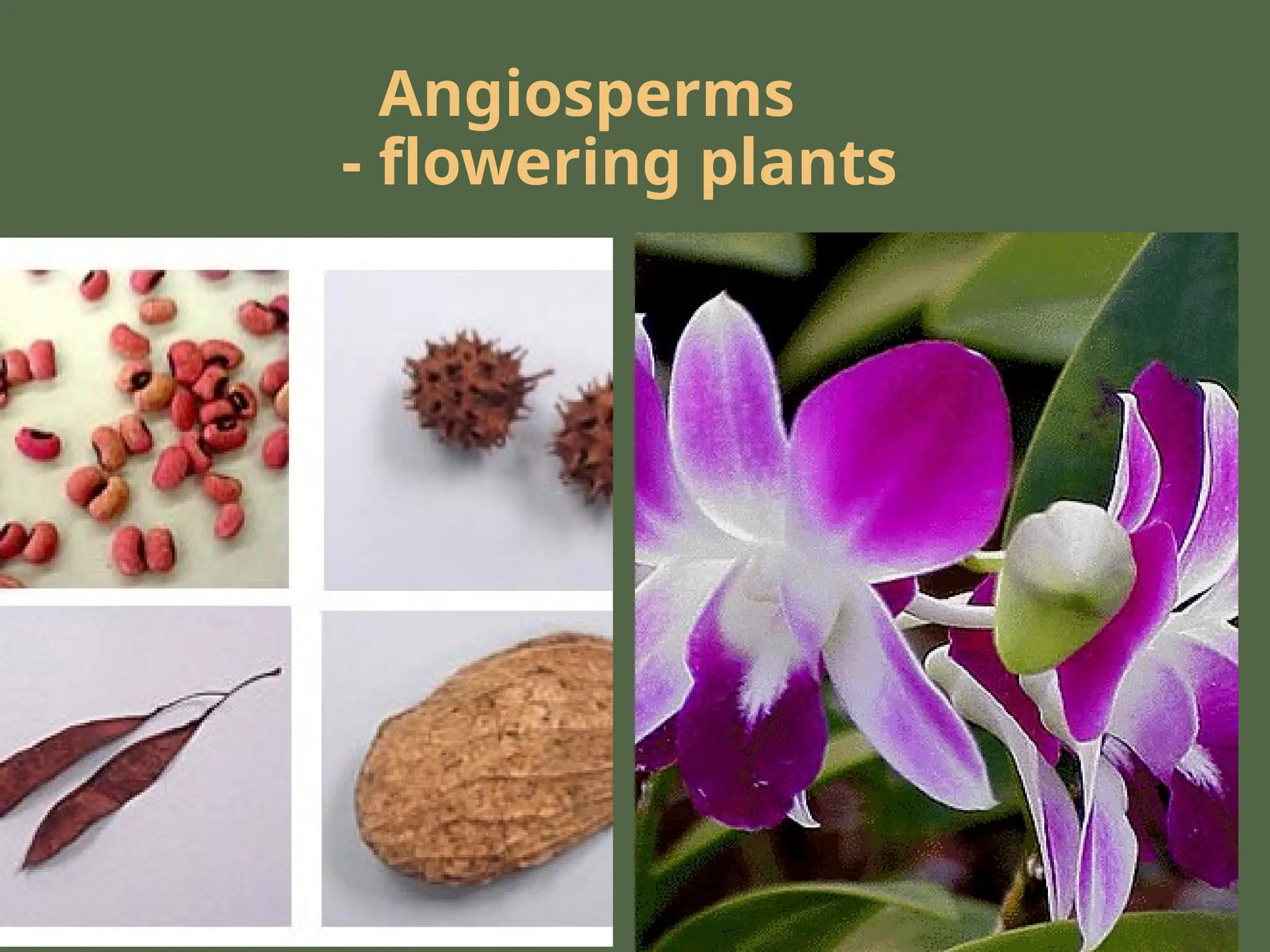
Flowering Plants
(Angiosperms)
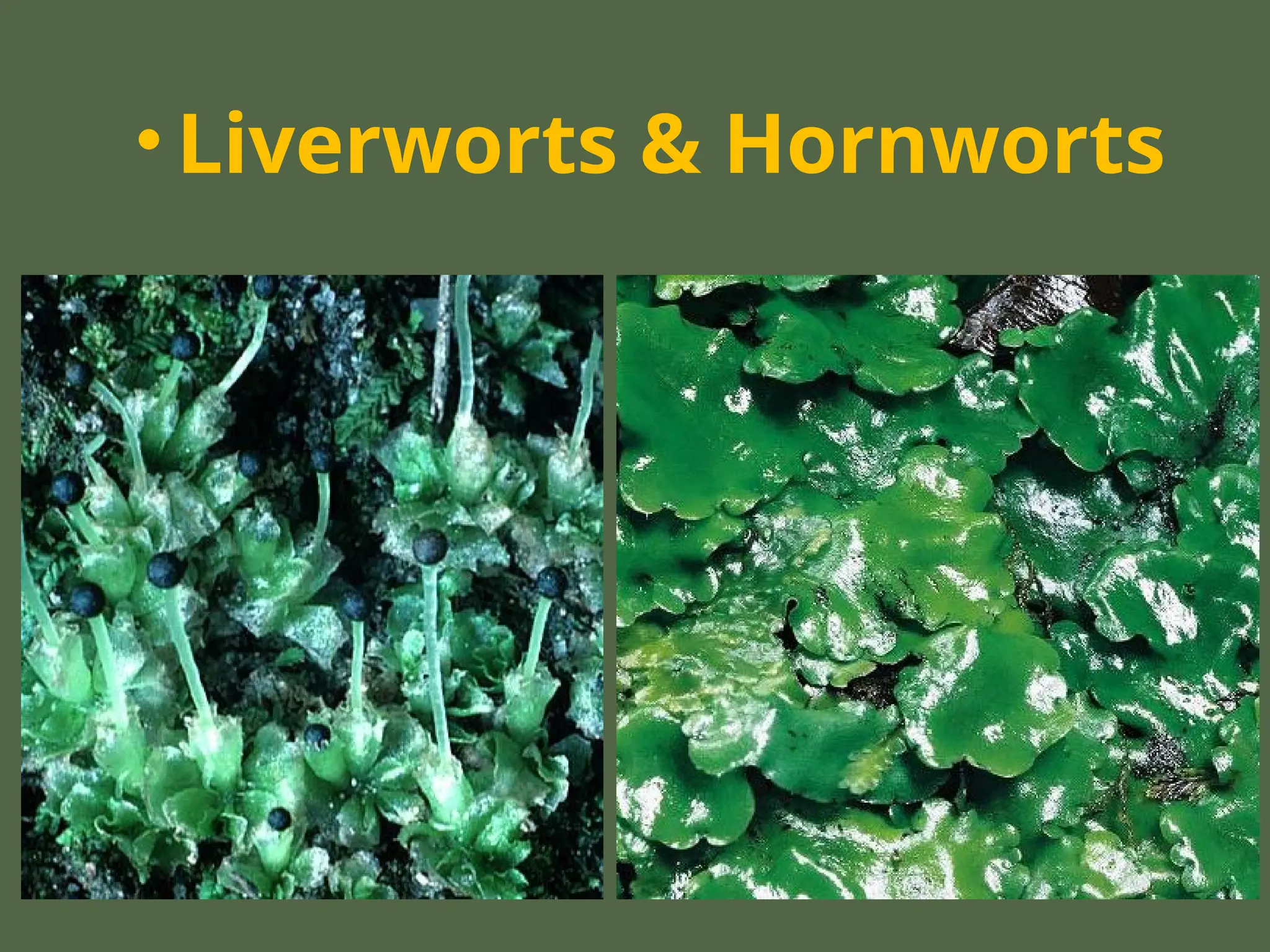
Non-vascular
Vascular
52.
• Nonvascular Plants-
Mosses
• the simplest of all land dwelling
plants
• lack an internal means for water
transportation
• do not produce seeds or flowers
- fertilization depends on water medium
to get the sperm to the egg.
• lack a woody tissue necessary for
support around their “stems” and so
are usually relatively short
• Vascular Plants
•Internal transportation System
⚬ Xylem – water carrying tubes
⚬ Phloem – sugar carrying tissues
⚬ enables plants to evolve into
larger specimens.
• Produce Seeds – protects and
nourishes an Embryo of the
new plant
Animalia Kingdom
All animalsare:
• Multicellular: cells
lacking a cell wall -
Heterotrophs
• Capable of movement at
some point in their lives.
59.
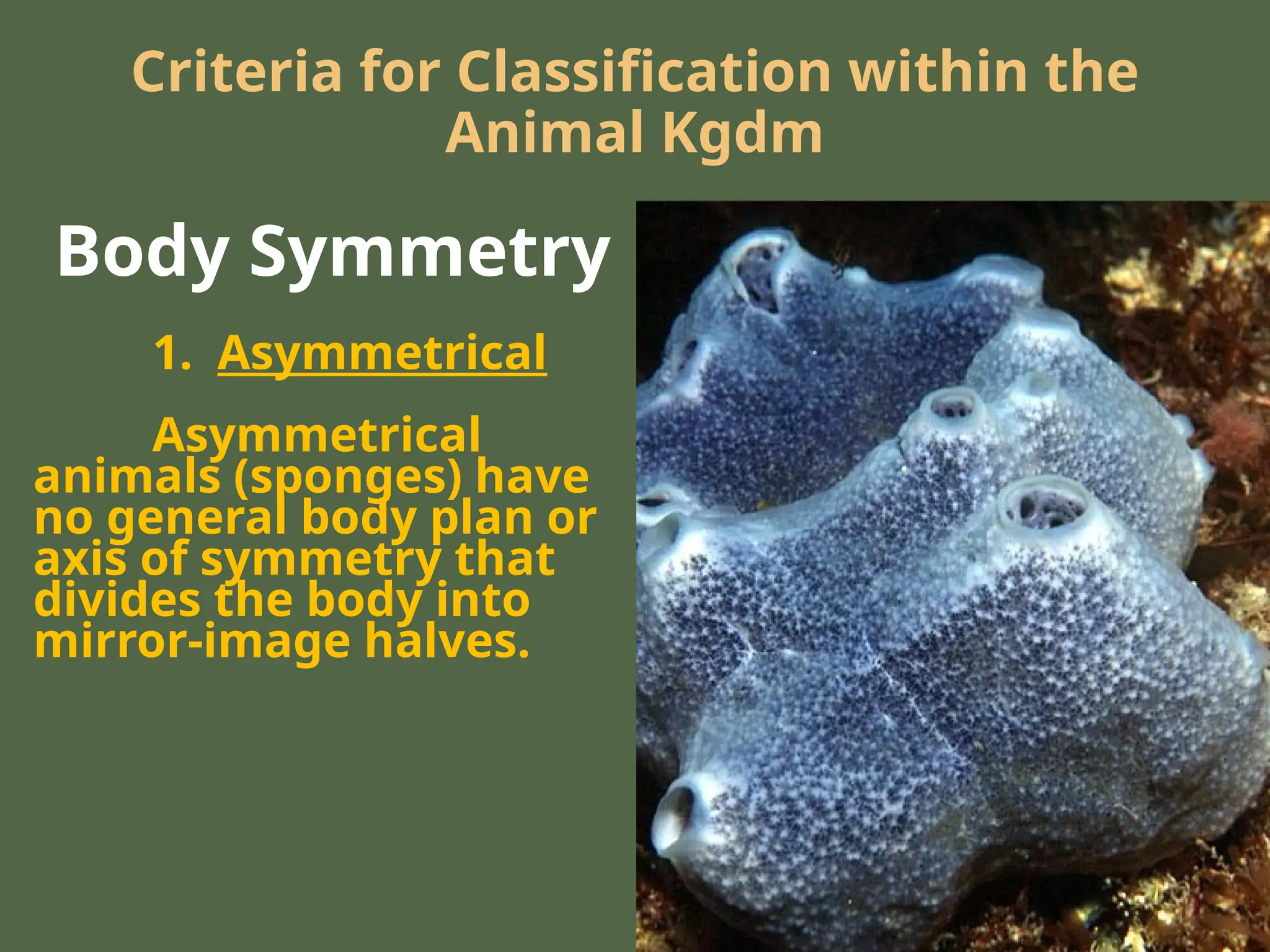
1. Asymmetrical
Asymmetrical
animals (sponges)have
no general body plan or
axis of symmetry that
divides the body into
mirror-image halves.
Criteria for Classification within the
Animal Kgdm
Body Symmetry
60.
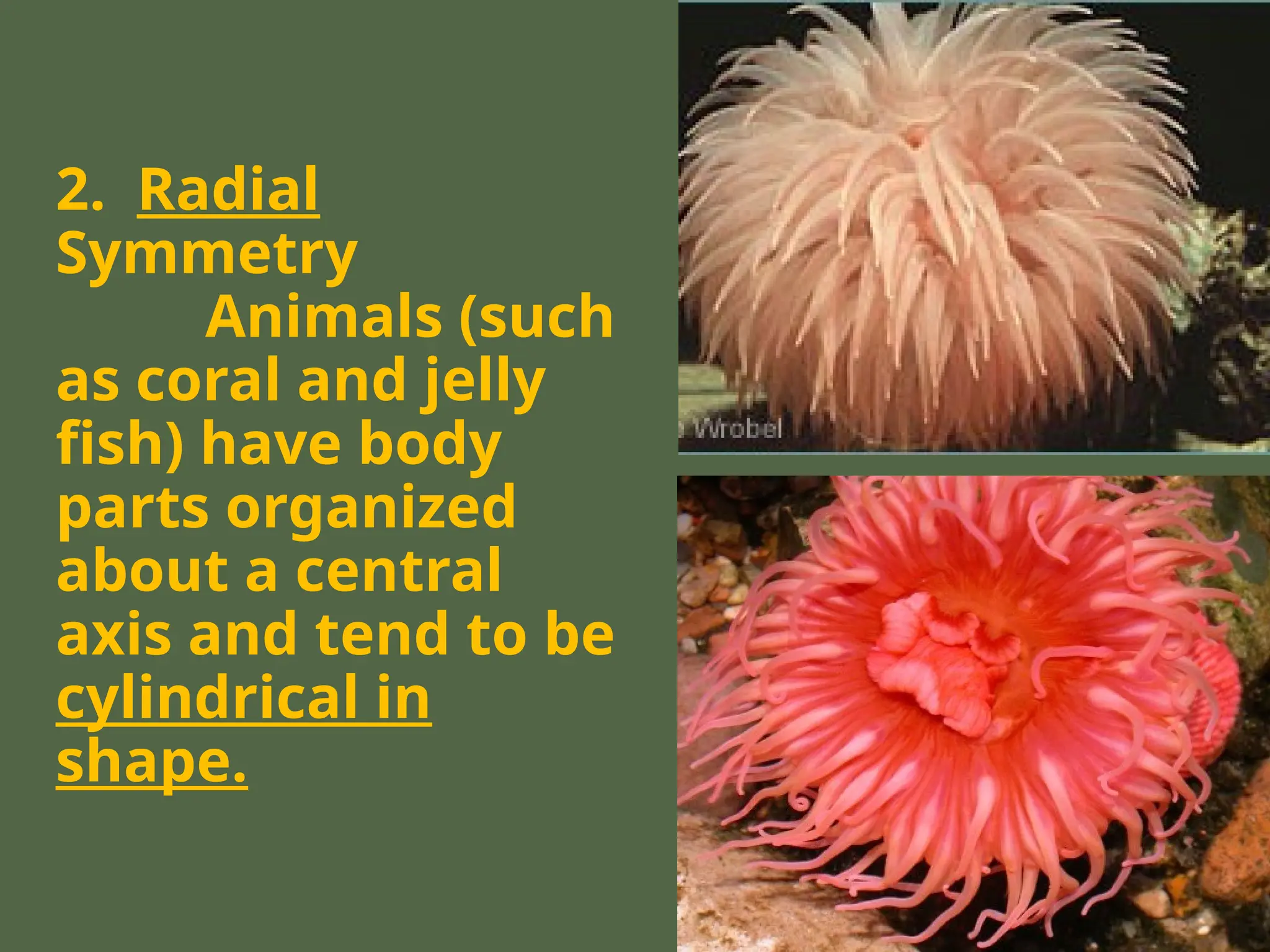
2. Radial
Symmetry
Animals (such
ascoral and jelly
fish) have body
parts organized
about a central
axis and tend to be
cylindrical in
shape.
2ⁿᵈ Criteria forAnimal
Classification
• Skeletal Characteristics
⚬Invertebrates
have a hard external skeleton
made of chitin known as an
exoskeleton
⚬Vertebrates
have a hard internal skeleton
made of bone or cartilage
64.
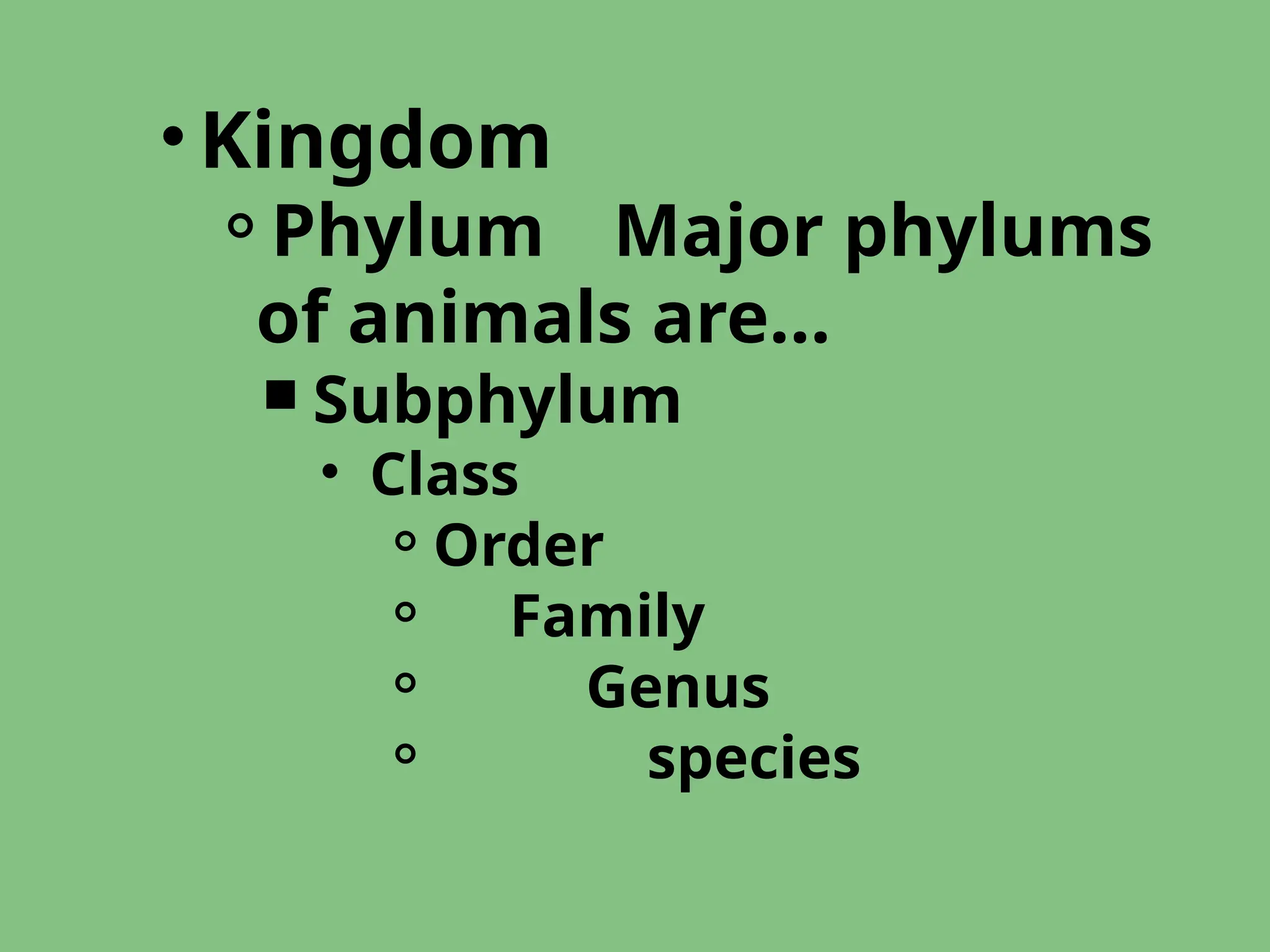
• Kingdom
⚬Phylum Majorphylums
of animals are…
■ Subphylum
• Class
⚬Order
⚬ Family
⚬ Genus
⚬ species
Flatworms – PLANARIA
•Hermaphrodites
⚬ fertilize their own sex cells internally
⚬ zygotes are released into water to hatch
⚬Planaria – capable of regeneration
being studied to understand stem cells
ability to differentiate.
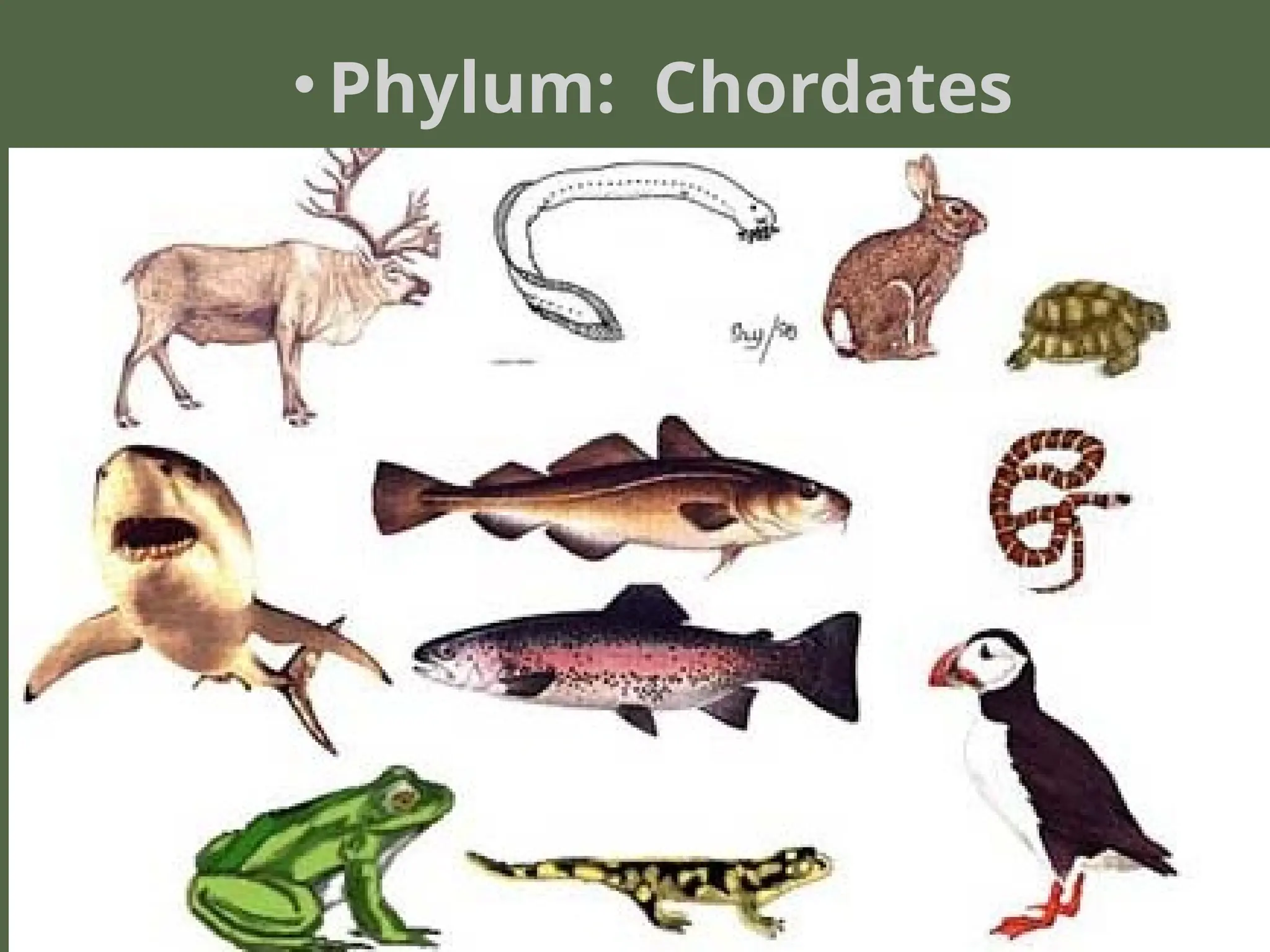
• Phylum: Chordates
⚬TheChordata is the animal phylum
with which everyone is most
familiar
Subphylum: Vertebrates (backbone)
• Bilateral symmetry
• Endoskeletons
• Closed circulatory systems
• Nervous systems with complex
brains
• Efficient respiratory systems