Kristina Giorda PhD, Staff Scientist
Target capture of DNA from FFPE
samples—recommendations for
generating robust sequencing data
1
Outline
• Review
– Oncology molecular profiling and formalin-fixed, paraffin-embedded (FFPE) tissue
– FFPE extraction and gDNA QC methods
– Library preparation and target enrichment
• Experimental approach
– Phase 1—Do FFPE extraction kits or QC methods vary?
– Phase 2—Are QC methods predictive of library quality?
– Phase 3—Can high quality capture libraries be made with FFPE samples?
2
Precision health and oncology
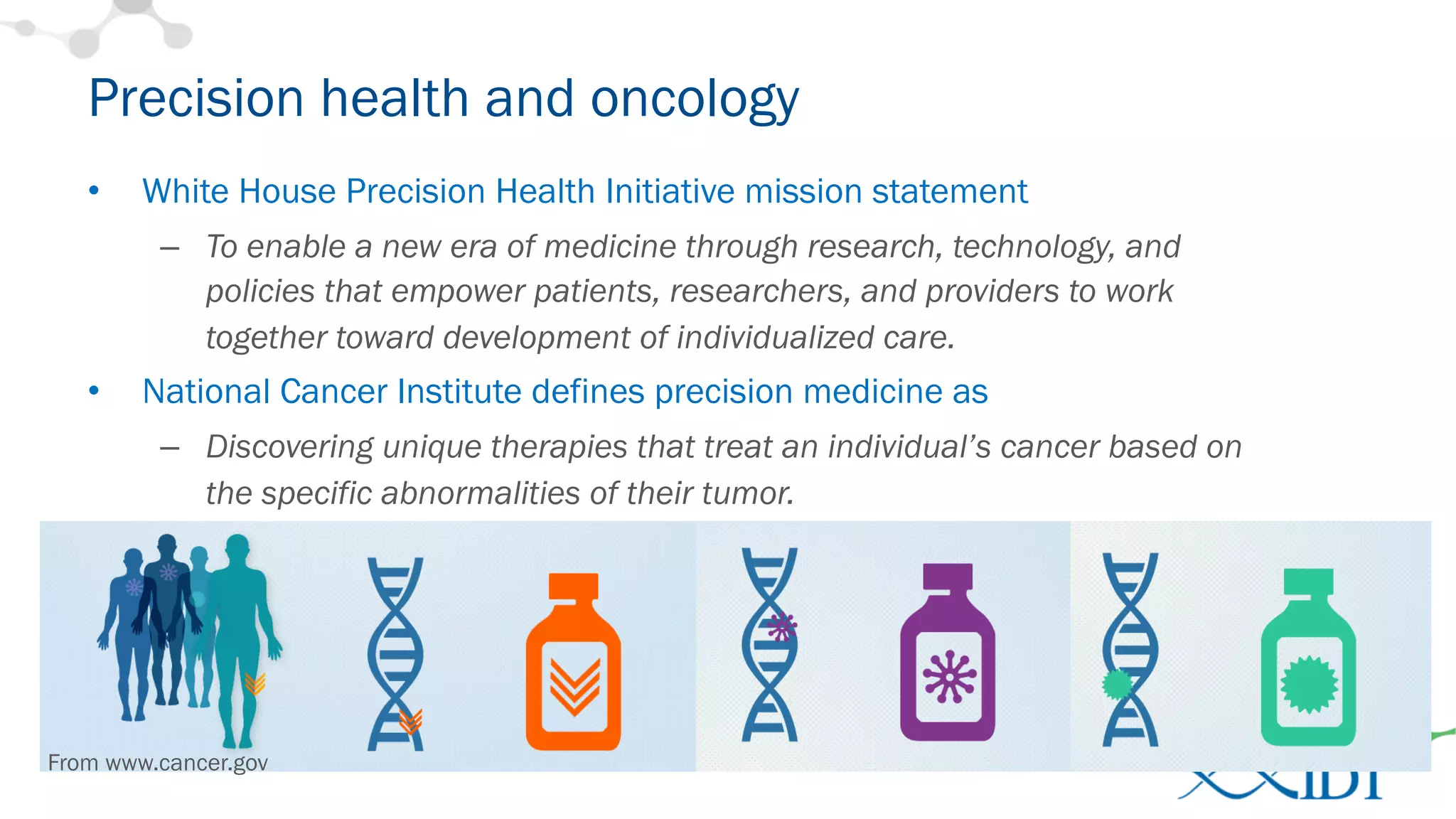
• White House Precision Health Initiative mission statement
– To enable a new era of medicine through research, technology, and
policies that empower patients, researchers, and providers to work
together toward development of individualized care.
• National Cancer Institute defines precision medicine as
– Discovering unique therapies that treat an individual’s cancer based on
the specific abnormalities of their tumor.
From www.cancer.gov
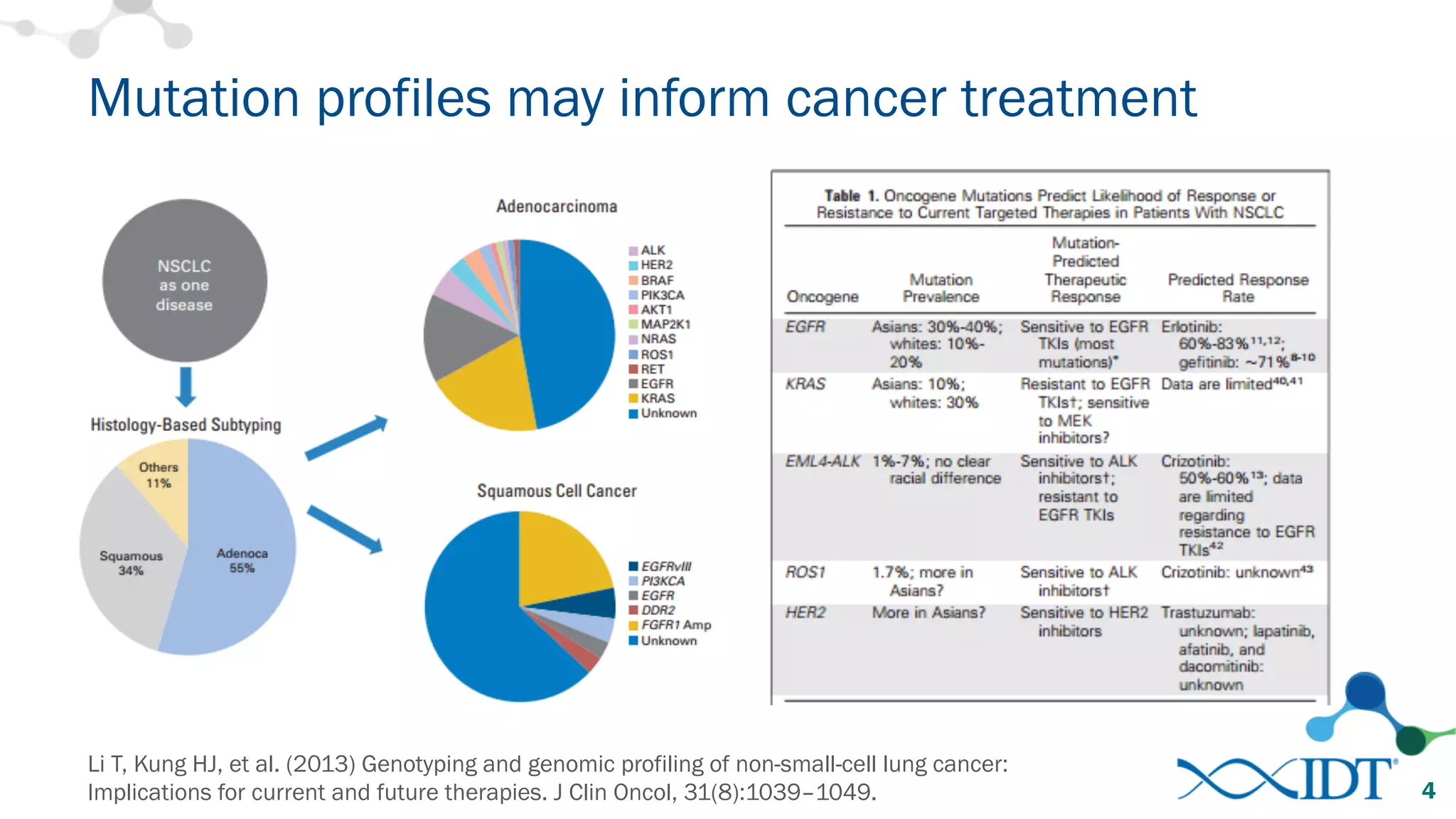
Mutation profiles may inform cancer treatment
Li T, Kung HJ, et al. (2013) Genotyping and genomic profiling of non-small-cell lung cancer:
Implications for current and future therapies. J Clin Oncol, 31(8):1039–1049. 4
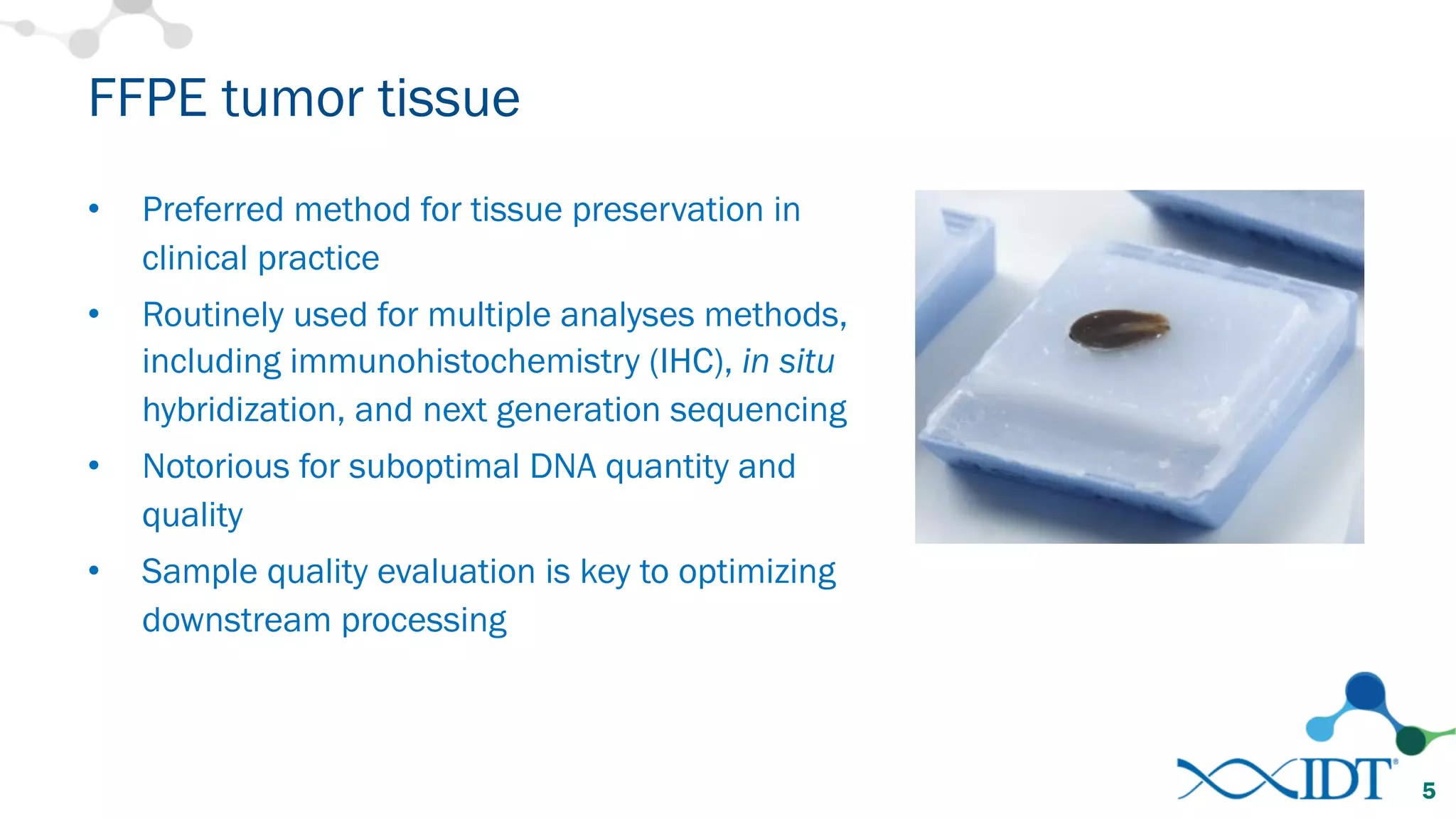
FFPE tumor tissue
• Preferred method for tissue preservation in
clinical practice
• Routinely used for multiple analyses methods,
including immunohistochemistry (IHC), in situ
hybridization, and next generation sequencing
• Notorious for suboptimal DNA quantity and
quality
• Sample quality evaluation is key to optimizing
downstream processing
5
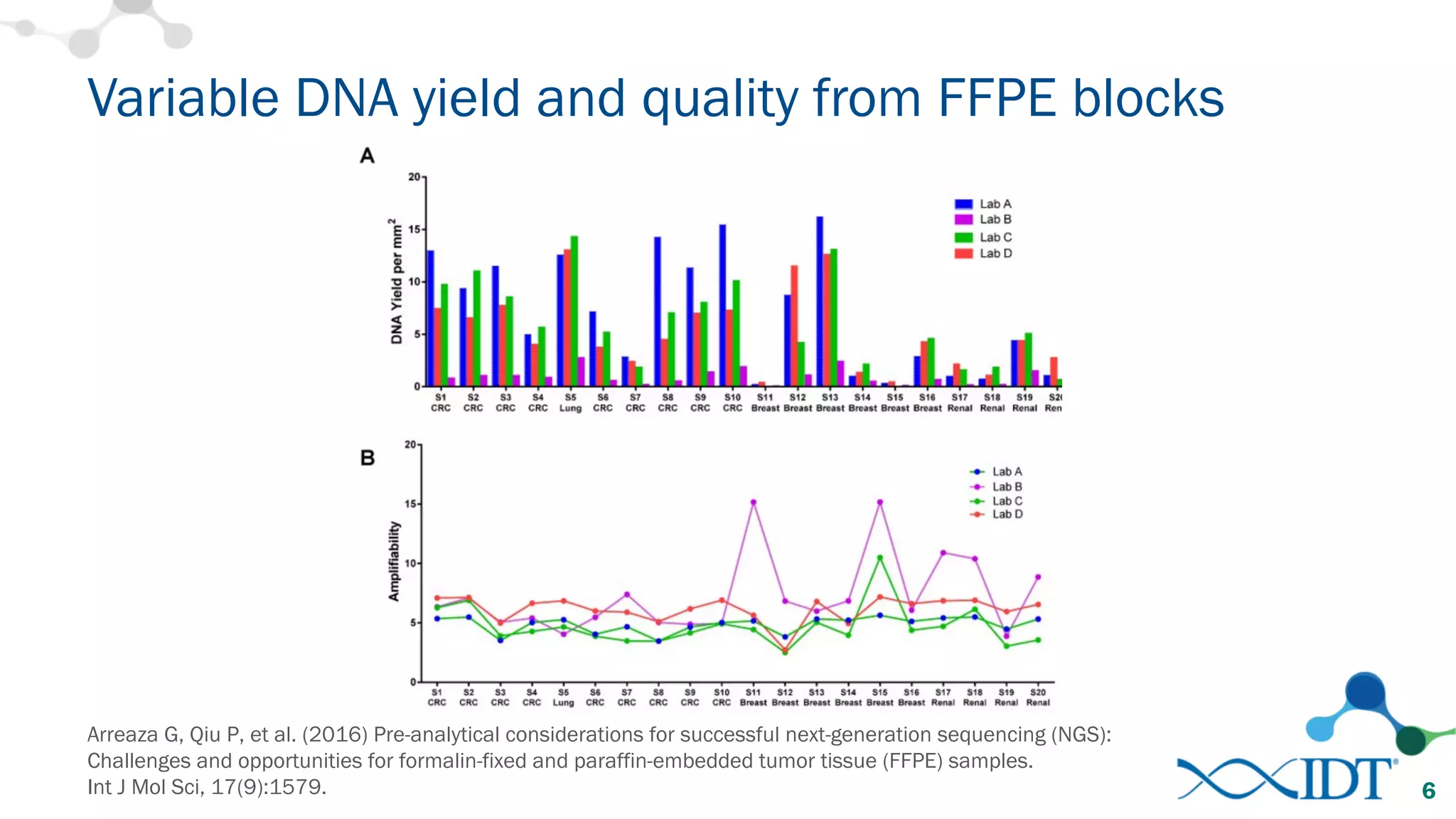
Variable DNA yield and quality from FFPE blocks
Arreaza G, Qiu P, et al. (2016) Pre-analytical considerations for successful next-generation sequencing (NGS):
Challenges and opportunities for formalin-fixed and paraffin-embedded tumor tissue (FFPE) samples.
Int J Mol Sci, 17(9):1579. 6
Outline
• Review
– Oncology molecular profiling and FFPE tissue
– FFPE extraction and gDNA QC methods
– Library preparation and target enrichment
• Experimental approach
– Phase 1—Do FFPE extraction kits or QC methods vary?
– Phase 2—Are QC methods predictive of library quality?
– Phase 3—Can high quality capture libraries be made with FFPE samples?
7
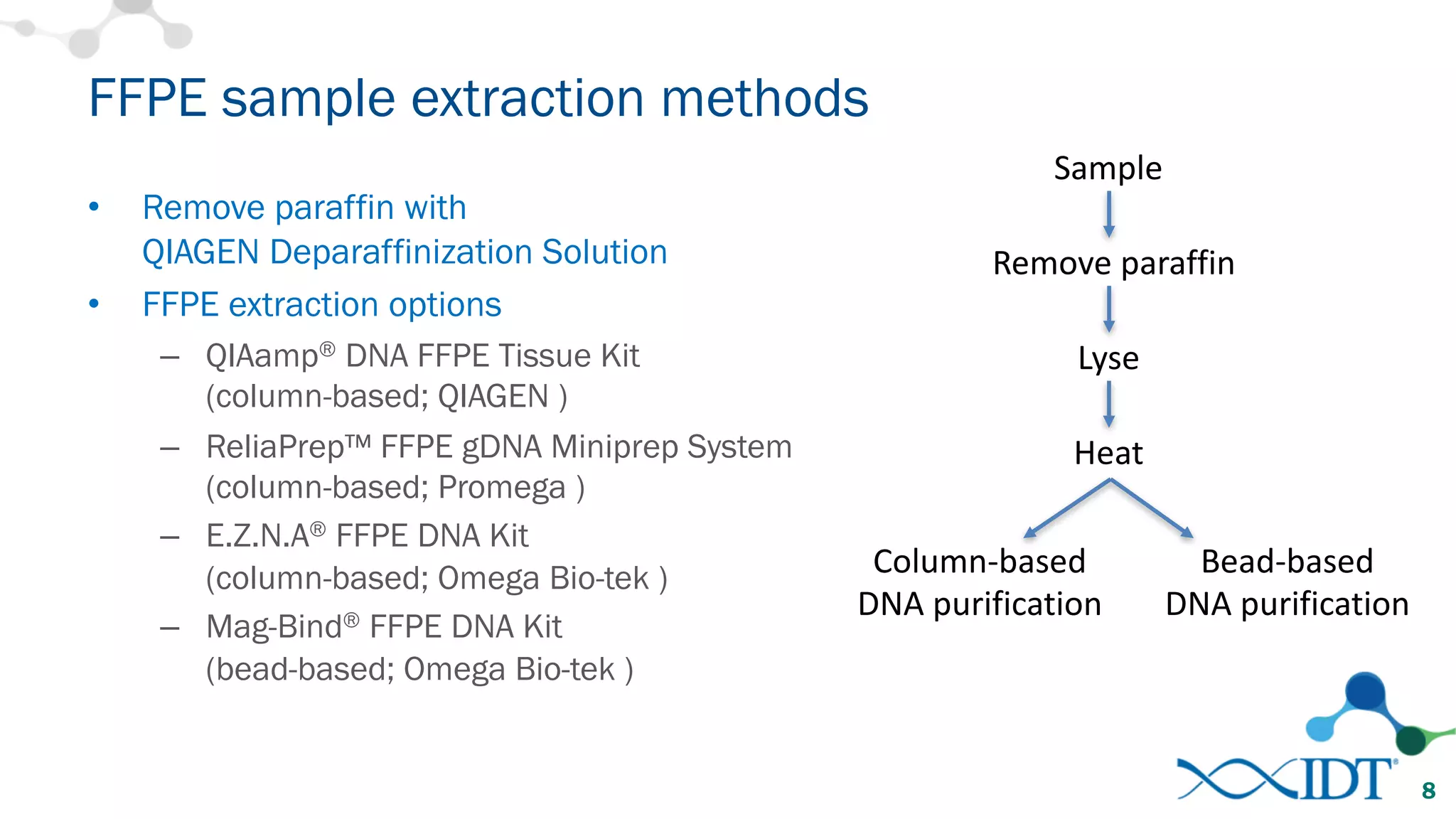
FFPE sample extraction methods
• Remove paraffin with
QIAGEN Deparaffinization Solution
• FFPE extraction options
– QIAamp® DNA FFPE Tissue Kit
(column-based; QIAGEN )
– ReliaPrep™ FFPE gDNA Miniprep System
(column-based; Promega )
– E.Z.N.A® FFPE DNA Kit
(column-based; Omega Bio-tek )
– Mag-Bind® FFPE DNA Kit
(bead-based; Omega Bio-tek )
8
Sample
Remove	paraffin
Lyse
Heat
Column-based
DNA	purification
Bead-based
DNA	purification
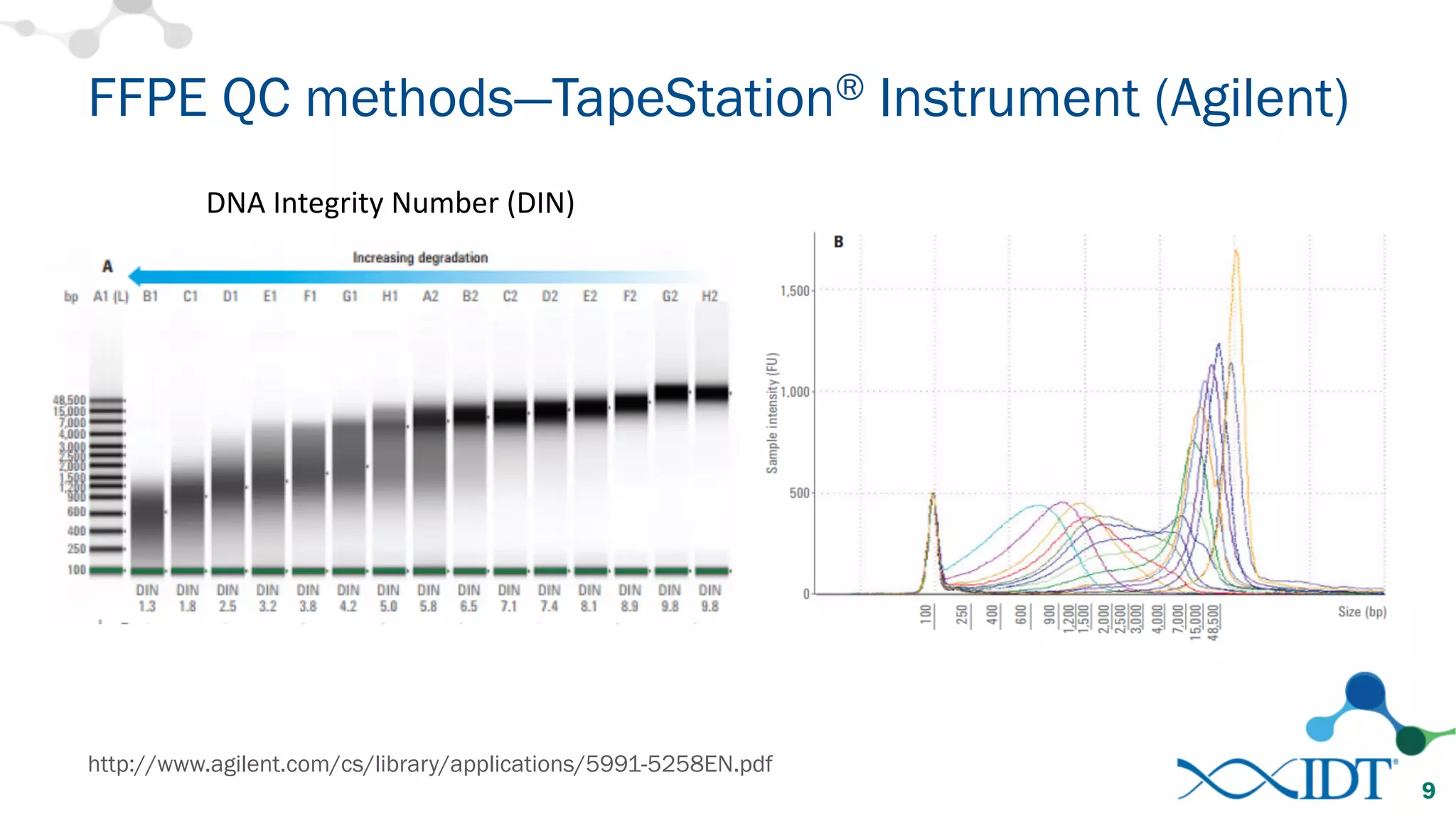
FFPE QC methods—TapeStation® Instrument (Agilent)
http://www.agilent.com/cs/library/applications/5991-5258EN.pdf
9
DNA	Integrity	Number	(DIN)
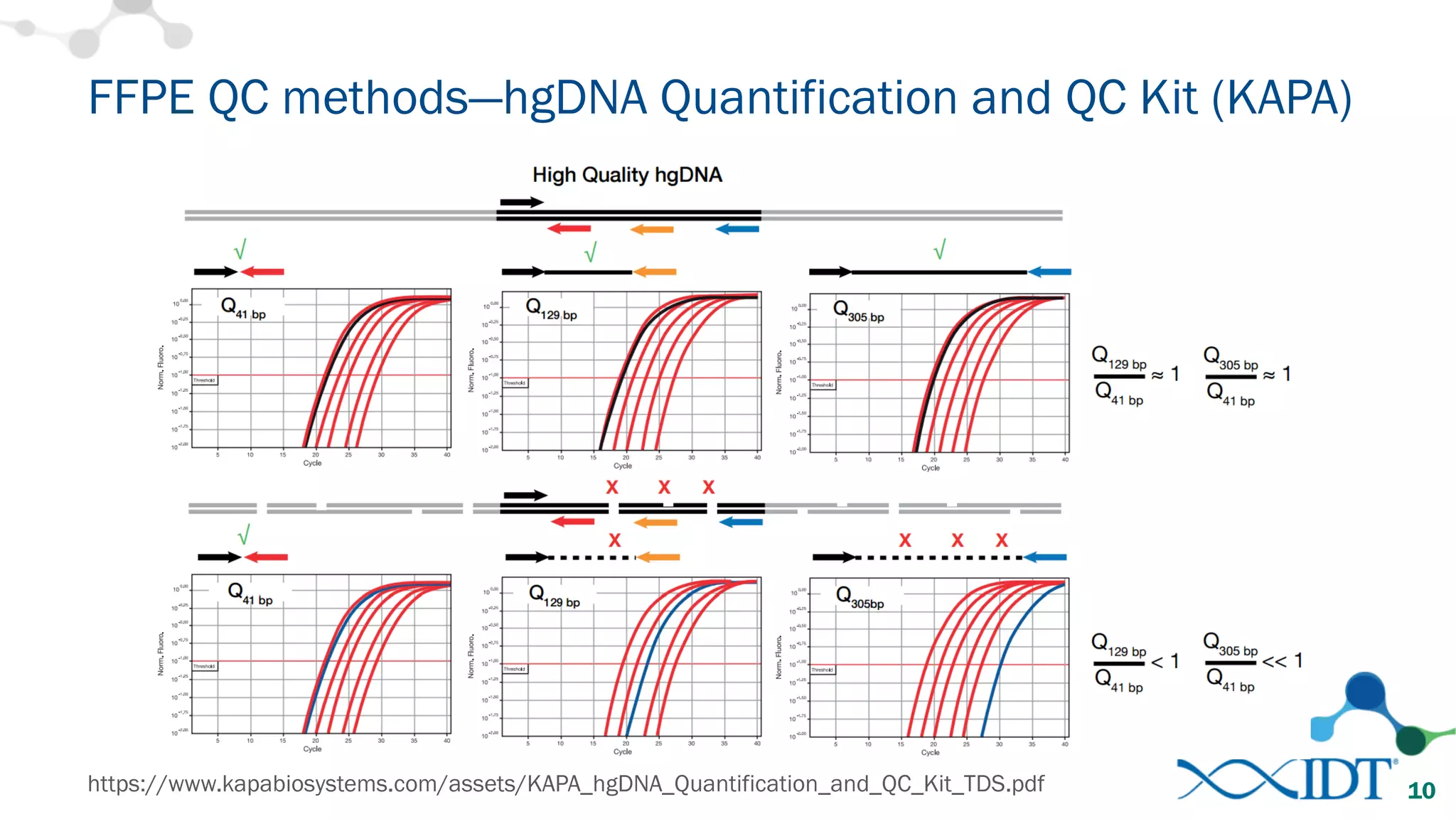
FFPE QC methods—hgDNA Quantification and QC Kit (KAPA)
https://www.kapabiosystems.com/assets/KAPA_hgDNA_Quantification_and_QC_Kit_TDS.pdf 10
Outline
• Review
– Oncology molecular profiling and FFPE tissue
– FFPE extraction and gDNA QC methods
– Library preparation and target enrichment
• Experimental approach
– Phase 1—Do FFPE extraction kits or QC methods vary?
– Phase 2—Are QC methods predictive of library quality?
– Phase 3—Can high quality capture libraries be made with FFPE samples?
11
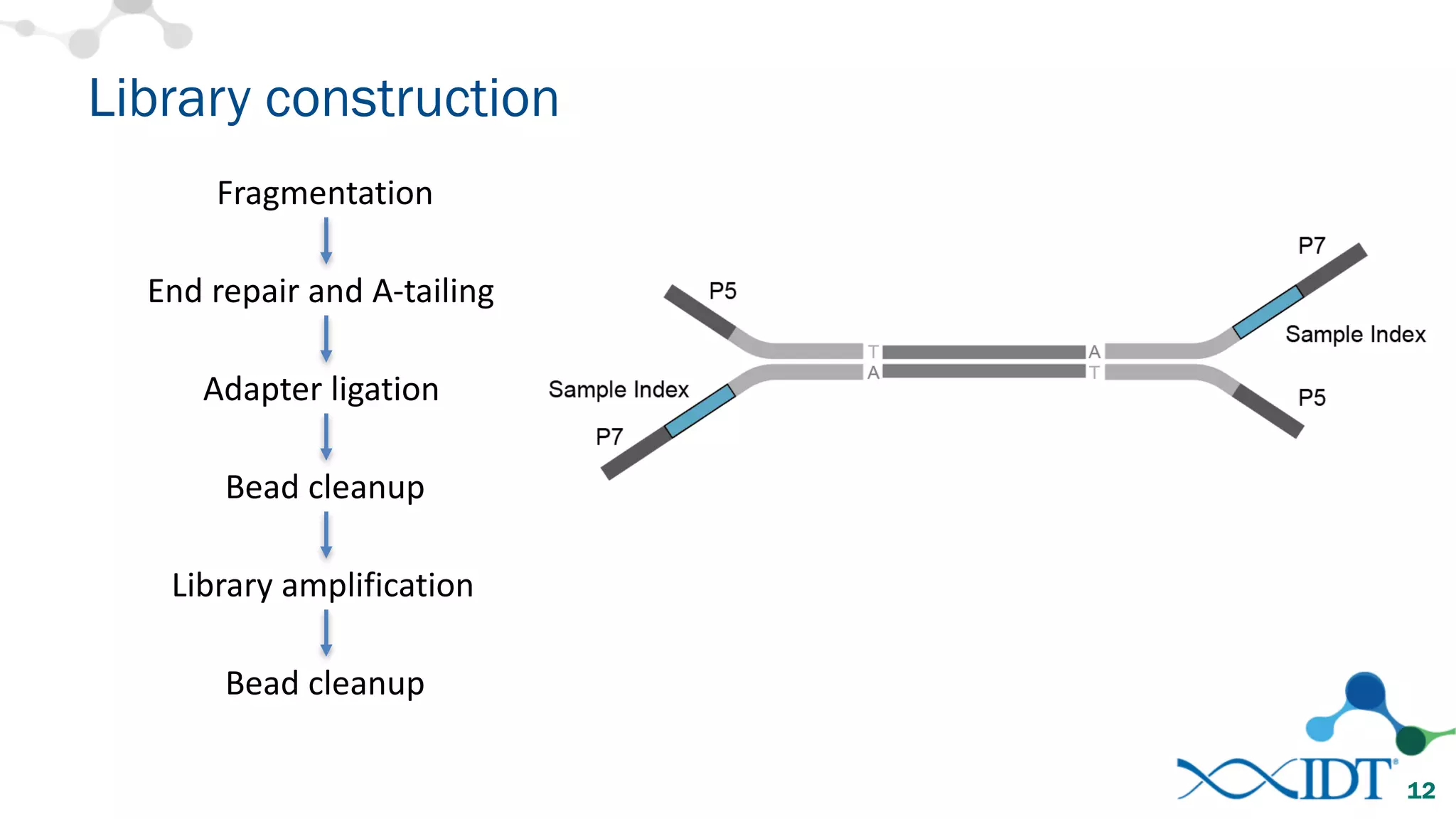
Library construction
12
Fragmentation
End	repair	and	A-tailing
Adapter	ligation
Bead	cleanup
Library	amplification
Bead	cleanup
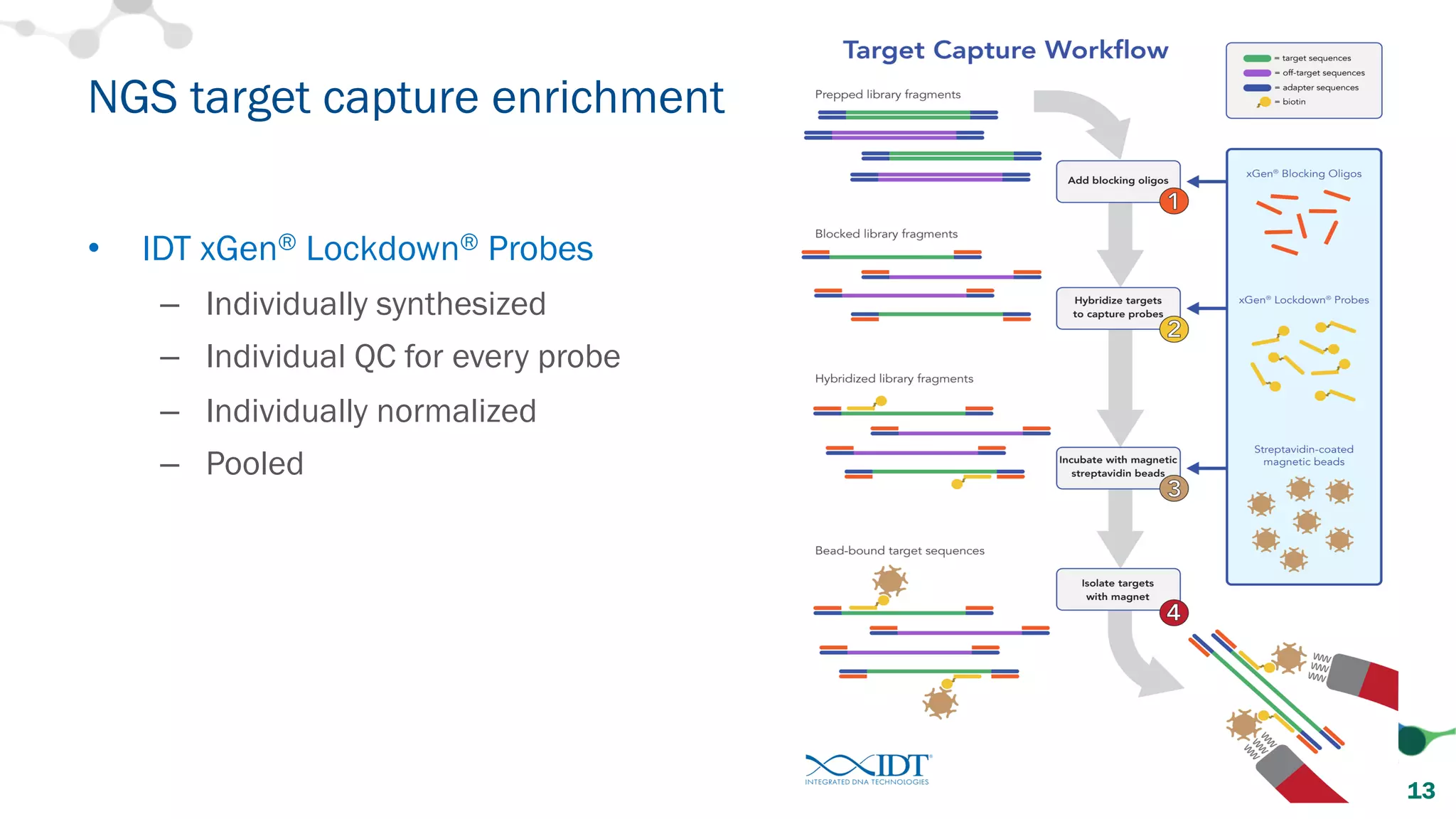
• IDT xGen® Lockdown® Probes
– Individually synthesized
– Individual QC for every probe
– Individually normalized
– Pooled
NGS target capture enrichment
13
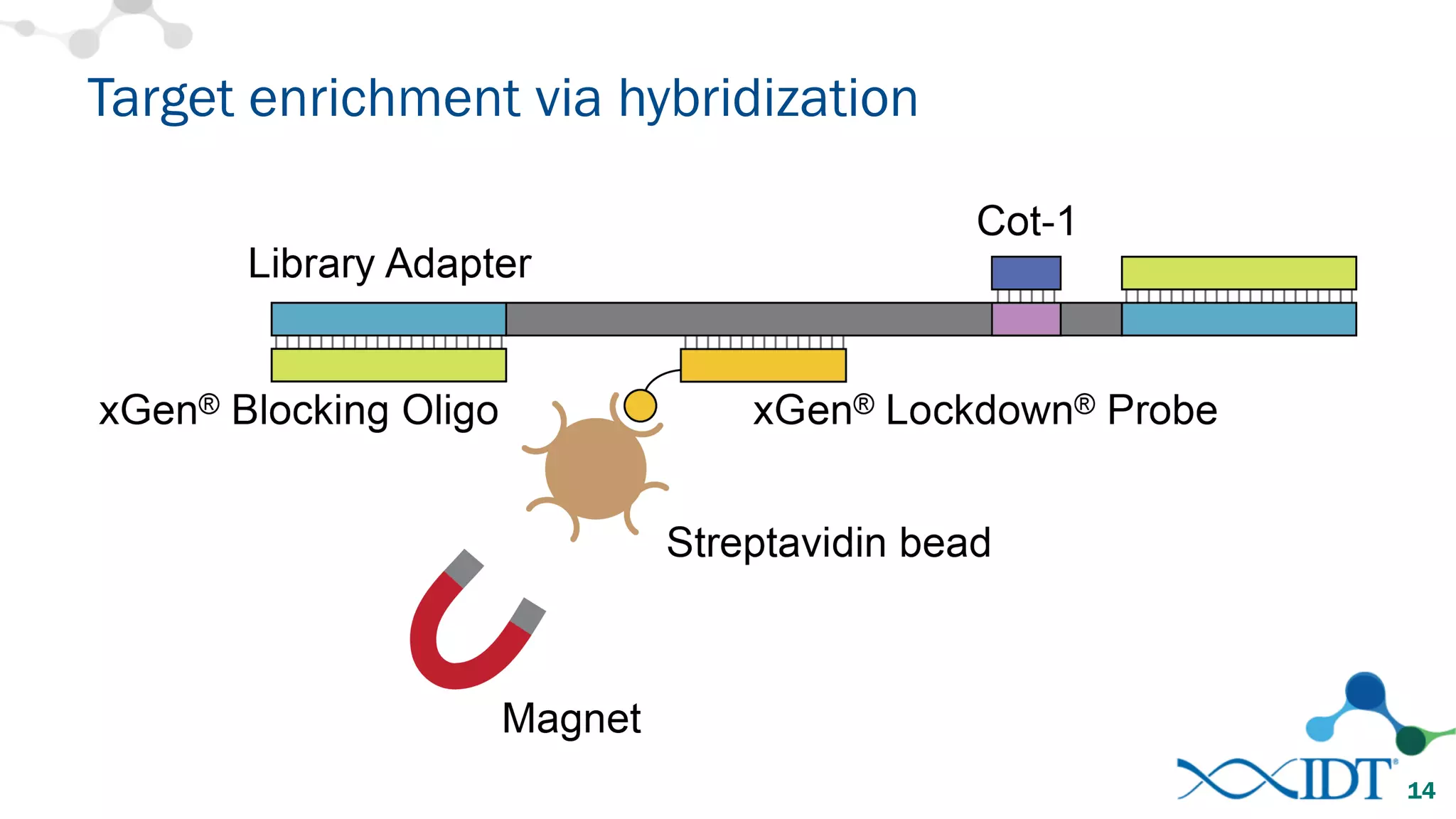
Target enrichment via hybridization
14
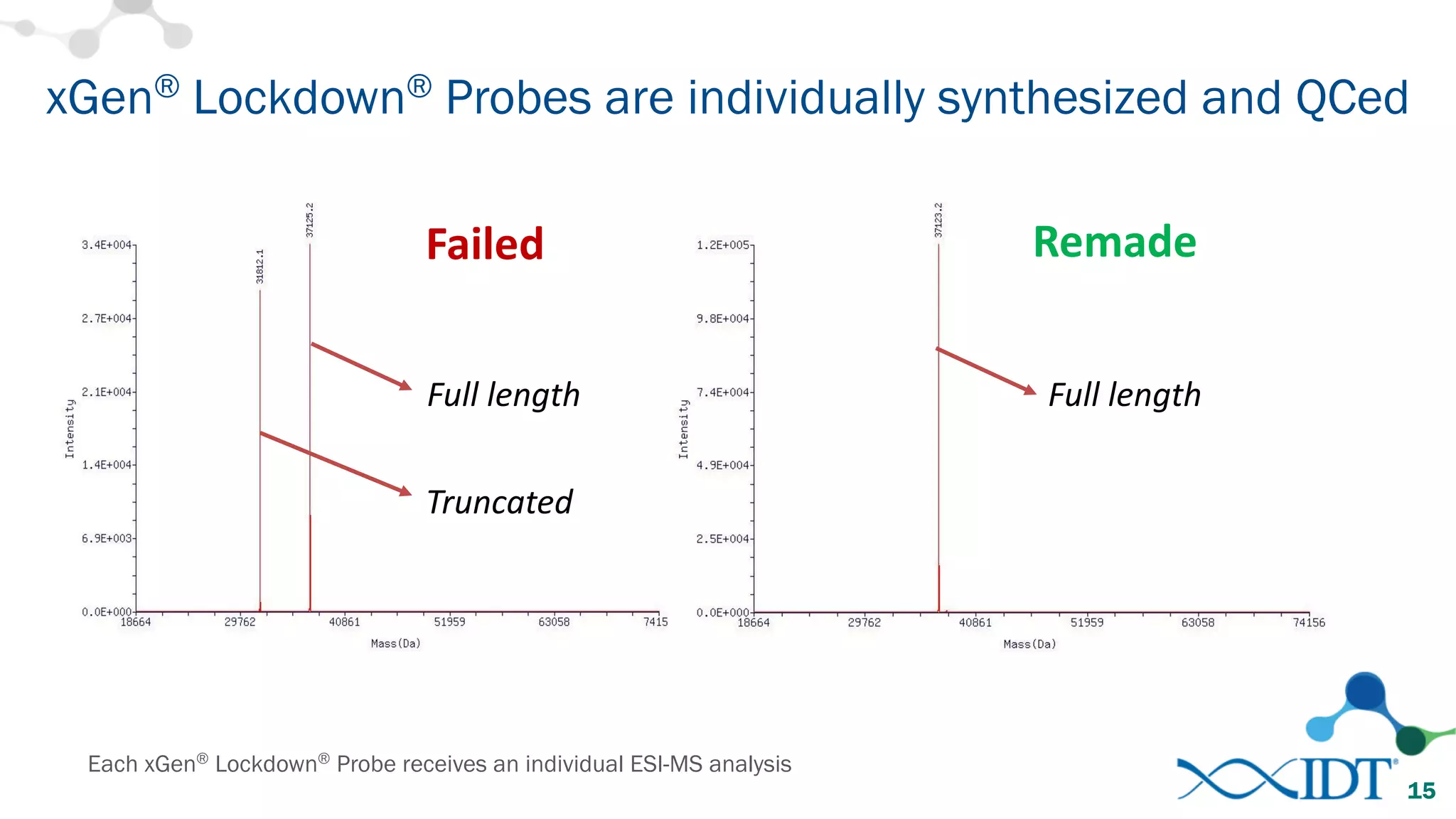
xGen® Lockdown® Probes are individually synthesized and QCed
Each xGen®
Lockdown®
Probe receives an individual ESI-MS analysis
15
Failed Remade
Full	length
Truncated
Full	length
Outline
• Review
– Oncology molecular profiling and FFPE tissue
– FFPE extraction and gDNA QC methods
– Library preparation and target enrichment
• Experimental approach
– Phase 1—Do FFPE extraction kits or QC methods vary?
– Phase 2—Are QC methods predictive of library quality?
– Phase 3—Can high quality capture libraries be made with FFPE samples?
16
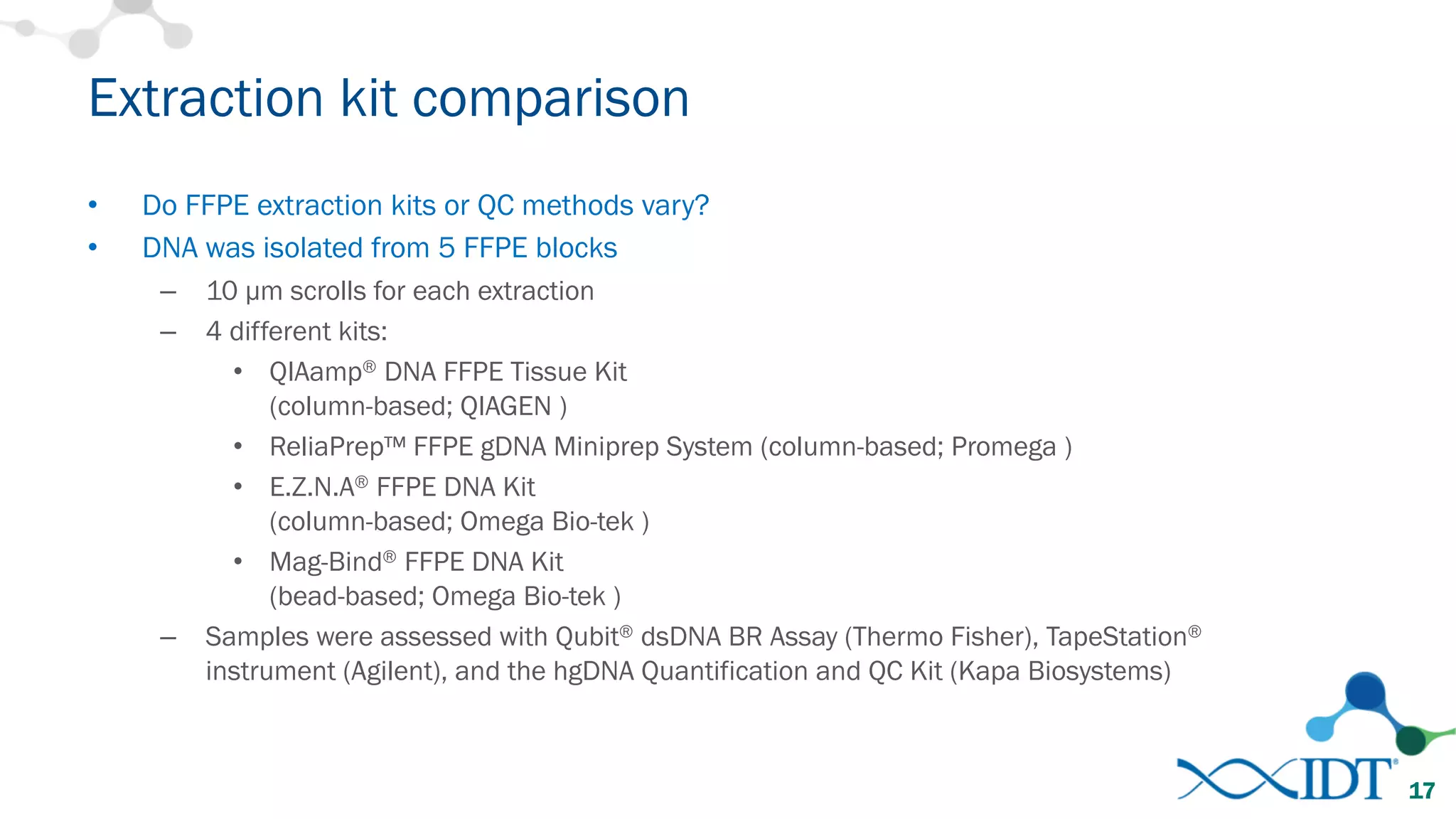
Extraction kit comparison
• Do FFPE extraction kits or QC methods vary?
• DNA was isolated from 5 FFPE blocks
– 10 µm scrolls for each extraction
– 4 different kits:
• QIAamp® DNA FFPE Tissue Kit
(column-based; QIAGEN )
• ReliaPrep™ FFPE gDNA Miniprep System (column-based; Promega )
• E.Z.N.A® FFPE DNA Kit
(column-based; Omega Bio-tek )
• Mag-Bind® FFPE DNA Kit
(bead-based; Omega Bio-tek )
– Samples were assessed with Qubit® dsDNA BR Assay (Thermo Fisher), TapeStation®
instrument (Agilent), and the hgDNA Quantification and QC Kit (Kapa Biosystems)
17
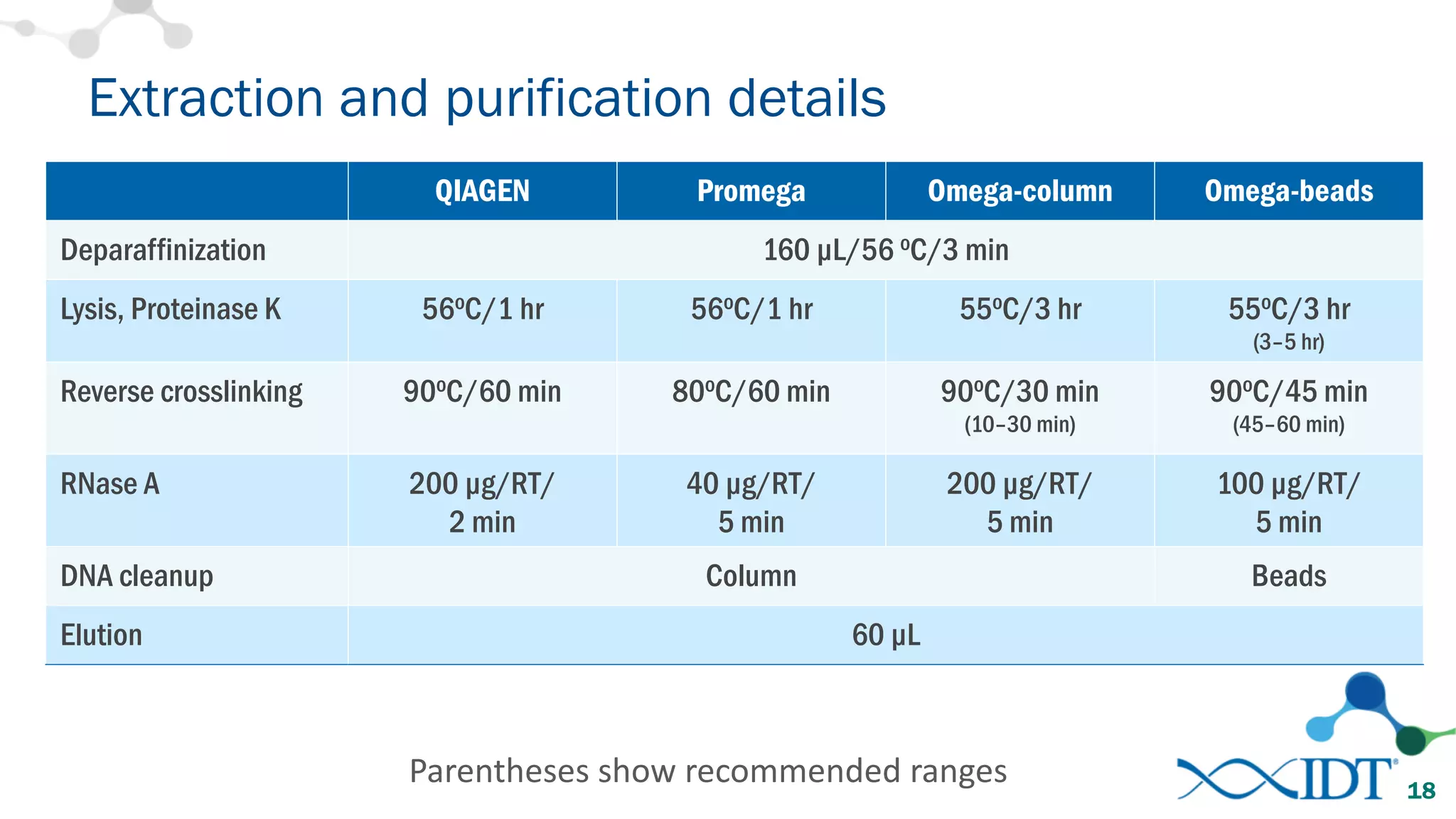
Extraction and purification details
QIAGEN Promega Omega-column Omega-beads
Deparaffinization 160 µL/56 oC/3 min
Lysis, Proteinase K 56oC/1 hr 56oC/1 hr 55oC/3 hr 55oC/3 hr
(3–5 hr)
Reverse crosslinking 90oC/60 min 80oC/60 min 90oC/30 min
(10–30 min)
90oC/45 min
(45–60 min)
RNase A 200 µg/RT/
2 min
40 µg/RT/
5 min
200 µg/RT/
5 min
100 µg/RT/
5 min
DNA cleanup Column Beads
Elution 60 µL
18
Parentheses	show	recommended	ranges
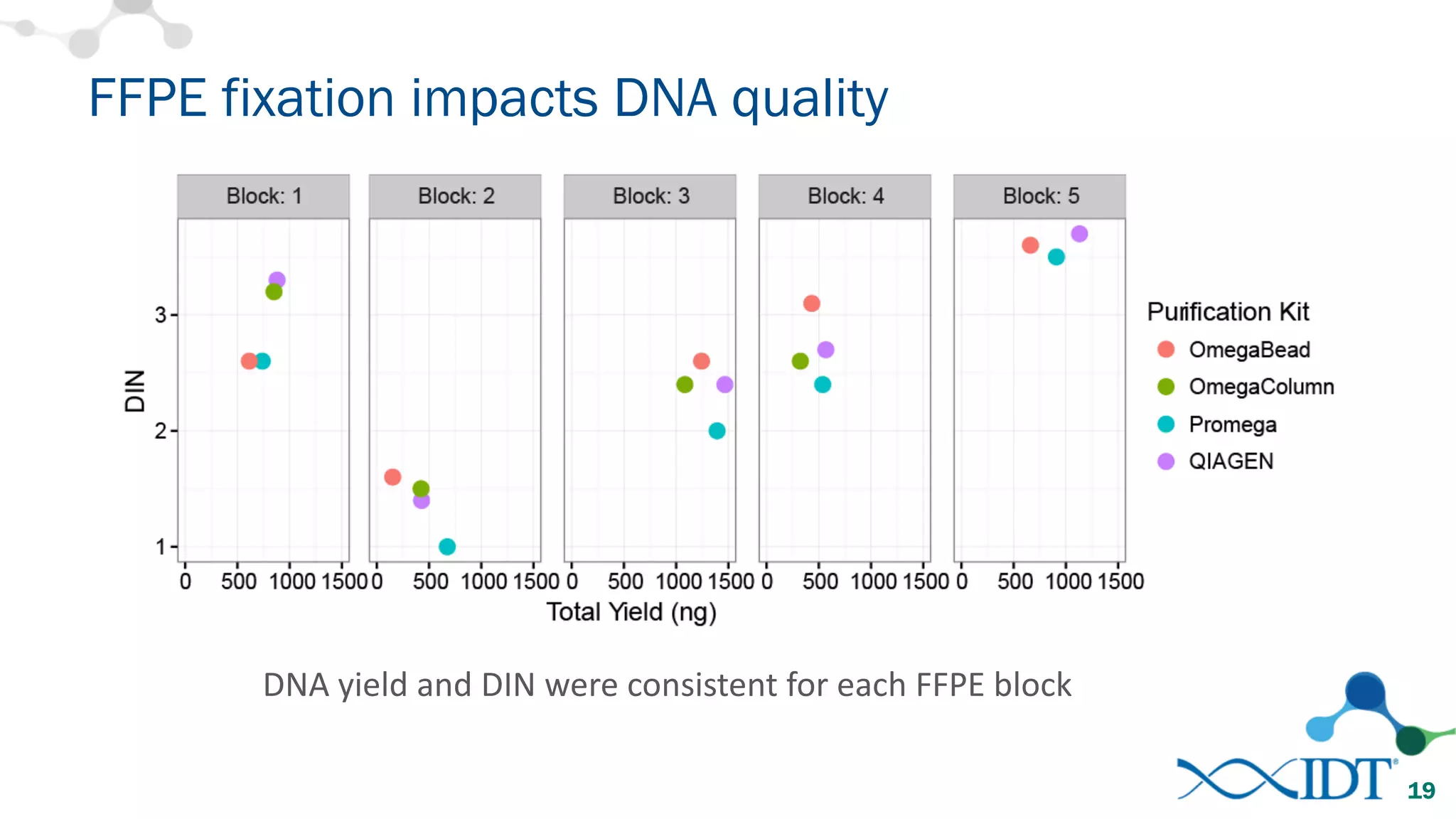
FFPE fixation impacts DNA quality
19
DNA	yield	and	DIN	were	consistent	for	each	FFPE	block
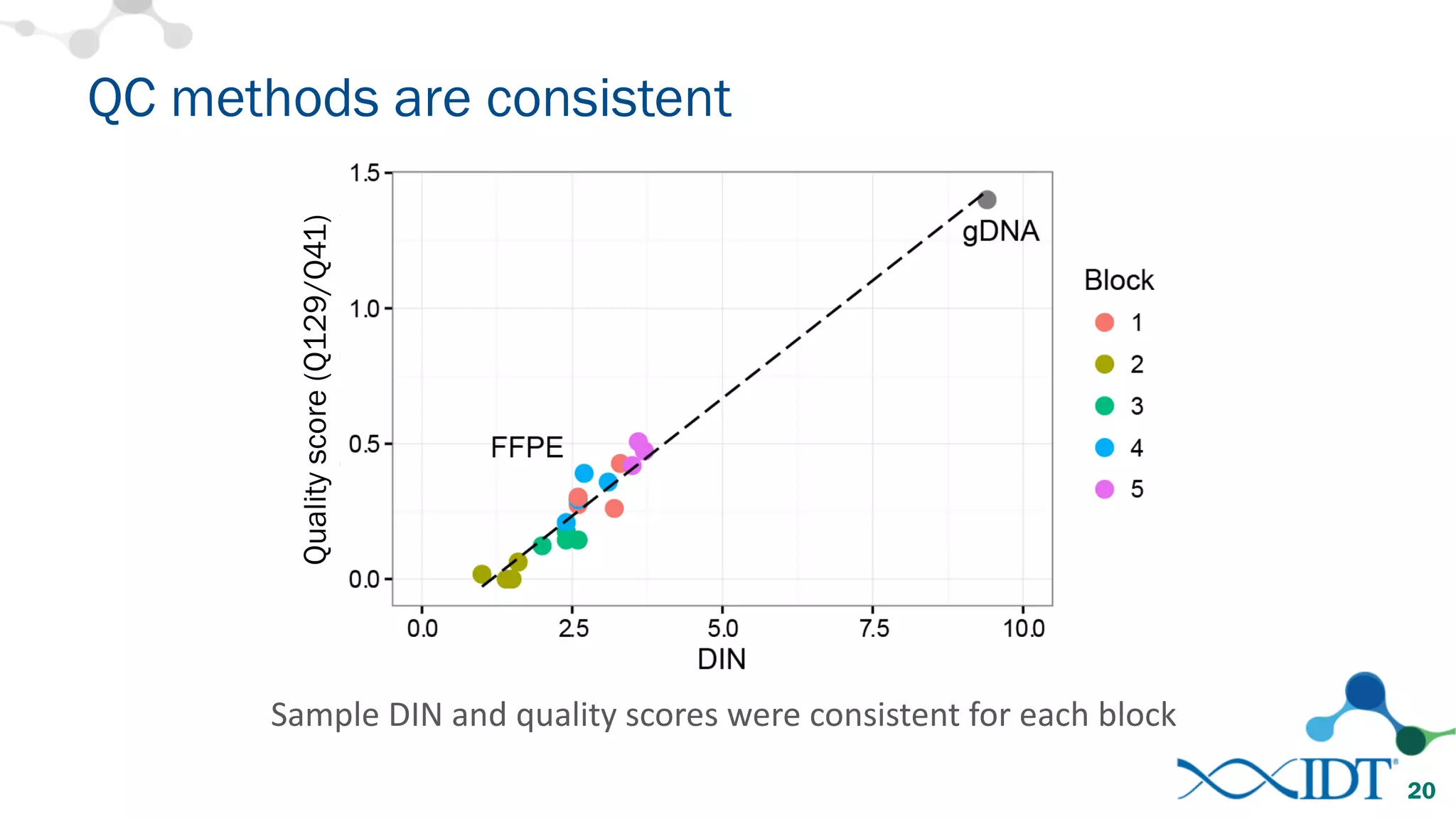
QC methods are consistent
20
Sample	DIN	and	quality	scores	were	consistent	for	each	block
Qualityscore(Q129/Q41)
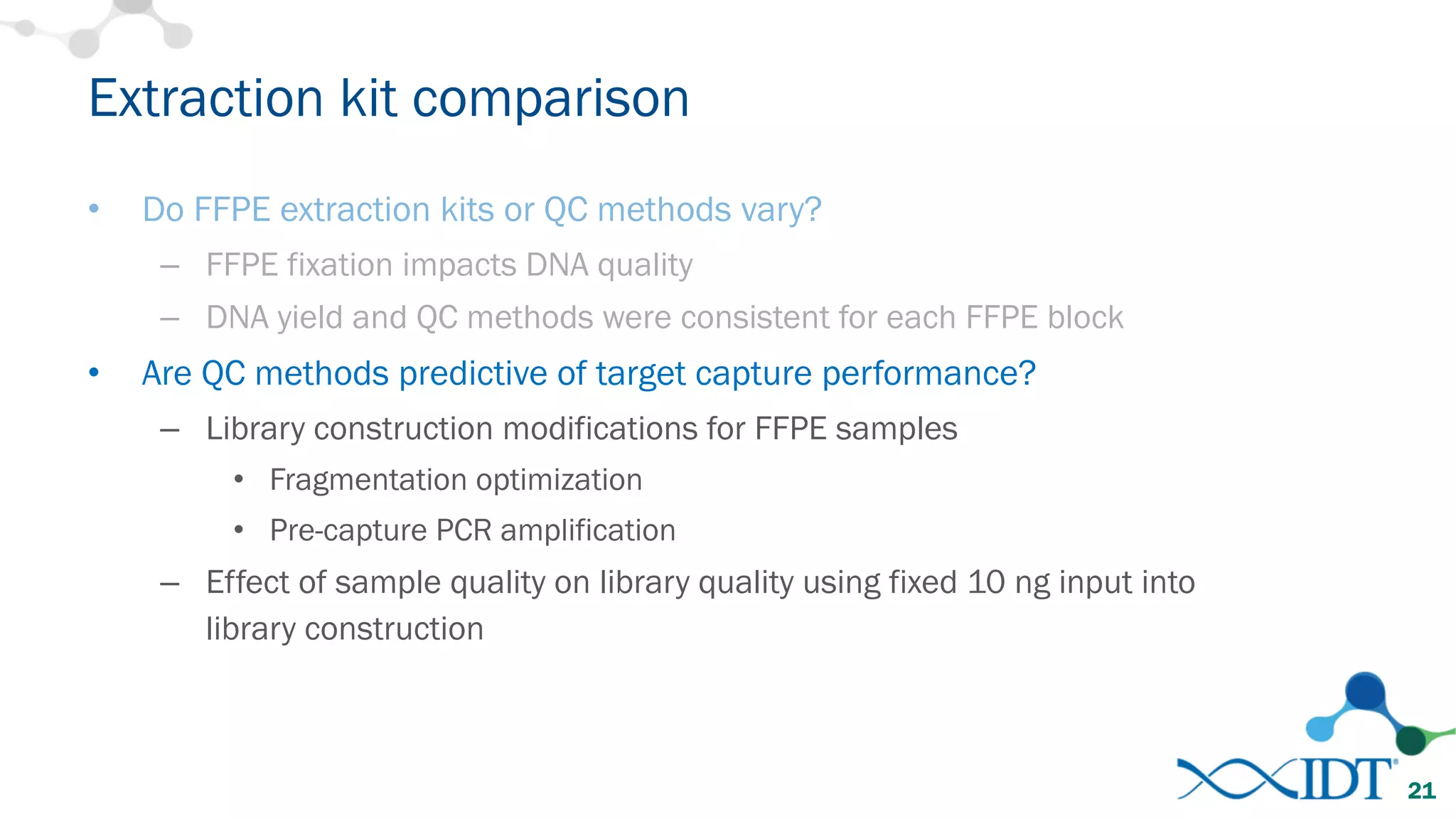
• Do FFPE extraction kits or QC methods vary?
– FFPE fixation impacts DNA quality
– DNA yield and QC methods were consistent for each FFPE block
• Are QC methods predictive of target capture performance?
– Library construction modifications for FFPE samples
• Fragmentation optimization
• Pre-capture PCR amplification
– Effect of sample quality on library quality using fixed 10 ng input into
library construction
Extraction kit comparison
21
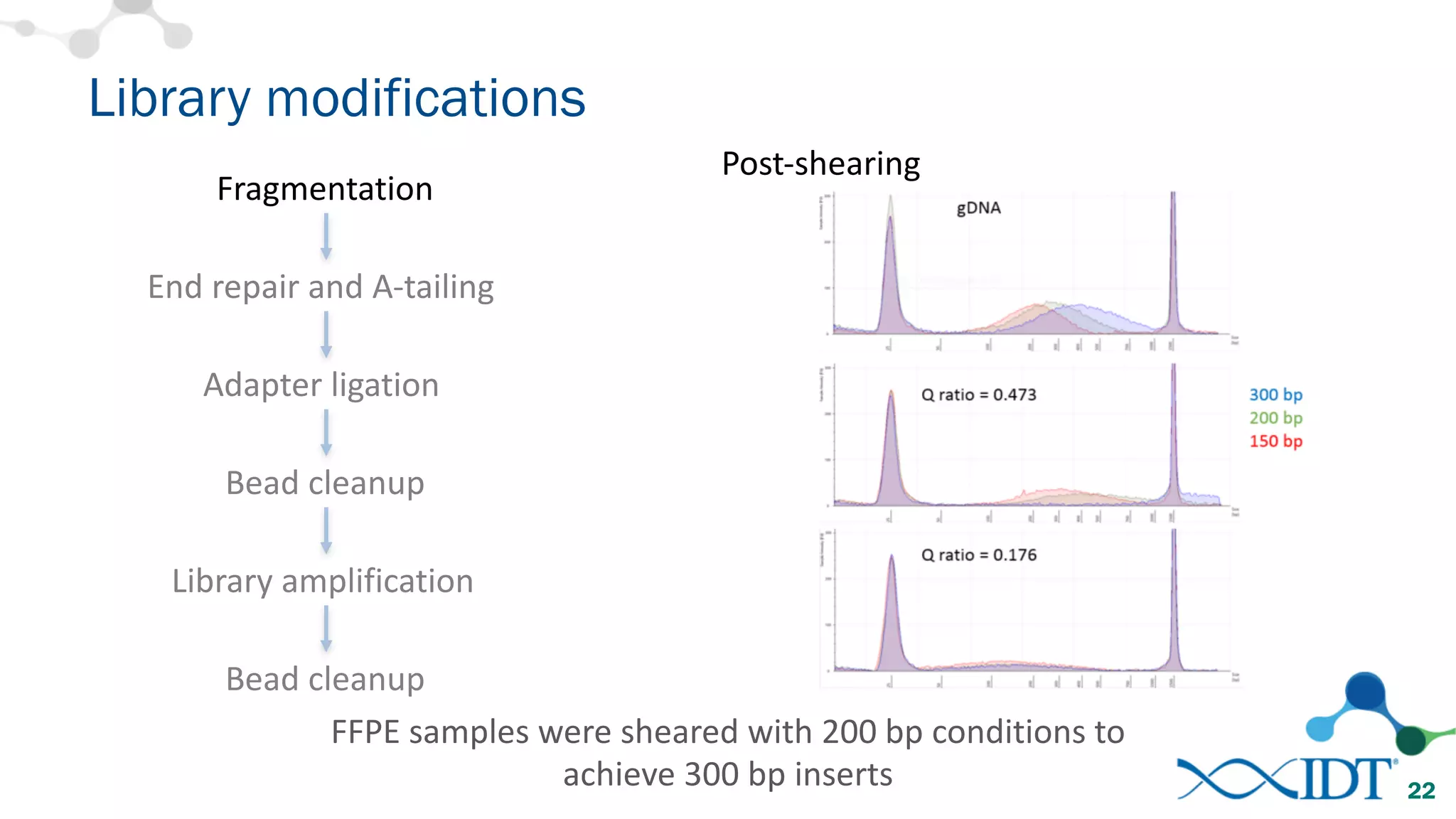
Library modifications
22
FFPE	samples	were	sheared	with	200	bp conditions	to	
achieve	300	bp inserts
Post-shearing
Fragmentation
End	repair	and	A-tailing
Adapter	ligation
Bead	cleanup
Library	amplification
Bead	cleanup
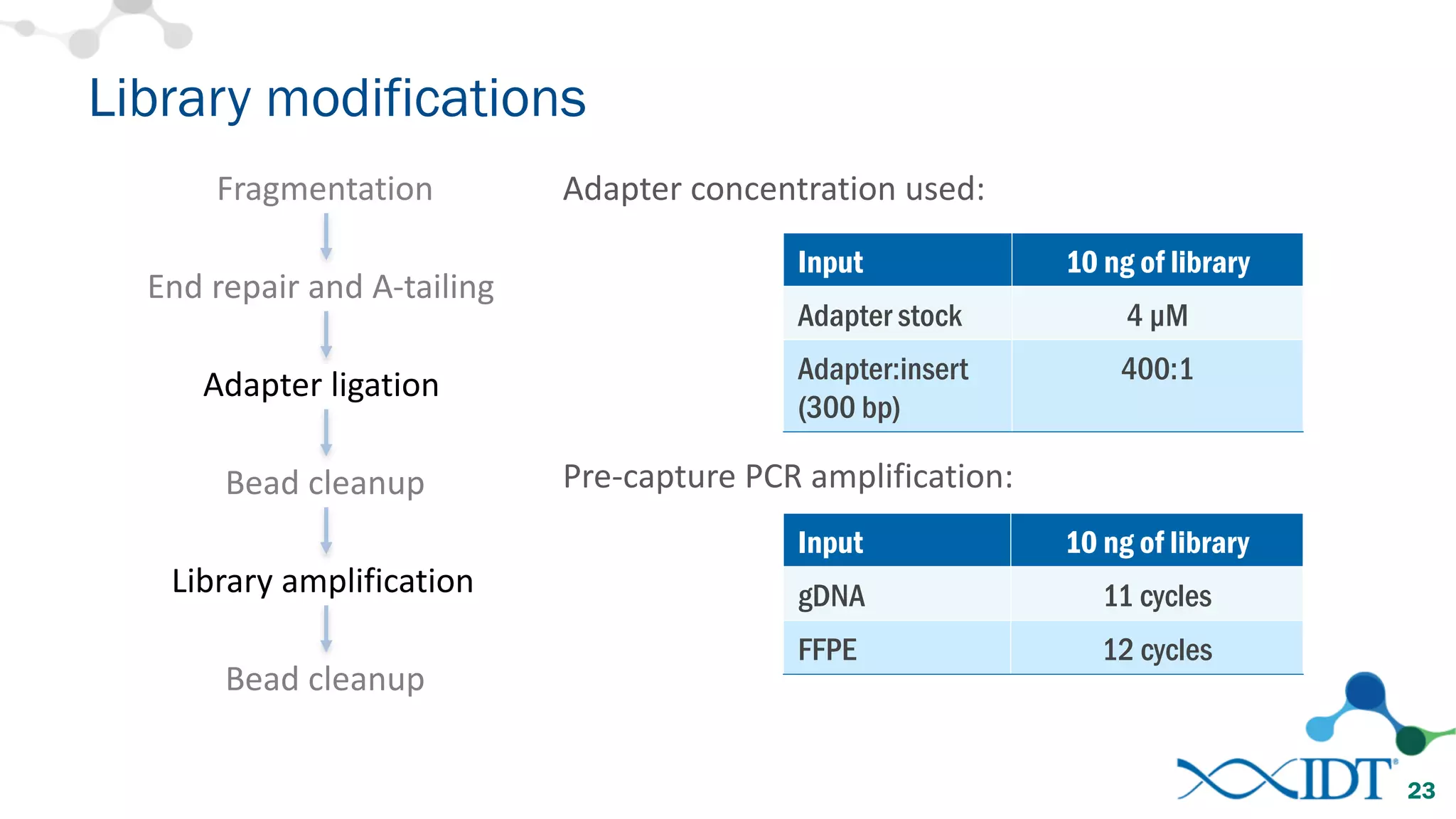
Library modifications
23
Input 10 ng of library
gDNA 11 cycles
FFPE 12 cycles
Pre-capture	PCR	amplification:
Input 10 ng of library
Adapter stock 4 µM
Adapter:insert
(300 bp)
400:1
Adapter	concentration	used:Fragmentation
End	repair	and	A-tailing
Adapter	ligation
Bead	cleanup
Library	amplification
Bead	cleanup
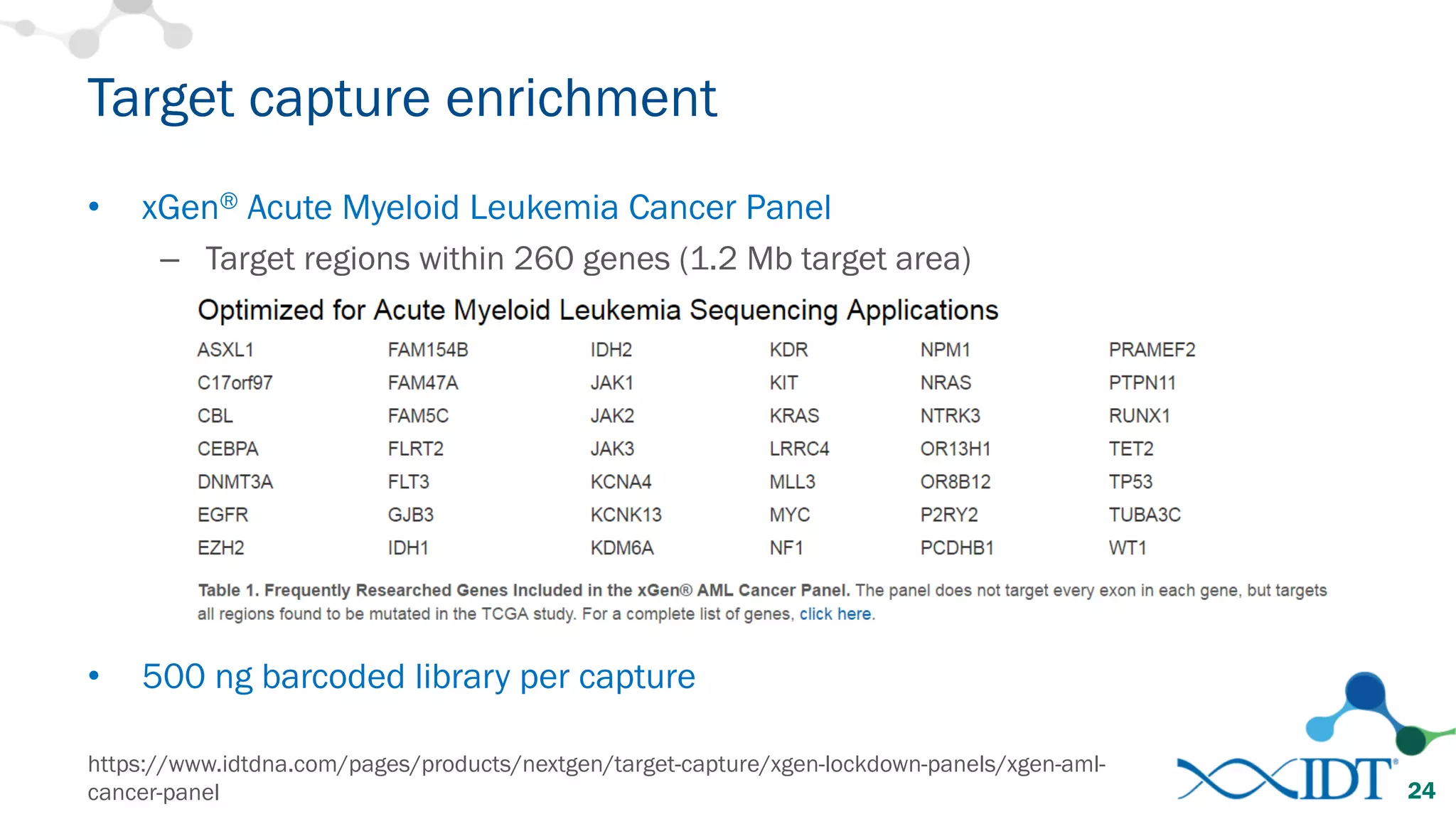
Target capture enrichment
• xGen® Acute Myeloid Leukemia Cancer Panel
– Target regions within 260 genes (1.2 Mb target area)
• 500 ng barcoded library per capture
https://www.idtdna.com/pages/products/nextgen/target-capture/xgen-lockdown-panels/xgen-aml-
cancer-panel 24
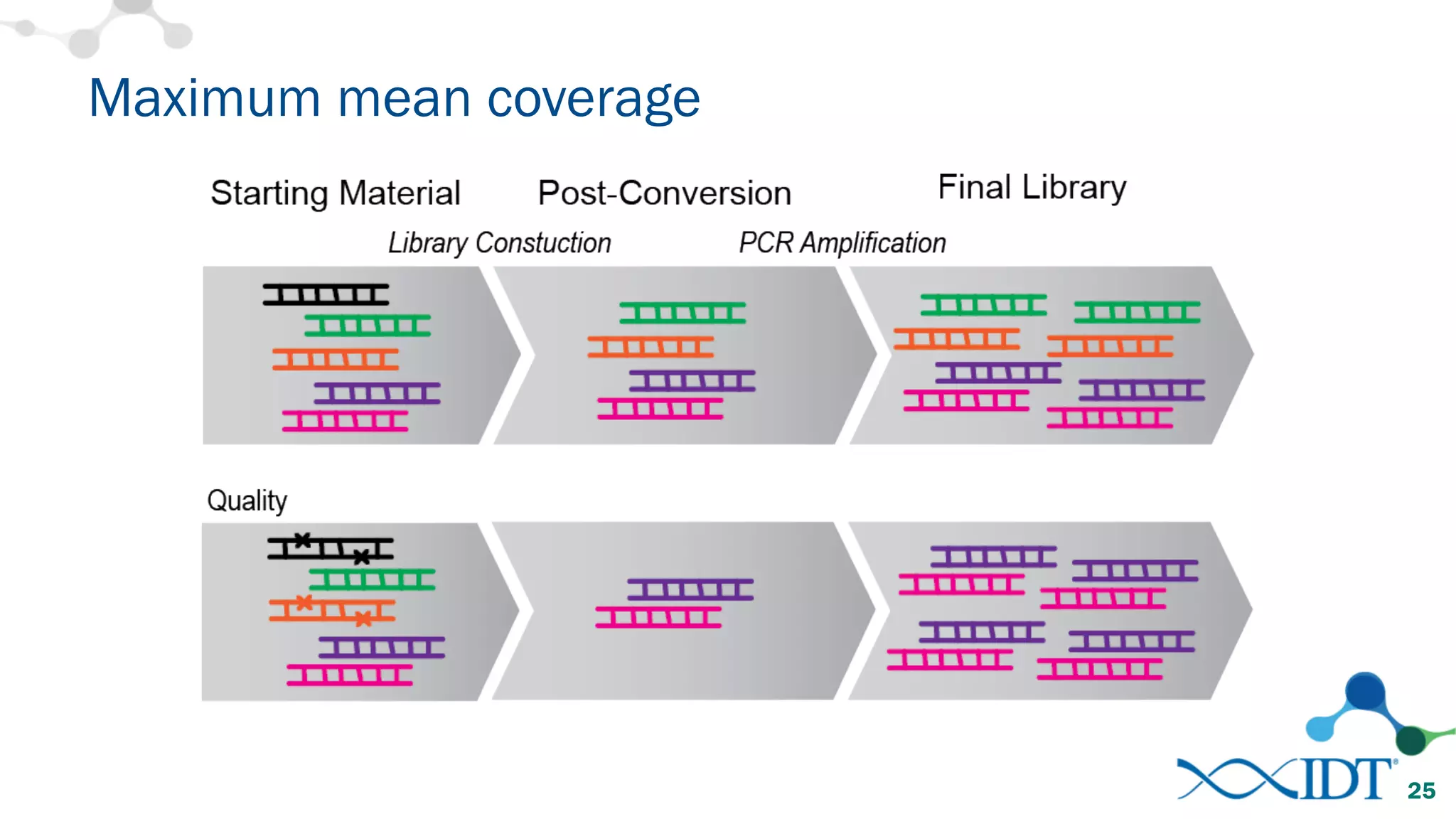
Maximum mean coverage
25
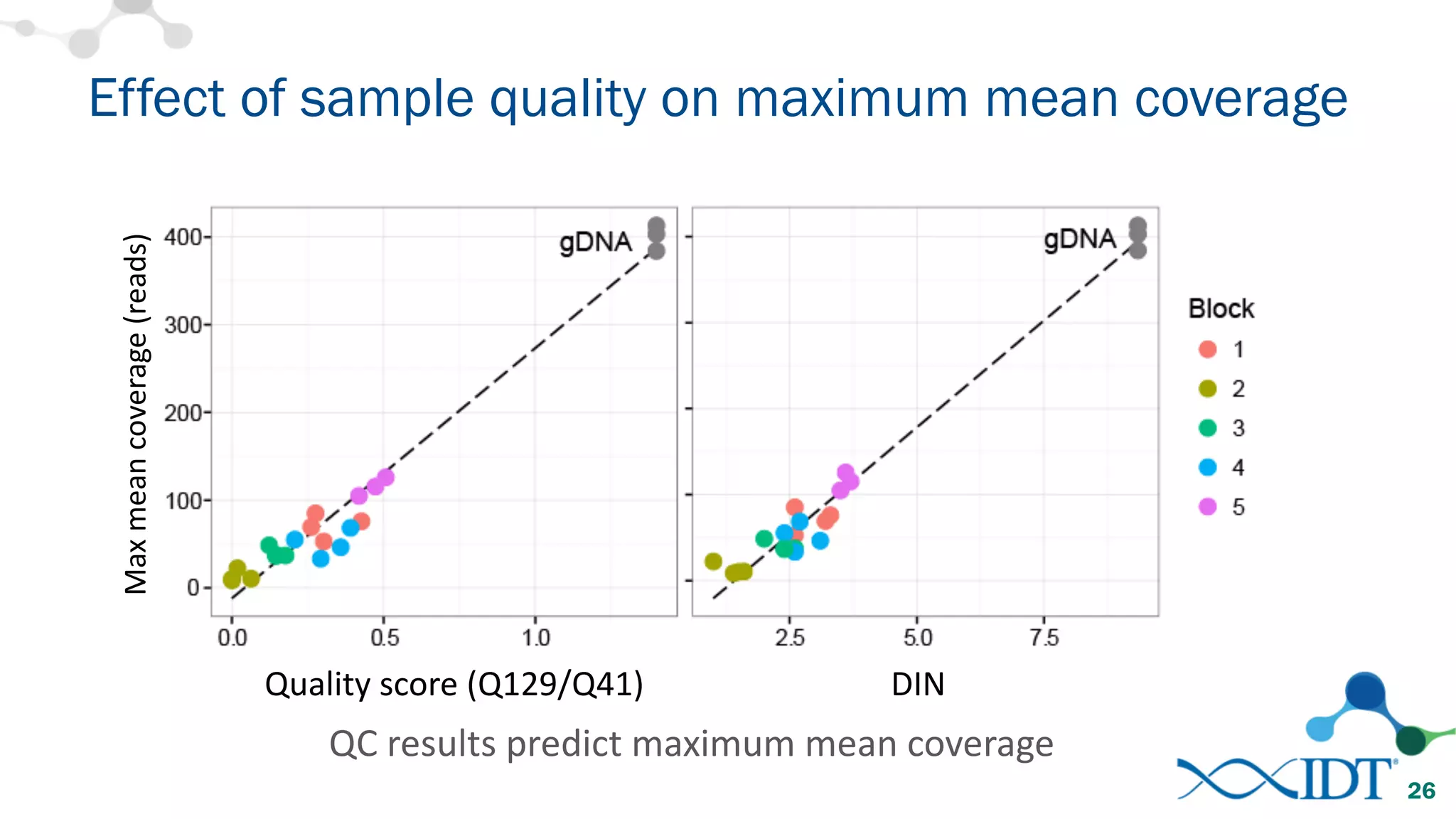
Effect of sample quality on maximum mean coverage
26
QC	results	predict	maximum	mean	coverage
Max	mean	coverage	(reads)
Quality	score	(Q129/Q41)	 DIN
• Do FFPE extraction kits or QC methods vary?
– FFPE fixation impacts DNA quality
– DNA yield and QC methods were consistent for each FFPE block
• Are QC methods predictive of target capture performance?
– Library construction modifications for FFPE samples
• Increase shearing
• Add pre-capture PCR cycles
– QC methods predict target capture performance
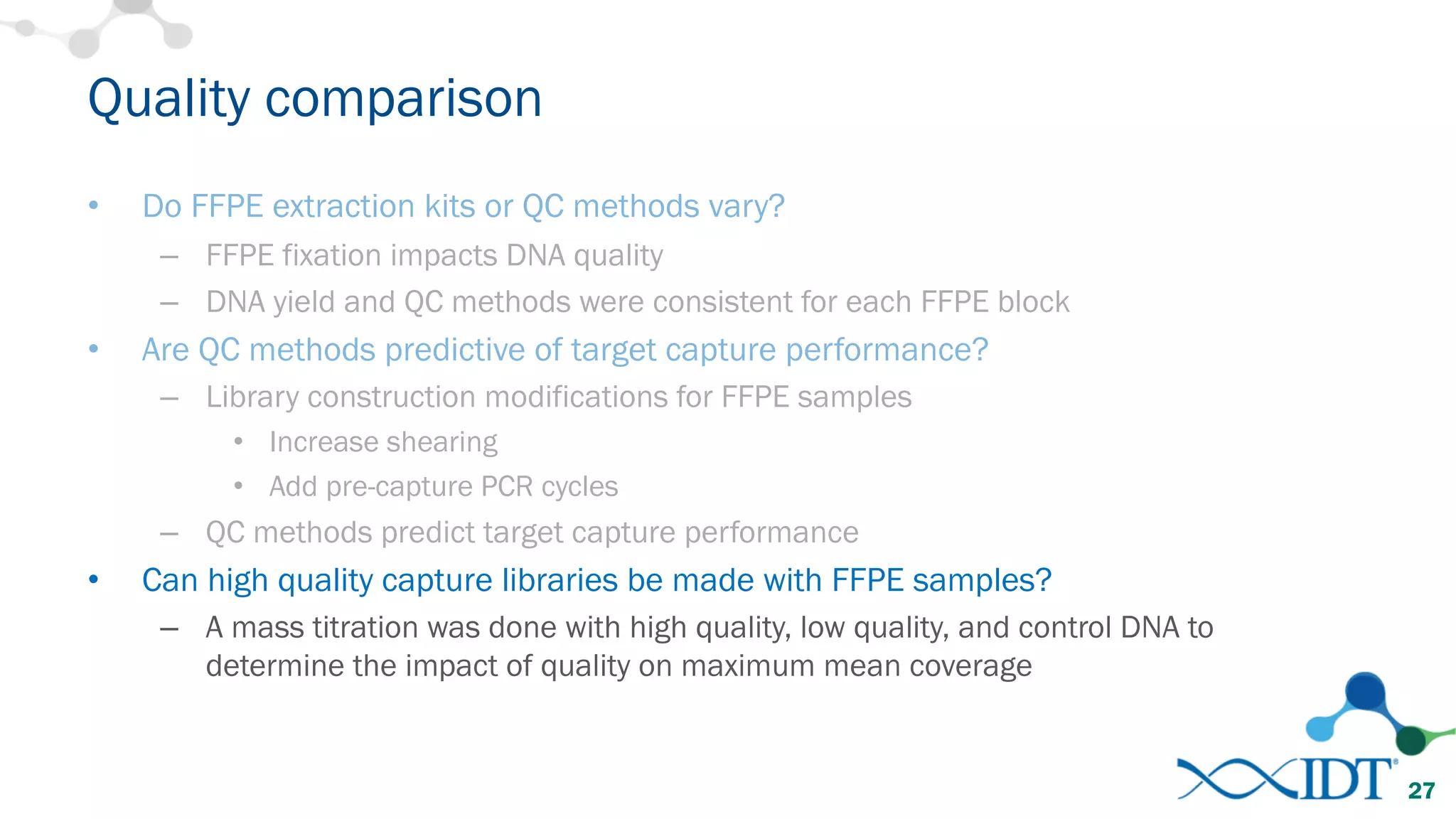
• Can high quality capture libraries be made with FFPE samples?
– A mass titration was done with high quality, low quality, and control DNA to
determine the impact of quality on maximum mean coverage
Quality comparison
27
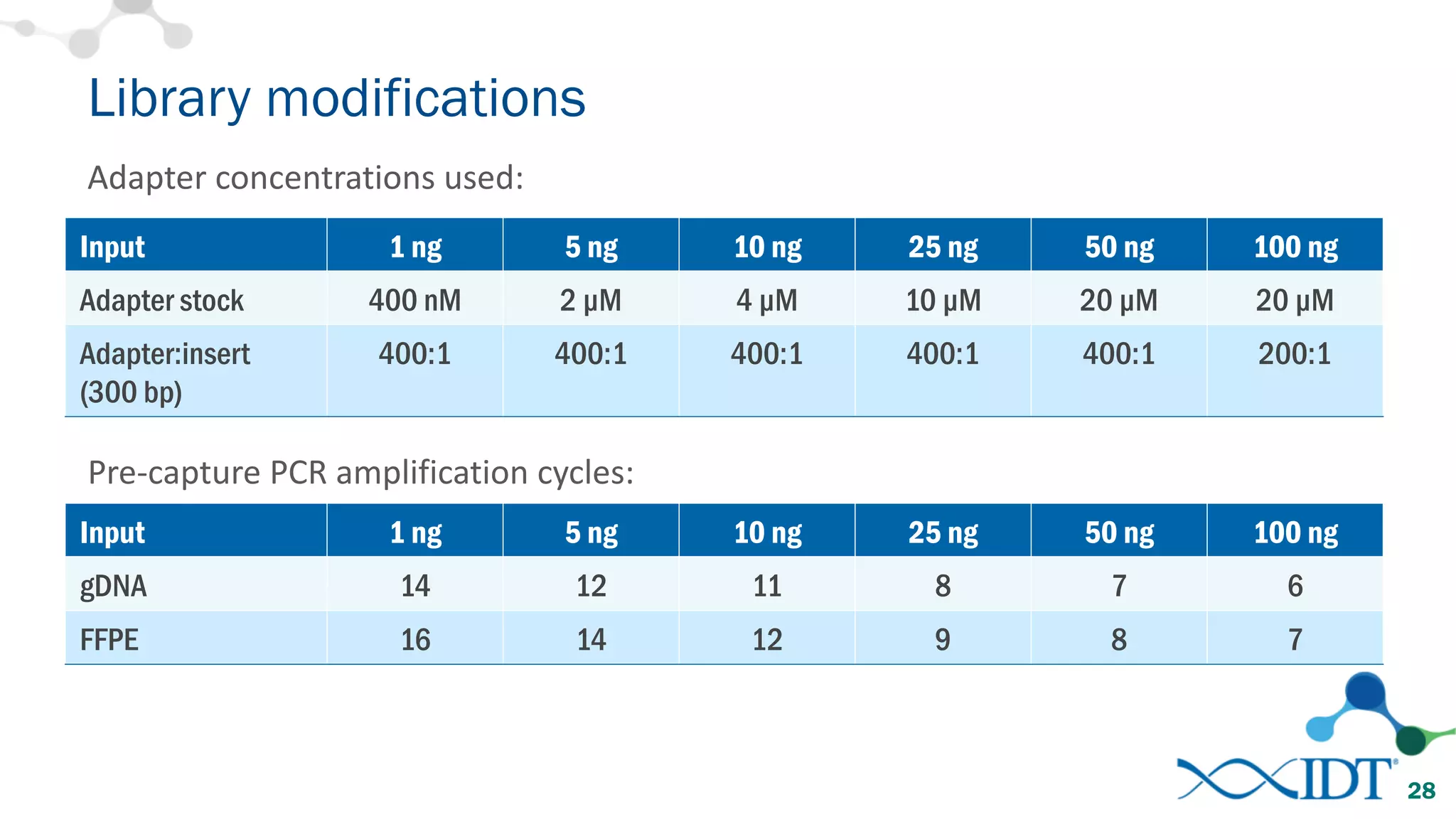
Library modifications
28
Input 1 ng 5 ng 10 ng 25 ng 50 ng 100 ng
gDNA 14 12 11 8 7 6
FFPE 16 14 12 9 8 7
Pre-capture	PCR	amplification	cycles:
Input 1 ng 5 ng 10 ng 25 ng 50 ng 100 ng
Adapter stock 400 nM 2 µM 4 µM 10 µM 20 µM 20 µM
Adapter:insert
(300 bp)
400:1 400:1 400:1 400:1 400:1 200:1
Adapter	concentrations	used:
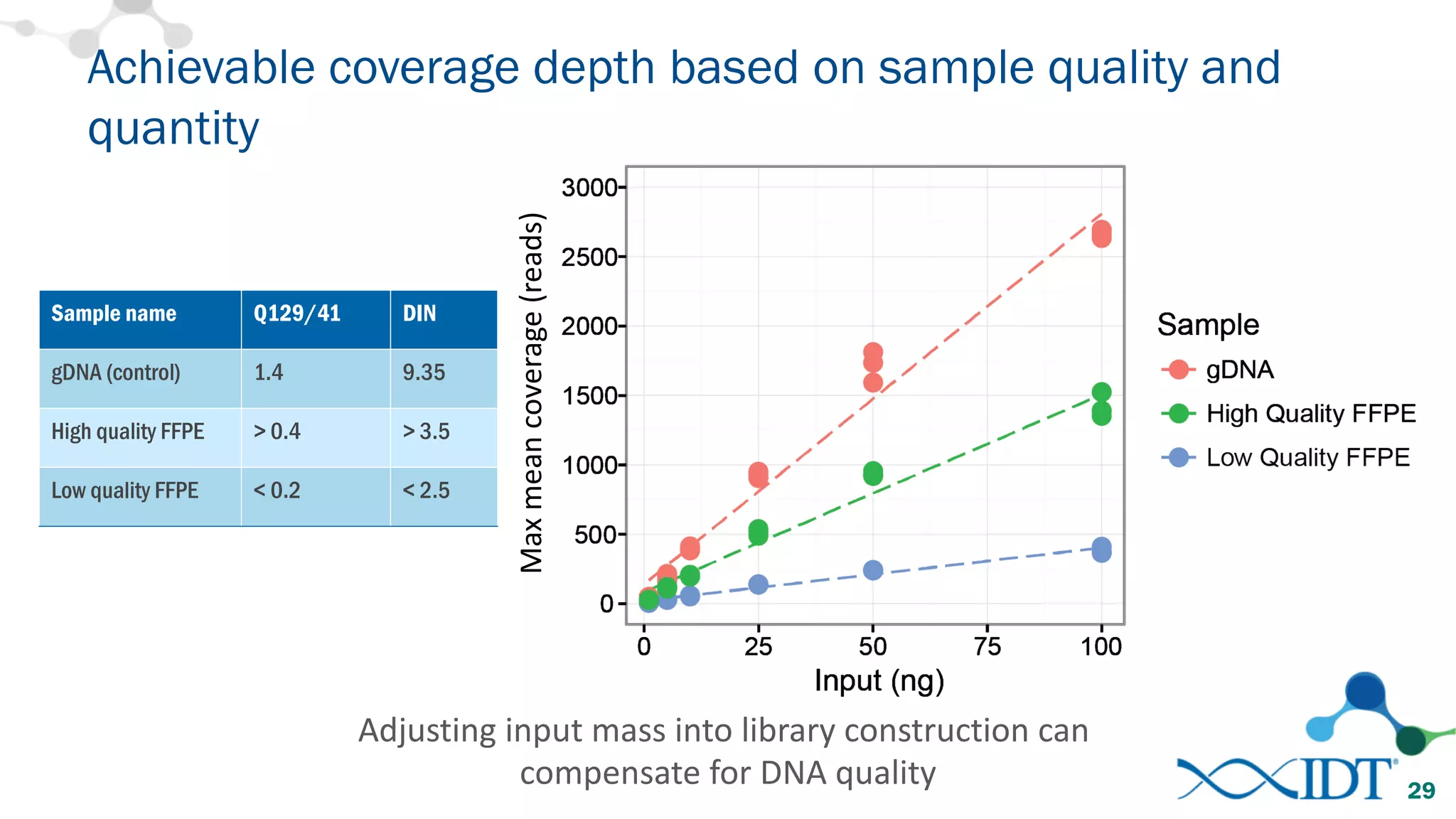
Achievable coverage depth based on sample quality and
quantity
29
Adjusting	input	mass	into	library	construction	can	
compensate	for	DNA	quality
Sample name Q129/41 DIN
gDNA (control) 1.4 9.35
High quality FFPE > 0.4 > 3.5
Low quality FFPE < 0.2 < 2.5
Max	mean	coverage	(reads)
Achievable coverage depth based on sample quality and
quantity
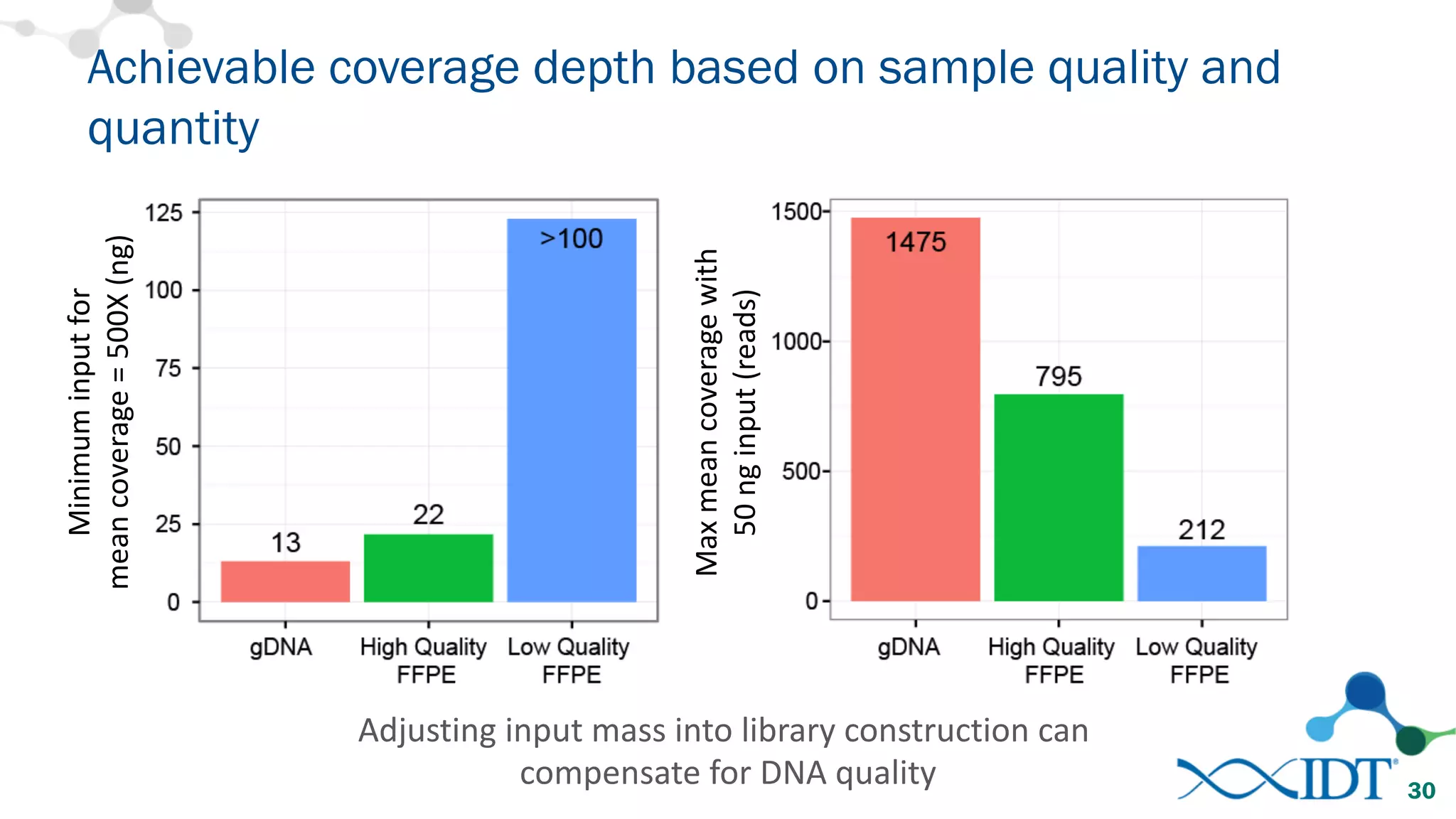
30
Max	mean	coverage	with	
50	ng	input	(reads)
Minimum	input	for	
mean	coverage	=	500X	(ng)
Adjusting	input	mass	into	library	construction	can	
compensate	for	DNA	quality
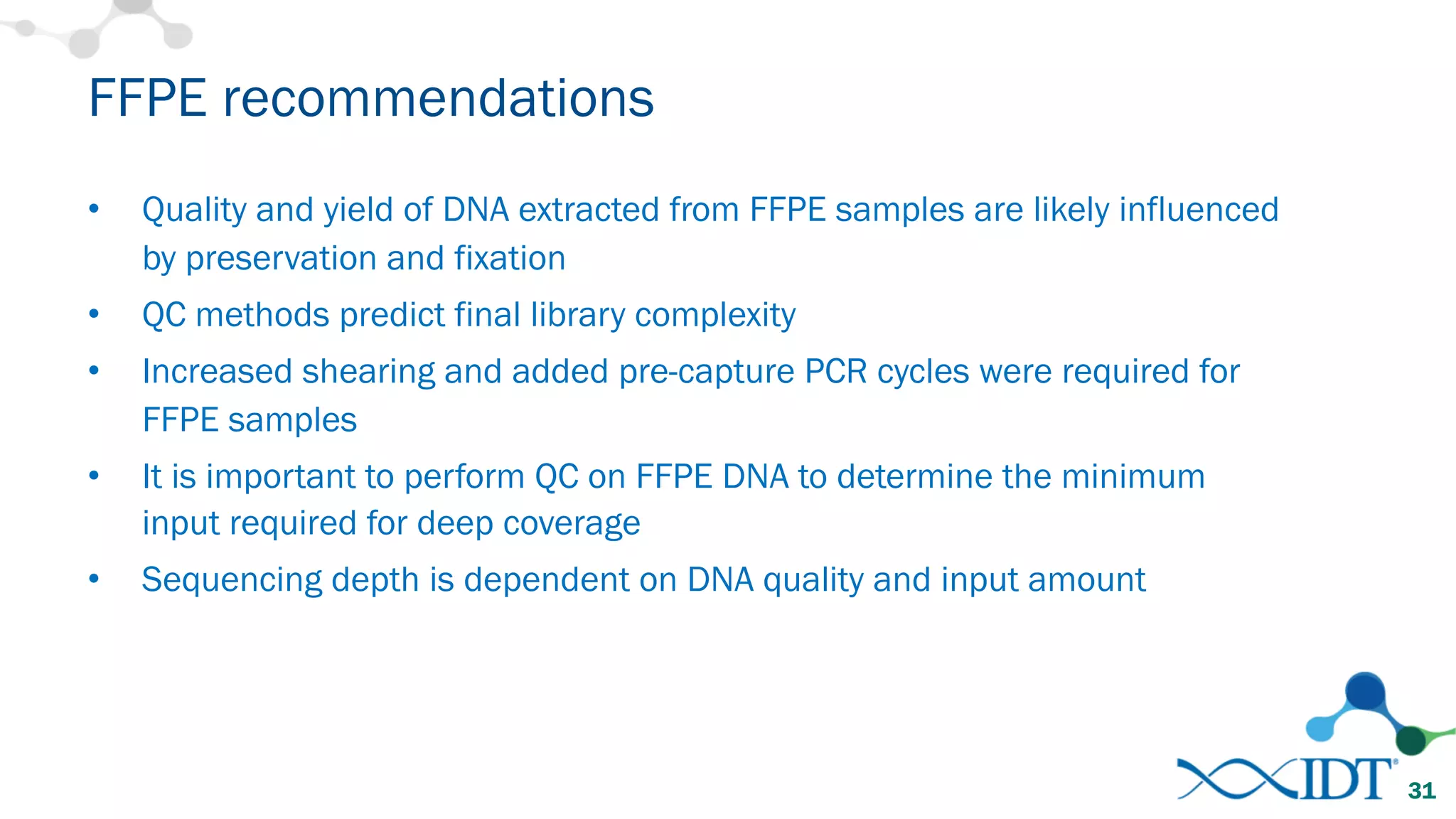
• Quality and yield of DNA extracted from FFPE samples are likely influenced
by preservation and fixation
• QC methods predict final library complexity
• Increased shearing and added pre-capture PCR cycles were required for
FFPE samples
• It is important to perform QC on FFPE DNA to determine the minimum
input required for deep coverage
• Sequencing depth is dependent on DNA quality and input amount
FFPE recommendations
31
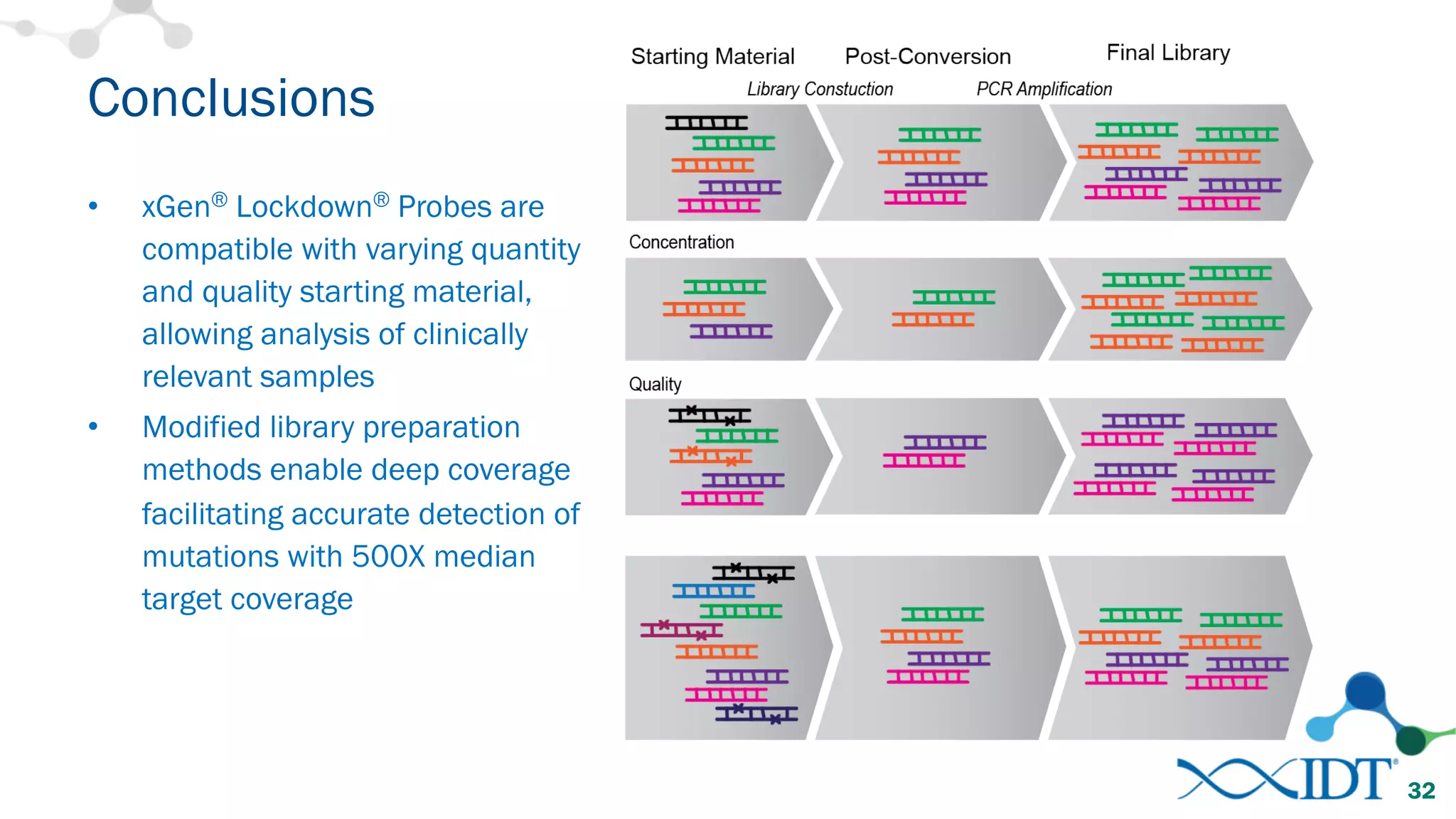
Conclusions
• xGen® Lockdown® Probes are
compatible with varying quantity
and quality starting material,
allowing analysis of clinically
relevant samples
• Modified library preparation
methods enable deep coverage
facilitating accurate detection of
mutations with 500X median
target coverage
32
“Best tech
support ever,
@idtdna!”
Questions?
TALK TO A PERSON.
Lauren SakowskiOur experts are available for consultation.
“The people
at @idtdna are
awesome. A+ for
customer service.”
Nikolai Braun
Contact us by web chat, email, or phone.
Find local contact details at: www.idtdna.com
Or email: applicationsupport@idtdna.com
THANK YOU!
We will email you the webinar recording
and slides next week.

Target capture of DNA from FFPE samples— recommendations for generating robust sequencing data

  • 1.
    Kristina Giorda PhD,Staff Scientist Target capture of DNA from FFPE samples—recommendations for generating robust sequencing data 1
  • 2.
    Outline • Review – Oncologymolecular profiling and formalin-fixed, paraffin-embedded (FFPE) tissue – FFPE extraction and gDNA QC methods – Library preparation and target enrichment • Experimental approach – Phase 1—Do FFPE extraction kits or QC methods vary? – Phase 2—Are QC methods predictive of library quality? – Phase 3—Can high quality capture libraries be made with FFPE samples? 2
  • 3.
    Precision health andoncology • White House Precision Health Initiative mission statement – To enable a new era of medicine through research, technology, and policies that empower patients, researchers, and providers to work together toward development of individualized care. • National Cancer Institute defines precision medicine as – Discovering unique therapies that treat an individual’s cancer based on the specific abnormalities of their tumor. From www.cancer.gov
  • 4.
    Mutation profiles mayinform cancer treatment Li T, Kung HJ, et al. (2013) Genotyping and genomic profiling of non-small-cell lung cancer: Implications for current and future therapies. J Clin Oncol, 31(8):1039–1049. 4
  • 5.
    FFPE tumor tissue •Preferred method for tissue preservation in clinical practice • Routinely used for multiple analyses methods, including immunohistochemistry (IHC), in situ hybridization, and next generation sequencing • Notorious for suboptimal DNA quantity and quality • Sample quality evaluation is key to optimizing downstream processing 5
  • 6.
    Variable DNA yieldand quality from FFPE blocks Arreaza G, Qiu P, et al. (2016) Pre-analytical considerations for successful next-generation sequencing (NGS): Challenges and opportunities for formalin-fixed and paraffin-embedded tumor tissue (FFPE) samples. Int J Mol Sci, 17(9):1579. 6
  • 7.
    Outline • Review – Oncologymolecular profiling and FFPE tissue – FFPE extraction and gDNA QC methods – Library preparation and target enrichment • Experimental approach – Phase 1—Do FFPE extraction kits or QC methods vary? – Phase 2—Are QC methods predictive of library quality? – Phase 3—Can high quality capture libraries be made with FFPE samples? 7
  • 8.
    FFPE sample extractionmethods • Remove paraffin with QIAGEN Deparaffinization Solution • FFPE extraction options – QIAamp® DNA FFPE Tissue Kit (column-based; QIAGEN ) – ReliaPrep™ FFPE gDNA Miniprep System (column-based; Promega ) – E.Z.N.A® FFPE DNA Kit (column-based; Omega Bio-tek ) – Mag-Bind® FFPE DNA Kit (bead-based; Omega Bio-tek ) 8 Sample Remove paraffin Lyse Heat Column-based DNA purification Bead-based DNA purification
  • 9.
    FFPE QC methods—TapeStation®Instrument (Agilent) http://www.agilent.com/cs/library/applications/5991-5258EN.pdf 9 DNA Integrity Number (DIN)
  • 10.
    FFPE QC methods—hgDNAQuantification and QC Kit (KAPA) https://www.kapabiosystems.com/assets/KAPA_hgDNA_Quantification_and_QC_Kit_TDS.pdf 10
  • 11.
    Outline • Review – Oncologymolecular profiling and FFPE tissue – FFPE extraction and gDNA QC methods – Library preparation and target enrichment • Experimental approach – Phase 1—Do FFPE extraction kits or QC methods vary? – Phase 2—Are QC methods predictive of library quality? – Phase 3—Can high quality capture libraries be made with FFPE samples? 11
  • 12.
  • 13.
    • IDT xGen®Lockdown® Probes – Individually synthesized – Individual QC for every probe – Individually normalized – Pooled NGS target capture enrichment 13
  • 14.
    Target enrichment viahybridization 14
  • 15.
    xGen® Lockdown® Probesare individually synthesized and QCed Each xGen® Lockdown® Probe receives an individual ESI-MS analysis 15 Failed Remade Full length Truncated Full length
  • 16.
    Outline • Review – Oncologymolecular profiling and FFPE tissue – FFPE extraction and gDNA QC methods – Library preparation and target enrichment • Experimental approach – Phase 1—Do FFPE extraction kits or QC methods vary? – Phase 2—Are QC methods predictive of library quality? – Phase 3—Can high quality capture libraries be made with FFPE samples? 16
  • 17.
    Extraction kit comparison •Do FFPE extraction kits or QC methods vary? • DNA was isolated from 5 FFPE blocks – 10 µm scrolls for each extraction – 4 different kits: • QIAamp® DNA FFPE Tissue Kit (column-based; QIAGEN ) • ReliaPrep™ FFPE gDNA Miniprep System (column-based; Promega ) • E.Z.N.A® FFPE DNA Kit (column-based; Omega Bio-tek ) • Mag-Bind® FFPE DNA Kit (bead-based; Omega Bio-tek ) – Samples were assessed with Qubit® dsDNA BR Assay (Thermo Fisher), TapeStation® instrument (Agilent), and the hgDNA Quantification and QC Kit (Kapa Biosystems) 17
  • 18.
    Extraction and purificationdetails QIAGEN Promega Omega-column Omega-beads Deparaffinization 160 µL/56 oC/3 min Lysis, Proteinase K 56oC/1 hr 56oC/1 hr 55oC/3 hr 55oC/3 hr (3–5 hr) Reverse crosslinking 90oC/60 min 80oC/60 min 90oC/30 min (10–30 min) 90oC/45 min (45–60 min) RNase A 200 µg/RT/ 2 min 40 µg/RT/ 5 min 200 µg/RT/ 5 min 100 µg/RT/ 5 min DNA cleanup Column Beads Elution 60 µL 18 Parentheses show recommended ranges
  • 19.
    FFPE fixation impactsDNA quality 19 DNA yield and DIN were consistent for each FFPE block
  • 20.
    QC methods areconsistent 20 Sample DIN and quality scores were consistent for each block Qualityscore(Q129/Q41)
  • 21.
    • Do FFPEextraction kits or QC methods vary? – FFPE fixation impacts DNA quality – DNA yield and QC methods were consistent for each FFPE block • Are QC methods predictive of target capture performance? – Library construction modifications for FFPE samples • Fragmentation optimization • Pre-capture PCR amplification – Effect of sample quality on library quality using fixed 10 ng input into library construction Extraction kit comparison 21
  • 22.
    Library modifications 22 FFPE samples were sheared with 200 bp conditions to achieve 300 bpinserts Post-shearing Fragmentation End repair and A-tailing Adapter ligation Bead cleanup Library amplification Bead cleanup
  • 23.
    Library modifications 23 Input 10ng of library gDNA 11 cycles FFPE 12 cycles Pre-capture PCR amplification: Input 10 ng of library Adapter stock 4 µM Adapter:insert (300 bp) 400:1 Adapter concentration used:Fragmentation End repair and A-tailing Adapter ligation Bead cleanup Library amplification Bead cleanup
  • 24.
    Target capture enrichment •xGen® Acute Myeloid Leukemia Cancer Panel – Target regions within 260 genes (1.2 Mb target area) • 500 ng barcoded library per capture https://www.idtdna.com/pages/products/nextgen/target-capture/xgen-lockdown-panels/xgen-aml- cancer-panel 24
  • 25.
  • 26.
    Effect of samplequality on maximum mean coverage 26 QC results predict maximum mean coverage Max mean coverage (reads) Quality score (Q129/Q41) DIN
  • 27.
    • Do FFPEextraction kits or QC methods vary? – FFPE fixation impacts DNA quality – DNA yield and QC methods were consistent for each FFPE block • Are QC methods predictive of target capture performance? – Library construction modifications for FFPE samples • Increase shearing • Add pre-capture PCR cycles – QC methods predict target capture performance • Can high quality capture libraries be made with FFPE samples? – A mass titration was done with high quality, low quality, and control DNA to determine the impact of quality on maximum mean coverage Quality comparison 27
  • 28.
    Library modifications 28 Input 1ng 5 ng 10 ng 25 ng 50 ng 100 ng gDNA 14 12 11 8 7 6 FFPE 16 14 12 9 8 7 Pre-capture PCR amplification cycles: Input 1 ng 5 ng 10 ng 25 ng 50 ng 100 ng Adapter stock 400 nM 2 µM 4 µM 10 µM 20 µM 20 µM Adapter:insert (300 bp) 400:1 400:1 400:1 400:1 400:1 200:1 Adapter concentrations used:
  • 29.
    Achievable coverage depthbased on sample quality and quantity 29 Adjusting input mass into library construction can compensate for DNA quality Sample name Q129/41 DIN gDNA (control) 1.4 9.35 High quality FFPE > 0.4 > 3.5 Low quality FFPE < 0.2 < 2.5 Max mean coverage (reads)
  • 30.
    Achievable coverage depthbased on sample quality and quantity 30 Max mean coverage with 50 ng input (reads) Minimum input for mean coverage = 500X (ng) Adjusting input mass into library construction can compensate for DNA quality
  • 31.
    • Quality andyield of DNA extracted from FFPE samples are likely influenced by preservation and fixation • QC methods predict final library complexity • Increased shearing and added pre-capture PCR cycles were required for FFPE samples • It is important to perform QC on FFPE DNA to determine the minimum input required for deep coverage • Sequencing depth is dependent on DNA quality and input amount FFPE recommendations 31
  • 32.
    Conclusions • xGen® Lockdown®Probes are compatible with varying quantity and quality starting material, allowing analysis of clinically relevant samples • Modified library preparation methods enable deep coverage facilitating accurate detection of mutations with 500X median target coverage 32
  • 33.
    “Best tech support ever, @idtdna!” Questions? TALKTO A PERSON. Lauren SakowskiOur experts are available for consultation. “The people at @idtdna are awesome. A+ for customer service.” Nikolai Braun Contact us by web chat, email, or phone. Find local contact details at: www.idtdna.com Or email: applicationsupport@idtdna.com
  • 34.
    THANK YOU! We willemail you the webinar recording and slides next week.