Transformer Presented by – DHEERENDRA UPADHYAY  ( EN 3 rd  yr ) Electrical & Electronics Engineering HINDUSTAN COLLEGE OF SCIENCE & TECHNOLOGY
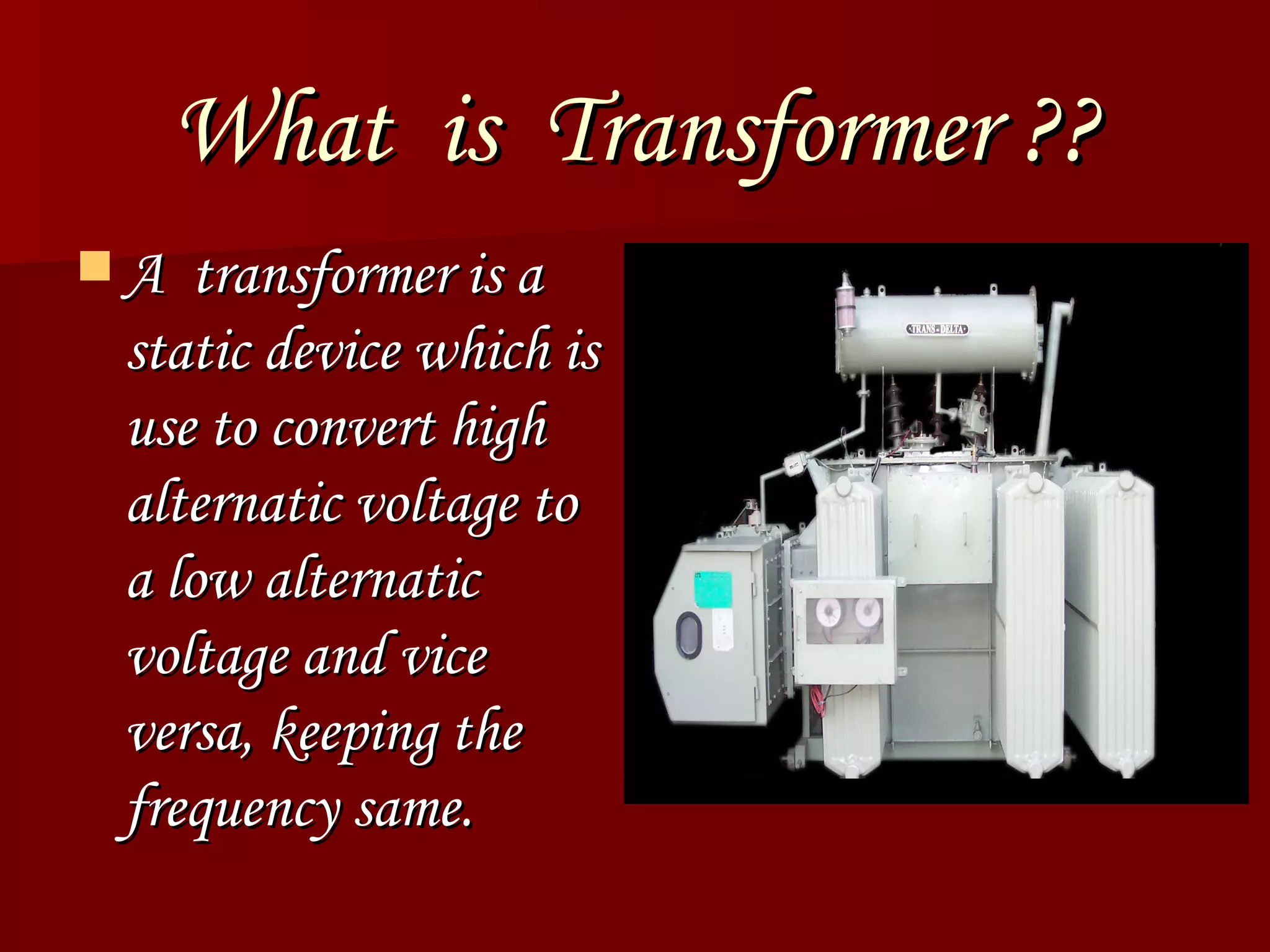
What  is  Transformer ?? A  transformer is a static device which is use to convert high alternatic voltage to a low alternatic voltage and vice versa, keeping the frequency same.
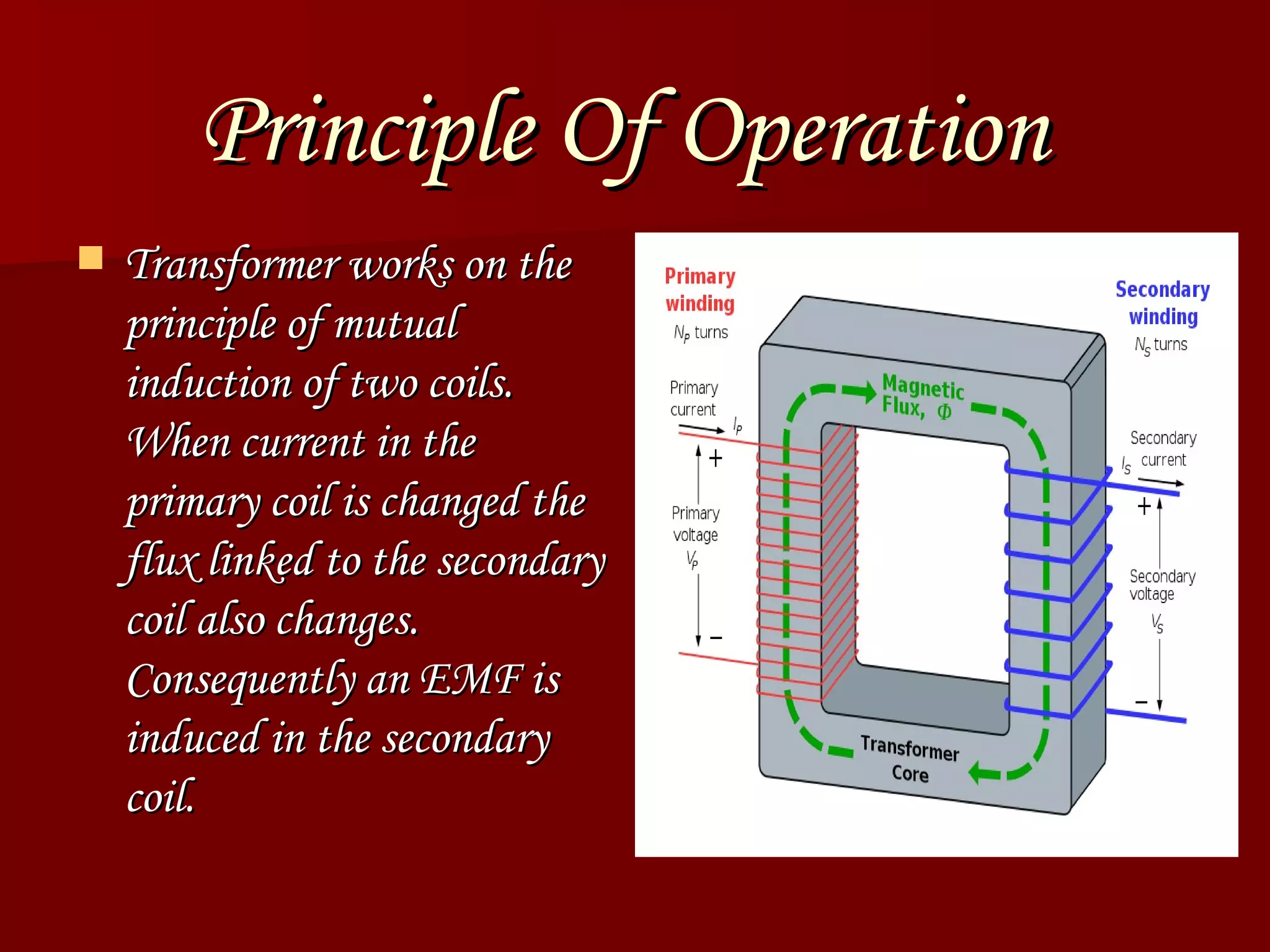
Principle Of Operation   Transformer works on the principle of mutual induction of two coils. When current in the primary coil is changed the flux linked to the secondary coil also changes. Consequently an EMF is induced in the secondary coil.
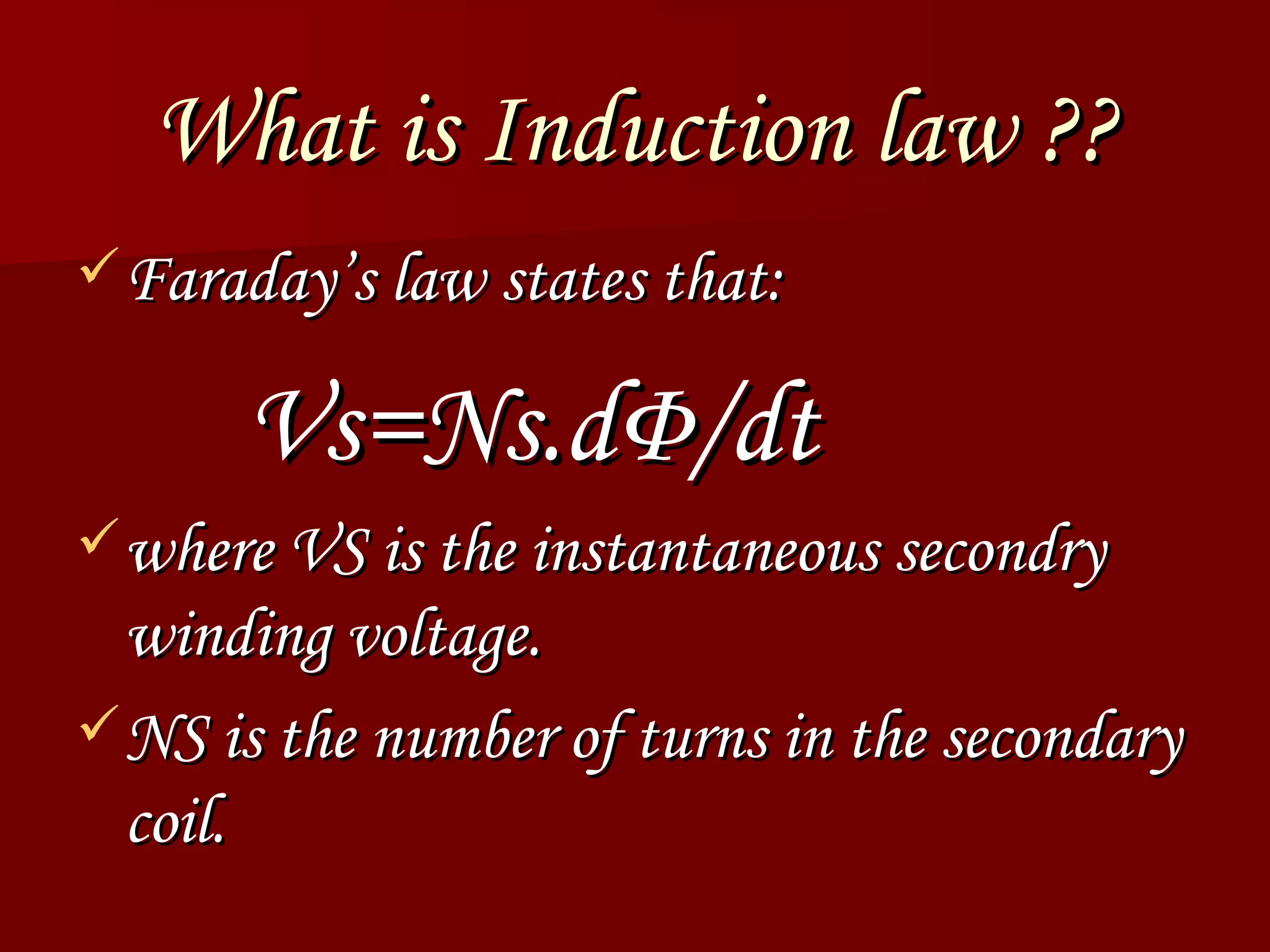
What is Induction law  ?? Faraday’s law states that: Vs=Ns.d Φ /dt   where  VS  is the instantaneous secondry winding voltage.  NS  is the number of turns in the secondary coil.
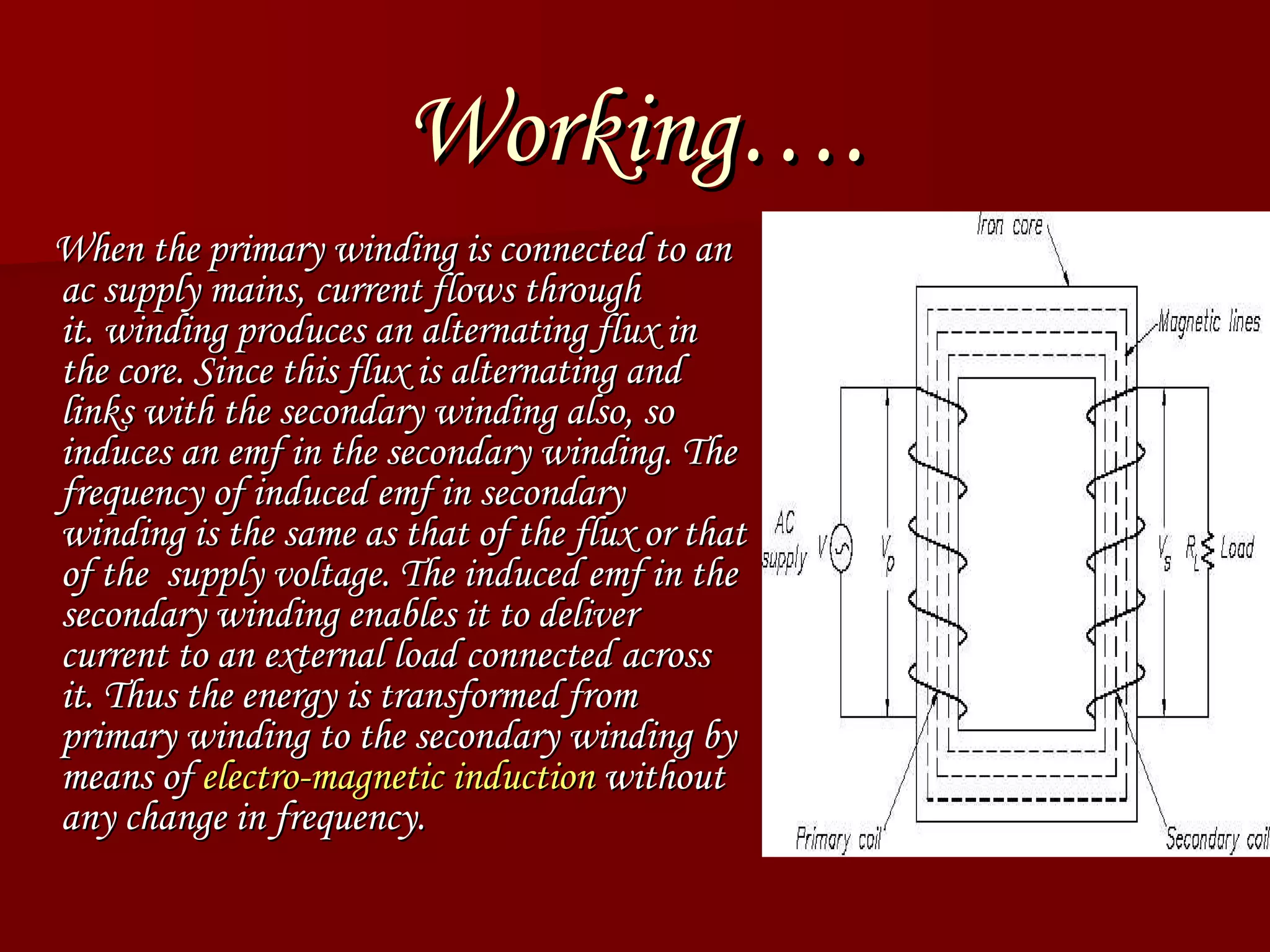
Working…. When the primary winding is connected to an ac supply mains, current flows through it. winding produces an alternating flux in the core. Since this flux is alternating and links with the secondary winding also, so induces an emf in the secondary winding. The frequency of induced emf in secondary winding is the same as that of the flux or that of the  supply voltage. The induced emf in the secondary winding enables it to deliver current to an external load connected across it. Thus the energy is transformed from primary winding to the secondary winding by means of  electro-magnetic induction  without any change in frequency. 
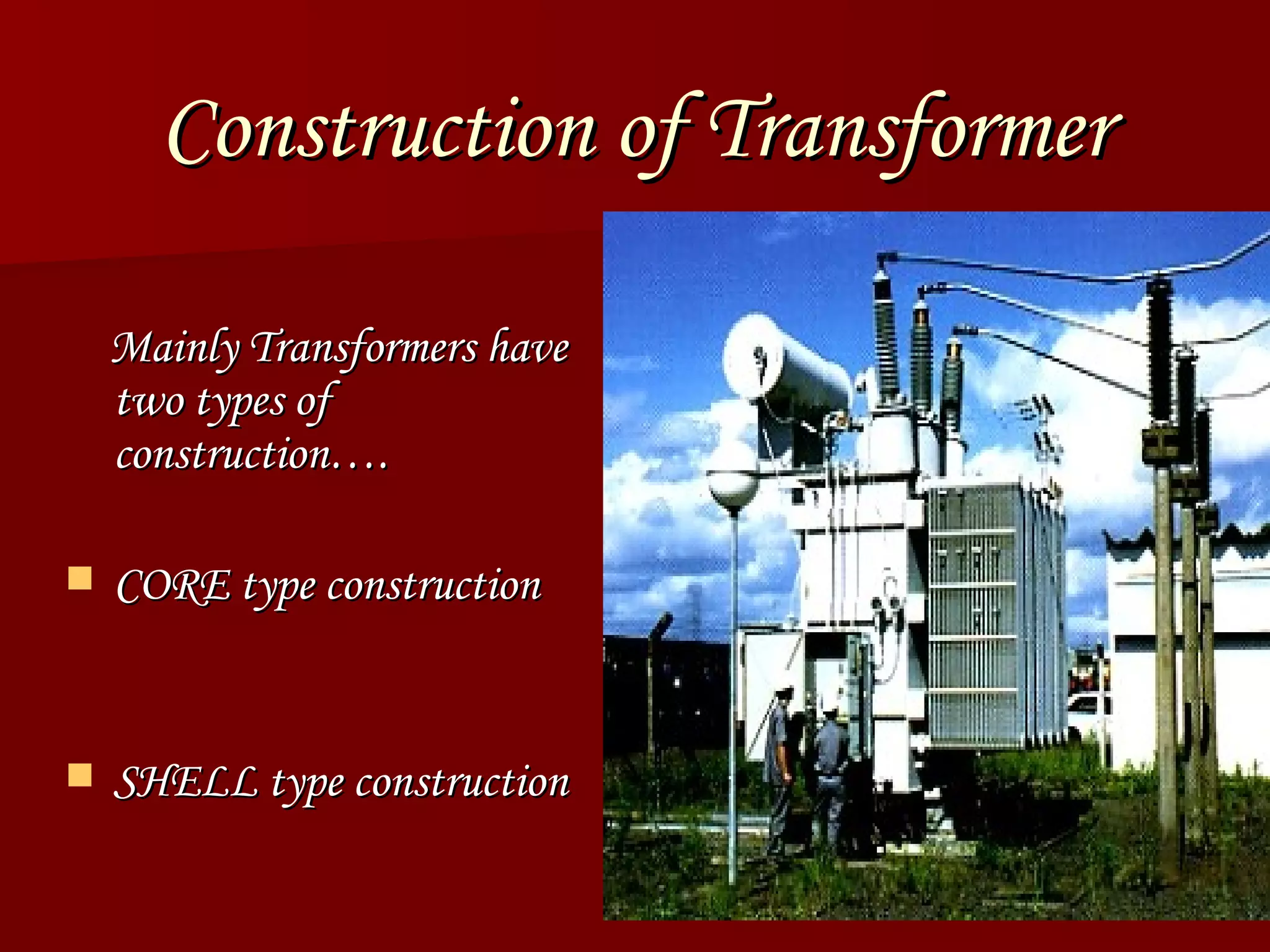
Construction of Transformer Mainly Transformers have two types of construction…. CORE type construction SHELL type construction
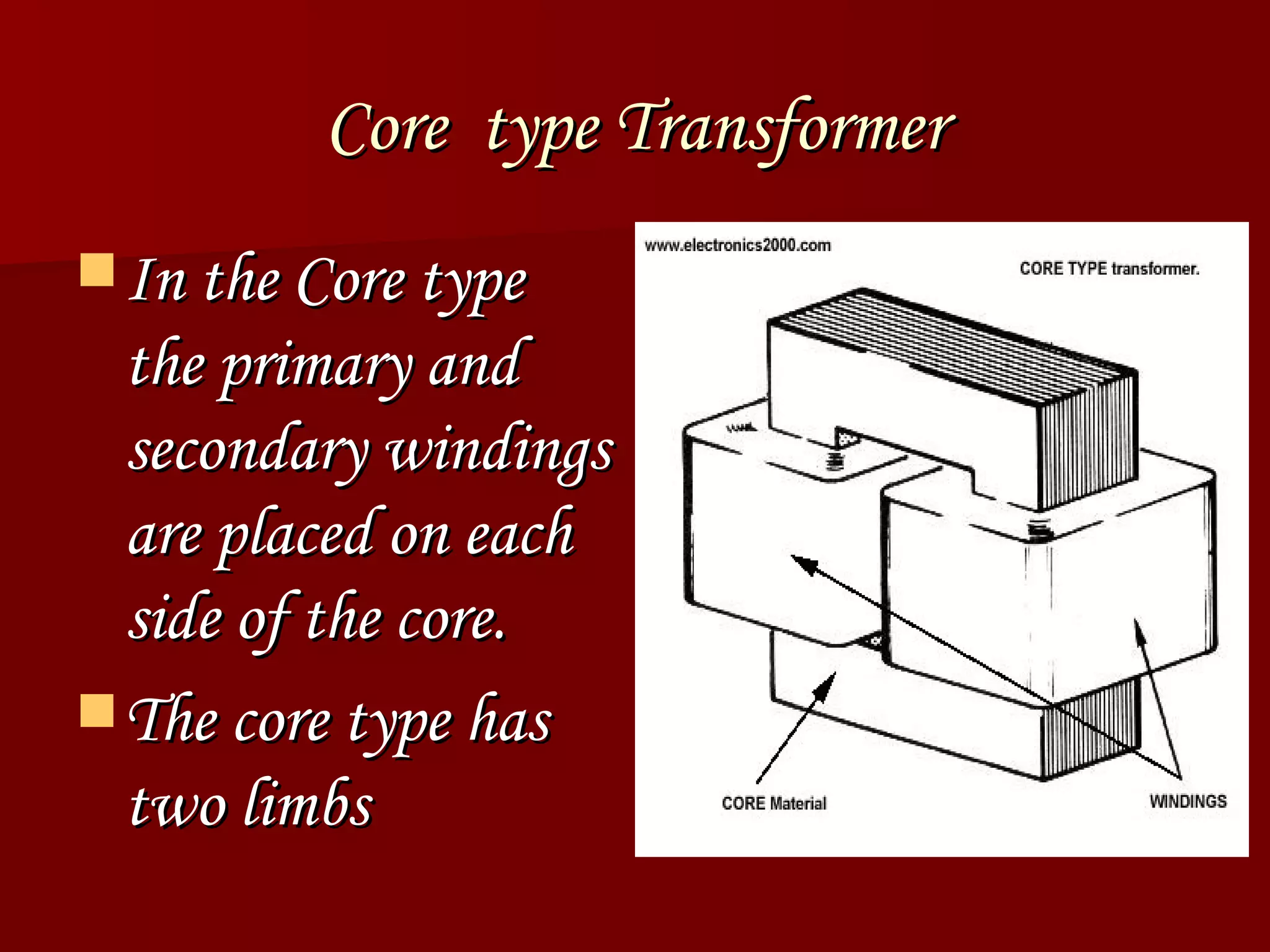
Core  type Transformer In the Core type the primary and secondary windings are placed on each side of the core.  The core type has two limbs
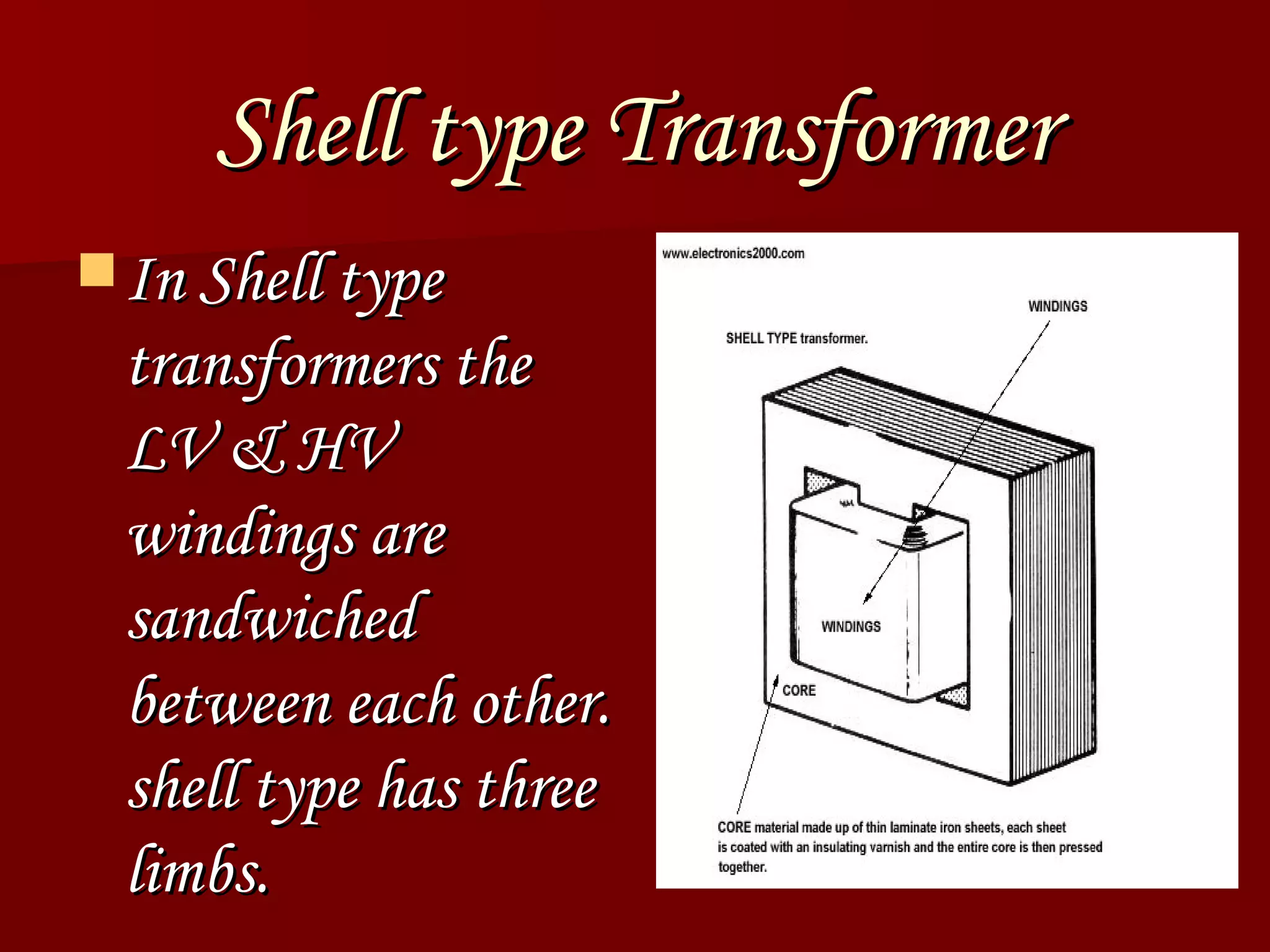
Shell type Transformer In Shell type transformers the LV & HV windings are sandwiched between each other. shell type has three limbs.
Types of Transformer Step UP Transformer  : A transformer in which Ns>Np is called a step up transformer. A step up transformer is a transformer which converts low alternatic voltage to high alternatic voltage.  Step DOWN Transformer  : A transformer in which Np>Ns is called a step down transformer. A step down transformer is a transformer which converts high alternatic voltage to low alternatic voltage.
A wide variety of transformer designs are used for different applications. Auto-transformer Poly-phase transormer Leakage transformer Resonant transformer Instrument transformers
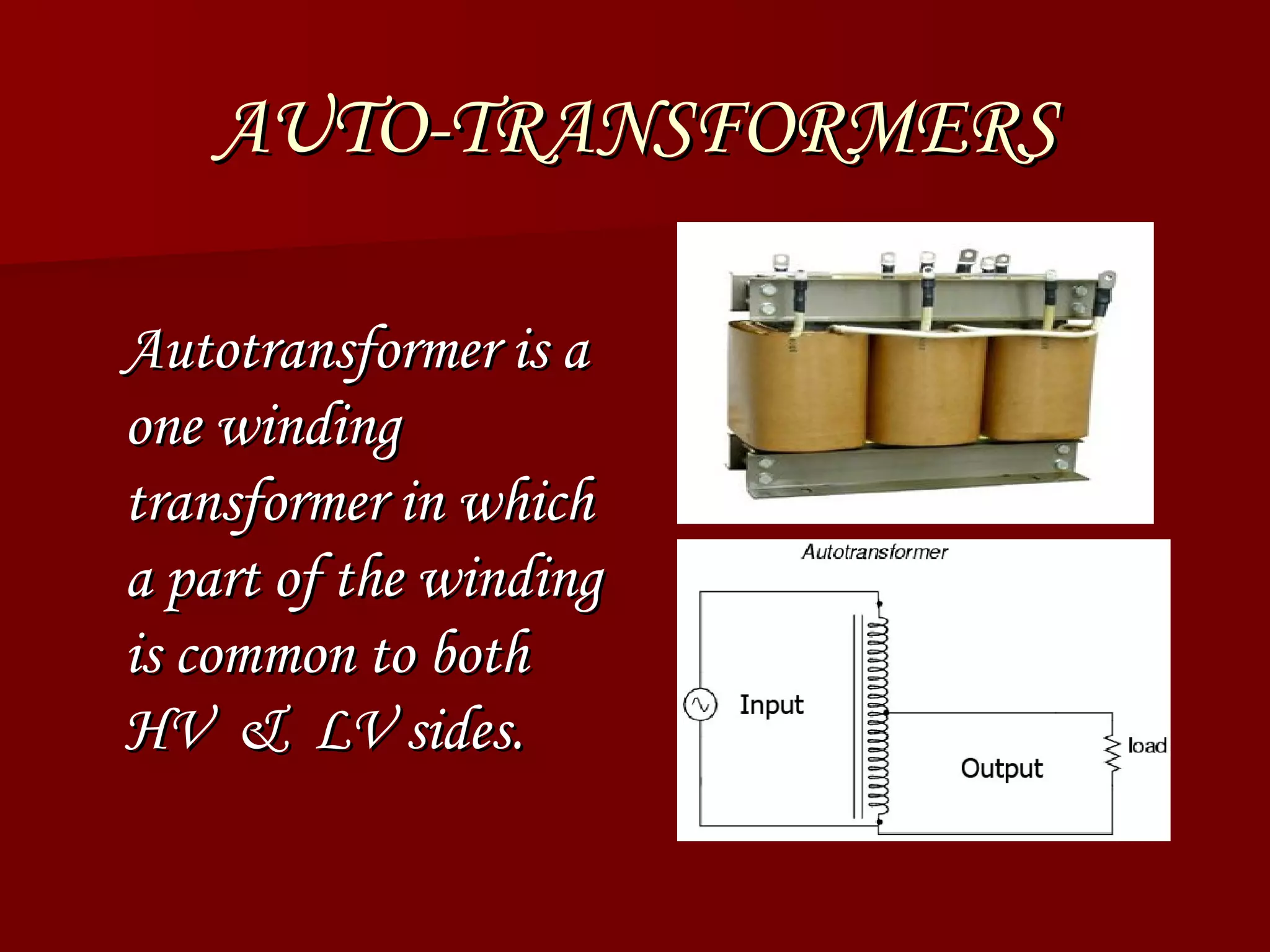
AUTO-TRANSFORMERS Autotransformer is a one winding transformer in which a part of the winding is common to both HV  &  LV sides.
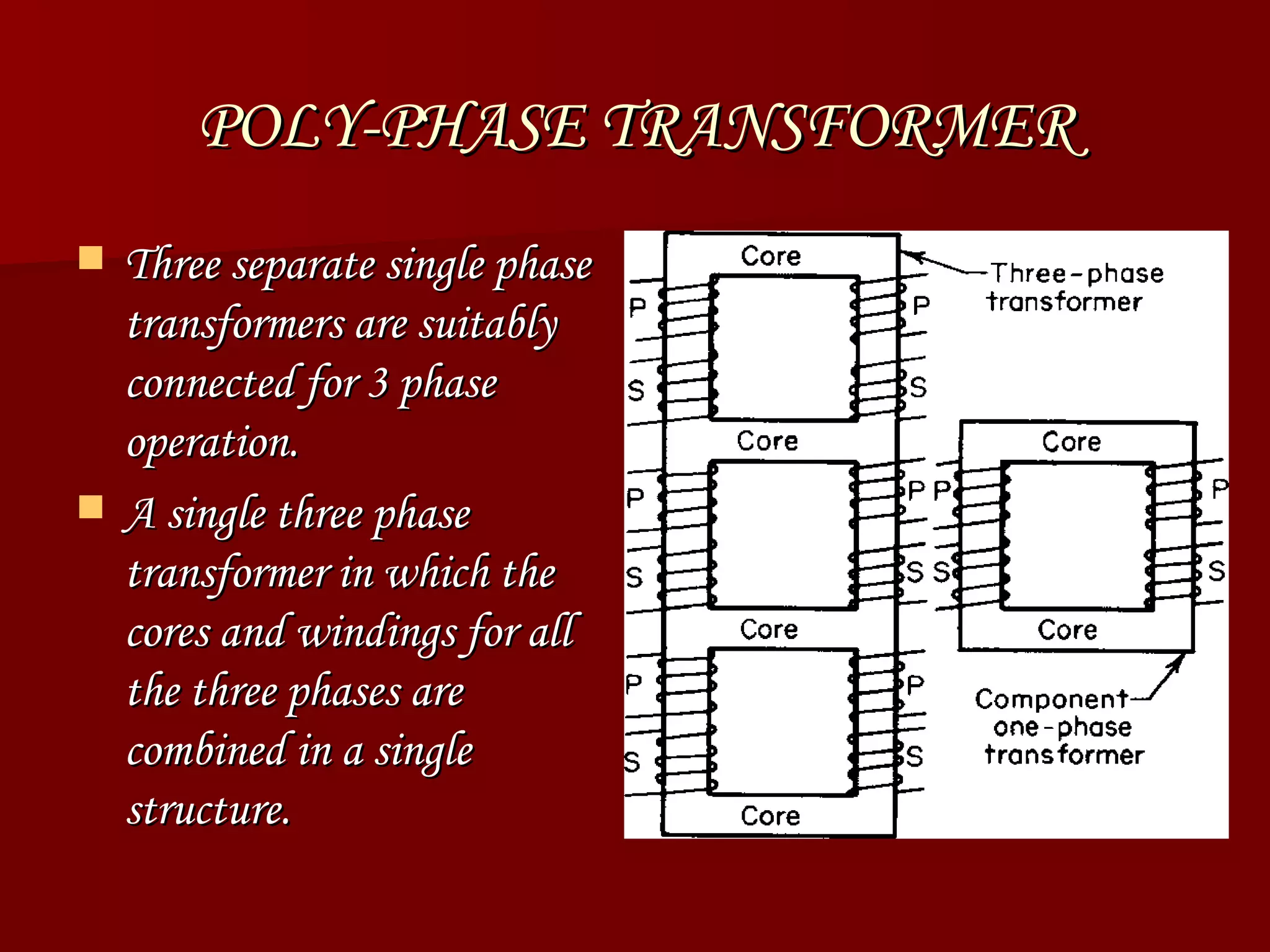
POLY-PHASE TRANSFORMER Three separate single phase transformers are suitably connected for 3 phase operation. A single three phase transformer in which the cores and windings for all the three phases are combined in a single structure.
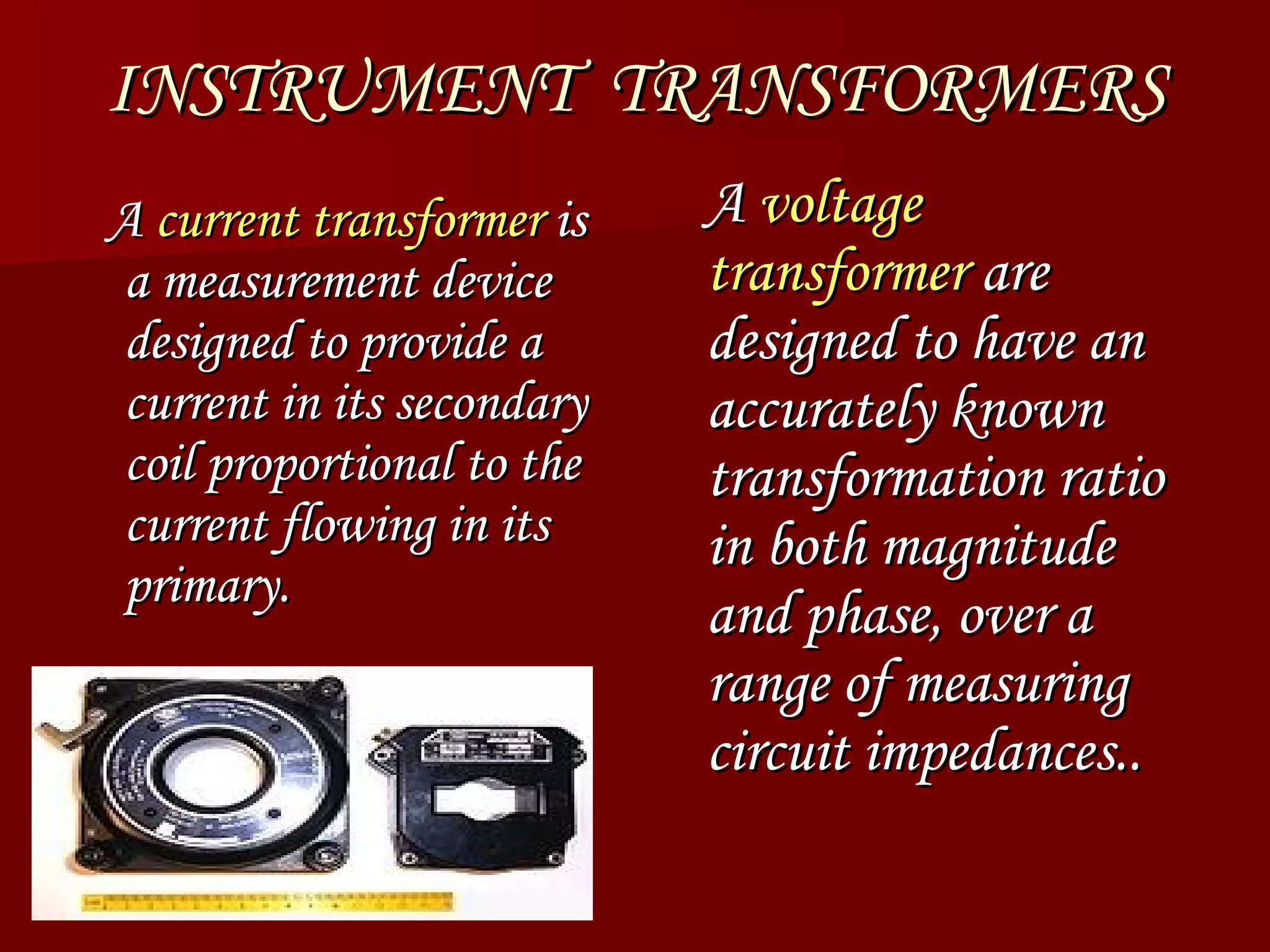
INSTRUMENT  TRANSFORMERS A current transformer is a measurement device designed to provide a current in its secondary coil proportional to the current flowing in its primary. A voltage transformer are designed to have an accurately known transformation ratio in both magnitude and phase, over a range of measuring circuit impedances..  A  current transformer  is a measurement device designed to provide a current in its secondary coil proportional to the current flowing in its primary. A  voltage transformer  are designed to have an accurately known transformation ratio in both magnitude and phase, over a range of measuring circuit impedances..
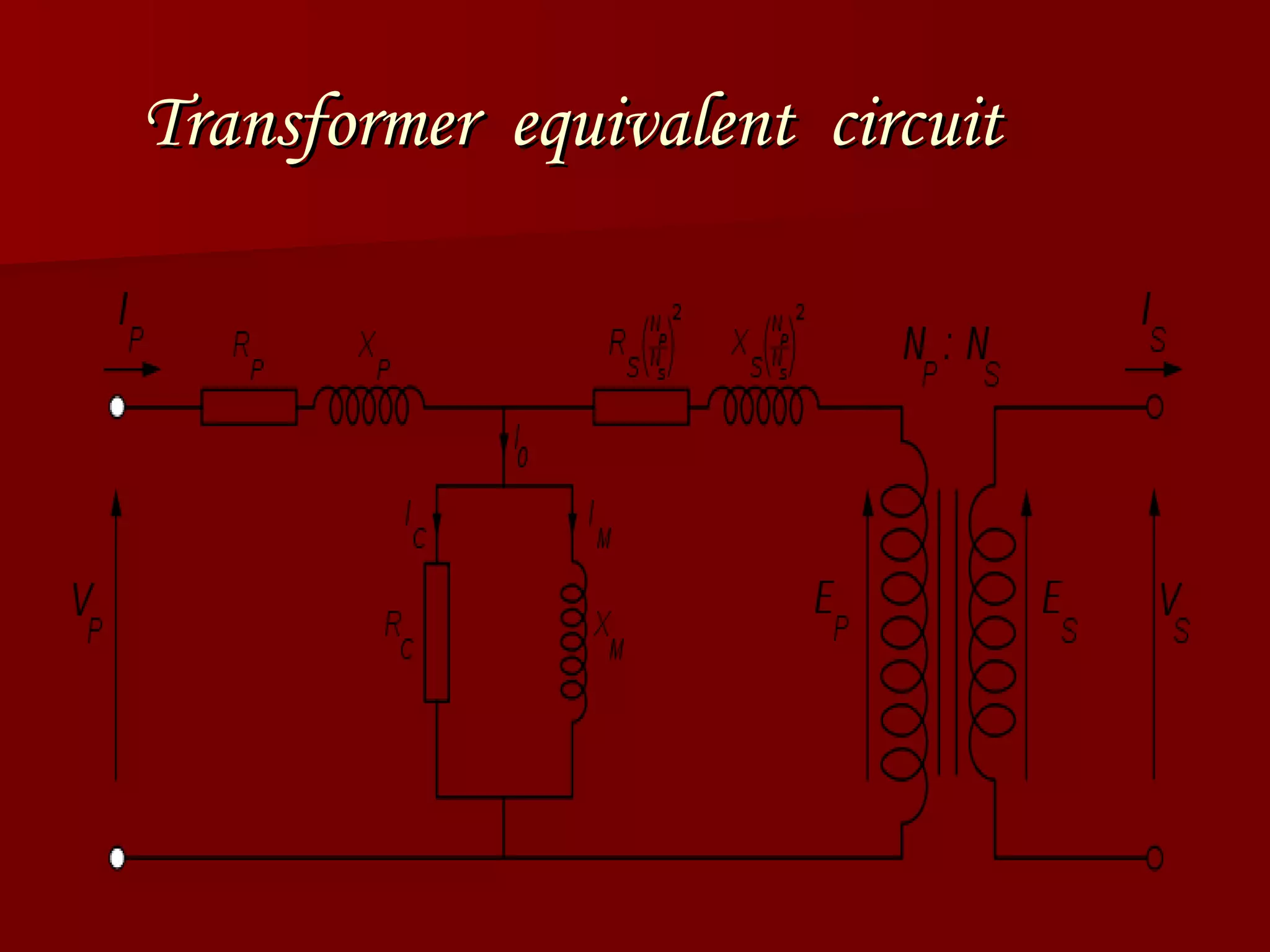
Transformer  equivalent  circuit
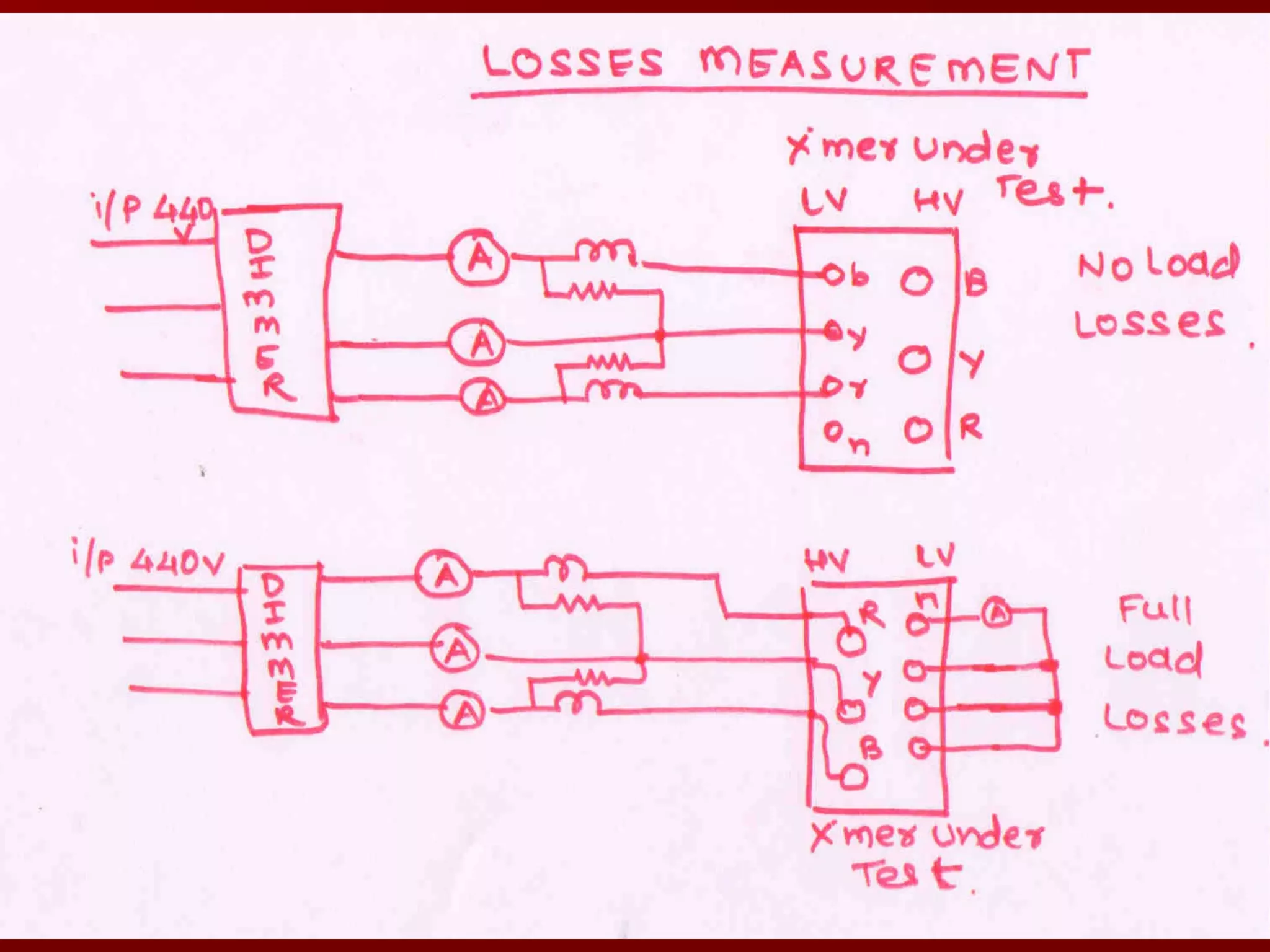
Losses In Transformers…. Iron Losses –  These are the hysteresis loss and eddy current loss, constant loss.  Each time the magnetic field is reversed, a small amount of energy is lost due to  hysteresis  within the core.     The  eddy current loss  is a complex function of the square of supply frequency and inverse square of the material thickness   Copper Loss :Current flowing through the windings causes  resistive heating  of the conductors. At higher frequencies,  skin effect  and  proximity effect  create additional winding resistance and losses.
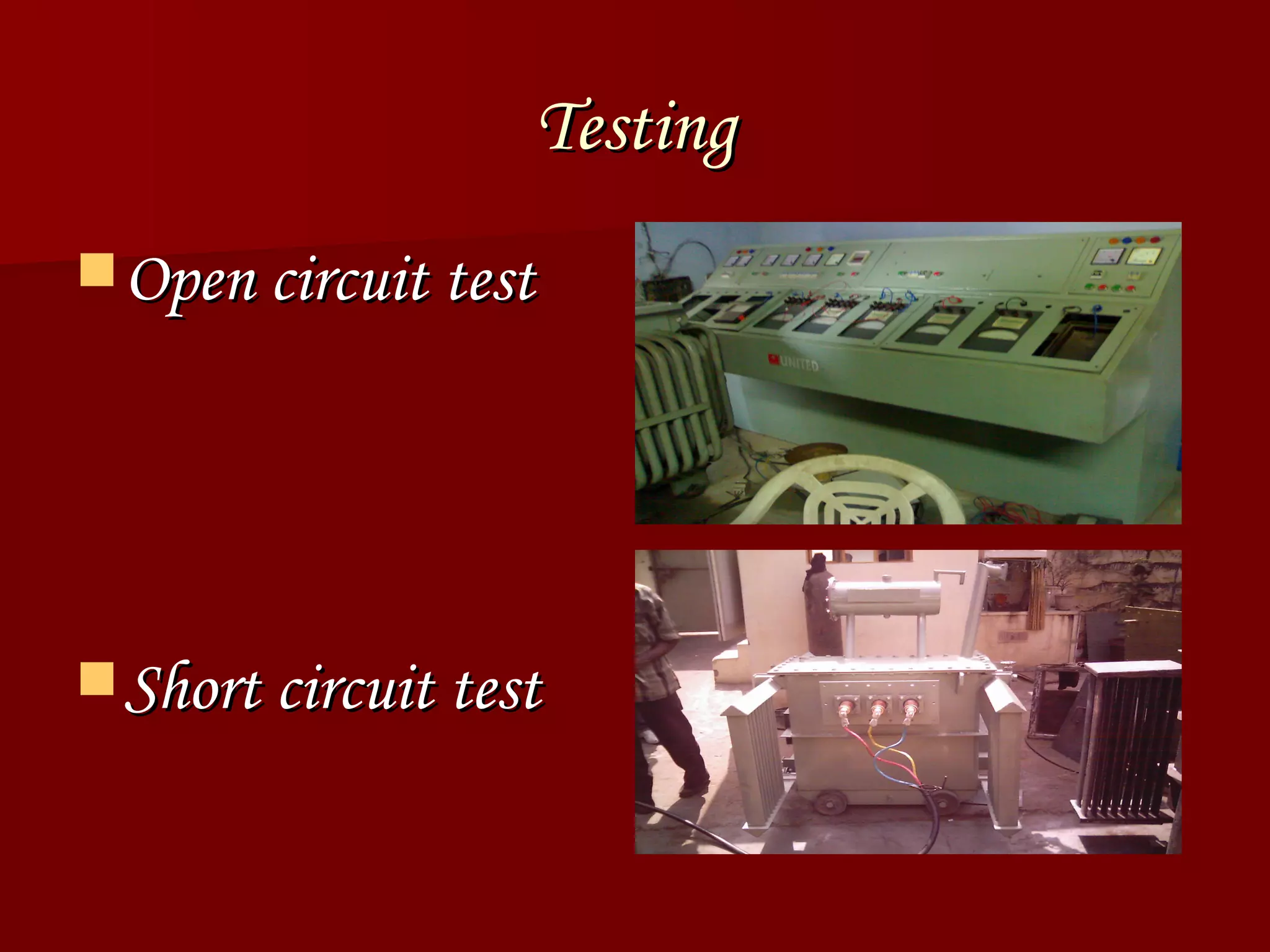
Testing Open circuit test Short circuit test
 
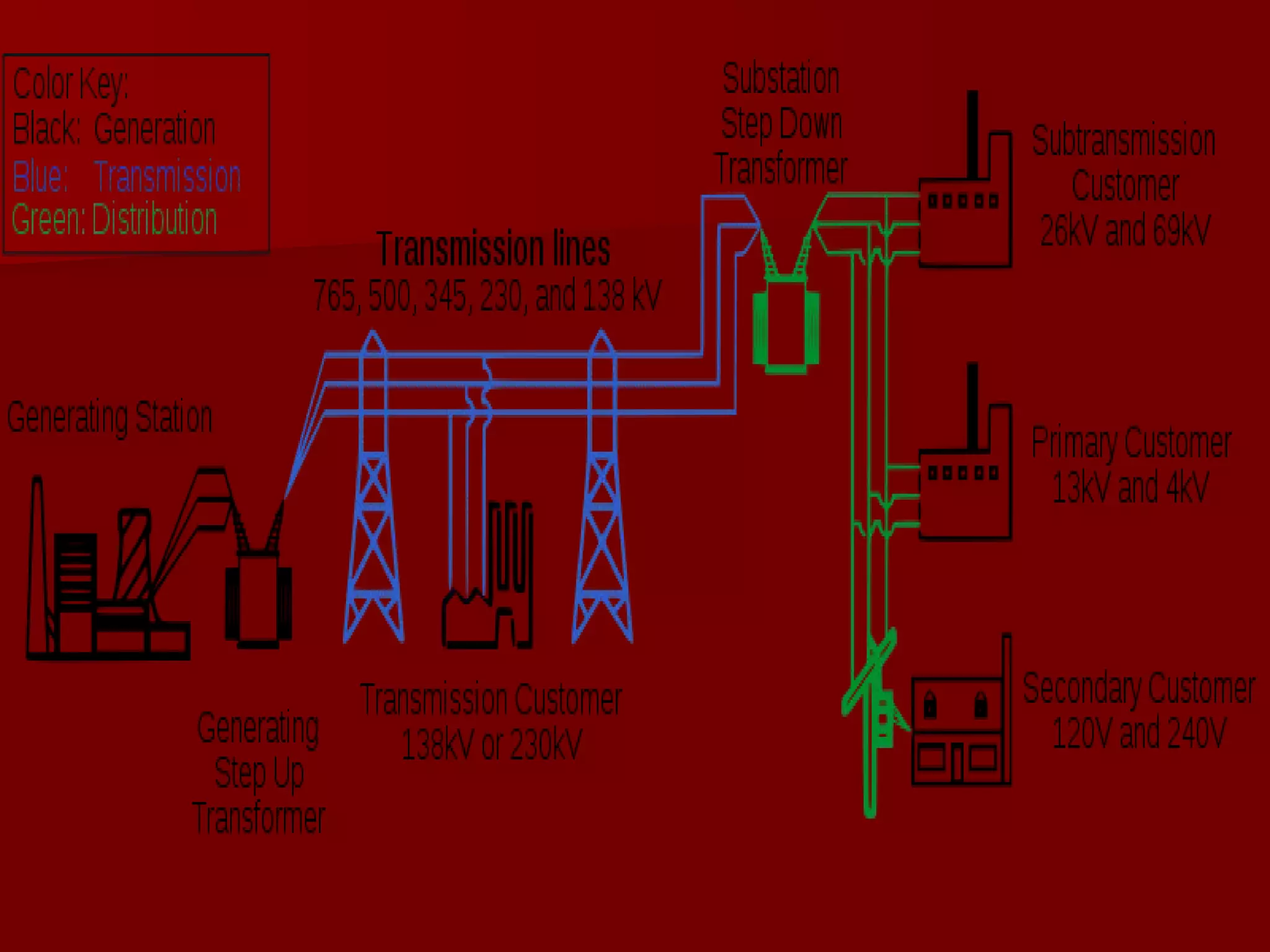
Applications… POWER TRANSMISSION  : A major application of transformers is to increase voltage before  transmitting electrical  energy  over long distances through  wires . Wires have  resistance  and so dissipate electrical energy at a rate proportional to the square of the current through the wire. By transforming  electrical power  to a high-voltage (and therefore low-current) form for transmission and back again afterward, transformers enable economical  transmission of power  over long distances .
 
IN ELECTRONICS  : Transformers are also used extensively in  electronic products  to step down the supply  voltage  to a level suitable for the low voltage circuits they contain. The transformer also electrically isolates the end user from contact with the supply voltage .
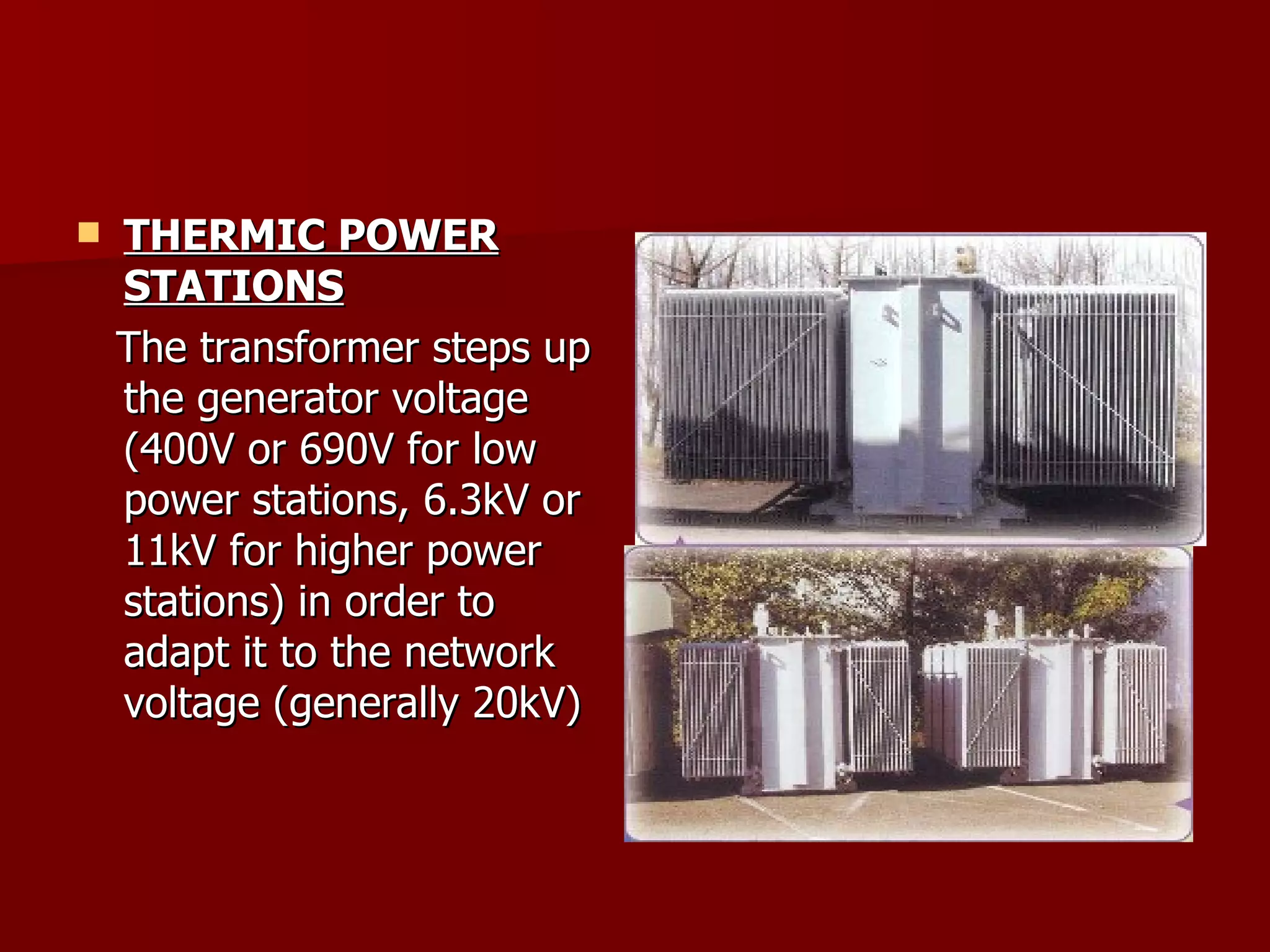
THERMIC POWER STATIONS The transformer steps up the generator voltage (400V or 690V for low power stations, 6.3kV or 11kV for higher power stations) in order to adapt it to the network voltage (generally 20kV)
Caution      Transformer must not be connected to a direct source. If the primary winding of a transformer is connected to a dc supply mains, the flux produced will not vary but remain constant in magnitude and therefore no emf will be induced in the secondary winding except at the moment of switching on. Thus the transformer can not be employed for raising or lowering the dc voltage. Also there will be no back induced emf in the primary winding and therefore a heavy current will be drawn from the supply mains which may result in the burning out of the winding.
THANK YOU

Tansformer @dheeraj upadhyay

  • 1.
    Transformer Presented by– DHEERENDRA UPADHYAY ( EN 3 rd yr ) Electrical & Electronics Engineering HINDUSTAN COLLEGE OF SCIENCE & TECHNOLOGY
  • 2.
    What is Transformer ?? A transformer is a static device which is use to convert high alternatic voltage to a low alternatic voltage and vice versa, keeping the frequency same.
  • 3.
    Principle Of Operation Transformer works on the principle of mutual induction of two coils. When current in the primary coil is changed the flux linked to the secondary coil also changes. Consequently an EMF is induced in the secondary coil.
  • 4.
    What is Inductionlaw ?? Faraday’s law states that: Vs=Ns.d Φ /dt where VS is the instantaneous secondry winding voltage. NS is the number of turns in the secondary coil.
  • 5.
    Working…. When theprimary winding is connected to an ac supply mains, current flows through it. winding produces an alternating flux in the core. Since this flux is alternating and links with the secondary winding also, so induces an emf in the secondary winding. The frequency of induced emf in secondary winding is the same as that of the flux or that of the supply voltage. The induced emf in the secondary winding enables it to deliver current to an external load connected across it. Thus the energy is transformed from primary winding to the secondary winding by means of electro-magnetic induction without any change in frequency. 
  • 6.
    Construction of TransformerMainly Transformers have two types of construction…. CORE type construction SHELL type construction
  • 7.
    Core typeTransformer In the Core type the primary and secondary windings are placed on each side of the core. The core type has two limbs
  • 8.
    Shell type TransformerIn Shell type transformers the LV & HV windings are sandwiched between each other. shell type has three limbs.
  • 9.
    Types of TransformerStep UP Transformer : A transformer in which Ns>Np is called a step up transformer. A step up transformer is a transformer which converts low alternatic voltage to high alternatic voltage. Step DOWN Transformer : A transformer in which Np>Ns is called a step down transformer. A step down transformer is a transformer which converts high alternatic voltage to low alternatic voltage.
  • 10.
    A wide varietyof transformer designs are used for different applications. Auto-transformer Poly-phase transormer Leakage transformer Resonant transformer Instrument transformers
  • 11.
    AUTO-TRANSFORMERS Autotransformer isa one winding transformer in which a part of the winding is common to both HV & LV sides.
  • 12.
    POLY-PHASE TRANSFORMER Threeseparate single phase transformers are suitably connected for 3 phase operation. A single three phase transformer in which the cores and windings for all the three phases are combined in a single structure.
  • 13.
    INSTRUMENT TRANSFORMERSA current transformer is a measurement device designed to provide a current in its secondary coil proportional to the current flowing in its primary. A voltage transformer are designed to have an accurately known transformation ratio in both magnitude and phase, over a range of measuring circuit impedances.. A current transformer is a measurement device designed to provide a current in its secondary coil proportional to the current flowing in its primary. A voltage transformer are designed to have an accurately known transformation ratio in both magnitude and phase, over a range of measuring circuit impedances..
  • 14.
  • 15.
    Losses In Transformers….Iron Losses – These are the hysteresis loss and eddy current loss, constant loss. Each time the magnetic field is reversed, a small amount of energy is lost due to  hysteresis  within the core.   The eddy current loss is a complex function of the square of supply frequency and inverse square of the material thickness Copper Loss :Current flowing through the windings causes  resistive heating  of the conductors. At higher frequencies,  skin effect  and  proximity effect  create additional winding resistance and losses.
  • 16.
    Testing Open circuittest Short circuit test
  • 17.
  • 18.
    Applications… POWER TRANSMISSION : A major application of transformers is to increase voltage before  transmitting electrical energy  over long distances through  wires . Wires have  resistance  and so dissipate electrical energy at a rate proportional to the square of the current through the wire. By transforming  electrical power  to a high-voltage (and therefore low-current) form for transmission and back again afterward, transformers enable economical  transmission of power  over long distances .
  • 19.
  • 20.
    IN ELECTRONICS : Transformers are also used extensively in  electronic products  to step down the supply  voltage  to a level suitable for the low voltage circuits they contain. The transformer also electrically isolates the end user from contact with the supply voltage .
  • 21.
    THERMIC POWER STATIONSThe transformer steps up the generator voltage (400V or 690V for low power stations, 6.3kV or 11kV for higher power stations) in order to adapt it to the network voltage (generally 20kV)
  • 22.
    Caution     Transformer must not be connected to a direct source. If the primary winding of a transformer is connected to a dc supply mains, the flux produced will not vary but remain constant in magnitude and therefore no emf will be induced in the secondary winding except at the moment of switching on. Thus the transformer can not be employed for raising or lowering the dc voltage. Also there will be no back induced emf in the primary winding and therefore a heavy current will be drawn from the supply mains which may result in the burning out of the winding.
  • 23.