- Attenuation refers to the loss of signal strength that occurs along transmission lines and is measured in decibels per kilometer. It is influenced by factors like line construction, frequency, weather conditions, and faults.
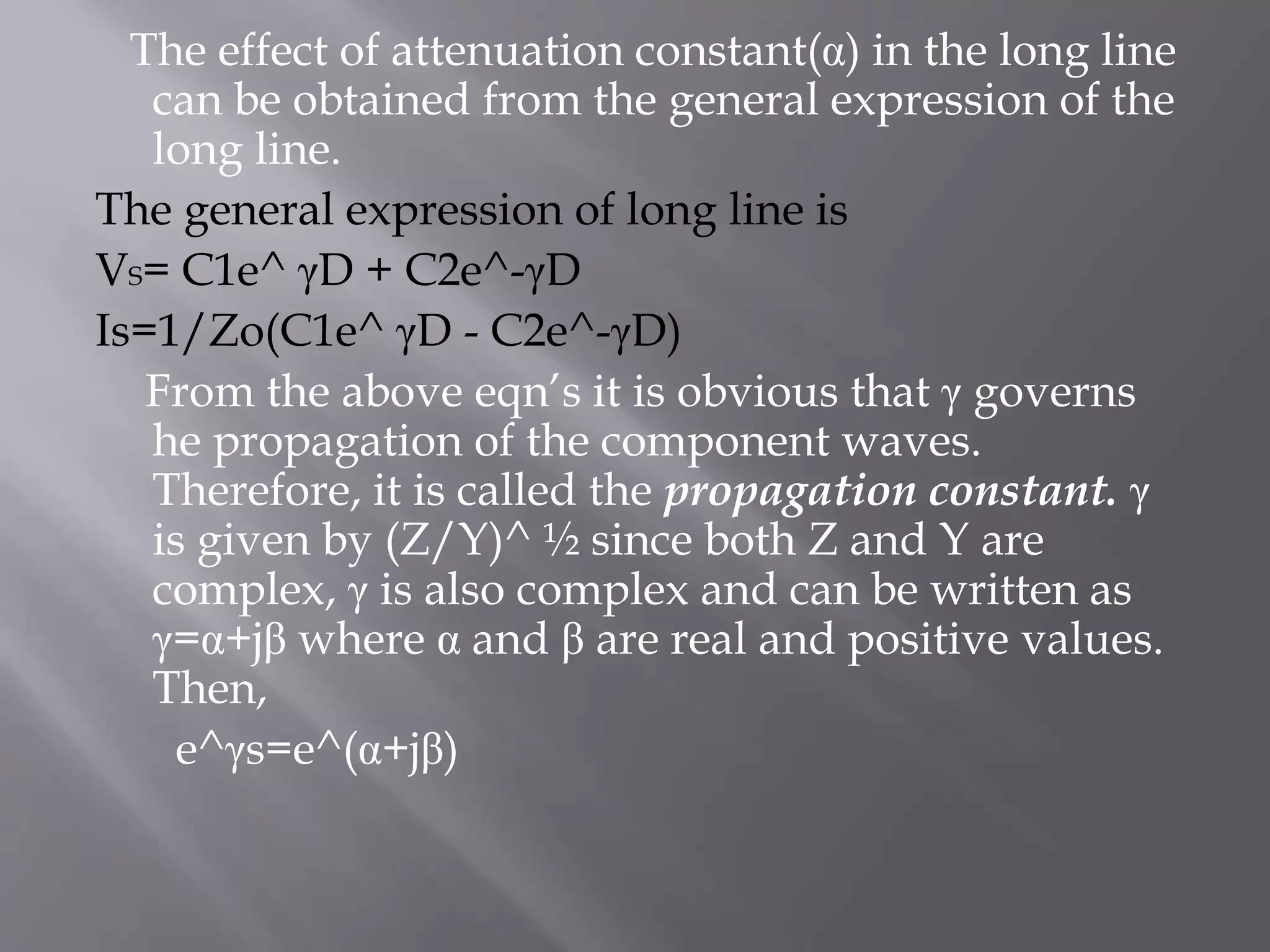
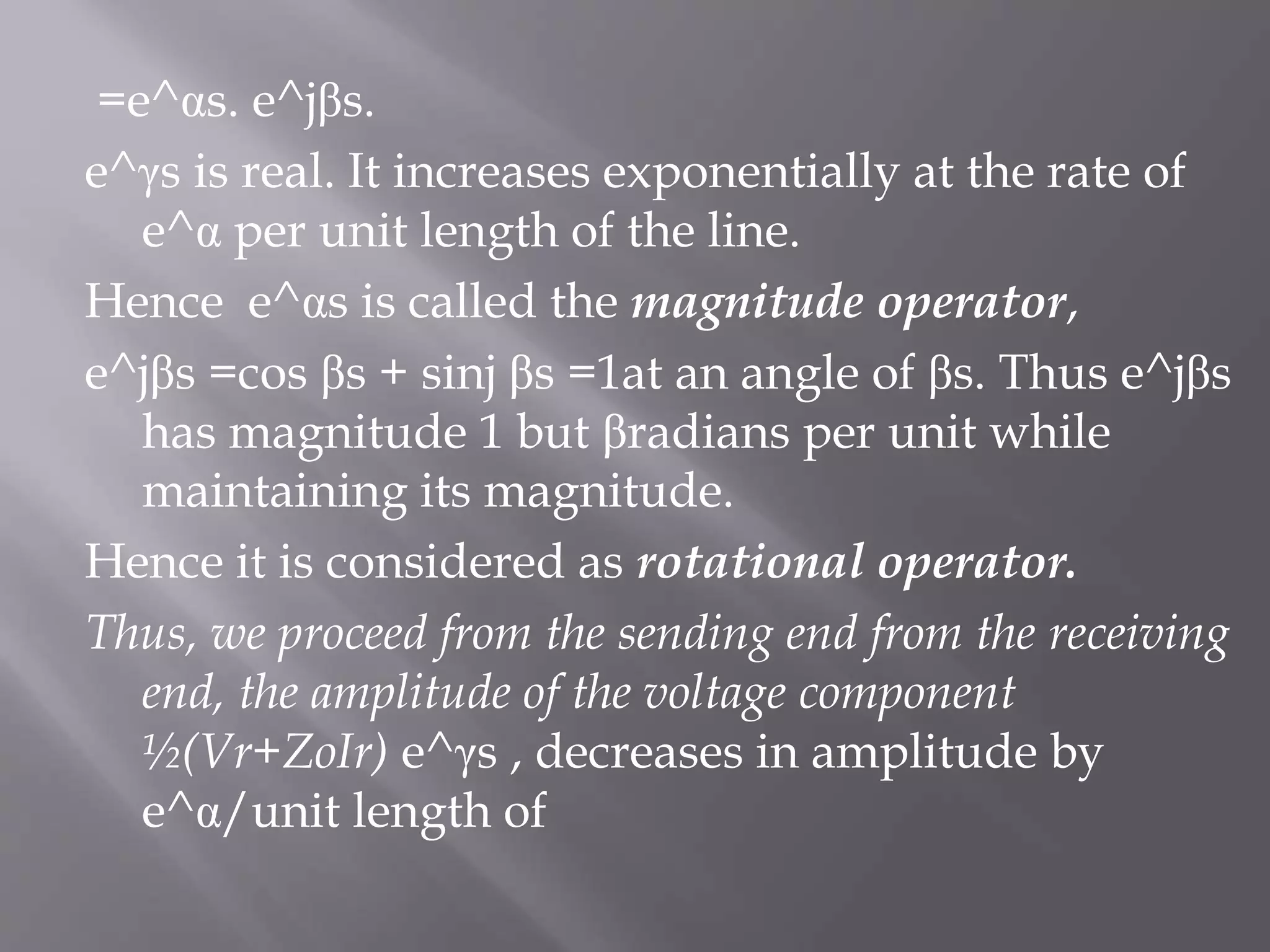
- The attenuation constant α determines the exponential decrease in amplitude per unit length of the line. The phase constant β determines the linear change in phase per unit length.
- Surge impedance is the characteristic impedance of a lossless line and is a measure of the maximum power that can be delivered by the line at unity power factor, known as surge impedance loading. It can be increased by raising voltages or decreasing the surge impedance through series and shunt capacitors.