Tannins
Ravish Yadav
Introduction
•Tanninsare polyphenolic substances found in many plants
product of secondary metabolism. Its water-soluble nature
allows easy extraction and is useful in various applications in
the chemical and pharmaceutical industry.
•Definition-the complex,organic,non-
nitrogenous,polyphenolic substances of higher molecular
weight. They are used as antiseptics and in git diseases like
diarrhea and also used in leather industries.
Properties
Pale yellow to light brown-red amorphous substances widely
distributed in plants and used chiefly in tanning leather, dyeing fabric,
and making ink.
• Their solutions are acid and have an astringent taste.
• They are isolated from oak bark, sumac, and galls.
• Tannins give tea astringency, color, and flavor. Tannins are phenol
glycosides.
Classification
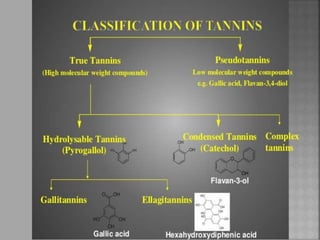
• The tannins are broadly classified into two groups based on complexity
of their chemical nature and according to their behaviour on dry
distillation
• Hydrolysable tannins :
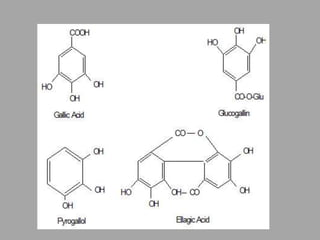
• As the name indicates, these tannins are hydrolyzed by acids or
enzymes quickly and the products of hydrolysis are Gallic acid or ellagic
acid. On dry distillation, Gallic acid and other components get
converted to pyrogallol. They respond to ferric chloride solution,
producing blue colour. The examples of hydrolysable tannins are- Gallo
tannin in nutgall, rhubarb, amla, clove and chestnut; ellagi tannin from
oak, myrobalans and pomegranate bark.
Continued…
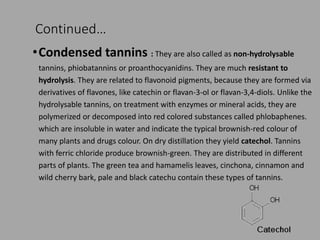
•Condensed tannins : They are also called as non-hydrolysable
tannins, phiobatannins or proanthocyanidins. They are much resistant to
hydrolysis. They are related to flavonoid pigments, because they are formed via
derivatives of flavones, like catechin or flavan-3-ol or flavan-3,4-diols. Unlike the
hydrolysable tannins, on treatment with enzymes or mineral acids, they are
polymerized or decomposed into red colored substances called phlobaphenes.
which are insoluble in water and indicate the typical brownish-red colour of
many plants and drugs colour. On dry distillation they yield catechol. Tannins
with ferric chloride produce brownish-green. They are distributed in different
parts of plants. The green tea and hamamelis leaves, cinchona, cinnamon and
wild cherry bark, pale and black catechu contain these types of tannins.
Continued..
• Pseudo tannins- This is not as such a separate group of tannins, but
may be treated as sub group because they do not obey to
goldbeaters skin test and are low molecular weight compounds.
Chlorogenic acid in coffee and nuxvomica, ipecacuanhic acid in
ipecacuanha and catechins in cocoa are examples of pseudotannins.
The detection test for chlorogenic acid is carried out by extracting the
drug with water.
Extraction and Isolation of tannins
• The various types of the methods of extraction depending upon the
source of tannins are employed. As the tannins are high molecular
weight compounds so it becomes difficult to isolate the tannins in
pure form. Thus the solvents used are the mixture of polar, non-polar
and semi-polar solvent like alcohol, ether,water,acetone etc.
Identification test
• 1. Gelatin test:
• To a solution of tannin, aqueous solution of 1% gelatin and 10% sodium
chloride are added. A white buff colored precipitate is formed. Conforms the
presence of tannins and pseudo tannins
• 2. Goldbeater’s skin test:
• A small piece of goldbeater skin (membrane prepared from the intestine of
an ox) is soaked in 20% hydrochloric acid, rinsed with distilled water and
placed in a solution of tannin for 5 minutes. The skin piece is washed with
distilled water and kept in a 1% solution of ferrous sulphate. A brown or
black colour is produced on the skin due tob presence of tannins.
• 3. Phenazone test:
• A 10ml of aqueous extract of a tannin and sodium acid phosphate is heated
and cooled and filtered. A 2% solution of phenazone is added to the filtrate.
A bulky colored precipitate is formed.
Continue..
• Match stick test (Catechin test):
• A match stick is dipped in aqueous plant extract, dried near burner and
moistened with concentrated hydrochloric acid. On warming near flame,
the matchstick wood turns pink or red due to formation of phloroglucinol.
Test with ferric chloride-To the solution of tannins add ferric chloride
solution. A blue,black,violet or green precipitate or colour confirms the
presence of tannins.
16
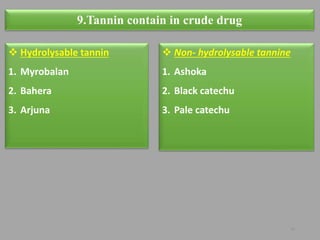
9.Tannin contain in crude drug
 Hydrolysable tannin
1. Myrobalan
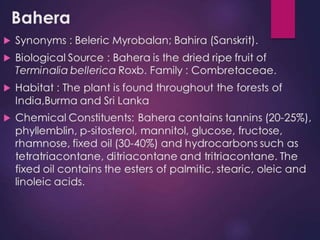
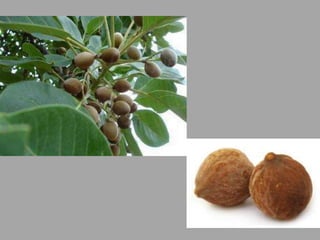
2. Bahera
3. Arjuna
 Non- hydrolysable tannine
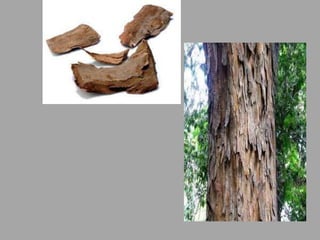
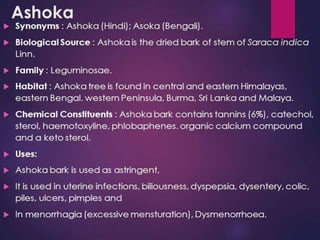
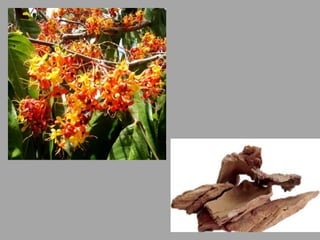
1. Ashoka
2. Black catechu
3. Pale catechu
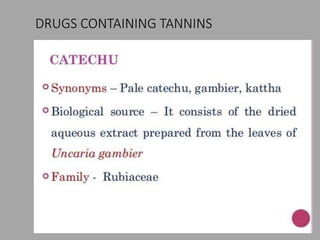
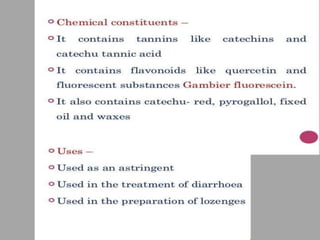
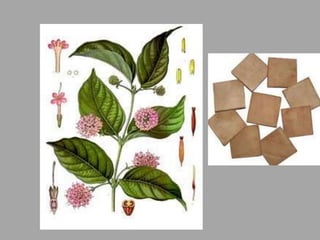
DRUGS CONTAINING TANNINS
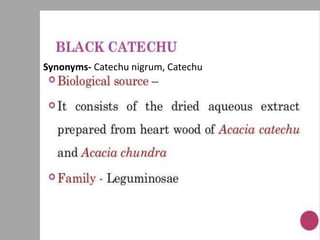
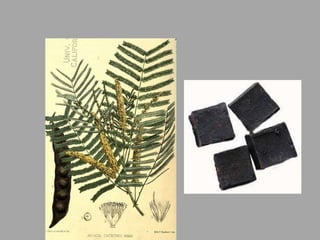
Synonyms- Catechu nigrum, Catechu
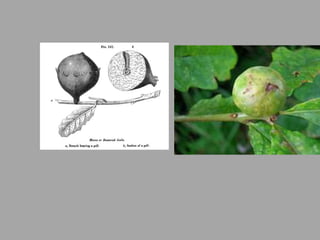
Synonyms- Galla, Blue galls, Aleppo galls
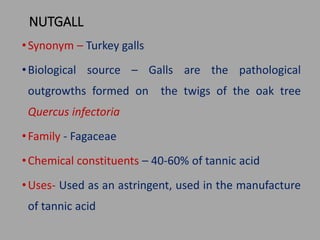
NUTGALL
•Synonym – Turkey galls
•Biological source – Galls are the pathological
outgrowths formed on the twigs of the oak tree
Quercus infectoria
•Family - Fagaceae
•Chemical constituents – 40-60% of tannic acid
•Uses- Used as an astringent, used in the manufacture
of tannic acid
Tannins
Tannins
Tannins
Tannins
Tannins
Tannins
Tannins
Tannins

Tannins

  • 1.
  • 2.
    Introduction •Tanninsare polyphenolic substancesfound in many plants product of secondary metabolism. Its water-soluble nature allows easy extraction and is useful in various applications in the chemical and pharmaceutical industry. •Definition-the complex,organic,non- nitrogenous,polyphenolic substances of higher molecular weight. They are used as antiseptics and in git diseases like diarrhea and also used in leather industries.
  • 3.
    Properties Pale yellow tolight brown-red amorphous substances widely distributed in plants and used chiefly in tanning leather, dyeing fabric, and making ink. • Their solutions are acid and have an astringent taste. • They are isolated from oak bark, sumac, and galls. • Tannins give tea astringency, color, and flavor. Tannins are phenol glycosides.
  • 9.
    Classification • The tanninsare broadly classified into two groups based on complexity of their chemical nature and according to their behaviour on dry distillation • Hydrolysable tannins : • As the name indicates, these tannins are hydrolyzed by acids or enzymes quickly and the products of hydrolysis are Gallic acid or ellagic acid. On dry distillation, Gallic acid and other components get converted to pyrogallol. They respond to ferric chloride solution, producing blue colour. The examples of hydrolysable tannins are- Gallo tannin in nutgall, rhubarb, amla, clove and chestnut; ellagi tannin from oak, myrobalans and pomegranate bark.
  • 11.
    Continued… •Condensed tannins :They are also called as non-hydrolysable tannins, phiobatannins or proanthocyanidins. They are much resistant to hydrolysis. They are related to flavonoid pigments, because they are formed via derivatives of flavones, like catechin or flavan-3-ol or flavan-3,4-diols. Unlike the hydrolysable tannins, on treatment with enzymes or mineral acids, they are polymerized or decomposed into red colored substances called phlobaphenes. which are insoluble in water and indicate the typical brownish-red colour of many plants and drugs colour. On dry distillation they yield catechol. Tannins with ferric chloride produce brownish-green. They are distributed in different parts of plants. The green tea and hamamelis leaves, cinchona, cinnamon and wild cherry bark, pale and black catechu contain these types of tannins.
  • 12.
    Continued.. • Pseudo tannins-This is not as such a separate group of tannins, but may be treated as sub group because they do not obey to goldbeaters skin test and are low molecular weight compounds. Chlorogenic acid in coffee and nuxvomica, ipecacuanhic acid in ipecacuanha and catechins in cocoa are examples of pseudotannins. The detection test for chlorogenic acid is carried out by extracting the drug with water.
  • 13.
    Extraction and Isolationof tannins • The various types of the methods of extraction depending upon the source of tannins are employed. As the tannins are high molecular weight compounds so it becomes difficult to isolate the tannins in pure form. Thus the solvents used are the mixture of polar, non-polar and semi-polar solvent like alcohol, ether,water,acetone etc.
  • 14.
    Identification test • 1.Gelatin test: • To a solution of tannin, aqueous solution of 1% gelatin and 10% sodium chloride are added. A white buff colored precipitate is formed. Conforms the presence of tannins and pseudo tannins • 2. Goldbeater’s skin test: • A small piece of goldbeater skin (membrane prepared from the intestine of an ox) is soaked in 20% hydrochloric acid, rinsed with distilled water and placed in a solution of tannin for 5 minutes. The skin piece is washed with distilled water and kept in a 1% solution of ferrous sulphate. A brown or black colour is produced on the skin due tob presence of tannins. • 3. Phenazone test: • A 10ml of aqueous extract of a tannin and sodium acid phosphate is heated and cooled and filtered. A 2% solution of phenazone is added to the filtrate. A bulky colored precipitate is formed.
  • 15.
    Continue.. • Match sticktest (Catechin test): • A match stick is dipped in aqueous plant extract, dried near burner and moistened with concentrated hydrochloric acid. On warming near flame, the matchstick wood turns pink or red due to formation of phloroglucinol. Test with ferric chloride-To the solution of tannins add ferric chloride solution. A blue,black,violet or green precipitate or colour confirms the presence of tannins.
  • 16.
    16 9.Tannin contain incrude drug  Hydrolysable tannin 1. Myrobalan 2. Bahera 3. Arjuna  Non- hydrolysable tannine 1. Ashoka 2. Black catechu 3. Pale catechu
  • 17.
  • 20.
  • 23.
    Synonyms- Galla, Bluegalls, Aleppo galls
  • 26.
    NUTGALL •Synonym – Turkeygalls •Biological source – Galls are the pathological outgrowths formed on the twigs of the oak tree Quercus infectoria •Family - Fagaceae •Chemical constituents – 40-60% of tannic acid •Uses- Used as an astringent, used in the manufacture of tannic acid