Download to read offline

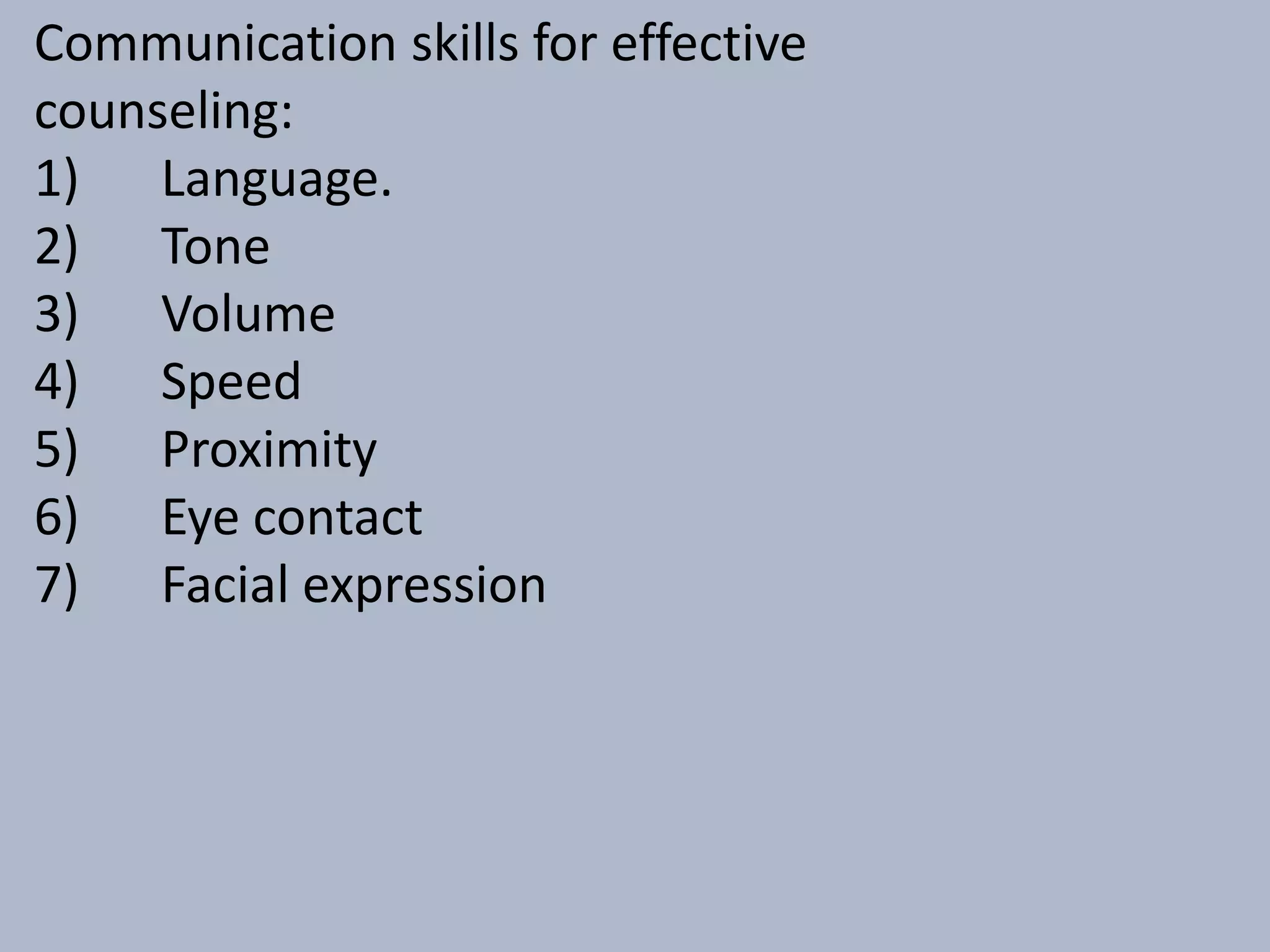





Patient counseling by pharmacists involves providing essential information and support to ensure appropriate medication use, ultimately leading to improved patient understanding, adherence, and quality of life. Effective communication skills are vital, and counselors must be good listeners and empathetic while being aware of potential drug interactions that can arise from various factors like food, alcohol, and concurrent medications. The document outlines types of interactions and emphasizes the pharmacist's role in mitigating adverse effects through proper guidance.


