

Tangential Transactions
Transactional Analysis
Prepared By
Manu Melwin Joy
Assistant Professor
Ilahia School of Management Studies
Kerala, India.
Phone – 9744551114
Mail – manu_melwinjoy@yahoo.com
Kindly restrict the use of slides for personal purpose.
Please seek permission to reproduce the same in public forms and presentations.
Tangential Transactions
• A tangential transaction
is one in which the
stimulus and response
address different issues,
or address the same
issue from different
perspectives.
Tangential Transactions
• For example, a therapist
asks a group member:
“How do you feel?”. She
replies: “ Well, when we
spoke about this in the
group yesterday, I felt
angry”.
Tangential Transactions
• With her response, she
addresses the issue of
how she feels, but from
the perspective of
yesterday instead of
today.
Tangential Transactions
• At a wage negotiation, a
union representative
asks: “ What do you
want from out side so we
can conclude this
agreement?”
Tangential Transactions
• The personnel manager
answers: “ We are not at
all satisfied with the
conditions you have
proposed so fare”. Here,
the issue has been shifted
from wanting to feeling
satisfied with.
Tangential Transactions
• Every day conversations
are full of tangential
transactions. When people
are in situations they
perceive as stressful, they
are even more likely to
redefine in this way.
Tangential Transactions
• This is not surprising,
because in stressful
situations, people are
likely to begin perceiving
threats to their frame of
reference.
Tangential Transactions
• The cover purpose of
going on a tangent is to
divert the other person
away from the issue
which constitutes the
threat.
Tangential Transactions
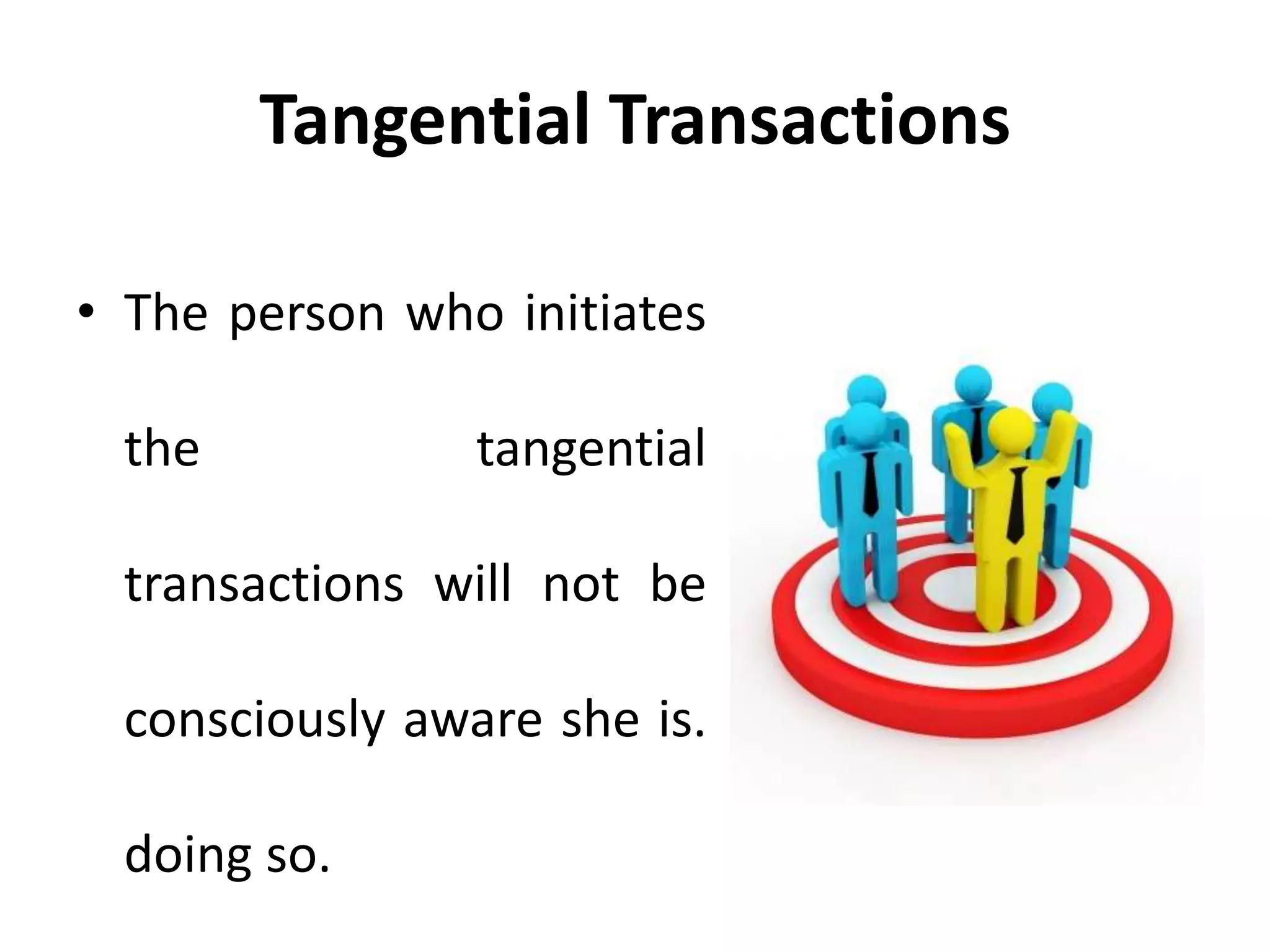
• The person who initiates
the tangential
transactions will not be
consciously aware she is.
doing so.
Tangential Transactions
• Often, the other person
will follow the tangent,
rather than sticking the
original topic. He may
even go off on a further
tangent of his own.
Tangential Transactions
• When people get into a
exchange of tangential
transactions, they are
likely to have an
uncomfortable sense
that their conversation is
getting nowhere.
Tangential Transactions
• When people get into a
exchange of tangential
transactions, they are
likely to have an
uncomfortable sense that
their conversation is
getting nowhere or going
around in circles.
Tangential Transactions
• On the psychological
level, that is exactly what
is intended.
Conversations like these
can go on for a long
time.
Tangential Transactions
• The participants may feel
they have been working
hard, and end up feeling
drained. By the close of
their discussion, they may
have never gotten back to
the original issue they
have intended to address.
References
Thank You

Tangential transactions - transactional analysis - Manu Melwin Joy

  • 1.
  • 2.
    Prepared By Manu MelwinJoy Assistant Professor Ilahia School of Management Studies Kerala, India. Phone – 9744551114 Mail – manu_melwinjoy@yahoo.com Kindly restrict the use of slides for personal purpose. Please seek permission to reproduce the same in public forms and presentations.
  • 3.
    Tangential Transactions • Atangential transaction is one in which the stimulus and response address different issues, or address the same issue from different perspectives.
  • 4.
    Tangential Transactions • Forexample, a therapist asks a group member: “How do you feel?”. She replies: “ Well, when we spoke about this in the group yesterday, I felt angry”.
  • 5.
    Tangential Transactions • Withher response, she addresses the issue of how she feels, but from the perspective of yesterday instead of today.
  • 6.
    Tangential Transactions • Ata wage negotiation, a union representative asks: “ What do you want from out side so we can conclude this agreement?”
  • 7.
    Tangential Transactions • Thepersonnel manager answers: “ We are not at all satisfied with the conditions you have proposed so fare”. Here, the issue has been shifted from wanting to feeling satisfied with.
  • 8.
    Tangential Transactions • Everyday conversations are full of tangential transactions. When people are in situations they perceive as stressful, they are even more likely to redefine in this way.
  • 9.
    Tangential Transactions • Thisis not surprising, because in stressful situations, people are likely to begin perceiving threats to their frame of reference.
  • 10.
    Tangential Transactions • Thecover purpose of going on a tangent is to divert the other person away from the issue which constitutes the threat.
  • 11.
    Tangential Transactions • Theperson who initiates the tangential transactions will not be consciously aware she is. doing so.
  • 12.
    Tangential Transactions • Often,the other person will follow the tangent, rather than sticking the original topic. He may even go off on a further tangent of his own.
  • 13.
    Tangential Transactions • Whenpeople get into a exchange of tangential transactions, they are likely to have an uncomfortable sense that their conversation is getting nowhere.
  • 14.
    Tangential Transactions • Whenpeople get into a exchange of tangential transactions, they are likely to have an uncomfortable sense that their conversation is getting nowhere or going around in circles.
  • 15.
    Tangential Transactions • Onthe psychological level, that is exactly what is intended. Conversations like these can go on for a long time.
  • 16.
    Tangential Transactions • Theparticipants may feel they have been working hard, and end up feeling drained. By the close of their discussion, they may have never gotten back to the original issue they have intended to address.
  • 17.
  • 18.