

Competitive symbiosis
Transactional Analysis
Prepared By
Manu Melwin Joy
Assistant Professor
Ilahia School of Management Studies
Kerala, India.
Phone – 9744551114
Mail – manu_melwinjoy@yahoo.com
Kindly restrict the use of slides for personal purpose.
Please seek permission to reproduce the same in public forms and presentations.
Competitive symbiosis
What happens when two
people meet who both
want to take up the same
symbiotic role? If they
both want to be Parents,
or both seek to act Child?
Competitive symbiosis
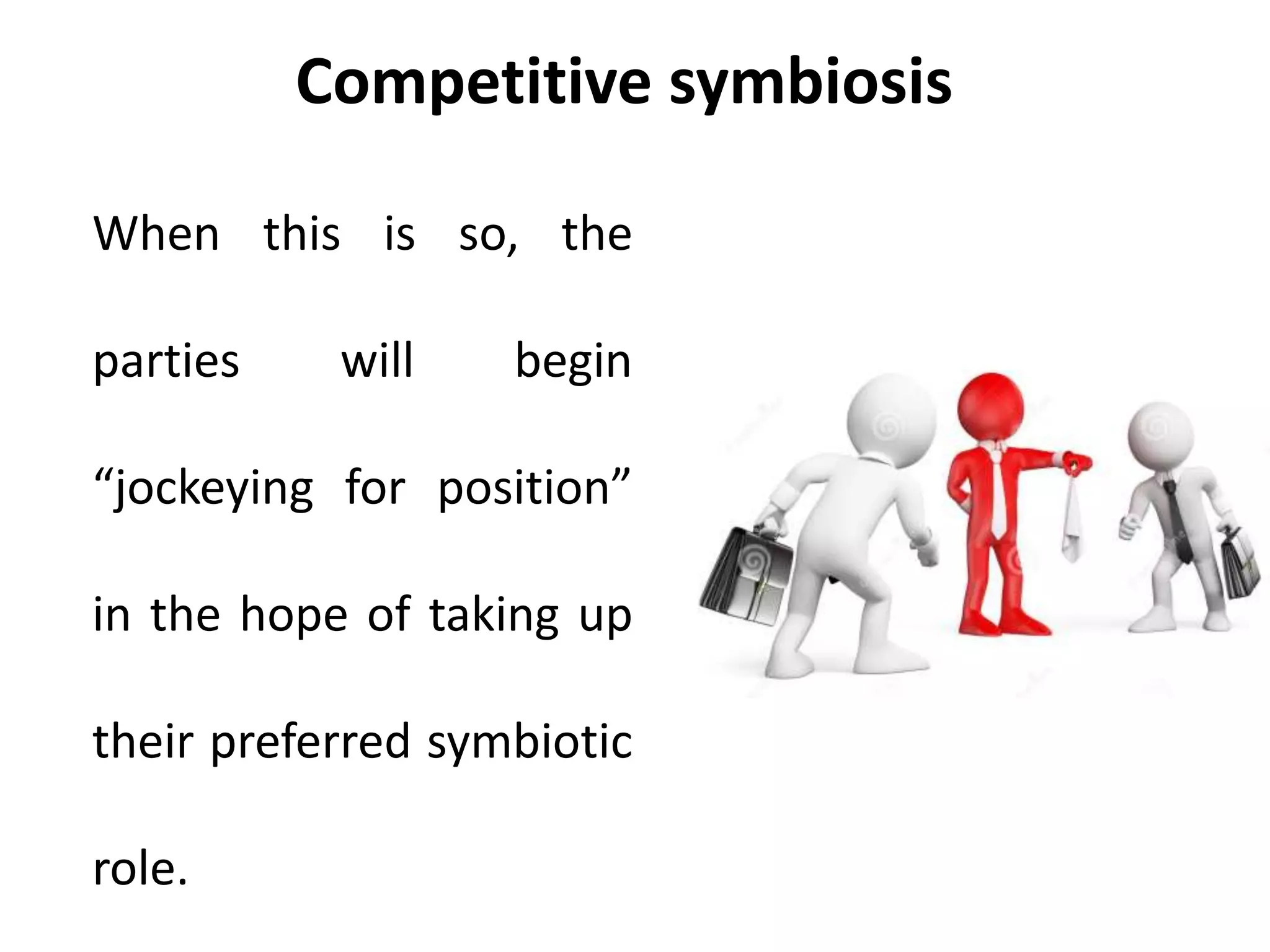
When this is so, the
parties will begin
“jockeying for position”
in the hope of taking up
their preferred symbiotic
role.
Competitive symbiosis
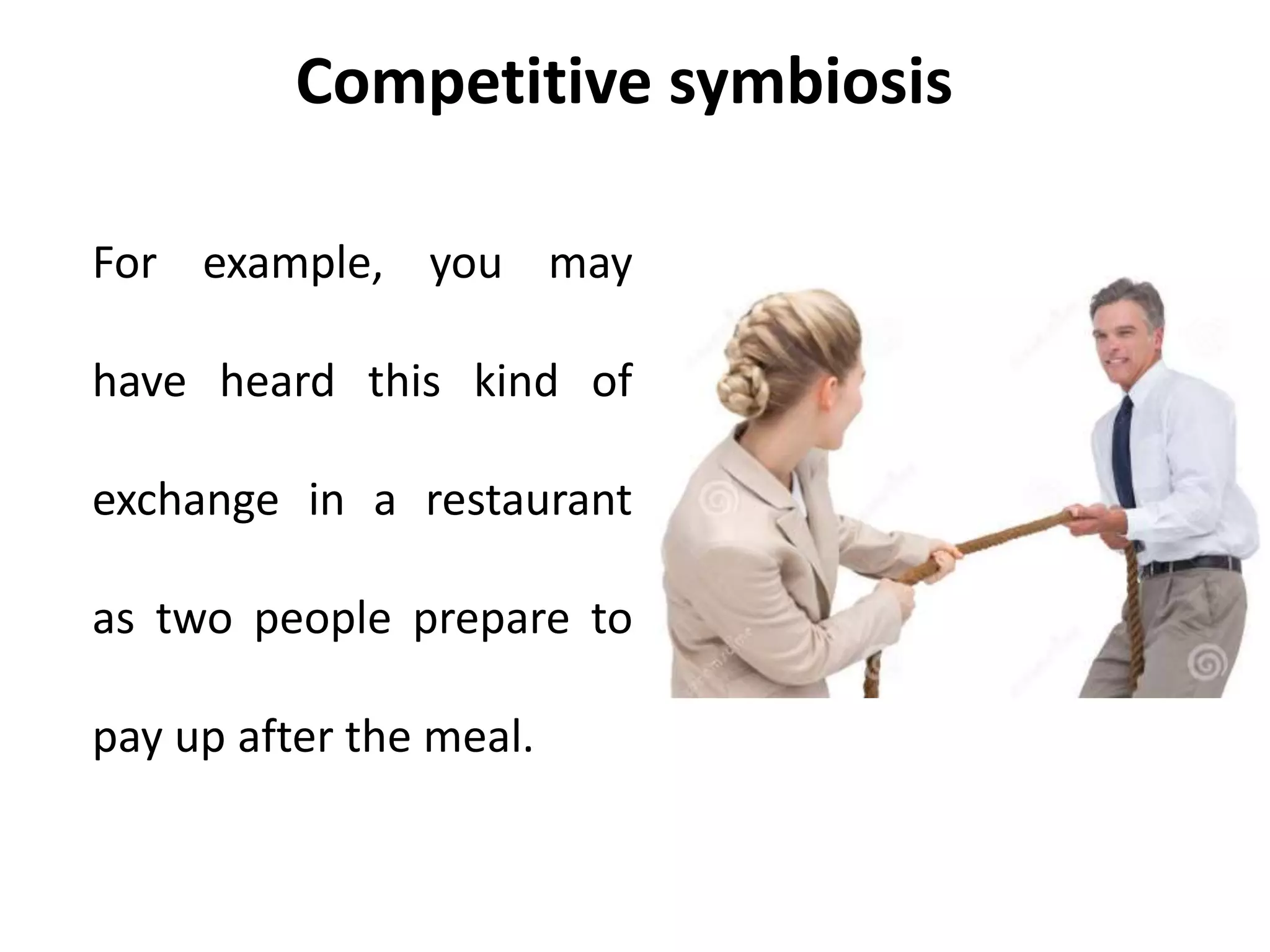
For example, you may
have heard this kind of
exchange in a restaurant
as two people prepare to
pay up after the meal.
Competitive symbiosis
A: “Now, put that money
away. I will pay for this”
B : “No, no, come on, I
will pay”.
A : “ I absolutely insist!
Not another word!”
Competitive symbiosis
These transactions may
go on for some time,
with each party
escalating insistence on
paying. Each is seeking
to be Parent to the
other. They are in
competitive symbiosis –
in this case, competing
for the parent position.
Competitive symbiosis
By its nature,
competitive symbiosis is
unstable. Exchanges like
this usually last only for
a relatively short time.
They may conclude in
two possible ways.
Competitive symbiosis
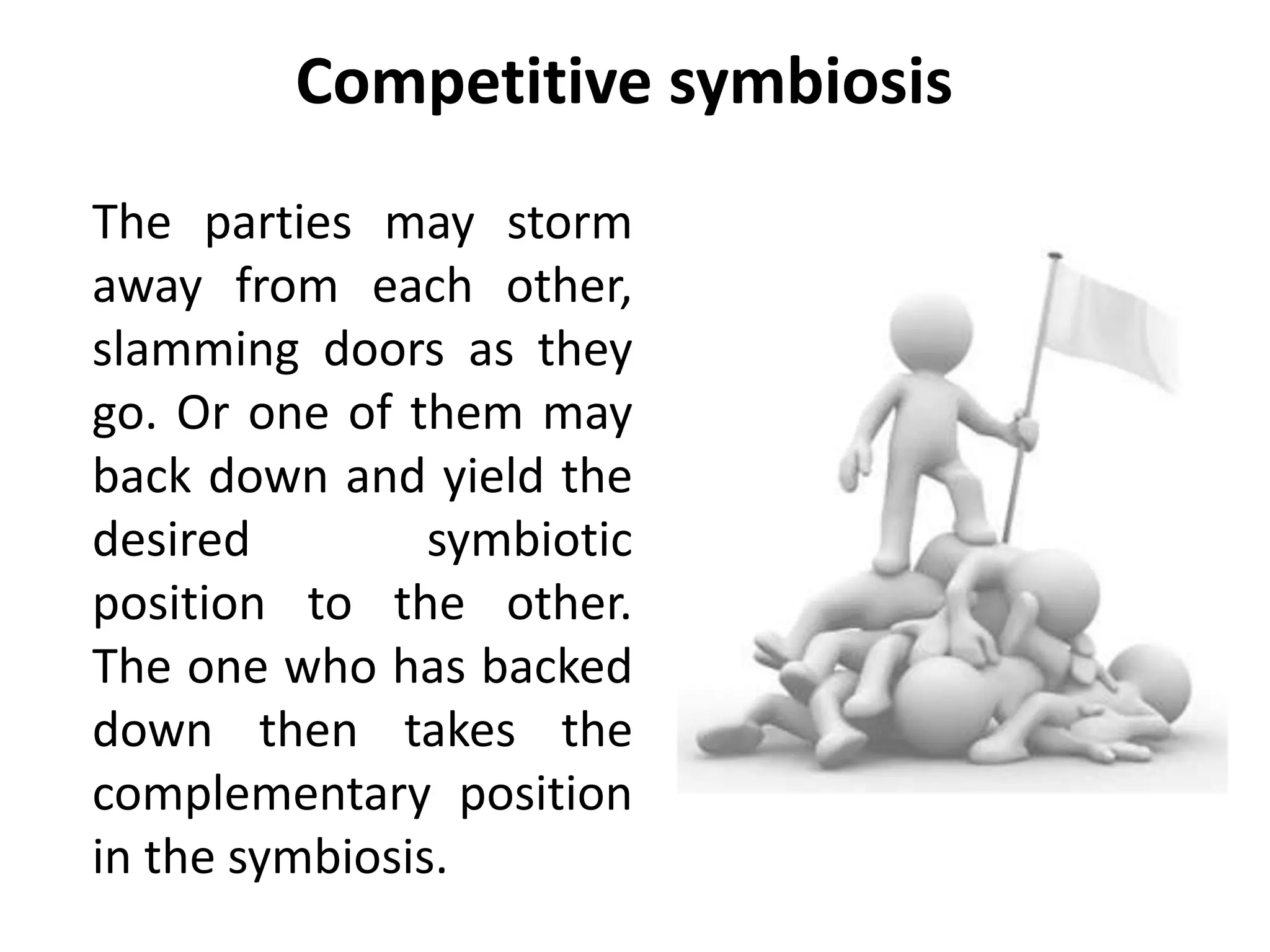
The parties may storm
away from each other,
slamming doors as they
go. Or one of them may
back down and yield the
desired symbiotic
position to the other.
The one who has backed
down then takes the
complementary position
in the symbiosis.
Competitive symbiosis
For instance, the
exchange in the
restaurant might end
with one of the parties
saying: “ Ah, well, if you
insist…” and putting
away his wallet with a
show of reluctance.
Competitive symbiosis
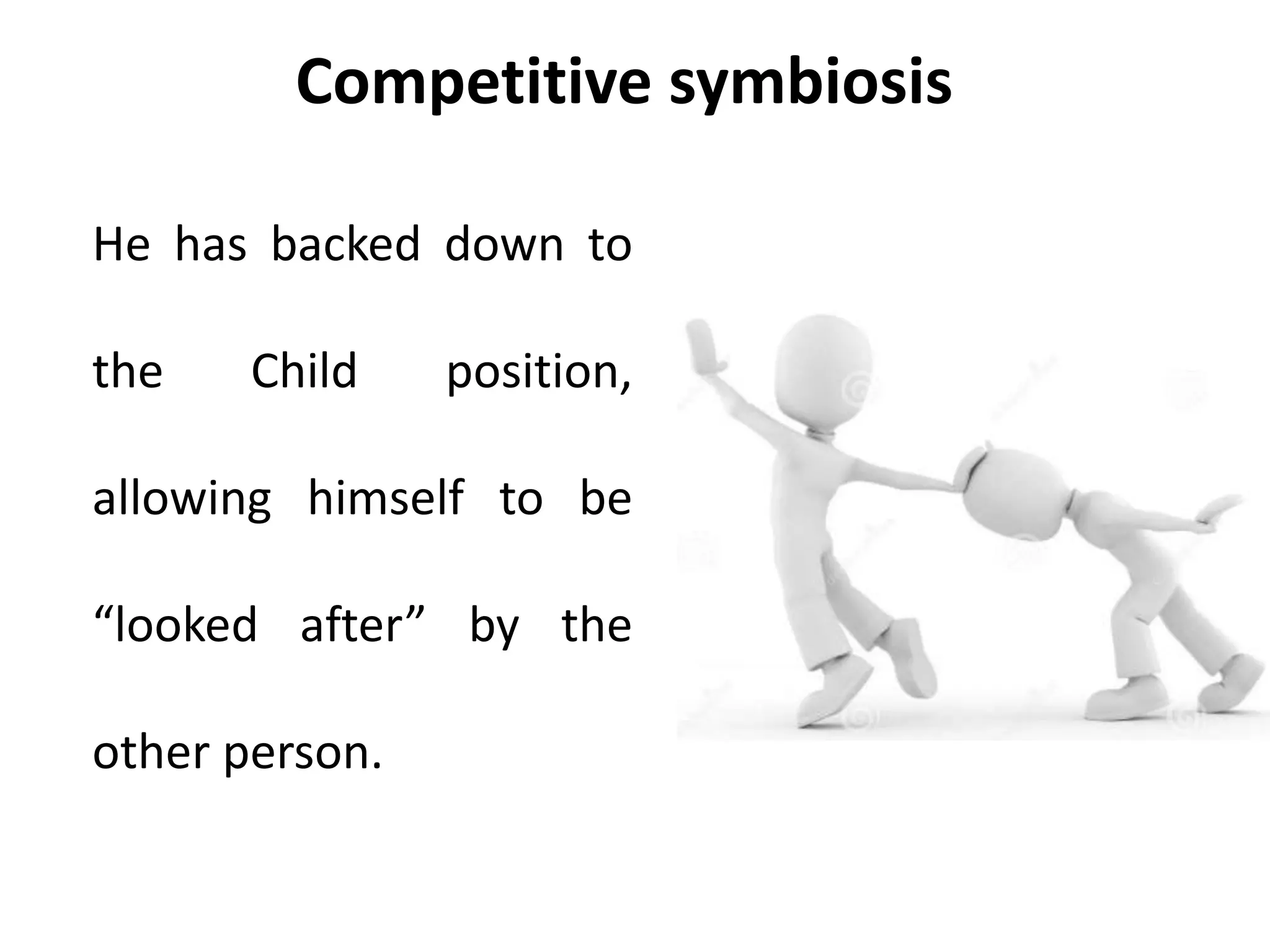
He has backed down to
the Child position,
allowing himself to be
“looked after” by the
other person.
References
Thank You

Competitive symbiosis - Transactional analysis

  • 1.
  • 2.
    Prepared By Manu MelwinJoy Assistant Professor Ilahia School of Management Studies Kerala, India. Phone – 9744551114 Mail – manu_melwinjoy@yahoo.com Kindly restrict the use of slides for personal purpose. Please seek permission to reproduce the same in public forms and presentations.
  • 3.
    Competitive symbiosis What happenswhen two people meet who both want to take up the same symbiotic role? If they both want to be Parents, or both seek to act Child?
  • 4.
    Competitive symbiosis When thisis so, the parties will begin “jockeying for position” in the hope of taking up their preferred symbiotic role.
  • 5.
    Competitive symbiosis For example,you may have heard this kind of exchange in a restaurant as two people prepare to pay up after the meal.
  • 6.
    Competitive symbiosis A: “Now,put that money away. I will pay for this” B : “No, no, come on, I will pay”. A : “ I absolutely insist! Not another word!”
  • 7.
    Competitive symbiosis These transactionsmay go on for some time, with each party escalating insistence on paying. Each is seeking to be Parent to the other. They are in competitive symbiosis – in this case, competing for the parent position.
  • 8.
    Competitive symbiosis By itsnature, competitive symbiosis is unstable. Exchanges like this usually last only for a relatively short time. They may conclude in two possible ways.
  • 9.
    Competitive symbiosis The partiesmay storm away from each other, slamming doors as they go. Or one of them may back down and yield the desired symbiotic position to the other. The one who has backed down then takes the complementary position in the symbiosis.
  • 10.
    Competitive symbiosis For instance,the exchange in the restaurant might end with one of the parties saying: “ Ah, well, if you insist…” and putting away his wallet with a show of reluctance.
  • 11.
    Competitive symbiosis He hasbacked down to the Child position, allowing himself to be “looked after” by the other person.
  • 12.
  • 13.