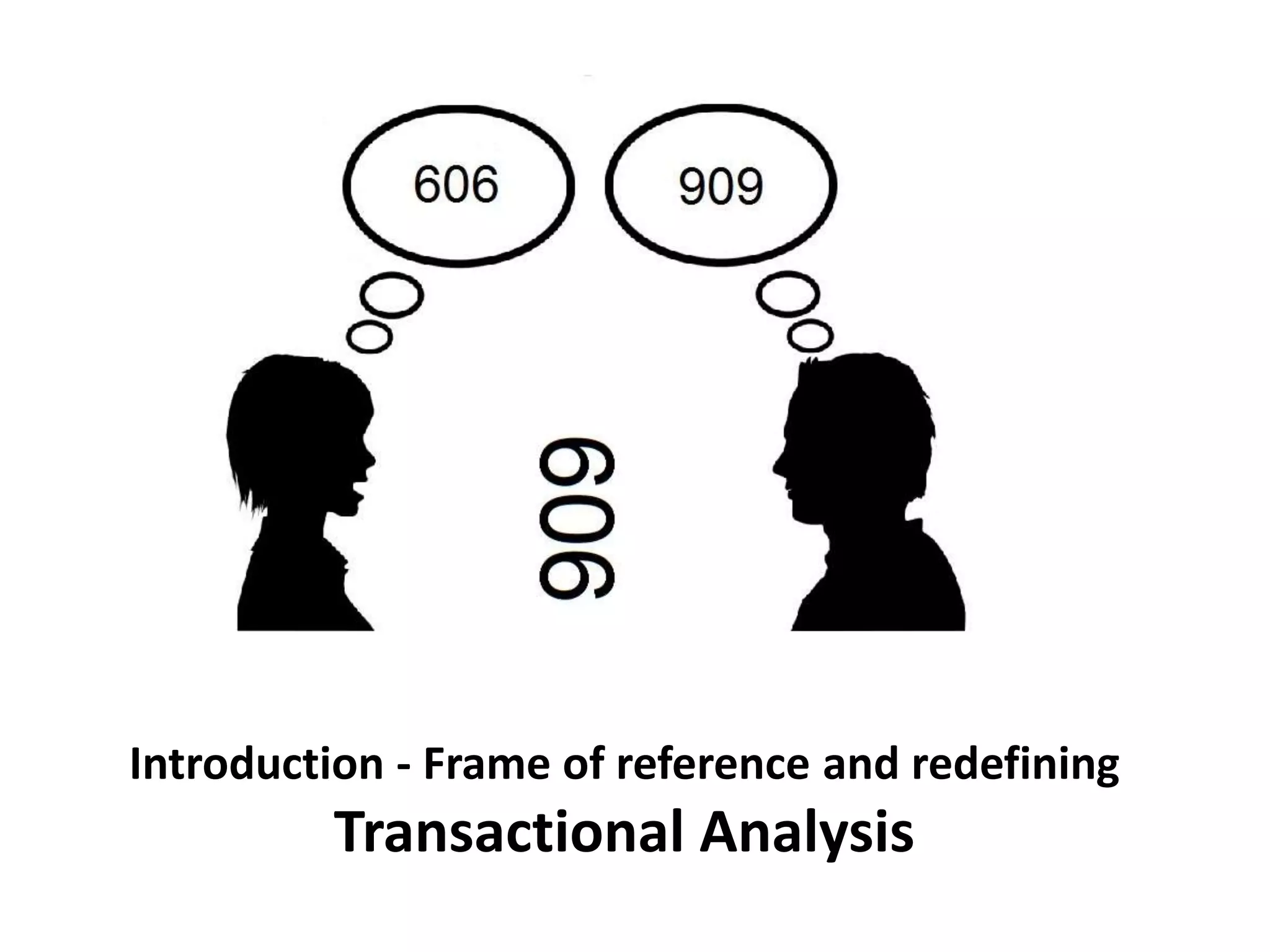


Introduction - Frame of reference and redefining
Transactional Analysis
Prepared By
Manu Melwin Joy
Assistant Professor
Ilahia School of Management Studies
Kerala, India.
Phone – 9744551114
Mail – manu_melwinjoy@yahoo.com
Kindly restrict the use of slides for personal purpose.
Please seek permission to reproduce the same in public forms and presentations.
Introduction
• I have my way of
perceiving the
world. You have
your way, and it will
be different from
mine.
Introduction
• Suppose you and I
stand outside a
window and look at
the room within. We
report to each other
what we see.
Introduction
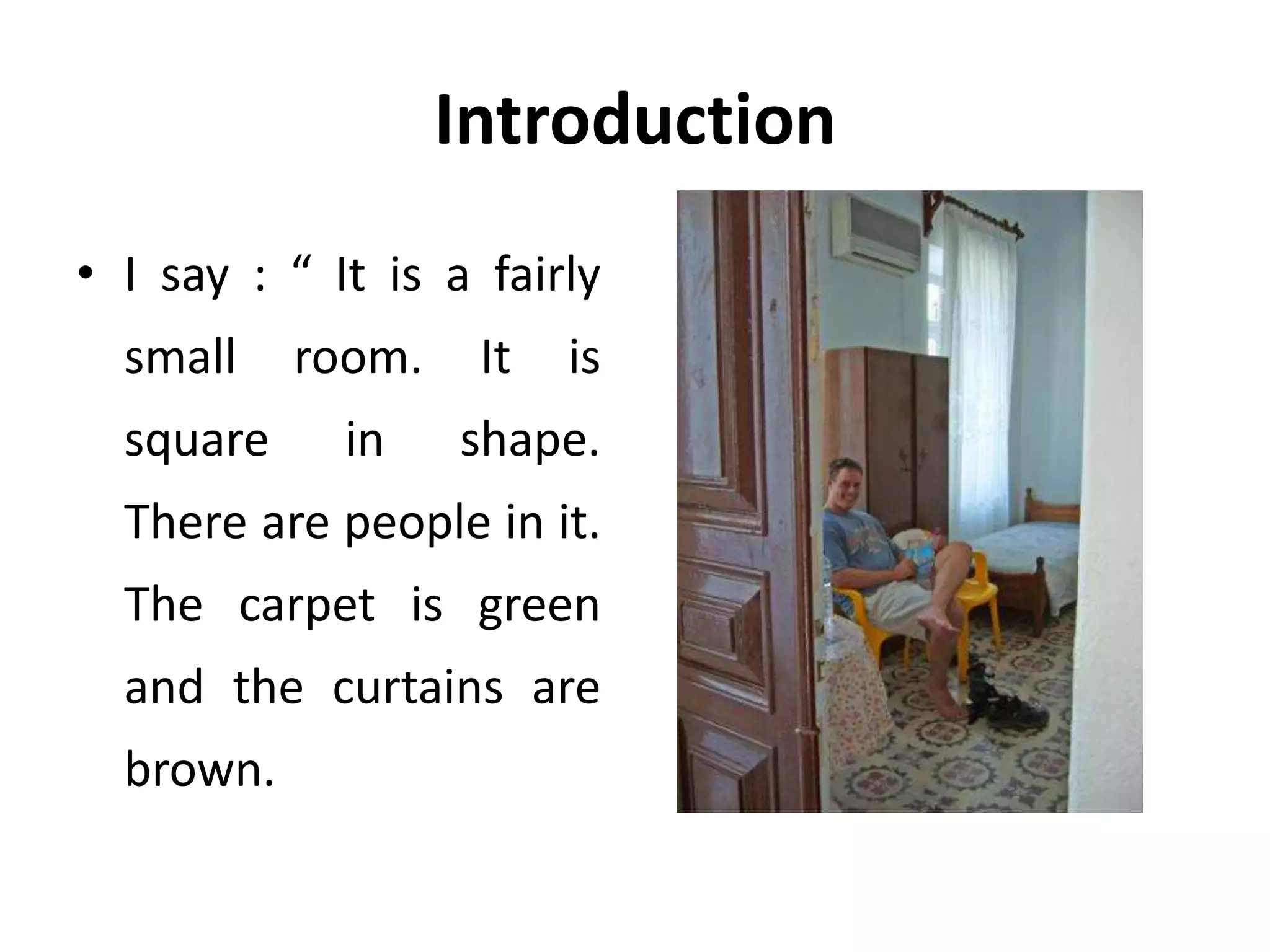
• I say : “ It is a fairly
small room. It is
square in shape.
There are people in it.
The carpet is green
and the curtains are
brown.
Introduction
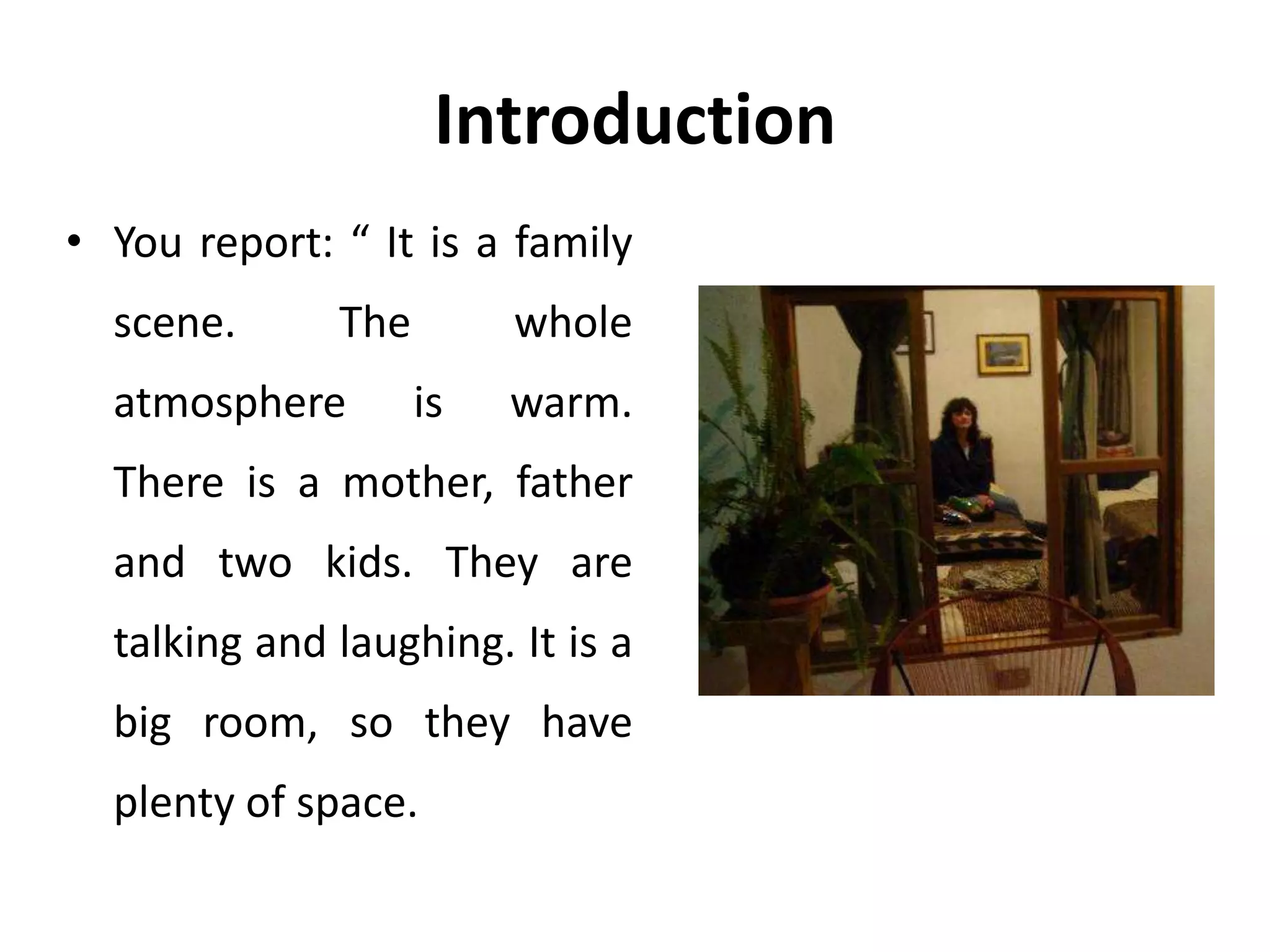
• You report: “ It is a family
scene. The whole
atmosphere is warm.
There is a mother, father
and two kids. They are
talking and laughing. It is a
big room, so they have
plenty of space.
Introduction
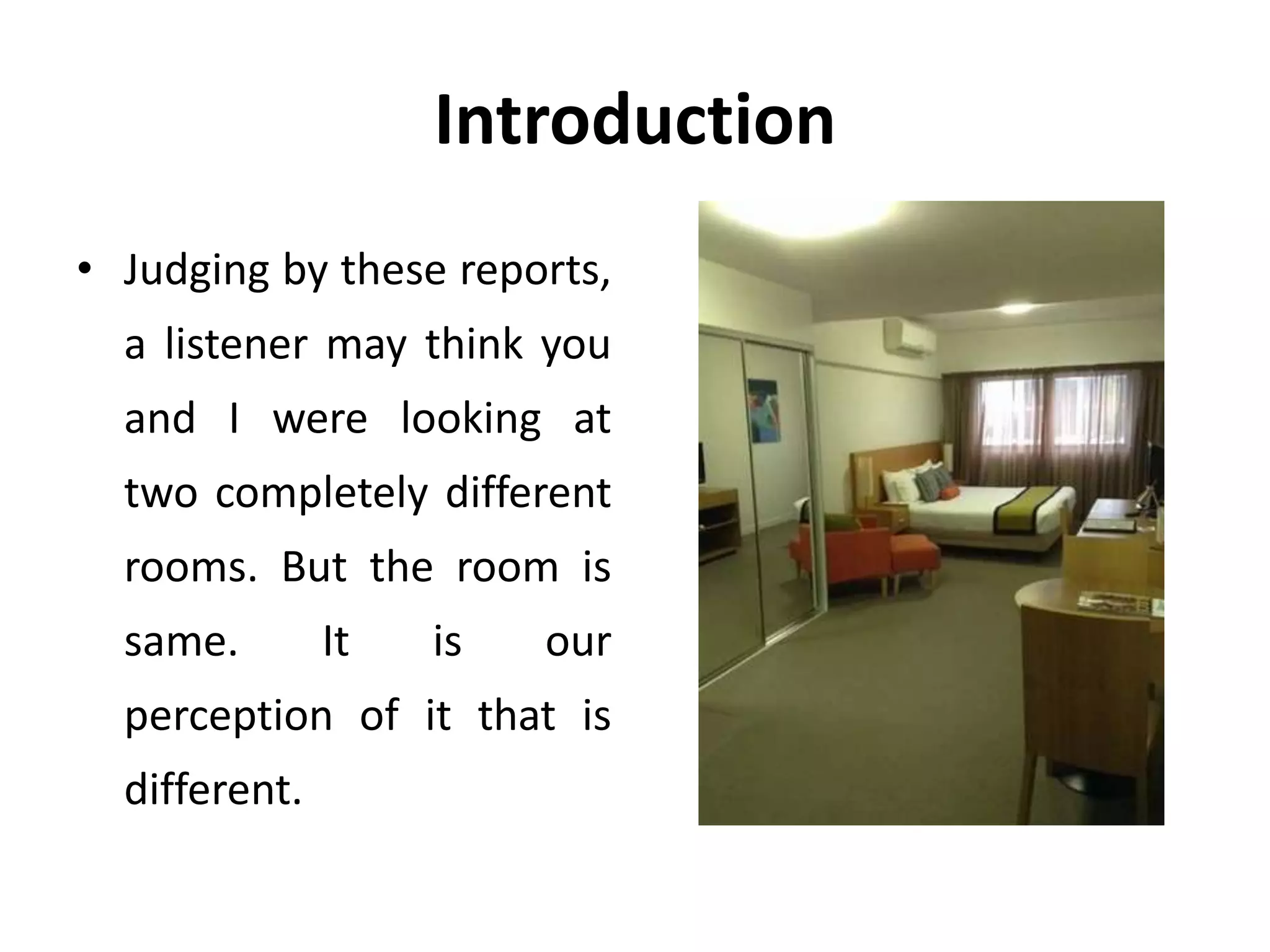
• Judging by these reports,
a listener may think you
and I were looking at
two completely different
rooms. But the room is
same. It is our
perception of it that is
different.
Introduction
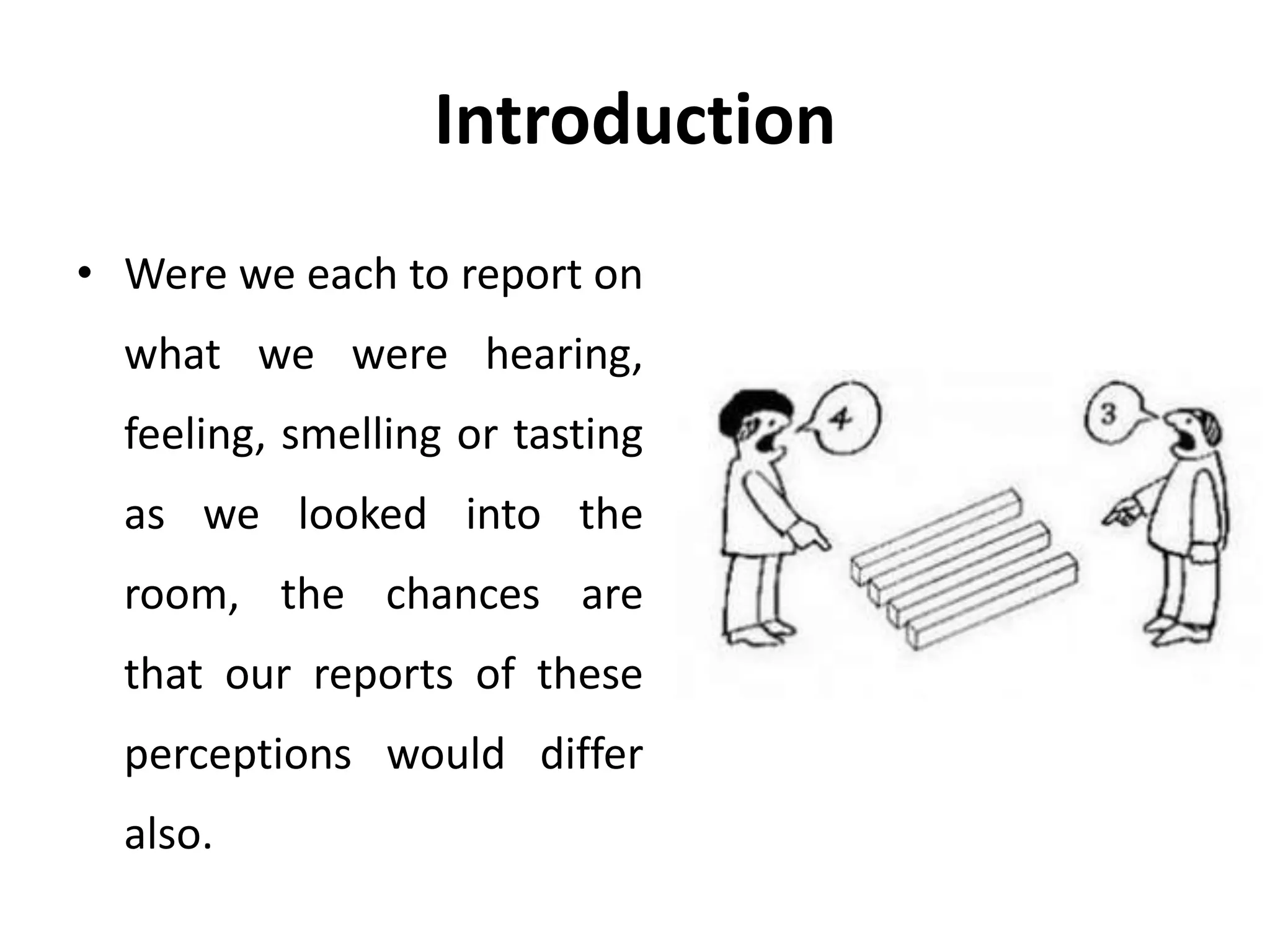
• Were we each to report on
what we were hearing,
feeling, smelling or tasting
as we looked into the
room, the chances are
that our reports of these
perceptions would differ
also.
Introduction
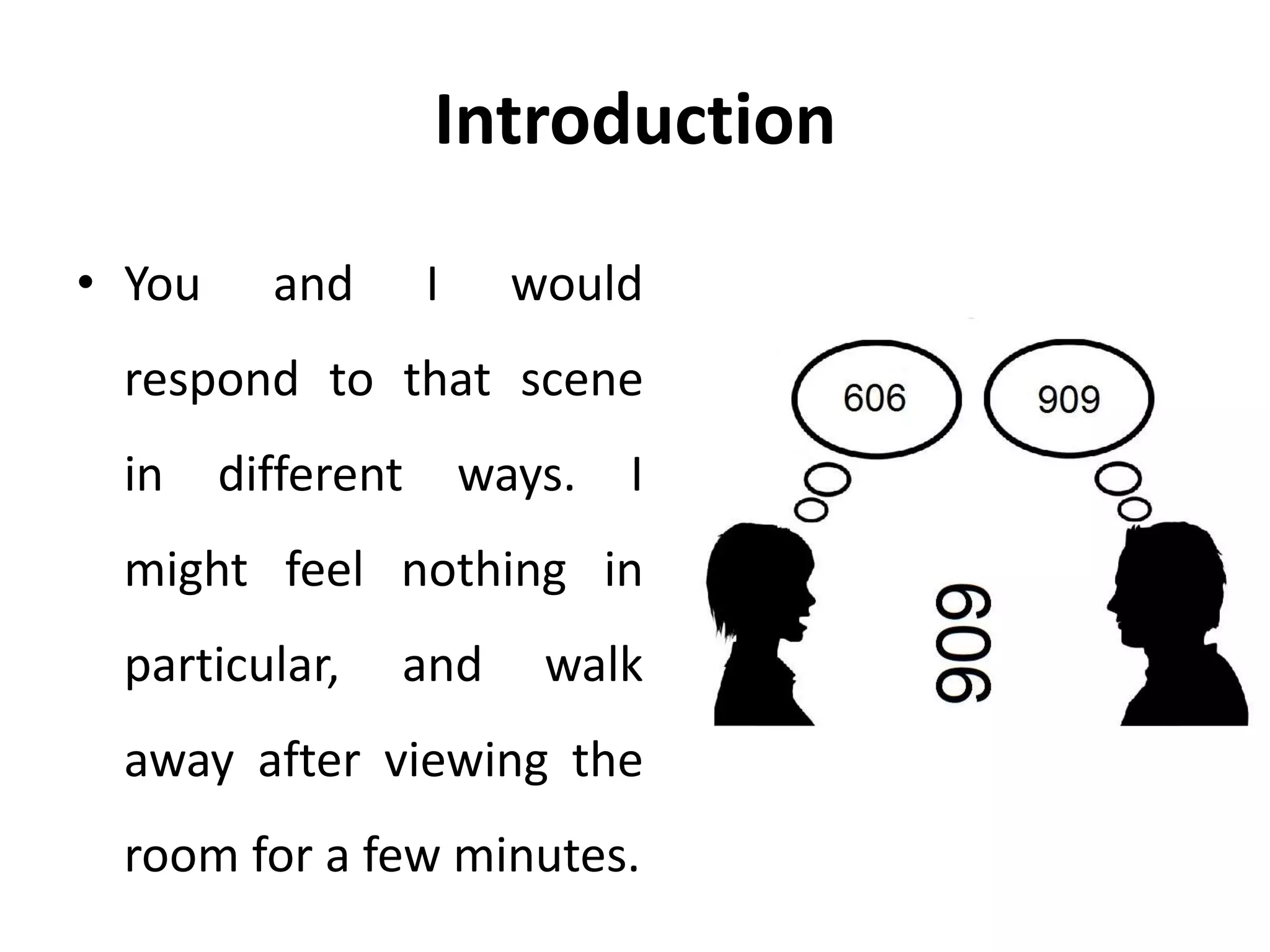
• You and I would
respond to that scene
in different ways. I
might feel nothing in
particular, and walk
away after viewing the
room for a few minutes.
Introduction
• You might feel happy,
knock on the window
and open a cover
station with the
people inside.
Introduction
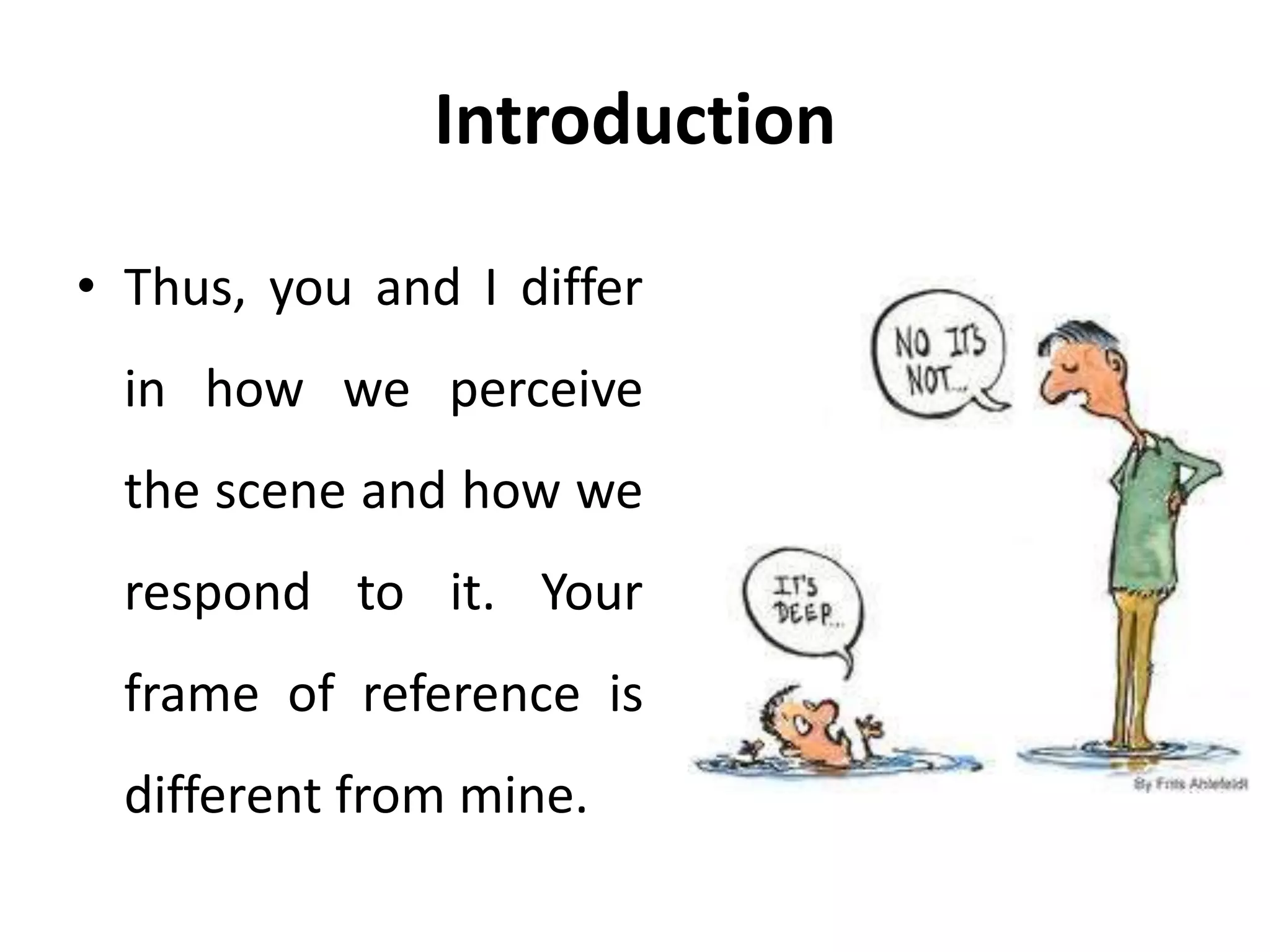
• Thus, you and I differ
in how we perceive
the scene and how we
respond to it. Your
frame of reference is
different from mine.
References
Thank You

Introduction - frame of reference and redefining - transactional analysis - Manu Melwin Joy

  • 1.
    Introduction - Frameof reference and redefining Transactional Analysis
  • 2.
    Prepared By Manu MelwinJoy Assistant Professor Ilahia School of Management Studies Kerala, India. Phone – 9744551114 Mail – manu_melwinjoy@yahoo.com Kindly restrict the use of slides for personal purpose. Please seek permission to reproduce the same in public forms and presentations.
  • 3.
    Introduction • I havemy way of perceiving the world. You have your way, and it will be different from mine.
  • 4.
    Introduction • Suppose youand I stand outside a window and look at the room within. We report to each other what we see.
  • 5.
    Introduction • I say: “ It is a fairly small room. It is square in shape. There are people in it. The carpet is green and the curtains are brown.
  • 6.
    Introduction • You report:“ It is a family scene. The whole atmosphere is warm. There is a mother, father and two kids. They are talking and laughing. It is a big room, so they have plenty of space.
  • 7.
    Introduction • Judging bythese reports, a listener may think you and I were looking at two completely different rooms. But the room is same. It is our perception of it that is different.
  • 8.
    Introduction • Were weeach to report on what we were hearing, feeling, smelling or tasting as we looked into the room, the chances are that our reports of these perceptions would differ also.
  • 9.
    Introduction • You andI would respond to that scene in different ways. I might feel nothing in particular, and walk away after viewing the room for a few minutes.
  • 10.
    Introduction • You mightfeel happy, knock on the window and open a cover station with the people inside.
  • 11.
    Introduction • Thus, youand I differ in how we perceive the scene and how we respond to it. Your frame of reference is different from mine.
  • 12.
  • 13.