Talc
Industrial Minerals
Contents
Introduction
Names of Talc
Occurrence
Physical Properties
Deposits
Formation Of Talc
Reserves In Pakistan
Uses of Talc (Soap Stone)
Health Effects
References
Introduction
 Talc is a mineral composed of
hydrated magnesium silicate.
 Its chemical formula is
Mg3Si4O10(OH)2.
 It is very soft and can be cut with a
knife.
 Talc is insoluble in water, but it is
slightly soluble in dilute acids.
Names of Talc
Talc is also name as:
o Soapstone (massive gray to bluish or
greenish can be carved by hand).
o French chalk (soft variety used for
making cloth).
o Steatite (Used for making electronic
tube insulators).
Occurrence
 Talc is a common metamorphic mineral
in metamorphic belts which contain
Ultramafic Rocks, Whiteschist and
Blueschist metamorphic
Terranes.
• Ultramafic Rocks: Silica content (Less
than 45%).
• Whiteschist: Present in the Himalayas
which stretches along Pakistan,
Kashmir and Nepal.
• Blueschist: Forms by the
metamorphism of basalt, corresponding
to a depth of 15 to 30 km and 200 to
500 C.
Physical Properties
Physical Properties
Color

Light to dark green, brown
and white

Crystal Habit
Crystal System
Cleavage
Specific Gravity
Hardness
Fracture

Fibrous Masses

Luster
Streak

Wax like or Pearly

Monoclinic to Triclinic
Basal Cleavage

2.58 to 2.83
1
Fracture in an uneven
pattern
White to Pearl green
Deposits
a) The first type of deposit
is derived from
Magnesium Carbonates.
Found in ancient
metamorphosed
carbonate sequences.
This talc deposit is
usually the purest form
of talc.
b) The second type of talc deposits

are made from Serpentines,
which provide 40% of the world's
talc production. This type of Talc
forming the ore commonly
known as "Soapstone."
c) The third type of talc

deposit is derived
from Alumino-silicate
rock. Only about 10%
of this type of talc
deposit is mined to
meet the world's talc
supplies.
d) The fourth type of talc is
deposited from magnesium
sedimentary deposits. This type
of deposit is not mined
currently and does not bring
good economical value.
Formation Of Talc
Talc is a metamorphic mineral resulting
from the metamorphism of magnesium
minerals such as Serpentine, Pyroxene,
Olivine, in the presence of Carbon
Dioxide and Water. This is known as
Talc Carbonation.
a)Talc is formed through hydration and
carbonation of serpentine.
Serpentine + carbon dioxide → talc +
magnesite + water
b) Most talc is formed from the alteration of
Dolomite in the presence of excess
dissolved Silica
Dolomite + silica + water → talc +
calcite + carbon dioxide
c)Talc can be formed from magnesium
chlorite and quartz through the following
metamorphic reaction:
chlorite + quartz → kyanite + talc +
water
Reserves In
Pakistan
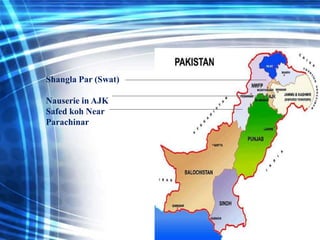
Talc reserves are estimated 0.6 Million
Tons
Pakistan has major resources of best
quality Talc Deposits in the world.
 Its mines are situated in green valleys
of Khyber Pakhtunkhwa with largest
deposits located in:
• Sherwan (Hazara)
• Shangla Par (Swat)
•
•
•
•

Kurram Agency,
Safed Koh (near Parachinar),
Nauseri in Azad Jammu & Kashmir
Talc deposits located in Kurram Agency
are of good quality matching to
International Standards.
Shangla Par (Swat)
Nauserie in AJK
Safed koh Near
Parachinar
Uses of Talc
(Soap Stone)
Paints Industry:
It improves durability, prevents cracking,
and enhances smoothness of paints.
Ceramics Industry:
The glazing and bodies of the ceramics
rely on talc to give ceramics their gloss,
whiteness and shape.
 Paper Industry:
It is used as filler and coating for paper
products.
Additives in Foods:
Talc coats some foods such as Chewing
Gum, Candies, as an anti-sticking agent.
Soap Industry:
Since pre-historic age it is being used as
soap that is why Talc is also named as
“Soap Stone”
Pharmaceutical Industry:
a)Anti- fungal powders include talc to
kill bacteria.
b)It is used in many commercial
antacids for stomach and indigestion
problems.
c)Pills are often coated in talc to help
keep moisture out of them.
Health Effects
Talc is mostly linked with pulmonary
diseases like Lung Cancer and Skin
Cancer.
Talc Products containing asbestos fibers
are fatal to human body.
Inhalation of large amounts of talc fine
dust may lead to pulmonary edema.
May cause irritation to the upper
respiratory tract. Tickling cough is a
common symptom.
May cause redness or irritation of eyes.
References
• http://www.tdap.gov.pk/doc_reports/
product_report_presentations.pdf
• http://www.nature.com/nature/journ
al/v207/n4994/abs/207283a0.html
• http://en.wikipedia.org/wiki/Talc
• http://www.mineralszone.com/miner
als/talc.html
Talc

Talc

  • 2.
  • 3.
  • 4.
    Introduction Names of Talc Occurrence PhysicalProperties Deposits Formation Of Talc Reserves In Pakistan Uses of Talc (Soap Stone) Health Effects References
  • 5.
  • 6.
     Talc isa mineral composed of hydrated magnesium silicate.  Its chemical formula is Mg3Si4O10(OH)2.  It is very soft and can be cut with a knife.  Talc is insoluble in water, but it is slightly soluble in dilute acids.
  • 7.
  • 8.
    Talc is alsoname as: o Soapstone (massive gray to bluish or greenish can be carved by hand). o French chalk (soft variety used for making cloth). o Steatite (Used for making electronic tube insulators).
  • 9.
  • 10.
     Talc isa common metamorphic mineral in metamorphic belts which contain Ultramafic Rocks, Whiteschist and Blueschist metamorphic Terranes.
  • 11.
    • Ultramafic Rocks:Silica content (Less than 45%). • Whiteschist: Present in the Himalayas which stretches along Pakistan, Kashmir and Nepal. • Blueschist: Forms by the metamorphism of basalt, corresponding to a depth of 15 to 30 km and 200 to 500 C.
  • 12.
  • 13.
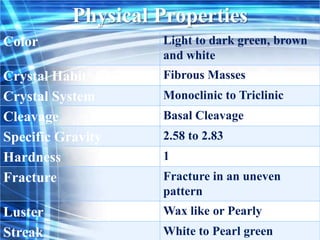
    Physical Properties Color Light todark green, brown and white Crystal Habit Crystal System Cleavage Specific Gravity Hardness Fracture Fibrous Masses Luster Streak Wax like or Pearly Monoclinic to Triclinic Basal Cleavage 2.58 to 2.83 1 Fracture in an uneven pattern White to Pearl green
  • 14.
  • 15.
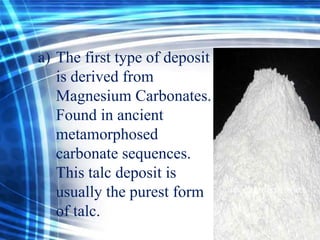
    a) The firsttype of deposit is derived from Magnesium Carbonates. Found in ancient metamorphosed carbonate sequences. This talc deposit is usually the purest form of talc.
  • 16.
    b) The secondtype of talc deposits are made from Serpentines, which provide 40% of the world's talc production. This type of Talc forming the ore commonly known as "Soapstone."
  • 17.
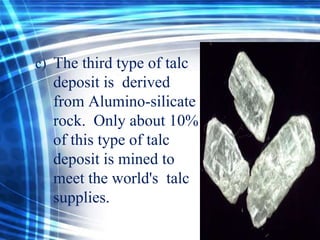
    c) The thirdtype of talc deposit is derived from Alumino-silicate rock. Only about 10% of this type of talc deposit is mined to meet the world's talc supplies.
  • 18.
    d) The fourthtype of talc is deposited from magnesium sedimentary deposits. This type of deposit is not mined currently and does not bring good economical value.
  • 19.
  • 20.
    Talc is ametamorphic mineral resulting from the metamorphism of magnesium minerals such as Serpentine, Pyroxene, Olivine, in the presence of Carbon Dioxide and Water. This is known as Talc Carbonation. a)Talc is formed through hydration and carbonation of serpentine. Serpentine + carbon dioxide → talc + magnesite + water
  • 21.
    b) Most talcis formed from the alteration of Dolomite in the presence of excess dissolved Silica Dolomite + silica + water → talc + calcite + carbon dioxide c)Talc can be formed from magnesium chlorite and quartz through the following metamorphic reaction: chlorite + quartz → kyanite + talc + water
  • 22.
  • 23.
    Talc reserves areestimated 0.6 Million Tons Pakistan has major resources of best quality Talc Deposits in the world.  Its mines are situated in green valleys of Khyber Pakhtunkhwa with largest deposits located in: • Sherwan (Hazara) • Shangla Par (Swat)
  • 24.
    • • • • Kurram Agency, Safed Koh(near Parachinar), Nauseri in Azad Jammu & Kashmir Talc deposits located in Kurram Agency are of good quality matching to International Standards.
  • 25.
    Shangla Par (Swat) Nauseriein AJK Safed koh Near Parachinar
  • 26.
  • 27.
    Paints Industry: It improvesdurability, prevents cracking, and enhances smoothness of paints. Ceramics Industry: The glazing and bodies of the ceramics rely on talc to give ceramics their gloss, whiteness and shape.
  • 28.
     Paper Industry: Itis used as filler and coating for paper products. Additives in Foods: Talc coats some foods such as Chewing Gum, Candies, as an anti-sticking agent. Soap Industry: Since pre-historic age it is being used as soap that is why Talc is also named as “Soap Stone”
  • 29.
    Pharmaceutical Industry: a)Anti- fungalpowders include talc to kill bacteria. b)It is used in many commercial antacids for stomach and indigestion problems. c)Pills are often coated in talc to help keep moisture out of them.
  • 30.
  • 31.
    Talc is mostlylinked with pulmonary diseases like Lung Cancer and Skin Cancer. Talc Products containing asbestos fibers are fatal to human body. Inhalation of large amounts of talc fine dust may lead to pulmonary edema.
  • 32.
    May cause irritationto the upper respiratory tract. Tickling cough is a common symptom. May cause redness or irritation of eyes.
  • 33.
  • 34.