System dependability

System dependability, 2013

Slide 1
System dependability
• For many software-intensive
systems, the most important
system property is the
dependability of the system.

System dependability, 2013

Slide 2
• The dependability of a system reflects
the extent of the user’s confidence that
it will operate as users expect and that it
will not corrupt data or other systems
and will not ‘fail’ in normal use.
• Users trust a system that is dependable
System dependability, 2013

Slide 3
Importance of dependability
• System failures may have widespread
effects with large numbers of people
affected by the failure.
• Systems that are not dependable and
are unreliable, unsafe or insecure may
be rejected by their users.
System dependability, 2013

Slide 4
• The costs of system failure may be very
high if the failure leads to economic
losses or physical damage.
• Undependable systems may cause
information loss with a high consequent
recovery cost.
System dependability, 2013

Slide 5
System dependability, 2013

Slide 6
Principal properties
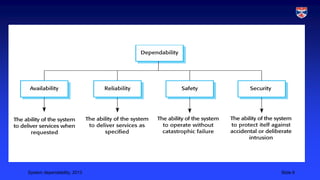
• Availability
– The probability that the system will be up and
running and able to deliver useful services to
users.

• Reliability
– The probability that the system will correctly deliver
services as expected by users.
System dependability, 2013

Slide 7
• Safety

– A judgment of how likely it is that the
system will not damage people or the
system’s environment.
• Security
– A judgment of how likely it is that the
system can resist accidental or deliberate
attacks and intrusions.
System dependability, 2013

Slide 8
Dependability attribute
dependencies
• Safe system operation depends on the
system being available and operating
reliably.

• A system may be unreliable because its
data has been corrupted by an external
attack.
System dependability, 2013

Slide 9
• Denial of service attacks on a system
are intended to make it unavailable.
• If a system is infected with a virus, you
cannot be confident in its reliability or
safety.
System dependability, 2013

Slide 10
Dependability is subjective
• The dependability of a system is not
absolute but depends on the judgment and
expectations of a system stakeholder.
• What seems to be a system failure to one
stakeholder is normal behaviour to another.

System dependability, 2013

Slide 11
User expectations
•

A banking system does not update user accounts in
real time but queues the transactions and updates
accounts twice a day

•

A user that expects real time updates may consider
this undependable as they cannot be sure whether or
not the account balance is accurate

System dependability, 2013

Slide 12
• Users trust a system if they think it is
dependable and this is based on
previous experience

•
•

Some people trust a system so don’t do backups

Others, backup obsessively

System dependability, 2013

Slide 13
Dependability and specifications
• Dependability can only be defined
formally (objectively) by relating
behaviour to the system specification

• A failure can be thought of as a
deviation from a specification
System dependability, 2013

Slide 14
• However, many specifications do not
reflect the real requirements of the
system users.
• A system that conforms to its
specification may ‘fail’ from the
perspective of some users.
System dependability, 2013

Slide 15
• Furthermore, users don’t read
specifications so don’t know how the
system is supposed to behave.
• Therefore, a formal definition of
dependability may not reflect user
experience with the system
System dependability, 2013

Slide 16
Summary
• Dependability is a composite system property
that reflects the degree of trust users have in
a system
• It includes availability, reliability, safety and
security
• Dependability is subjective and depends on
the expectations and judgment of system
users

System dependability, 2013

Slide 17

System dependability

  • 1.
  • 2.
    System dependability • Formany software-intensive systems, the most important system property is the dependability of the system. System dependability, 2013 Slide 2
  • 3.
    • The dependabilityof a system reflects the extent of the user’s confidence that it will operate as users expect and that it will not corrupt data or other systems and will not ‘fail’ in normal use. • Users trust a system that is dependable System dependability, 2013 Slide 3
  • 4.
    Importance of dependability •System failures may have widespread effects with large numbers of people affected by the failure. • Systems that are not dependable and are unreliable, unsafe or insecure may be rejected by their users. System dependability, 2013 Slide 4
  • 5.
    • The costsof system failure may be very high if the failure leads to economic losses or physical damage. • Undependable systems may cause information loss with a high consequent recovery cost. System dependability, 2013 Slide 5
  • 6.
  • 7.
    Principal properties • Availability –The probability that the system will be up and running and able to deliver useful services to users. • Reliability – The probability that the system will correctly deliver services as expected by users. System dependability, 2013 Slide 7
  • 8.
    • Safety – Ajudgment of how likely it is that the system will not damage people or the system’s environment. • Security – A judgment of how likely it is that the system can resist accidental or deliberate attacks and intrusions. System dependability, 2013 Slide 8
  • 9.
    Dependability attribute dependencies • Safesystem operation depends on the system being available and operating reliably. • A system may be unreliable because its data has been corrupted by an external attack. System dependability, 2013 Slide 9
  • 10.
    • Denial ofservice attacks on a system are intended to make it unavailable. • If a system is infected with a virus, you cannot be confident in its reliability or safety. System dependability, 2013 Slide 10
  • 11.
    Dependability is subjective •The dependability of a system is not absolute but depends on the judgment and expectations of a system stakeholder. • What seems to be a system failure to one stakeholder is normal behaviour to another. System dependability, 2013 Slide 11
  • 12.
    User expectations • A bankingsystem does not update user accounts in real time but queues the transactions and updates accounts twice a day • A user that expects real time updates may consider this undependable as they cannot be sure whether or not the account balance is accurate System dependability, 2013 Slide 12
  • 13.
    • Users trusta system if they think it is dependable and this is based on previous experience • • Some people trust a system so don’t do backups Others, backup obsessively System dependability, 2013 Slide 13
  • 14.
    Dependability and specifications •Dependability can only be defined formally (objectively) by relating behaviour to the system specification • A failure can be thought of as a deviation from a specification System dependability, 2013 Slide 14
  • 15.
    • However, manyspecifications do not reflect the real requirements of the system users. • A system that conforms to its specification may ‘fail’ from the perspective of some users. System dependability, 2013 Slide 15
  • 16.
    • Furthermore, usersdon’t read specifications so don’t know how the system is supposed to behave. • Therefore, a formal definition of dependability may not reflect user experience with the system System dependability, 2013 Slide 16
  • 17.
    Summary • Dependability isa composite system property that reflects the degree of trust users have in a system • It includes availability, reliability, safety and security • Dependability is subjective and depends on the expectations and judgment of system users System dependability, 2013 Slide 17