Tubular Processing of
Glomerular Filtrate
By Dr. Karishma R. Pandey
Assistant Professor
BPKIHS, Nepal
Overview
 Steps in urine formation
 Processing of glomerular filtrate by Reabsorption and
secretion
 Substances reabsorbed in different parts of renal tubule
and its mechanism
 Substances secreted in different parts of renal tubule and
its mechanism
 Regulation of renal processing
Steps in Urine Formation
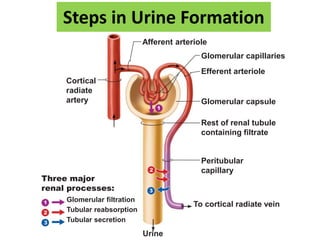
Cortical
radiate
artery
Afferent arteriole
Glomerular capillaries
Efferent arteriole
Glomerular capsule
Rest of renal tubule
containing filtrate
Peritubular
capillary
To cortical radiate vein
Urine
Glomerular filtration
Tubular reabsorption
Tubular secretion
Three major
renal processes:
Processing of glomerular filtrate by
Reabsorption and secretion
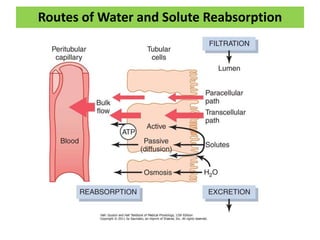
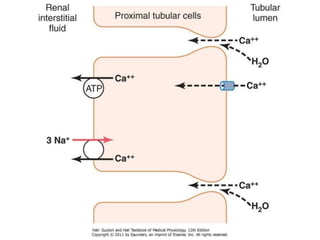
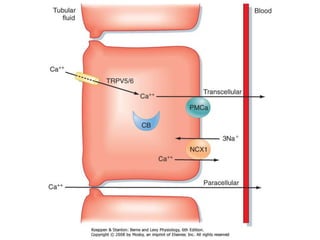
• Reabsorption is defined as movement of a substance from the tubular
fluid to the blood, and this process occurs either via the tubular cells ”the
transcellular route” or between the cells” the paracellular route .
• Tubular secretion is defined as movement of a substance from the blood
into the tubular fluid.
• The reabsorption and secretion that occur via the transcellular route are
largely the result of secondary active transport of solutes by the tubular
cells.
• Paracellular reabsorption occurs as a result of concentration or electrical
gradients that favor movement of solutes out of the tubular fluid.
Routes of Water and Solute Reabsorption
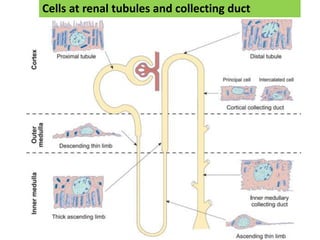
Cells at renal tubules and collecting duct
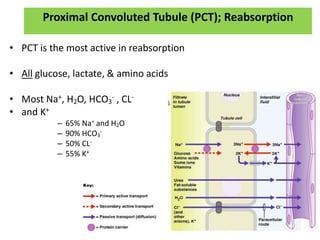
Proximal Convoluted Tubule (PCT); Reabsorption
Figure 25.4b
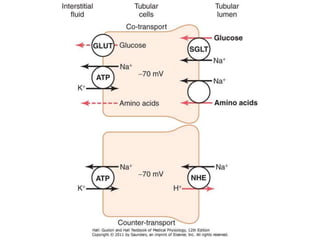
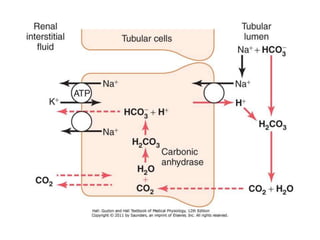
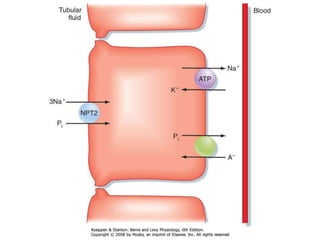
• PCT is the most active in reabsorption
• All glucose, lactate, & amino acids
• Most Na+, H2O, HCO3
- , CL-
• and K+
– 65% Na+ and H2O
– 90% HCO3
-
– 50% CL-
– 55% K+
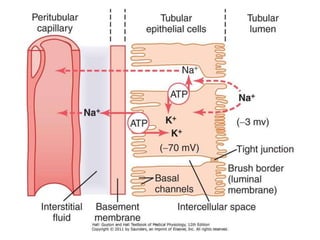
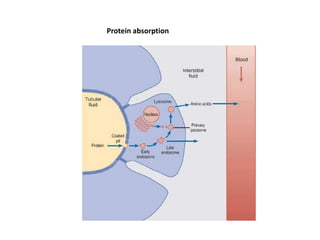
Protein absorption
Reabsorption of water / ions / nutrients
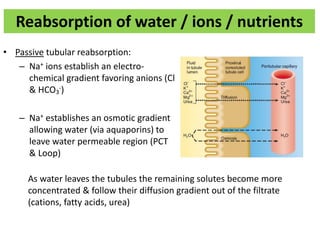
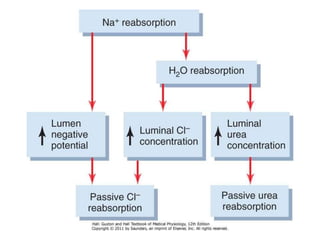
• Passive tubular reabsorption:
– Na+ ions establish an electro-
chemical gradient favoring anions (Cl-
& HCO3
-)
– Na+ establishes an osmotic gradient
allowing water (via aquaporins) to
leave water permeable region (PCT
& Loop)
As water leaves the tubules the remaining solutes become more
concentrated & follow their diffusion gradient out of the filtrate
(cations, fatty acids, urea)
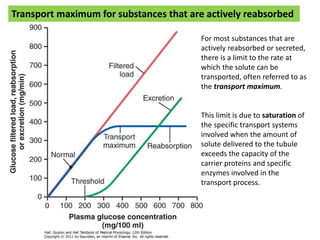
Transport maximum for substances that are actively reabsorbed
For most substances that are
actively reabsorbed or secreted,
there is a limit to the rate at
which the solute can be
transported, often referred to as
the transport maximum.
This limit is due to saturation of
the specific transport systems
involved when the amount of
solute delivered to the tubule
exceeds the capacity of the
carrier proteins and specific
enzymes involved in the
transport process.
Non-Reabsorbed Substances
• Non-reabsorption due to:
– Lack of carriers
– Lipid insolubility
– Molecules too large to pass through membrane pores
• Non-reabsorbed substances are usually nitrogenous wastes
– Urea (50-60% reclaimed)
– Creatinine: not reabsorbed
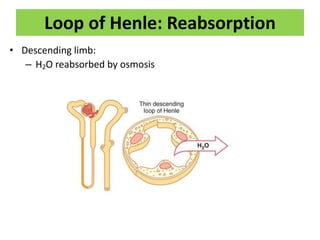
Loop of Henle: Reabsorption
• Descending limb:
– H2O reabsorbed by osmosis
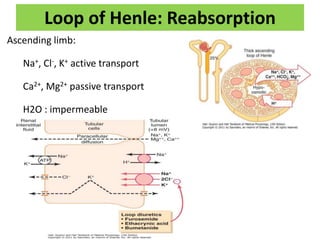
Loop of Henle: Reabsorption
Ascending limb:
Na+, Cl-, K+ active transport
Ca2+, Mg2+ passive transport
H2O : impermeable
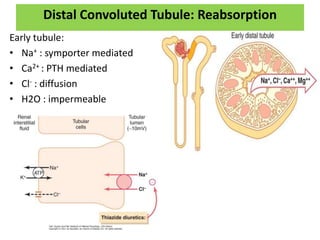
Distal Convoluted Tubule: Reabsorption
Early tubule:
• Na+ : symporter mediated
• Ca2+ : PTH mediated
• Cl- : diffusion
• H2O : impermeable
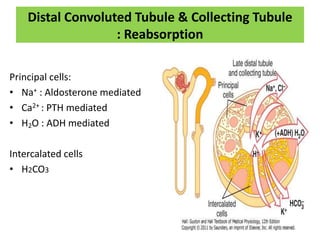
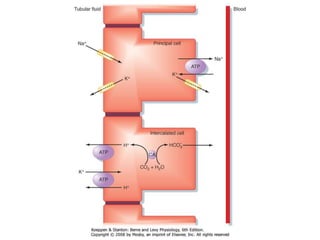
Distal Convoluted Tubule & Collecting Tubule
: Reabsorption
Principal cells:
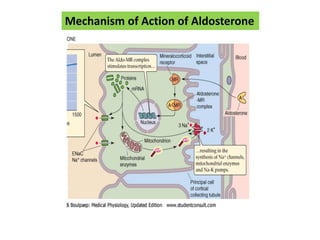
• Na+ : Aldosterone mediated
• Ca2+ : PTH mediated
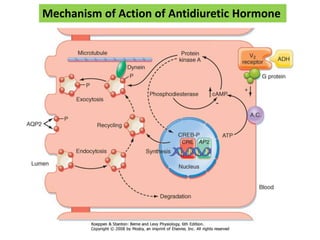
• H2O : ADH mediated
Intercalated cells
• H2CO3
Mechanism of Action of Aldosterone
Mechanism of Action of Antidiuretic Hormone
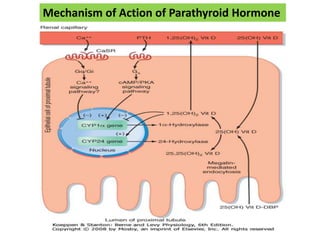
Mechanism of Action of Parathyroid Hormone
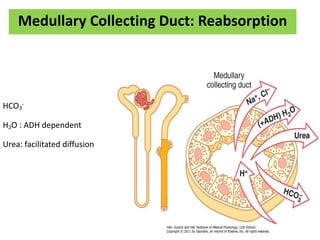
Medullary Collecting Duct: Reabsorption
HCO3
-
H2O : ADH dependent
Urea: facilitated diffusion
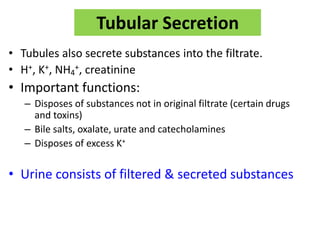
Tubular Secretion
• Tubules also secrete substances into the filtrate.
• H+, K+, NH4
+, creatinine
• Important functions:
– Disposes of substances not in original filtrate (certain drugs
and toxins)
– Bile salts, oxalate, urate and catecholamines
– Disposes of excess K+
• Urine consists of filtered & secreted substances
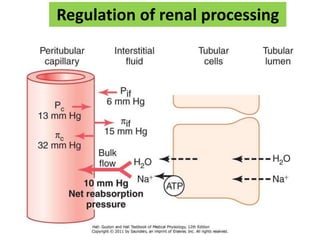
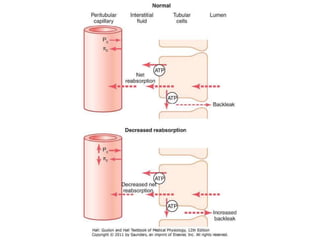
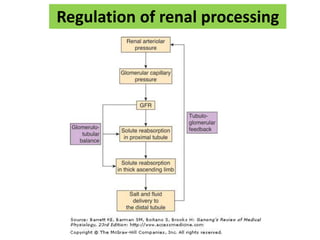
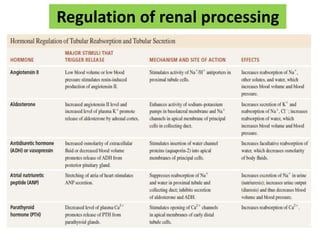
Regulation of renal processing
Mechanism of Action of Angiotensin II
Mechanism of Action of Atrial Natriuretic Peptide
References
1. Textbook of Medical Physiology-12th
edition(Guyton and Hall)
2. Ganong’s Review of Medical Physiology-23rd
edition
3. Textbook of Physiology-6th edition(Berne and
Levy)
4. Textbook of Medical Physiology-2nd
edition(Walter F. Boron, Emile L. Boulpaep)
Thank you!!!

Renal processing of glomerular filtrate

  • 1.
    Tubular Processing of GlomerularFiltrate By Dr. Karishma R. Pandey Assistant Professor BPKIHS, Nepal
  • 2.
    Overview  Steps inurine formation  Processing of glomerular filtrate by Reabsorption and secretion  Substances reabsorbed in different parts of renal tubule and its mechanism  Substances secreted in different parts of renal tubule and its mechanism  Regulation of renal processing
  • 3.
    Steps in UrineFormation Cortical radiate artery Afferent arteriole Glomerular capillaries Efferent arteriole Glomerular capsule Rest of renal tubule containing filtrate Peritubular capillary To cortical radiate vein Urine Glomerular filtration Tubular reabsorption Tubular secretion Three major renal processes:
  • 4.
    Processing of glomerularfiltrate by Reabsorption and secretion • Reabsorption is defined as movement of a substance from the tubular fluid to the blood, and this process occurs either via the tubular cells ”the transcellular route” or between the cells” the paracellular route . • Tubular secretion is defined as movement of a substance from the blood into the tubular fluid. • The reabsorption and secretion that occur via the transcellular route are largely the result of secondary active transport of solutes by the tubular cells. • Paracellular reabsorption occurs as a result of concentration or electrical gradients that favor movement of solutes out of the tubular fluid.
  • 5.
    Routes of Waterand Solute Reabsorption
  • 6.
    Cells at renaltubules and collecting duct
  • 7.
    Proximal Convoluted Tubule(PCT); Reabsorption Figure 25.4b • PCT is the most active in reabsorption • All glucose, lactate, & amino acids • Most Na+, H2O, HCO3 - , CL- • and K+ – 65% Na+ and H2O – 90% HCO3 - – 50% CL- – 55% K+
  • 11.
  • 14.
    Reabsorption of water/ ions / nutrients • Passive tubular reabsorption: – Na+ ions establish an electro- chemical gradient favoring anions (Cl- & HCO3 -) – Na+ establishes an osmotic gradient allowing water (via aquaporins) to leave water permeable region (PCT & Loop) As water leaves the tubules the remaining solutes become more concentrated & follow their diffusion gradient out of the filtrate (cations, fatty acids, urea)
  • 16.
    Transport maximum forsubstances that are actively reabsorbed For most substances that are actively reabsorbed or secreted, there is a limit to the rate at which the solute can be transported, often referred to as the transport maximum. This limit is due to saturation of the specific transport systems involved when the amount of solute delivered to the tubule exceeds the capacity of the carrier proteins and specific enzymes involved in the transport process.
  • 17.
    Non-Reabsorbed Substances • Non-reabsorptiondue to: – Lack of carriers – Lipid insolubility – Molecules too large to pass through membrane pores • Non-reabsorbed substances are usually nitrogenous wastes – Urea (50-60% reclaimed) – Creatinine: not reabsorbed
  • 18.
    Loop of Henle:Reabsorption • Descending limb: – H2O reabsorbed by osmosis
  • 19.
    Loop of Henle:Reabsorption Ascending limb: Na+, Cl-, K+ active transport Ca2+, Mg2+ passive transport H2O : impermeable
  • 20.
    Distal Convoluted Tubule:Reabsorption Early tubule: • Na+ : symporter mediated • Ca2+ : PTH mediated • Cl- : diffusion • H2O : impermeable
  • 21.
    Distal Convoluted Tubule& Collecting Tubule : Reabsorption Principal cells: • Na+ : Aldosterone mediated • Ca2+ : PTH mediated • H2O : ADH mediated Intercalated cells • H2CO3
  • 23.
    Mechanism of Actionof Aldosterone
  • 24.
    Mechanism of Actionof Antidiuretic Hormone
  • 25.
    Mechanism of Actionof Parathyroid Hormone
  • 27.
    Medullary Collecting Duct:Reabsorption HCO3 - H2O : ADH dependent Urea: facilitated diffusion
  • 28.
    Tubular Secretion • Tubulesalso secrete substances into the filtrate. • H+, K+, NH4 +, creatinine • Important functions: – Disposes of substances not in original filtrate (certain drugs and toxins) – Bile salts, oxalate, urate and catecholamines – Disposes of excess K+ • Urine consists of filtered & secreted substances
  • 29.
  • 31.
  • 32.
  • 33.
    Mechanism of Actionof Angiotensin II
  • 34.
    Mechanism of Actionof Atrial Natriuretic Peptide
  • 35.
    References 1. Textbook ofMedical Physiology-12th edition(Guyton and Hall) 2. Ganong’s Review of Medical Physiology-23rd edition 3. Textbook of Physiology-6th edition(Berne and Levy) 4. Textbook of Medical Physiology-2nd edition(Walter F. Boron, Emile L. Boulpaep)
  • 36.

Editor's Notes

  • #5 As fluid passes along the renal tubules, its composition is modified by both the reabsorption of some substances and the secretion of others. Paracellular secretion results when such forces favor movement into the tubular fluid.