Sustainable HomesUnit 3 VCE Environmental ScienceArea of Study 1: Energy and Greenhouse Gas Emissions
Considerations for Sustainability:Orientation (north-facing, for winter sun and summer shade)
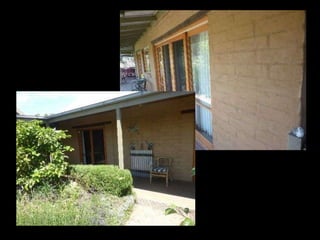
Materials (wood, mud-brick, straw-bale, stone, Hebel)
Design (roof pitch, eaves, height of ceilings)
Garden surrounds (effects on micro-climate)
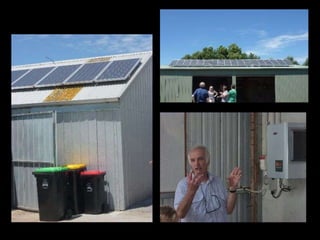
Energy use and supply
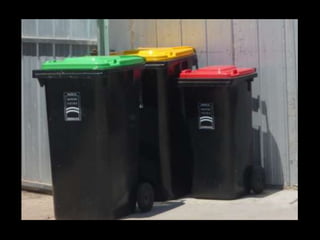
Waste (Rethink, Reduce, Reuse and Recycle)
Biodiversity (encouraging native plants and animals)
Water (Tanks, natural filters and tanks)Orientation A north facing home allows maximum sunlight to be radiated into the home during winter, when the sun is at a lower angle.
 With effective roof eaves, summer sun can be prevented from entering the home due to the greater angle of the sun at this time.
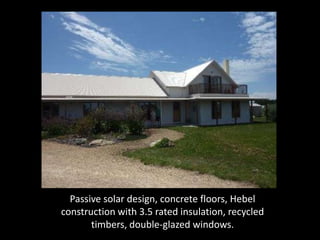
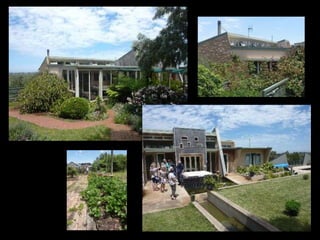
In Victoria, our weather often comes from the south or west, so no windows or small ones should be on these sides.Passive solar design, concrete floors, Hebel construction with 3.5 rated insulation, recycled timbers, double-glazed windows.
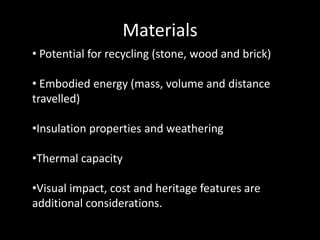
Materials Potential for recycling (stone, wood and brick)
 Embodied energy (mass, volume and distance travelled)
Insulation properties and weathering
Thermal capacity
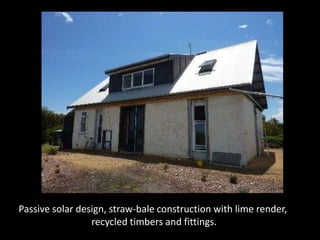
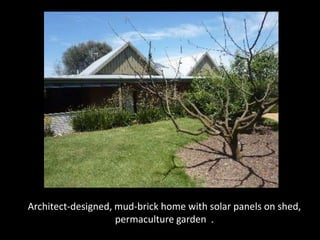
Visual impact, cost and heritage features are additional considerations.Passive solar design, straw-bale construction with lime render, recycled timbers and fittings.
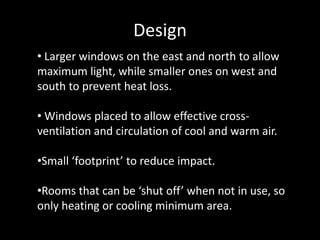
Design Larger windows on the east and north to allow maximum light, while smaller ones on west and south to prevent heat loss.
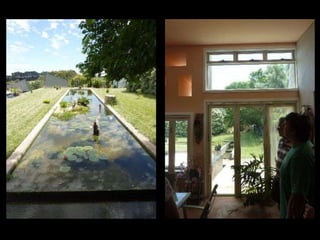
Windows placed to allow effective cross-ventilation and circulation of cool and warm air.
Small ‘footprint’ to reduce impact.

Sustainable homes