4/7/2015 1
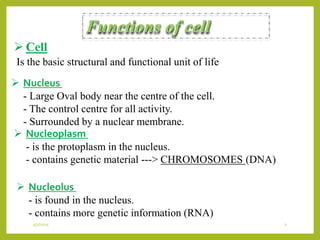
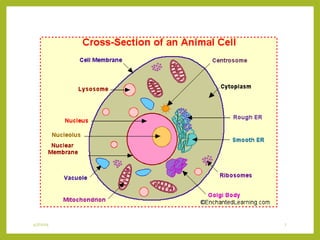
 Nucleus
- Large Oval body near the centre of the cell.
- The control centre for all activity.
- Surrounded by a nuclear membrane.
 Nucleoplasm
- is the protoplasm in the nucleus.
- contains genetic material ---> CHROMOSOMES (DNA)
 Nucleolus
- is found in the nucleus.
- contains more genetic information (RNA)
4/7/2015 2
 Cell
Is the basic structural and functional unit of life
Functions of cell
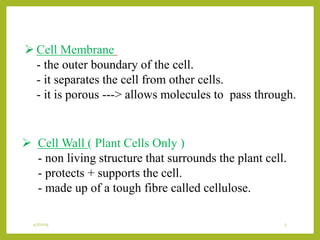
 Cell Membrane
- the outer boundary of the cell.
- it separates the cell from other cells.
- it is porous ---> allows molecules to pass through.
 Cell Wall ( Plant Cells Only )
- non living structure that surrounds the plant cell.
- protects + supports the cell.
- made up of a tough fibre called cellulose.
4/7/2015 3
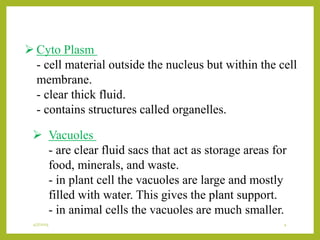
 Cyto Plasm
- cell material outside the nucleus but within the cell
membrane.
- clear thick fluid.
- contains structures called organelles.
 Vacuoles
- are clear fluid sacs that act as storage areas for
food, minerals, and waste.
- in plant cell the vacuoles are large and mostly
filled with water. This gives the plant support.
- in animal cells the vacuoles are much smaller.
4/7/2015 4
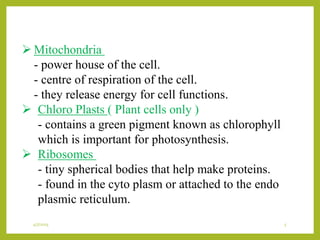
 Mitochondria
- power house of the cell.
- centre of respiration of the cell.
- they release energy for cell functions.
 Chloro Plasts ( Plant cells only )
- contains a green pigment known as chlorophyll
which is important for photosynthesis.
 Ribosomes
- tiny spherical bodies that help make proteins.
- found in the cyto plasm or attached to the endo
plasmic reticulum.
4/7/2015 5
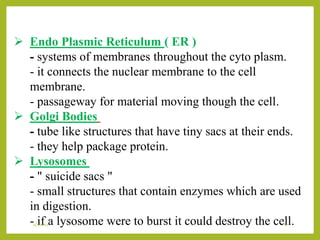
 Endo Plasmic Reticulum ( ER )
- systems of membranes throughout the cyto plasm.
- it connects the nuclear membrane to the cell
membrane.
- passageway for material moving though the cell.
 Golgi Bodies
- tube like structures that have tiny sacs at their ends.
- they help package protein.
 Lysosomes
- " suicide sacs "
- small structures that contain enzymes which are used
in digestion.
- if a lysosome were to burst it could destroy the cell.4/7/2015 6
4/7/2015 7
4/7/2015 8

functions of cell

  • 1.
  • 2.
     Nucleus - LargeOval body near the centre of the cell. - The control centre for all activity. - Surrounded by a nuclear membrane.  Nucleoplasm - is the protoplasm in the nucleus. - contains genetic material ---> CHROMOSOMES (DNA)  Nucleolus - is found in the nucleus. - contains more genetic information (RNA) 4/7/2015 2  Cell Is the basic structural and functional unit of life Functions of cell
  • 3.
     Cell Membrane -the outer boundary of the cell. - it separates the cell from other cells. - it is porous ---> allows molecules to pass through.  Cell Wall ( Plant Cells Only ) - non living structure that surrounds the plant cell. - protects + supports the cell. - made up of a tough fibre called cellulose. 4/7/2015 3
  • 4.
     Cyto Plasm -cell material outside the nucleus but within the cell membrane. - clear thick fluid. - contains structures called organelles.  Vacuoles - are clear fluid sacs that act as storage areas for food, minerals, and waste. - in plant cell the vacuoles are large and mostly filled with water. This gives the plant support. - in animal cells the vacuoles are much smaller. 4/7/2015 4
  • 5.
     Mitochondria - powerhouse of the cell. - centre of respiration of the cell. - they release energy for cell functions.  Chloro Plasts ( Plant cells only ) - contains a green pigment known as chlorophyll which is important for photosynthesis.  Ribosomes - tiny spherical bodies that help make proteins. - found in the cyto plasm or attached to the endo plasmic reticulum. 4/7/2015 5
  • 6.
     Endo PlasmicReticulum ( ER ) - systems of membranes throughout the cyto plasm. - it connects the nuclear membrane to the cell membrane. - passageway for material moving though the cell.  Golgi Bodies - tube like structures that have tiny sacs at their ends. - they help package protein.  Lysosomes - " suicide sacs " - small structures that contain enzymes which are used in digestion. - if a lysosome were to burst it could destroy the cell.4/7/2015 6
  • 7.
  • 8.