



Microbial contamination
The microbiological quality of pharmaceutical
products are influenced by:
• Environment and materials used like:
• Formulation
• Raw materials
• Equipment
• Atmosphere
• Person operating
• Final container
Good Manufacturing Practices
• To minimize contamination
• By Study of the ecology of microorganisms
• Hazard Analysis of Critical Control Points (HACCP)
• Its objective is to improve the microbiological safety of the product in
a cost-effective manner
Atmosphere
• The type of formulation being prepared determines the
microbiological standard of the air supply required and the hazard it
poses.
• Example: in case of Products for injection and ophthalmic (relating to
the eye) use
• An unsatisfactory air count may lead to the casual contamination of a
few containers and be undetected by the test for sterility.
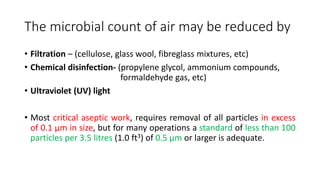
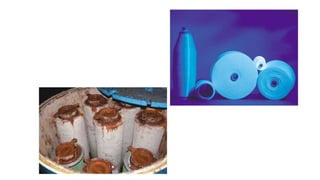
The microbial count of air may be reduced by
• Filtration – (cellulose, glass wool, fibreglass mixtures, etc)
• Chemical disinfection- (propylene glycol, ammonium compounds,
formaldehyde gas, etc)
• Ultraviolet (UV) light
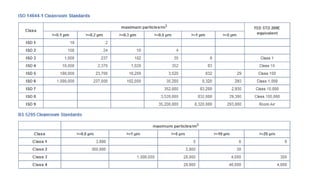
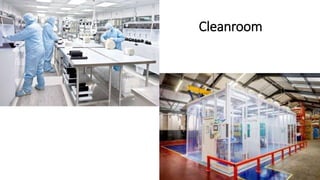
• Most critical aseptic work, requires removal of all particles in excess
of 0.1 μm in size, but for many operations a standard of less than 100
particles per 3.5 litres (1.0 ft3) of 0.5 μm or larger is adequate.
Cleanroom
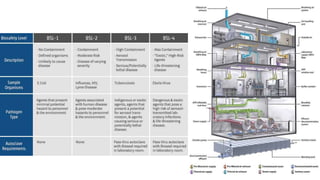
Biological Safety Cabinets
• Class I - Personnel and Environmental Protection Only
• Class II - Product, Personnel and Environmental Protection
• Class III - Total Containment Cabinets
Water
Two main aspects are involved:
• The quality of the raw water
• Any processing it receives and the distribution system
• Microorganisms indigenous to fresh water
• Bacteria which are introduced as a result of soil erosion, heavy rainfall
and decaying plant matter
• Contamination by sewage
Supply water
• Surface water the flora - more abundant and faster-growing
• Deep water source such as a well or spring are comparatively less as it
gets filtered out
• Softened water is often used for washing containers before filling with
liquid or semi-solid preparations and for cooling systems.
• Deionized water is used in pharmaceutical formulations, for washing
containers and plant, and for the preparation of disinfectant
solutions.
• Distilled water is often used in the formulation of oral and topical
pharmaceutical preparations and a low bacterial count is desirable.
• Water for such preparations is often stored at 80°C in order to
prevent bacterial growth and the production of pyrogenic substances
which accompany such growth.
• Water produced by reverse osmosis (RO) is forced by an osmotic
pressure through a semi-permeable membrane which acts as a
molecular filter.
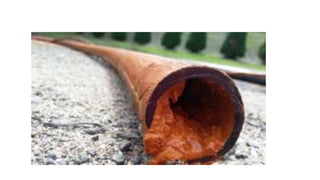
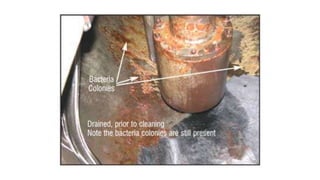
Distribution system
• If microorganisms colonize a storage vessel, it then acts as a microbial
reservoir and contaminates all water passing through it.
• It is therefore important that the contents of all storage vessels are
tested regularly.
Microbial transfer from operators
Raw materials
• During the manufacture of pharmaceuticals whatever the means of
prevention of growth or survival by chemical or in-process treatment,
it should be regarded as critical and controlled accordingly.
• Untreated raw materials which are derived from a natural source
usually support an extensive and varied microflora.
• Products from animal sources such as gelatine, desiccated thyroid,
pancreas and cochineal may be contaminated with animal-borne
pathogens.
Packaging
• Packaging material
• composition and storage conditions
• Closure liners of pulpboard or cork, unless specially treated with a
preservative, foil or wax coating, are often a source of mould
contamination for liquid or semi-solid products.
Equipment
The following points are common to many pieces of plant and serve as a
general guide to reduce the risk of microbial colonization.
1. All equipment should be easy to dismantle and clean.
2. All surfaces which are in contact with the product should be smooth,
continuous and free from pits, with all sharp corners eliminated and
junctions rounded or coved.
3. There should be no inside screw threads and all outside threads
should be readily accessible for cleaning.
4. Coupling nuts on all pipework and valves should be capable of being
taken apart and cleaned.
5. Agitator blades and the shaft should preferably be of one piece and
be accessible for cleaning.
6. Mechanical seals are preferable to packing boxes.
7. Valves should be of a sanitary design, and all contact parts must be
treated during cleaning and sanitation, and a wide variety of plug type
valves are available for general purpose use.
8. All pipelines should slope away from the product source and all process
and storage vessels should be self-draining.
9. If a vacuum exhaust system is used to remove the air or steam from a
vessel, it is necessary to clean and disinfect all fittings regularly.
10. If any filters or straining bags made from natural materials such as
canvas, muslin or paper are used, care must be taken to ensure that they are
cleaned and sterilized regularly to prevent the growth of moulds such as
Cladosporium spp., Stachybotrys spp., and Aureobasidium
(Pullularia)pullulans, which utilize cellulose and would impairthem.

Microbial contamination

  • 1.
  • 2.
    The microbiological qualityof pharmaceutical products are influenced by: • Environment and materials used like: • Formulation • Raw materials • Equipment • Atmosphere • Person operating • Final container
  • 3.
    Good Manufacturing Practices •To minimize contamination • By Study of the ecology of microorganisms • Hazard Analysis of Critical Control Points (HACCP) • Its objective is to improve the microbiological safety of the product in a cost-effective manner
  • 4.
    Atmosphere • The typeof formulation being prepared determines the microbiological standard of the air supply required and the hazard it poses. • Example: in case of Products for injection and ophthalmic (relating to the eye) use • An unsatisfactory air count may lead to the casual contamination of a few containers and be undetected by the test for sterility.
  • 6.
    The microbial countof air may be reduced by • Filtration – (cellulose, glass wool, fibreglass mixtures, etc) • Chemical disinfection- (propylene glycol, ammonium compounds, formaldehyde gas, etc) • Ultraviolet (UV) light • Most critical aseptic work, requires removal of all particles in excess of 0.1 μm in size, but for many operations a standard of less than 100 particles per 3.5 litres (1.0 ft3) of 0.5 μm or larger is adequate.
  • 8.
  • 10.
    Biological Safety Cabinets •Class I - Personnel and Environmental Protection Only • Class II - Product, Personnel and Environmental Protection • Class III - Total Containment Cabinets
  • 11.
    Water Two main aspectsare involved: • The quality of the raw water • Any processing it receives and the distribution system • Microorganisms indigenous to fresh water • Bacteria which are introduced as a result of soil erosion, heavy rainfall and decaying plant matter • Contamination by sewage
  • 13.
    Supply water • Surfacewater the flora - more abundant and faster-growing • Deep water source such as a well or spring are comparatively less as it gets filtered out • Softened water is often used for washing containers before filling with liquid or semi-solid preparations and for cooling systems. • Deionized water is used in pharmaceutical formulations, for washing containers and plant, and for the preparation of disinfectant solutions.
  • 14.
    • Distilled wateris often used in the formulation of oral and topical pharmaceutical preparations and a low bacterial count is desirable. • Water for such preparations is often stored at 80°C in order to prevent bacterial growth and the production of pyrogenic substances which accompany such growth. • Water produced by reverse osmosis (RO) is forced by an osmotic pressure through a semi-permeable membrane which acts as a molecular filter.
  • 15.
    Distribution system • Ifmicroorganisms colonize a storage vessel, it then acts as a microbial reservoir and contaminates all water passing through it. • It is therefore important that the contents of all storage vessels are tested regularly.
  • 17.
  • 18.
    Raw materials • Duringthe manufacture of pharmaceuticals whatever the means of prevention of growth or survival by chemical or in-process treatment, it should be regarded as critical and controlled accordingly. • Untreated raw materials which are derived from a natural source usually support an extensive and varied microflora. • Products from animal sources such as gelatine, desiccated thyroid, pancreas and cochineal may be contaminated with animal-borne pathogens.
  • 19.
    Packaging • Packaging material •composition and storage conditions • Closure liners of pulpboard or cork, unless specially treated with a preservative, foil or wax coating, are often a source of mould contamination for liquid or semi-solid products.
  • 20.
    Equipment The following pointsare common to many pieces of plant and serve as a general guide to reduce the risk of microbial colonization. 1. All equipment should be easy to dismantle and clean. 2. All surfaces which are in contact with the product should be smooth, continuous and free from pits, with all sharp corners eliminated and junctions rounded or coved.
  • 21.
    3. There shouldbe no inside screw threads and all outside threads should be readily accessible for cleaning. 4. Coupling nuts on all pipework and valves should be capable of being taken apart and cleaned. 5. Agitator blades and the shaft should preferably be of one piece and be accessible for cleaning.
  • 22.
    6. Mechanical sealsare preferable to packing boxes. 7. Valves should be of a sanitary design, and all contact parts must be treated during cleaning and sanitation, and a wide variety of plug type valves are available for general purpose use.
  • 23.
    8. All pipelinesshould slope away from the product source and all process and storage vessels should be self-draining. 9. If a vacuum exhaust system is used to remove the air or steam from a vessel, it is necessary to clean and disinfect all fittings regularly. 10. If any filters or straining bags made from natural materials such as canvas, muslin or paper are used, care must be taken to ensure that they are cleaned and sterilized regularly to prevent the growth of moulds such as Cladosporium spp., Stachybotrys spp., and Aureobasidium (Pullularia)pullulans, which utilize cellulose and would impairthem.

Editor's Notes

  • #3 The microbiological quality of pharmaceutical products is influenced by the environment in which they are manufactured and by the materials used in their formulation. With the exception of preparations which are terminally sterilized in their final container, the microflora of the final product may represent the contaminants from the raw materials, from the equipment with which it was made, from the atmosphere, from the person operating the process or from the final container into which it was packed.
  • #4 In parallel to improvements in manufacturing technology there have been developments in Good Manufacturing Practices to minimize contamination by a study of the ecology of microorganisms, the hazards posed by them and any points in the process which are critical to their control. This approach has been distilled into the concept of Hazard Analysis of Critical Control Points (HACCP), with the objective of improving the microbiological safety of the product in a cost-effective manner, which has been assisted by the development of rapid methods for the detection of microorganisms. https://www.ispe.org/initiatives/regulatory-resources/gmp/what-is-gmp http://www.22000-tools.com/what-is-haccp.html
  • #5 In areas where products for injection and ophthalmic use which cannot be terminally sterilized by moist heat are being manufactured, the air count should be very low and regarded as a critical control point in the process since although these products are required to pass a test for sterility, the test itself is destructive, and therefore only relatively few samples are tested. The manufacture of liquid or semi-solid preparations for either oral or topical use requires a clean environment for both the production and filling stages.
  • #6 International Organization for Standardization FEDERAL STANDARD 209E FOR CLEANROOM British Standard
  • #7 The microbial count of air may be reduced by filtration, chemical disinfection and to a limited extent by ultraviolet (UV) light. Filtration is the most commonly used method and filters may be made of a variety of materials such as cellulose, glass wool, fibreglass mixtures or polytetrafluorethylene (PTFE) with resin or acrylic binders.
  • #10 https://consteril.com/biosafety-levels-difference/
  • #11 https://www.bakerco.com/introduction-biological-safety-cabinets
  • #12 The microbial ecology of water is of great importance in the pharmaceutical industry due to its multiple uses as a constituent of many products as well as for various washing and cooling processes. . Both should be taken into consideration when reviewing the hazards to the finished product and any critical control points. Such bacteria are nutritionally undemanding and often have a relatively low optimum growth temperature.
  • #14 This is due to surface waters receiving both microorganisms and nutrients from soil and sewage whilst water from deep sources has its microflora filtered out Deionized water is used in pharmaceutical formulations, for washing containers and plant, and for the preparation of disinfectant solutions. Deionized water is prepared by passing mains water through anion and cation exchange resin beds to remove the ions
  • #15 Water for such preparations is often stored at 80°C in order to prevent bacterial growth and the production of pyrogenic substances which accompany such growth.
  • #18 The hazard of the transfer of microorganisms from humans to pharmaceutical preparations may be reduced by comprehensive training in personal hygiene coupled with regular medical checks to prevent carriers of pathogenic organisms from coming in contact with any product.
  • #19 For example, the use of untreated sewage as a fertilizer may result in animal-borne pathogens such as Salmonella spp. being present
  • #20 Packaging material has a dual role and acts both to contain the product and to prevent the entry of microorganisms or moisture which may result in spoilage, and it is therefore important that the source of contamination is not the packaging itself. The microflora of packaging materials is dependent upon both its composition and storage conditions. Glass containers are sterile on leaving the furnace, but are often stored in dusty conditions and packed for transport in cardboard boxes. As a result they may contain mould spores of Penicillium spp., Aspergillus spp. and bacteria such as Bacillus spp. Plastic bottles which are either blow- or injection-moulded have a very low microbial count and may not require disinfection. They may, however, become contaminated with mould spores if they are transported in a non-sanitary packaging material such as unlined cardboard.
  • #21 All internal welding should be polished out and there should be no dead ends. All contact surfaces require routine inspection for damage, particularly those of lagged equipment, and double-walled and lined vessels, since any crack or pinholes in the surface may allow the product to seep and microorganisms may grow and contaminate subsequent batches of product.
  • #22 If the blades are bolted onto the shaft, the product may become entrained between the shaft and blades and support microorganisms. If the shaft is packed into a housing and this fitting is within a manufacturing vessel it also may act as a reservoir of microorganisms.
  • #23 Mechanical seals are preferable to packing boxes since packing material is usually difficult to sterilize and often requires a lubricant which may gain access to the product. (example – industrial pumps) For aseptically manufactured and filled products valves fitted with steam barriers are available. If diaphragm valves are used, it is essential to inspect the diaphragm routinely. Worn diaphragms can permit seepage of the product into the seat of the valve, where it is protected from cleaning and sterilizing agents and may act as a growth medium for microorganisms, in addition if diaphragm valves are used in very wet area, a purpose-made cover may be useful to prevent access of water and potential Smicrobial growth occurring under the diaphragm.
  • #24 Run-off valves should be as near to the tank as possible and sampling through them should be avoided, since any nutrient left in the valve may encourage microbial growth which could contaminate the complete batch. A separate sampling cock or hatch is preferable.