Introduction to the
Sulphur Cycle
The sulphur cycle is a vital biogeochemical process that describes the
movement and transformation of sulphur through the Earth's atmosphere,
hydrosphere, and biosphere. This cycle plays a crucial role in sustaining
ecosystems and supporting life.
Sources of Sulphur
1 Natural Sources
Volcanic eruptions,
decomposition of
organic matter,
weathering of rocks
2 Anthropogenic
Sources
Fossil fuel
combustion, industrial
processes, mining
3 Biological Sources
Microbial metabolism,
plant and animal
matter
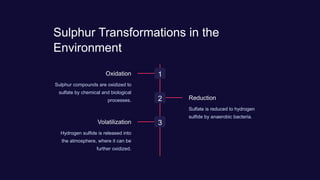
Sulphur Transformations in the
Environment
1
Oxidation
Sulphur compounds are oxidized to
sulfate by chemical and biological
processes. 2 Reduction
Sulfate is reduced to hydrogen
sulfide by anaerobic bacteria.
3
Volatilization
Hydrogen sulfide is released into
the atmosphere, where it can be
further oxidized.
Biological Processes in the Sulphur
Cycle
Chemolithotrophs
Microbes that obtain energy
by oxidizing inorganic
sulphur compounds.
Sulfur-Reducing
Bacteria
Bacteria that use sulfate as
a terminal electron
acceptor, producing
hydrogen sulfide.
Sulfur-Oxidizing
Bacteria
Bacteria that oxidize
hydrogen sulfide and other
reduced sulphur
compounds.
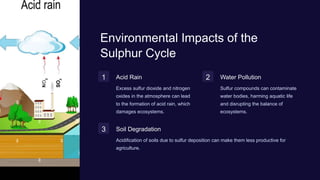
Environmental Impacts of the
Sulphur Cycle
1 Acid Rain
Excess sulfur dioxide and nitrogen
oxides in the atmosphere can lead
to the formation of acid rain, which
damages ecosystems.
2 Water Pollution
Sulfur compounds can contaminate
water bodies, harming aquatic life
and disrupting the balance of
ecosystems.
3 Soil Degradation
Acidification of soils due to sulfur deposition can make them less productive for
agriculture.
Anthropogenic Influences on the
Sulphur Cycle
1 Fossil Fuel Combustion
Burning of coal, oil, and natural gas releases sulfur dioxide and other sulfur
compounds into the atmosphere.
2 Industrial Processes
Smelting, refining, and manufacturing activities can release significant
amounts of sulfur compounds.
3 Agricultural Practices
The use of sulfur-containing fertilizers and pesticides can alter the natural
sulphur cycle.
Importance of the Sulphur Cycle for
Ecosystems
Nutrient Cycling
Sulphur is an essential
nutrient for plants and
microorganisms, playing
a crucial role in various
metabolic processes.
Biodiversity
The sulphur cycle
supports a diverse range
of organisms, from
chemolithotrophs to
larger animals,
contributing to the overall
health of ecosystems.
Biogeochemical
Balance
The sulphur cycle is
tightly linked to other
biogeochemical cycles,
such as the carbon and
nitrogen cycles,
maintaining the balance
of the Earth's systems.
Conclusion and Future Considerations
The sulphur cycle is a complex and dynamic process that is essential for the functioning of our
planet's ecosystems. As human activities continue to impact the natural sulphur cycle, it is crucial
to understand and mitigate these effects to ensure the long-term sustainability of our environment.

Introduction-to-the-Sulphur-Cycle-1.pptx

  • 1.
    Introduction to the SulphurCycle The sulphur cycle is a vital biogeochemical process that describes the movement and transformation of sulphur through the Earth's atmosphere, hydrosphere, and biosphere. This cycle plays a crucial role in sustaining ecosystems and supporting life.
  • 2.
    Sources of Sulphur 1Natural Sources Volcanic eruptions, decomposition of organic matter, weathering of rocks 2 Anthropogenic Sources Fossil fuel combustion, industrial processes, mining 3 Biological Sources Microbial metabolism, plant and animal matter
  • 3.
    Sulphur Transformations inthe Environment 1 Oxidation Sulphur compounds are oxidized to sulfate by chemical and biological processes. 2 Reduction Sulfate is reduced to hydrogen sulfide by anaerobic bacteria. 3 Volatilization Hydrogen sulfide is released into the atmosphere, where it can be further oxidized.
  • 4.
    Biological Processes inthe Sulphur Cycle Chemolithotrophs Microbes that obtain energy by oxidizing inorganic sulphur compounds. Sulfur-Reducing Bacteria Bacteria that use sulfate as a terminal electron acceptor, producing hydrogen sulfide. Sulfur-Oxidizing Bacteria Bacteria that oxidize hydrogen sulfide and other reduced sulphur compounds.
  • 5.
    Environmental Impacts ofthe Sulphur Cycle 1 Acid Rain Excess sulfur dioxide and nitrogen oxides in the atmosphere can lead to the formation of acid rain, which damages ecosystems. 2 Water Pollution Sulfur compounds can contaminate water bodies, harming aquatic life and disrupting the balance of ecosystems. 3 Soil Degradation Acidification of soils due to sulfur deposition can make them less productive for agriculture.
  • 6.
    Anthropogenic Influences onthe Sulphur Cycle 1 Fossil Fuel Combustion Burning of coal, oil, and natural gas releases sulfur dioxide and other sulfur compounds into the atmosphere. 2 Industrial Processes Smelting, refining, and manufacturing activities can release significant amounts of sulfur compounds. 3 Agricultural Practices The use of sulfur-containing fertilizers and pesticides can alter the natural sulphur cycle.
  • 7.
    Importance of theSulphur Cycle for Ecosystems Nutrient Cycling Sulphur is an essential nutrient for plants and microorganisms, playing a crucial role in various metabolic processes. Biodiversity The sulphur cycle supports a diverse range of organisms, from chemolithotrophs to larger animals, contributing to the overall health of ecosystems. Biogeochemical Balance The sulphur cycle is tightly linked to other biogeochemical cycles, such as the carbon and nitrogen cycles, maintaining the balance of the Earth's systems.
  • 8.
    Conclusion and FutureConsiderations The sulphur cycle is a complex and dynamic process that is essential for the functioning of our planet's ecosystems. As human activities continue to impact the natural sulphur cycle, it is crucial to understand and mitigate these effects to ensure the long-term sustainability of our environment.