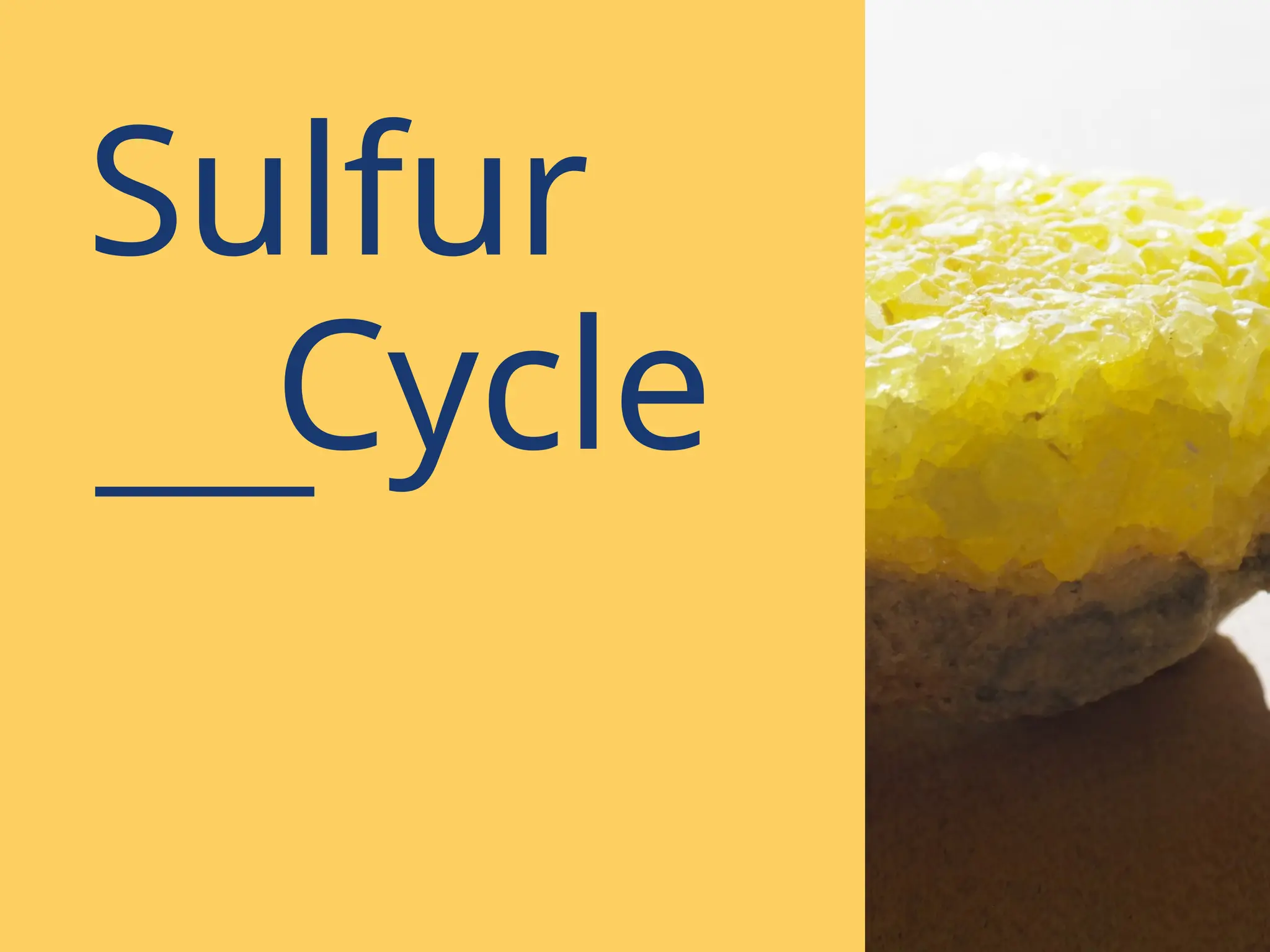
Sulfur
Cycle
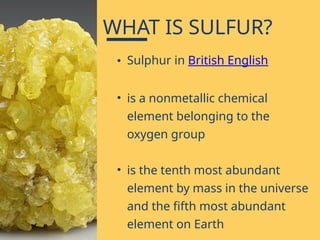
• Sulphur in British English
• is a nonmetallic chemical
element belonging to the
oxygen group
• is the tenth most abundant
element by mass in the universe
and the fifth most abundant
element on Earth
WHAT IS SULFUR?
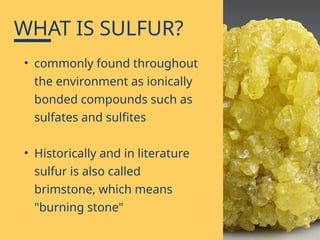
• commonly found throughout
the environment as ionically
bonded compounds such as
sulfates and sulfites
• Historically and in literature
sulfur is also called
brimstone, which means
"burning stone"
WHAT IS SULFUR?
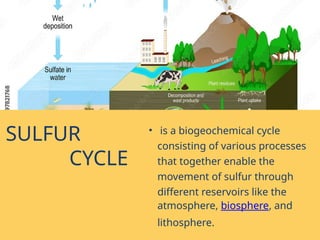
• is a biogeochemical cycle
consisting of various processes
that together enable the
movement of sulfur through
different reservoirs like the
atmosphere, biosphere, and
lithosphere.
SULFUR
CYCLE
• The sulfur cycle is essential as it
balances the concentration of
sulfur in different reservoirs so as
to make the Earth a hospitable
place for life.
SIGNIFICANCE
OF THE SULFUR
CYCLE
• Biological processes occurring in
the terrestrial ecosystem in the
sulfur cycle are responsible for
increasing the availability of sulfur
to plants and microorganisms.
• Understanding the mechanism of
the sulfur cycle helps to
understand the physiology of
different microorganisms involved
in the process.
HOW DOES THE SULFUR
CYCLE WORK?
WEATHERING
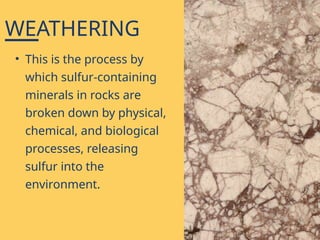
• This is the process by
which sulfur-containing
minerals in rocks are
broken down by physical,
chemical, and biological
processes, releasing
sulfur into the
environment.
RELEASE
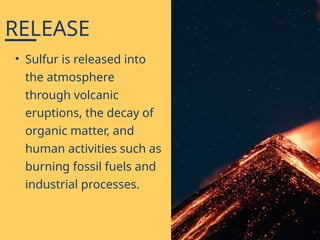
• Sulfur is released into
the atmosphere
through volcanic
eruptions, the decay of
organic matter, and
human activities such as
burning fossil fuels and
industrial processes.
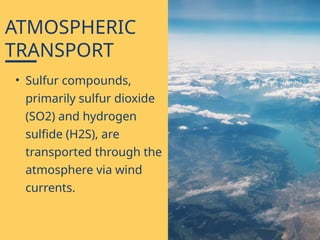
• Sulfur compounds,
primarily sulfur dioxide
(SO2) and hydrogen
sulfide (H2S), are
transported through the
atmosphere via wind
currents.
ATMOSPHERIC
TRANSPORT
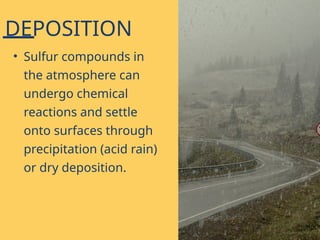
DEPOSITION
• Sulfur compounds in
the atmosphere can
undergo chemical
reactions and settle
onto surfaces through
precipitation (acid rain)
or dry deposition.
ASSIMILATION
• Sulfur is taken up by
plants and
microorganisms from
the soil or water, where
it becomes
incorporated into
organic compounds.
MINERALIZATION
• Sulfur is released back
into the soil or water
through the
decomposition of
organic matter by
microbes.
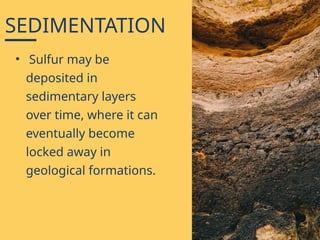
SEDIMENTATION
• Sulfur may be
deposited in
sedimentary layers
over time, where it can
eventually become
locked away in
geological formations.
• Burning Fossil Fuels
• Industrial Processes
• Deforestation
• Excessive Use of
Fertilizers
• Mining Activities
• Volcanic Eruptions
• Climate Change
• Air Pollution Control
Measures
DISTURBANCES
OF
THE SULFUR
CYCLE
• Reduce Sulfur Emissions
• Promote Sulfur Recycling
• Protect Sulfur-Rich
Environments
• Avoid Sulfur
Contamination
• Promote Biological Sulfur
Cycling
• Monitor Sulfur Levels
• Educate and Raise
Awareness
MAINTAINING
THE
EQUILIBRIUM OF
THE SULFUR
CYCLE
CONCLUSION
In conclusion, the sulfur cycle is an essential process that regulates
the distribution and transformation of sulfur throughout the Earth's
ecosystems. Understanding the sulfur cycle is vital for addressing
environmental challenges. Maintaining the equilibrium of the sulfur
cycle requires collective efforts to minimize sulfur emissions,
promote recycling, protect sulfur-rich environments, and etc.
Essentially, the sulfur cycle highlights the complex interconnections
present in nature and emphasizes the importance of responsibly
managing Earth's resources to secure a sustainable future.
REFERENCES:
https://microbenotes.com/sulfur-cycle/
https://en.wikipedia.org/wiki/Sulfur_cycle#
https://unacademy.com/content/upsc/study-material/general-
awareness/sulphur-cycle-definition-steps-diagram-importance-and-facts/

Sulfur Cycle - Definition, Composition and Importance

  • 1.
  • 2.
    • Sulphur inBritish English • is a nonmetallic chemical element belonging to the oxygen group • is the tenth most abundant element by mass in the universe and the fifth most abundant element on Earth WHAT IS SULFUR?
  • 3.
    • commonly foundthroughout the environment as ionically bonded compounds such as sulfates and sulfites • Historically and in literature sulfur is also called brimstone, which means "burning stone" WHAT IS SULFUR?
  • 4.
    • is abiogeochemical cycle consisting of various processes that together enable the movement of sulfur through different reservoirs like the atmosphere, biosphere, and lithosphere. SULFUR CYCLE
  • 5.
    • The sulfurcycle is essential as it balances the concentration of sulfur in different reservoirs so as to make the Earth a hospitable place for life. SIGNIFICANCE OF THE SULFUR CYCLE • Biological processes occurring in the terrestrial ecosystem in the sulfur cycle are responsible for increasing the availability of sulfur to plants and microorganisms. • Understanding the mechanism of the sulfur cycle helps to understand the physiology of different microorganisms involved in the process.
  • 6.
    HOW DOES THESULFUR CYCLE WORK?
  • 7.
    WEATHERING • This isthe process by which sulfur-containing minerals in rocks are broken down by physical, chemical, and biological processes, releasing sulfur into the environment.
  • 8.
    RELEASE • Sulfur isreleased into the atmosphere through volcanic eruptions, the decay of organic matter, and human activities such as burning fossil fuels and industrial processes.
  • 9.
    • Sulfur compounds, primarilysulfur dioxide (SO2) and hydrogen sulfide (H2S), are transported through the atmosphere via wind currents. ATMOSPHERIC TRANSPORT
  • 10.
    DEPOSITION • Sulfur compoundsin the atmosphere can undergo chemical reactions and settle onto surfaces through precipitation (acid rain) or dry deposition.
  • 11.
    ASSIMILATION • Sulfur istaken up by plants and microorganisms from the soil or water, where it becomes incorporated into organic compounds.
  • 12.
    MINERALIZATION • Sulfur isreleased back into the soil or water through the decomposition of organic matter by microbes.
  • 13.
    SEDIMENTATION • Sulfur maybe deposited in sedimentary layers over time, where it can eventually become locked away in geological formations.
  • 14.
    • Burning FossilFuels • Industrial Processes • Deforestation • Excessive Use of Fertilizers • Mining Activities • Volcanic Eruptions • Climate Change • Air Pollution Control Measures DISTURBANCES OF THE SULFUR CYCLE
  • 15.
    • Reduce SulfurEmissions • Promote Sulfur Recycling • Protect Sulfur-Rich Environments • Avoid Sulfur Contamination • Promote Biological Sulfur Cycling • Monitor Sulfur Levels • Educate and Raise Awareness MAINTAINING THE EQUILIBRIUM OF THE SULFUR CYCLE
  • 16.
    CONCLUSION In conclusion, thesulfur cycle is an essential process that regulates the distribution and transformation of sulfur throughout the Earth's ecosystems. Understanding the sulfur cycle is vital for addressing environmental challenges. Maintaining the equilibrium of the sulfur cycle requires collective efforts to minimize sulfur emissions, promote recycling, protect sulfur-rich environments, and etc. Essentially, the sulfur cycle highlights the complex interconnections present in nature and emphasizes the importance of responsibly managing Earth's resources to secure a sustainable future.
  • 17.