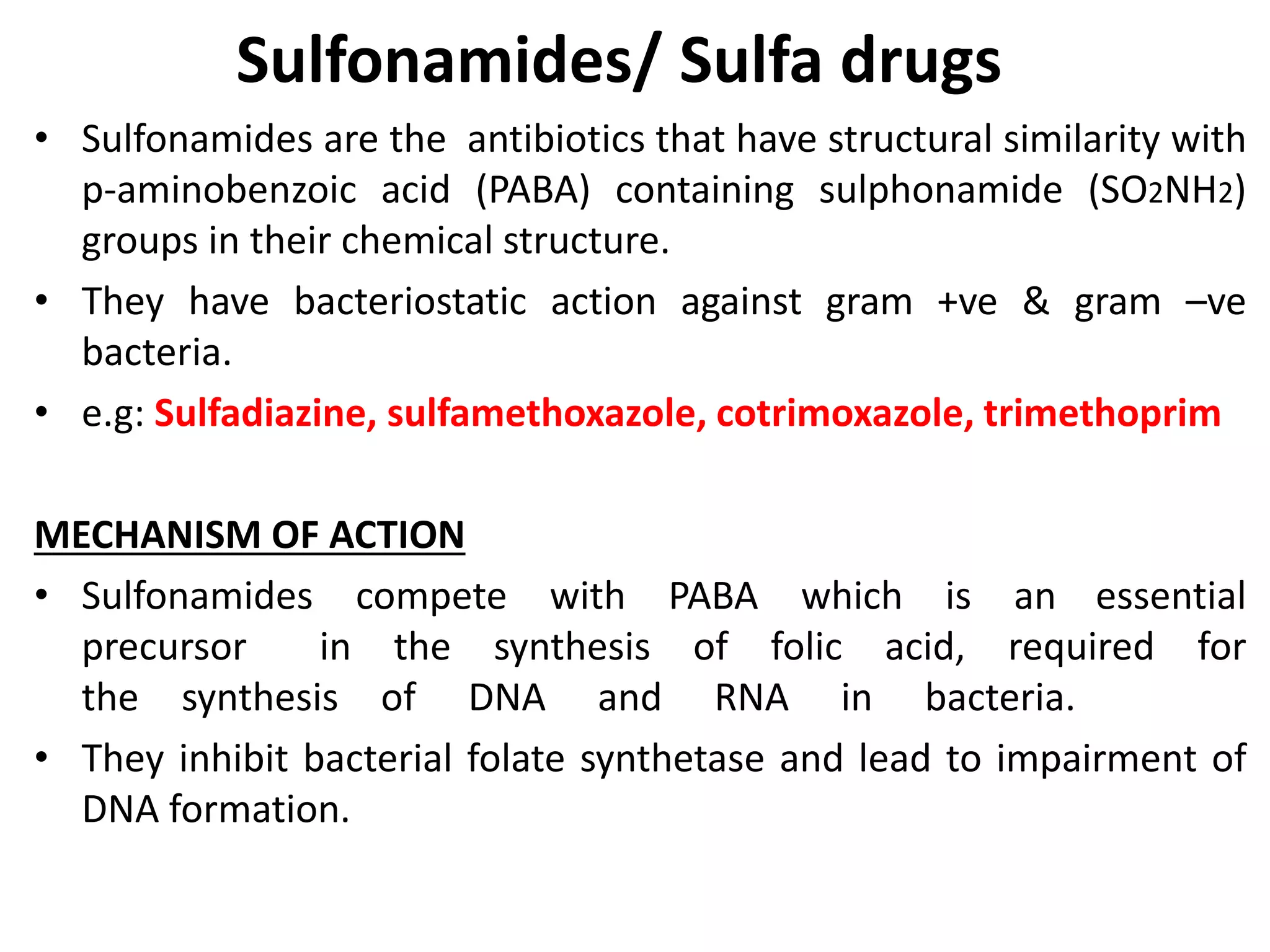
Sulfonamides/ Sulfa drugs
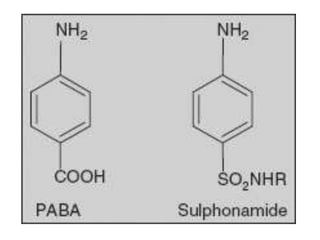
• Sulfonamides are the antibiotics that have structural similarity with
p-aminobenzoic acid (PABA) containing sulphonamide (SO2NH2)
groups in their chemical structure.
• They have bacteriostatic action against gram +ve & gram –ve
bacteria.
• e.g: Sulfadiazine, sulfamethoxazole, cotrimoxazole, trimethoprim
MECHANISM OF ACTION
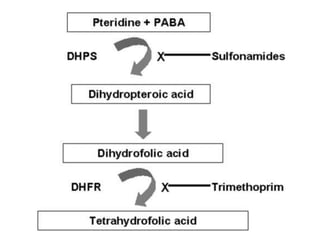
• Sulfonamides compete with PABA which is an essential
precursor in the synthesis of folic acid, required for
the synthesis of DNA and RNA in bacteria.
• They inhibit bacterial folate synthetase and lead to impairment of
DNA formation.
• Sulfa drugs were discovered when a red dye
called Prontosil had shown in-vivo
antibacterial activity against streptococcal
infection. Later it was found that prontosil was
broken down in the body to release
Sulfanilamide which was responsible for
antibacterial action.
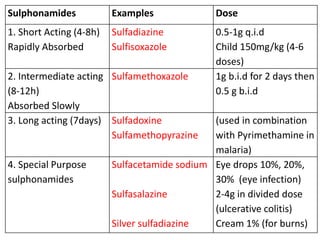
Sulphonamides Examples Dose
1. Short Acting (4-8h)
Rapidly Absorbed
Sulfadiazine
Sulfisoxazole
0.5-1g q.i.d
Child 150mg/kg (4-6
doses)
2. Intermediate acting
(8-12h)
Absorbed Slowly
Sulfamethoxazole 1g b.i.d for 2 days then
0.5 g b.i.d
3. Long acting (7days) Sulfadoxine
Sulfamethopyrazine
(used in combination
with Pyrimethamine in
malaria)
4. Special Purpose
sulphonamides
Sulfacetamide sodium
Sulfasalazine
Silver sulfadiazine
Eye drops 10%, 20%,
30% (eye infection)
2-4g in divided dose
(ulcerative colitis)
Cream 1% (for burns)
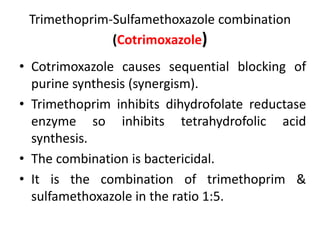
Trimethoprim-Sulfamethoxazole combination
(Cotrimoxazole)
• Cotrimoxazole causes sequential blocking of
purine synthesis (synergism).
• Trimethoprim inhibits dihydrofolate reductase
enzyme so inhibits tetrahydrofolic acid
synthesis.
• The combination is bactericidal.
• It is the combination of trimethoprim &
sulfamethoxazole in the ratio 1:5.
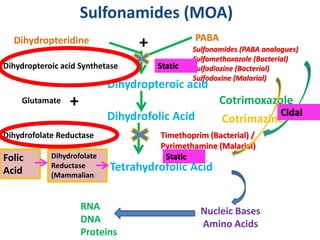
Sulfonamides (MOA)
Dihydropteridine + PABA
Sulfonamides (PABA analogues)
Sulfomethoxazole (Bacterial)
Sulfadiazine (Bacterial)
Sulfodoxine (Malarial)
Dihydropteroic acid Synthetase
Dihydropteroic acid
Glutamate
Dihydrofolic Acid
Timethoprim (Bacterial) /
Pyrimethamine (Malarial)
Dihydrofolate Reductase
Tetrahydrofolic Acid
Nucleic Bases
Amino Acids
RNA
DNA
Proteins
Folic
Acid
Dihydrofolate
Reductase
(Mammalian)
+ Cotrimoxazole
Cotrimazine
Static
Cidal
Static
Triple sulfa
• It is the combination of 3 sulfonamides together.
• Triple sulfa is an antibacterial medication that
fights bacteria in the body.
• Triple sulfa vaginal is used to treat vaginal
infections caused by the bacteria Gardnerella
vaginalis.
Therapeutic Use
1. Toxoplasmosis (infection caused by Toxo plasma gondii -
Mild flu like infection ( Sulfadiazine + Pyrimethamine)
2. Nocardiasis ( infection caused by Nocardia) Chronic infection on
lungs, cutanious part etc. (High dose for prolonged period)
3. Trachoma and Inclusion Conjuctivitis
4. Lympho Granuloma Venereum (infection of
genitals) and Chancroid (Sexual infection Disease)
5. Malaria (Pyrimethamine + Sulfadoxine)
6. Burn ( Silver sulfadiazine)
7. Urinary Tract Infection (UTI)
8. Upper respiratory tract infections
Contraindication
• Should not be given for
• Infants
• Renal impaired patients
• Pregnancy
Adverse Effects
• Abdominal Discomfort: Nausea, Vomoting, diarrhea etc.
• Hypersensitivity reaction: Allergy, Rash, Inflammation etc.
• Nephotoxicity: formation and deposition of crystalline
aggregate in the kidney, Ureters and Bladder
• Hematopoietic Disorders: Aplastic Anaemia (Anemia due
to deficiency of RBC), Thrombocytopenia, Granulocytosis
(Decrease granulosyte in RBC), Bone marrow depression
etc.
• Kernicterus: displacement of bilirubin in infant specially
premature baby. These free bilirubin cross the BBB and
becomes deposited in basal ganglia and sub-thalamic
nuclei of brain which is leading to parkinsonism.
Doses
• Sulfadiazine: 500-1000 mg 8 hourly oral for adult and
150mg/kg/day for children
• Sulfadimidine: Initial 2 gm and then 1gm 6-8 hourly
orally
• Sulfacetamide: Locally used as eye drop or eye ointment
as the concentration of 10, 20 and 30%
• Sulfamethoxazole: 1gm BD for 2 days and then 0.5gm
BD upto 10 days
• Silver Sulfadiazine: Used as a 1% cream topically in
burning area
Quinolones/Fluoroquinolones
• Quinolones are synthetic antibiotics having quinolone
structure & broad spectrum antibacterial activity.
• The important quinolones are synthetic fluorinated
analogs of nalidixic acid.
• Also known as floroquinolones, which have a fluoro
group attached the central ring system.
• Examples:
• Ciprofloxacin,
• Levofloxacin,
• Ofloxacin,
• Norfloxacin, etc.
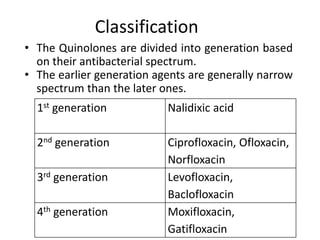
Classification
• The Quinolones are divided into generation based
on their antibacterial spectrum.
• The earlier generation agents are generally narrow
spectrum than the later ones.
1st generation Nalidixic acid
2nd generation Ciprofloxacin, Ofloxacin,
Norfloxacin
3rd generation Levofloxacin,
Baclofloxacin
4th generation Moxifloxacin,
Gatifloxacin
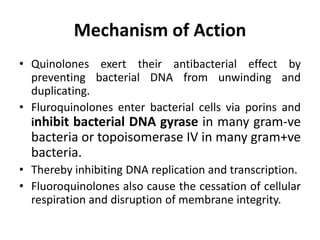
Mechanism of Action
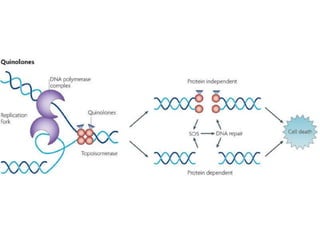
• Quinolones exert their antibacterial effect by
preventing bacterial DNA from unwinding and
duplicating.
• Fluroquinolones enter bacterial cells via porins and
inhibit bacterial DNA gyrase in many gram-ve
bacteria or topoisomerase IV in many gram+ve
bacteria.
• Thereby inhibiting DNA replication and transcription.
• Fluoroquinolones also cause the cessation of cellular
respiration and disruption of membrane integrity.
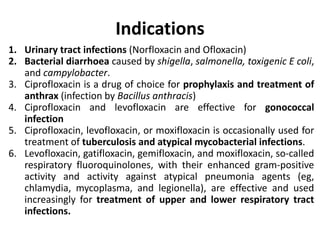
Indications
1. Urinary tract infections (Norfloxacin and Ofloxacin)
2. Bacterial diarrhoea caused by shigella, salmonella, toxigenic E coli,
and campylobacter.
3. Ciprofloxacin is a drug of choice for prophylaxis and treatment of
anthrax (infection by Bacillus anthracis)
4. Ciprofloxacin and levofloxacin are effective for gonococcal
infection
5. Ciprofloxacin, levofloxacin, or moxifloxacin is occasionally used for
treatment of tuberculosis and atypical mycobacterial infections.
6. Levofloxacin, gatifloxacin, gemifloxacin, and moxifloxacin, so-called
respiratory fluoroquinolones, with their enhanced gram-positive
activity and activity against atypical pneumonia agents (eg,
chlamydia, mycoplasma, and legionella), are effective and used
increasingly for treatment of upper and lower respiratory tract
infections.
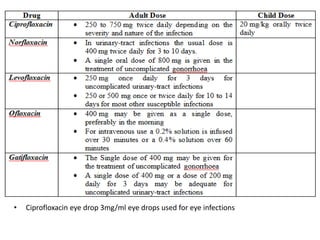
• Ciprofloxacin eye drop 3mg/ml eye drops used for eye infections
Adverse Effects
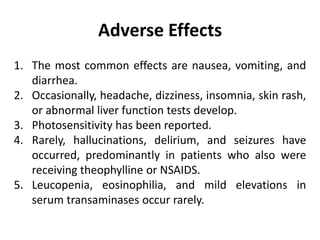
1. The most common effects are nausea, vomiting, and
diarrhea.
2. Occasionally, headache, dizziness, insomnia, skin rash,
or abnormal liver function tests develop.
3. Photosensitivity has been reported.
4. Rarely, hallucinations, delirium, and seizures have
occurred, predominantly in patients who also were
receiving theophylline or NSAIDS.
5. Leucopenia, eosinophilia, and mild elevations in
serum transaminases occur rarely.
Contraindication and Precaution
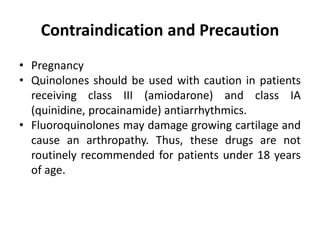
• Pregnancy
• Quinolones should be used with caution in patients
receiving class III (amiodarone) and class IA
(quinidine, procainamide) antiarrhythmics.
• Fluoroquinolones may damage growing cartilage and
cause an arthropathy. Thus, these drugs are not
routinely recommended for patients under 18 years
of age.

Sulphonamides and Quinolones

  • 1.
    Sulfonamides/ Sulfa drugs •Sulfonamides are the antibiotics that have structural similarity with p-aminobenzoic acid (PABA) containing sulphonamide (SO2NH2) groups in their chemical structure. • They have bacteriostatic action against gram +ve & gram –ve bacteria. • e.g: Sulfadiazine, sulfamethoxazole, cotrimoxazole, trimethoprim MECHANISM OF ACTION • Sulfonamides compete with PABA which is an essential precursor in the synthesis of folic acid, required for the synthesis of DNA and RNA in bacteria. • They inhibit bacterial folate synthetase and lead to impairment of DNA formation.
  • 3.
    • Sulfa drugswere discovered when a red dye called Prontosil had shown in-vivo antibacterial activity against streptococcal infection. Later it was found that prontosil was broken down in the body to release Sulfanilamide which was responsible for antibacterial action.
  • 4.
    Sulphonamides Examples Dose 1.Short Acting (4-8h) Rapidly Absorbed Sulfadiazine Sulfisoxazole 0.5-1g q.i.d Child 150mg/kg (4-6 doses) 2. Intermediate acting (8-12h) Absorbed Slowly Sulfamethoxazole 1g b.i.d for 2 days then 0.5 g b.i.d 3. Long acting (7days) Sulfadoxine Sulfamethopyrazine (used in combination with Pyrimethamine in malaria) 4. Special Purpose sulphonamides Sulfacetamide sodium Sulfasalazine Silver sulfadiazine Eye drops 10%, 20%, 30% (eye infection) 2-4g in divided dose (ulcerative colitis) Cream 1% (for burns)
  • 5.
    Trimethoprim-Sulfamethoxazole combination (Cotrimoxazole) • Cotrimoxazolecauses sequential blocking of purine synthesis (synergism). • Trimethoprim inhibits dihydrofolate reductase enzyme so inhibits tetrahydrofolic acid synthesis. • The combination is bactericidal. • It is the combination of trimethoprim & sulfamethoxazole in the ratio 1:5.
  • 7.
    Sulfonamides (MOA) Dihydropteridine +PABA Sulfonamides (PABA analogues) Sulfomethoxazole (Bacterial) Sulfadiazine (Bacterial) Sulfodoxine (Malarial) Dihydropteroic acid Synthetase Dihydropteroic acid Glutamate Dihydrofolic Acid Timethoprim (Bacterial) / Pyrimethamine (Malarial) Dihydrofolate Reductase Tetrahydrofolic Acid Nucleic Bases Amino Acids RNA DNA Proteins Folic Acid Dihydrofolate Reductase (Mammalian) + Cotrimoxazole Cotrimazine Static Cidal Static
  • 8.
    Triple sulfa • Itis the combination of 3 sulfonamides together. • Triple sulfa is an antibacterial medication that fights bacteria in the body. • Triple sulfa vaginal is used to treat vaginal infections caused by the bacteria Gardnerella vaginalis.
  • 9.
    Therapeutic Use 1. Toxoplasmosis(infection caused by Toxo plasma gondii - Mild flu like infection ( Sulfadiazine + Pyrimethamine) 2. Nocardiasis ( infection caused by Nocardia) Chronic infection on lungs, cutanious part etc. (High dose for prolonged period) 3. Trachoma and Inclusion Conjuctivitis 4. Lympho Granuloma Venereum (infection of genitals) and Chancroid (Sexual infection Disease) 5. Malaria (Pyrimethamine + Sulfadoxine) 6. Burn ( Silver sulfadiazine) 7. Urinary Tract Infection (UTI) 8. Upper respiratory tract infections
  • 10.
    Contraindication • Should notbe given for • Infants • Renal impaired patients • Pregnancy
  • 11.
    Adverse Effects • AbdominalDiscomfort: Nausea, Vomoting, diarrhea etc. • Hypersensitivity reaction: Allergy, Rash, Inflammation etc. • Nephotoxicity: formation and deposition of crystalline aggregate in the kidney, Ureters and Bladder • Hematopoietic Disorders: Aplastic Anaemia (Anemia due to deficiency of RBC), Thrombocytopenia, Granulocytosis (Decrease granulosyte in RBC), Bone marrow depression etc. • Kernicterus: displacement of bilirubin in infant specially premature baby. These free bilirubin cross the BBB and becomes deposited in basal ganglia and sub-thalamic nuclei of brain which is leading to parkinsonism.
  • 12.
    Doses • Sulfadiazine: 500-1000mg 8 hourly oral for adult and 150mg/kg/day for children • Sulfadimidine: Initial 2 gm and then 1gm 6-8 hourly orally • Sulfacetamide: Locally used as eye drop or eye ointment as the concentration of 10, 20 and 30% • Sulfamethoxazole: 1gm BD for 2 days and then 0.5gm BD upto 10 days • Silver Sulfadiazine: Used as a 1% cream topically in burning area
  • 13.
    Quinolones/Fluoroquinolones • Quinolones aresynthetic antibiotics having quinolone structure & broad spectrum antibacterial activity. • The important quinolones are synthetic fluorinated analogs of nalidixic acid. • Also known as floroquinolones, which have a fluoro group attached the central ring system. • Examples: • Ciprofloxacin, • Levofloxacin, • Ofloxacin, • Norfloxacin, etc.
  • 14.
    Classification • The Quinolonesare divided into generation based on their antibacterial spectrum. • The earlier generation agents are generally narrow spectrum than the later ones. 1st generation Nalidixic acid 2nd generation Ciprofloxacin, Ofloxacin, Norfloxacin 3rd generation Levofloxacin, Baclofloxacin 4th generation Moxifloxacin, Gatifloxacin
  • 15.
    Mechanism of Action •Quinolones exert their antibacterial effect by preventing bacterial DNA from unwinding and duplicating. • Fluroquinolones enter bacterial cells via porins and inhibit bacterial DNA gyrase in many gram-ve bacteria or topoisomerase IV in many gram+ve bacteria. • Thereby inhibiting DNA replication and transcription. • Fluoroquinolones also cause the cessation of cellular respiration and disruption of membrane integrity.
  • 18.
    Indications 1. Urinary tractinfections (Norfloxacin and Ofloxacin) 2. Bacterial diarrhoea caused by shigella, salmonella, toxigenic E coli, and campylobacter. 3. Ciprofloxacin is a drug of choice for prophylaxis and treatment of anthrax (infection by Bacillus anthracis) 4. Ciprofloxacin and levofloxacin are effective for gonococcal infection 5. Ciprofloxacin, levofloxacin, or moxifloxacin is occasionally used for treatment of tuberculosis and atypical mycobacterial infections. 6. Levofloxacin, gatifloxacin, gemifloxacin, and moxifloxacin, so-called respiratory fluoroquinolones, with their enhanced gram-positive activity and activity against atypical pneumonia agents (eg, chlamydia, mycoplasma, and legionella), are effective and used increasingly for treatment of upper and lower respiratory tract infections.
  • 19.
    • Ciprofloxacin eyedrop 3mg/ml eye drops used for eye infections
  • 20.
    Adverse Effects 1. Themost common effects are nausea, vomiting, and diarrhea. 2. Occasionally, headache, dizziness, insomnia, skin rash, or abnormal liver function tests develop. 3. Photosensitivity has been reported. 4. Rarely, hallucinations, delirium, and seizures have occurred, predominantly in patients who also were receiving theophylline or NSAIDS. 5. Leucopenia, eosinophilia, and mild elevations in serum transaminases occur rarely.
  • 21.
    Contraindication and Precaution •Pregnancy • Quinolones should be used with caution in patients receiving class III (amiodarone) and class IA (quinidine, procainamide) antiarrhythmics. • Fluoroquinolones may damage growing cartilage and cause an arthropathy. Thus, these drugs are not routinely recommended for patients under 18 years of age.