Communication Skills
Communication is the exchange of information or
ideas between a pharmacist and the patient or
caregiver. A good communication makes the
treatment easier and improves patient compliance.
Types of communication:
• Verbal communication
• Non-verbal communication
• Verbal Communication: It is the communication
using words or speech between the pharmacist
and the patient. Language plays an important role
in the Verbal communication. It makes exchange
of information easier. It is the most common
method of communication between healthcare
provider and the patient.
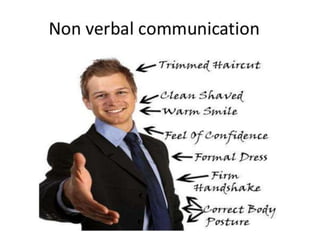
• Non verbal communication: It is the exchange of
information or ideas using gestures, facial
expression, eye movements, postures, body
movements, etc. It is useful for disabled people,
child or elderly people that have difficulty in
hearing or understanding verbal language.
Types of non-verbal communication:
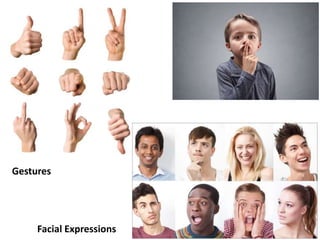
• Gestures: Expression using hand or head is known as
gesture. Gesture uses different signs using hand and
other body parts.
• Facial expression: Facial expression express the mood
and emotion with the eyes and mouth giving the
dominant signs.
• Eye contact: Eye contact encourages patient to
express and continue the communication whereas
avoiding eye contact makes communication gap.
• Physical contact: Physical contact is one of the means
of pleading to what is spoken however cultural
variation should be accounted.
• Body posture: Different body postures with different
meanings allow patient to communicate easily
without words.
Gestures
Facial Expressions
PATTERNS OF BEHAVIOUR IN COMMUNICATION:
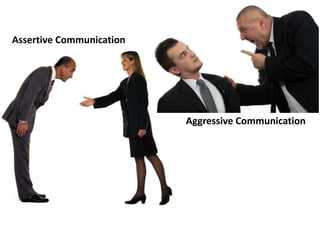
Aggressive communication: Aggressive communication
displays a lack of regard for other people and assumes that
others are inferior. It causes interruption in the
communication.
Assertive communication: Assertive communication style has
a body language that conveys openness and receptiveness. An
assertive person makes good eye contact and is aware of
personal space.
Passive communication: Passive communication displays little
or no confidence. A passive communication style shows
weakness behaviours, quiet voice and poor eye contact.
Passive-Aggressive communication: A passive-aggressive
communication may cause irritation, frustration and even
anger. Such communication displays stubborn and
unconcerned behaviour.
Assertive Communication
Aggressive Communication
Questioning skills: Asking questions during a communication
is a valuable tool in gathering information by a pharmacist. It
provides essential information required for the examination or
treatment of patient.
Types of questions:
• Closed questions: A closed question is direct and close-
ended. It requires specific or predetermined answers such
as in the form of yes or no.
e.g: Have you ever taken this medicine before?
Do you know how to take this medicine?
• Open questions: An open question is open-minded and
people can answer in their own way. It has no limits and
encourages to provide detail information.
e.g: Tell me your symptoms.
How do you feel now?
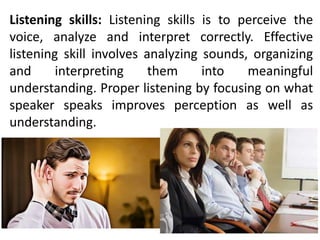
Listening skills: Listening skills is to perceive the
voice, analyze and interpret correctly. Effective
listening skill involves analyzing sounds, organizing
and interpreting them into meaningful
understanding. Proper listening by focusing on what
speaker speaks improves perception as well as
understanding.
Effective listening skill is used to:
• To recognize and prevent barriers to listening
Barriers includes noise, frequent interruptions,
message overload, disability, anxiety, attitude,
impatient, etc. Such barriers interrupts the
listening, so barriers to listening should be
avoided.
• To develop listening behaviours by improving
attention, focusing, patience, participation,
feedback response, etc. Good listening behaviours
improves the communication skills and makes
effective conversation.
BARRIERS TO COMMUNICATION
Disturbance or failure in communication may occur due to several
factors. Some of them are:
• Physical barrier: Barrier in communication due to physical
factors like noise, time, space, place or medium. Such factors
blocks or disturbs the communication process.
• Psychological barrier: The psychological state of person during
communication affects the communication. Different
psychological states like mental condition, anger, attitudes affect
the communication process.
• Personal barrier: Personal barriers includes low self confidence,
shy, internal monologue, cultural differences, discomfort during
a communication process.
• Administrative barrier: Administrative or management view of
earning profit rather than caring patient may also cause
communication barrier.
• Time barriers: Time limits during dispensing or patient crowd or
due to administrative authorities also causes communication
barrier.
Confidentiality is a type of agreement or promise to
keep information or conversation secret. It is a type of
bond between pharmacist and patient which agrees to
keep information secret or between them. In
pharmacy, some people may not like to disclose their
status due to social stigma or psychological problems,
so doctors and pharmacist should help to keep such
information confidential.
Confidentiality is the right of an individual to keep
medical information in private. There are legal
protections that prevents physicians or health care
professionals from revealing the information about
patient without consent.

Communication skills

  • 1.
    Communication Skills Communication isthe exchange of information or ideas between a pharmacist and the patient or caregiver. A good communication makes the treatment easier and improves patient compliance. Types of communication: • Verbal communication • Non-verbal communication
  • 2.
    • Verbal Communication:It is the communication using words or speech between the pharmacist and the patient. Language plays an important role in the Verbal communication. It makes exchange of information easier. It is the most common method of communication between healthcare provider and the patient. • Non verbal communication: It is the exchange of information or ideas using gestures, facial expression, eye movements, postures, body movements, etc. It is useful for disabled people, child or elderly people that have difficulty in hearing or understanding verbal language.
  • 4.
    Types of non-verbalcommunication: • Gestures: Expression using hand or head is known as gesture. Gesture uses different signs using hand and other body parts. • Facial expression: Facial expression express the mood and emotion with the eyes and mouth giving the dominant signs. • Eye contact: Eye contact encourages patient to express and continue the communication whereas avoiding eye contact makes communication gap. • Physical contact: Physical contact is one of the means of pleading to what is spoken however cultural variation should be accounted. • Body posture: Different body postures with different meanings allow patient to communicate easily without words.
  • 5.
  • 6.
    PATTERNS OF BEHAVIOURIN COMMUNICATION: Aggressive communication: Aggressive communication displays a lack of regard for other people and assumes that others are inferior. It causes interruption in the communication. Assertive communication: Assertive communication style has a body language that conveys openness and receptiveness. An assertive person makes good eye contact and is aware of personal space. Passive communication: Passive communication displays little or no confidence. A passive communication style shows weakness behaviours, quiet voice and poor eye contact. Passive-Aggressive communication: A passive-aggressive communication may cause irritation, frustration and even anger. Such communication displays stubborn and unconcerned behaviour.
  • 7.
  • 8.
    Questioning skills: Askingquestions during a communication is a valuable tool in gathering information by a pharmacist. It provides essential information required for the examination or treatment of patient. Types of questions: • Closed questions: A closed question is direct and close- ended. It requires specific or predetermined answers such as in the form of yes or no. e.g: Have you ever taken this medicine before? Do you know how to take this medicine? • Open questions: An open question is open-minded and people can answer in their own way. It has no limits and encourages to provide detail information. e.g: Tell me your symptoms. How do you feel now?
  • 9.
    Listening skills: Listeningskills is to perceive the voice, analyze and interpret correctly. Effective listening skill involves analyzing sounds, organizing and interpreting them into meaningful understanding. Proper listening by focusing on what speaker speaks improves perception as well as understanding.
  • 10.
    Effective listening skillis used to: • To recognize and prevent barriers to listening Barriers includes noise, frequent interruptions, message overload, disability, anxiety, attitude, impatient, etc. Such barriers interrupts the listening, so barriers to listening should be avoided. • To develop listening behaviours by improving attention, focusing, patience, participation, feedback response, etc. Good listening behaviours improves the communication skills and makes effective conversation.
  • 11.
    BARRIERS TO COMMUNICATION Disturbanceor failure in communication may occur due to several factors. Some of them are: • Physical barrier: Barrier in communication due to physical factors like noise, time, space, place or medium. Such factors blocks or disturbs the communication process. • Psychological barrier: The psychological state of person during communication affects the communication. Different psychological states like mental condition, anger, attitudes affect the communication process. • Personal barrier: Personal barriers includes low self confidence, shy, internal monologue, cultural differences, discomfort during a communication process. • Administrative barrier: Administrative or management view of earning profit rather than caring patient may also cause communication barrier. • Time barriers: Time limits during dispensing or patient crowd or due to administrative authorities also causes communication barrier.
  • 12.
    Confidentiality is atype of agreement or promise to keep information or conversation secret. It is a type of bond between pharmacist and patient which agrees to keep information secret or between them. In pharmacy, some people may not like to disclose their status due to social stigma or psychological problems, so doctors and pharmacist should help to keep such information confidential. Confidentiality is the right of an individual to keep medical information in private. There are legal protections that prevents physicians or health care professionals from revealing the information about patient without consent.