

FOLATE ANTAGONISTS
By.Dr Ishfaq Ahmad
ANTIFOLATE DRUGS
CLASSIFICATION AND PHARMACOKINETICS
Sulfonamides
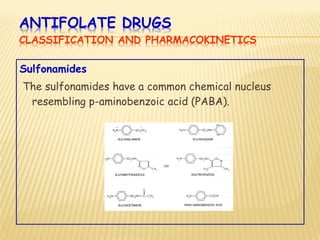
The sulfonamides have a common chemical nucleus
resembling p-aminobenzoic acid (PABA).
SULFONAMIDES
ORALLY ABSORBABLE
short acting  sulfisoxazole,
intermediate acting  sulfamethoxazole,
long
acting  sulfadoxine
ORALLY NONABSORBABLE
Sulfaguanidine, sulfasalazine
weakly absorbed after oral
administeration ,used for enteric fever
TOPICAL Sulfadiazine is used in burns
topically,
Sulfacetamide in ophthalmic
preparations
ANTIFOLATE DRUGS
MECHANISMS OF ACTION
1. Sulfonamides
• The sulfonamides are bacteriostatic
inhibitors of folic acid synthesis.
• As antimetabolites of PABA, they are
competitive inhibitors of dihydropteroate
synthase.
• The selective toxicity of sulfonamides
results from the inability of mammalian cells
to synthesize folic acid; they must use
preformed folic acid that is present in the
diet.
ANTIMETOBOLITE ANTIBIOTICS
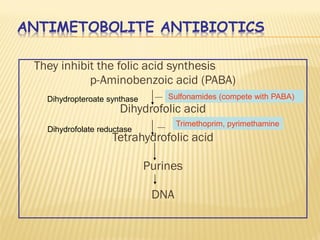
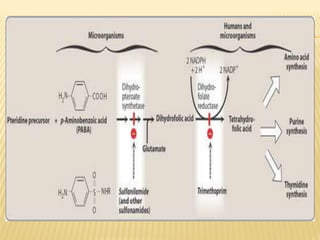
They inhibit the folic acid synthesis
p-Aminobenzoic acid (PABA)‫‏‬
Dihydrofolic acid
Tetrahydrofolic acid
Purines
DNA
Dihydropteroate synthase
Dihydrofolate reductase
Sulfonamides (compete with PABA)‫‏‬
Trimethoprim, pyrimethamine
ANTI-BACTERIAL SPECTRUM
Against enterobacter species in UTIs
Nocardia species
Sulfadiazine + pyrimethamine= used
for toxoplasmosis
Sulfadoxine + pyrimethamine = as
anti-malarial drug
RESISTANCE
 Bacteria that obtain folate from
environment
 Resistance may be due to plasmid
transfer or mutation
 These involves following processes
1.Altered dihydropteroate synthetase
2. Decreased permeability
3.Enhanced production of PABA
PHARMACOKINETICS
 Well absorbed orally
 sulfasalazine is used as suppository for
treatment of ulcerative colitis
 IV preparation are also available
 Usually not applied topically due to risk of
allergic reaction
 But in burn units, creams of silver sulfadiazine
or mafenide acetate used to inhibit sepsis
DISTRIBUTION
 Bound to serum albumin, depends on pKa
value of drug
 Smaller pKa, greater the binding
 Distribute throughout the body including CSF
 Also cross placental barrier
 METABOLISM
 Acetylated and conjugated in liver
 Acetylated product is devoid of activity
EXCRETION
 Through glomerular filtration
 dose adjustment in renally compromised
patients
ADRs
 Crystalluria/ stone formation in kidney that can
be prevented by adequate hydration and
alkalinization of urine
 Hypersensitivity; rashes, angioedema or stevens-
johnson syndrome
 Hematopoietic disturbances:
1. Hemolytic anemia
2. granulocytopenia
3. Aplastic anemia
4. Blood dyscrasias
 Kernicterus
 Billirubin in CNS of newborns as sulfa drugs
displace them from serum albumin
 Drug potentiation; warfarin and
methotrexate levels increased due to
displacement
 Contraindication
 Due to kernicterus, should be avoided in
newborns and pregnant women
TRIMETHOPRIM
 Anti-bacterial spectrum similar to sulfonamides
 Mostly used in combination with
sulfamethoxazole
 20-50 folds more potent than sulfa drugs
 MOA
 Through inhibition of dihydrofolate reductase
leading to decreased availability of
tetrahydrofolate cofactor necessary for purine,
pyrimidine synthesis
RESISTANCE
 Altered dihydrofolate reductase
 Efflux pump
 Decreased permeability
PHARMACOKINETICS
 Absorbed after oral administration
 Widely distributed into body fluids and
tissues
 Also penetration into CSF
 Undergoes O-demethylation metabolism
 60-80 % excreted unchanged in urine
ADRS
 Folic acid deficiency which includes
megaloblastic anemia, leukopenia and
granulocytopenia
 But these disorder can be reversed through
adminitration of folinic acid which cant enter in
bacteris
COTRIMOXAZOLE
 The combination of trimethoprim
with sulfamethoxazole, called
cotrimoxazole
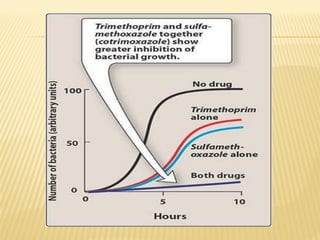
 shows greater antimicrobial
activity than equivalent quantities of
either drug used alone
 combination was selected because of
the similarity in the half-lives and
synergistic activity of the two
drugs.
MECHANISM OF ACTION
 inhibition of two sequential steps in
the synthesis of tetrahydrofolic
acid
 Sulfamethoxazole inhibits the
incorporation of PABA into
dihydrofolic acid precursors,
 Trimethoprim prevents reduction of
dihydrofolate to tetrahydrofolate
ANTIBACTERIAL SPECTRUM
 Broader spectrum of antibacterial
action than the sulfa drugs
 effective in treating following
infections
 UTIs
 RTIs
 Pneumocystis jiroveci pneumonia
and ampicillin-
 chloramphenicol-resistant systemic
salmonella infections.
 MRSA so can be used for skin and soft
tissue infections
 Also activity against Nocardia species
RESISTANCE
Resistance is less frequently
encountered than resistance to
either of the drugs alone
 because simultaneous
resistance to both drugs is
required.
PHARMACOKINETICS
 Administration of one part trimethoprim
to five parts of the sulfa drug
 generally administered orally
 Intravenous administration to
patients with severe pneumonia caused
by P. jiroveci.
 Both agents distribute throughout the
body.
Trimethoprim concentrates in the
relatively acidic environment
Crosses BBB
Both drugs and metabolites
excreted in urine
ADVERSE DRUG REACTIONS
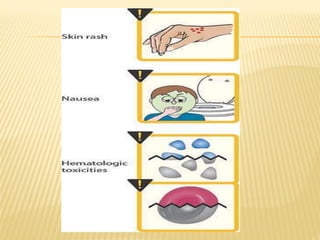
Dermatologic: Reactions involving the
skin are very common
Gastrointestinal: Nausea, vomiting, as
well as glossitis and stomatitis are not
unusual.
Hematologic: Megaloblastic anemia,
leukopenia, and thrombocytopenia
All these effects may be reversed by the
concurrent administration of folinic acid
Patients infected with human
immunodeficiency virus:
 Immuno-compromised patients with
P. jiroveci pneumonia frequently show
drug-induced fever, rashes,
diarrhea, and/or pancytopenia.
Drug interactions:
 Prolonged prothrombin time in
combination with warfarin
The plasma half-life of phenytoin may
be increased due to an inhibition of
its metabolism.
Methotrexate levels may rise due to
displacement from albumin-binding
sites by sulfamethoxazole.
Folate antagonists

Folate antagonists

  • 1.
  • 2.
    ANTIFOLATE DRUGS CLASSIFICATION ANDPHARMACOKINETICS Sulfonamides The sulfonamides have a common chemical nucleus resembling p-aminobenzoic acid (PABA).
  • 3.
    SULFONAMIDES ORALLY ABSORBABLE short acting sulfisoxazole, intermediate acting  sulfamethoxazole, long acting  sulfadoxine ORALLY NONABSORBABLE Sulfaguanidine, sulfasalazine weakly absorbed after oral administeration ,used for enteric fever TOPICAL Sulfadiazine is used in burns topically, Sulfacetamide in ophthalmic preparations
  • 4.
    ANTIFOLATE DRUGS MECHANISMS OFACTION 1. Sulfonamides • The sulfonamides are bacteriostatic inhibitors of folic acid synthesis. • As antimetabolites of PABA, they are competitive inhibitors of dihydropteroate synthase. • The selective toxicity of sulfonamides results from the inability of mammalian cells to synthesize folic acid; they must use preformed folic acid that is present in the diet.
  • 5.
    ANTIMETOBOLITE ANTIBIOTICS They inhibitthe folic acid synthesis p-Aminobenzoic acid (PABA)‫‏‬ Dihydrofolic acid Tetrahydrofolic acid Purines DNA Dihydropteroate synthase Dihydrofolate reductase Sulfonamides (compete with PABA)‫‏‬ Trimethoprim, pyrimethamine
  • 7.
    ANTI-BACTERIAL SPECTRUM Against enterobacterspecies in UTIs Nocardia species Sulfadiazine + pyrimethamine= used for toxoplasmosis Sulfadoxine + pyrimethamine = as anti-malarial drug
  • 8.
    RESISTANCE  Bacteria thatobtain folate from environment  Resistance may be due to plasmid transfer or mutation  These involves following processes 1.Altered dihydropteroate synthetase 2. Decreased permeability 3.Enhanced production of PABA
  • 9.
    PHARMACOKINETICS  Well absorbedorally  sulfasalazine is used as suppository for treatment of ulcerative colitis  IV preparation are also available  Usually not applied topically due to risk of allergic reaction  But in burn units, creams of silver sulfadiazine or mafenide acetate used to inhibit sepsis
  • 10.
    DISTRIBUTION  Bound toserum albumin, depends on pKa value of drug  Smaller pKa, greater the binding  Distribute throughout the body including CSF  Also cross placental barrier  METABOLISM  Acetylated and conjugated in liver  Acetylated product is devoid of activity
  • 11.
    EXCRETION  Through glomerularfiltration  dose adjustment in renally compromised patients ADRs  Crystalluria/ stone formation in kidney that can be prevented by adequate hydration and alkalinization of urine  Hypersensitivity; rashes, angioedema or stevens- johnson syndrome
  • 12.
     Hematopoietic disturbances: 1.Hemolytic anemia 2. granulocytopenia 3. Aplastic anemia 4. Blood dyscrasias  Kernicterus  Billirubin in CNS of newborns as sulfa drugs displace them from serum albumin
  • 14.
     Drug potentiation;warfarin and methotrexate levels increased due to displacement  Contraindication  Due to kernicterus, should be avoided in newborns and pregnant women
  • 15.
    TRIMETHOPRIM  Anti-bacterial spectrumsimilar to sulfonamides  Mostly used in combination with sulfamethoxazole  20-50 folds more potent than sulfa drugs  MOA  Through inhibition of dihydrofolate reductase leading to decreased availability of tetrahydrofolate cofactor necessary for purine, pyrimidine synthesis
  • 16.
    RESISTANCE  Altered dihydrofolatereductase  Efflux pump  Decreased permeability
  • 17.
    PHARMACOKINETICS  Absorbed afteroral administration  Widely distributed into body fluids and tissues  Also penetration into CSF  Undergoes O-demethylation metabolism  60-80 % excreted unchanged in urine
  • 18.
    ADRS  Folic aciddeficiency which includes megaloblastic anemia, leukopenia and granulocytopenia  But these disorder can be reversed through adminitration of folinic acid which cant enter in bacteris
  • 19.
    COTRIMOXAZOLE  The combinationof trimethoprim with sulfamethoxazole, called cotrimoxazole  shows greater antimicrobial activity than equivalent quantities of either drug used alone  combination was selected because of the similarity in the half-lives and synergistic activity of the two drugs.
  • 21.
    MECHANISM OF ACTION inhibition of two sequential steps in the synthesis of tetrahydrofolic acid  Sulfamethoxazole inhibits the incorporation of PABA into dihydrofolic acid precursors,  Trimethoprim prevents reduction of dihydrofolate to tetrahydrofolate
  • 22.
    ANTIBACTERIAL SPECTRUM  Broaderspectrum of antibacterial action than the sulfa drugs  effective in treating following infections  UTIs  RTIs  Pneumocystis jiroveci pneumonia and ampicillin-  chloramphenicol-resistant systemic salmonella infections.
  • 23.
     MRSA socan be used for skin and soft tissue infections  Also activity against Nocardia species
  • 24.
    RESISTANCE Resistance is lessfrequently encountered than resistance to either of the drugs alone  because simultaneous resistance to both drugs is required.
  • 25.
    PHARMACOKINETICS  Administration ofone part trimethoprim to five parts of the sulfa drug  generally administered orally  Intravenous administration to patients with severe pneumonia caused by P. jiroveci.  Both agents distribute throughout the body.
  • 26.
    Trimethoprim concentrates inthe relatively acidic environment Crosses BBB Both drugs and metabolites excreted in urine
  • 27.
    ADVERSE DRUG REACTIONS Dermatologic:Reactions involving the skin are very common Gastrointestinal: Nausea, vomiting, as well as glossitis and stomatitis are not unusual. Hematologic: Megaloblastic anemia, leukopenia, and thrombocytopenia All these effects may be reversed by the concurrent administration of folinic acid
  • 28.
    Patients infected withhuman immunodeficiency virus:  Immuno-compromised patients with P. jiroveci pneumonia frequently show drug-induced fever, rashes, diarrhea, and/or pancytopenia. Drug interactions:  Prolonged prothrombin time in combination with warfarin
  • 29.
    The plasma half-lifeof phenytoin may be increased due to an inhibition of its metabolism. Methotrexate levels may rise due to displacement from albumin-binding sites by sulfamethoxazole.