Dr Chintan Doshi
 Sulfonamide: Sulfone + amide
Sulfanilamide [p-aminobenzene sulfonamide]
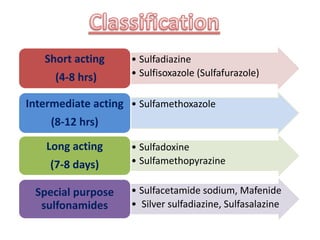
• Sulfadiazine
• Sulfisoxazole (Sulfafurazole)
Short acting
(4-8 hrs)
• Sulfamethoxazole
Intermediate acting
(8-12 hrs)
• Sulfadoxine
• Sulfamethopyrazine
Long acting
(7-8 days)
• Sulfacetamide sodium, Mafenide
• Silver sulfadiazine, Sulfasalazine
Special purpose
sulfonamides
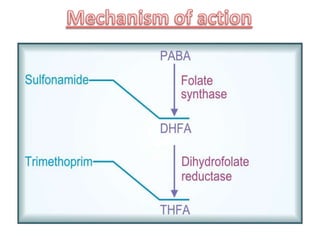
Dihydropteroic acid synthetase
Glutamate
Dihydrofolate reductase
Sulfonamide
Trimethoprim
=
=
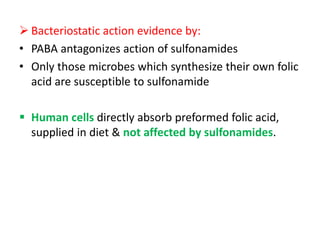
 Bacteriostatic action evidence by:
• PABA antagonizes action of sulfonamides
• Only those microbes which synthesize their own folic
acid are susceptible to sulfonamide
 Human cells directly absorb preformed folic acid,
supplied in diet & not affected by sulfonamides.
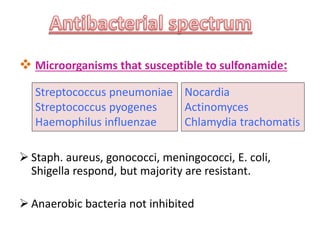
 Microorganisms that susceptible to sulfonamide:
 Staph. aureus, gonococci, meningococci, E. coli,
Shigella respond, but majority are resistant.
 Anaerobic bacteria not inhibited
Streptococcus pneumoniae
Streptococcus pyogenes
Haemophilus influenzae
Nocardia
Actinomyces
Chlamydia trachomatis
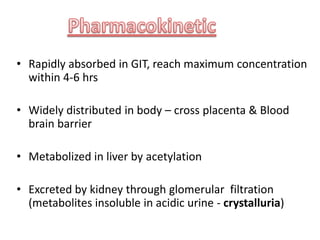
• Rapidly absorbed in GIT, reach maximum concentration
within 4-6 hrs
• Widely distributed in body – cross placenta & Blood
brain barrier
• Metabolized in liver by acetylation
• Excreted by kidney through glomerular filtration
(metabolites insoluble in acidic urine - crystalluria)
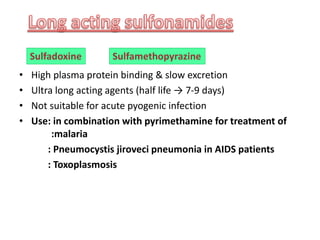
• High plasma protein binding & slow excretion
• Ultra long acting agents (half life → 7-9 days)
• Not suitable for acute pyogenic infection
• Use: in combination with pyrimethamine for treatment of
:malaria
: Pneumocystis jiroveci pneumonia in AIDS patients
: Toxoplasmosis
Sulfadoxine Sulfamethopyrazine
• Highly soluble
• Only mild irritating to eye in concentration up to 30%
• Topical - high concentration in anterior segment & aqueous
humour
• Use: ocular infection due to susceptible bacteria & chlamydia
: ophthalmia neonatorum by Ch. oculogenitalis
• S/E: Sensitivity reaction (incidence low but when occur stop drug)
Sulfacetamide sodium
• Topically (1% cream)
• Inhibit gram –ve & gram +ve bacteria, against pseudomonas, clostridia
• Active in presence of pus
• Use: burn dressing to prevent infection (not treat already infected case)
• S/E: burning sensation & severe pain on raw surface
: acidosis & hyperventilation
: allergic reaction
• Active against bacteria & fungi, even though resist to other
sulfonamide like pseudomonas
• Slowly release silver ions
• Use: prevent infection of burn surface & chronic ulcers(1% cream)
• S/E: burning sensation & itch
Mafenide
Silver sulfadiazine
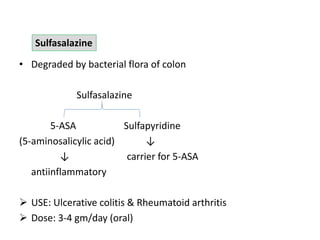
• Degraded by bacterial flora of colon
Sulfasalazine
5-ASA Sulfapyridine
(5-aminosalicylic acid) ↓
↓ carrier for 5-ASA
antiinflammatory
 USE: Ulcerative colitis & Rheumatoid arthritis
 Dose: 3-4 gm/day (oral)
Sulfasalazine
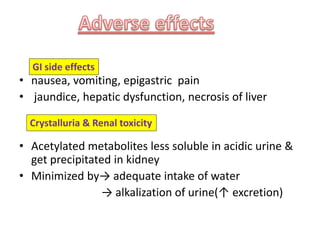
• nausea, vomiting, epigastric pain
• jaundice, hepatic dysfunction, necrosis of liver
• Acetylated metabolites less soluble in acidic urine &
get precipitated in kidney
• Minimized by→ adequate intake of water
→ alkalization of urine(↑ excretion)
GI side effects
Crystalluria & Renal toxicity
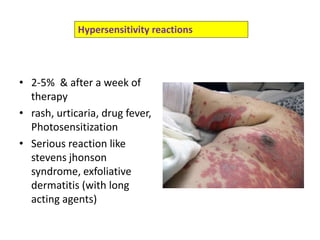
• 2-5% & after a week of
therapy
• rash, urticaria, drug fever,
Photosensitization
• Serious reaction like
stevens jhonson
syndrome, exfoliative
dermatitis (with long
acting agents)
Hypersensitivity reactions
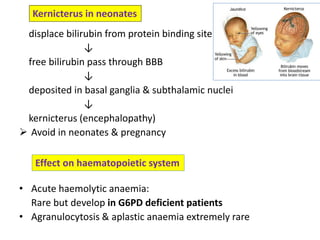
displace bilirubin from protein binding site
↓
free bilirubin pass through BBB
↓
deposited in basal ganglia & subthalamic nuclei
↓
kernicterus (encephalopathy)
 Avoid in neonates & pregnancy
• Acute haemolytic anaemia:
Rare but develop in G6PD deficient patients
• Agranulocytosis & aplastic anaemia extremely rare
Effect on haematopoietic system
Kernicterus in neonates
1) Cotrimoxazole
2) Cotrimazine
3) Sulfadoxine + Pyrimethamine
Fixed Dose Combination
Cotrimoxazole
Sulfamethoxazole + Trimethoprim
• Diaminopyrimidine related to pyrimethamine
• Selectively inhibit DHFRase (dihydrofolate reductase)
• >1,00,000 times more active against bacterial DHFRase
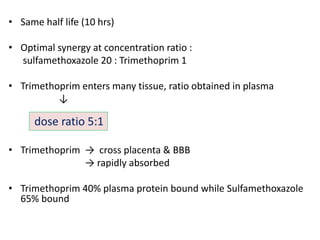
• Same half life (10 hrs)
• Optimal synergy at concentration ratio :
sulfamethoxazole 20 : Trimethoprim 1
• Trimethoprim enters many tissue, ratio obtained in plasma
↓
• Trimethoprim → cross placenta & BBB
→ rapidly absorbed
• Trimethoprim 40% plasma protein bound while Sulfamethoxazole
65% bound
dose ratio 5:1
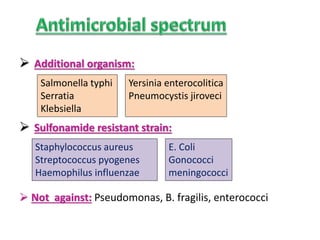
 Additional organism:
 Sulfonamide resistant strain:
 Not against: Pseudomonas, B. fragilis, enterococci
Salmonella typhi
Serratia
Klebsiella
Yersinia enterocolitica
Pneumocystis jiroveci
Staphylococcus aureus
Streptococcus pyogenes
Haemophilus influenzae
E. Coli
Gonococci
meningococci
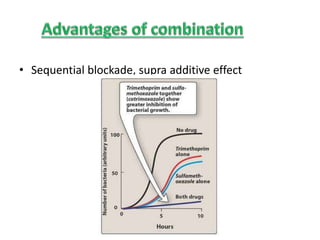
• Sequential blockade, supra additive effect
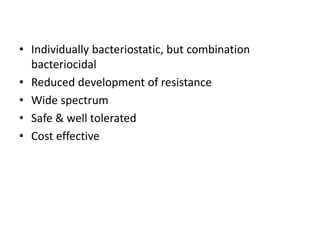
• Individually bacteriostatic, but combination
bacteriocidal
• Reduced development of resistance
• Wide spectrum
• Safe & well tolerated
• Cost effective
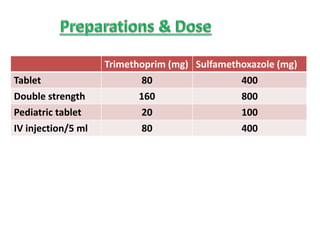
Trimethoprim (mg) Sulfamethoxazole (mg)
Tablet 80 400
Double strength 160 800
Pediatric tablet 20 100
IV injection/5 ml 80 400
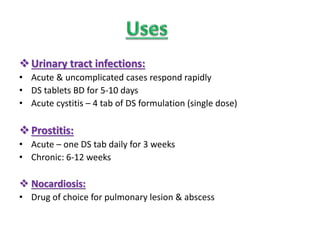
Urinary tract infections:
• Acute & uncomplicated cases respond rapidly
• DS tablets BD for 5-10 days
• Acute cystitis – 4 tab of DS formulation (single dose)
Prostitis:
• Acute – one DS tab daily for 3 weeks
• Chronic: 6-12 weeks
 Nocardiosis:
• Drug of choice for pulmonary lesion & abscess
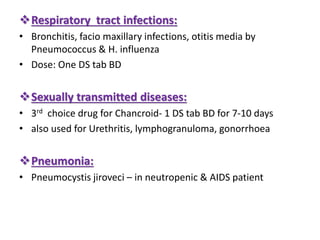
Respiratory tract infections:
• Bronchitis, facio maxillary infections, otitis media by
Pneumococcus & H. influenza
• Dose: One DS tab BD
Sexually transmitted diseases:
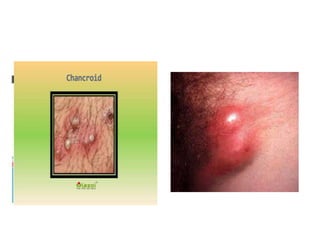
• 3rd choice drug for Chancroid- 1 DS tab BD for 7-10 days
• also used for Urethritis, lymphogranuloma, gonorrhoea
Pneumonia:
• Pneumocystis jiroveci – in neutropenic & AIDS patient
Bacterial diarrhoea & Dysentery:
• Acute gastroenteritis by Shigella & Yersinia enterocolitica,
Traveler’s diarrhoea due to E. coli & Cholera by V. cholera
• Alternative to fluoroquinolones
As alternative drug:
• Typhoid – 1 DS tab BD for 2 weeks
 Intravenous cotrimoxazole – severe infection
 Dose: 80mg Trimethoprim + 400mg sulfamethoxazole
↓
diluted in 125 ml of 5% dextrose(i.v. infusion over 60-90min)
• Nausea, vomiting, stomatitis, headache
• Fever, rash, bone marrow hypoplasia (up to 50%)
• Megaloblastic anaemia
• Uremia
• Bone marrow toxicity – elderly
• Blood dyscrasias – rarely
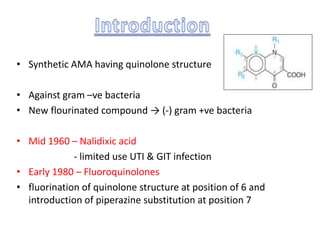
• Synthetic AMA having quinolone structure
• Against gram –ve bacteria
• New flourinated compound → (-) gram +ve bacteria
• Mid 1960 – Nalidixic acid
- limited use UTI & GIT infection
• Early 1980 – Fluoroquinolones
• fluorination of quinolone structure at position of 6 and
introduction of piperazine substitution at position 7
Nalidixic acid
 Active against:
• Gram –ve bacteria – E.coli, Proteus, Klebsiella, Shigella,
but not Pseudomonas
 Mechanism of action:
• Bactericidal
• Inhibit DNA gyrase
Pharmacokinetic:
• Absorbed orally
• High plasma protein binding & metabolized in liver
• Plasma half life 8 hrs
• Excreted in urine
 Adverse effects:
• GI upset & rashes
• Neurological toxicity – headache, drowsiness, vertigo, visual
disturbance, seizure
• Phototoxicity rare
• Haemolysis in G6 PD deficient pt
 Uses:
• As urinary antiseptic
• Diarrhoea
 Dose:
• 0.5-1 gm TDS or QID
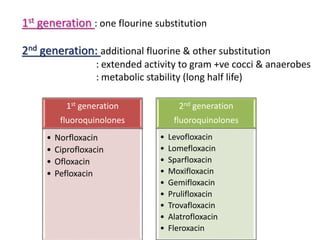
1st generation
fluoroquinolones
• Norfloxacin
• Ciprofloxacin
• Ofloxacin
• Pefloxacin
2nd generation
fluoroquinolones
• Levofloxacin
• Lomefloxacin
• Sparfloxacin
• Moxifloxacin
• Gemifloxacin
• Prulifloxacin
• Trovafloxacin
• Alatrofloxacin
• Fleroxacin
1st generation : one flourine substitution
2nd generation: additional fluorine & other substitution
: extended activity to gram +ve cocci & anaerobes
: metabolic stability (long half life)
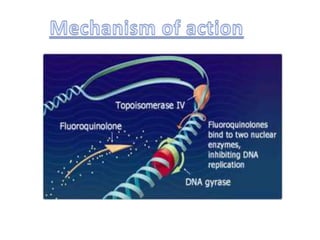
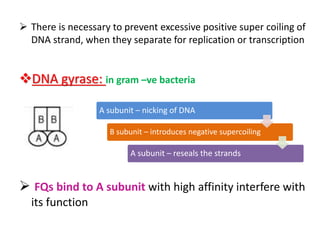
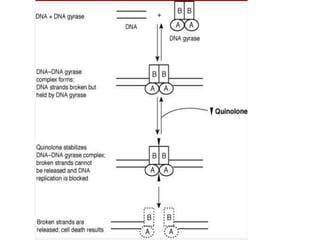
 There is necessary to prevent excessive positive super coiling of
DNA strand, when they separate for replication or transcription
DNA gyrase: in gram –ve bacteria
 FQs bind to A subunit with high affinity interfere with
its function
A subunit – nicking of DNA
B subunit – introduces negative supercoiling
A subunit – reseals the strands
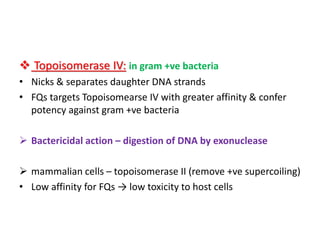
 Topoisomerase IV: in gram +ve bacteria
• Nicks & separates daughter DNA strands
• FQs targets Topoisomearse IV with greater affinity & confer
potency against gram +ve bacteria
 Bactericidal action – digestion of DNA by exonuclease
 mammalian cells – topoisomerase II (remove +ve supercoiling)
• Low affinity for FQs → low toxicity to host cells
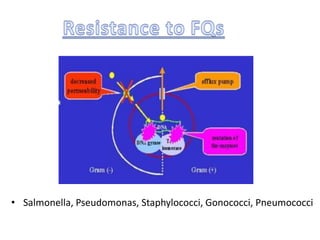
• Salmonella, Pseudomonas, Staphylococci, Gonococci, Pneumococci
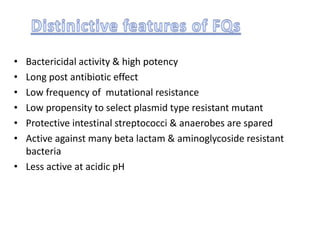
• Bactericidal activity & high potency
• Long post antibiotic effect
• Low frequency of mutational resistance
• Low propensity to select plasmid type resistant mutant
• Protective intestinal streptococci & anaerobes are spared
• Active against many beta lactam & aminoglycoside resistant
bacteria
• Less active at acidic pH
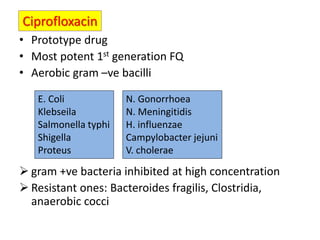
Ciprofloxacin
• Prototype drug
• Most potent 1st generation FQ
• Aerobic gram –ve bacilli
 gram +ve bacteria inhibited at high concentration
 Resistant ones: Bacteroides fragilis, Clostridia,
anaerobic cocci
E. Coli
Klebseila
Salmonella typhi
Shigella
Proteus
N. Gonorrhoea
N. Meningitidis
H. influenzae
Campylobacter jejuni
V. cholerae
Pharmacokinetics:
• Rapidly absorbed orally, food delays absorption
• First pass metabolism
• Good tissue penetration- lung, sputum, muscle, prostate, phagocytes,
but low in CSF, bone & aqueous
• Excreted in urine except pefloxacin & moxifloxacin
Adverse effects: (10%)
o GIT: nausea, vomiting, bad taste, anorexia (diarrhoea infrequent)
o CNS: dizziness, headache, restlessness, anxiety, insomnia, impairment
of concentration (caution during driving)
o Skin: rash, pruritus, photosensitivity, urticaria, swelling of lips
o Tendinitis & tendon rupture: higher in those above 60 yr & receiving
steroids
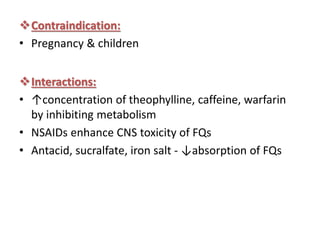
Contraindication:
• Pregnancy & children
Interactions:
• ↑concentration of theophylline, caffeine, warfarin
by inhibiting metabolism
• NSAIDs enhance CNS toxicity of FQs
• Antacid, sucralfate, iron salt - ↓absorption of FQs
Uses:
 Urinary tract infections:
• High cure rates, even in complicated cases or those with
indwelling catheters/prostitis
• High success rates than cotrimoxazole
 Gonorrhoea:
• Single 500mg dose – 100% curative in non PPNG & PPNG
• Resistance – not 1st line drug
 Chancroid:
• Second line drug – 500mg BD for 3 days
• Alternative to ceftriaxone/ azithromycin
 Bacterial gastroenteritis:
• Currently most commonly used
• Reserved for sever cases due to E.choli, Shigella, Salmonella,
Camp. jejuni infection
• ↓ stool volume in cholera
 Bone, soft tissue & wound inection:
• Osteomyelitis & joint pain – prolong treatment with high dose
(750 mg BD for 6-8 weeks)
• Diabetic foot – with clindamycin / metronidazole (cover anaerobes)
 Tuberculosis:
• Second line drug against mutidrug resistant TB
 Typhoid:
• First choice of drug
• India – 95% S. typhi were sensitive
• Dose: 750 mg BD for 10 days
: unable to take orally – 200 mg i.v. 12 hrly
: 750 mg BD for 4-8 weeks for carriers
• Advantages: quick defervescene
: early abetment of symptoms
: prevention of carrier state
 Gram –ve septicemia:
• Parenteral ciprofloxacin combined with 3rd generation
cephalosporin or aminoglycoside
 Respiratory tract infections:
• Treat Mycoplasma, Legionella, H. influenza infection
• Low susceptibility for pneumococci, streptococci
• 2nd generation FQs – pneumonia & bronchitis
• US FDA approved for inhalational anthrax
 Meningitis:
• Gram –ve bacterial meningitis, specially in
immunocompromised patients or CSF shunt
 Prophylaxis:
• Infection in neutropenic / cancer patients
 Conjuctivitis:
• By gram –ve bacteria , topical therapy
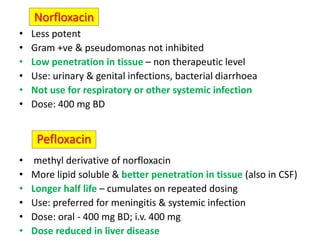
Norfloxacin
• Less potent
• Gram +ve & pseudomonas not inhibited
• Low penetration in tissue – non therapeutic level
• Use: urinary & genital infections, bacterial diarrhoea
• Not use for respiratory or other systemic infection
• Dose: 400 mg BD
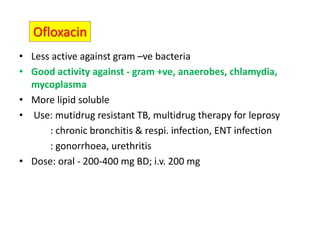
• methyl derivative of norfloxacin
• More lipid soluble & better penetration in tissue (also in CSF)
• Longer half life – cumulates on repeated dosing
• Use: preferred for meningitis & systemic infection
• Dose: oral - 400 mg BD; i.v. 400 mg
• Dose reduced in liver disease
Pefloxacin
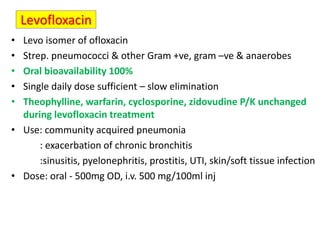
Ofloxacin
• Less active against gram –ve bacteria
• Good activity against - gram +ve, anaerobes, chlamydia,
mycoplasma
• More lipid soluble
• Use: mutidrug resistant TB, multidrug therapy for leprosy
: chronic bronchitis & respi. infection, ENT infection
: gonorrhoea, urethritis
• Dose: oral - 200-400 mg BD; i.v. 200 mg
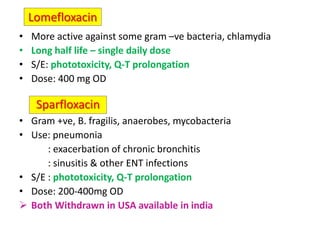
Levofloxacin
• Levo isomer of ofloxacin
• Strep. pneumococci & other Gram +ve, gram –ve & anaerobes
• Oral bioavailability 100%
• Single daily dose sufficient – slow elimination
• Theophylline, warfarin, cyclosporine, zidovudine P/K unchanged
during levofloxacin treatment
• Use: community acquired pneumonia
: exacerbation of chronic bronchitis
:sinusitis, pyelonephritis, prostitis, UTI, skin/soft tissue infection
• Dose: oral - 500mg OD, i.v. 500 mg/100ml inj
Lomefloxacin
• More active against some gram –ve bacteria, chlamydia
• Long half life – single daily dose
• S/E: phototoxicity, Q-T prolongation
• Dose: 400 mg OD
• Gram +ve, B. fragilis, anaerobes, mycobacteria
• Use: pneumonia
: exacerbation of chronic bronchitis
: sinusitis & other ENT infections
• S/E : phototoxicity, Q-T prolongation
• Dose: 200-400mg OD
 Both Withdrawn in USA available in india
Sparfloxacin
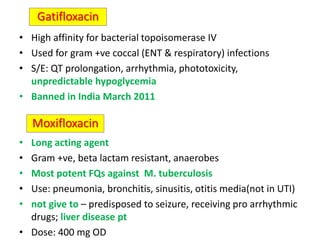
• High affinity for bacterial topoisomerase IV
• Used for gram +ve coccal (ENT & respiratory) infections
• S/E: QT prolongation, arrhythmia, phototoxicity,
unpredictable hypoglycemia
• Banned in India March 2011
• Long acting agent
• Gram +ve, beta lactam resistant, anaerobes
• Most potent FQs against M. tuberculosis
• Use: pneumonia, bronchitis, sinusitis, otitis media(not in UTI)
• not give to – predisposed to seizure, receiving pro arrhythmic
drugs; liver disease pt
• Dose: 400 mg OD
Gatifloxacin
Moxifloxacin
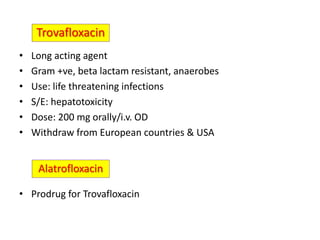
• Long acting agent
• Gram +ve, beta lactam resistant, anaerobes
• Use: life threatening infections
• S/E: hepatotoxicity
• Dose: 200 mg orally/i.v. OD
• Withdraw from European countries & USA
• Prodrug for Trovafloxacin
Trovafloxacin
Alatrofloxacin
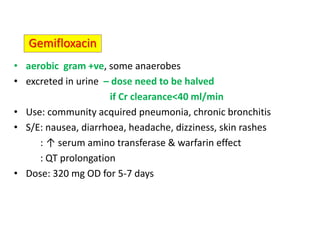
• aerobic gram +ve, some anaerobes
• excreted in urine – dose need to be halved
if Cr clearance<40 ml/min
• Use: community acquired pneumonia, chronic bronchitis
• S/E: nausea, diarrhoea, headache, dizziness, skin rashes
: ↑ serum amino transferase & warfarin effect
: QT prolongation
• Dose: 320 mg OD for 5-7 days
Gemifloxacin
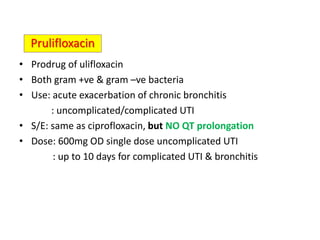
• Prodrug of ulifloxacin
• Both gram +ve & gram –ve bacteria
• Use: acute exacerbation of chronic bronchitis
: uncomplicated/complicated UTI
• S/E: same as ciprofloxacin, but NO QT prolongation
• Dose: 600mg OD single dose uncomplicated UTI
: up to 10 days for complicated UTI & bronchitis
Prulifloxacin
• Broad spectrum(gram –ve & gram +ve methicilin sensitive strain)
• Long acting agent
• Use: UTI, gonorrhoea, respi infection, skin & soft tissue infection,
enteritis
• S/E: GIT, CNS, skin
• Dose: 400 mg OD
Fleroxacin
• Under going phase III
• Activity markedly increases at acidic pH
• Very high safety profile
• Widest spectrum
• Long half life
• Clinical option for its trial – UTI, community acquired pneumonia,
bronchitis, COPD, intra abdominal & skin infection
Finafloxacin
• William AP. Sulfonamides, Trimethoprim-
Sulfamethoxazole, Quinolones,and Agents for Urinary Tract
Infections. In : Bruton LL, editor. Goodman & Gilman’s –
The Pharmacological basis of therapeutics. 12th edition.
New York : Mc Graw Hill Publication; 2011. p. 1463-76.
• Donald MC. Pharmacology of bacterial infections. In: Golan
DE, editor. Principles of Pharmacology – The
pathophysiological basis of drug therapy. 3rd edition. New
Delhi: Walters Kluwer Publication; 2012. p. 581-98.
• Tripathi KD. Essentials of Medical Pharmacology. 6th ed. New
Delhi : Jaypee brothers medical publishers; 2009. p. 360-71.
• Sharma HL & Sharma KK. Principles of Pharmacology. 2nd ed.
New Delhi: Paras publication; 2012. p. 702-16.
• Casini A, Scozzafava A, Supuran LT. Sulfonamides and
sulfonylated derivatives as anticancer agents. Curr Cancer Drug
Targets.[Internet] 2002 [cited in 2014 June 30];2(1):55-75.
Available from: Medline
Sulfonamide

Sulfonamide

  • 1.
  • 3.
     Sulfonamide: Sulfone+ amide Sulfanilamide [p-aminobenzene sulfonamide]
  • 4.
    • Sulfadiazine • Sulfisoxazole(Sulfafurazole) Short acting (4-8 hrs) • Sulfamethoxazole Intermediate acting (8-12 hrs) • Sulfadoxine • Sulfamethopyrazine Long acting (7-8 days) • Sulfacetamide sodium, Mafenide • Silver sulfadiazine, Sulfasalazine Special purpose sulfonamides
  • 5.
    Dihydropteroic acid synthetase Glutamate Dihydrofolatereductase Sulfonamide Trimethoprim = =
  • 6.
     Bacteriostatic actionevidence by: • PABA antagonizes action of sulfonamides • Only those microbes which synthesize their own folic acid are susceptible to sulfonamide  Human cells directly absorb preformed folic acid, supplied in diet & not affected by sulfonamides.
  • 7.
     Microorganisms thatsusceptible to sulfonamide:  Staph. aureus, gonococci, meningococci, E. coli, Shigella respond, but majority are resistant.  Anaerobic bacteria not inhibited Streptococcus pneumoniae Streptococcus pyogenes Haemophilus influenzae Nocardia Actinomyces Chlamydia trachomatis
  • 8.
    • Rapidly absorbedin GIT, reach maximum concentration within 4-6 hrs • Widely distributed in body – cross placenta & Blood brain barrier • Metabolized in liver by acetylation • Excreted by kidney through glomerular filtration (metabolites insoluble in acidic urine - crystalluria)
  • 9.
    • High plasmaprotein binding & slow excretion • Ultra long acting agents (half life → 7-9 days) • Not suitable for acute pyogenic infection • Use: in combination with pyrimethamine for treatment of :malaria : Pneumocystis jiroveci pneumonia in AIDS patients : Toxoplasmosis Sulfadoxine Sulfamethopyrazine
  • 10.
    • Highly soluble •Only mild irritating to eye in concentration up to 30% • Topical - high concentration in anterior segment & aqueous humour • Use: ocular infection due to susceptible bacteria & chlamydia : ophthalmia neonatorum by Ch. oculogenitalis • S/E: Sensitivity reaction (incidence low but when occur stop drug) Sulfacetamide sodium
  • 11.
    • Topically (1%cream) • Inhibit gram –ve & gram +ve bacteria, against pseudomonas, clostridia • Active in presence of pus • Use: burn dressing to prevent infection (not treat already infected case) • S/E: burning sensation & severe pain on raw surface : acidosis & hyperventilation : allergic reaction • Active against bacteria & fungi, even though resist to other sulfonamide like pseudomonas • Slowly release silver ions • Use: prevent infection of burn surface & chronic ulcers(1% cream) • S/E: burning sensation & itch Mafenide Silver sulfadiazine
  • 12.
    • Degraded bybacterial flora of colon Sulfasalazine 5-ASA Sulfapyridine (5-aminosalicylic acid) ↓ ↓ carrier for 5-ASA antiinflammatory  USE: Ulcerative colitis & Rheumatoid arthritis  Dose: 3-4 gm/day (oral) Sulfasalazine
  • 13.
    • nausea, vomiting,epigastric pain • jaundice, hepatic dysfunction, necrosis of liver • Acetylated metabolites less soluble in acidic urine & get precipitated in kidney • Minimized by→ adequate intake of water → alkalization of urine(↑ excretion) GI side effects Crystalluria & Renal toxicity
  • 14.
    • 2-5% &after a week of therapy • rash, urticaria, drug fever, Photosensitization • Serious reaction like stevens jhonson syndrome, exfoliative dermatitis (with long acting agents) Hypersensitivity reactions
  • 15.
    displace bilirubin fromprotein binding site ↓ free bilirubin pass through BBB ↓ deposited in basal ganglia & subthalamic nuclei ↓ kernicterus (encephalopathy)  Avoid in neonates & pregnancy • Acute haemolytic anaemia: Rare but develop in G6PD deficient patients • Agranulocytosis & aplastic anaemia extremely rare Effect on haematopoietic system Kernicterus in neonates
  • 16.
    1) Cotrimoxazole 2) Cotrimazine 3)Sulfadoxine + Pyrimethamine
  • 17.
  • 18.
    • Diaminopyrimidine relatedto pyrimethamine • Selectively inhibit DHFRase (dihydrofolate reductase) • >1,00,000 times more active against bacterial DHFRase
  • 19.
    • Same halflife (10 hrs) • Optimal synergy at concentration ratio : sulfamethoxazole 20 : Trimethoprim 1 • Trimethoprim enters many tissue, ratio obtained in plasma ↓ • Trimethoprim → cross placenta & BBB → rapidly absorbed • Trimethoprim 40% plasma protein bound while Sulfamethoxazole 65% bound dose ratio 5:1
  • 20.
     Additional organism: Sulfonamide resistant strain:  Not against: Pseudomonas, B. fragilis, enterococci Salmonella typhi Serratia Klebsiella Yersinia enterocolitica Pneumocystis jiroveci Staphylococcus aureus Streptococcus pyogenes Haemophilus influenzae E. Coli Gonococci meningococci
  • 21.
    • Sequential blockade,supra additive effect
  • 22.
    • Individually bacteriostatic,but combination bacteriocidal • Reduced development of resistance • Wide spectrum • Safe & well tolerated • Cost effective
  • 23.
    Trimethoprim (mg) Sulfamethoxazole(mg) Tablet 80 400 Double strength 160 800 Pediatric tablet 20 100 IV injection/5 ml 80 400
  • 24.
    Urinary tract infections: •Acute & uncomplicated cases respond rapidly • DS tablets BD for 5-10 days • Acute cystitis – 4 tab of DS formulation (single dose) Prostitis: • Acute – one DS tab daily for 3 weeks • Chronic: 6-12 weeks  Nocardiosis: • Drug of choice for pulmonary lesion & abscess
  • 25.
    Respiratory tract infections: •Bronchitis, facio maxillary infections, otitis media by Pneumococcus & H. influenza • Dose: One DS tab BD Sexually transmitted diseases: • 3rd choice drug for Chancroid- 1 DS tab BD for 7-10 days • also used for Urethritis, lymphogranuloma, gonorrhoea Pneumonia: • Pneumocystis jiroveci – in neutropenic & AIDS patient
  • 27.
    Bacterial diarrhoea &Dysentery: • Acute gastroenteritis by Shigella & Yersinia enterocolitica, Traveler’s diarrhoea due to E. coli & Cholera by V. cholera • Alternative to fluoroquinolones As alternative drug: • Typhoid – 1 DS tab BD for 2 weeks  Intravenous cotrimoxazole – severe infection  Dose: 80mg Trimethoprim + 400mg sulfamethoxazole ↓ diluted in 125 ml of 5% dextrose(i.v. infusion over 60-90min)
  • 28.
    • Nausea, vomiting,stomatitis, headache • Fever, rash, bone marrow hypoplasia (up to 50%) • Megaloblastic anaemia • Uremia • Bone marrow toxicity – elderly • Blood dyscrasias – rarely
  • 30.
    • Synthetic AMAhaving quinolone structure • Against gram –ve bacteria • New flourinated compound → (-) gram +ve bacteria • Mid 1960 – Nalidixic acid - limited use UTI & GIT infection • Early 1980 – Fluoroquinolones • fluorination of quinolone structure at position of 6 and introduction of piperazine substitution at position 7
  • 31.
    Nalidixic acid  Activeagainst: • Gram –ve bacteria – E.coli, Proteus, Klebsiella, Shigella, but not Pseudomonas  Mechanism of action: • Bactericidal • Inhibit DNA gyrase Pharmacokinetic: • Absorbed orally • High plasma protein binding & metabolized in liver • Plasma half life 8 hrs • Excreted in urine
  • 32.
     Adverse effects: •GI upset & rashes • Neurological toxicity – headache, drowsiness, vertigo, visual disturbance, seizure • Phototoxicity rare • Haemolysis in G6 PD deficient pt  Uses: • As urinary antiseptic • Diarrhoea  Dose: • 0.5-1 gm TDS or QID
  • 34.
    1st generation fluoroquinolones • Norfloxacin •Ciprofloxacin • Ofloxacin • Pefloxacin 2nd generation fluoroquinolones • Levofloxacin • Lomefloxacin • Sparfloxacin • Moxifloxacin • Gemifloxacin • Prulifloxacin • Trovafloxacin • Alatrofloxacin • Fleroxacin 1st generation : one flourine substitution 2nd generation: additional fluorine & other substitution : extended activity to gram +ve cocci & anaerobes : metabolic stability (long half life)
  • 36.
     There isnecessary to prevent excessive positive super coiling of DNA strand, when they separate for replication or transcription DNA gyrase: in gram –ve bacteria  FQs bind to A subunit with high affinity interfere with its function A subunit – nicking of DNA B subunit – introduces negative supercoiling A subunit – reseals the strands
  • 38.
     Topoisomerase IV:in gram +ve bacteria • Nicks & separates daughter DNA strands • FQs targets Topoisomearse IV with greater affinity & confer potency against gram +ve bacteria  Bactericidal action – digestion of DNA by exonuclease  mammalian cells – topoisomerase II (remove +ve supercoiling) • Low affinity for FQs → low toxicity to host cells
  • 39.
    • Salmonella, Pseudomonas,Staphylococci, Gonococci, Pneumococci
  • 40.
    • Bactericidal activity& high potency • Long post antibiotic effect • Low frequency of mutational resistance • Low propensity to select plasmid type resistant mutant • Protective intestinal streptococci & anaerobes are spared • Active against many beta lactam & aminoglycoside resistant bacteria • Less active at acidic pH
  • 41.
    Ciprofloxacin • Prototype drug •Most potent 1st generation FQ • Aerobic gram –ve bacilli  gram +ve bacteria inhibited at high concentration  Resistant ones: Bacteroides fragilis, Clostridia, anaerobic cocci E. Coli Klebseila Salmonella typhi Shigella Proteus N. Gonorrhoea N. Meningitidis H. influenzae Campylobacter jejuni V. cholerae
  • 42.
    Pharmacokinetics: • Rapidly absorbedorally, food delays absorption • First pass metabolism • Good tissue penetration- lung, sputum, muscle, prostate, phagocytes, but low in CSF, bone & aqueous • Excreted in urine except pefloxacin & moxifloxacin Adverse effects: (10%) o GIT: nausea, vomiting, bad taste, anorexia (diarrhoea infrequent) o CNS: dizziness, headache, restlessness, anxiety, insomnia, impairment of concentration (caution during driving) o Skin: rash, pruritus, photosensitivity, urticaria, swelling of lips o Tendinitis & tendon rupture: higher in those above 60 yr & receiving steroids
  • 43.
    Contraindication: • Pregnancy &children Interactions: • ↑concentration of theophylline, caffeine, warfarin by inhibiting metabolism • NSAIDs enhance CNS toxicity of FQs • Antacid, sucralfate, iron salt - ↓absorption of FQs
  • 44.
    Uses:  Urinary tractinfections: • High cure rates, even in complicated cases or those with indwelling catheters/prostitis • High success rates than cotrimoxazole  Gonorrhoea: • Single 500mg dose – 100% curative in non PPNG & PPNG • Resistance – not 1st line drug  Chancroid: • Second line drug – 500mg BD for 3 days • Alternative to ceftriaxone/ azithromycin
  • 45.
     Bacterial gastroenteritis: •Currently most commonly used • Reserved for sever cases due to E.choli, Shigella, Salmonella, Camp. jejuni infection • ↓ stool volume in cholera  Bone, soft tissue & wound inection: • Osteomyelitis & joint pain – prolong treatment with high dose (750 mg BD for 6-8 weeks) • Diabetic foot – with clindamycin / metronidazole (cover anaerobes)  Tuberculosis: • Second line drug against mutidrug resistant TB
  • 46.
     Typhoid: • Firstchoice of drug • India – 95% S. typhi were sensitive • Dose: 750 mg BD for 10 days : unable to take orally – 200 mg i.v. 12 hrly : 750 mg BD for 4-8 weeks for carriers • Advantages: quick defervescene : early abetment of symptoms : prevention of carrier state  Gram –ve septicemia: • Parenteral ciprofloxacin combined with 3rd generation cephalosporin or aminoglycoside
  • 47.
     Respiratory tractinfections: • Treat Mycoplasma, Legionella, H. influenza infection • Low susceptibility for pneumococci, streptococci • 2nd generation FQs – pneumonia & bronchitis • US FDA approved for inhalational anthrax  Meningitis: • Gram –ve bacterial meningitis, specially in immunocompromised patients or CSF shunt  Prophylaxis: • Infection in neutropenic / cancer patients  Conjuctivitis: • By gram –ve bacteria , topical therapy
  • 48.
    Norfloxacin • Less potent •Gram +ve & pseudomonas not inhibited • Low penetration in tissue – non therapeutic level • Use: urinary & genital infections, bacterial diarrhoea • Not use for respiratory or other systemic infection • Dose: 400 mg BD • methyl derivative of norfloxacin • More lipid soluble & better penetration in tissue (also in CSF) • Longer half life – cumulates on repeated dosing • Use: preferred for meningitis & systemic infection • Dose: oral - 400 mg BD; i.v. 400 mg • Dose reduced in liver disease Pefloxacin
  • 49.
    Ofloxacin • Less activeagainst gram –ve bacteria • Good activity against - gram +ve, anaerobes, chlamydia, mycoplasma • More lipid soluble • Use: mutidrug resistant TB, multidrug therapy for leprosy : chronic bronchitis & respi. infection, ENT infection : gonorrhoea, urethritis • Dose: oral - 200-400 mg BD; i.v. 200 mg
  • 50.
    Levofloxacin • Levo isomerof ofloxacin • Strep. pneumococci & other Gram +ve, gram –ve & anaerobes • Oral bioavailability 100% • Single daily dose sufficient – slow elimination • Theophylline, warfarin, cyclosporine, zidovudine P/K unchanged during levofloxacin treatment • Use: community acquired pneumonia : exacerbation of chronic bronchitis :sinusitis, pyelonephritis, prostitis, UTI, skin/soft tissue infection • Dose: oral - 500mg OD, i.v. 500 mg/100ml inj
  • 51.
    Lomefloxacin • More activeagainst some gram –ve bacteria, chlamydia • Long half life – single daily dose • S/E: phototoxicity, Q-T prolongation • Dose: 400 mg OD • Gram +ve, B. fragilis, anaerobes, mycobacteria • Use: pneumonia : exacerbation of chronic bronchitis : sinusitis & other ENT infections • S/E : phototoxicity, Q-T prolongation • Dose: 200-400mg OD  Both Withdrawn in USA available in india Sparfloxacin
  • 52.
    • High affinityfor bacterial topoisomerase IV • Used for gram +ve coccal (ENT & respiratory) infections • S/E: QT prolongation, arrhythmia, phototoxicity, unpredictable hypoglycemia • Banned in India March 2011 • Long acting agent • Gram +ve, beta lactam resistant, anaerobes • Most potent FQs against M. tuberculosis • Use: pneumonia, bronchitis, sinusitis, otitis media(not in UTI) • not give to – predisposed to seizure, receiving pro arrhythmic drugs; liver disease pt • Dose: 400 mg OD Gatifloxacin Moxifloxacin
  • 53.
    • Long actingagent • Gram +ve, beta lactam resistant, anaerobes • Use: life threatening infections • S/E: hepatotoxicity • Dose: 200 mg orally/i.v. OD • Withdraw from European countries & USA • Prodrug for Trovafloxacin Trovafloxacin Alatrofloxacin
  • 54.
    • aerobic gram+ve, some anaerobes • excreted in urine – dose need to be halved if Cr clearance<40 ml/min • Use: community acquired pneumonia, chronic bronchitis • S/E: nausea, diarrhoea, headache, dizziness, skin rashes : ↑ serum amino transferase & warfarin effect : QT prolongation • Dose: 320 mg OD for 5-7 days Gemifloxacin
  • 55.
    • Prodrug ofulifloxacin • Both gram +ve & gram –ve bacteria • Use: acute exacerbation of chronic bronchitis : uncomplicated/complicated UTI • S/E: same as ciprofloxacin, but NO QT prolongation • Dose: 600mg OD single dose uncomplicated UTI : up to 10 days for complicated UTI & bronchitis Prulifloxacin
  • 56.
    • Broad spectrum(gram–ve & gram +ve methicilin sensitive strain) • Long acting agent • Use: UTI, gonorrhoea, respi infection, skin & soft tissue infection, enteritis • S/E: GIT, CNS, skin • Dose: 400 mg OD Fleroxacin
  • 57.
    • Under goingphase III • Activity markedly increases at acidic pH • Very high safety profile • Widest spectrum • Long half life • Clinical option for its trial – UTI, community acquired pneumonia, bronchitis, COPD, intra abdominal & skin infection Finafloxacin
  • 58.
    • William AP.Sulfonamides, Trimethoprim- Sulfamethoxazole, Quinolones,and Agents for Urinary Tract Infections. In : Bruton LL, editor. Goodman & Gilman’s – The Pharmacological basis of therapeutics. 12th edition. New York : Mc Graw Hill Publication; 2011. p. 1463-76. • Donald MC. Pharmacology of bacterial infections. In: Golan DE, editor. Principles of Pharmacology – The pathophysiological basis of drug therapy. 3rd edition. New Delhi: Walters Kluwer Publication; 2012. p. 581-98.
  • 59.
    • Tripathi KD.Essentials of Medical Pharmacology. 6th ed. New Delhi : Jaypee brothers medical publishers; 2009. p. 360-71. • Sharma HL & Sharma KK. Principles of Pharmacology. 2nd ed. New Delhi: Paras publication; 2012. p. 702-16. • Casini A, Scozzafava A, Supuran LT. Sulfonamides and sulfonylated derivatives as anticancer agents. Curr Cancer Drug Targets.[Internet] 2002 [cited in 2014 June 30];2(1):55-75. Available from: Medline

Editor's Notes

  • #4 All sulfonamides are derivatives of sulfanilamide, commonly reffered as sulfa drugs; this group also present in thiazide, sulfonylurea, furosemide,
  • #6 Many bacteria synthesize their own folic acid, which consist of pteridine moiety, PABA, glutamate Sufonamide structurally analogue to PABA. Competitively inhibit folate synthetase & form altered folic acid & protein , no use for bacteria & inhibition of growth of bacteria (Bacteriostatic action)
  • #18 Introduced in 1969 causes sequential blockage folate metabolism
  • #19 Not interfer human folate metabolism at antimicrobial conc
  • #21 Of t & s overlap
  • #22 Combination ↓ more bacteria compare to individual agent in same time
  • #26 Ceftriaxone, azithro
  • #31 1st member introduced was / with high potency, expanded spectrum, slow development of resistance, better tissue penetration
  • #35 quinolone having one or more flourine substitution
  • #40 Whose production govern by damage DNA
  • #41 FQs resistant mutant are not easily selected, so resistance to FQs slow to develop
  • #45 Carilage damage in wt bearing joint
  • #46 Bcz broad spectrum bactericidal activity, oral efficacy, good tolerability, it is extensively use for empirical therapy of any infection, but not for minor cases or where gram +ve & anaerobes are primarily causative
  • #47 Caused by resistant staph & gram –ve anaerobes, high cure rate in
  • #48 ↑ no of non responsive. Ceftriaxone or cefotaxime/ cefoperazone MC used: fever subsides in 4-5 days: low incedence of compli & relapse: due to cidal action, good penetration in infected cells, high biliary & intestinal conct
  • #49 Although CSF pnetration not good, successfully used in
  • #50 MIC 3-4 times higher: gut conct high & gut anaerobes not affected
  • #55 Community acquired pneumonia, complicated intra abdo & gynaecological infection, skin/soft tissue infection,