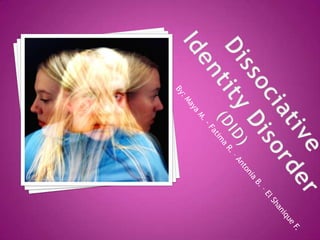
Dissociative Identity Disorder(DID)By: Maya M. - Fatima R. – Antonia B. – El Shanique F.
What Is It?Apsychiatric diagnosis that describes a condition in which a single person displays multiple distinct identities or personalities (known as alter egos or alters), each with its own pattern of perceiving and interacting with the environment. The diagnosis requires that at least two personalities routinely take control of the individual's behavior with an associated memory loss that goes beyond normal forgetfulness; in addition, symptoms cannot be due to drug use or medical condition. The person with DID may have as few as two alters, or as many as 100.  The average number is about 10. http://www.youtube.com/watch?v=7iHJfIH20TYDissociative Identity Disorder
Smaller SymptomsBigger  SymptomsPanic AttacksAnxietyDepressionPhysical Symptoms Posttraumatic stress Sexual DysfunctionEating DisordersMemory loss Relation towards patient experiencing time lapsesCannot account or recognize certain things (ex: Handwriting)Depersonalization:DerealizationMay refer to themselves in 1st personHallucinations Signs and Symptoms
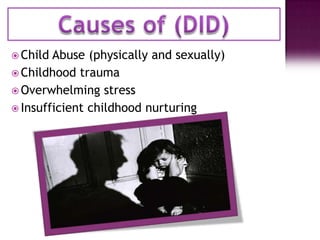
Causes of (DID)Child Abuse (physically and sexually)Childhood traumaOverwhelming stressInsufficient childhood nurturing
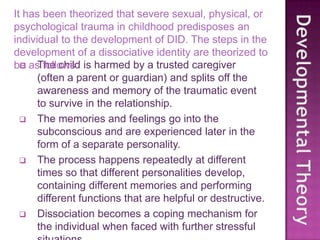
The child is harmed by a trusted caregiver (often a parent or guardian) and splits off the awareness and memory of the traumatic event to survive in the relationship.
The memories and feelings go into the subconscious and are experienced later in the form of a separate personality.
The process happens repeatedly at different times so that different personalities develop, containing different memories and performing different functions that are helpful or destructive.
Dissociation becomes a coping mechanism for the individual when faced with further stressful situationsIt has been theorized that severe sexual, physical, or psychological trauma in childhood predisposes an individual to the development of DID. The steps in the development of a dissociative identity are theorized to be as follows:Developmental Theory
Psychotherapy-Many patients with dissociative identity disorder choose an alternative to drugs called psychotherapyMedication-The use of medication for DID is NOT recommended, since DID is hard to control and it’s hard to diagnose just one medication that worksSelf-Help-Many DID patients are coming together to form networks of supportHypnosis-Hypnosis can often help the patients discover any repressed memories that could have led to DIDTreatment

Student Work - DID

  • 1.
    Dissociative Identity Disorder(DID)By:Maya M. - Fatima R. – Antonia B. – El Shanique F.
  • 2.
    What Is It?Apsychiatricdiagnosis that describes a condition in which a single person displays multiple distinct identities or personalities (known as alter egos or alters), each with its own pattern of perceiving and interacting with the environment. The diagnosis requires that at least two personalities routinely take control of the individual's behavior with an associated memory loss that goes beyond normal forgetfulness; in addition, symptoms cannot be due to drug use or medical condition. The person with DID may have as few as two alters, or as many as 100. The average number is about 10. http://www.youtube.com/watch?v=7iHJfIH20TYDissociative Identity Disorder
  • 3.
    Smaller SymptomsBigger SymptomsPanic AttacksAnxietyDepressionPhysical Symptoms Posttraumatic stress Sexual DysfunctionEating DisordersMemory loss Relation towards patient experiencing time lapsesCannot account or recognize certain things (ex: Handwriting)Depersonalization:DerealizationMay refer to themselves in 1st personHallucinations Signs and Symptoms
  • 4.
    Causes of (DID)ChildAbuse (physically and sexually)Childhood traumaOverwhelming stressInsufficient childhood nurturing
  • 5.
    The child isharmed by a trusted caregiver (often a parent or guardian) and splits off the awareness and memory of the traumatic event to survive in the relationship.
  • 6.
    The memories andfeelings go into the subconscious and are experienced later in the form of a separate personality.
  • 7.
    The process happensrepeatedly at different times so that different personalities develop, containing different memories and performing different functions that are helpful or destructive.
  • 8.
    Dissociation becomes acoping mechanism for the individual when faced with further stressful situationsIt has been theorized that severe sexual, physical, or psychological trauma in childhood predisposes an individual to the development of DID. The steps in the development of a dissociative identity are theorized to be as follows:Developmental Theory
  • 9.
    Psychotherapy-Many patients withdissociative identity disorder choose an alternative to drugs called psychotherapyMedication-The use of medication for DID is NOT recommended, since DID is hard to control and it’s hard to diagnose just one medication that worksSelf-Help-Many DID patients are coming together to form networks of supportHypnosis-Hypnosis can often help the patients discover any repressed memories that could have led to DIDTreatment