By
Linda, Kianna, and Krystal
Agenda
   Definition
   History
   Diagnosis
   Symptoms
   Treatment
   Patients
   Research
   Questions
   Resources
   Ending Comments
History
History
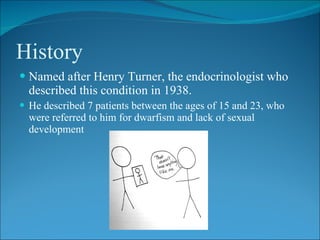
 Named after Henry Turner, the endocrinologist who
  described this condition in 1938.
 He described 7 patients between the ages of 15 and 23, who
  were referred to him for dwarfism and lack of sexual
  development
Definition
What is Tuner’s Syndrome?
A g ne d o e in g c us db am s o d fe tive
   e tic is rd r  irls a e y is ing r e c
 X (fe a ) c m s m .
      m le hro o o e
How does it Occur?
 The human cells have 22 pairs of chromosomes and 1
  pair of sex chromosomes (called X &Y). A female
  usually has XX chromosomes whereas a male has XY
  chromosomes.
 These sex chromosomes determine the gender of a
  person, the height as well as development of sexual
  organs.
 During mitosis only one X chromosome transfers to
  the egg for a female baby.
Diagnosis
 Amniocentesis the prenatal diagnosis of chromosomal
    abnormalities during pregnancy.
   Chromosome analysis.
   Finding the specific chromosome problem of the syndrome is
    the only definitive diagnosis.
   Learning problems that lead to difficulty with math and spatial
    relationships between objects.
   Blood Hormone levels
   Echocardiogram (heart ultrasound)
   MRI of Chest
   Ultrasound of reproductive organs and kidneys
   Pelvic Exam
Symptoms
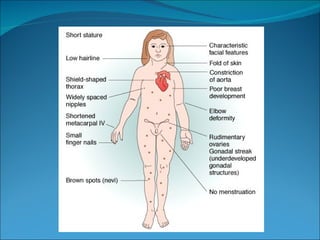
 short stature (affects almost all girls with Turner, to different degrees)
 failure of ovaries to develop (90-95% of girls)
 webbed neck (25%) or short neck (40%)
 abnormal fingernails and toenails (70%)
 low hairline at neck (40%)
 heart defect (30%)
 kidney or urinary tract defect (30%)
 hearing disorders (50-90%)
 frequent ear infections in childhood (75%)
 shortening of bones in the hands (35%)
 lower jaw smaller than normal (60%)
 drooping eyelids (ptosis), wandering eyes (strasbismus)
Women with Turner syndrome are more likely to develop high blood
pressure, diabetes and thyroid disorders
Treatment
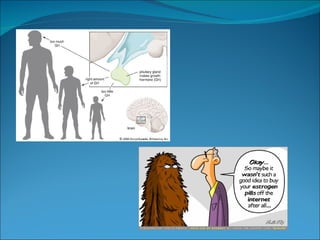
 Hum n Gro th Ho o
       a    w    rm ne
 Es g n
    tro e
 P g s ro
   ro e te ne

 - Se Func nsa no a -
      x    tio re rm l
Infertility
 Adopt Children
 In Vitro-Fertilization
 Some may have Children (rare cases)
Patients
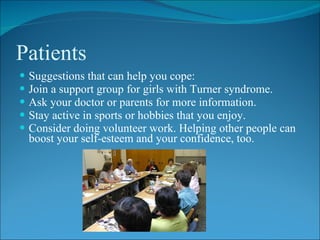
   Suggestions that can help you cope:
   Join a support group for girls with Turner syndrome.
   Ask your doctor or parents for more information.
   Stay active in sports or hobbies that you enjoy.
   Consider doing volunteer work. Helping other people can
    boost your self-esteem and your confidence, too.
Patients
 Consider talking to a professional therapist. A qualified
  counselor or other mental health professional can help you
  build your self-esteem and address your concerns about living
  with Turner syndrome.
 Discuss this with your parents if you think you might need
  help.
 Keep a journal or diary in which you can record your thoughts
  and feelings about the challenges you're dealing with.
 Talk to school counselors if you are having problems at school.
Research
 Growth Hormone Treatment of Women With Turner Syndrome
  Condition: Turner Syndrome Interventions:
  Drug: Growth Hormone; Drug: Placebo;
  Other: Healthy controls
 Estrogen Dosing in Turner Syndrome: Pharmacology and Metabolism
  Conditions: Turner Syndrome; Hypogonadism;
  Premature Ovarian Failure
  Interventions: Drug: 17 B estradiol orally; Drug: 17 B estradiol
Research
 Dry Eye in Women With Turner Syndrome and Women With Prema
  Conditions: Turner Syndrome; Ovarian Failure, Premature;
  Sex Chromosome Aberrations; Menopause; Perimenopause
 Sex Differences in Early Brain Development; Brain Development in
  Condition: Turner Syndrome
 Long-Term Growth and Skeletal Effects of Early Growth Hormone T
  Condition: Turner Syndrome Intervention: Drug: Somatropin
Resources
w ww .turne ynd m .o
            rs ro e rg
w ww .nlm .nih.g v/m d p /turne ynd m .htm
                 o e line lus   rs ro e    l
 nic .nih.g v
     hd      o
Questions?
Ending Comments
 The a p s
     re re o itiveo o e .
                   utc m s
           http://www.youtube.com/watch?v=56ujy218Kag
Quiz
   Definition?
   Diagnosis?
   Symptoms?
   Treatment?
The End
Turners Syndrome
Turners Syndrome

Turners Syndrome

  • 1.
  • 2.
    Agenda Definition  History  Diagnosis  Symptoms  Treatment  Patients  Research  Questions  Resources  Ending Comments
  • 3.
  • 4.
    History  Named afterHenry Turner, the endocrinologist who described this condition in 1938.  He described 7 patients between the ages of 15 and 23, who were referred to him for dwarfism and lack of sexual development
  • 5.
  • 6.
    What is Tuner’sSyndrome? A g ne d o e in g c us db am s o d fe tive e tic is rd r irls a e y is ing r e c X (fe a ) c m s m . m le hro o o e
  • 7.
    How does itOccur?  The human cells have 22 pairs of chromosomes and 1 pair of sex chromosomes (called X &Y). A female usually has XX chromosomes whereas a male has XY chromosomes.  These sex chromosomes determine the gender of a person, the height as well as development of sexual organs.  During mitosis only one X chromosome transfers to the egg for a female baby.
  • 8.
    Diagnosis  Amniocentesis theprenatal diagnosis of chromosomal abnormalities during pregnancy.  Chromosome analysis.  Finding the specific chromosome problem of the syndrome is the only definitive diagnosis.  Learning problems that lead to difficulty with math and spatial relationships between objects.  Blood Hormone levels  Echocardiogram (heart ultrasound)  MRI of Chest  Ultrasound of reproductive organs and kidneys  Pelvic Exam
  • 10.
    Symptoms  short stature(affects almost all girls with Turner, to different degrees)  failure of ovaries to develop (90-95% of girls)  webbed neck (25%) or short neck (40%)  abnormal fingernails and toenails (70%)  low hairline at neck (40%)  heart defect (30%)  kidney or urinary tract defect (30%)  hearing disorders (50-90%)  frequent ear infections in childhood (75%)  shortening of bones in the hands (35%)  lower jaw smaller than normal (60%)  drooping eyelids (ptosis), wandering eyes (strasbismus) Women with Turner syndrome are more likely to develop high blood pressure, diabetes and thyroid disorders
  • 13.
    Treatment  Hum nGro th Ho o a w rm ne  Es g n tro e  P g s ro ro e te ne  - Se Func nsa no a - x tio re rm l
  • 15.
    Infertility  Adopt Children In Vitro-Fertilization  Some may have Children (rare cases)
  • 17.
    Patients  Suggestions that can help you cope:  Join a support group for girls with Turner syndrome.  Ask your doctor or parents for more information.  Stay active in sports or hobbies that you enjoy.  Consider doing volunteer work. Helping other people can boost your self-esteem and your confidence, too.
  • 18.
    Patients  Consider talkingto a professional therapist. A qualified counselor or other mental health professional can help you build your self-esteem and address your concerns about living with Turner syndrome.  Discuss this with your parents if you think you might need help.  Keep a journal or diary in which you can record your thoughts and feelings about the challenges you're dealing with.  Talk to school counselors if you are having problems at school.
  • 20.
    Research  Growth HormoneTreatment of Women With Turner Syndrome Condition: Turner Syndrome Interventions: Drug: Growth Hormone; Drug: Placebo; Other: Healthy controls  Estrogen Dosing in Turner Syndrome: Pharmacology and Metabolism Conditions: Turner Syndrome; Hypogonadism; Premature Ovarian Failure Interventions: Drug: 17 B estradiol orally; Drug: 17 B estradiol
  • 21.
    Research  Dry Eyein Women With Turner Syndrome and Women With Prema Conditions: Turner Syndrome; Ovarian Failure, Premature; Sex Chromosome Aberrations; Menopause; Perimenopause  Sex Differences in Early Brain Development; Brain Development in Condition: Turner Syndrome  Long-Term Growth and Skeletal Effects of Early Growth Hormone T Condition: Turner Syndrome Intervention: Drug: Somatropin
  • 22.
    Resources w ww .turneynd m .o rs ro e rg w ww .nlm .nih.g v/m d p /turne ynd m .htm o e line lus rs ro e l  nic .nih.g v hd o
  • 23.
  • 24.
    Ending Comments  Thea p s re re o itiveo o e . utc m s http://www.youtube.com/watch?v=56ujy218Kag
  • 25.
    Quiz Definition?  Diagnosis?  Symptoms?  Treatment?
  • 26.