Submitted by: Asif Ahmed Tonmoy
ID: 131-23-3505 ; Sec: D (L3T1)
Assignment topic: Stress-Strain Curve
Submitted to:
Lecturer
Daffodil International University
Mousumi Rahman Hashi
For Example
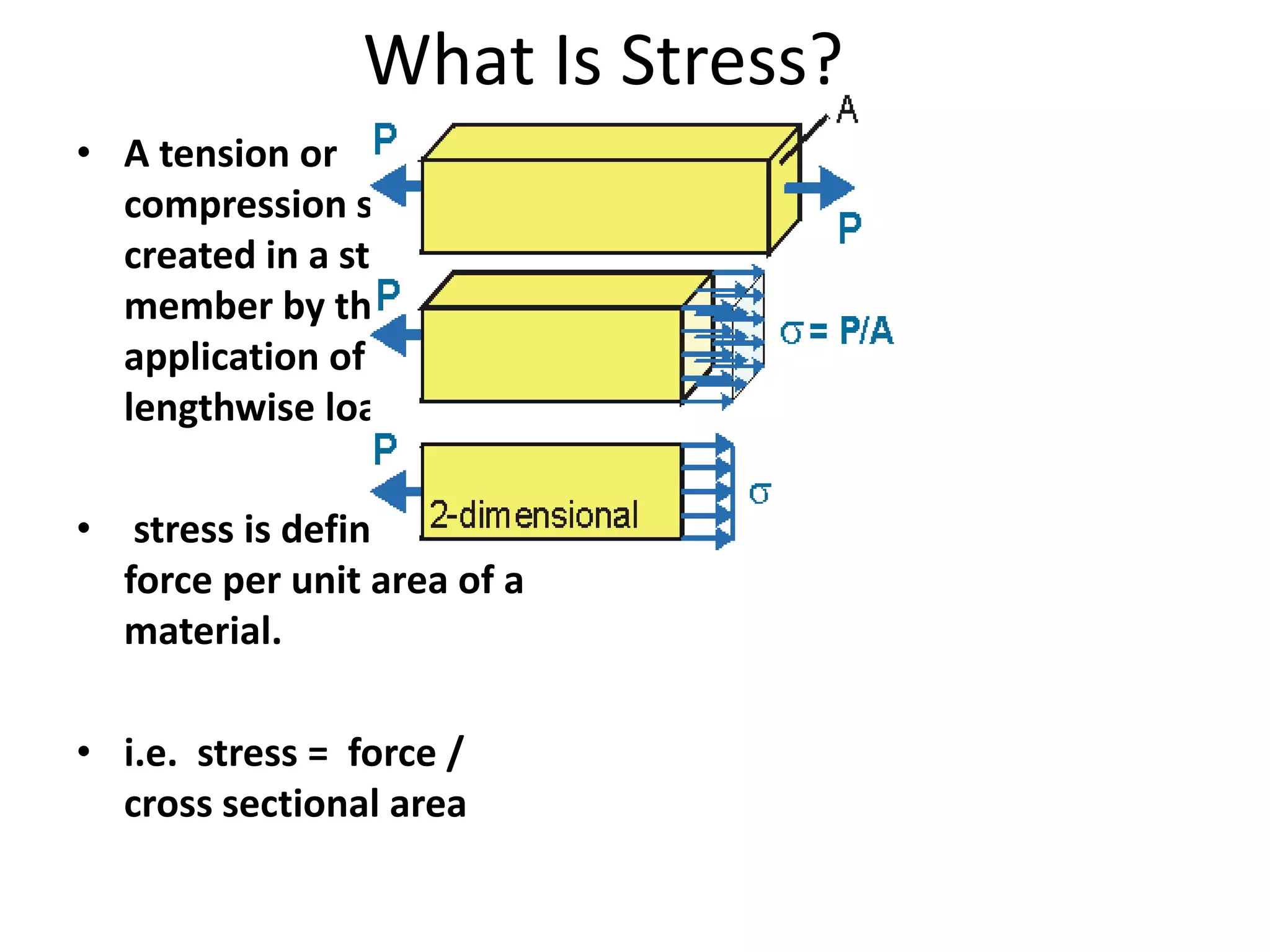
What Is Stress?
• A tension or
compression stress
created in a structural
member by the
application of a
lengthwise load.
• stress is defined as the
force per unit area of a
material.
• i.e. stress = force /
cross sectional area
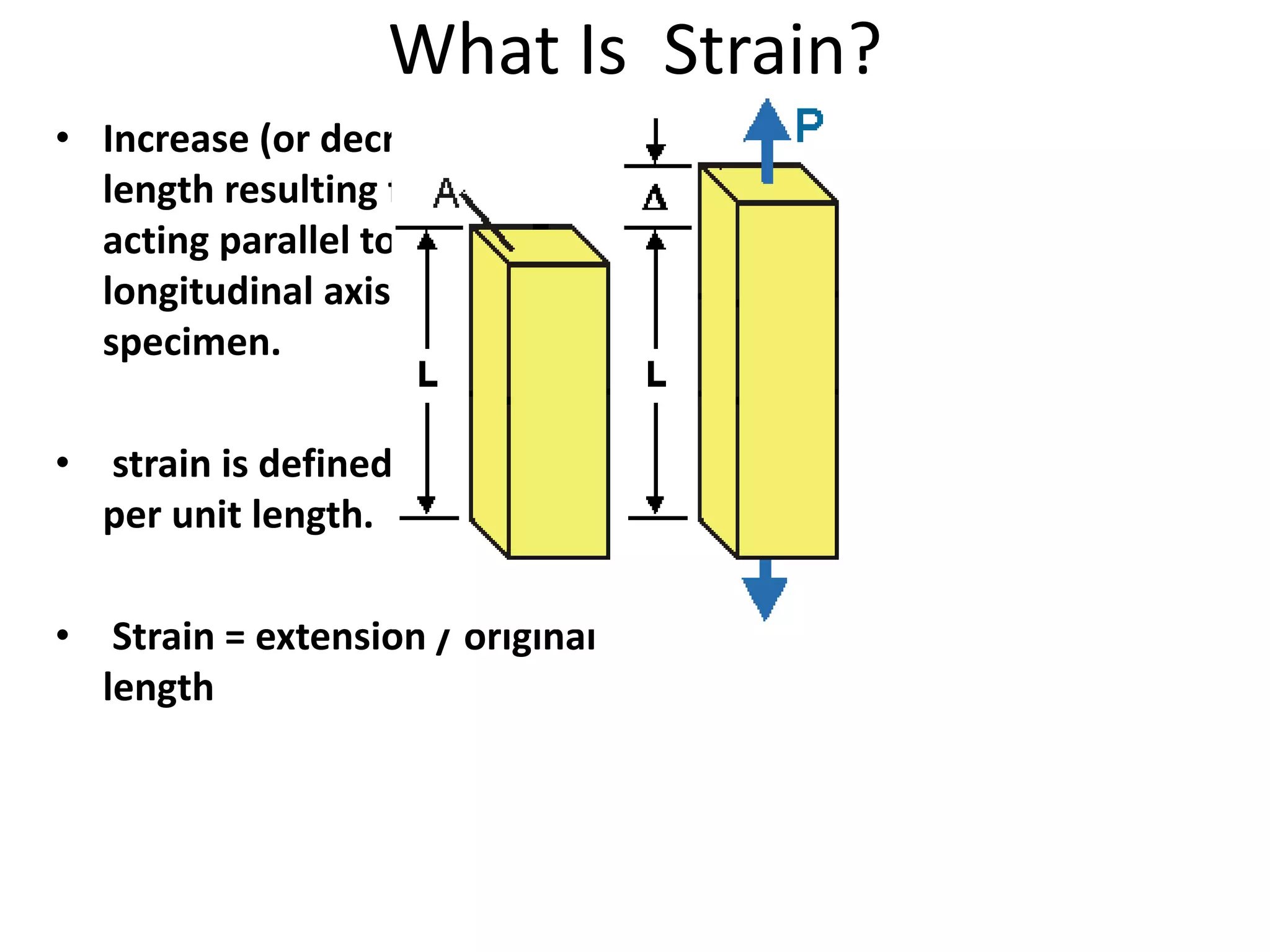
What Is Strain?
• Increase (or decrease) in
length resulting from a stress
acting parallel to the
longitudinal axis of the
specimen.
• strain is defined as extension
per unit length.
• Strain = extension / original
length
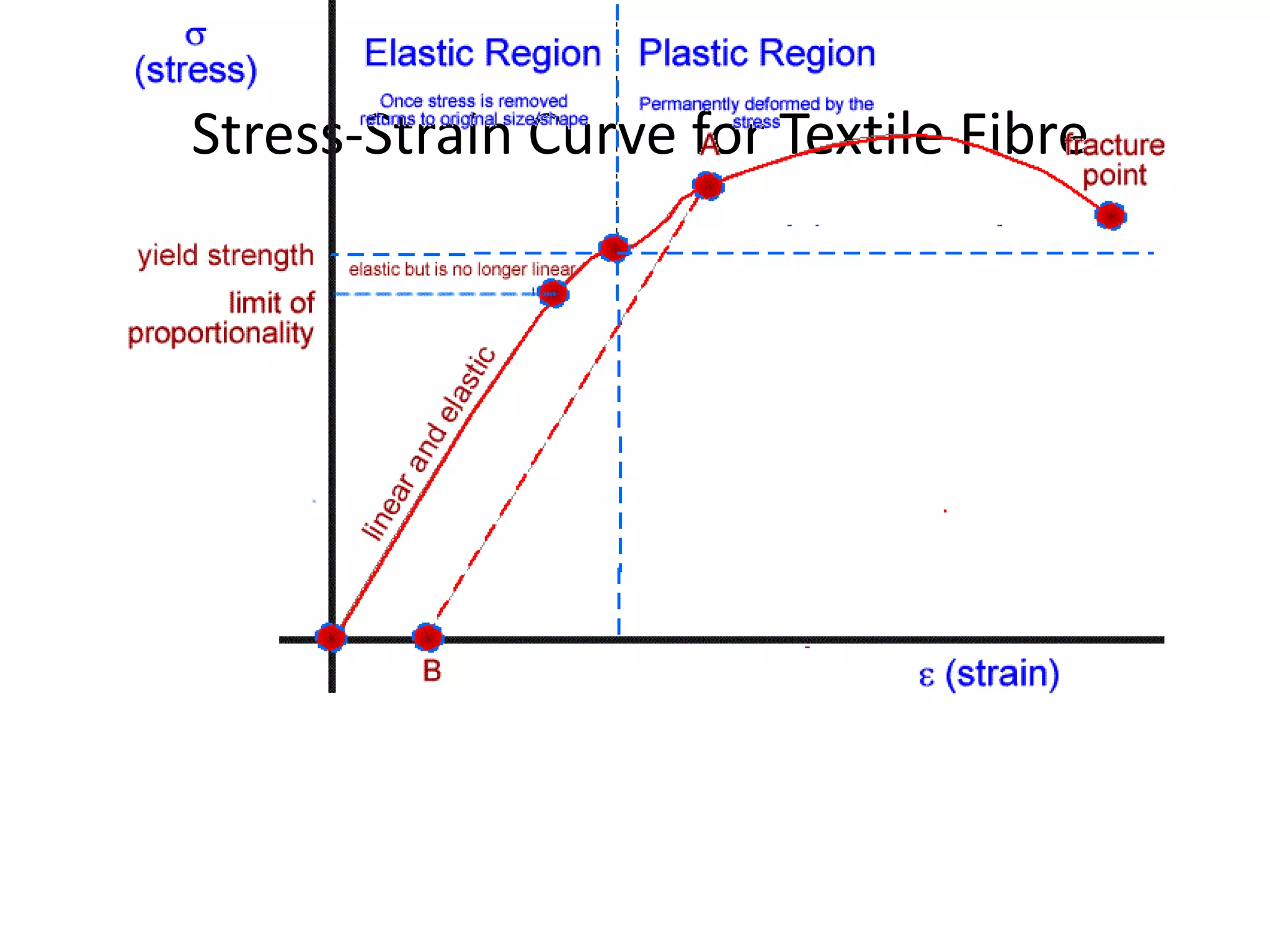
Stress-Strain Curve for Textile Fibre
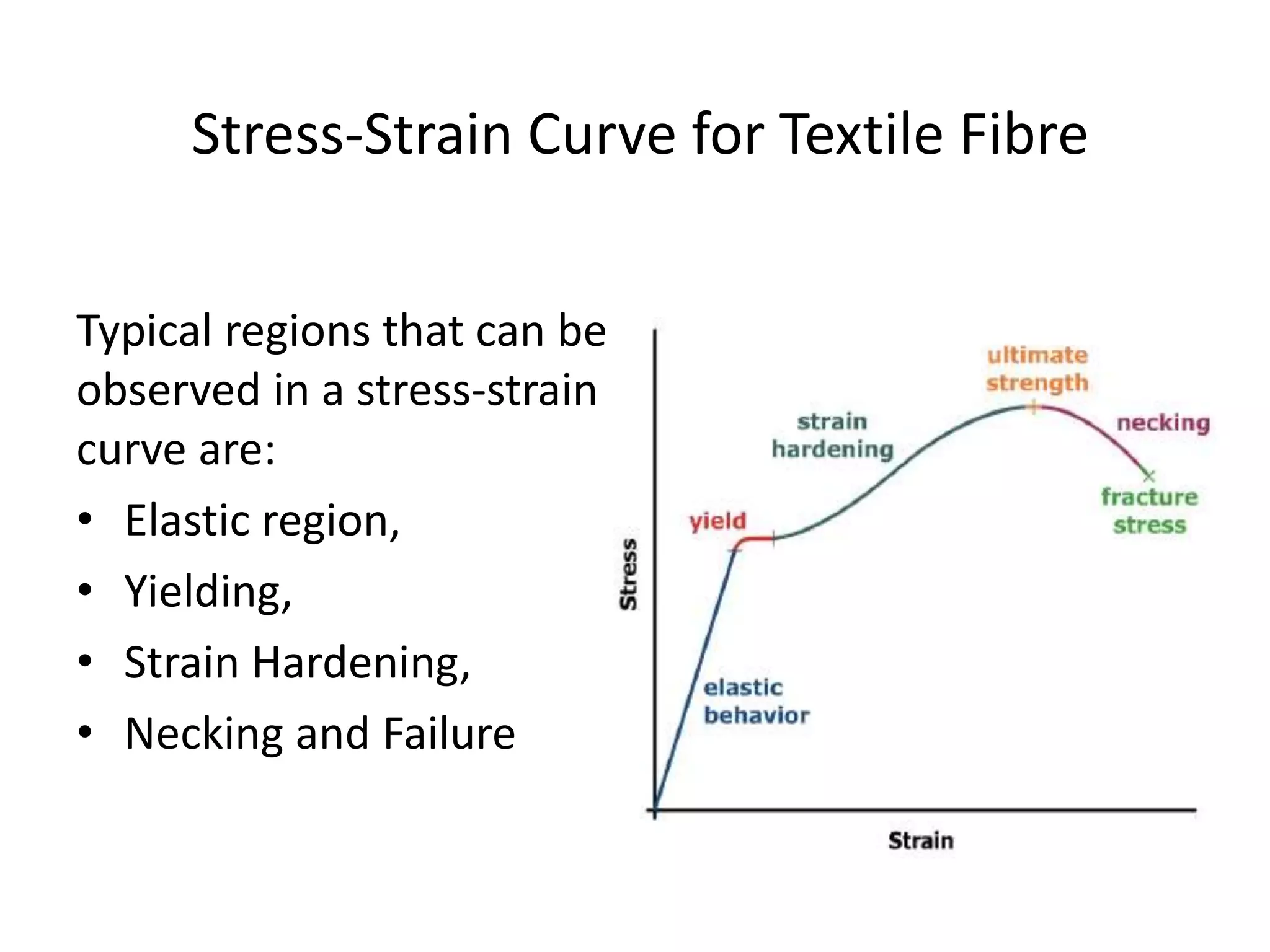
Typical regions that can be
observed in a stress-strain
curve are:
• Elastic region,
• Yielding,
• Strain Hardening,
• Necking and Failure
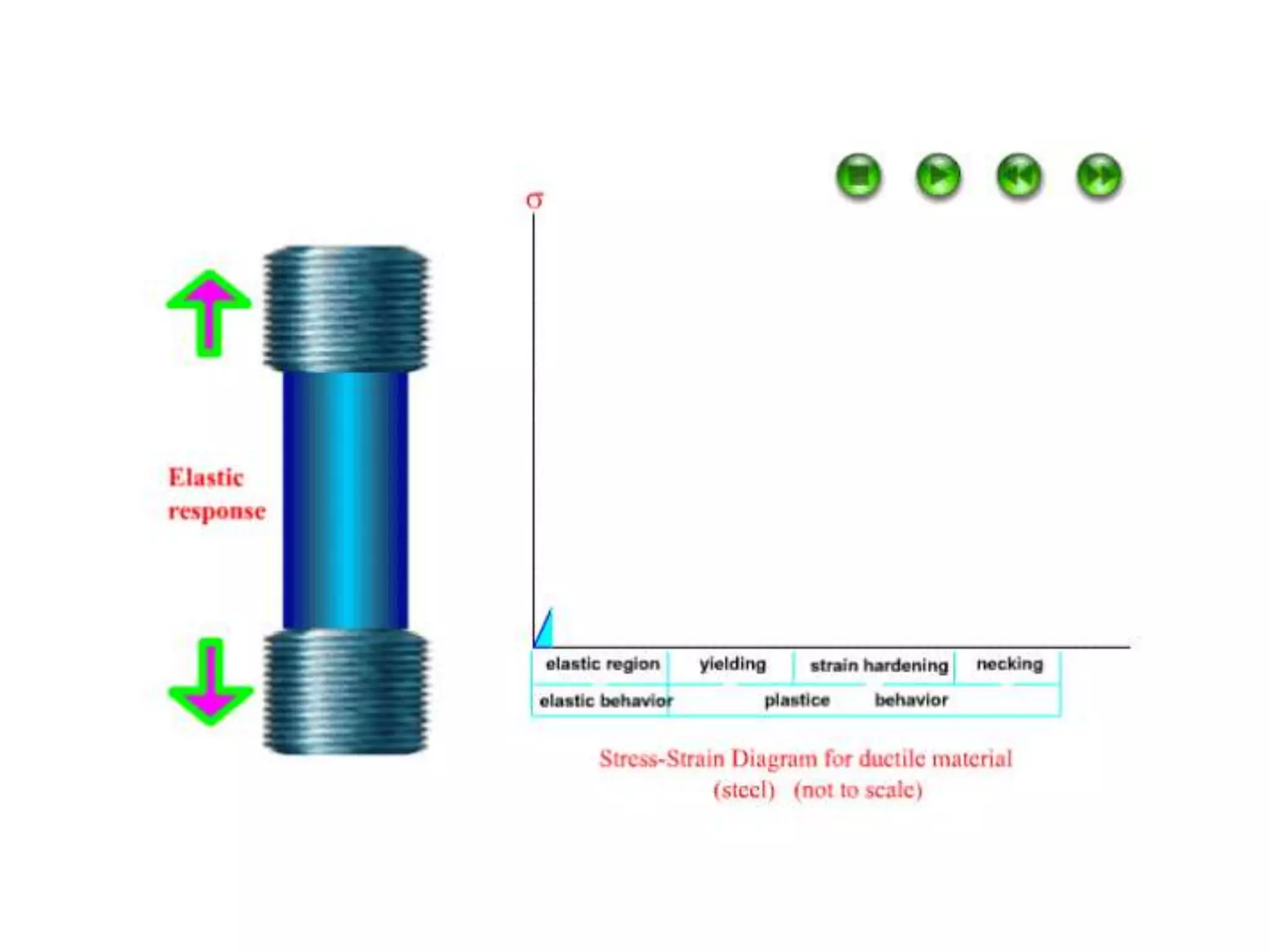
Stress-Strain Curve for Textile Fibre
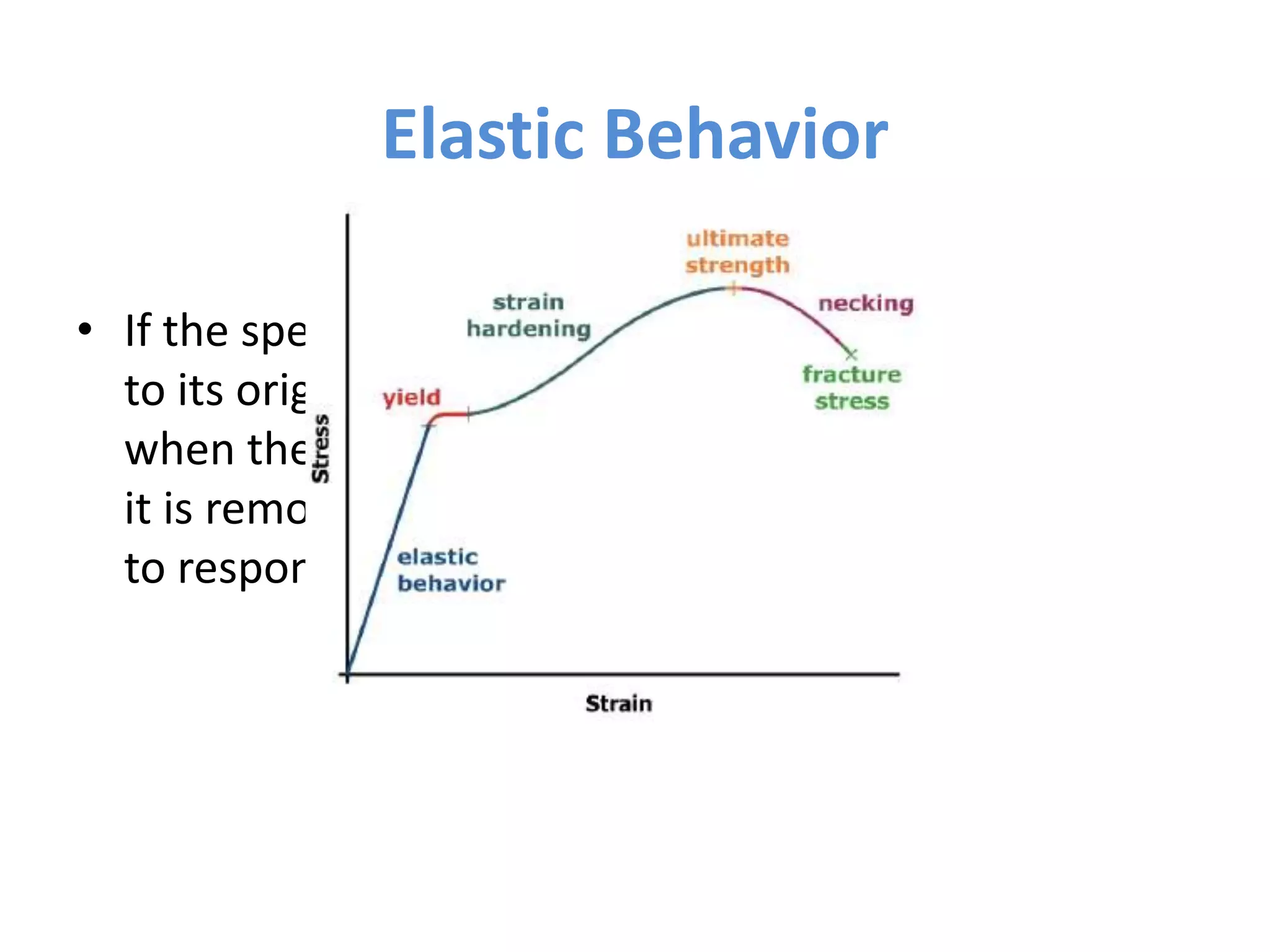
Elastic Behavior
• If the specimen returns
to its original length
when the load acting on
it is removed, it is said
to response elastically
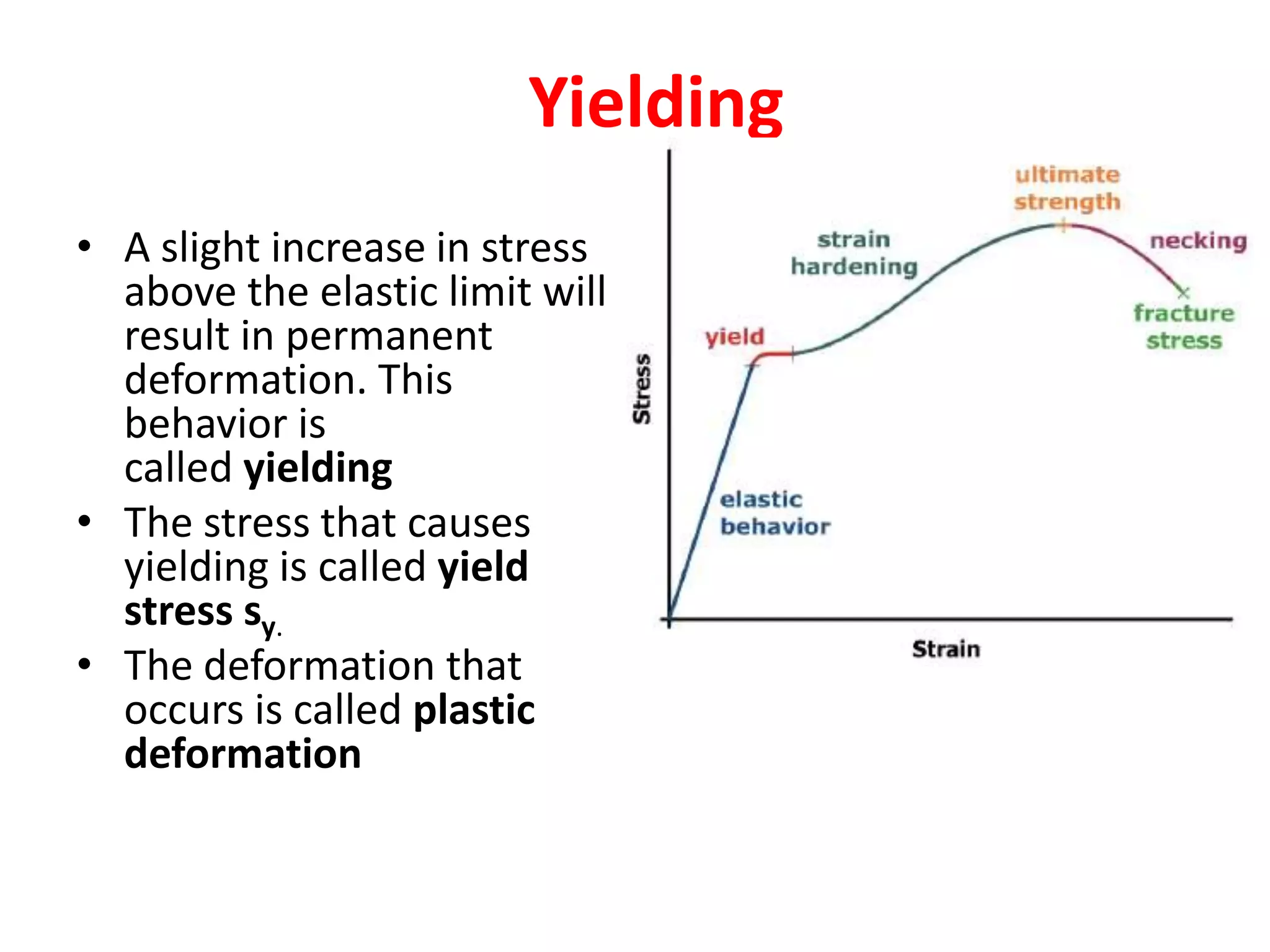
Yielding
• A slight increase in stress
above the elastic limit will
result in permanent
deformation. This
behavior is
called yielding
• The stress that causes
yielding is called yield
stress sy.
• The deformation that
occurs is called plastic
deformation
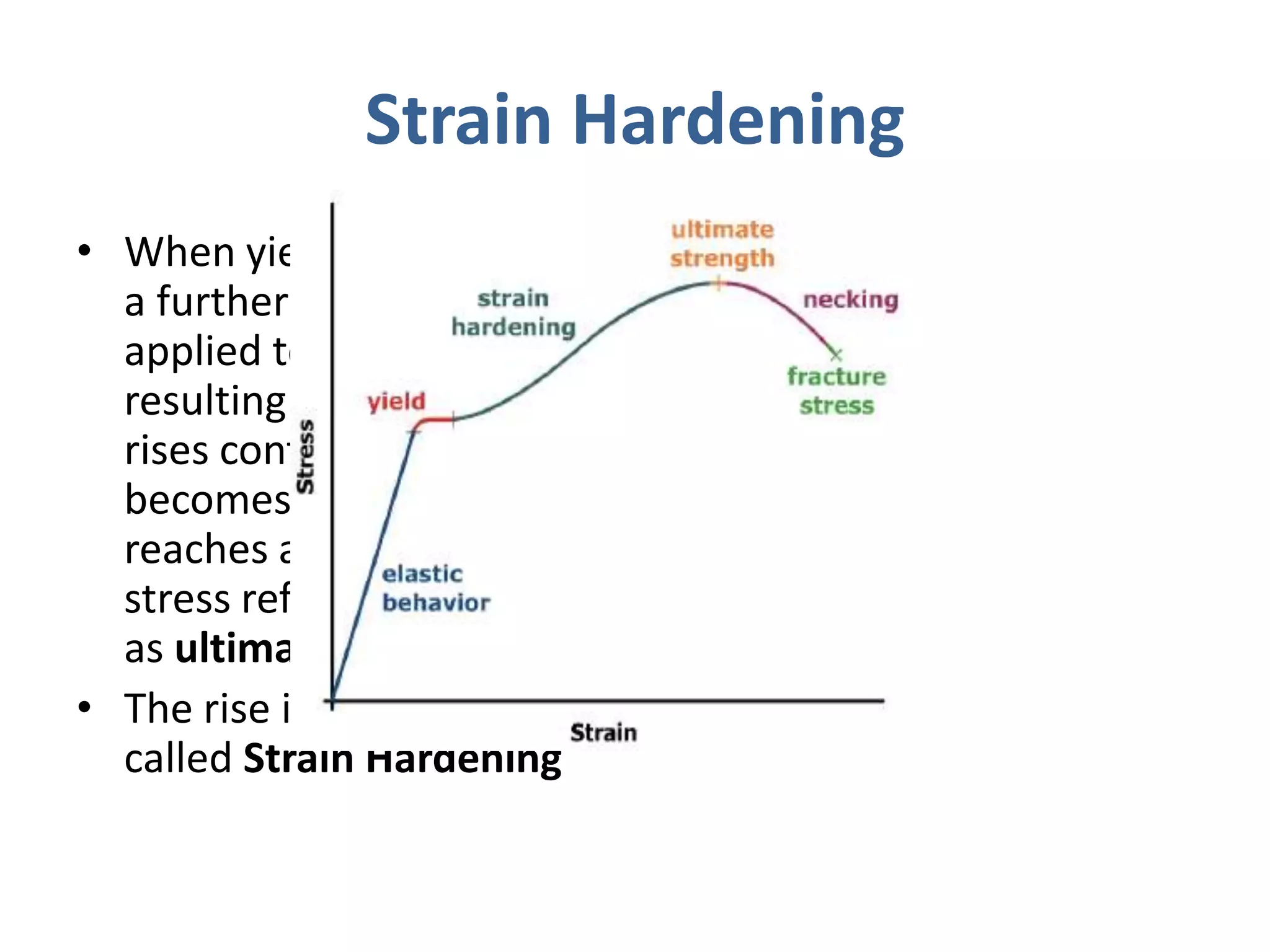
Strain Hardening
• When yielding has ended,
a further load can be
applied to the specimen,
resulting in a cure that
rises continuously but
becomes flatter until it
reaches a maximum
stress referred to
as ultimate stress, su.
• The rise in the curve is
called Strain Hardening
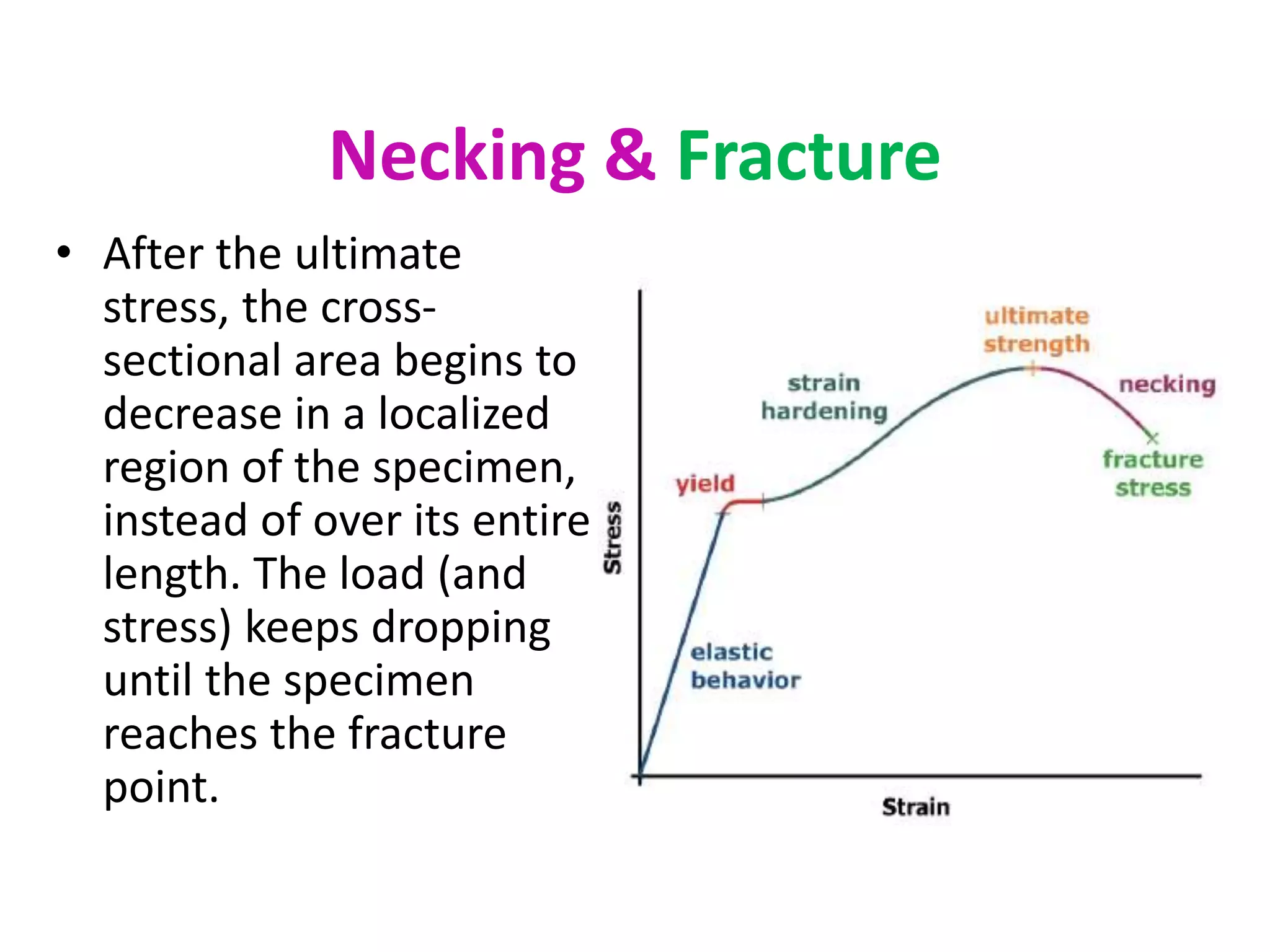
Necking & Fracture
• After the ultimate
stress, the cross-
sectional area begins to
decrease in a localized
region of the specimen,
instead of over its entire
length. The load (and
stress) keeps dropping
until the specimen
reaches the fracture
point.
Stress strain curve
Stress strain curve

Stress strain curve

  • 2.
    Submitted by: AsifAhmed Tonmoy ID: 131-23-3505 ; Sec: D (L3T1) Assignment topic: Stress-Strain Curve Submitted to: Lecturer Daffodil International University Mousumi Rahman Hashi
  • 3.
  • 4.
    What Is Stress? •A tension or compression stress created in a structural member by the application of a lengthwise load. • stress is defined as the force per unit area of a material. • i.e. stress = force / cross sectional area
  • 5.
    What Is Strain? •Increase (or decrease) in length resulting from a stress acting parallel to the longitudinal axis of the specimen. • strain is defined as extension per unit length. • Strain = extension / original length
  • 6.
  • 7.
    Typical regions thatcan be observed in a stress-strain curve are: • Elastic region, • Yielding, • Strain Hardening, • Necking and Failure Stress-Strain Curve for Textile Fibre
  • 8.
    Elastic Behavior • Ifthe specimen returns to its original length when the load acting on it is removed, it is said to response elastically
  • 9.
    Yielding • A slightincrease in stress above the elastic limit will result in permanent deformation. This behavior is called yielding • The stress that causes yielding is called yield stress sy. • The deformation that occurs is called plastic deformation
  • 10.
    Strain Hardening • Whenyielding has ended, a further load can be applied to the specimen, resulting in a cure that rises continuously but becomes flatter until it reaches a maximum stress referred to as ultimate stress, su. • The rise in the curve is called Strain Hardening
  • 11.
    Necking & Fracture •After the ultimate stress, the cross- sectional area begins to decrease in a localized region of the specimen, instead of over its entire length. The load (and stress) keeps dropping until the specimen reaches the fracture point.