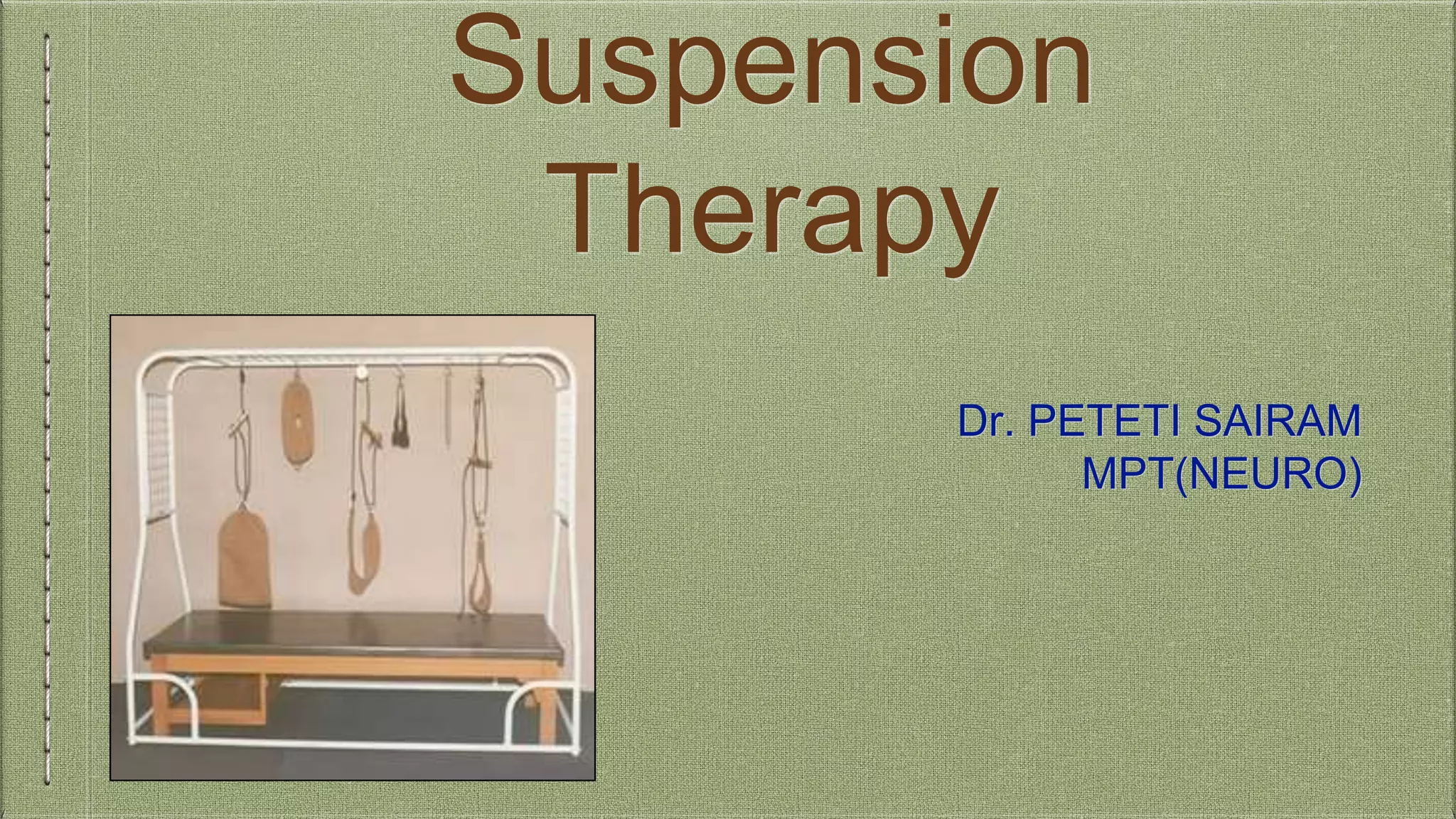
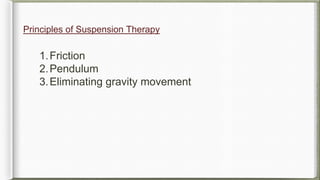
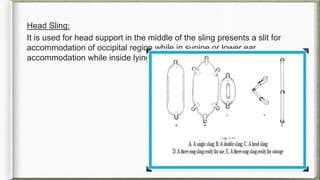
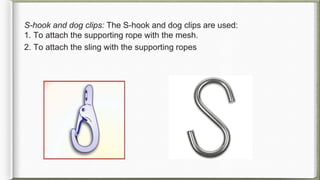
Suspension therapy involves supporting parts of the body using slings and pulleys to aid movement, particularly beneficial for conditions like spinal cord injuries and muscle weakness. It operates on principles such as friction, pendulum motion, and gravity reduction, facilitating exercises that improve muscle properties and range of motion. While it has advantages like reduced therapist workload and easier limb positioning, it also has disadvantages including complexity and material requirements.