STUDY SKILL #7 Stress Management
TAKE THE STRESS TEST Do any of these  apply to you?
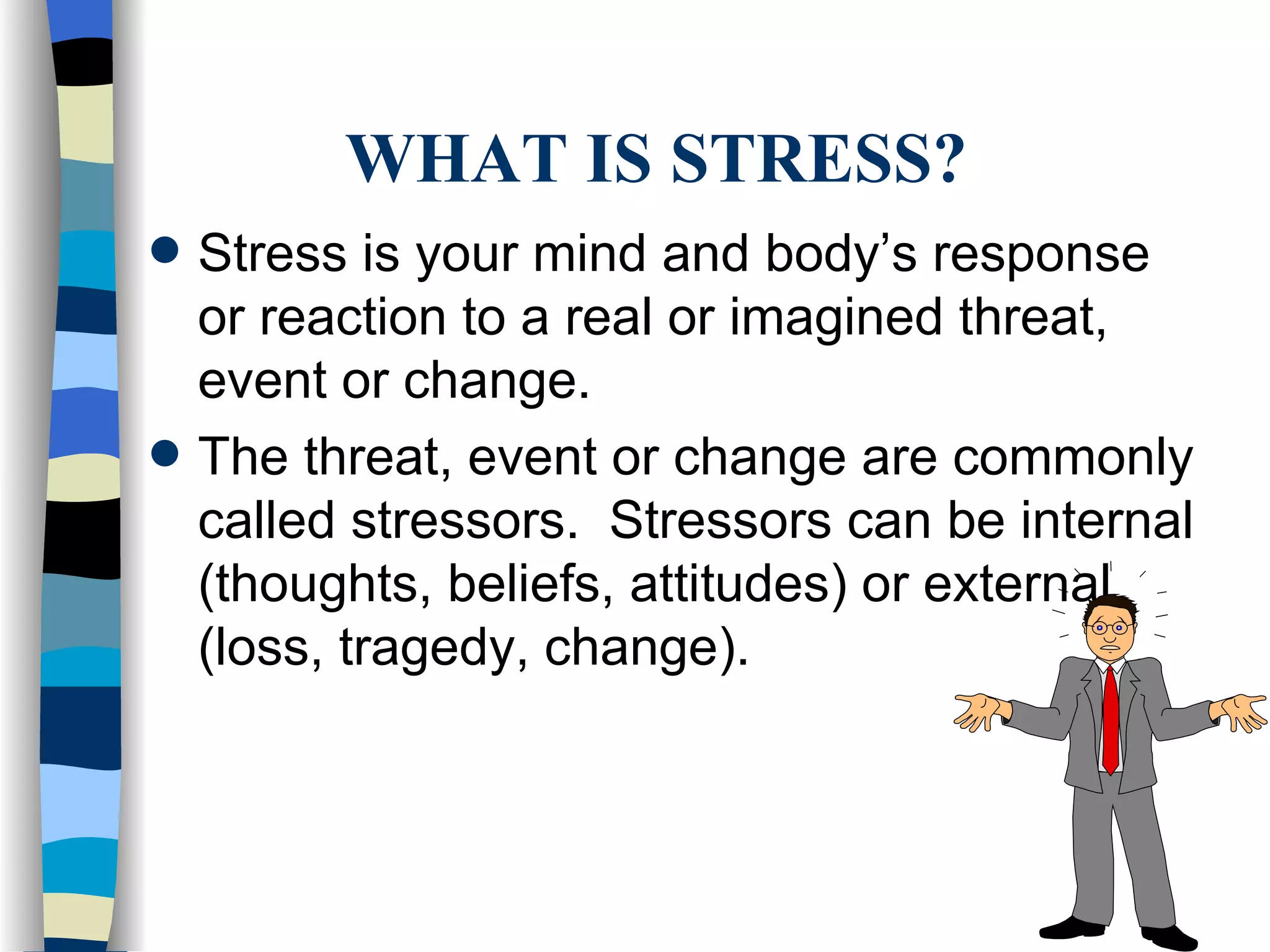
WHAT IS STRESS? Stress is your mind and body’s response or reaction to a real or imagined threat, event or change. The threat, event or change are commonly called stressors.  Stressors can be internal (thoughts, beliefs, attitudes) or external (loss, tragedy, change).
TYPES  OF  STRESS
EUSTRESS Eustress or positive stress occurs when your level of stress is high enough to motivate you to move into action to get things accomplished .
DISTRESS Distress or negative stress occurs when your level of stress is either too high or too low and your body and/or mind begin to respond negatively to the stressors.
STAGES OF STRESS
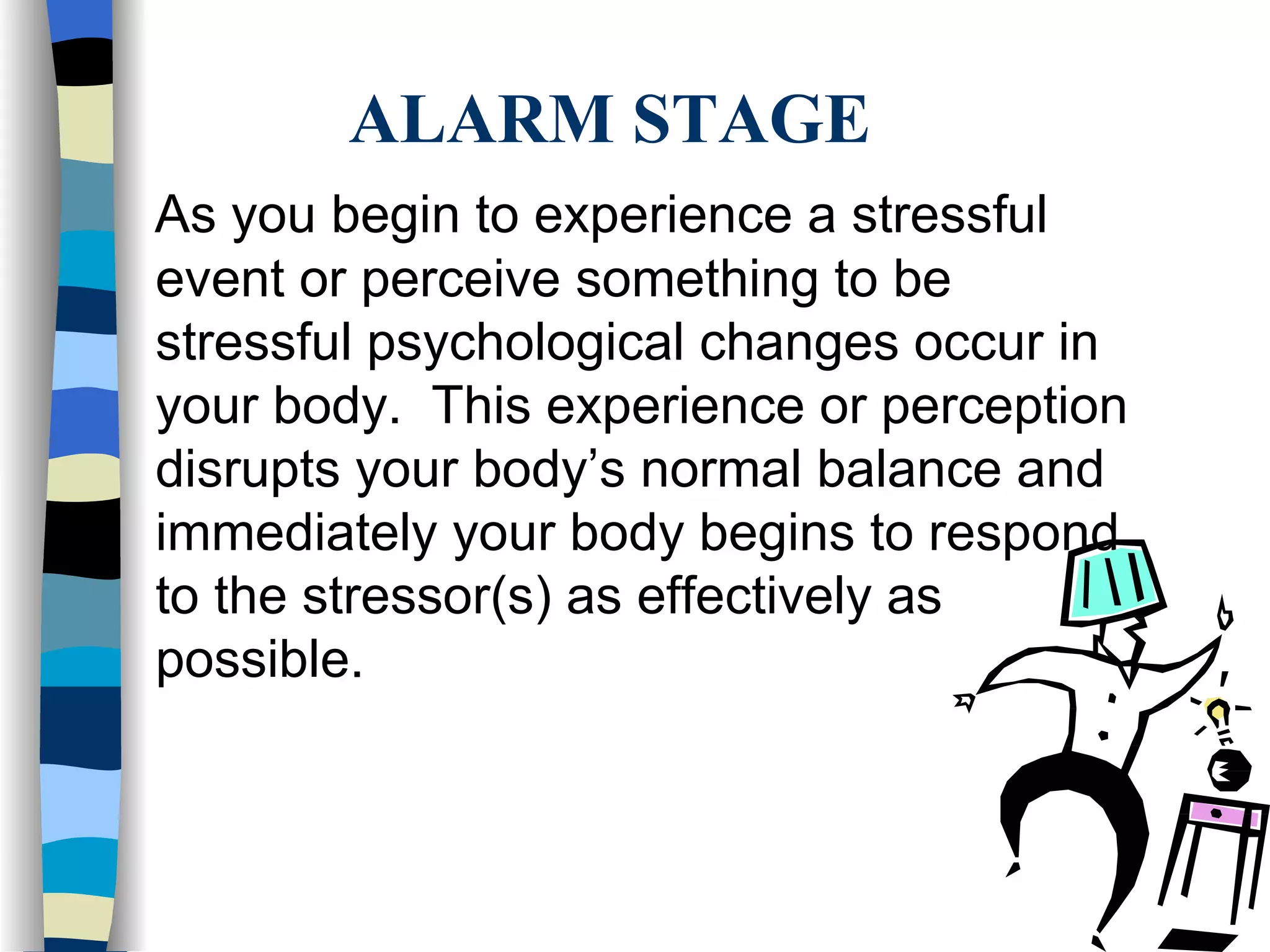
ALARM STAGE As you begin to experience a stressful event or perceive something to be stressful psychological changes occur in your body.  This experience or perception disrupts your body’s normal balance and immediately your body begins to respond to the stressor(s) as effectively as possible.
EXAMPLES Cardiac - increased heart rate Respiratory - increased respiration Skin - decreased temperature Hormonal - increased stimulation of adrenal genes which produce an adrenal rush.
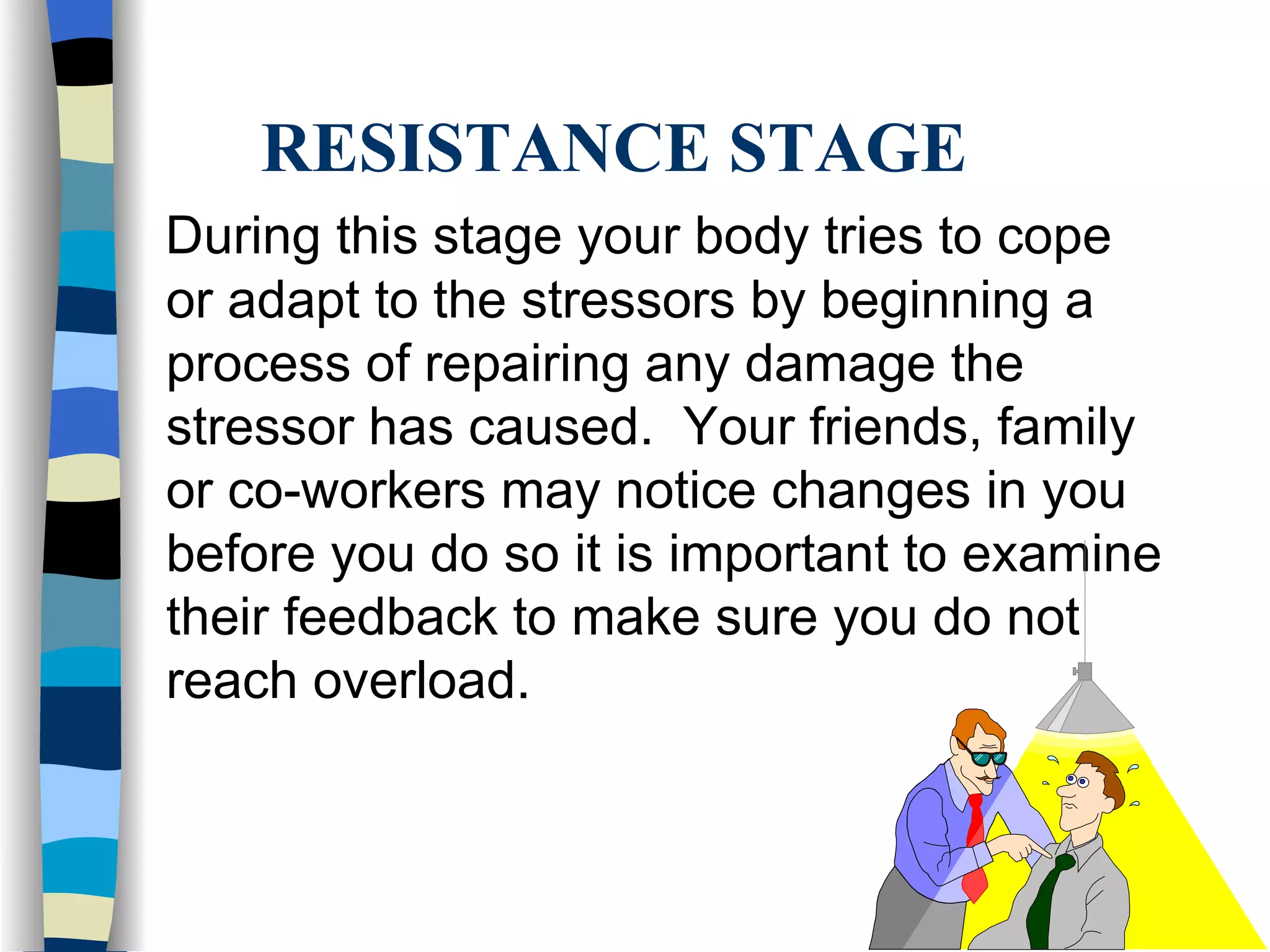
RESISTANCE STAGE During this stage your body tries to cope or adapt to the stressors by beginning a process of repairing any damage the stressor has caused.  Your friends, family or co-workers may notice changes in you before you do so it is important to examine their feedback to make sure you do not reach overload.
EXAMPLES Tearfulness Fear Anxiety Panic Guilt Agitation Depression Overwhelmed.
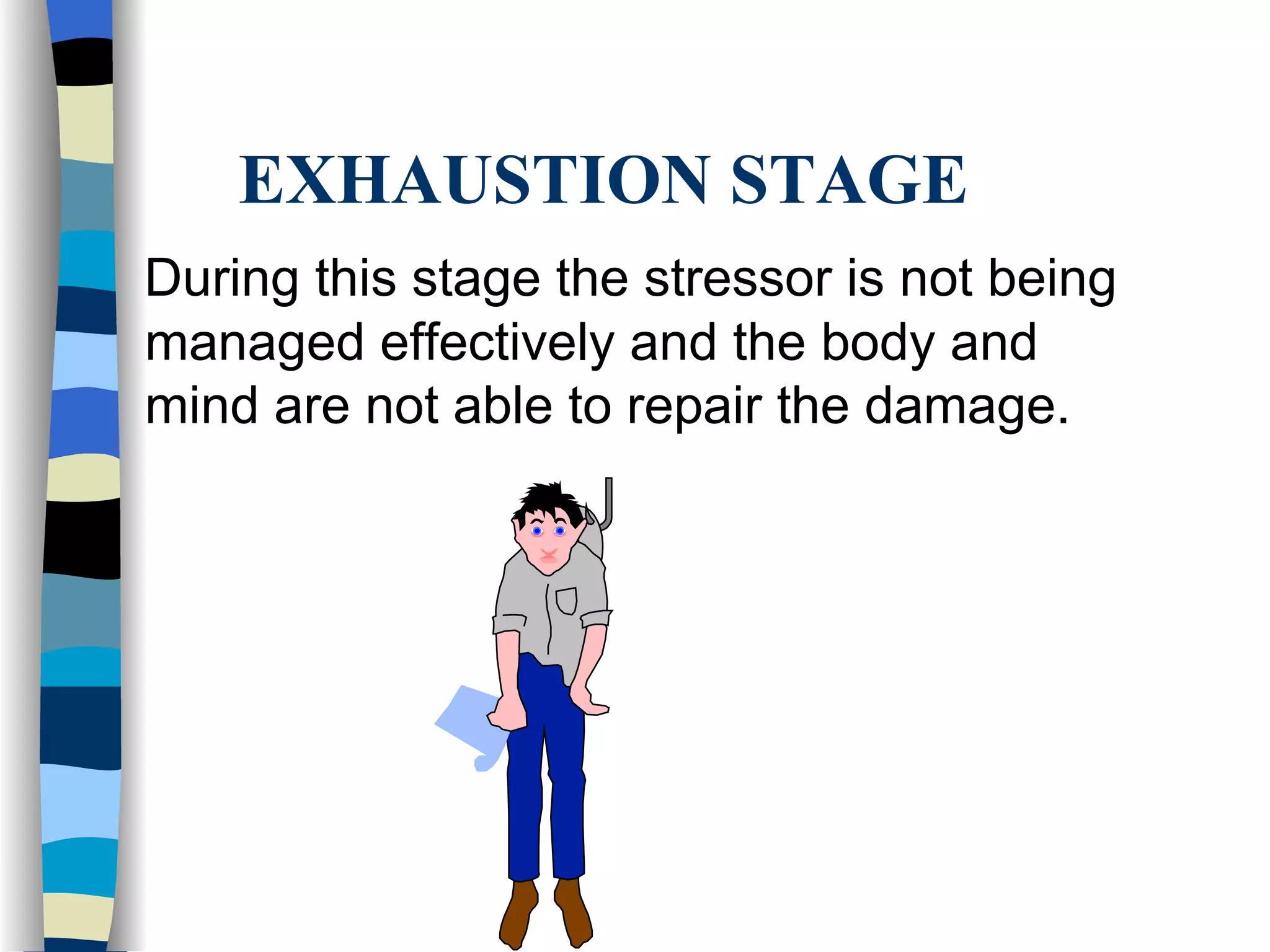
EXHAUSTION STAGE During this stage the stressor is not being managed effectively and the body and mind are not able to repair the damage.
EXAMPLES Digestive disorders Withdrawal Headaches Tension Insomnia Loss of temper
Suggestions for Your  Stress Quiz Responses
If you said yes to many  work stressors , you might consider one of the following… Consult with a counselor about time management and/or priority setting Seek out a tutor or other study skills help Talk to the career center about work style
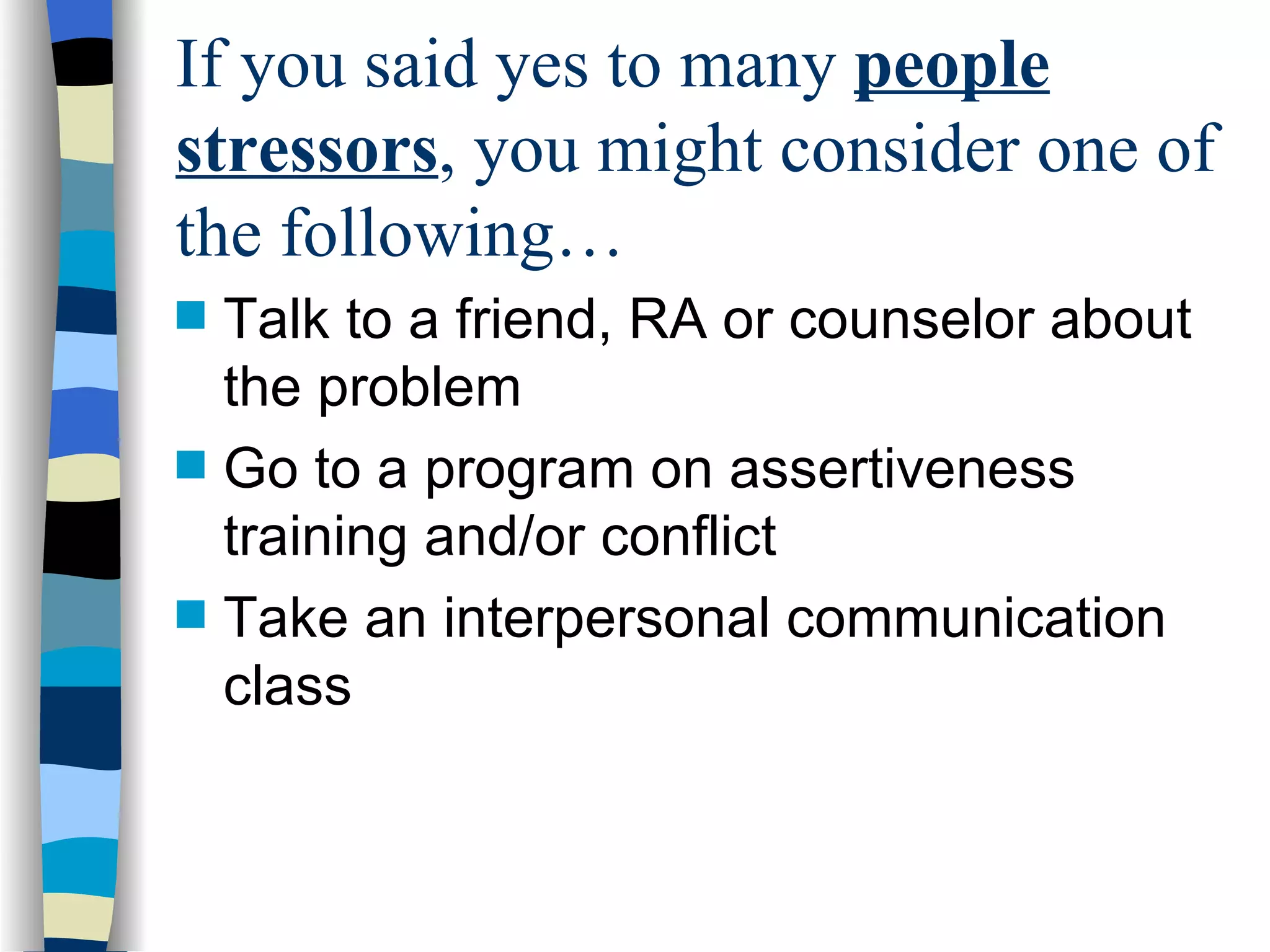
If you said yes to many  people stressors , you might consider one of the following… Talk to a friend, RA or counselor about the problem Go to a program on assertiveness training and/or conflict Take an interpersonal communication class
If you said yes to many  mind stressors , you are experiencing a lot of internally generated stress. Information or counseling on self talk, irrational beliefs and reinterpretation might be a good place to start.
If you said yes to many  body stressors , then try the following… Exercise regularly Choose healthy foods Change your environment (lighting, space, etc.) Reduce or eliminate caffeine, nicotine and alcohol intake Get enough sleep
I’M IN CONTROL DISTRESS RELIEF STRATEGIES Feeling good about yourselves can be an effective buffer against stress. Eliminate unnecessary worries. Most worries are either passed on to us by another or conjured up in our imagination.
GET PHYSICAL Relax neck and shoulders Take a stretch Get a massage Exercise GET MENTAL Count to 10 Control your thoughts Fantasize Congratulate yourself Ignore the problem if appropriate, after evaluation Perform self maintenance Talk to a counselor DISTRESS RELIEF STRATEGIES
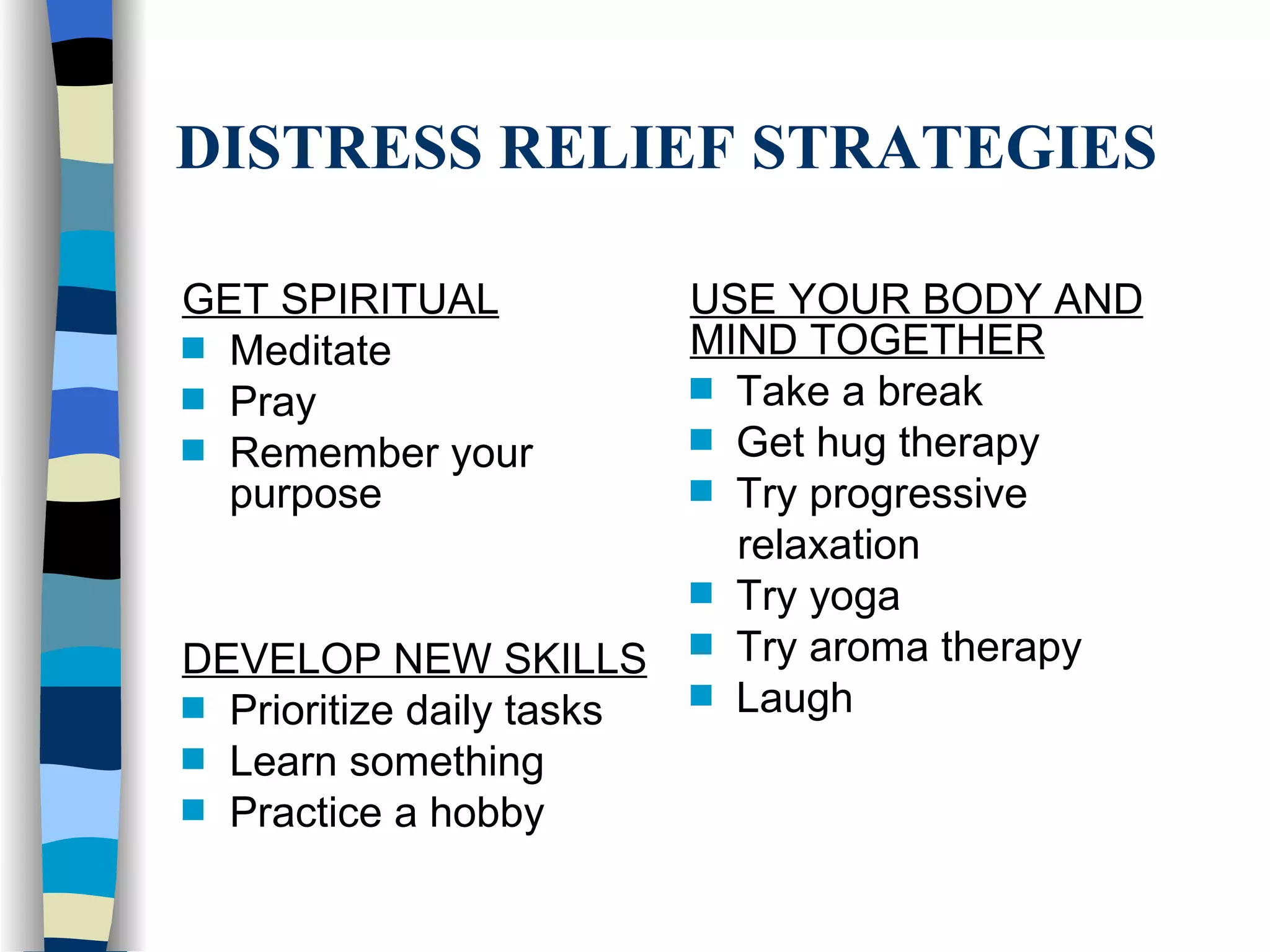
DISTRESS RELIEF STRATEGIES GET SPIRITUAL Meditate Pray Remember your purpose DEVELOP NEW SKILLS Prioritize daily tasks Learn something Practice a hobby USE YOUR BODY AND MIND TOGETHER Take a break Get hug therapy Try progressive relaxation Try yoga Try aroma therapy Laugh

Stress Management

  • 1.
    STUDY SKILL #7Stress Management
  • 2.
    TAKE THE STRESSTEST Do any of these apply to you?
  • 3.
    WHAT IS STRESS?Stress is your mind and body’s response or reaction to a real or imagined threat, event or change. The threat, event or change are commonly called stressors. Stressors can be internal (thoughts, beliefs, attitudes) or external (loss, tragedy, change).
  • 4.
    TYPES OF STRESS
  • 5.
    EUSTRESS Eustress orpositive stress occurs when your level of stress is high enough to motivate you to move into action to get things accomplished .
  • 6.
    DISTRESS Distress ornegative stress occurs when your level of stress is either too high or too low and your body and/or mind begin to respond negatively to the stressors.
  • 7.
  • 8.
    ALARM STAGE Asyou begin to experience a stressful event or perceive something to be stressful psychological changes occur in your body. This experience or perception disrupts your body’s normal balance and immediately your body begins to respond to the stressor(s) as effectively as possible.
  • 9.
    EXAMPLES Cardiac -increased heart rate Respiratory - increased respiration Skin - decreased temperature Hormonal - increased stimulation of adrenal genes which produce an adrenal rush.
  • 10.
    RESISTANCE STAGE Duringthis stage your body tries to cope or adapt to the stressors by beginning a process of repairing any damage the stressor has caused. Your friends, family or co-workers may notice changes in you before you do so it is important to examine their feedback to make sure you do not reach overload.
  • 11.
    EXAMPLES Tearfulness FearAnxiety Panic Guilt Agitation Depression Overwhelmed.
  • 12.
    EXHAUSTION STAGE Duringthis stage the stressor is not being managed effectively and the body and mind are not able to repair the damage.
  • 13.
    EXAMPLES Digestive disordersWithdrawal Headaches Tension Insomnia Loss of temper
  • 14.
    Suggestions for Your Stress Quiz Responses
  • 15.
    If you saidyes to many work stressors , you might consider one of the following… Consult with a counselor about time management and/or priority setting Seek out a tutor or other study skills help Talk to the career center about work style
  • 16.
    If you saidyes to many people stressors , you might consider one of the following… Talk to a friend, RA or counselor about the problem Go to a program on assertiveness training and/or conflict Take an interpersonal communication class
  • 17.
    If you saidyes to many mind stressors , you are experiencing a lot of internally generated stress. Information or counseling on self talk, irrational beliefs and reinterpretation might be a good place to start.
  • 18.
    If you saidyes to many body stressors , then try the following… Exercise regularly Choose healthy foods Change your environment (lighting, space, etc.) Reduce or eliminate caffeine, nicotine and alcohol intake Get enough sleep
  • 19.
    I’M IN CONTROLDISTRESS RELIEF STRATEGIES Feeling good about yourselves can be an effective buffer against stress. Eliminate unnecessary worries. Most worries are either passed on to us by another or conjured up in our imagination.
  • 20.
    GET PHYSICAL Relaxneck and shoulders Take a stretch Get a massage Exercise GET MENTAL Count to 10 Control your thoughts Fantasize Congratulate yourself Ignore the problem if appropriate, after evaluation Perform self maintenance Talk to a counselor DISTRESS RELIEF STRATEGIES
  • 21.
    DISTRESS RELIEF STRATEGIESGET SPIRITUAL Meditate Pray Remember your purpose DEVELOP NEW SKILLS Prioritize daily tasks Learn something Practice a hobby USE YOUR BODY AND MIND TOGETHER Take a break Get hug therapy Try progressive relaxation Try yoga Try aroma therapy Laugh