CHAPTER 8 STRESS
DID YOU KNOW? STRESS IS A NATURAL PART OF LIKE? STRESS IN YOUR LIFE STRESS OS THE REACTION OF THE BODY AND MIND TO EVERYDAY CHALLENGES AND DEMANDS PERCEPTION  IS THE ACT OF BECOMING AWARE THROUGH THE SENSES. HOW MUCH STRESS  YOU FEEL DEPENDS IN PART ON YOUR PERCEPTION OF EVENTS THAT CAUSE STRESS ONE WAY TO MANAGE STRESS IS TO CHANGE HOW YOU  PERCEIVE AND REACT  TO EVENTS THAT CAUSE STRESS.
REACTING TO STRESS STRESS IS NOT NECESSARILY GOOD OR BAD; IT CAN HAVE POSITIVE OR NEGATIVE EFFECTS.  EUSTRESS: GOOD DISTRESS: BAD SOMETIMES STRESS MOTIVTES YOU TO DO YOUR BEST THE EFFECTS OF STRESS CAN BE UNHEALTHY, SUCH AS WHEN YOU’RE SO WORRIED ABOUT A TEST THAT YOU DON’T PERFORM WELL.
What Causes Stress? A Stressor is anything that causes stress. Some stressors affect different people in different ways Categories of Stressors Biological Environmental Cognitive/thinking Personal Behavior Life Situations
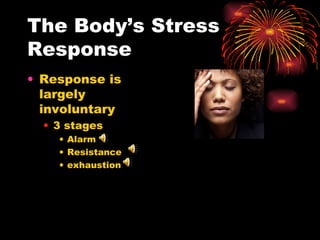
The Body’s Stress Response Response is largely involuntary 3 stages Alarm Resistance exhaustion
Stress and your health Prolonged stress can have negative effects on all aspects of your health. Sometime stress can lead to a  Psychosomatic response,  a physical reaction that results from stress rather than an injury or illness. headache
Taking Control of Chronic Stress One type of prolonged stress is chronic stress, stress associated with long-term problems that are beyond a person’s control Strategies for control Engage in physical activity look for support among f and f Find a hobby or activity that relaxes you Avoid using tobacco, alcohol, and other drugs.
Identifying Personal causes of Stress Life Events: graduating,moving,divorce Physical: Pollution, noise, injury Daily Hassels: time pressures, too many responsibilities, deadlines
Avoiding Stress with Refusal Skills Demonstrating refusal strategies may help you avoid stressful situations
Ways to Manage Stress Planning ahead.  Getting enough sleep Regular physical activity Balanced diet Avoid substance abuse Junk foods/comfort foods
Stress-Management Techniques Successful techniques for managing stress Redirect your energy Relax and laugh Keep a positive outlook Seek out support
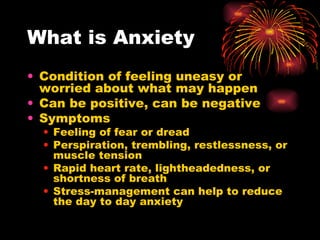
What is Anxiety Condition of feeling uneasy or worried about what may happen Can be positive, can be negative Symptoms  Feeling of fear or dread Perspiration, trembling, restlessness, or muscle tension Rapid heart rate, lightheadedness, or shortness of breath Stress-management can help to reduce the day to day anxiety
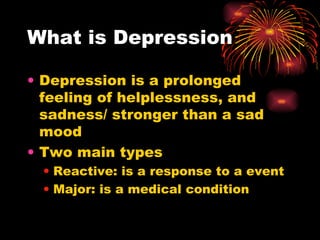
What is Depression Depression is a prolonged feeling of helplessness, and sadness/ stronger than a sad mood Two main types Reactive: is a response to a event Major: is a medical condition
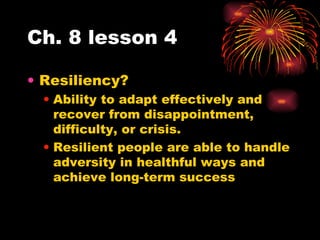
Ch. 8 lesson 4 Resiliency? Ability to adapt effectively and recover from disappointment, difficulty, or crisis. Resilient people are able to handle adversity in healthful ways and achieve long-term success
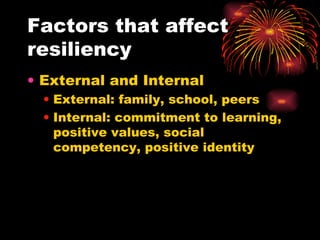
Factors that affect resiliency External and Internal External: family, school, peers Internal: commitment to learning, positive values, social competency, positive identity

Chapter 8 master

  • 1.
  • 2.
    DID YOU KNOW?STRESS IS A NATURAL PART OF LIKE? STRESS IN YOUR LIFE STRESS OS THE REACTION OF THE BODY AND MIND TO EVERYDAY CHALLENGES AND DEMANDS PERCEPTION IS THE ACT OF BECOMING AWARE THROUGH THE SENSES. HOW MUCH STRESS YOU FEEL DEPENDS IN PART ON YOUR PERCEPTION OF EVENTS THAT CAUSE STRESS ONE WAY TO MANAGE STRESS IS TO CHANGE HOW YOU PERCEIVE AND REACT TO EVENTS THAT CAUSE STRESS.
  • 3.
    REACTING TO STRESSSTRESS IS NOT NECESSARILY GOOD OR BAD; IT CAN HAVE POSITIVE OR NEGATIVE EFFECTS. EUSTRESS: GOOD DISTRESS: BAD SOMETIMES STRESS MOTIVTES YOU TO DO YOUR BEST THE EFFECTS OF STRESS CAN BE UNHEALTHY, SUCH AS WHEN YOU’RE SO WORRIED ABOUT A TEST THAT YOU DON’T PERFORM WELL.
  • 4.
    What Causes Stress?A Stressor is anything that causes stress. Some stressors affect different people in different ways Categories of Stressors Biological Environmental Cognitive/thinking Personal Behavior Life Situations
  • 5.
    The Body’s StressResponse Response is largely involuntary 3 stages Alarm Resistance exhaustion
  • 6.
    Stress and yourhealth Prolonged stress can have negative effects on all aspects of your health. Sometime stress can lead to a Psychosomatic response, a physical reaction that results from stress rather than an injury or illness. headache
  • 7.
    Taking Control ofChronic Stress One type of prolonged stress is chronic stress, stress associated with long-term problems that are beyond a person’s control Strategies for control Engage in physical activity look for support among f and f Find a hobby or activity that relaxes you Avoid using tobacco, alcohol, and other drugs.
  • 8.
    Identifying Personal causesof Stress Life Events: graduating,moving,divorce Physical: Pollution, noise, injury Daily Hassels: time pressures, too many responsibilities, deadlines
  • 9.
    Avoiding Stress withRefusal Skills Demonstrating refusal strategies may help you avoid stressful situations
  • 10.
    Ways to ManageStress Planning ahead. Getting enough sleep Regular physical activity Balanced diet Avoid substance abuse Junk foods/comfort foods
  • 11.
    Stress-Management Techniques Successfultechniques for managing stress Redirect your energy Relax and laugh Keep a positive outlook Seek out support
  • 12.
    What is AnxietyCondition of feeling uneasy or worried about what may happen Can be positive, can be negative Symptoms Feeling of fear or dread Perspiration, trembling, restlessness, or muscle tension Rapid heart rate, lightheadedness, or shortness of breath Stress-management can help to reduce the day to day anxiety
  • 13.
    What is DepressionDepression is a prolonged feeling of helplessness, and sadness/ stronger than a sad mood Two main types Reactive: is a response to a event Major: is a medical condition
  • 14.
    Ch. 8 lesson4 Resiliency? Ability to adapt effectively and recover from disappointment, difficulty, or crisis. Resilient people are able to handle adversity in healthful ways and achieve long-term success
  • 15.
    Factors that affectresiliency External and Internal External: family, school, peers Internal: commitment to learning, positive values, social competency, positive identity