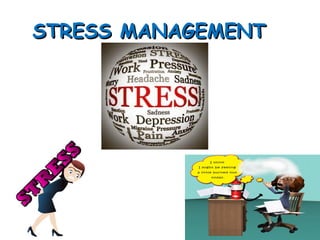
STRESS MANAGEMENTSTRESS MANAGEMENT
WHAT IS STRESS AND WHAT ARE
SOME OF THE THINGS THAT
“STRESS YOU OUT”?
WHAT IS STRESS?
“Stress is the physiological and
psychological state of disruption caused
by the presence of an unanticipated,
disruption, or stimulating event.”
STRESSORS
Stressors:-
Any threat, event or change.
Stressors can be internal (thoughts,
beliefs, attitudes) or external (loss,
tragedy, change).
LEVELS OF STRESS
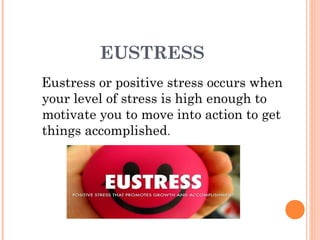
EUSTRESS
Eustress or positive stress occurs when
your level of stress is high enough to
motivate you to move into action to get
things accomplished.
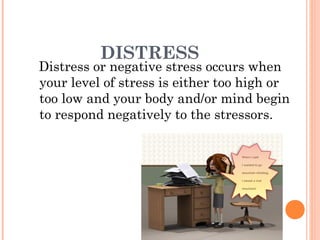
DISTRESS
Distress or negative stress occurs when
your level of stress is either too high or
too low and your body and/or mind begin
to respond negatively to the stressors.
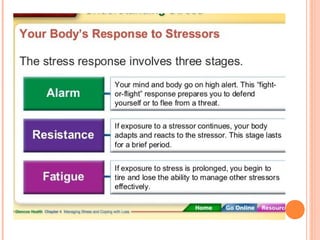
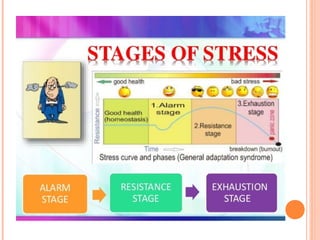
STAGES OF STRESS
-Alarm
-Resistance
-Exhaustion
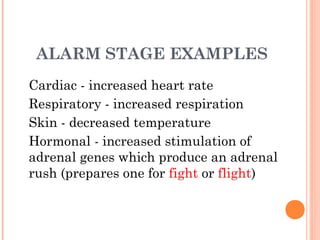
ALARM STAGE EXAMPLES
Cardiac - increased heart rate
Respiratory - increased respiration
Skin - decreased temperature
Hormonal - increased stimulation of
adrenal genes which produce an adrenal
rush (prepares one for fight or flight)
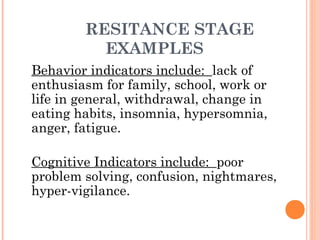
RESITANCE STAGE
EXAMPLES
Behavior indicators include: lack of
enthusiasm for family, school, work or
life in general, withdrawal, change in
eating habits, insomnia, hypersomnia,
anger, fatigue.
Cognitive Indicators include: poor
problem solving, confusion, nightmares,
hyper-vigilance.
RESISTANCE STAGE
MORE EXAMPLES
Emotional indicators include:
tearfulness
fear
anxiety
panic
guilt
agitation
depression
overwhelmed.
EXHAUSTION STAGE
EXAMPLES
Digestive disorders, withdrawal,
headaches, tension, insomnia, loss of
temper.
STRESS CONTROL – ABC
STRATEGY
 A: Awareness
Ask questions like:
- What causes you to stress?
- How do you react to potentially stressful
situation?
 B: Balance
With the understanding that there is a fine line
between eustress and distress (good and bad
stress)….
- How much stress can I handle before it becomes
distress?
 C: Control
- What can I do to combat the negative aspects of
stress?
STRESS CONTROL – ABC
STRATEGY CONTD.
I’M IN CONTROL - DISTRESS
RELIEF STRATEGIES
 Feeling good about yourselves can be an effective buffer against
stress. Eliminate unnecessary worries. Most worries are either
passed on to us by another or conjured up in our imagination.
 GET PHYSICAL
 1. Relax neck and shoulders
 2. Take a stretch
 3. Get a massage
 4. Exercise
 GET MENTAL
 5. Count to 10
 6. Control your thoughts
 7. Fantasize
 8. Congratulate yourself
 9. Ignore the problem if appropriate, after evaluation
 10. Perform self maintenance
 11. Talk to a counselor
I’M IN CONTROL - DISTRESS
RELIEF STRATEGIES
 GET SPIRITUAL
 12. Meditate
 13. Pray
 14. Remember your purpose
 USE YOUR BODY AND MIND TOGETHER
 15. Take a break
 16. Get hug therapy
 17. Try progressive relaxation
 18. Try yoga
 19. Try aroma therapy
 20. Laugh
 DEVELOP NEW SKILLS
 21. Prioritize daily tasks
 22. Learn something
 23. Practice a hobby
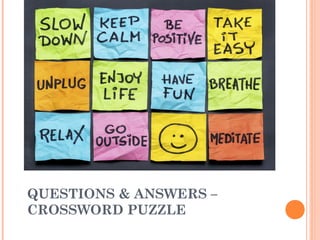
QUESTIONS & ANSWERS –
CROSSWORD PUZZLE

Stress management presentation - 26.06.17

  • 1.
  • 2.
    WHAT IS STRESSAND WHAT ARE SOME OF THE THINGS THAT “STRESS YOU OUT”?
  • 3.
    WHAT IS STRESS? “Stressis the physiological and psychological state of disruption caused by the presence of an unanticipated, disruption, or stimulating event.”
  • 4.
    STRESSORS Stressors:- Any threat, eventor change. Stressors can be internal (thoughts, beliefs, attitudes) or external (loss, tragedy, change).
  • 5.
  • 6.
    EUSTRESS Eustress or positivestress occurs when your level of stress is high enough to motivate you to move into action to get things accomplished.
  • 7.
    DISTRESS Distress or negativestress occurs when your level of stress is either too high or too low and your body and/or mind begin to respond negatively to the stressors.
  • 8.
  • 11.
    ALARM STAGE EXAMPLES Cardiac- increased heart rate Respiratory - increased respiration Skin - decreased temperature Hormonal - increased stimulation of adrenal genes which produce an adrenal rush (prepares one for fight or flight)
  • 12.
    RESITANCE STAGE EXAMPLES Behavior indicatorsinclude: lack of enthusiasm for family, school, work or life in general, withdrawal, change in eating habits, insomnia, hypersomnia, anger, fatigue. Cognitive Indicators include: poor problem solving, confusion, nightmares, hyper-vigilance.
  • 13.
    RESISTANCE STAGE MORE EXAMPLES Emotionalindicators include: tearfulness fear anxiety panic guilt agitation depression overwhelmed.
  • 14.
    EXHAUSTION STAGE EXAMPLES Digestive disorders,withdrawal, headaches, tension, insomnia, loss of temper.
  • 15.
    STRESS CONTROL –ABC STRATEGY  A: Awareness Ask questions like: - What causes you to stress? - How do you react to potentially stressful situation?  B: Balance With the understanding that there is a fine line between eustress and distress (good and bad stress)…. - How much stress can I handle before it becomes distress?
  • 16.
     C: Control -What can I do to combat the negative aspects of stress? STRESS CONTROL – ABC STRATEGY CONTD.
  • 17.
    I’M IN CONTROL- DISTRESS RELIEF STRATEGIES  Feeling good about yourselves can be an effective buffer against stress. Eliminate unnecessary worries. Most worries are either passed on to us by another or conjured up in our imagination.  GET PHYSICAL  1. Relax neck and shoulders  2. Take a stretch  3. Get a massage  4. Exercise  GET MENTAL  5. Count to 10  6. Control your thoughts  7. Fantasize  8. Congratulate yourself  9. Ignore the problem if appropriate, after evaluation  10. Perform self maintenance  11. Talk to a counselor
  • 18.
    I’M IN CONTROL- DISTRESS RELIEF STRATEGIES  GET SPIRITUAL  12. Meditate  13. Pray  14. Remember your purpose  USE YOUR BODY AND MIND TOGETHER  15. Take a break  16. Get hug therapy  17. Try progressive relaxation  18. Try yoga  19. Try aroma therapy  20. Laugh  DEVELOP NEW SKILLS  21. Prioritize daily tasks  22. Learn something  23. Practice a hobby
  • 19.
    QUESTIONS & ANSWERS– CROSSWORD PUZZLE