Presentation Skills for STUDENT’s
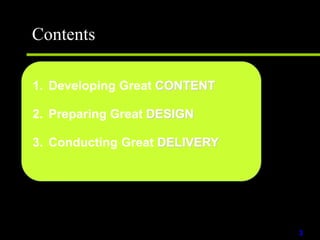
ContentsDeveloping Great CONTENTPreparing Great DESIGNConducting Great DELIVERY
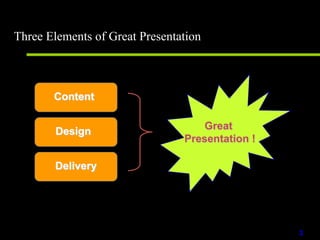
Three Elements of Great PresentationContentGreat Presentation !DesignDelivery
Developing Great CONTENT
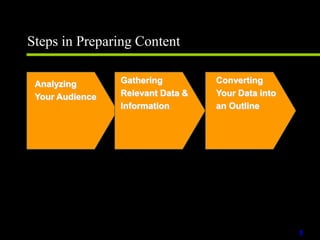
Steps in Preparing ContentGathering Relevant Data & InformationConverting Your Data into an OutlineAnalyzing Your Audience
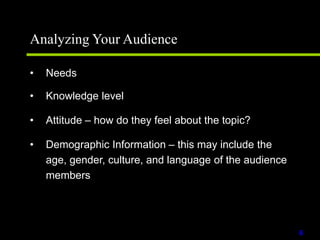
Analyzing Your AudienceNeeds
Knowledge level
Attitude – how do they feel about the topic?
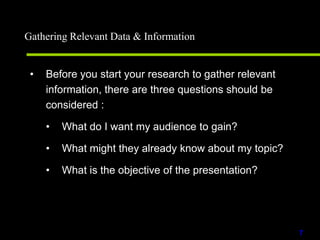
Demographic Information – this may include the age, gender, culture, and language of the audience membersGathering Relevant Data & InformationBefore you start your research to gather relevant information, there are three questions should be considered :
What do I want my audience to gain?
What might they already know about my topic?
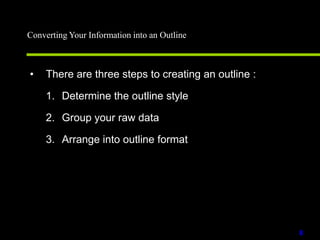
What is the objective of the presentation?Converting Your Information into an OutlineThere are three steps to creating an outline :Determine the outline styleGroup your raw dataArrange into outline format
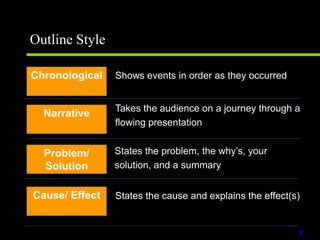
Outline StyleChronologicalShows events in order as they occurredTakes the audience on a journey through a flowing presentationNarrativeStates the problem, the why’s, your solution, and a summaryProblem/ SolutionCause/ EffectStates the cause and explains the effect(s)
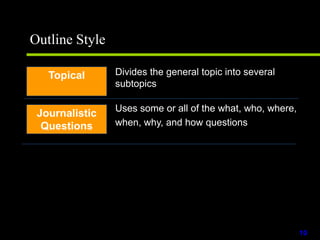
Outline StyleDivides the general topic into several subtopicsTopicalUses some or all of the what, who, where, when, why, and how questionsJournalistic Questions
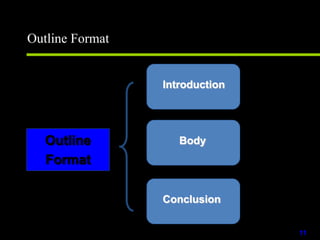
Outline FormatIntroductionOutline FormatBodyConclusion
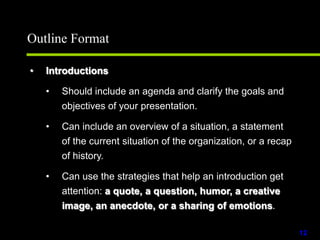
Outline FormatIntroductions
Should include an agenda and clarify the goals and objectives of your presentation.
Can include an overview of a situation, a statement of the current situation of the organization, or a recap of history.
Can use the strategies that help an introduction get attention: a quote, a question, humor, a creative image, an anecdote, or a sharing of emotions.Outline FormatBody
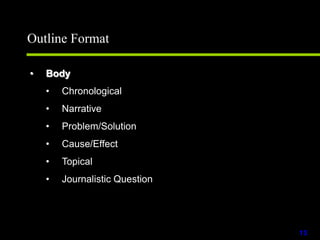
Chronological
Narrative
Problem/Solution
Cause/Effect
Topical
Journalistic QuestionOutline FormatConclusion
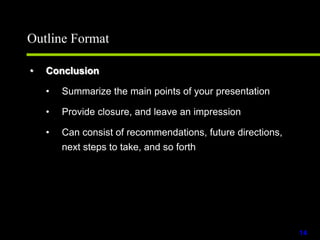
Summarize the main points of your presentation
Provide closure, and leave an impression
Can consist of recommendations, future directions, next steps to take, and so forthBuilding Great DESIGN
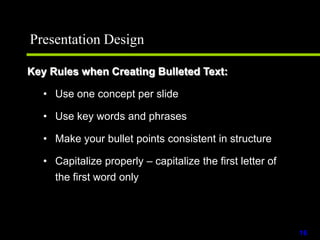
Presentation DesignKey Rules when Creating Bulleted Text:Use one concept per slide
Use key words and phrases
Make your bullet points consistent in structure
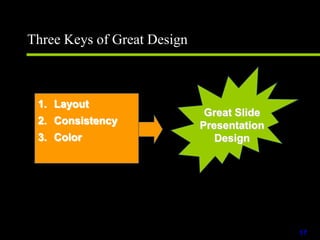
Capitalize properly – capitalize the first letter of the first word onlyThree Keys of Great DesignLayoutConsistencyColor Great Slide PresentationDesign
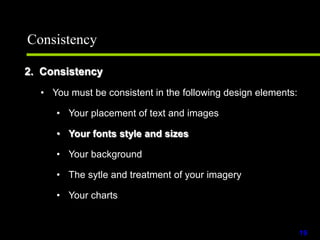
LayoutLayout Consider your layout to be like the skeleton of your presentation….Just as our skeleton support our bodies, your layout should support your message and provide structure.Consistency2.  ConsistencyYou must be consistent in the following design elements:
Your placement of text and images
Your fonts style and sizes
Your background
The sytle and treatment of your imagery
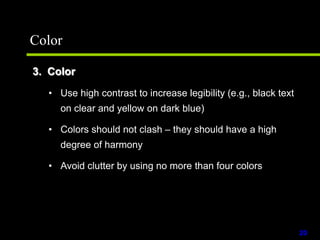
Your chartsColor3.  ColorUse high contrast to increase legibility (e.g., black text on clear and yellow on dark blue)
Colors should not clash – they should have a high degree of harmony
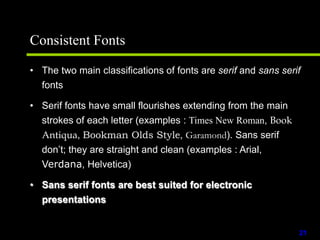
Avoid clutter by using no more than four colorsConsistent FontsThe two main classifications of fonts are serif and sans serif fonts
Serif fonts have small flourishes extending from the main strokes of each letter (examples : Times New Roman, Book Antiqua, Bookman Olds Style, Garamond). Sans serif don’t; they are straight and clean (examples : Arial, Verdana, Helvetica)
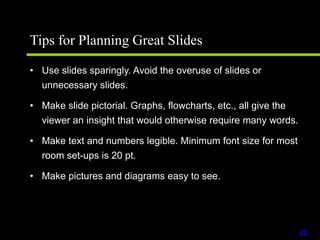
Sans serif fonts are best suited for electronic presentationsTips for Planning Great SlidesUse slides sparingly. Avoid the overuse of slides or unnecessary slides.
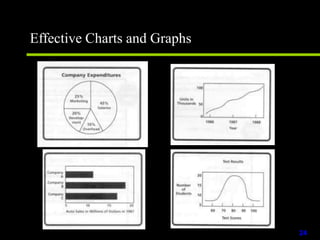
Make slide pictorial. Graphs, flowcharts, etc., all give the viewer an insight that would otherwise require many words.
Make text and numbers legible. Minimum font size for most room set-ups is 20 pt.
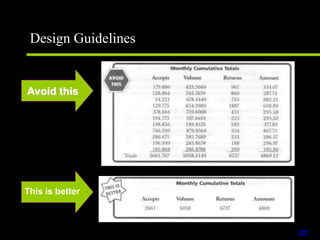
Make pictures and diagrams easy to see.Design GuidelinesAvoid thisThis is better
Effective Charts and Graphs
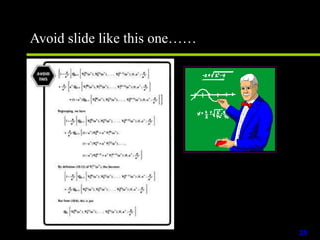
Avoid slide like this one……
Conducting Great DELIVERY

Presentation Skill For Student's

  • 1.
  • 2.
    ContentsDeveloping Great CONTENTPreparingGreat DESIGNConducting Great DELIVERY
  • 3.
    Three Elements ofGreat PresentationContentGreat Presentation !DesignDelivery
  • 4.
  • 5.
    Steps in PreparingContentGathering Relevant Data & InformationConverting Your Data into an OutlineAnalyzing Your Audience
  • 6.
  • 7.
  • 8.
    Attitude – howdo they feel about the topic?
  • 9.
    Demographic Information –this may include the age, gender, culture, and language of the audience membersGathering Relevant Data & InformationBefore you start your research to gather relevant information, there are three questions should be considered :
  • 10.
    What do Iwant my audience to gain?
  • 11.
    What might theyalready know about my topic?
  • 12.
    What is theobjective of the presentation?Converting Your Information into an OutlineThere are three steps to creating an outline :Determine the outline styleGroup your raw dataArrange into outline format
  • 13.
    Outline StyleChronologicalShows eventsin order as they occurredTakes the audience on a journey through a flowing presentationNarrativeStates the problem, the why’s, your solution, and a summaryProblem/ SolutionCause/ EffectStates the cause and explains the effect(s)
  • 14.
    Outline StyleDivides thegeneral topic into several subtopicsTopicalUses some or all of the what, who, where, when, why, and how questionsJournalistic Questions
  • 15.
  • 16.
  • 17.
    Should include anagenda and clarify the goals and objectives of your presentation.
  • 18.
    Can include anoverview of a situation, a statement of the current situation of the organization, or a recap of history.
  • 19.
    Can use thestrategies that help an introduction get attention: a quote, a question, humor, a creative image, an anecdote, or a sharing of emotions.Outline FormatBody
  • 20.
  • 21.
  • 22.
  • 23.
  • 24.
  • 25.
  • 26.
    Summarize the mainpoints of your presentation
  • 27.
    Provide closure, andleave an impression
  • 28.
    Can consist ofrecommendations, future directions, next steps to take, and so forthBuilding Great DESIGN
  • 29.
    Presentation DesignKey Ruleswhen Creating Bulleted Text:Use one concept per slide
  • 30.
    Use key wordsand phrases
  • 31.
    Make your bulletpoints consistent in structure
  • 32.
    Capitalize properly –capitalize the first letter of the first word onlyThree Keys of Great DesignLayoutConsistencyColor Great Slide PresentationDesign
  • 33.
    LayoutLayout Consider yourlayout to be like the skeleton of your presentation….Just as our skeleton support our bodies, your layout should support your message and provide structure.Consistency2. ConsistencyYou must be consistent in the following design elements:
  • 34.
    Your placement oftext and images
  • 35.
  • 36.
  • 37.
    The sytle andtreatment of your imagery
  • 38.
    Your chartsColor3. ColorUse high contrast to increase legibility (e.g., black text on clear and yellow on dark blue)
  • 39.
    Colors should notclash – they should have a high degree of harmony
  • 40.
    Avoid clutter byusing no more than four colorsConsistent FontsThe two main classifications of fonts are serif and sans serif fonts
  • 41.
    Serif fonts havesmall flourishes extending from the main strokes of each letter (examples : Times New Roman, Book Antiqua, Bookman Olds Style, Garamond). Sans serif don’t; they are straight and clean (examples : Arial, Verdana, Helvetica)
  • 42.
    Sans serif fontsare best suited for electronic presentationsTips for Planning Great SlidesUse slides sparingly. Avoid the overuse of slides or unnecessary slides.
  • 43.
    Make slide pictorial.Graphs, flowcharts, etc., all give the viewer an insight that would otherwise require many words.
  • 44.
    Make text andnumbers legible. Minimum font size for most room set-ups is 20 pt.
  • 45.
    Make pictures anddiagrams easy to see.Design GuidelinesAvoid thisThis is better
  • 46.
  • 47.
    Avoid slide likethis one……
  • 48.
  • 49.
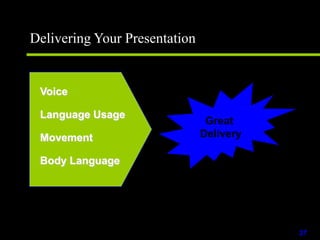
    Delivering Your PresentationVoiceLanguageUsageMovementBody LanguageGreat Delivery
  • 50.
    Managing Your VoiceTryto sound natural, so your rhythm and tone is appropriate to the message you are delivering
  • 51.
  • 52.
  • 53.
  • 54.
    PacingManaging Your VoiceSpeakloudly enough to reach all the members audience without overpowering those closest to you.VolumeAvoid to speak in monotone. Put more feeling into your voice and make it livelier by changes in your intonation.Intonation
  • 55.
    Managing Your VoiceFormost of us, this is natural – except when we are nervous or excited. Practice, and you can figure out what sounds natural and appropriate for the points you are making.Pacing
  • 56.
    Language UsageWhen youspeak, convey confidence and show interest in what you’re presenting. Speak with feeling.
  • 57.
    Use short sentencesand short, simple words.
  • 58.
    Speak slowly andclearly enough that everyone in your audience can understand every word.MovementIf possible, “work the room and work the audience”
  • 59.
    Move appropriately andwith purpose – don’t move simply because you’re nervous
  • 60.
    Your movements shouldbe natural and support your words and the rest of your presentation
  • 61.
    Don’t move constantly.Pause for effect. Stand still to make an important pointBody LanguageStand straight, but not stiff. You should radiate energy
  • 62.
    Be relaxed, becasual, but don’t be lazy
  • 63.
    Use your hands,arms and gestures. Just let your body react to how you feel
  • 64.
    Make good eyecontact – the rule of thumb for eye contact is three to five seconds per personBody LanguageDo not keep hands in your pockets
  • 65.
    Do not keephands “handcuffed” behind your back
  • 66.
    Do not keepyour arms crossed
  • 67.
    Do not puthands in “fig leaf” position
  • 68.
    Do not wringyour hands nervouslyIn advance of your presentationPractice – a lot. Don’t just think your presentation through : act it out, in front of friends, or family. Time each section of your presentation and develop a schedule.
  • 69.
    Memorize the firsttwo minutes of your presentation, so you breeze on through the time when the butterflies are most active.In the hours before presentationThink positive thought : visualize yourself feeling at ease with the audience
  • 70.
    Use affirmation (e.g.,“I can do this. I am prepared. It will go well”)
  • 71.
    Make sure allthe equipment is working properly
  • 72.
    Remember that thepeople in your audience are human too, just like you. They want you to succeed !When you enter the room:Focus on making your movements fluid and confident, neither too slow nor too fast
  • 73.
    Find a fewfriendly faces in the audience, for reassurance
  • 74.
    Smile. Show thatyou want to be there
  • 75.
    Be yourselfHow toHandle Tough SituationsProblem : Know-it-all – A participant who feels like more of an expert than you.Solution : Don’t fight it. Involve know-it-alls in your presentation.
  • 76.
    They may havesome great information to contribute. Allowing them to participate and share their thoughts will not only show how confident you are, but also help them get more out of your presentation.How to Handle Tough SituationsProblem : Unprepared participants – Those who haven’t prepared for the presentation as you requested.Solution : Be flexible. Take something out of your agenda to allow the group time to get up to speed.
  • 77.
    Keep in mindyour overall objective of the presentations.
  • 78.
    Don’t force youragenda; modify it to meet your objective.How to Handle Tough SituationsProblem : After-lunch nap time – One of the toughest times to keep people engaged.Solution : If you have anything to do with planning the lunch selections, go light – and no heavy desserts.
  • 79.
    If you reallyneed to get everyone going again, get out those icebreakers.How to Handle Tough SituationsProblem : Non-stop talker – A participant who carries on conversations during the presentation.Solution : Take a few moments to share what you talked about. This usually makes the talker feel more involved and want to stay engaged and participate with you instead of others.Planning for the QuestionsAnticipate the questions that might come up
  • 80.
    Listen carefully tothe questioner
  • 81.
    Repeat or rephrasethe question
  • 82.
  • 83.
    Go to thenext questionDealing with DisastersYou find out that the time allotted has been reduced. At the very worse, you can make your points, support the with the essentials, ask and answer the most likely questions on your list.
  • 84.
    The slide equipmentfails. You know then saying, “The show must go on”. Apologize to the audience and then add something like “Now return with me to a distant past, before Powerpoint, when all we had for presentations was our notes and perhaps a blackboard or flipcharts.” Then, make the most of your primitive tools.Dealing with DisastersYou tell a joke that falls flat. Ouch! Just shrug your shoulders and apologize: “I am sorry. I got that joke at a Henry Youngman clearance sale.” (You can choose your own comedian).
  • 85.
    You get nervousand flustered and lose track of where you are. Figure out where you are from your slides and notes. If you can’t, just be honest : “My brain has derailed. Who can back me up so I can the on the track again?”Recommended Further Readings:Jennifer Rotondo and Mike Rotondo, Presentation Skills for Managers, McGraw HillDavid A. Whetten and Kim S. Cameron, Developing Management Skills, Harpers Collins Publisher.
  • 87.
    Thanks For WatchingPleaseShareCheck out more great forwards atvparakhiya@rediffmail.comMo. No. :- 94279-13540