Stress and its Management
75% of adults reported experiencing moderate to high levels of stress
in the past month and nearly half reported that their stress has
increased in the past year
– American Psychological Association.
• Stress is the body’s reaction to a challenge/ threat in a situation.
• It is the “wear and tear” our minds and bodies experience as we attempt to cope
with our continuously changing environment
• When thinking about types of stress there are two perspectives to consider
Stress from a Physicist's perspective
Stress from Psychological perspective
• In Physics, stress is a reaction to an external force. Too much stress, and
an object breaks or changes form.
• In psychological perspective, there is "good" stress and "bad" stress.
• Good stress: Eustress
• Bad stress : Distress
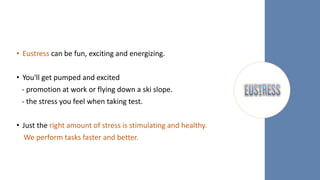
• Eustress can be fun, exciting and energizing.
• You'll get pumped and excited
- promotion at work or flying down a ski slope.
- the stress you feel when taking test.
• Just the right amount of stress is stimulating and healthy.
We perform tasks faster and better.
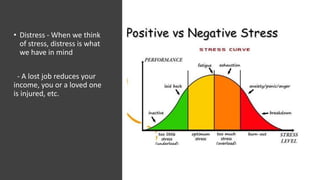
• Distress - When we think
of stress, distress is what
we have in mind
- A lost job reduces your
income, you or a loved one
is injured, etc.
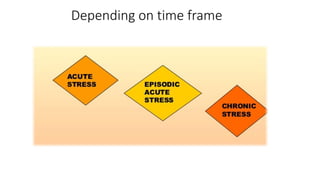
Depending on time frame
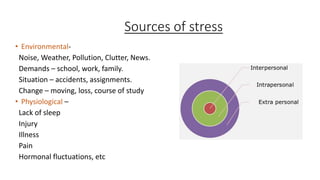
Sources of stress
• Environmental-
Noise, Weather, Pollution, Clutter, News.
Demands – school, work, family.
Situation – accidents, assignments.
Change – moving, loss, course of study
• Physiological –
Lack of sleep
Injury
Illness
Pain
Hormonal fluctuations, etc
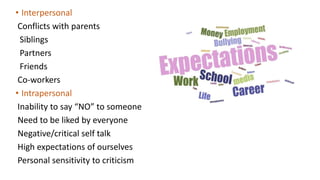
• Interpersonal
Conflicts with parents
Siblings
Partners
Friends
Co-workers
• Intrapersonal
Inability to say “NO” to someone
Need to be liked by everyone
Negative/critical self talk
High expectations of ourselves
Personal sensitivity to criticism
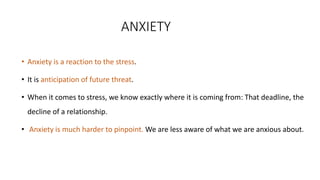
ANXIETY
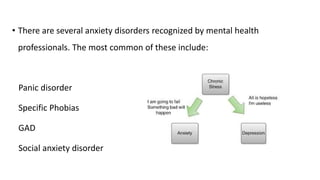
• Anxiety is a reaction to the stress.
• It is anticipation of future threat.
• When it comes to stress, we know exactly where it is coming from: That deadline, the
decline of a relationship.
• Anxiety is much harder to pinpoint. We are less aware of what we are anxious about.
• There are several anxiety disorders recognized by mental health
professionals. The most common of these include:
Panic disorder
Specific Phobias
GAD
Social anxiety disorder
If you don’t take time for stress management
it will cost you more time in the long run
What can we do to reduce our stress and turn down the
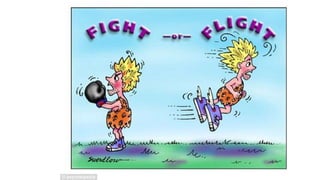
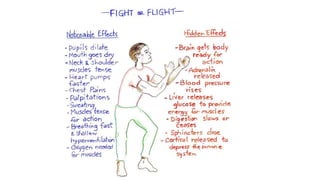
activity of our fight or flight response?
• Changing our external environment (our "reality") - make the
environment we live in safer.
• Changing our perceptions of reality - or change our mental
perspectives, our attitudes, our beliefs and our emotional reactions to
the events that happen to us.
• Know your source of stress
• Rate your stress level (1-10)
• What are the things you do to decrease your stress levels?
Short-Term Stress Relief “Quick fix"
• Take a break from the stressor
• Relaxation techniques
• Meditate
Long-Term Stress Relief Habits
• Organizational skills
• Assertive Communication
• Time Management
• Support system
• Healthy habits (Sleep, Diet, Regular exercise)
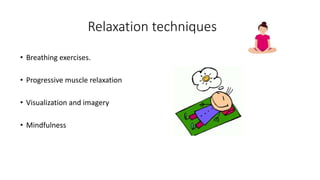
Relaxation techniques
• Breathing exercises.
• Progressive muscle relaxation
• Visualization and imagery
• Mindfulness
MINDFULNESS
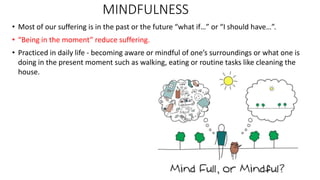
• Most of our suffering is in the past or the future “what if…” or “I should have…”.
• “Being in the moment” reduce suffering.
• Practiced in daily life - becoming aware or mindful of one’s surroundings or what one is
doing in the present moment such as walking, eating or routine tasks like cleaning the
house.
Cognitive–Behavioural Therapy (CBT)
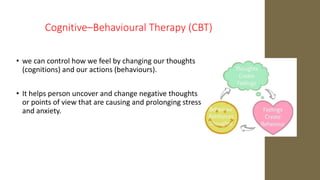
• we can control how we feel by changing our thoughts
(cognitions) and our actions (behaviours).
• It helps person uncover and change negative thoughts
or points of view that are causing and prolonging stress
and anxiety.
Thoughts
• Be able to objectively observe your thoughts
• Remember thoughts are not facts
• Know how thoughts trigger feelings
• Be able to shift perspective
• Be aware of and shift negative/critical/emotionally abusive self talk
• Noticing where your mind goes and bring it back to present
movement
• To be more effective in the movement, accept reality and decreasing
should and what-ifs
Feelings
• Increase emotion regulation skills
• Be able to notice emotions without pushing them away or making them
larger than useful
• Remember emotions are something you have, they are not who you
are
• Notice and practice the emotions that you want to feel more often
• Be able to sit with and accept some anxiety
Behaviour
• Be able to choose your behaviours
- create space between impulse and action, so you can make an effective choice
- behaviour can trigger emotions
• Be able to take accountability= objectively observe your behaviour and
consequence, take responsibility for your part
- Decrease habits of shame, denial, minimise, blame
• Choose behaviours consistent with the person you want to be and move towards
your ideal self
Things You Should Know About Stress
• 1. Stress affects everyone.
• 2. Not all stress is bad.
• 3. Long-term stress can harm your health.
• 4. There are ways to manage stress.
• 5. If you’re overwhelmed by stress, ask for help from a professional.
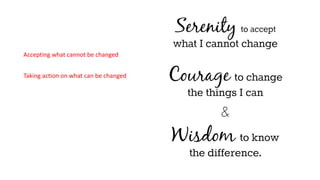
Accepting what cannot be changed
Taking action on what can be changed
Stress and its Management

Stress and its Management

  • 1.
    Stress and itsManagement
  • 2.
    75% of adultsreported experiencing moderate to high levels of stress in the past month and nearly half reported that their stress has increased in the past year – American Psychological Association.
  • 3.
    • Stress isthe body’s reaction to a challenge/ threat in a situation. • It is the “wear and tear” our minds and bodies experience as we attempt to cope with our continuously changing environment • When thinking about types of stress there are two perspectives to consider Stress from a Physicist's perspective Stress from Psychological perspective
  • 4.
    • In Physics,stress is a reaction to an external force. Too much stress, and an object breaks or changes form. • In psychological perspective, there is "good" stress and "bad" stress. • Good stress: Eustress • Bad stress : Distress
  • 5.
    • Eustress canbe fun, exciting and energizing. • You'll get pumped and excited - promotion at work or flying down a ski slope. - the stress you feel when taking test. • Just the right amount of stress is stimulating and healthy. We perform tasks faster and better.
  • 6.
    • Distress -When we think of stress, distress is what we have in mind - A lost job reduces your income, you or a loved one is injured, etc.
  • 7.
  • 8.
    Sources of stress •Environmental- Noise, Weather, Pollution, Clutter, News. Demands – school, work, family. Situation – accidents, assignments. Change – moving, loss, course of study • Physiological – Lack of sleep Injury Illness Pain Hormonal fluctuations, etc
  • 9.
    • Interpersonal Conflicts withparents Siblings Partners Friends Co-workers • Intrapersonal Inability to say “NO” to someone Need to be liked by everyone Negative/critical self talk High expectations of ourselves Personal sensitivity to criticism
  • 15.
    ANXIETY • Anxiety isa reaction to the stress. • It is anticipation of future threat. • When it comes to stress, we know exactly where it is coming from: That deadline, the decline of a relationship. • Anxiety is much harder to pinpoint. We are less aware of what we are anxious about.
  • 16.
    • There areseveral anxiety disorders recognized by mental health professionals. The most common of these include: Panic disorder Specific Phobias GAD Social anxiety disorder
  • 18.
    If you don’ttake time for stress management it will cost you more time in the long run
  • 19.
    What can wedo to reduce our stress and turn down the activity of our fight or flight response? • Changing our external environment (our "reality") - make the environment we live in safer. • Changing our perceptions of reality - or change our mental perspectives, our attitudes, our beliefs and our emotional reactions to the events that happen to us.
  • 20.
    • Know yoursource of stress • Rate your stress level (1-10) • What are the things you do to decrease your stress levels?
  • 21.
    Short-Term Stress Relief“Quick fix" • Take a break from the stressor • Relaxation techniques • Meditate
  • 22.
    Long-Term Stress ReliefHabits • Organizational skills • Assertive Communication • Time Management • Support system • Healthy habits (Sleep, Diet, Regular exercise)
  • 23.
    Relaxation techniques • Breathingexercises. • Progressive muscle relaxation • Visualization and imagery • Mindfulness
  • 24.
    MINDFULNESS • Most ofour suffering is in the past or the future “what if…” or “I should have…”. • “Being in the moment” reduce suffering. • Practiced in daily life - becoming aware or mindful of one’s surroundings or what one is doing in the present moment such as walking, eating or routine tasks like cleaning the house.
  • 25.
    Cognitive–Behavioural Therapy (CBT) •we can control how we feel by changing our thoughts (cognitions) and our actions (behaviours). • It helps person uncover and change negative thoughts or points of view that are causing and prolonging stress and anxiety.
  • 26.
    Thoughts • Be ableto objectively observe your thoughts • Remember thoughts are not facts • Know how thoughts trigger feelings • Be able to shift perspective • Be aware of and shift negative/critical/emotionally abusive self talk • Noticing where your mind goes and bring it back to present movement • To be more effective in the movement, accept reality and decreasing should and what-ifs
  • 27.
    Feelings • Increase emotionregulation skills • Be able to notice emotions without pushing them away or making them larger than useful • Remember emotions are something you have, they are not who you are • Notice and practice the emotions that you want to feel more often • Be able to sit with and accept some anxiety
  • 28.
    Behaviour • Be ableto choose your behaviours - create space between impulse and action, so you can make an effective choice - behaviour can trigger emotions • Be able to take accountability= objectively observe your behaviour and consequence, take responsibility for your part - Decrease habits of shame, denial, minimise, blame • Choose behaviours consistent with the person you want to be and move towards your ideal self
  • 29.
    Things You ShouldKnow About Stress • 1. Stress affects everyone. • 2. Not all stress is bad. • 3. Long-term stress can harm your health. • 4. There are ways to manage stress. • 5. If you’re overwhelmed by stress, ask for help from a professional.
  • 30.
    Accepting what cannotbe changed Taking action on what can be changed