Stress Management
• Define stress and the reasons to stress
• Types of stressors
• Types of stress
• Manifestations of stress
• Methods to manage and cope with stress
• Closing Thought
Objectives
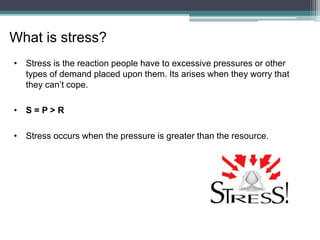
• Stress is the reaction people have to excessive pressures or other
types of demand placed upon them. Its arises when they worry that
they can’t cope.
• S = P > R
• Stress occurs when the pressure is greater than the resource.
What is stress?
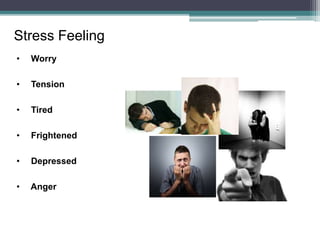
• Worry
• Tension
• Tired
• Frightened
• Depressed
• Anger
Stress Feeling
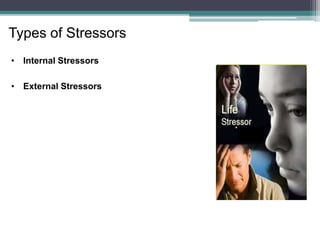
Types of Stressors
• Internal Stressors
• External Stressors
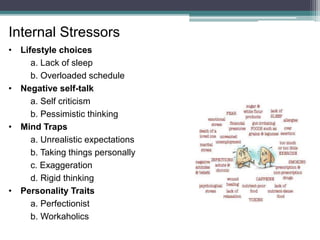
Internal Stressors
• Lifestyle choices
a. Lack of sleep
b. Overloaded schedule
• Negative self-talk
a. Self criticism
b. Pessimistic thinking
• Mind Traps
a. Unrealistic expectations
b. Taking things personally
c. Exaggeration
d. Rigid thinking
• Personality Traits
a. Perfectionist
b. Workaholics
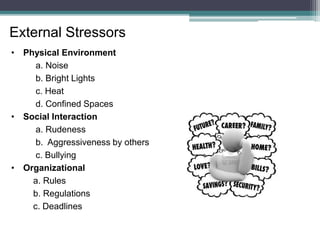
• Physical Environment
a. Noise
b. Bright Lights
c. Heat
d. Confined Spaces
• Social Interaction
a. Rudeness
b. Aggressiveness by others
c. Bullying
• Organizational
a. Rules
b. Regulations
c. Deadlines
External Stressors
• Major Life Events
a. Birth
b. Death
c. Lost job
d. Promotion
e. Marital status change
• Daily Hassles
a. Commuting
b. Misplaced keys
c. Mechanical breakdown
External Stressors (cont.)
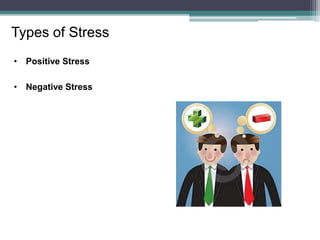
Types of Stress
• Positive Stress
• Negative Stress
Positive Stress
• Stress can also have a positive effect , spurring motivation and
awareness, providing the stimulation to cope with challenging
situations.
• Stress also provides the sense of urgency and alertness needed for
survival when confronting threatening situations.
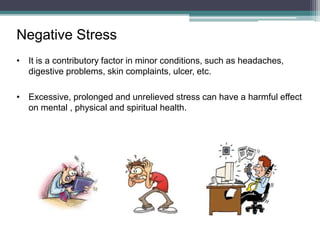
Negative Stress
• It is a contributory factor in minor conditions, such as headaches,
digestive problems, skin complaints, ulcer, etc.
• Excessive, prolonged and unrelieved stress can have a harmful effect
on mental , physical and spiritual health.
Manifestation of Stress
• Stomach or bowel upset.
• Headaches.
• Backaches.
• Muscle tension.
• Change in eating habits: lost of
appetite or overeating.
• Restlessness/irritability.
• Fatigue.
Physical
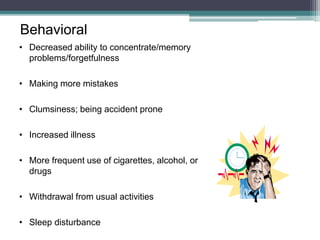
Behavioral
• Decreased ability to concentrate/memory
problems/forgetfulness
• Making more mistakes
• Clumsiness; being accident prone
• Increased illness
• More frequent use of cigarettes, alcohol, or
drugs
• Withdrawal from usual activities
• Sleep disturbance
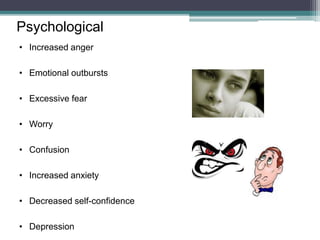
Psychological
• Increased anger
• Emotional outbursts
• Excessive fear
• Worry
• Confusion
• Increased anxiety
• Decreased self-confidence
• Depression
Managing Stress
• ABC strategy
• Change your thinking
• Change your behavior
• Change your lifestyle
Stress Control
ABC strategy
• A = Awareness
What causes you stress?
How do you react?
• B = Balance
There is a thin line between positive / negative stress
How much can you cope with before it becomes negative?
• C = Control
What can you do to help yourself combat the negative effects of stress?
ABC strategy
Change your thinking
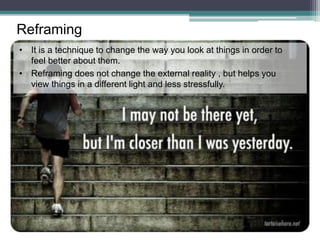
• It is a technique to change the way you look at things in order to
feel better about them.
• Reframing does not change the external reality , but helps you
view things in a different light and less stressfully.
Reframing
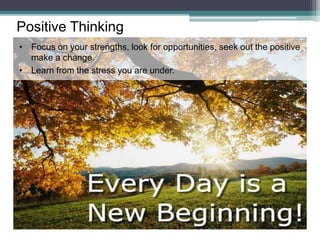
Positive Thinking
• Focus on your strengths, look for opportunities, seek out the positive
make a change.
• Learn from the stress you are under.
Change your behavior
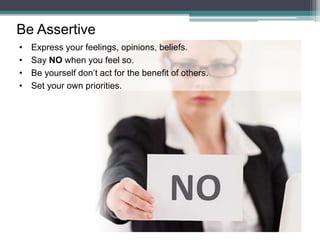
Be Assertive
• Express your feelings, opinions, beliefs.
• Say NO when you feel so.
• Be yourself don’t act for the benefit of others.
• Set your own priorities.
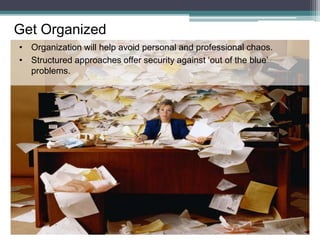
Get Organized
• Organization will help avoid personal and professional chaos.
• Structured approaches offer security against ‘out of the blue’
problems.
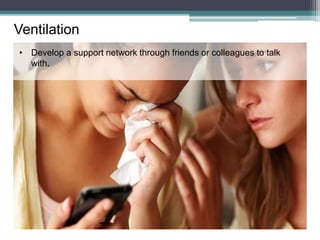
• Develop a support network through friends or colleagues to talk
with.
Ventilation
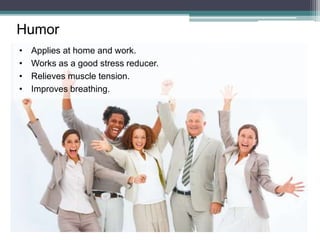
• Applies at home and work.
• Works as a good stress reducer.
• Relieves muscle tension.
• Improves breathing.
Humor
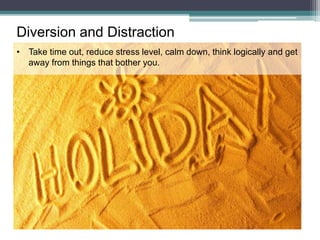
Diversion and Distraction
• Take time out, reduce stress level, calm down, think logically and get
away from things that bother you.
Change your lifestyle
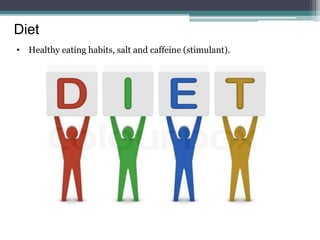
Diet
• Healthy eating habits, salt and caffeine (stimulant).
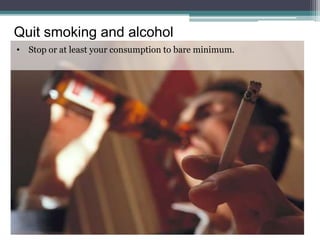
Quit smoking and alcohol
• Stop or at least your consumption to bare minimum.
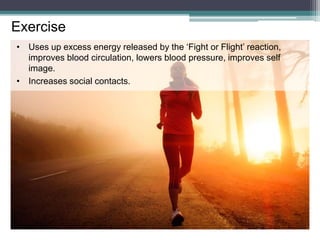
Exercise
• Uses up excess energy released by the ‘Fight or Flight’ reaction,
improves blood circulation, lowers blood pressure, improves self
image.
• Increases social contacts.
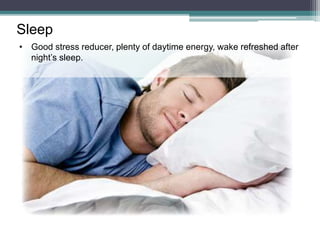
Sleep
• Good stress reducer, plenty of daytime energy, wake refreshed after
night’s sleep.
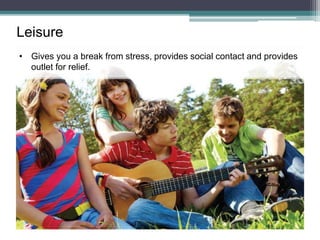
Leisure
• Gives you a break from stress, provides social contact and provides
outlet for relief.
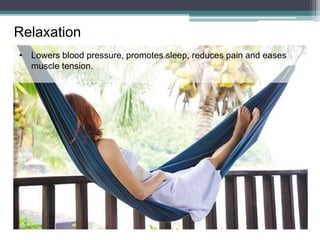
Relaxation
• Lowers blood pressure, promotes sleep, reduces pain and eases
muscle tension.
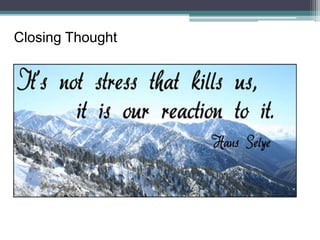
Closing Thought
Stress management

Stress management

  • 1.
  • 2.
    • Define stressand the reasons to stress • Types of stressors • Types of stress • Manifestations of stress • Methods to manage and cope with stress • Closing Thought Objectives
  • 3.
    • Stress isthe reaction people have to excessive pressures or other types of demand placed upon them. Its arises when they worry that they can’t cope. • S = P > R • Stress occurs when the pressure is greater than the resource. What is stress?
  • 4.
    • Worry • Tension •Tired • Frightened • Depressed • Anger Stress Feeling
  • 5.
    Types of Stressors •Internal Stressors • External Stressors
  • 6.
    Internal Stressors • Lifestylechoices a. Lack of sleep b. Overloaded schedule • Negative self-talk a. Self criticism b. Pessimistic thinking • Mind Traps a. Unrealistic expectations b. Taking things personally c. Exaggeration d. Rigid thinking • Personality Traits a. Perfectionist b. Workaholics
  • 7.
    • Physical Environment a.Noise b. Bright Lights c. Heat d. Confined Spaces • Social Interaction a. Rudeness b. Aggressiveness by others c. Bullying • Organizational a. Rules b. Regulations c. Deadlines External Stressors
  • 8.
    • Major LifeEvents a. Birth b. Death c. Lost job d. Promotion e. Marital status change • Daily Hassles a. Commuting b. Misplaced keys c. Mechanical breakdown External Stressors (cont.)
  • 9.
    Types of Stress •Positive Stress • Negative Stress
  • 10.
    Positive Stress • Stresscan also have a positive effect , spurring motivation and awareness, providing the stimulation to cope with challenging situations. • Stress also provides the sense of urgency and alertness needed for survival when confronting threatening situations.
  • 11.
    Negative Stress • Itis a contributory factor in minor conditions, such as headaches, digestive problems, skin complaints, ulcer, etc. • Excessive, prolonged and unrelieved stress can have a harmful effect on mental , physical and spiritual health.
  • 12.
  • 13.
    • Stomach orbowel upset. • Headaches. • Backaches. • Muscle tension. • Change in eating habits: lost of appetite or overeating. • Restlessness/irritability. • Fatigue. Physical
  • 14.
    Behavioral • Decreased abilityto concentrate/memory problems/forgetfulness • Making more mistakes • Clumsiness; being accident prone • Increased illness • More frequent use of cigarettes, alcohol, or drugs • Withdrawal from usual activities • Sleep disturbance
  • 15.
    Psychological • Increased anger •Emotional outbursts • Excessive fear • Worry • Confusion • Increased anxiety • Decreased self-confidence • Depression
  • 16.
  • 17.
    • ABC strategy •Change your thinking • Change your behavior • Change your lifestyle Stress Control
  • 18.
  • 19.
    • A =Awareness What causes you stress? How do you react? • B = Balance There is a thin line between positive / negative stress How much can you cope with before it becomes negative? • C = Control What can you do to help yourself combat the negative effects of stress? ABC strategy
  • 20.
  • 21.
    • It isa technique to change the way you look at things in order to feel better about them. • Reframing does not change the external reality , but helps you view things in a different light and less stressfully. Reframing
  • 22.
    Positive Thinking • Focuson your strengths, look for opportunities, seek out the positive make a change. • Learn from the stress you are under.
  • 23.
  • 24.
    Be Assertive • Expressyour feelings, opinions, beliefs. • Say NO when you feel so. • Be yourself don’t act for the benefit of others. • Set your own priorities.
  • 25.
    Get Organized • Organizationwill help avoid personal and professional chaos. • Structured approaches offer security against ‘out of the blue’ problems.
  • 26.
    • Develop asupport network through friends or colleagues to talk with. Ventilation
  • 27.
    • Applies athome and work. • Works as a good stress reducer. • Relieves muscle tension. • Improves breathing. Humor
  • 28.
    Diversion and Distraction •Take time out, reduce stress level, calm down, think logically and get away from things that bother you.
  • 29.
  • 30.
    Diet • Healthy eatinghabits, salt and caffeine (stimulant).
  • 31.
    Quit smoking andalcohol • Stop or at least your consumption to bare minimum.
  • 32.
    Exercise • Uses upexcess energy released by the ‘Fight or Flight’ reaction, improves blood circulation, lowers blood pressure, improves self image. • Increases social contacts.
  • 33.
    Sleep • Good stressreducer, plenty of daytime energy, wake refreshed after night’s sleep.
  • 34.
    Leisure • Gives youa break from stress, provides social contact and provides outlet for relief.
  • 35.
    Relaxation • Lowers bloodpressure, promotes sleep, reduces pain and eases muscle tension.
  • 36.