STRESS MANAGEMENT
Part 1 - Outline
• What is Stress ?
• Types of Stresses
• Individuals
• Stress origins & body systems
• Adaptation Syndrome
• Symptoms
• Costs of Stress
• Discussion & Questions
WHAT IS STRESS ?
Stress is the reaction people have to
excessive pressures or other types of
demand placed upon them. It arises when
they worry that they can’t cope.
HELP ME!
WHAT IS STRESS ?
Stress is the “wear and tear” our minds and
bodies experience as we attempt to cope
with our continually changing environment
I HATE YOU
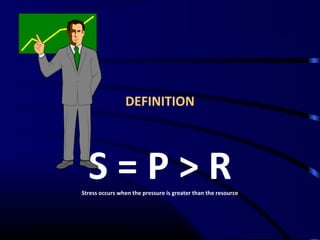
DEFINITION
S = P > RStress occurs when the pressure is greater than the resource
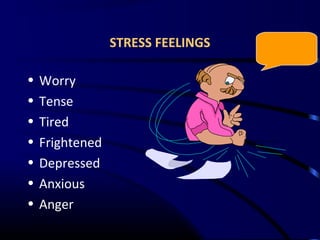
STRESS FEELINGS
• Worry
• Tense
• Tired
• Frightened
• Depressed
• Anxious
• Anger
TYPES OF STRESSORS
• External
• Internal
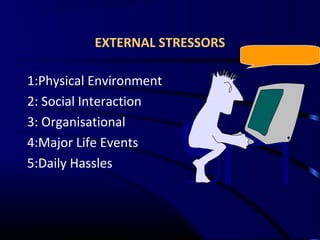
EXTERNAL STRESSORS
1:Physical Environment
2: Social Interaction
3: Organisational
4:Major Life Events
5:Daily Hassles
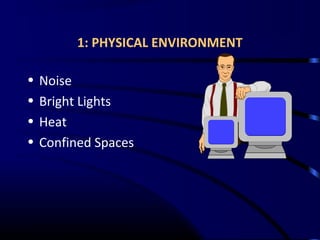
1: PHYSICAL ENVIRONMENT
• Noise
• Bright Lights
• Heat
• Confined Spaces
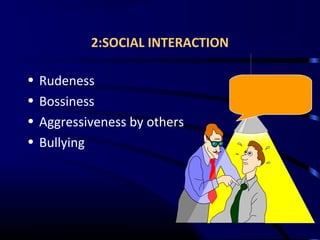
2:SOCIAL INTERACTION
• Rudeness
• Bossiness
• Aggressiveness by others
• Bullying
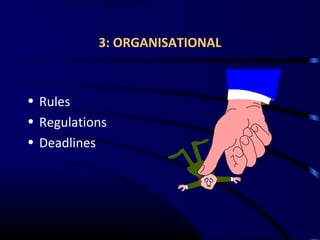
3: ORGANISATIONAL
• Rules
• Regulations
• Deadlines
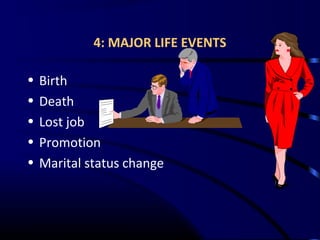
4: MAJOR LIFE EVENTS
• Birth
• Death
• Lost job
• Promotion
• Marital status change
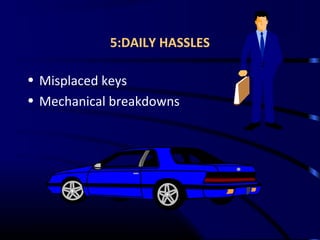
5:DAILY HASSLES
• Misplaced keys
• Mechanical breakdowns
2:INTERNAL STRESSORS
• Lifestyle choices
• Negative self - talk
• Mind traps
• Personality traits
1:LIFESTYLE CHOICES
• Caffeine
• Lack of sleep
• Overloaded schedule
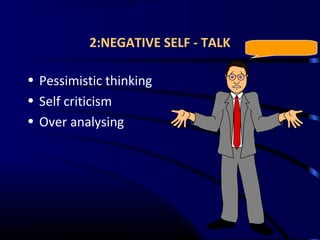
2:NEGATIVE SELF - TALK
• Pessimistic thinking
• Self criticism
• Over analysing
3:MIND TRAPS
• Unrealistic expectations
• Taking things personally
• All or nothing thinking
• Rigid thinking
4: PERSONALITY TRAITS
• Perfectionists
• Workaholics
TYPES OF STRESS
EUSTRESS
DISTRESS
EUSTRESS
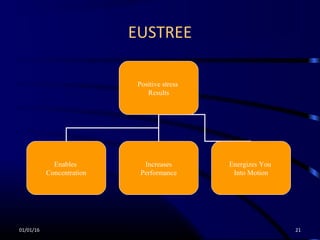
• Eustress or positive stress occurs when
your level of stress is high enough to
motivate you to move into action to get
things accomplished
EUSTREE
01/01/16 21
Positive stress
Results
Enables
Concentration
Increases
Performance
Energizes You
Into Motion
DISTRESS
• The stress that presents problems is what we
will focus on today.
• It is called Distress
DISTRESS
01/01/16 23
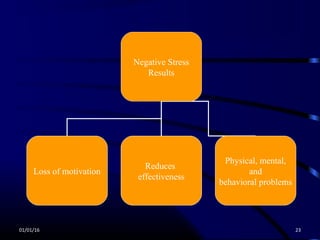
Negative Stress
Results
Loss of motivation
Reduces
effectiveness
Physical, mental,
and
behavioral problems
ALARM RESPONSE
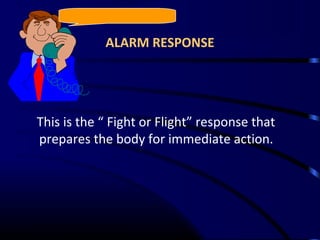
This is the “ Fight or Flight” response that
prepares the body for immediate action.
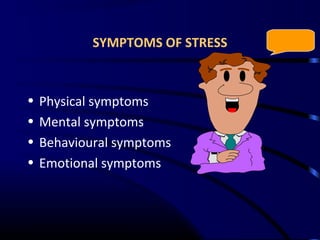
SYMPTOMS OF STRESS
• Physical symptoms
• Mental symptoms
• Behavioural symptoms
• Emotional symptoms
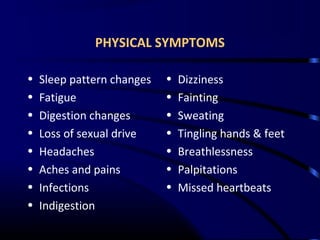
PHYSICAL SYMPTOMS
• Sleep pattern changes
• Fatigue
• Digestion changes
• Loss of sexual drive
• Headaches
• Aches and pains
• Infections
• Indigestion
• Dizziness
• Fainting
• Sweating
• Tingling hands & feet
• Breathlessness
• Palpitations
• Missed heartbeats
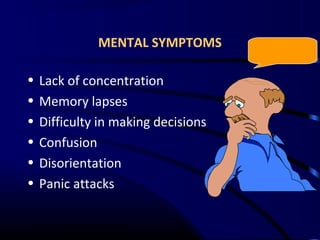
MENTAL SYMPTOMS
• Lack of concentration
• Memory lapses
• Difficulty in making decisions
• Confusion
• Disorientation
• Panic attacks
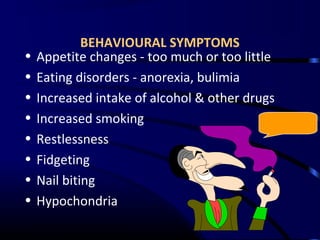
BEHAVIOURAL SYMPTOMS
• Appetite changes - too much or too little
• Eating disorders - anorexia, bulimia
• Increased intake of alcohol & other drugs
• Increased smoking
• Restlessness
• Fidgeting
• Nail biting
• Hypochondria
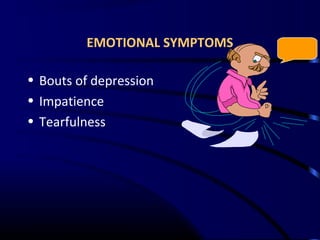
EMOTIONAL SYMPTOMS
• Bouts of depression
• Impatience
• Tearfulness
STRESS CONTROL
A B C STRATEGY
ABC STRATEGY
A = AWARENESS
What causes you stress?
How do you react?(potentially stressful
situation)
ABC STRATEGY
B = BALANCE
(your beliefs, thoughts, or perceptions about
that stressful situation)
There is a fine line between positive /
negative stress
How much can you cope with before it
becomes negative ?
ABC STRATEGY
C = CONTROL
What can you do to help yourself combat the
negative effects of stress ?
Stress Management Techniques
• Change your thinking
• Change your behaviour
• Change your lifestyle
1:Change your Thinking
A:Re-framing
B: Positive thinking
A:Re-framing
Re-framing is a technique to change the
way you look at things in order to feel
better about them. There are many ways to
interpret the same situation so pick the one
you like. Re-framing does not change the
external reality, but helps you view things
in a different light and less stressfully.
B:Positive Thinking
• Focus on your strengths
• Learn from the stress you are under
• Look for opportunities
• Seek out the positive - make a change.
2:Change your Behaviour
1.Be assertive
2.Get organised
3.Ventilation
4.Humour
Be Assertive
Assertiveness helps to manage stressful
situations, and will , in time, help to reduce
their frequency.
Lack of assertiveness often shows low self -
esteem and low self - confidence. The key
to assertiveness is verbal and non - verbal
communication. Extending our range of
communication skills will improve our
assertiveness.
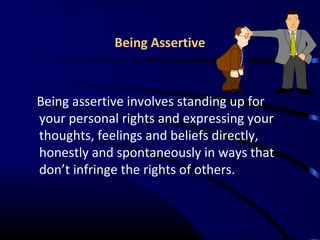
Being Assertive
Being assertive involves standing up for
your personal rights and expressing your
thoughts, feelings and beliefs directly,
honestly and spontaneously in ways that
don’t infringe the rights of others.
2:Get Organised
Poor organisation is one of the most
common causes of stress. Structured
approaches offer security against ‘out of
the blue’ problems. Prioritising objectives,
duties and activities makes them
manageable and achievable. Don’t
overload your mind. Organisation will help
avoid personal and professional chaos.
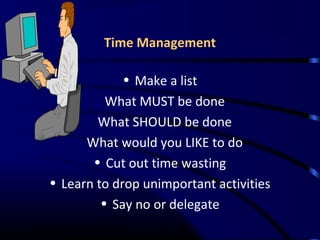
Time Management
• Make a list
What MUST be done
What SHOULD be done
What would you LIKE to do
• Cut out time wasting
• Learn to drop unimportant activities
• Say no or delegate
Ventilation
‘A problem shared is a problem halved’
Develop a support network through friends
or colleagues to talk with. It’s not always
events that are stressful but how we
perceive them.
Writing a diary or notes may help release
feelings but do not re-read what has been
written.
Humour
• Good stress - reducer
• Applies at home and work
• Relieves muscular tension
• Improves breathing
• Pumps endorphins into the bloodstream -
the body’s natural painkillers
Diversion and Distraction
• Take time out
• Get away from things that bother you
• Doesn’t solve the problem
• Reduce stress level
• Calm down
• Think logically
Change Your Lifestyle
• Diet
• Smoking & Alcohol
• Exercise
• Sleep
• Leisure
• Relaxation

Stressmanagement final