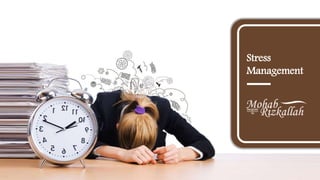
Stress
Management
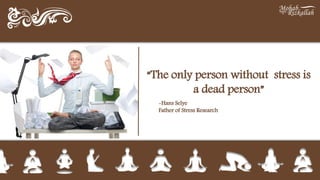
-Hans Selye
Father of Stress Research
“The only person without stress is
a dead person”
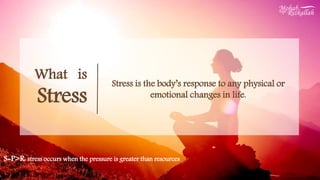
What is
Stress
Stress is the body’s response to any physical or
emotional changes in life.
S=P>R: stress occurs when the pressure is greater than resources
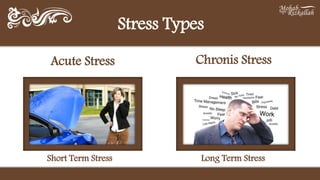
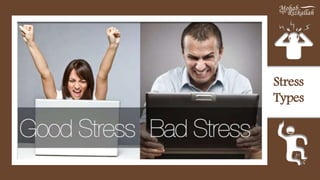
Stress Types
Acute Stress
Stress Types
Chronis Stress
Short Term Stress Long Term Stress
Acute Stress
Acute stress is usually for short time and may be
due to work pressure, meeting deadlines
pressure or minor accident, over exertion,
increased physical activity, searching something
but you misplaced it, or similar things.
Symptoms of this type of tension are headaches,
back pain, stomach problems, rapid heartbeat,
muscle aches or body pain etc.
Chronic Stress
This type of stress is the most serious of all the
stress types. Chronic stress is a prolonged stress
that exists for weeks, months, or even years. This
stress is due to poverty, broken or stressed
families and marriages, chronic illness and
successive failures in life. People suffering from
this type of stress get used to it and may even
not realize that they are under chronic stress. It is
very harmful to their health.
Stress
Types
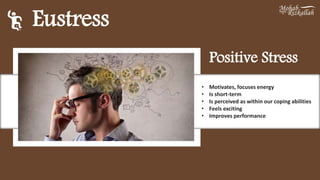
Eustress
• Motivates, focuses energy
• Is short-term
• Is perceived as within our coping abilities
• Feels exciting
• Improves performance
Positive Stress
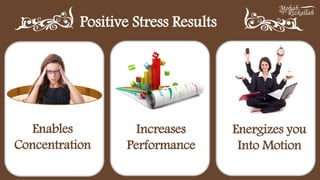
Positive Stress Results
Enables
Concentration
Increases
Performance
Energizes you
Into Motion
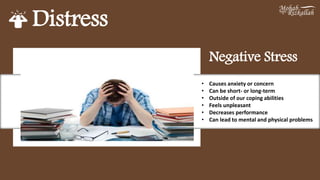
Distress
• Causes anxiety or concern
• Can be short- or long-term
• Outside of our coping abilities
• Feels unpleasant
• Decreases performance
• Can lead to mental and physical problems
Negative Stress
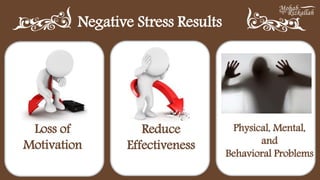
Negative Stress Results
Loss of
Motivation
Reduce
Effectiveness
Physical, Mental,
and
Behavioral Problems
Stress Causes & Signs
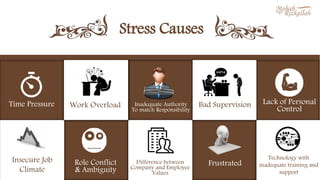
Stress Causes
Work OverloadTime Pressure Bad Supervision Lack of Personal
Control
Insecure Job
Climate
Inadequate Authority
To match Responsibility
Role Conflict
& Ambiguity
Difference between
Company and Employee
Values
Frustrated
Technology with
inadequate training and
support
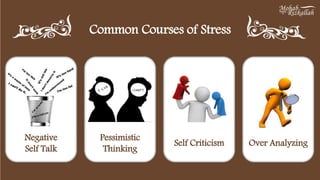
Common Courses of Stress
Negative
Self Talk
Pessimistic
Thinking
Self Criticism Over Analyzing
I CANT’T
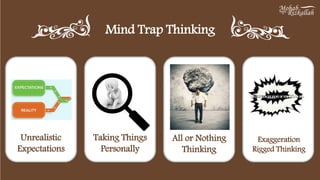
Mind Trap Thinking
Unrealistic
Expectations
Taking Things
Personally
All or Nothing
Thinking
Exaggeration
Rigged Thinking
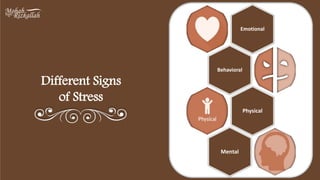
Emotional
Behavioral
Physical
Mental
Different Signs
of Stress
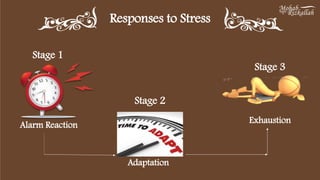
Responses to Stress
Stage 1
Alarm Reaction
Stage 2
Adaptation
Stage 3
Exhaustion
Stress Management
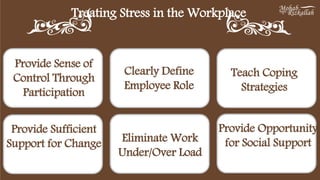
Treating Stress in the Workplace
Provide Sufficient
Support for Change
Provide Sense of
Control Through
Participation
Clearly Define
Employee Role
Teach Coping
Strategies
Provide Opportunity
for Social SupportEliminate Work
Under/Over Load
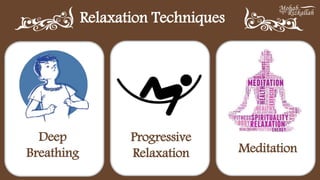
Relaxation Techniques
Deep
Breathing
Progressive
Relaxation Meditation
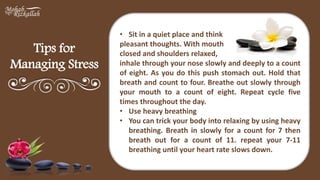
Tips for
Managing Stress
• Sit in a quiet place and think
pleasant thoughts. With mouth
closed and shoulders relaxed,
inhale through your nose slowly and deeply to a count
of eight. As you do this push stomach out. Hold that
breath and count to four. Breathe out slowly through
your mouth to a count of eight. Repeat cycle five
times throughout the day.
• Use heavy breathing
• You can trick your body into relaxing by using heavy
breathing. Breath in slowly for a count for 7 then
breath out for a count of 11. repeat your 7-11
breathing until your heart rate slows down.
Tips for
Managing Stress
• Figure out what time of day you feel the most
energetic and use that time for productive tasks
• Cluttered homes and offices cluttered your mind
and life, get rid of what you do not use.
• Take time to plan, set goals, both personally and
professionally. Think about your future and write it
down.
• Prioritize your tasks in A, B and C’s, start with first
things first.
• Use your low energy time for simple tasks, like
phone calls, filling, simple tasks at home.
• Schedule time every week for private time. Be by
yourself.
• Learn to say NO and not feel guilty afterwards
Tips for
Managing Stress
• Believe in yourself. No one else will, until you do.
• Do things that give you positive feedback. This will
help build your reserves of self-esteem
• Stick in your bath room mirror quotes that
motivates and inspire
• Go to your favorite place more often
• There are no mistakes. Only more learning to do.
• Do not spend time with ”energy vampires” people
who take your energy away.
• Strive to accomplish more with less. Less time. Less
money. Less energy
Tips for Managing Stress
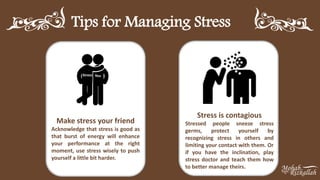
Make stress your friend
Acknowledge that stress is good as
that burst of energy will enhance
your performance at the right
moment, use stress wisely to push
yourself a little bit harder.
Stress is contagious
Stressed people sneeze stress
germs, protect yourself by
recognizing stress in others and
limiting your contact with them. Or
if you have the inclination, play
stress doctor and teach them how
to better manage theirs.
Stress You
Thank You
Mohab.rizkallah@gmail.com

Stress Mangement

  • 1.
  • 2.
    -Hans Selye Father ofStress Research “The only person without stress is a dead person”
  • 3.
    What is Stress Stress isthe body’s response to any physical or emotional changes in life. S=P>R: stress occurs when the pressure is greater than resources
  • 5.
  • 6.
    Acute Stress Stress Types ChronisStress Short Term Stress Long Term Stress
  • 7.
    Acute Stress Acute stressis usually for short time and may be due to work pressure, meeting deadlines pressure or minor accident, over exertion, increased physical activity, searching something but you misplaced it, or similar things. Symptoms of this type of tension are headaches, back pain, stomach problems, rapid heartbeat, muscle aches or body pain etc.
  • 8.
    Chronic Stress This typeof stress is the most serious of all the stress types. Chronic stress is a prolonged stress that exists for weeks, months, or even years. This stress is due to poverty, broken or stressed families and marriages, chronic illness and successive failures in life. People suffering from this type of stress get used to it and may even not realize that they are under chronic stress. It is very harmful to their health.
  • 9.
  • 10.
    Eustress • Motivates, focusesenergy • Is short-term • Is perceived as within our coping abilities • Feels exciting • Improves performance Positive Stress
  • 11.
  • 12.
    Distress • Causes anxietyor concern • Can be short- or long-term • Outside of our coping abilities • Feels unpleasant • Decreases performance • Can lead to mental and physical problems Negative Stress
  • 13.
    Negative Stress Results Lossof Motivation Reduce Effectiveness Physical, Mental, and Behavioral Problems
  • 15.
  • 16.
    Stress Causes Work OverloadTimePressure Bad Supervision Lack of Personal Control Insecure Job Climate Inadequate Authority To match Responsibility Role Conflict & Ambiguity Difference between Company and Employee Values Frustrated Technology with inadequate training and support
  • 17.
    Common Courses ofStress Negative Self Talk Pessimistic Thinking Self Criticism Over Analyzing I CANT’T
  • 18.
    Mind Trap Thinking Unrealistic Expectations TakingThings Personally All or Nothing Thinking Exaggeration Rigged Thinking
  • 19.
  • 20.
    Responses to Stress Stage1 Alarm Reaction Stage 2 Adaptation Stage 3 Exhaustion
  • 21.
  • 22.
    Treating Stress inthe Workplace Provide Sufficient Support for Change Provide Sense of Control Through Participation Clearly Define Employee Role Teach Coping Strategies Provide Opportunity for Social SupportEliminate Work Under/Over Load
  • 23.
  • 24.
    Tips for Managing Stress •Sit in a quiet place and think pleasant thoughts. With mouth closed and shoulders relaxed, inhale through your nose slowly and deeply to a count of eight. As you do this push stomach out. Hold that breath and count to four. Breathe out slowly through your mouth to a count of eight. Repeat cycle five times throughout the day. • Use heavy breathing • You can trick your body into relaxing by using heavy breathing. Breath in slowly for a count for 7 then breath out for a count of 11. repeat your 7-11 breathing until your heart rate slows down.
  • 25.
    Tips for Managing Stress •Figure out what time of day you feel the most energetic and use that time for productive tasks • Cluttered homes and offices cluttered your mind and life, get rid of what you do not use. • Take time to plan, set goals, both personally and professionally. Think about your future and write it down. • Prioritize your tasks in A, B and C’s, start with first things first. • Use your low energy time for simple tasks, like phone calls, filling, simple tasks at home. • Schedule time every week for private time. Be by yourself. • Learn to say NO and not feel guilty afterwards
  • 26.
    Tips for Managing Stress •Believe in yourself. No one else will, until you do. • Do things that give you positive feedback. This will help build your reserves of self-esteem • Stick in your bath room mirror quotes that motivates and inspire • Go to your favorite place more often • There are no mistakes. Only more learning to do. • Do not spend time with ”energy vampires” people who take your energy away. • Strive to accomplish more with less. Less time. Less money. Less energy
  • 27.
    Tips for ManagingStress Make stress your friend Acknowledge that stress is good as that burst of energy will enhance your performance at the right moment, use stress wisely to push yourself a little bit harder. Stress is contagious Stressed people sneeze stress germs, protect yourself by recognizing stress in others and limiting your contact with them. Or if you have the inclination, play stress doctor and teach them how to better manage theirs. Stress You
  • 28.

Editor's Notes