STREPTOCOCCUS MUTANS
                   Dr. Ali Yaldrum
      Faculty of Dentistry, SEGi University.
LEARNING OBJECTIVES


 At the end of this session, the student should be able to:

1.Describe what are Streptococci Organisms

2.Classification of Streptococci Organisms

3.Describe role played by Streptococcus mutans in health and disease
1. GENERAL PROPERTIES

• Catalase negative
• Gram +ve
• Spherical or Oval Cocci
• Appears in pairs or chains
• 0.7 to 0.9 um in diameter
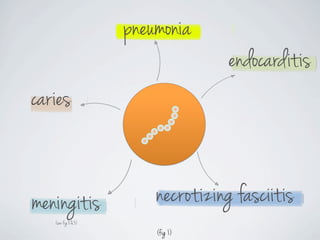
• causes a wide variety of diseases (fig. 1)
2. PATHOGENICITY


Pathogenic Streptococcus produces several extra cellular
substances that contribute to their pathogenicity
2. PATHOGENICITY


1. products that destroy the phagocytic cells & ingest them

2. produces enzymes that digest the connective tissue resulting in
   extensive tissue destruction

3. can also lyse “Fibrin”
pneumonia
                                  endocarditis
caries


meningitis             necrotizing fasciitis
   (see fig 2&3)
                       (fig 1)
facial cellulitis which progressed relentlessly with necrosis
                              (fig 2)
(fig 3)
4. CULTURE

• Grow well on blood agar
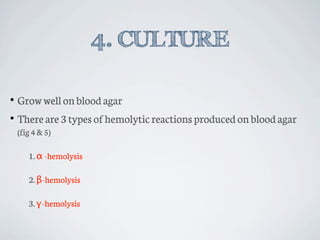
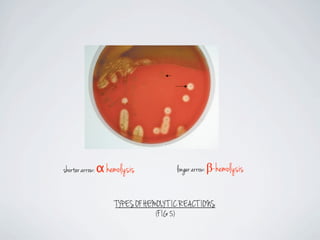
• There are 3 types of hemolytic reactions produced on blood agar
 (fig 4 & 5)

    1. α -hemolysis

    2. β-hemolysis

    3. γ-hemolysis
β-hemolysis
 wide clear translucent zone
of complete hemolysis around                                        α -hemolysis
          the colony                                                narrow zone of partial
                                                                          hemolysis


                                                       γ-hemolysis: no hemolysis occurs
                               T YP ES OF HEMOLY T IC REAC T IONS
                                             (F IG 4)
shorter arrow: α hemolysis             longer arrow: β-hemolysis


                  T YP ES OF HEMOLY T IC REAC T IONS
                                (F IG 5)
3. SEROLOGY


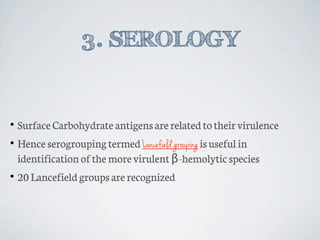
• Surface Carbohydrate antigens are related to their virulence
• Hence serogrouping termed Lancefield grouping is useful in
  identification of the more virulent β-hemolytic species
• 20 Lancefield groups are recognized
MUTANS GROUP
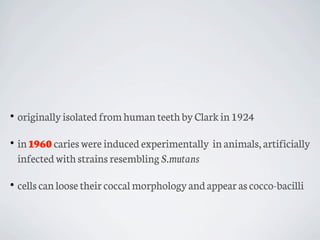
• originally isolated from human teeth by Clark in 1924

• in 1960 caries were induced experimentally in animals, artificially
  infected with strains resembling S.mutans

• cells can loose their coccal morphology and appear as cocco-bacilli
• 9 serotypes have been identified (a-h & k)

• Human isolates are : c,e f and k

• S.mutans have been implicated as the primary pathogen in :

    1.enamel caries in children & young adults

    2.root surface caries in elderly
• occupy hard non-shedding surfaces i.e teeth or dentures

• Regularly isolated from dental plaque at carious site, but low
  prevalence on sound enamel

• opportunistic pathogens (isolated from cases of infective endocarditis)

• communicate with other mutans
• cell wall carbohydrate antigen (I/II)

• lipoteichoic acid

• lipoproteins

• cell wall associated protein
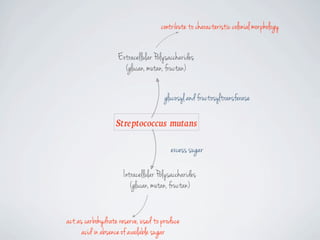
contribute to characteristic colonial morphology

                    Extracellular Polysaccharides
                      (glucan, mutan, fructan)

                                      glucosyl and fructosyltransferase

                   Streptococcus mutans

                                        excess sugar

                      Intracellular Polysaccharides
                         (glucan, mutan, fructan)


act as carbohydrate reserve, used to produce
      acid in absence of available sugar
Salivarius group
This group consists of two bacterias


1. S. salivarius

2. S. vestibularis
• salivarius prefer mucosal surface especially the tongue

• produce unusual quantity of extracellular fructan

• rarely isolated from diseased sites
• S. vestibularis prefers the vestibular mucosa

• no extracellular polysaccharide production

• produces ‘urease’ leading to rise in local pH and hydrogen peroxide
Anginosus group
The group is differentiated into

•   S. constellatus

•   S. intermedius

•   S. anginosus
• readily isolated from dental plaque & from mucosal surface

• cause serious, purulent diseases

• commonly found in abscess of internal organs

• no strain produces polysaccharide from sucrose
Mitis group
This group consists of

•   S. sanguinis

•   S. gordonii

•   S. mitis

•   S. oralis
• Early colonizers of tooth
• produce soluble and insoluble glucans from sucrose
• contribute to plaque formation
• ammonia generation from arginine
• S. sanguinis produces a protease that can cleave sIgA
• S. gordonii can bind with salivary amylase enabling the breakdown
 of starch
References


1. Philip D. Marsh, Michael V Martin, “The Resident Oral Microflora” in Oral Microbiology, 5th Edition,
Churchil Livingstone, 2009, pp 25-35

Streptococcus mutans & other streptococci

  • 1.
    STREPTOCOCCUS MUTANS Dr. Ali Yaldrum Faculty of Dentistry, SEGi University.
  • 2.
    LEARNING OBJECTIVES Atthe end of this session, the student should be able to: 1.Describe what are Streptococci Organisms 2.Classification of Streptococci Organisms 3.Describe role played by Streptococcus mutans in health and disease
  • 3.
    1. GENERAL PROPERTIES •Catalase negative • Gram +ve • Spherical or Oval Cocci • Appears in pairs or chains • 0.7 to 0.9 um in diameter • causes a wide variety of diseases (fig. 1)
  • 4.
    2. PATHOGENICITY Pathogenic Streptococcusproduces several extra cellular substances that contribute to their pathogenicity
  • 5.
    2. PATHOGENICITY 1. productsthat destroy the phagocytic cells & ingest them 2. produces enzymes that digest the connective tissue resulting in extensive tissue destruction 3. can also lyse “Fibrin”
  • 6.
    pneumonia endocarditis caries meningitis necrotizing fasciitis (see fig 2&3) (fig 1)
  • 7.
    facial cellulitis whichprogressed relentlessly with necrosis (fig 2)
  • 8.
  • 9.
    4. CULTURE • Growwell on blood agar • There are 3 types of hemolytic reactions produced on blood agar (fig 4 & 5) 1. α -hemolysis 2. β-hemolysis 3. γ-hemolysis
  • 10.
    β-hemolysis wide cleartranslucent zone of complete hemolysis around α -hemolysis the colony narrow zone of partial hemolysis γ-hemolysis: no hemolysis occurs T YP ES OF HEMOLY T IC REAC T IONS (F IG 4)
  • 11.
    shorter arrow: αhemolysis longer arrow: β-hemolysis T YP ES OF HEMOLY T IC REAC T IONS (F IG 5)
  • 12.
    3. SEROLOGY • SurfaceCarbohydrate antigens are related to their virulence • Hence serogrouping termed Lancefield grouping is useful in identification of the more virulent β-hemolytic species • 20 Lancefield groups are recognized
  • 13.
  • 14.
    • originally isolatedfrom human teeth by Clark in 1924 • in 1960 caries were induced experimentally in animals, artificially infected with strains resembling S.mutans • cells can loose their coccal morphology and appear as cocco-bacilli
  • 15.
    • 9 serotypeshave been identified (a-h & k) • Human isolates are : c,e f and k • S.mutans have been implicated as the primary pathogen in : 1.enamel caries in children & young adults 2.root surface caries in elderly
  • 16.
    • occupy hardnon-shedding surfaces i.e teeth or dentures • Regularly isolated from dental plaque at carious site, but low prevalence on sound enamel • opportunistic pathogens (isolated from cases of infective endocarditis) • communicate with other mutans
  • 17.
    • cell wallcarbohydrate antigen (I/II) • lipoteichoic acid • lipoproteins • cell wall associated protein
  • 18.
    contribute to characteristiccolonial morphology Extracellular Polysaccharides (glucan, mutan, fructan) glucosyl and fructosyltransferase Streptococcus mutans excess sugar Intracellular Polysaccharides (glucan, mutan, fructan) act as carbohydrate reserve, used to produce acid in absence of available sugar
  • 19.
  • 20.
    This group consistsof two bacterias 1. S. salivarius 2. S. vestibularis
  • 21.
    • salivarius prefermucosal surface especially the tongue • produce unusual quantity of extracellular fructan • rarely isolated from diseased sites
  • 22.
    • S. vestibularisprefers the vestibular mucosa • no extracellular polysaccharide production • produces ‘urease’ leading to rise in local pH and hydrogen peroxide
  • 23.
  • 24.
    The group isdifferentiated into • S. constellatus • S. intermedius • S. anginosus
  • 25.
    • readily isolatedfrom dental plaque & from mucosal surface • cause serious, purulent diseases • commonly found in abscess of internal organs • no strain produces polysaccharide from sucrose
  • 26.
  • 27.
    This group consistsof • S. sanguinis • S. gordonii • S. mitis • S. oralis
  • 28.
    • Early colonizersof tooth • produce soluble and insoluble glucans from sucrose • contribute to plaque formation • ammonia generation from arginine
  • 29.
    • S. sanguinisproduces a protease that can cleave sIgA • S. gordonii can bind with salivary amylase enabling the breakdown of starch
  • 30.
    References 1. Philip D.Marsh, Michael V Martin, “The Resident Oral Microflora” in Oral Microbiology, 5th Edition, Churchil Livingstone, 2009, pp 25-35