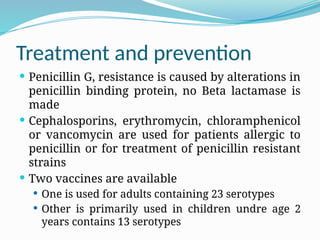
Streptococci
Shah Faisal Jamal
KMU-IPMS
Streptococci
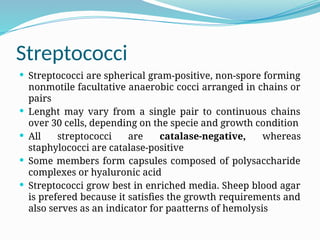
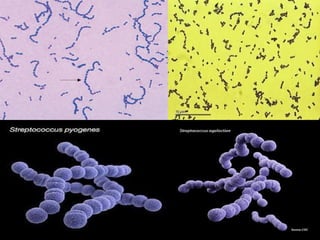
 Streptococci are spherical gram-positive, non-spore forming
nonmotile facultative anaerobic cocci arranged in chains or
pairs
 Lenght may vary from a single pair to continuous chains
over 30 cells, depending on the specie and growth condition
 All streptococci are catalase-negative, whereas
staphylococci are catalase-positive
 Some members form capsules composed of polysaccharide
complexes or hyaluronic acid
 Streptococci grow best in enriched media. Sheep blood agar
is prefered because it satisfies the growth requirements and
also serves as an indicator for paatterns of hemolysis
Classification
 At the turn of the 20th
century, a classification based
on hemolysis and biochemical tests was sufficient to
associate some streptococcal species with infection in
human.
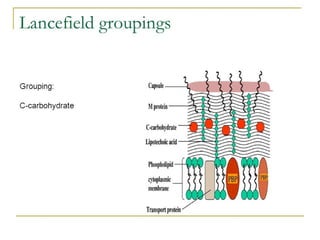
 Rebecca Lancefield, demonstrated carbohydrate
antigens in cell wall extracts of the β-Hemolytic
streptococci, Her studies formed a classfication by
serogroups (eg A,B,C)
 Later it was also discovered that nonhemolytic
streptococci also have the same cell wall antigens
Classification
 Over the years it has become clear that
possession of one of the lancefield a particularly
virulence segment of the streptococcal genus
regardless of hemolytic patterns, these are called
pyogenic streptococci.
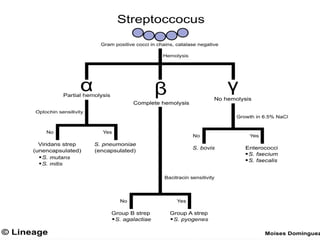
 For practical purposes, the type of hemolysis and
certain biochemical reactions remain valuable
for the initial recognition and presumptive
classification of streptococci.
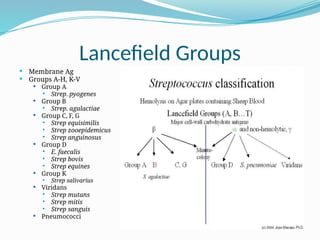
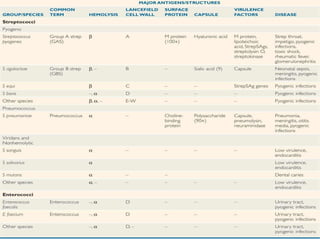
Lancefield Groups
 Membrane Ag
 Groups A-H, K-V
 Group A
 Strep. pyogenes
 Group B
 Strep. agalactiae
 Group C, F, G
 Strep equisimilis
 Strep zooepidemicus
 Strep anguinosus
 Group D
 E. faecalis
 Strep bovis
 Strep equines
 Group K
 Strep salivarius
 Viridans
 Strep mutans
 Strep mitis
 Strep sanguis
 Pneumococci
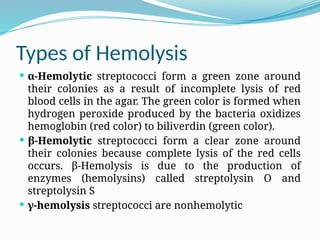
Types of Hemolysis
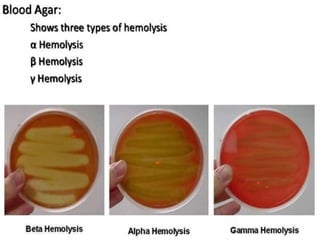
 α-Hemolytic streptococci form a green zone around
their colonies as a result of incomplete lysis of red
blood cells in the agar. The green color is formed when
hydrogen peroxide produced by the bacteria oxidizes
hemoglobin (red color) to biliverdin (green color).
 β-Hemolytic streptococci form a clear zone around
their colonies because complete lysis of the red cells
occurs. β-Hemolysis is due to the production of
enzymes (hemolysins) called streptolysin O and
streptolysin S
 γ-hemolysis streptococci are nonhemolytic
Group A Streptococci (S. pyogenes)
 Habitat
 Habitat is the human throat and skin.
 Diseases
 Suppurative diseases (Pus producing)
 Non suppurative diseases (Immunologic)
 Transmission
 Cough, sneezing, even conversation, tiny skin
pustules are spread by scratching & direct contact
or shared fomities and also hand to hand
transmission
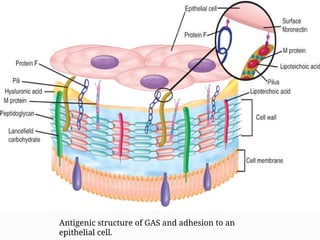
Antigenic structure of GAS and adhesion to an
epithelial cell.
Pathogenesis and Clinical Manifestation
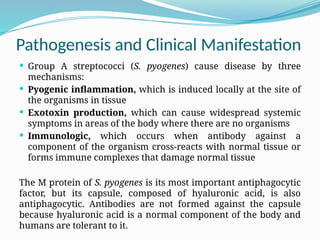
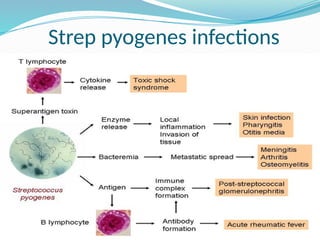
 Group A streptococci (S. pyogenes) cause disease by three
mechanisms:
 Pyogenic inflammation, which is induced locally at the site of
the organisms in tissue
 Exotoxin production, which can cause widespread systemic
symptoms in areas of the body where there are no organisms
 Immunologic, which occurs when antibody against a
component of the organism cross-reacts with normal tissue or
forms immune complexes that damage normal tissue
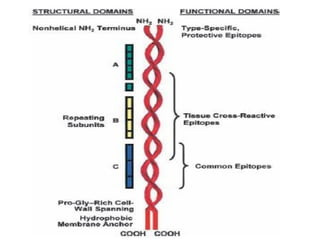
The M protein of S. pyogenes is its most important antiphagocytic
factor, but its capsule, composed of hyaluronic acid, is also
antiphagocytic. Antibodies are not formed against the capsule
because hyaluronic acid is a normal component of the body and
humans are tolerant to it.
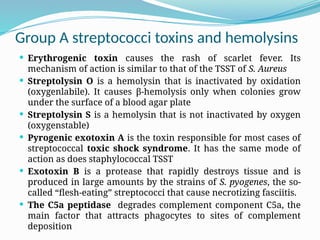
Group A streptococci toxins and hemolysins
 Erythrogenic toxin causes the rash of scarlet fever. Its
mechanism of action is similar to that of the TSST of S. Aureus
 Streptolysin O is a hemolysin that is inactivated by oxidation
(oxygenlabile). It causes β-hemolysis only when colonies grow
under the surface of a blood agar plate
 Streptolysin S is a hemolysin that is not inactivated by oxygen
(oxygenstable)
 Pyrogenic exotoxin A is the toxin responsible for most cases of
streptococcal toxic shock syndrome. It has the same mode of
action as does staphylococcal TSST
 Exotoxin B is a protease that rapidly destroys tissue and is
produced in large amounts by the strains of S. pyogenes, the so-
called “flesh-eating” streptococci that cause necrotizing fasciitis.
 The C5a peptidase degrades complement component C5a, the
main factor that attracts phagocytes to sites of complement
deposition
Strep pyogenes infections
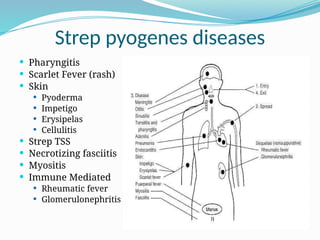
Strep pyogenes diseases
 Pharyngitis
 Scarlet Fever (rash)
 Skin
 Pyoderma
 Impetigo
 Erysipelas
 Cellulitis
 Strep TSS
 Necrotizing fasciitis
 Myositis
 Immune Mediated
 Rheumatic fever
 Glomerulonephritis
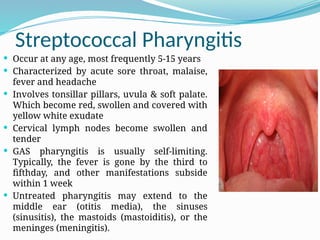
Streptococcal Pharyngitis
 Occur at any age, most frequently 5-15 years
 Characterized by acute sore throat, malaise,
fever and headache
 Involves tonsillar pillars, uvula & soft palate.
Which become red, swollen and covered with
yellow white exudate
 Cervical lymph nodes become swollen and
tender
 GAS pharyngitis is usually self-limiting.
Typically, the fever is gone by the third to
fifthday, and other manifestations subside
within 1 week
 Untreated pharyngitis may extend to the
middle ear (otitis media), the sinuses
(sinusitis), the mastoids (mastoiditis), or the
meninges (meningitis).
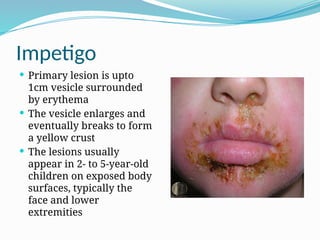
Impetigo
 Primary lesion is upto
1cm vesicle surrounded
by erythema
 The vesicle enlarges and
eventually breaks to form
a yellow crust
 The lesions usually
appear in 2- to 5-year-old
children on exposed body
surfaces, typically the
face and lower
extremities
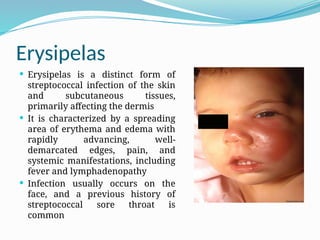
Erysipelas
 Erysipelas is a distinct form of
streptococcal infection of the skin
and subcutaneous tissues,
primarily affecting the dermis
 It is characterized by a spreading
area of erythema and edema with
rapidly advancing, well-
demarcated edges, pain, and
systemic manifestations, including
fever and lymphadenopathy
 Infection usually occurs on the
face, and a previous history of
streptococcal sore throat is
common
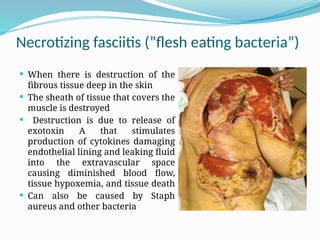
Necrotizing fasciitis (”flesh eating bacteria”)
 When there is destruction of the
fibrous tissue deep in the skin
 The sheath of tissue that covers the
muscle is destroyed
 Destruction is due to release of
exotoxin A that stimulates
production of cytokines damaging
endothelial lining and leaking fluid
into the extravascular space
causing diminished blood flow,
tissue hypoxemia, and tissue death
 Can also be caused by Staph
aureus and other bacteria
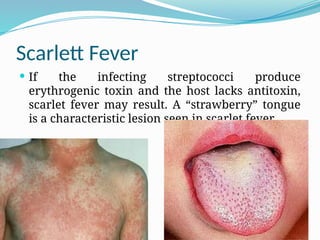
Scarlett Fever
 If the infecting streptococci produce
erythrogenic toxin and the host lacks antitoxin,
scarlet fever may result. A “strawberry” tongue
is a characteristic lesion seen in scarlet fever.
Streptococcal Toxic Shock Syndrome (STSS)
 Beta-hemolytic group A streptococci can cause
toxic shock syndrome like that caused by
Staphylococcus aureus
 Similar to scarlet fever, streptococcal toxic shock
syndrome is also mediated by the release of
pyrogenic toxin
Poststreptococcal Sequelae
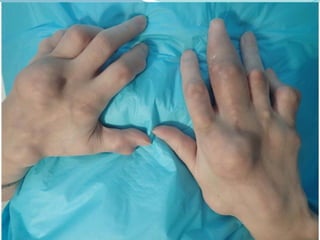
 ACUTE RHEUMATIC FEVER
 Acute rheumatic fever is a nonsuppurative inflammatory
disease characterized by fever, carditis, subcutaneous
nodules, chorea, and migratory polyarthritis.
 The antigen stimulating these antibodies is most probably M
protein, but the group A carbohydrate is also a possibility.
There is similarity between the structure of regions of the M
protein and myosin, and M protein fragments have been
shown to stimulate antibodies that bind to human heart
sarcolemma membranes, cardiac myosin, synovium, and
articular cartilage.
 A cellular reaction pattern consisting of lymphocytes and
macrophages aggregated around fibrinoid deposits is found in
human hearts. This lesion, called the Aschoff body is
considered characteristic of rheumatic carditis
Poststreptococcal Sequelae
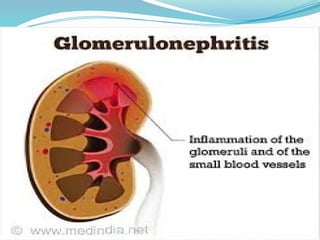
 ACUTE GLOMERULONEPHRITIS
 The renal injury of acute glomerulonephritis is caused by
deposition in the glomerulus of antigen–antibody
complexes with complement activation and consequent
inflammation. This is a type III hypersensitivity. The M
proteins of some nephritogenic strains have been shown to
share antigenic determinants with glomeruli, which
suggests an autoimmune mechanism similar to rheumatic
fever
 Poststreptococcal glomerulonephritis is primarily a disease
of childhood that begins 1 to 4 weeks after streptococcal
pharyngitis and 3 to 6 weeks after skin infection. It is
characterized clinically by edema, hypertension, hematuria,
proteinuria, and decreased serum complement levels.
Diagnosis
 Suppurative Infections
 Gram Stain, smear and culture. B- hemolytic colonies on
blood agar (Hemolysis due to streptolysin O & S)
 Isolates are sensitive to bacitracin
 ELISA tests are available for GAS antigens in throat swab
 Non suppurative infections
 If rheumatic fever is suspected, patients antistreptolysin
O (ASO) antibody titer is tested
 If acute glomerulonephritis is suspected antibody to
streptococcal Dnase B is used as evidence of a previous
skin infection by S. Pygenes.
Treatment and prevention
 Penicillin G (No significant resistance)
 Penicillin is used in patients with rheumatic
fever to prevent recurrent s.pygenes pharygitis.
This prevents additional damage to heart valves
 Multivalent vaccines using M protein epitopes
that are not cross-reactive to self are in clinical
trials with encouraging results.
Group B Streptococcus (S. agalactia)
 Characteristics
 Gram positive cocci in chains, B-hemolytic colonies,
catalase negative, Bacitricin resistant.
 Habitat
 Habitat is the human GIT & vagina (Group B streptococci
can be found in the lower gastrointestinal and vaginal flora of
10% to 40% of women)
 Diseases
 Neonatal Meningitis and sepsis
 Transmission
 Trasmission occurs during birth
Pathogenesis & clinical manifestations
 In adults it rarely causes URT infections, meningitis,
bacteremia, and endocarditis
 It used to be a major cause of puerperal sepsis (post-
partum sepsis)
 The most serious cases of group B infections occur in
the newborn
 There are two types of disease in the newborn
 Early onset disease – occurs when babies become
infected in utero or at birth, with the organism
gaining access through the respiratory tract
 The disease has a high mortality rate and is
characterized by respiratory disease and
bacteremia
 Septicemia and meningitis may also occur
Pathogenesis & clinical manifestations
 Late onset disease – occurs 7-10 days after birth and
the baby probably acquires the organism by direct
contact with mucosal surfaces
 The disease is characterized by meningitis or osteomyelitis
and possibly bacteremia
 The mortality rate is high, but lower than that for the early-
onset disease
 Although most group B streptococcal infections are
in neonates, this organism also causes such
infections as pneumonia, endocarditis, arthritis,
cellulitis, and osteomyelitis in adults.
 Postpartum endometritis also occurs. Diabetes is the
main predisposing factor for adult group B
streptococcal infections
Lab Diagnosis
 Specimens: Include cerebrospinal fluid, and blood for
culture from neonates. High vaginal swab is required
from women with suspected sepsis
 Gram stain smear and culture B-hemolytic colonies
on blood agar that is resistant to bacitracin
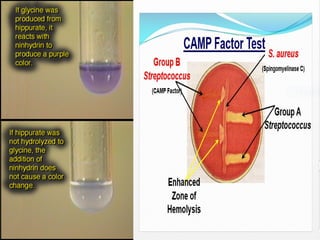
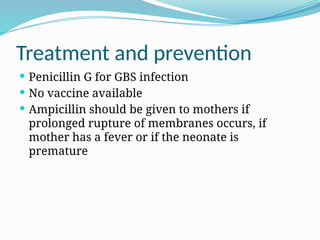
 CAMP (Christie, Atkins, Munch, Peterson) test to
identify presumptively S. agalactiae +ve
 Hippurate hydrolysis test +ve
Treatment and prevention
 Penicillin G for GBS infection
 No vaccine available
 Ampicillin should be given to mothers if
prolonged rupture of membranes occurs, if
mother has a fever or if the neonate is
premature
Enterococci (Group D)
 Characteristics
 Gram positive cocci in chains, catalase negative, non- hemolytic
or alpha hemolytic, non-capsulate and the majority are non-
motile
 Habitat
 Habitat is the human colon, urethra and female genital tract but
mainly GIT
 Diseases
 Urinary tract infection, biliary tract infection are frequent,
endocarditis are rare but life threatening
 Transmission
 May enter bloodstream and gastrointestinal or genitourinary
tract through procedures
Enterococci (Group D)
 Formerly called streptococci, two important
species E. faecalis and E. faecium
 E. faecalis is the main pathogen in the genus
Enterococcus, causing about 95% of enterococcal
infections, a minority of infections are caused by
E. faecium
 The term enterococcus derives from their
presence in the intestinal tract
Pathogenesis & clinical manifestation
 Enterococci are a significant cause of disease in
specialized hospital settings
 They are not highly virulent. On their own, they
do not produce fulminant disease and in wound
and soft tissue infections are usually mixed with
other members of the intestinal flora
 Enterococci cause opportunistic urinary tract
infections (UTIs) and occasionally wound and
soft tissue infections, in much the same fashion
as members of the Enterobacteriaceae
Pathogenesis & clinical manifestation
 Infections are often associated with urinary tract
manipulations, malignancies, biliary tract
disease, and gastrointestinal disorders
 Vascular or peritoneal catheters are often points
of entry
 There is sometimes an associated bacteremia,
which can result in the development of
endocarditis on previously damaged cardiac
valves
Lab Diagnosis
Morphology:
 Enterococcus species are Gram positive cocci, occurring
in pairs or short chains
Culture
 Enterococci are aerobic organisms capable of growing
over a wide temperature range, 10–45 ºC
 Blood agar: Enterococci are mainly nonhaemolytic but
some strains show alpha or beta-haemolysis
 Enterococcus species are also able to grow in the
presence of 6.5% sodium chloride and 40% bile
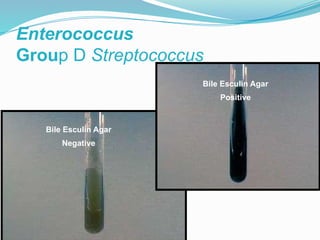
 When grown on media containing esculin, enterococci
hydrolyze the esculin, producing black colonies
Enterococcus
Group D Streptococcus
Bile Esculin Agar
Negative
Bile Esculin Agar
Positive
Treatment and Prevention
 Penicillin or vancomycin plus gentamycin is used
combinely.
 Organism is resistant to drug given individually.
 Vancomycin resistant enterococci (VRE) are
important causes of nosocomal infection, for
which linzolid is best option
 Penicillin and gentamycin should be given to
patients with damaged heart valves prior to
intestinal or urinary tract procedures
 No vaccine is available
Streptococcus pneumoniae
 Characteristics
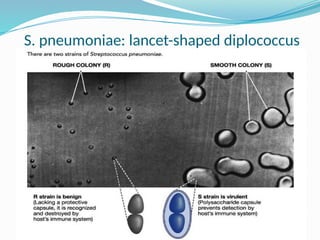
 Gram positive (lancet “bullet” shaped) cocci in pairs or in short
chains, catalase negative, alpha hemolytic colonies. Growth is
inhibited by optochin, colonies are bile soluble. Prominant
polysaccharide capsule (85 serotypes)
 Habitat
 Resides asymptomatically in healthy carriers typically
colonizing the respiratory tract, sinuses and nasal cavity
 Diseases
 Pneumonia, meningitis in adults and otitis media, sinusitis and
conjunctivitis in childrens. S. Pneumoniae cause of community
acquired pneumoniae
 Transmission
 Spread via respiratory droplets and autoinoculation in persons
carrying the bacteria.
S. pneumoniae: lancet-shaped diplococcus
Streptococcus pneumoniae
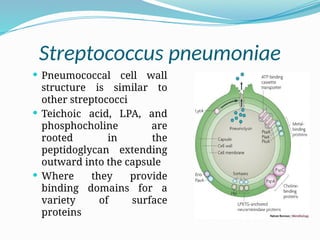
 Pneumococcal cell wall
structure is similar to
other streptococci
 Teichoic acid, LPA, and
phosphocholine are
rooted in the
peptidoglycan extending
outward into the capsule
 Where they provide
binding domains for a
variety of surface
proteins
Streptococcus pneumoniae
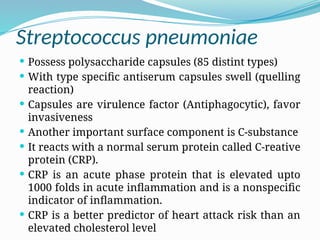
 Possess polysaccharide capsules (85 distint types)
 With type specific antiserum capsules swell (quelling
reaction)
 Capsules are virulence factor (Antiphagocytic), favor
invasiveness
 Another important surface component is C-substance
 It reacts with a normal serum protein called C-reative
protein (CRP).
 CRP is an acute phase protein that is elevated upto
1000 folds in acute inflammation and is a nonspecific
indicator of inflammation.
 CRP is a better predictor of heart attack risk than an
elevated cholesterol level
Pathogenesis & clinical manifestation
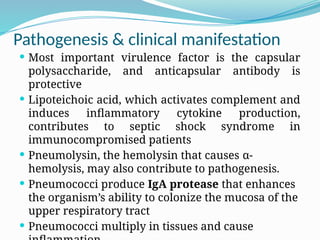
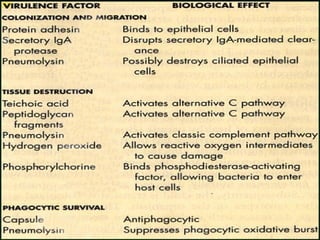
 Most important virulence factor is the capsular
polysaccharide, and anticapsular antibody is
protective
 Lipoteichoic acid, which activates complement and
induces inflammatory cytokine production,
contributes to septic shock syndrome in
immunocompromised patients
 Pneumolysin, the hemolysin that causes α-
hemolysis, may also contribute to pathogenesis.
 Pneumococci produce IgA protease that enhances
the organism’s ability to colonize the mucosa of the
upper respiratory tract
 Pneumococci multiply in tissues and cause
Pathogenesis & clinical manifestation
 When they reach alveoli, there is outpouring of fluid
and red and white blood cells, resulting in
consolidation of the lung. During recovery,
pneumococci are phagocytized, mononuclear cells
ingest debris, and the consolidation resolves.
 Factors that lower resistance and predispose persons
to pneumococcal infections are
 Alcohol, drug intoxication, cerebral impairment,
repiratory tract abnormality, abnormal circulatory
dynamics, certain chronic diseases like scikle cell
anemia and splenectomy
Pathogenesis & clinical manifestation
 Pneumonia often begins with a sudden chill, fever,
cough, and pleuritic pain.
 Sputum is a red or brown “rusty” color.
 Bacteremia occurs in 15% to 25% of cases.
 Spontaneous recovery may begin in 5 to 10 days
and is accompanied by development of
anticapsular antibodies.
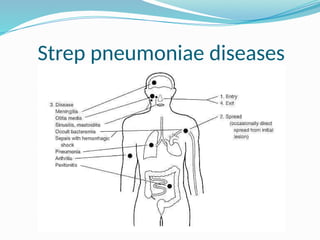
 Pneumococci are a prominent cause of otitis media,
sinusitis, mastoiditis, conjunctivitis, purulent
bronchitis, pericarditis, bacterial meningitis, and
sepsis.
 Pneumococci are the leading cause of sepsis in
patients without a functional spleen.
Strep pneumoniae diseases
Laboratory Diagnosis
 Gram positive bacteria and culture produce
alpha hemolytic colonies on blood agar. Growth
is inhibited by bile and optochin.
 Quelling reaction occurs (swelling of capsule
with types specific antiserum)
 Serologic test is not useful
 Test for capsular antigen in spinal fluid and C
polysaccharide in urine can be diagnostic
Treatment and prevention
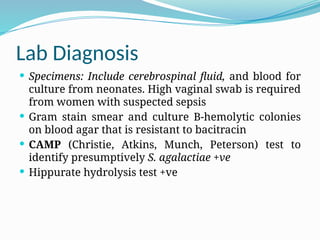
 Penicillin G, resistance is caused by alterations in
penicillin binding protein, no Beta lactamase is
made
 Cephalosporins, erythromycin, chloramphenicol
or vancomycin are used for patients allergic to
penicillin or for treatment of penicillin resistant
strains
 Two vaccines are available
 One is used for adults containing 23 serotypes
 Other is primarily used in children undre age 2
years contains 13 serotypes
The streptococcus Gram positive cocci.pptx

The streptococcus Gram positive cocci.pptx

  • 1.
  • 2.
    Streptococci  Streptococci arespherical gram-positive, non-spore forming nonmotile facultative anaerobic cocci arranged in chains or pairs  Lenght may vary from a single pair to continuous chains over 30 cells, depending on the specie and growth condition  All streptococci are catalase-negative, whereas staphylococci are catalase-positive  Some members form capsules composed of polysaccharide complexes or hyaluronic acid  Streptococci grow best in enriched media. Sheep blood agar is prefered because it satisfies the growth requirements and also serves as an indicator for paatterns of hemolysis
  • 4.
    Classification  At theturn of the 20th century, a classification based on hemolysis and biochemical tests was sufficient to associate some streptococcal species with infection in human.  Rebecca Lancefield, demonstrated carbohydrate antigens in cell wall extracts of the β-Hemolytic streptococci, Her studies formed a classfication by serogroups (eg A,B,C)  Later it was also discovered that nonhemolytic streptococci also have the same cell wall antigens
  • 5.
    Classification  Over theyears it has become clear that possession of one of the lancefield a particularly virulence segment of the streptococcal genus regardless of hemolytic patterns, these are called pyogenic streptococci.  For practical purposes, the type of hemolysis and certain biochemical reactions remain valuable for the initial recognition and presumptive classification of streptococci.
  • 6.
    Lancefield Groups  MembraneAg  Groups A-H, K-V  Group A  Strep. pyogenes  Group B  Strep. agalactiae  Group C, F, G  Strep equisimilis  Strep zooepidemicus  Strep anguinosus  Group D  E. faecalis  Strep bovis  Strep equines  Group K  Strep salivarius  Viridans  Strep mutans  Strep mitis  Strep sanguis  Pneumococci
  • 8.
    Types of Hemolysis α-Hemolytic streptococci form a green zone around their colonies as a result of incomplete lysis of red blood cells in the agar. The green color is formed when hydrogen peroxide produced by the bacteria oxidizes hemoglobin (red color) to biliverdin (green color).  β-Hemolytic streptococci form a clear zone around their colonies because complete lysis of the red cells occurs. β-Hemolysis is due to the production of enzymes (hemolysins) called streptolysin O and streptolysin S  γ-hemolysis streptococci are nonhemolytic
  • 12.
    Group A Streptococci(S. pyogenes)  Habitat  Habitat is the human throat and skin.  Diseases  Suppurative diseases (Pus producing)  Non suppurative diseases (Immunologic)  Transmission  Cough, sneezing, even conversation, tiny skin pustules are spread by scratching & direct contact or shared fomities and also hand to hand transmission
  • 13.
    Antigenic structure ofGAS and adhesion to an epithelial cell.
  • 15.
    Pathogenesis and ClinicalManifestation  Group A streptococci (S. pyogenes) cause disease by three mechanisms:  Pyogenic inflammation, which is induced locally at the site of the organisms in tissue  Exotoxin production, which can cause widespread systemic symptoms in areas of the body where there are no organisms  Immunologic, which occurs when antibody against a component of the organism cross-reacts with normal tissue or forms immune complexes that damage normal tissue The M protein of S. pyogenes is its most important antiphagocytic factor, but its capsule, composed of hyaluronic acid, is also antiphagocytic. Antibodies are not formed against the capsule because hyaluronic acid is a normal component of the body and humans are tolerant to it.
  • 16.
    Group A streptococcitoxins and hemolysins  Erythrogenic toxin causes the rash of scarlet fever. Its mechanism of action is similar to that of the TSST of S. Aureus  Streptolysin O is a hemolysin that is inactivated by oxidation (oxygenlabile). It causes β-hemolysis only when colonies grow under the surface of a blood agar plate  Streptolysin S is a hemolysin that is not inactivated by oxygen (oxygenstable)  Pyrogenic exotoxin A is the toxin responsible for most cases of streptococcal toxic shock syndrome. It has the same mode of action as does staphylococcal TSST  Exotoxin B is a protease that rapidly destroys tissue and is produced in large amounts by the strains of S. pyogenes, the so- called “flesh-eating” streptococci that cause necrotizing fasciitis.  The C5a peptidase degrades complement component C5a, the main factor that attracts phagocytes to sites of complement deposition
  • 17.
  • 18.
    Strep pyogenes diseases Pharyngitis  Scarlet Fever (rash)  Skin  Pyoderma  Impetigo  Erysipelas  Cellulitis  Strep TSS  Necrotizing fasciitis  Myositis  Immune Mediated  Rheumatic fever  Glomerulonephritis
  • 19.
    Streptococcal Pharyngitis  Occurat any age, most frequently 5-15 years  Characterized by acute sore throat, malaise, fever and headache  Involves tonsillar pillars, uvula & soft palate. Which become red, swollen and covered with yellow white exudate  Cervical lymph nodes become swollen and tender  GAS pharyngitis is usually self-limiting. Typically, the fever is gone by the third to fifthday, and other manifestations subside within 1 week  Untreated pharyngitis may extend to the middle ear (otitis media), the sinuses (sinusitis), the mastoids (mastoiditis), or the meninges (meningitis).
  • 20.
    Impetigo  Primary lesionis upto 1cm vesicle surrounded by erythema  The vesicle enlarges and eventually breaks to form a yellow crust  The lesions usually appear in 2- to 5-year-old children on exposed body surfaces, typically the face and lower extremities
  • 21.
    Erysipelas  Erysipelas isa distinct form of streptococcal infection of the skin and subcutaneous tissues, primarily affecting the dermis  It is characterized by a spreading area of erythema and edema with rapidly advancing, well- demarcated edges, pain, and systemic manifestations, including fever and lymphadenopathy  Infection usually occurs on the face, and a previous history of streptococcal sore throat is common
  • 22.
    Necrotizing fasciitis (”flesheating bacteria”)  When there is destruction of the fibrous tissue deep in the skin  The sheath of tissue that covers the muscle is destroyed  Destruction is due to release of exotoxin A that stimulates production of cytokines damaging endothelial lining and leaking fluid into the extravascular space causing diminished blood flow, tissue hypoxemia, and tissue death  Can also be caused by Staph aureus and other bacteria
  • 23.
    Scarlett Fever  Ifthe infecting streptococci produce erythrogenic toxin and the host lacks antitoxin, scarlet fever may result. A “strawberry” tongue is a characteristic lesion seen in scarlet fever.
  • 24.
    Streptococcal Toxic ShockSyndrome (STSS)  Beta-hemolytic group A streptococci can cause toxic shock syndrome like that caused by Staphylococcus aureus  Similar to scarlet fever, streptococcal toxic shock syndrome is also mediated by the release of pyrogenic toxin
  • 25.
    Poststreptococcal Sequelae  ACUTERHEUMATIC FEVER  Acute rheumatic fever is a nonsuppurative inflammatory disease characterized by fever, carditis, subcutaneous nodules, chorea, and migratory polyarthritis.  The antigen stimulating these antibodies is most probably M protein, but the group A carbohydrate is also a possibility. There is similarity between the structure of regions of the M protein and myosin, and M protein fragments have been shown to stimulate antibodies that bind to human heart sarcolemma membranes, cardiac myosin, synovium, and articular cartilage.  A cellular reaction pattern consisting of lymphocytes and macrophages aggregated around fibrinoid deposits is found in human hearts. This lesion, called the Aschoff body is considered characteristic of rheumatic carditis
  • 27.
    Poststreptococcal Sequelae  ACUTEGLOMERULONEPHRITIS  The renal injury of acute glomerulonephritis is caused by deposition in the glomerulus of antigen–antibody complexes with complement activation and consequent inflammation. This is a type III hypersensitivity. The M proteins of some nephritogenic strains have been shown to share antigenic determinants with glomeruli, which suggests an autoimmune mechanism similar to rheumatic fever  Poststreptococcal glomerulonephritis is primarily a disease of childhood that begins 1 to 4 weeks after streptococcal pharyngitis and 3 to 6 weeks after skin infection. It is characterized clinically by edema, hypertension, hematuria, proteinuria, and decreased serum complement levels.
  • 29.
    Diagnosis  Suppurative Infections Gram Stain, smear and culture. B- hemolytic colonies on blood agar (Hemolysis due to streptolysin O & S)  Isolates are sensitive to bacitracin  ELISA tests are available for GAS antigens in throat swab  Non suppurative infections  If rheumatic fever is suspected, patients antistreptolysin O (ASO) antibody titer is tested  If acute glomerulonephritis is suspected antibody to streptococcal Dnase B is used as evidence of a previous skin infection by S. Pygenes.
  • 30.
    Treatment and prevention Penicillin G (No significant resistance)  Penicillin is used in patients with rheumatic fever to prevent recurrent s.pygenes pharygitis. This prevents additional damage to heart valves  Multivalent vaccines using M protein epitopes that are not cross-reactive to self are in clinical trials with encouraging results.
  • 31.
    Group B Streptococcus(S. agalactia)  Characteristics  Gram positive cocci in chains, B-hemolytic colonies, catalase negative, Bacitricin resistant.  Habitat  Habitat is the human GIT & vagina (Group B streptococci can be found in the lower gastrointestinal and vaginal flora of 10% to 40% of women)  Diseases  Neonatal Meningitis and sepsis  Transmission  Trasmission occurs during birth
  • 32.
    Pathogenesis & clinicalmanifestations  In adults it rarely causes URT infections, meningitis, bacteremia, and endocarditis  It used to be a major cause of puerperal sepsis (post- partum sepsis)  The most serious cases of group B infections occur in the newborn  There are two types of disease in the newborn  Early onset disease – occurs when babies become infected in utero or at birth, with the organism gaining access through the respiratory tract  The disease has a high mortality rate and is characterized by respiratory disease and bacteremia  Septicemia and meningitis may also occur
  • 33.
    Pathogenesis & clinicalmanifestations  Late onset disease – occurs 7-10 days after birth and the baby probably acquires the organism by direct contact with mucosal surfaces  The disease is characterized by meningitis or osteomyelitis and possibly bacteremia  The mortality rate is high, but lower than that for the early- onset disease  Although most group B streptococcal infections are in neonates, this organism also causes such infections as pneumonia, endocarditis, arthritis, cellulitis, and osteomyelitis in adults.  Postpartum endometritis also occurs. Diabetes is the main predisposing factor for adult group B streptococcal infections
  • 34.
    Lab Diagnosis  Specimens:Include cerebrospinal fluid, and blood for culture from neonates. High vaginal swab is required from women with suspected sepsis  Gram stain smear and culture B-hemolytic colonies on blood agar that is resistant to bacitracin  CAMP (Christie, Atkins, Munch, Peterson) test to identify presumptively S. agalactiae +ve  Hippurate hydrolysis test +ve
  • 36.
    Treatment and prevention Penicillin G for GBS infection  No vaccine available  Ampicillin should be given to mothers if prolonged rupture of membranes occurs, if mother has a fever or if the neonate is premature
  • 37.
    Enterococci (Group D) Characteristics  Gram positive cocci in chains, catalase negative, non- hemolytic or alpha hemolytic, non-capsulate and the majority are non- motile  Habitat  Habitat is the human colon, urethra and female genital tract but mainly GIT  Diseases  Urinary tract infection, biliary tract infection are frequent, endocarditis are rare but life threatening  Transmission  May enter bloodstream and gastrointestinal or genitourinary tract through procedures
  • 38.
    Enterococci (Group D) Formerly called streptococci, two important species E. faecalis and E. faecium  E. faecalis is the main pathogen in the genus Enterococcus, causing about 95% of enterococcal infections, a minority of infections are caused by E. faecium  The term enterococcus derives from their presence in the intestinal tract
  • 39.
    Pathogenesis & clinicalmanifestation  Enterococci are a significant cause of disease in specialized hospital settings  They are not highly virulent. On their own, they do not produce fulminant disease and in wound and soft tissue infections are usually mixed with other members of the intestinal flora  Enterococci cause opportunistic urinary tract infections (UTIs) and occasionally wound and soft tissue infections, in much the same fashion as members of the Enterobacteriaceae
  • 40.
    Pathogenesis & clinicalmanifestation  Infections are often associated with urinary tract manipulations, malignancies, biliary tract disease, and gastrointestinal disorders  Vascular or peritoneal catheters are often points of entry  There is sometimes an associated bacteremia, which can result in the development of endocarditis on previously damaged cardiac valves
  • 41.
    Lab Diagnosis Morphology:  Enterococcusspecies are Gram positive cocci, occurring in pairs or short chains Culture  Enterococci are aerobic organisms capable of growing over a wide temperature range, 10–45 ºC  Blood agar: Enterococci are mainly nonhaemolytic but some strains show alpha or beta-haemolysis  Enterococcus species are also able to grow in the presence of 6.5% sodium chloride and 40% bile  When grown on media containing esculin, enterococci hydrolyze the esculin, producing black colonies
  • 42.
    Enterococcus Group D Streptococcus BileEsculin Agar Negative Bile Esculin Agar Positive
  • 43.
    Treatment and Prevention Penicillin or vancomycin plus gentamycin is used combinely.  Organism is resistant to drug given individually.  Vancomycin resistant enterococci (VRE) are important causes of nosocomal infection, for which linzolid is best option  Penicillin and gentamycin should be given to patients with damaged heart valves prior to intestinal or urinary tract procedures  No vaccine is available
  • 44.
    Streptococcus pneumoniae  Characteristics Gram positive (lancet “bullet” shaped) cocci in pairs or in short chains, catalase negative, alpha hemolytic colonies. Growth is inhibited by optochin, colonies are bile soluble. Prominant polysaccharide capsule (85 serotypes)  Habitat  Resides asymptomatically in healthy carriers typically colonizing the respiratory tract, sinuses and nasal cavity  Diseases  Pneumonia, meningitis in adults and otitis media, sinusitis and conjunctivitis in childrens. S. Pneumoniae cause of community acquired pneumoniae  Transmission  Spread via respiratory droplets and autoinoculation in persons carrying the bacteria.
  • 45.
  • 46.
    Streptococcus pneumoniae  Pneumococcalcell wall structure is similar to other streptococci  Teichoic acid, LPA, and phosphocholine are rooted in the peptidoglycan extending outward into the capsule  Where they provide binding domains for a variety of surface proteins
  • 47.
    Streptococcus pneumoniae  Possesspolysaccharide capsules (85 distint types)  With type specific antiserum capsules swell (quelling reaction)  Capsules are virulence factor (Antiphagocytic), favor invasiveness  Another important surface component is C-substance  It reacts with a normal serum protein called C-reative protein (CRP).  CRP is an acute phase protein that is elevated upto 1000 folds in acute inflammation and is a nonspecific indicator of inflammation.  CRP is a better predictor of heart attack risk than an elevated cholesterol level
  • 48.
    Pathogenesis & clinicalmanifestation  Most important virulence factor is the capsular polysaccharide, and anticapsular antibody is protective  Lipoteichoic acid, which activates complement and induces inflammatory cytokine production, contributes to septic shock syndrome in immunocompromised patients  Pneumolysin, the hemolysin that causes α- hemolysis, may also contribute to pathogenesis.  Pneumococci produce IgA protease that enhances the organism’s ability to colonize the mucosa of the upper respiratory tract  Pneumococci multiply in tissues and cause
  • 50.
    Pathogenesis & clinicalmanifestation  When they reach alveoli, there is outpouring of fluid and red and white blood cells, resulting in consolidation of the lung. During recovery, pneumococci are phagocytized, mononuclear cells ingest debris, and the consolidation resolves.  Factors that lower resistance and predispose persons to pneumococcal infections are  Alcohol, drug intoxication, cerebral impairment, repiratory tract abnormality, abnormal circulatory dynamics, certain chronic diseases like scikle cell anemia and splenectomy
  • 51.
    Pathogenesis & clinicalmanifestation  Pneumonia often begins with a sudden chill, fever, cough, and pleuritic pain.  Sputum is a red or brown “rusty” color.  Bacteremia occurs in 15% to 25% of cases.  Spontaneous recovery may begin in 5 to 10 days and is accompanied by development of anticapsular antibodies.  Pneumococci are a prominent cause of otitis media, sinusitis, mastoiditis, conjunctivitis, purulent bronchitis, pericarditis, bacterial meningitis, and sepsis.  Pneumococci are the leading cause of sepsis in patients without a functional spleen.
  • 52.
  • 53.
    Laboratory Diagnosis  Grampositive bacteria and culture produce alpha hemolytic colonies on blood agar. Growth is inhibited by bile and optochin.  Quelling reaction occurs (swelling of capsule with types specific antiserum)  Serologic test is not useful  Test for capsular antigen in spinal fluid and C polysaccharide in urine can be diagnostic
  • 54.
    Treatment and prevention Penicillin G, resistance is caused by alterations in penicillin binding protein, no Beta lactamase is made  Cephalosporins, erythromycin, chloramphenicol or vancomycin are used for patients allergic to penicillin or for treatment of penicillin resistant strains  Two vaccines are available  One is used for adults containing 23 serotypes  Other is primarily used in children undre age 2 years contains 13 serotypes