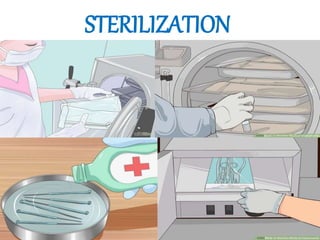
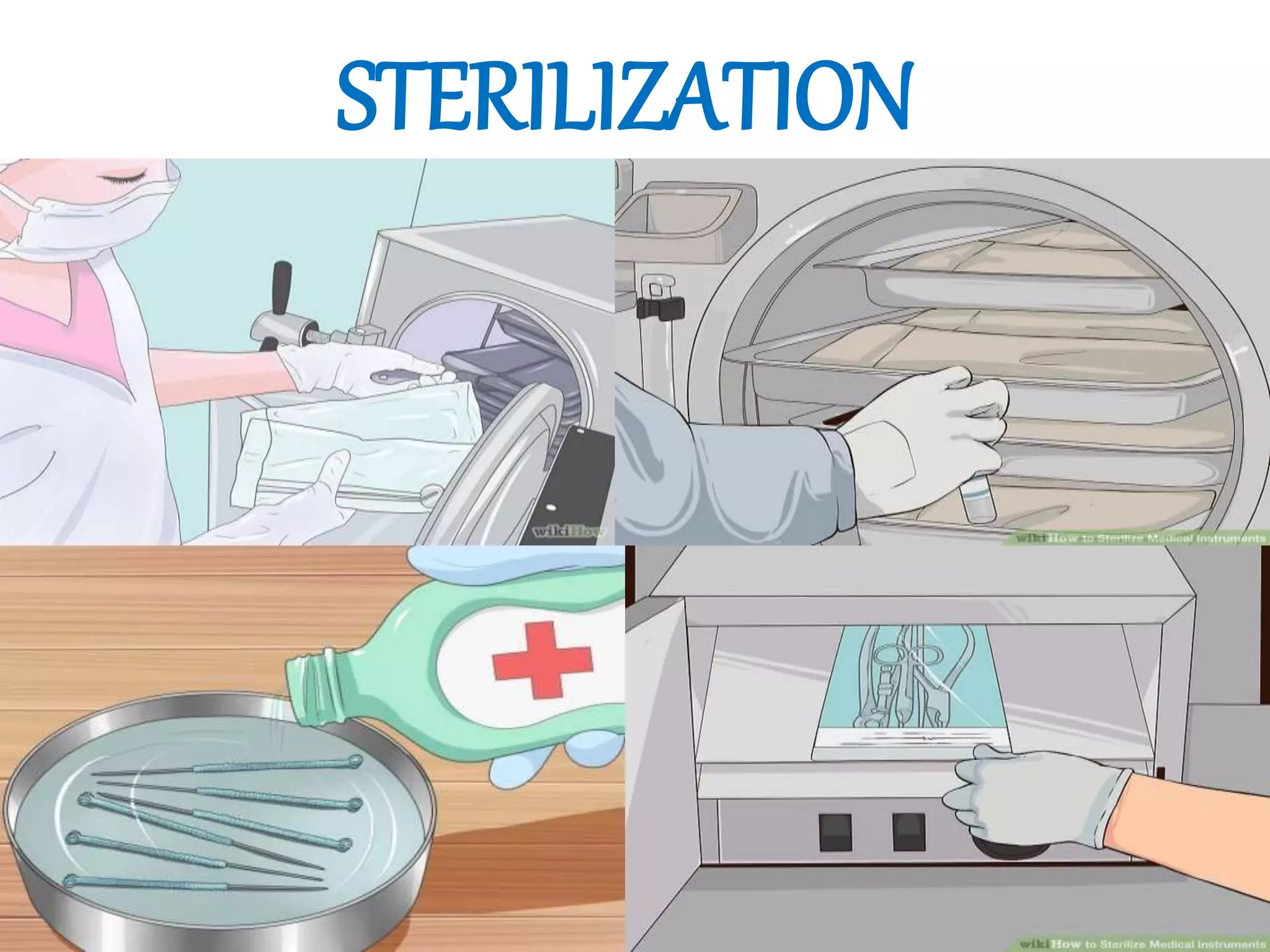
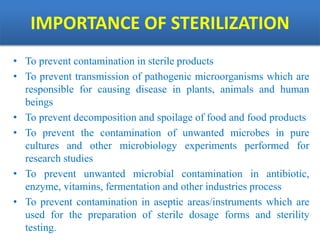
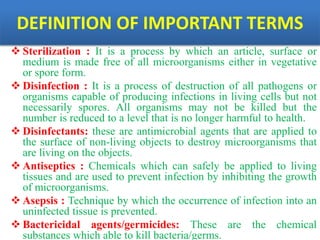
STERILIZATION
IMPORTANCE OF STERILIZATION
• To prevent contamination in sterile products
• To prevent transmission of pathogenic microorganisms which are
responsible for causing disease in plants, animals and human
beings
• To prevent decomposition and spoilage of food and food products
• To prevent the contamination of unwanted microbes in pure
cultures and other microbiology experiments performed for
research studies
• To prevent unwanted microbial contamination in antibiotic,
enzyme, vitamins, fermentation and other industries process
• To prevent contamination in aseptic areas/instruments which are
used for the preparation of sterile dosage forms and sterility
testing.
DEFINITION OF IMPORTANT TERMS
 Sterilization : It is a process by which an article, surface or
medium is made free of all microorganisms either in vegetative
or spore form.
 Disinfection : It is a process of destruction of all pathogens or
organisms capable of producing infections in living cells but not
necessarily spores. All organisms may not be killed but the
number is reduced to a level that is no longer harmful to health.
 Disinfectants: these are antimicrobial agents that are applied to
the surface of non-living objects to destroy microorganisms that
are living on the objects.
 Antiseptics : Chemicals which can safely be applied to living
tissues and are used to prevent infection by inhibiting the growth
of microorganisms.
 Asepsis : Technique by which the occurrence of infection into an
uninfected tissue is prevented.
 Bactericidal agents/germicides: These are the chemical
substances which able to kill bacteria/germs.
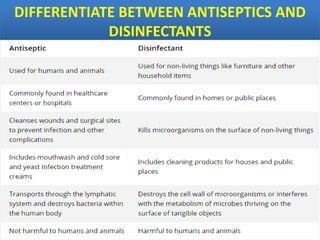
DIFFERENTIATE BETWEEN ANTISEPTICS AND
DISINFECTANTS
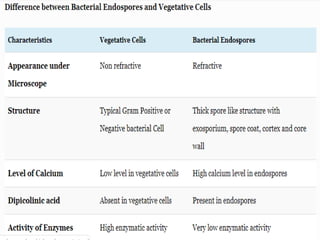
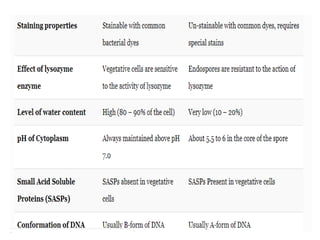
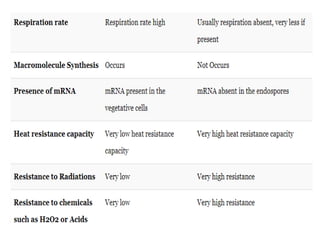
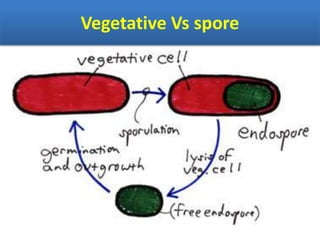
Vegetative Vs spore
Why we need Sterilization
Microorganisms capable of causing
infection are constantly present in the
external environment and on the human
body.
Microorganisms are responsible for
contamination and infection.
The aim of sterilization is to remove or
destroy the microorganisms from materials
or from surfaces.
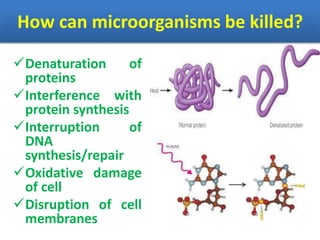
How can microorganisms be killed?
Denaturation of
proteins
Interference with
protein synthesis
Interruption of
DNA
synthesis/repair
Oxidative damage
of cell
Disruption of cell
membranes
Factors that influence efficacy of
disinfection/sterilization
Contact time
Physico-chemical environment (e.g. pH)
Presence of organic material
Temperature
Type of microorganism
Number of microorganisms
Material composition
What to sterilize?
 All instruments that penetrate soft tissues and
bone.
 Instruments that are not intended to penetrate
the tissues, but that may come into contact
with oral tissues.
 If the sterilization procedure may damage the
instruments, then sterilization can be replaced
by Disinfection procedure.
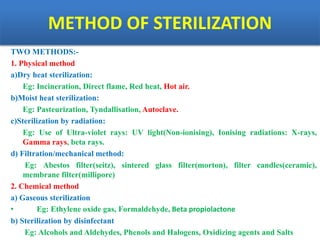
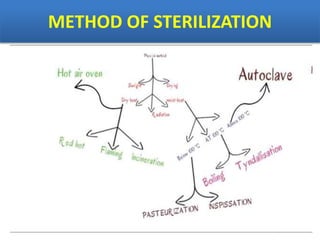
METHOD OF STERILIZATION
TWO METHODS:-
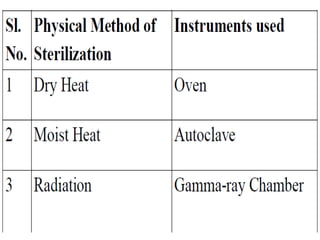
1. Physical method
a)Dry heat sterilization:
Eg: Incineration, Direct flame, Red heat, Hot air.
b)Moist heat sterilization:
Eg: Pasteurization, Tyndallisation, Autoclave.
c)Sterilization by radiation:
Eg: Use of Ultra-violet rays: UV light(Non-ionising), Ionising radiations: X-rays,
Gamma rays, beta rays.
d) Filtration/mechanical method:
Eg: Abestos filter(seitz), sintered glass filter(morton), filter candles(ceramic),
membrane filter(millipore)
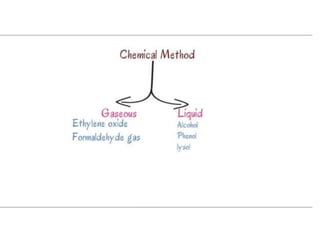
2. Chemical method
a) Gaseous sterilization
• Eg: Ethylene oxide gas, Formaldehyde, Beta propiolactone
b) Sterilization by disinfectant
Eg: Alcohols and Aldehydes, Phenols and Halogens, Oxidizing agents and Salts
METHOD OF STERILIZATION
1. Physical method
• Involves processes by the use of
physical means
• Utilisation of heat in the
presence or in the absence of
heat, moisture, radiation or
membrane filtration methods.
A) DRY HEAT STERILIZATION
• Heat is the most reliable and rapid method of
sterilization
• Mechanism: Protein denaturation, oxidative
damage and toxic effect of elevated levels of
electrolytes.
• Time required for sterilization is inversely
proportional to the temperature of exposure.
This can be expressed as thermal death time,
which is the minimum time required to kill a
suspension of microorganisms at a temperature
and specific conditions.
1. Sunlight and drying:
• Action primarily due to UV rays however, effects vary due to
places
Eg: Natural method for sterilization of water in tanks, reservoir,
lakes, etc
2. Heat:
• Most reliable method of sterilization and should be the method
of choice.
Eg: Inoculating wire, needles, forceps, etc
3. Flaming:
• Passed over flame without allowing it to become red hot
Eg: Culture tube, glass slides, scalpels, needles, cover slips, etc.
4. Incineration:
• Excellent method for rapid destroying materials
Eg: Pathological material, contaminated cloth, animals carcasses
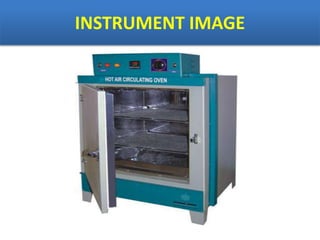
5. HOT AIR OVEN
• Hot air ovens are electrical devices used in sterilization.
• The oven uses dry heat to sterilize articles.
• Generally, they can be operated from 50 to 300 C (122 to 572 F) .
• There is a thermostat controlling the temperature.
• This is the most widely used method of sterilization by dry heat.
• Items: glassware, forceps, scissors, scalpels, all-glass syringes,
swabs, liquid paraffin, dusting powder, fats, grease.
• (Materials should be properly arranged to allow free circulation of
air)
• IT IS NOT SUITABLE FOR SURGICAL DRESSING, RUBBER, PLASTIC,
VOLATILE AND HEAT LIABLE SUBSTANCES.
INSTRUMENT IMAGE
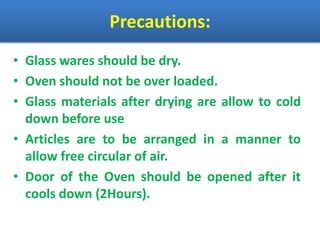
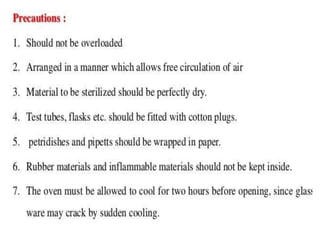
Precautions:
• Glass wares should be dry.
• Oven should not be over loaded.
• Glass materials after drying are allow to cold
down before use
• Articles are to be arranged in a manner to
allow free circular of air.
• Door of the Oven should be opened after it
cools down (2Hours).
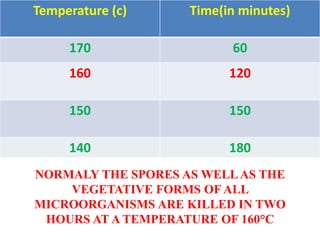
NORMALY THE SPORES AS WELLAS THE
VEGETATIVE FORMS OF ALL
MICROORGANISMS ARE KILLED IN TWO
HOURS AT A TEMPERATURE OF 160°C
Temperature (c) Time(in minutes)
170 60
160 120
150 150
140 180
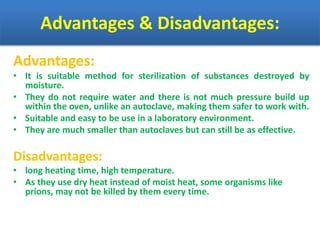
Advantages & Disadvantages:
Advantages:
• It is suitable method for sterilization of substances destroyed by
moisture.
• They do not require water and there is not much pressure build up
within the oven, unlike an autoclave, making them safer to work with.
• Suitable and easy to be use in a laboratory environment.
• They are much smaller than autoclaves but can still be as effective.
Disadvantages:
• long heating time, high temperature.
• As they use dry heat instead of moist heat, some organisms like
prions, may not be killed by them every time.
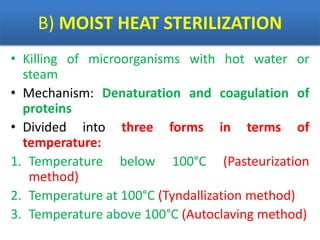
B) MOIST HEAT STERILIZATION
• Killing of microorganisms with hot water or
steam
• Mechanism: Denaturation and coagulation of
proteins
• Divided into three forms in terms of
temperature:
1. Temperature below 100°C (Pasteurization
method)
2. Temperature at 100°C (Tyndallization method)
3. Temperature above 100°C (Autoclaving method)
Temperature below 100°C
I : Pasteurization: below100°C
• Used for milk, ice cream, yogurt, and fruit juices
• Heat-tolerant microbes survive
• Batch method
• Temperature below 100° Pasteurization of milk
• Developed by Louis Pasteur to prevent the spoilage of beverages.
• Used to reduce microbes responsible for spoilage of beer, milk, wine, juices, etc.
• Milk was exposed to 65°C for 30 minutes.
• Inspissation is the process used when heating high-protein containing media; for
example to enable recovery of bacteria for testing.( by making THICKINING /DENSE)
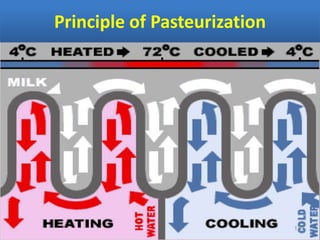
• High Temperature Short Time Pasteurization (HTST): Used today. Milk is
exposed to 72°C for 15 seconds.
• Target: all non-sporing pathogens
• Eg: Mycobacteria, Brucellae, Salmonella, relatively heat resistant, may survive
the holder method.
Principle of Pasteurization
II: A temperature at 100°C
1. Boiling : Boiling for 10 – 30 minutes may kill most
of vegetative forms but spores with stand boiling.
2. Tyndallisation: Steam at 100°C for 20 minutes on
three successive days. Used for egg , serum and
sugar containing media.
3. Steam sterilizer : Steam at 100°C for 90 minutes.
Used for media which are decomposed at high
temperature.
III. A temperature above 100°C
Autoclave :
• Steam above 100°C has a better killing power than dry
heat.
• Bacteria are more susceptible to moist heat.
• TARGETS BOTH VEGETAIVE AND SPORES
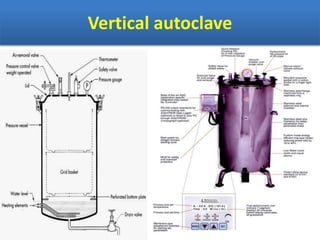
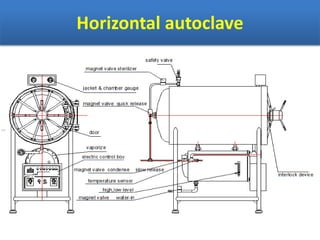
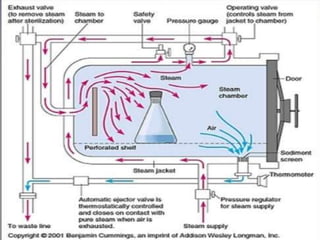
Components of autoclave:
• Consists of vertical or horizontal cylinder of gunmetal or
stainless steel.
• Lid is fastened by screw clamps and rendered air tight by
an asbestos washer.
• Lid bears a discharge tap for air and steam, a pressure
gauge and a safety valve.
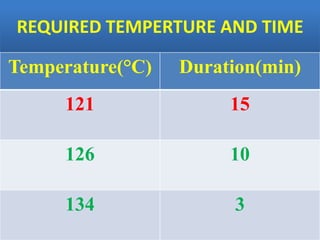
REQUIRED TEMPERTURE AND TIME
Temperature(°C) Duration(min)
121 15
126 10
134 3
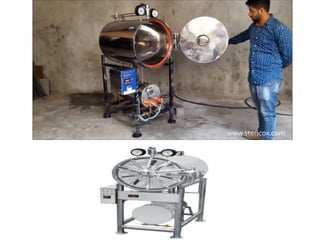
Vertical autoclave
Horizontal autoclave
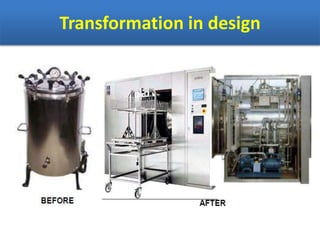
Transformation in design
Procedure
• Water is added on the bottom of the autoclave and articles to be
sterilized are placed in a perforated shelf.
• The lid is closed, discharge tap is opened and safety valve is adjusted to
the required pressure.
• When the air bubbles stop emitting from the discharge tap it indicates all
the air from inside the autoclave has been removed.
• At this stage, the discharge tap is closed.
• Steam pressure rises inside and when it reaches the desire set
level(15p.s.i) the safety valve opens and excess steam escapes.
• From this point the holding time(15mins) is counted
• When the holding time is over, the heating is stopped and autoclave is
allowed to cool till pressure gauze indicates that the inside pressure has
reached to the atmospheric pressure
• The discharge tap is opened slowly and air is allowed to removed from
the autoclave.
• The lid is opened and the sterilized articles are removed.
Uses of Autoclaves:
• Useful for materials which can not withstand
high temp.
• To sterilize culture media, heat stable liquids,
saline solutions, heat resistant equipments and
instruments, glasswares, ampoules, syringes,
rubber material, gowns, surgical dressings,
gloves etc.
Unsuitable for anhydrous material such as
powders, oils, fats, ointments.
More efficient than Dry heat sterilization
i) It provides greater lethal action of
moist heat
ii) It is quicker in heat up the exposed
articles
iii)It can penetrate easily porous
material such as cotton wool
stoppers, paper and cloths wrappers.
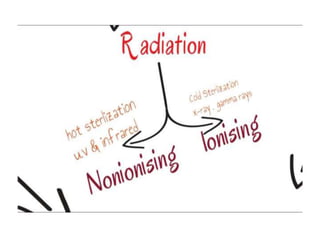
C) RADIATION
• Two types of radiation: Ionising radiation & Non-ionising
radiation
1. Non-ionising radiation(HOT STERILIZATION)
• Infrared- Used for rapid mass sterilization of pre-packed
items such as Syringe, Cathaters
• UV
• Used for disinfecting enclosed area such as entryways,
operation theatres and labs.
2. Ionising radiation(Cold sterilization)
• Gamma rays: X-rays:
• Used for sterilising plastics, syringes, swabs, catheters,
animal feeds, cardboard, oils, greases, fabric and metal
foils.
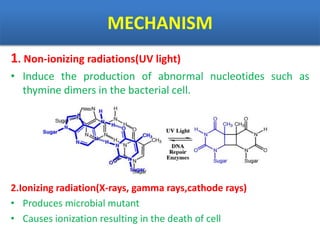
MECHANISM
1. Non-ionizing radiations(UV light)
• Induce the production of abnormal nucleotides such as
thymine dimers in the bacterial cell.
2.Ionizing radiation(X-rays, gamma rays,cathode rays)
• Produces microbial mutant
• Causes ionization resulting in the death of cell
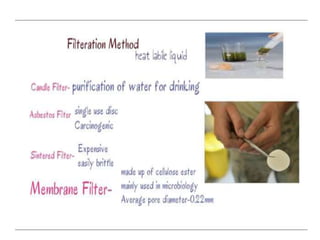
D) Filtration (mechanical) method
• Helps to remove bacteria from heat labile
liquids
• Items: sera and solutions of sugars or
antibiotics.
• Principle: as viruses pass through the ordinary
filters, filtration can be used to obtain bacteria-
free filtrates of clinical samples for virus
isolation.
Types of filters:
•Candle filters
•Asbestos filters
•Sintered glass filters
•Membrane filters.
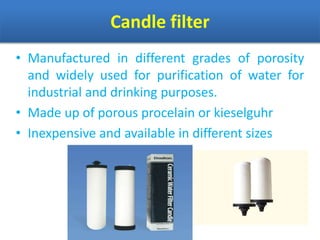
Candle filter
• Manufactured in different grades of porosity
and widely used for purification of water for
industrial and drinking purposes.
• Made up of porous procelain or kieselguhr
• Inexpensive and available in different sizes
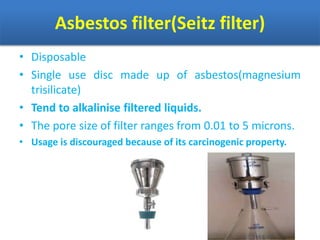
Asbestos filter(Seitz filter)
• Disposable
• Single use disc made up of asbestos(magnesium
trisilicate)
• Tend to alkalinise filtered liquids.
• The pore size of filter ranges from 0.01 to 5 microns.
• Usage is discouraged because of its carcinogenic property.
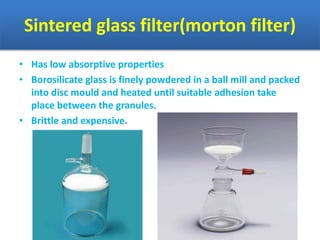
Sintered glass filter(morton filter)
• Has low absorptive properties
• Borosilicate glass is finely powdered in a ball mill and packed
into disc mould and heated until suitable adhesion take
place between the granules.
• Brittle and expensive.
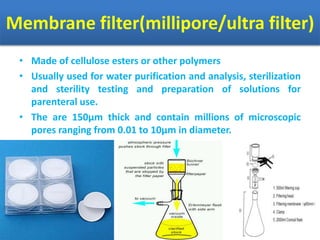
Membrane filter(millipore/ultra filter)
• Made of cellulose esters or other polymers
• Usually used for water purification and analysis, sterilization
and sterility testing and preparation of solutions for
parenteral use.
• The are 150µm thick and contain millions of microscopic
pores ranging from 0.01 to 10µm in diameter.
Advantages and disadvantages
Adv:
1. All microorganisms are separated by process of sieving
2. Membranes have a high and uniform porosity permitting a rapid rate of
filtration
3. Membranes are disposable. Hence, there is no cross contamination
between filtered products
4. Adsorption is very less
Disadv:
1. Prefilter is used before the membrane filter to avoid clogging and
breaking
2. They have less chemical resistance to certain organic solvents such as
chloroform, ketone and esters
CHEMICAL METHODS OF STERILIZATION
Action of chemical agents
Mechanism:
• Protein coagulation
• Disruption of cell membrane resulting in
exposure, damage/loss of contents
• Removal of sulfhydryl group essential for
normal functioning Of enzyme
• Substrate competition.
Commonly used chemical
1. Reagents:
Alcohol
• Frequently used are Ethyl alcohol ,Isopropyl alcohol
• These must be used at concentration 60-90%.
• Isopropyl alcohol used in disinfection of clinical thermometer.
• Methyl alcohol is effective against fungal spores, treating cabinets and
incubators.
• Methyl alcohol is also toxic and inflammable.
Aldehyde
• Formaldehyde:
• Having Bactericidal, sporicidal and has lethal effect on viruses.
• Used to preserve anatomical specimens, destroying anthrax
• spores on hair and wool.
Glutaldehyde:
• Effective against tubercle bacilli, fungi, viruses.
• Less toxic and irritant to eyes, skin
• Used to treat anaesthetic rubber, face masks, plastic endotracheal
tubes, metal instruments and polythene tubing.
2. Dyes:
Two groups of dyes:
1.Aniline dye
2.Acridine dye
• Both are bacteriostatic in high dilution but are of low bactericidal
activity.
• Aniline dye is more active against gram +ve than gram-ve organisms.
Some important dyes:
• Proflavine
• Acriflavine
• Euflavine
• Aminacrine
• These Impair the DNA complexes of the organisms and thus kill or
destroy the reproductive capacity of the cell.
Halogens
• Iodine
• Used as Skin disinfectant
• Having Active bactericidal activity &moderate
action on spores.
• Chlorine
• Used to disinfect Water supplies, swimming
pools and food and dairy industries.
• Along with hypochlorides are bactericidal. Also
act on viruses.
Phenols
• These are obtained from distillation of coal tar between 170- 270 C.
• Lethal effects are:
• Capacity to cause cell membrane damage, releasing cell contents and
causing lysis.
• Low concentration will precipitate proteins.
3. Gases:
• Types of gases used for sterilization:
• Ethylene oxide
• Formaldehyde gas
• Beta propiolactone (BPL).
Ethylene oxide:
• Action is due to its alkylating the amino, carboxyl, hydroxyl and
sulphydryl groups in protein molecules.
• Also on DNA and RNA.
• Items: heart-lung machines, respirators, sutures, dental equipment,
books, clothing.
Formaldehyde gas:
• This is widely employed for fumigation of
Operation Theatre and other rooms.
• Formaldehyde is produced by adding 150g of
KMnO4 to 280ml of formalin for every 1000cu.ft of
roomvolume, after closing the windows and other
outlets.
• After fumigation, the doors should be sealed and
left unopened for 48 hours.
Beta propiolactone:
• Product of ketane and formaldehyde with a boiling
point of 163 C.
• Having rapid bactericidal activity but carcinogenic.
• Capable of killing all microorganisms and is very
active against viruses.
Sterility criteria
• Bioburden is normally defined as the number of
bacteria living on a surface that has not been
sterilized.
• The term is most often used in the context
of bioburden testing, also known as microbial
limit testing, which is performed on
pharmaceutical products and medical products
for quality control purposes.
• Time and temperature relationship for steam
sterilization to ensure that a large number of the
most resistant pathogens would be killed.
Sensitivity of microorganisms
• Microorganisms shows resistance to heat,
radiation and chemicals.
• The vegetative forms of bacteria and fungi
are most sensitive.
• The thermophilic bacteria, smaller viruses
and mould spores are killed at temperature
between 70 to 90°C, while bacteria spores
may be destroyed at 90 to 120°C
temperatures.
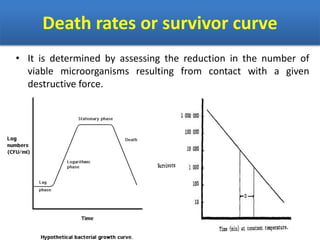
Death rates or survivor curve
• It is determined by assessing the reduction in the number of
viable microorganisms resulting from contact with a given
destructive force.
Sterility indicators
• Changing appearances in colour or pattern, the sterilization
indicators visually show if cleaning conditions are passing or
procedures have been completed.
• Eliminating any confusion or possibility instruments will not be
sterile, indicators are used routinely in clinical and research
environments where contamination elimination is crucial.
• With the temperature resistance required to endure the
purification, the sterilization indicators are available in different
forms such as tapes, ampoules, and sticks.
• Monitoring of sterilization process can be achieved by the use of
physical, chemical or biological indicators.
1. Physical indicators
i) Moist heat Indicator:
 A Master Process Record (MPR) is prepared as
part of the validation procedure for a
particular autoclave
 The MPR should be checked at annual intervals
and whenever significant changes occur in the
BPR(Batch Production Records)when compared
with the MPR.
 Microprocessor-controlled sterilization cycles
are now a part of modern autoclaves.
ii) Dry heat:
 in dry sterilization processes, a temperature record chart is made of each
sterilization cycle and is compared against a master temperature record.
iii) Radio sterilization:
 A plastic dosimeter gives an accurate measure of the radiation does absorbed
and is considered to be the best technique currently available for the radio
sterilization process.
iv) Gaseous methods:
 For gaseous sterilization procedures, elevated temperatures are monitored for
each sterilization cycle by temperature probes and routine leak test are
performed to ensure gas-tight seals. Gas concentration is measured
independently of pressure rise, often by reference to the weight of gas used.
Pressure and humidity measurements are record.
v) Filtration:
 Bubble point pressure test is a technique employed for determining the pore
size of filters and may also be used to check the integrity of certain types of
filter devices immediately after use. The principle of the is that the filter is
soaked in an appropriate fluid and pressure is applied to the filter. The pressure
difference when the first bubble of air breaks away from the filter is equivalent
to the maximum pore size. When the air pressure is further increased slowly,
there is general eruption of bubbles over the entire surface. The pressure
difffrence is equivalent to the mean pore size.
2.Chemical indicators
• Chemical monitoring of a sterilization process is
based on the ability of heat, steam, sterility gases
and ionizing radiation to alter the chemical or
physical characteristics of a variety of chemical
substances.
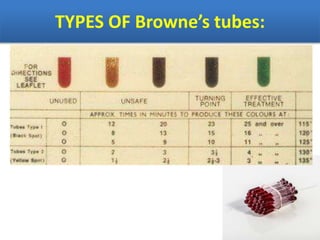
i) Browne’s tubes:
 Most commonly used chemical indicator for heat
process
 Contains small sealed coloured tubes having a
reaction mixture and an indicator
 Expose to high temperature resulting in the
change of colour of the indicators.(Red to green)
TYPES OF Browne’s tubes:
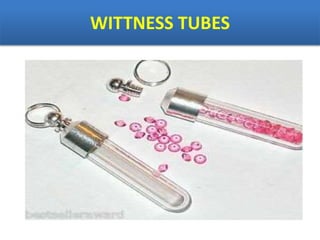
II) WITTNESS TUBES
• Consist of single crystalline substances of
known melting point contained in glass tubes
• Ex: Sulphur(115°C), Succinic anhydride(120°C),
Benzoic acid(121°C), etc.
• A dye may be included to show more clearly
that the crystals have melted.
• Indicates that a certain temperature has been
reached.
WITTNESS TUBES
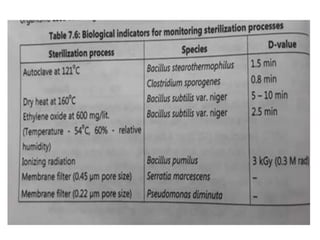
3. Biological indicator
• Consist of a suitable organism deposited on a
carrier and are distributed throughout the
sterilizer load
• At the end of the sterilization process, the units
are recovered and cultured to determine the
presence or absence of survivors.
• Confirm the ability of the sterilization process to
kill microbial spores
• Can check large number of spore
• Includes all the parameters of the sterilization
process
• Most critical test of sterilization process
Thank you

Sterilization process

  • 1.
  • 2.
    IMPORTANCE OF STERILIZATION •To prevent contamination in sterile products • To prevent transmission of pathogenic microorganisms which are responsible for causing disease in plants, animals and human beings • To prevent decomposition and spoilage of food and food products • To prevent the contamination of unwanted microbes in pure cultures and other microbiology experiments performed for research studies • To prevent unwanted microbial contamination in antibiotic, enzyme, vitamins, fermentation and other industries process • To prevent contamination in aseptic areas/instruments which are used for the preparation of sterile dosage forms and sterility testing.
  • 3.
    DEFINITION OF IMPORTANTTERMS  Sterilization : It is a process by which an article, surface or medium is made free of all microorganisms either in vegetative or spore form.  Disinfection : It is a process of destruction of all pathogens or organisms capable of producing infections in living cells but not necessarily spores. All organisms may not be killed but the number is reduced to a level that is no longer harmful to health.  Disinfectants: these are antimicrobial agents that are applied to the surface of non-living objects to destroy microorganisms that are living on the objects.  Antiseptics : Chemicals which can safely be applied to living tissues and are used to prevent infection by inhibiting the growth of microorganisms.  Asepsis : Technique by which the occurrence of infection into an uninfected tissue is prevented.  Bactericidal agents/germicides: These are the chemical substances which able to kill bacteria/germs.
  • 4.
  • 8.
  • 9.
    Why we needSterilization Microorganisms capable of causing infection are constantly present in the external environment and on the human body. Microorganisms are responsible for contamination and infection. The aim of sterilization is to remove or destroy the microorganisms from materials or from surfaces.
  • 10.
    How can microorganismsbe killed? Denaturation of proteins Interference with protein synthesis Interruption of DNA synthesis/repair Oxidative damage of cell Disruption of cell membranes
  • 11.
    Factors that influenceefficacy of disinfection/sterilization Contact time Physico-chemical environment (e.g. pH) Presence of organic material Temperature Type of microorganism Number of microorganisms Material composition
  • 12.
    What to sterilize? All instruments that penetrate soft tissues and bone.  Instruments that are not intended to penetrate the tissues, but that may come into contact with oral tissues.  If the sterilization procedure may damage the instruments, then sterilization can be replaced by Disinfection procedure.
  • 13.
    METHOD OF STERILIZATION TWOMETHODS:- 1. Physical method a)Dry heat sterilization: Eg: Incineration, Direct flame, Red heat, Hot air. b)Moist heat sterilization: Eg: Pasteurization, Tyndallisation, Autoclave. c)Sterilization by radiation: Eg: Use of Ultra-violet rays: UV light(Non-ionising), Ionising radiations: X-rays, Gamma rays, beta rays. d) Filtration/mechanical method: Eg: Abestos filter(seitz), sintered glass filter(morton), filter candles(ceramic), membrane filter(millipore) 2. Chemical method a) Gaseous sterilization • Eg: Ethylene oxide gas, Formaldehyde, Beta propiolactone b) Sterilization by disinfectant Eg: Alcohols and Aldehydes, Phenols and Halogens, Oxidizing agents and Salts
  • 14.
  • 19.
    1. Physical method •Involves processes by the use of physical means • Utilisation of heat in the presence or in the absence of heat, moisture, radiation or membrane filtration methods.
  • 20.
    A) DRY HEATSTERILIZATION • Heat is the most reliable and rapid method of sterilization • Mechanism: Protein denaturation, oxidative damage and toxic effect of elevated levels of electrolytes. • Time required for sterilization is inversely proportional to the temperature of exposure. This can be expressed as thermal death time, which is the minimum time required to kill a suspension of microorganisms at a temperature and specific conditions.
  • 21.
    1. Sunlight anddrying: • Action primarily due to UV rays however, effects vary due to places Eg: Natural method for sterilization of water in tanks, reservoir, lakes, etc 2. Heat: • Most reliable method of sterilization and should be the method of choice. Eg: Inoculating wire, needles, forceps, etc 3. Flaming: • Passed over flame without allowing it to become red hot Eg: Culture tube, glass slides, scalpels, needles, cover slips, etc. 4. Incineration: • Excellent method for rapid destroying materials Eg: Pathological material, contaminated cloth, animals carcasses
  • 22.
    5. HOT AIROVEN • Hot air ovens are electrical devices used in sterilization. • The oven uses dry heat to sterilize articles. • Generally, they can be operated from 50 to 300 C (122 to 572 F) . • There is a thermostat controlling the temperature. • This is the most widely used method of sterilization by dry heat. • Items: glassware, forceps, scissors, scalpels, all-glass syringes, swabs, liquid paraffin, dusting powder, fats, grease. • (Materials should be properly arranged to allow free circulation of air) • IT IS NOT SUITABLE FOR SURGICAL DRESSING, RUBBER, PLASTIC, VOLATILE AND HEAT LIABLE SUBSTANCES.
  • 23.
  • 24.
    Precautions: • Glass waresshould be dry. • Oven should not be over loaded. • Glass materials after drying are allow to cold down before use • Articles are to be arranged in a manner to allow free circular of air. • Door of the Oven should be opened after it cools down (2Hours).
  • 25.
    NORMALY THE SPORESAS WELLAS THE VEGETATIVE FORMS OF ALL MICROORGANISMS ARE KILLED IN TWO HOURS AT A TEMPERATURE OF 160°C Temperature (c) Time(in minutes) 170 60 160 120 150 150 140 180
  • 26.
    Advantages & Disadvantages: Advantages: •It is suitable method for sterilization of substances destroyed by moisture. • They do not require water and there is not much pressure build up within the oven, unlike an autoclave, making them safer to work with. • Suitable and easy to be use in a laboratory environment. • They are much smaller than autoclaves but can still be as effective. Disadvantages: • long heating time, high temperature. • As they use dry heat instead of moist heat, some organisms like prions, may not be killed by them every time.
  • 27.
    B) MOIST HEATSTERILIZATION • Killing of microorganisms with hot water or steam • Mechanism: Denaturation and coagulation of proteins • Divided into three forms in terms of temperature: 1. Temperature below 100°C (Pasteurization method) 2. Temperature at 100°C (Tyndallization method) 3. Temperature above 100°C (Autoclaving method)
  • 28.
    Temperature below 100°C I: Pasteurization: below100°C • Used for milk, ice cream, yogurt, and fruit juices • Heat-tolerant microbes survive • Batch method • Temperature below 100° Pasteurization of milk • Developed by Louis Pasteur to prevent the spoilage of beverages. • Used to reduce microbes responsible for spoilage of beer, milk, wine, juices, etc. • Milk was exposed to 65°C for 30 minutes. • Inspissation is the process used when heating high-protein containing media; for example to enable recovery of bacteria for testing.( by making THICKINING /DENSE) • High Temperature Short Time Pasteurization (HTST): Used today. Milk is exposed to 72°C for 15 seconds. • Target: all non-sporing pathogens • Eg: Mycobacteria, Brucellae, Salmonella, relatively heat resistant, may survive the holder method.
  • 29.
  • 30.
    II: A temperatureat 100°C 1. Boiling : Boiling for 10 – 30 minutes may kill most of vegetative forms but spores with stand boiling. 2. Tyndallisation: Steam at 100°C for 20 minutes on three successive days. Used for egg , serum and sugar containing media. 3. Steam sterilizer : Steam at 100°C for 90 minutes. Used for media which are decomposed at high temperature.
  • 31.
    III. A temperatureabove 100°C Autoclave : • Steam above 100°C has a better killing power than dry heat. • Bacteria are more susceptible to moist heat. • TARGETS BOTH VEGETAIVE AND SPORES Components of autoclave: • Consists of vertical or horizontal cylinder of gunmetal or stainless steel. • Lid is fastened by screw clamps and rendered air tight by an asbestos washer. • Lid bears a discharge tap for air and steam, a pressure gauge and a safety valve.
  • 33.
    REQUIRED TEMPERTURE ANDTIME Temperature(°C) Duration(min) 121 15 126 10 134 3
  • 34.
  • 35.
  • 38.
  • 39.
    Procedure • Water isadded on the bottom of the autoclave and articles to be sterilized are placed in a perforated shelf. • The lid is closed, discharge tap is opened and safety valve is adjusted to the required pressure. • When the air bubbles stop emitting from the discharge tap it indicates all the air from inside the autoclave has been removed. • At this stage, the discharge tap is closed. • Steam pressure rises inside and when it reaches the desire set level(15p.s.i) the safety valve opens and excess steam escapes. • From this point the holding time(15mins) is counted • When the holding time is over, the heating is stopped and autoclave is allowed to cool till pressure gauze indicates that the inside pressure has reached to the atmospheric pressure • The discharge tap is opened slowly and air is allowed to removed from the autoclave. • The lid is opened and the sterilized articles are removed.
  • 40.
    Uses of Autoclaves: •Useful for materials which can not withstand high temp. • To sterilize culture media, heat stable liquids, saline solutions, heat resistant equipments and instruments, glasswares, ampoules, syringes, rubber material, gowns, surgical dressings, gloves etc. Unsuitable for anhydrous material such as powders, oils, fats, ointments.
  • 41.
    More efficient thanDry heat sterilization i) It provides greater lethal action of moist heat ii) It is quicker in heat up the exposed articles iii)It can penetrate easily porous material such as cotton wool stoppers, paper and cloths wrappers.
  • 42.
    C) RADIATION • Twotypes of radiation: Ionising radiation & Non-ionising radiation 1. Non-ionising radiation(HOT STERILIZATION) • Infrared- Used for rapid mass sterilization of pre-packed items such as Syringe, Cathaters • UV • Used for disinfecting enclosed area such as entryways, operation theatres and labs. 2. Ionising radiation(Cold sterilization) • Gamma rays: X-rays: • Used for sterilising plastics, syringes, swabs, catheters, animal feeds, cardboard, oils, greases, fabric and metal foils.
  • 43.
    MECHANISM 1. Non-ionizing radiations(UVlight) • Induce the production of abnormal nucleotides such as thymine dimers in the bacterial cell. 2.Ionizing radiation(X-rays, gamma rays,cathode rays) • Produces microbial mutant • Causes ionization resulting in the death of cell
  • 44.
    D) Filtration (mechanical)method • Helps to remove bacteria from heat labile liquids • Items: sera and solutions of sugars or antibiotics. • Principle: as viruses pass through the ordinary filters, filtration can be used to obtain bacteria- free filtrates of clinical samples for virus isolation.
  • 45.
    Types of filters: •Candlefilters •Asbestos filters •Sintered glass filters •Membrane filters.
  • 46.
    Candle filter • Manufacturedin different grades of porosity and widely used for purification of water for industrial and drinking purposes. • Made up of porous procelain or kieselguhr • Inexpensive and available in different sizes
  • 47.
    Asbestos filter(Seitz filter) •Disposable • Single use disc made up of asbestos(magnesium trisilicate) • Tend to alkalinise filtered liquids. • The pore size of filter ranges from 0.01 to 5 microns. • Usage is discouraged because of its carcinogenic property.
  • 48.
    Sintered glass filter(mortonfilter) • Has low absorptive properties • Borosilicate glass is finely powdered in a ball mill and packed into disc mould and heated until suitable adhesion take place between the granules. • Brittle and expensive.
  • 49.
    Membrane filter(millipore/ultra filter) •Made of cellulose esters or other polymers • Usually used for water purification and analysis, sterilization and sterility testing and preparation of solutions for parenteral use. • The are 150µm thick and contain millions of microscopic pores ranging from 0.01 to 10µm in diameter.
  • 50.
    Advantages and disadvantages Adv: 1.All microorganisms are separated by process of sieving 2. Membranes have a high and uniform porosity permitting a rapid rate of filtration 3. Membranes are disposable. Hence, there is no cross contamination between filtered products 4. Adsorption is very less Disadv: 1. Prefilter is used before the membrane filter to avoid clogging and breaking 2. They have less chemical resistance to certain organic solvents such as chloroform, ketone and esters
  • 51.
    CHEMICAL METHODS OFSTERILIZATION Action of chemical agents Mechanism: • Protein coagulation • Disruption of cell membrane resulting in exposure, damage/loss of contents • Removal of sulfhydryl group essential for normal functioning Of enzyme • Substrate competition.
  • 52.
    Commonly used chemical 1.Reagents: Alcohol • Frequently used are Ethyl alcohol ,Isopropyl alcohol • These must be used at concentration 60-90%. • Isopropyl alcohol used in disinfection of clinical thermometer. • Methyl alcohol is effective against fungal spores, treating cabinets and incubators. • Methyl alcohol is also toxic and inflammable. Aldehyde • Formaldehyde: • Having Bactericidal, sporicidal and has lethal effect on viruses. • Used to preserve anatomical specimens, destroying anthrax • spores on hair and wool.
  • 53.
    Glutaldehyde: • Effective againsttubercle bacilli, fungi, viruses. • Less toxic and irritant to eyes, skin • Used to treat anaesthetic rubber, face masks, plastic endotracheal tubes, metal instruments and polythene tubing. 2. Dyes: Two groups of dyes: 1.Aniline dye 2.Acridine dye • Both are bacteriostatic in high dilution but are of low bactericidal activity. • Aniline dye is more active against gram +ve than gram-ve organisms. Some important dyes: • Proflavine • Acriflavine • Euflavine • Aminacrine • These Impair the DNA complexes of the organisms and thus kill or destroy the reproductive capacity of the cell.
  • 54.
    Halogens • Iodine • Usedas Skin disinfectant • Having Active bactericidal activity &moderate action on spores. • Chlorine • Used to disinfect Water supplies, swimming pools and food and dairy industries. • Along with hypochlorides are bactericidal. Also act on viruses.
  • 55.
    Phenols • These areobtained from distillation of coal tar between 170- 270 C. • Lethal effects are: • Capacity to cause cell membrane damage, releasing cell contents and causing lysis. • Low concentration will precipitate proteins. 3. Gases: • Types of gases used for sterilization: • Ethylene oxide • Formaldehyde gas • Beta propiolactone (BPL). Ethylene oxide: • Action is due to its alkylating the amino, carboxyl, hydroxyl and sulphydryl groups in protein molecules. • Also on DNA and RNA. • Items: heart-lung machines, respirators, sutures, dental equipment, books, clothing.
  • 56.
    Formaldehyde gas: • Thisis widely employed for fumigation of Operation Theatre and other rooms. • Formaldehyde is produced by adding 150g of KMnO4 to 280ml of formalin for every 1000cu.ft of roomvolume, after closing the windows and other outlets. • After fumigation, the doors should be sealed and left unopened for 48 hours. Beta propiolactone: • Product of ketane and formaldehyde with a boiling point of 163 C. • Having rapid bactericidal activity but carcinogenic. • Capable of killing all microorganisms and is very active against viruses.
  • 58.
    Sterility criteria • Bioburdenis normally defined as the number of bacteria living on a surface that has not been sterilized. • The term is most often used in the context of bioburden testing, also known as microbial limit testing, which is performed on pharmaceutical products and medical products for quality control purposes. • Time and temperature relationship for steam sterilization to ensure that a large number of the most resistant pathogens would be killed.
  • 59.
    Sensitivity of microorganisms •Microorganisms shows resistance to heat, radiation and chemicals. • The vegetative forms of bacteria and fungi are most sensitive. • The thermophilic bacteria, smaller viruses and mould spores are killed at temperature between 70 to 90°C, while bacteria spores may be destroyed at 90 to 120°C temperatures.
  • 60.
    Death rates orsurvivor curve • It is determined by assessing the reduction in the number of viable microorganisms resulting from contact with a given destructive force.
  • 61.
    Sterility indicators • Changingappearances in colour or pattern, the sterilization indicators visually show if cleaning conditions are passing or procedures have been completed. • Eliminating any confusion or possibility instruments will not be sterile, indicators are used routinely in clinical and research environments where contamination elimination is crucial. • With the temperature resistance required to endure the purification, the sterilization indicators are available in different forms such as tapes, ampoules, and sticks. • Monitoring of sterilization process can be achieved by the use of physical, chemical or biological indicators.
  • 62.
    1. Physical indicators i)Moist heat Indicator:  A Master Process Record (MPR) is prepared as part of the validation procedure for a particular autoclave  The MPR should be checked at annual intervals and whenever significant changes occur in the BPR(Batch Production Records)when compared with the MPR.  Microprocessor-controlled sterilization cycles are now a part of modern autoclaves.
  • 63.
    ii) Dry heat: in dry sterilization processes, a temperature record chart is made of each sterilization cycle and is compared against a master temperature record. iii) Radio sterilization:  A plastic dosimeter gives an accurate measure of the radiation does absorbed and is considered to be the best technique currently available for the radio sterilization process. iv) Gaseous methods:  For gaseous sterilization procedures, elevated temperatures are monitored for each sterilization cycle by temperature probes and routine leak test are performed to ensure gas-tight seals. Gas concentration is measured independently of pressure rise, often by reference to the weight of gas used. Pressure and humidity measurements are record. v) Filtration:  Bubble point pressure test is a technique employed for determining the pore size of filters and may also be used to check the integrity of certain types of filter devices immediately after use. The principle of the is that the filter is soaked in an appropriate fluid and pressure is applied to the filter. The pressure difference when the first bubble of air breaks away from the filter is equivalent to the maximum pore size. When the air pressure is further increased slowly, there is general eruption of bubbles over the entire surface. The pressure difffrence is equivalent to the mean pore size.
  • 64.
    2.Chemical indicators • Chemicalmonitoring of a sterilization process is based on the ability of heat, steam, sterility gases and ionizing radiation to alter the chemical or physical characteristics of a variety of chemical substances. i) Browne’s tubes:  Most commonly used chemical indicator for heat process  Contains small sealed coloured tubes having a reaction mixture and an indicator  Expose to high temperature resulting in the change of colour of the indicators.(Red to green)
  • 65.
  • 66.
    II) WITTNESS TUBES •Consist of single crystalline substances of known melting point contained in glass tubes • Ex: Sulphur(115°C), Succinic anhydride(120°C), Benzoic acid(121°C), etc. • A dye may be included to show more clearly that the crystals have melted. • Indicates that a certain temperature has been reached.
  • 67.
  • 68.
    3. Biological indicator •Consist of a suitable organism deposited on a carrier and are distributed throughout the sterilizer load • At the end of the sterilization process, the units are recovered and cultured to determine the presence or absence of survivors. • Confirm the ability of the sterilization process to kill microbial spores • Can check large number of spore • Includes all the parameters of the sterilization process • Most critical test of sterilization process
  • 70.