1
Sterilization Methods
G H Raisoni Institute of Life Sciences
(Department of Pharmacy)
BY
MS. PRIYANKA B. RATHOD
ASSISTANT PROFESSOR
2
Sterilization
Sterilization is a crucial step in ensuring that products used for injections, wounds, or internal organs are free
from harmful microorganisms. This process is essential for:
1. Preventing Contamination: Ensuring that sterile products remain free of microbes.
2. Avoiding Disease Spread: Stopping the spread of harmful microorganisms that can cause diseases in humans,
animals, and plants.
3. Maintaining Food Quality: Preventing food and food products from spoiling.
4. Protecting Research: Keeping pure cultures and experiments free from unwanted microbes.
5. Safeguarding Industrial Processes: Ensuring that processes like antibiotic production and fermentation are
free from contamination.
6. Ensuring Clean Environments: Keeping areas where sterile products are made or tested free from
microorganisms.
3
Sterilization is a process that completely removes all microorganisms,
including their spores, from an object, surface, or medium.
Sterilization Methods
The various methods used in sterilization can be classified as follows:
Physical Methods
(a) Dry Heat Sterilization
Examples:
 Incineration
 Direct Flame
 Red Heat
 Hot Air
4
(b) Moist Heat Sterilization/Steam Sterilization
Examples:
 Pasteurization
 Tyndallization
 Autoclave
(c) Radiation/Cool Sterilization
Examples:
 Use of Ultra-Violet Rays: UV Light
 Ionizing Radiations: X-rays, Gamma Rays, Beta Rays
5
(d) Filtration/Mechanical Methods
Examples:
 Asbestos Filter (Seitz Filter)
 Sintered Glass Filter (Morton Filter)
 Filter Candles (Ceramic/Berkefeld Filter)
 Membrane Filter (Millipore/Ultra Filter)
6
2. Chemical Methods
(a) Gaseous Sterilization
Examples:
 Formaldehyde
 Ethylene Oxide
(b) By Using Disinfectants
Examples:
 Cresol
 Phenol
7
1. Physical Methods
(a) Dry Heat Sterilization
Principle: Dry heat kills microorganisms by causing damage to their proteins and other cell
structures through high temperatures. It is effective but requires more time and higher
temperatures compared to moist heat.
Mechanism:
 Protein Denaturation: Heat changes the structure of microbial proteins, making them
inactive.than
 Oxidative Damage: Heat can cause oxidative stress, further damaging microorganisms.
 Elevated Electrolyte Levels: High temperatures can increase electrolyte concentrations to
toxic levels for microorganisms.
Factors: Effectiveness depends on temperature, time, and the nature of the
microorganisms. Higher temperatures reduce the required time for sterilization.
8
 Sunlight &Drying:
 Contains ultraviolet (UV) rays and heat rays.
 UV rays are effective in killing microorganisms.
 Cannot penetrate through glass.
 Natural method for sterilizing water in tanks, rivers, and lakes.
 Air drying can kill many bacteria.
 Spores are not affected by drying.
 Drying alone is an unreliable sterilization method.
 Red Heat: Metals are heated until they glow red hot to kill microorganisms (e.g., inoculating
loops).
 Flaming: Items are passed through a flame to sterilize quickly (e.g., mouth of culture tubes,
inoculum loop).
 Incineration: Burns materials completely (e.g., medical waste).
9
 Hot Air Oven Sterilization
Principle: The hot air oven uses dry heat to kill microorganisms by maintaining high temperatures over time.
It’s a reliable method for sterilizing heat-resistant materials. It has low penetration power compared to moist
heat.
Construction:
 Double-walled chamber: Made of aluminum or stainless steel.
 Insulation: Thick layer of fiberglass between the inner and outer walls for effective heat retention.
 Heating Elements: Electrical heaters controlled by thermostats to maintain the desired temperature.
 Insulated Door: Contains asbestos for a tight seal.
Operation:
 Arrangement: Materials should be placed to allow air circulation and avoid overloading.
 Preparation: Glassware should be dry and wrapped in Kraft paper before placing in the oven.
 Cooling: The oven must cool slowly for about two hours before opening to prevent glassware from
cracking due to sudden temperature changes.
10
Applicable Materials: Substances that are not heat-sensitive
and can tolerate temperatures up to 250°C.
 Sterilizes glassware, forceps, scalpels, scissors, spatulas,
and swabs.
 Sterilizes some pharmaceutical substances like glycerin,
fixed oil, liquid paraffin, propylene glycol, sulphonamides,
and dusting powders (e.g., kaolin, talc, zinc oxide, starch).
Limitations:
 Not suitable for surgical dressings, rubbers, plastics,
volatile substances, and heat-labile materials.
 Heat-Labile Materials: Items that cannot tolerate high
temperatures or prolonged heat exposure should not be
sterilized using a hot air oven.
 Practical Tips: Ensure proper placement and avoid
overloading to maintain effective air circulation and
uniform temperature distribution.
Temperature (°C) Time (minutes)
170 20
160 60
150 150
140 180
11
(b) Moist Heat Sterilization
Mechanism: Kills microorganisms using hot water or steam. Lethal effect due to denaturation
and coagulation of proteins.
Forms of Moist Heat Sterilization:
 Temperature Below 100°C:
Pasteurization:
 Holder Method: The Holder Method, also known as Low-Temperature Long-Time (LTLT)
pasteurization, involves heating the liquid to 62.8°C and holding it at this temperature for 30
minutes.
 Flash Method: Heat at 72°C for 20 seconds, followed by rapid cooling to 13°C or lower.
 Applications: Widely used for dairy products like milk and butter.
 Effectiveness: Destroys non-sporing microorganisms such as mycobacteria, brucella, and
salmonella.
 Heat-Labile Fluids: Disinfected at 56°C for one hour.
 Vaccines: Inactivated in a water bath at 60°C for one hour.
 Heat-Resistant Spores: Spores of Clostridium botulinum require 120°C for 4 minutes.
12
 Temperature at 100°C:
Boiling:
 Description: Boiling at 100°C for 10 to 30 minutes.
 Effectiveness: Kills all vegetative bacteria and some bacterial spores.
 Limitations: Not recommended for sterilizing surgical instruments.
Enhanced Sterilization: Addition of acids, alkalis, or washing soda improves effectiveness.
Steam Sterilization:
Koch or Arnold Steam Sterilizer:
 Design: Vertical metal cylinder with a removable conical lid and perforated shelf above water.
 Process: Single steam exposure for 90 minutes ensures sterilization. But media containing sugar & gelatin
may decompose on long heating.
 Tyndallization (Intermittent/Fractional Sterilization):
 Process: Exposure to steam at 100°C for 20 minutes on three successive days.
 Purpose: Kills vegetative bacteria on the first exposure; spores germinate and are killed on subsequent
exposures.
 Limitations: Not suitable for non-nutrient media.
13
 Temperature Above 100°C:
Autoclaving:
 Description: Uses saturated steam under pressure for effective sterilization.
 Equipment: Autoclave designed to use steam under regulated pressure.
 Effectiveness: Most practical and reliable method for thorough sterilization.
Advantages of Autoclave:
• Greater Lethal Action: Moist Heat: Provides a more effective lethal action against
microorganisms due to the high efficiency of steam in denaturing proteins.
• Quicker Heating: Efficiency: Heats up exposed articles faster compared to dry heat,
reducing the overall sterilization time.
• Ease of Penetration: Can penetrate easily through porous materials such as cotton wool
stoppers, paper, and cloth wrappers, ensuring thorough sterilization.
14
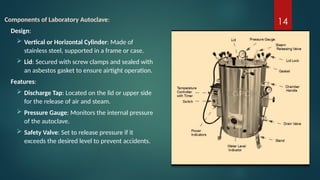
Components of Laboratory Autoclave:
Design:
 Vertical or Horizontal Cylinder: Made of
stainless steel, supported in a frame or case.
 Lid: Secured with screw clamps and sealed with
an asbestos gasket to ensure airtight operation.
Features:
 Discharge Tap: Located on the lid or upper side
for the release of air and steam.
 Pressure Gauge: Monitors the internal pressure
of the autoclave.
 Safety Valve: Set to release pressure if it
exceeds the desired level to prevent accidents.
15
Preparation:
 Add water to the bottom of the autoclave.
 Place items to be sterilized on a perforated shelf.
Setup:
 Close the lid of the autoclave.
 Open the discharge tap.
 Adjust the safety valve to the required pressure.
Air Removal:
 When air bubbles stop escaping from the discharge tap, it indicates that
all air has been removed.
 Close the discharge tap.
16
Sterilization:
 Steam pressure rises inside the autoclave.
 When the pressure reaches the desired level (15 psi), the safety valve opens to release excess steam.
 Start timing the holding period (typically 15 minutes).
Cooling:
 After the holding time, stop heating.
 Allow the autoclave to cool until the pressure gauge shows atmospheric pressure.
 Open the discharge tap slowly to release any remaining steam.
Removal:
 Open the lid.
 Remove the sterilized items.
Temperature °C Steam pressure (ib/sq.inch) Holding time (Minutes)
115-118 10 30
121-124 15 15
126-129 20 10
135-138 30 3
17
Applications:
 Autoclaves are used for sterilizing:
o Bacteriological media
o Heat-stable liquids
o Saline solutions
o Heat-resistant equipment
o Glassware
o Filters
o Ampoules
o Syringes
o Rubber products
o Surgical dressings and instruments
Limitations:
 Not suitable for anhydrous materials (e.g., powders, oils, fats, ointments).
 Not suitable for materials that cannot withstand temperatures above 115°C.
18
(C) Radiation
 Radiation refers to energy transmitted through space in various forms.
 This method is known as "cold sterilization" because ionizing radiations generate relatively little heat in
the irradiated material.
Applications:
 Useful for sterilizing heat-sensitive substances.
 Techniques are increasingly used in the food and pharmaceutical industries.
Types of Radiation:
• Non-Ionizing Radiation:
 Lower energy levels.
 Does not alter the atomic configuration of target molecules.
• Ionizing Radiation:
 Higher energy levels.
 Can ionize the target molecules, potentially altering their atomic configuration.
19
 Non-Ionizing Radiations (Ultraviolet Radiation)
 Wavelength and Effectiveness:
o UV radiation, particularly at 253.7 nm, is most effective at destroying microorganisms.
o UV radiation spans wavelengths between 150-390 nm.
o Effectiveness is limited to exposed surfaces due to minimal penetration power.
 Applications:
o Commonly used to reduce airborne contamination.
o Employed in maintaining aseptic conditions in pharmaceutical settings, hospital operating rooms, and food and
dairy industries.
o Used for sterilizing biological fluids such as blood plasma and vaccines.
 Mechanism:
o UV light is absorbed by nucleic acids in cells, causing damage.
o Leads to the formation of abnormal nucleotides (e.g., thymine dimers), interfering with DNA replication.
 Sources:
o UV lamps, known as sterilizing or germicidal lamps, are the most common artificial sources of UV radiation.
20
 Ionizing Radiations (Cold Sterilization)
 Types and Properties:
o X-rays:
 High energy and penetration power.
 Expensive and challenging to use efficiently for microbial control.
 Often used experimentally to produce microbial mutants.
o Gamma Rays:
 Similar to X-rays but with higher energy and shorter wavelengths.
 Commonly emitted from radioactive isotopes like Cobalt-60.
 Highly effective for sterilizing bulk materials, including packaged food and
medical instruments, due to their penetration power and microbicidal effect.
21
o Cathode Rays (Electron-Beam Radiation):
 Produced when a high-voltage potential is applied between a cathode
and an anode in an evacuated tube.
 Emit beams of electrons which have high energy and penetration
power.
 Factors Affecting Lethal Activity:
o Factors include oxygen, protective compounds, sensitizing agents, pH,
freezing, moisture, and recovery conditions.
22
(d) Filtration (Mechanical) Methods
Overview: Filtration is a non-thermal method of sterilization, commonly used in the
pharmaceutical industry for heat-sensitive solutions.
• It’s effective for large volumes, eye drops, antibiotics, sera, and carbohydrate solutions.
• It’s also used to separate bacteriophages and bacterial toxins from bacteria, and to
isolate microorganisms from fluids.
Sterilization Process:
 Filter Passage: The solution is passed through a sterilized bacteria-proof filter unit.
 Filtrate Transfer: The filtered solution is transferred aseptically to sterile containers,
which are then sealed.
 Sterility Testing: The final sample is tested for sterility.
23
Factors Affecting Filter Efficiency:
 Pore size
 Wall thickness
 Filtration rate
 Positive or negative pressures
 Nature of the liquid being filtered
Key Points:
 Maintain sterile techniques throughout the process.
 Sterilize filters and all equipment before use.
24
Types of Filters:
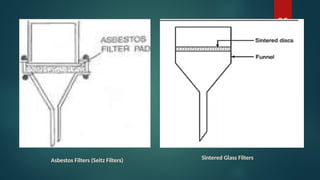
 Asbestos Filters (Seitz Filters):
o Made from asbestos (magnesium trisilicate).
o Disposable and single-use.
o Consists of a disc supported on a perforated metal disc within a metal funnel.
o Used with a sterile flask and an exhaust pump.
o Pore sizes range from 0.01 to 5 microns.
 Sintered Glass Filters (Fritted Glass Filters/Morton Filters):
o Made from finely powdered borosilicate glass, packed into disc molds, and heated.
o Available in different porosities; for sterilization, use grade 5 or 5 on 3.
o Low adsorptive properties and easy to clean.
o Brittle and expensive with a small filtration area.
25
Sintered Glass Filters
Asbestos Filters (Seitz Filters)
26
 Filter Candles (Ceramic/Berkefield Filters)
Overview: Filter candles are used for water purification in both industrial and drinking
water applications. They come in various grades of porosity and are made from porous
materials such as porcelain or kieselguhr.
Features:
Shape & Structure: Cylindrical with thick walls. They are depth filters with cellular walls.
Available in different sizes.
Process:
 Assembly: The filter candle is fixed to the filter assembly and placed in a mantle.
 Filtration: Liquid is poured into the mantle and vacuum forces it through the filter.
 Post-Filtration: After filtration, the filter candle is removed, and the filtrate is transferred to
a sterile container.
Characteristics: Cost: Inexpensive.
 Performance: Prone to clogging and blocking; requires high pressure for effective filtration.
27
Filter Candles
28
 Membrane Filters (Millipore/Ultra Filters)
 Overview: Membrane filters are made from cellulose and cellulose esters. They are
thin (150 µm) and contain millions of microscopic pores ranging from 0.01 to 10 µm
in diameter.
 Common pore sizes for sterilization are 0.45 µm ± 0.02 µm (Millipore grade, HA) and
0.22 µm ± 0.02 µm (Millipore grade, GS).
Sterilization:
 Autoclaving: Filters can be sterilized in their holders or packed between thick filter
pads to prevent curling.
 Ready Sterilized: Available sterilized by ethylene oxide or ionizing radiation.
 Support: Supported on a rigid base of perforated metal, plastic, or coarse sintered
glass.
29
Membrane Filters
30
Performance:
 Flow Rate: HA grade filters: approximately 65 ml/min/sq.cm; GS grade filters:
approximately 22 ml/min/sq.cm.
 Pressure: Differential pressure of 70 cm mercury across the membrane.
Advantages:
 Effective Sieving: Separates all microorganisms through sieving.
 High Porosity: Allows rapid filtration with uniform porosity.
 Disposable: Reduces cross-contamination between filtered products.
 Low Adsorption: Minimal adsorption of substances.
31
Disadvantages:
 Prefilter Needed: A prefilter is used to avoid clogging and breaking of the membrane.
 Chemical Sensitivity: sensitive to some organic solvents like chloroform, ketones, and
esters.
Applications:
 Water purification and analysis
 Sterilization and sterility testing
 Preparation of solutions for parenteral use
 Identification and enumeration of microorganisms from water samples and other
materials
32
2. Chemical Methods
(a) Gaseous Sterilization
Overview: Gaseous sterilization involves using chemicals in a gaseous or vapor
state to destroy all living microorganisms. It is used for materials sensitive to
dry and moist heat.
The gases used are toxic to humans at higher concentrations and may have
other side effects.
Common Gaseous Sterilizers:
 Ethylene Oxide: Most widely used in pharmaceutical and medical fields.
 Formaldehyde: Also used, along with other chemicals like p-propiolactone,
glycols, methyl bromide, and alcohol for room sterilization.
33
 Formaldehyde (HCHO):
 Source: Generated by heating concentrated formaldehyde solution.
 Form: Known as formalin in aqueous solution, containing 37-40% formaldehyde.
Usage:
 Used for sterilizing enclosed areas like operation theatres, hospital rooms, and labs.
 Generated by adding 150g of KMnO₄ to 280ml of formalin for every 1,000 cubic feet
of room volume.
 Best results at 70% humidity and 22°C temperature.
 The room should be sealed for 48 hours after starting formaldehyde generation.
Properties:
 Extremely reactive, combining with proteins and nucleic acids.
 Kills both vegetative cells and spores.
 Has poor penetration power.
34
 p-Propiolactone (BPL):
 Characteristics: A colorless liquid at room temperature with a high
boiling point (155°C).
 Effectiveness: Kills all microorganisms, very active against viruses. BPL
vapor is 25 times more effective than formaldehyde, 4,000 times more
than ethylene oxide, and 50,000 times more than methyl bromide.
 Concentration: Used at 2 to 5 mg/liter.
 Limitations: Poor penetration, causes irritation, and has carcinogenic
properties. Not recommended for pharmaceutical use.
35
 Ethylene Oxide
 Overview: Ethylene oxide is a colorless liquid with a boiling point of 10.8°C. It is
highly flammable and can be explosive when mixed with air in concentrations above
3%. To prevent flammability, it is often mixed with carbon dioxide or fluorinated
hydrocarbons (freons) which act as inert diluents.

Sterilization Effectiveness:
 Factors: The effectiveness of ethylene oxide as a sterilizing agent depends on: Gas
concentration, Temperature, Moisture, Exposure time, Conditions & Accessibility of
microorganisms
Concentration and Time Relationship:
Concentration (mg/lit.) Exposure Time (hours)
44 24
88 10
442 4
884 1
36
Mechanism of Action : Ethylene oxide works by alkylating (adding alkyl groups to) amino,
carboxyl, hydroxyl, and sulfhydryl groups in enzymes and proteins. It also reacts with DNA and
RNA, disrupting their function.
Applications: Ethylene oxide is effective for sterilizing heat and moisture-sensitive materials.
It is used for:
 Medical and biological preparations
 Catguts
 Plastic equipment
 Antibiotics
 Plaster bandages
 Culture media
37
 Hospital bedding
 Foodstuffs
 Heavy equipment
 Books
 Clothing
 Soil
(b) By using disinfectants or antimicrobial agents
Chemical agents most commonly used as disinfectants and antiseptic are
phenols, alcohol, halogens, dyes, aldehydes
38
Thank You

Sterilization Methods: Physical & Chemical

  • 1.
    1 Sterilization Methods G HRaisoni Institute of Life Sciences (Department of Pharmacy) BY MS. PRIYANKA B. RATHOD ASSISTANT PROFESSOR
  • 2.
    2 Sterilization Sterilization is acrucial step in ensuring that products used for injections, wounds, or internal organs are free from harmful microorganisms. This process is essential for: 1. Preventing Contamination: Ensuring that sterile products remain free of microbes. 2. Avoiding Disease Spread: Stopping the spread of harmful microorganisms that can cause diseases in humans, animals, and plants. 3. Maintaining Food Quality: Preventing food and food products from spoiling. 4. Protecting Research: Keeping pure cultures and experiments free from unwanted microbes. 5. Safeguarding Industrial Processes: Ensuring that processes like antibiotic production and fermentation are free from contamination. 6. Ensuring Clean Environments: Keeping areas where sterile products are made or tested free from microorganisms.
  • 3.
    3 Sterilization is aprocess that completely removes all microorganisms, including their spores, from an object, surface, or medium. Sterilization Methods The various methods used in sterilization can be classified as follows: Physical Methods (a) Dry Heat Sterilization Examples:  Incineration  Direct Flame  Red Heat  Hot Air
  • 4.
    4 (b) Moist HeatSterilization/Steam Sterilization Examples:  Pasteurization  Tyndallization  Autoclave (c) Radiation/Cool Sterilization Examples:  Use of Ultra-Violet Rays: UV Light  Ionizing Radiations: X-rays, Gamma Rays, Beta Rays
  • 5.
    5 (d) Filtration/Mechanical Methods Examples: Asbestos Filter (Seitz Filter)  Sintered Glass Filter (Morton Filter)  Filter Candles (Ceramic/Berkefeld Filter)  Membrane Filter (Millipore/Ultra Filter)
  • 6.
    6 2. Chemical Methods (a)Gaseous Sterilization Examples:  Formaldehyde  Ethylene Oxide (b) By Using Disinfectants Examples:  Cresol  Phenol
  • 7.
    7 1. Physical Methods (a)Dry Heat Sterilization Principle: Dry heat kills microorganisms by causing damage to their proteins and other cell structures through high temperatures. It is effective but requires more time and higher temperatures compared to moist heat. Mechanism:  Protein Denaturation: Heat changes the structure of microbial proteins, making them inactive.than  Oxidative Damage: Heat can cause oxidative stress, further damaging microorganisms.  Elevated Electrolyte Levels: High temperatures can increase electrolyte concentrations to toxic levels for microorganisms. Factors: Effectiveness depends on temperature, time, and the nature of the microorganisms. Higher temperatures reduce the required time for sterilization.
  • 8.
    8  Sunlight &Drying: Contains ultraviolet (UV) rays and heat rays.  UV rays are effective in killing microorganisms.  Cannot penetrate through glass.  Natural method for sterilizing water in tanks, rivers, and lakes.  Air drying can kill many bacteria.  Spores are not affected by drying.  Drying alone is an unreliable sterilization method.  Red Heat: Metals are heated until they glow red hot to kill microorganisms (e.g., inoculating loops).  Flaming: Items are passed through a flame to sterilize quickly (e.g., mouth of culture tubes, inoculum loop).  Incineration: Burns materials completely (e.g., medical waste).
  • 9.
    9  Hot AirOven Sterilization Principle: The hot air oven uses dry heat to kill microorganisms by maintaining high temperatures over time. It’s a reliable method for sterilizing heat-resistant materials. It has low penetration power compared to moist heat. Construction:  Double-walled chamber: Made of aluminum or stainless steel.  Insulation: Thick layer of fiberglass between the inner and outer walls for effective heat retention.  Heating Elements: Electrical heaters controlled by thermostats to maintain the desired temperature.  Insulated Door: Contains asbestos for a tight seal. Operation:  Arrangement: Materials should be placed to allow air circulation and avoid overloading.  Preparation: Glassware should be dry and wrapped in Kraft paper before placing in the oven.  Cooling: The oven must cool slowly for about two hours before opening to prevent glassware from cracking due to sudden temperature changes.
  • 10.
    10 Applicable Materials: Substancesthat are not heat-sensitive and can tolerate temperatures up to 250°C.  Sterilizes glassware, forceps, scalpels, scissors, spatulas, and swabs.  Sterilizes some pharmaceutical substances like glycerin, fixed oil, liquid paraffin, propylene glycol, sulphonamides, and dusting powders (e.g., kaolin, talc, zinc oxide, starch). Limitations:  Not suitable for surgical dressings, rubbers, plastics, volatile substances, and heat-labile materials.  Heat-Labile Materials: Items that cannot tolerate high temperatures or prolonged heat exposure should not be sterilized using a hot air oven.  Practical Tips: Ensure proper placement and avoid overloading to maintain effective air circulation and uniform temperature distribution. Temperature (°C) Time (minutes) 170 20 160 60 150 150 140 180
  • 11.
    11 (b) Moist HeatSterilization Mechanism: Kills microorganisms using hot water or steam. Lethal effect due to denaturation and coagulation of proteins. Forms of Moist Heat Sterilization:  Temperature Below 100°C: Pasteurization:  Holder Method: The Holder Method, also known as Low-Temperature Long-Time (LTLT) pasteurization, involves heating the liquid to 62.8°C and holding it at this temperature for 30 minutes.  Flash Method: Heat at 72°C for 20 seconds, followed by rapid cooling to 13°C or lower.  Applications: Widely used for dairy products like milk and butter.  Effectiveness: Destroys non-sporing microorganisms such as mycobacteria, brucella, and salmonella.  Heat-Labile Fluids: Disinfected at 56°C for one hour.  Vaccines: Inactivated in a water bath at 60°C for one hour.  Heat-Resistant Spores: Spores of Clostridium botulinum require 120°C for 4 minutes.
  • 12.
    12  Temperature at100°C: Boiling:  Description: Boiling at 100°C for 10 to 30 minutes.  Effectiveness: Kills all vegetative bacteria and some bacterial spores.  Limitations: Not recommended for sterilizing surgical instruments. Enhanced Sterilization: Addition of acids, alkalis, or washing soda improves effectiveness. Steam Sterilization: Koch or Arnold Steam Sterilizer:  Design: Vertical metal cylinder with a removable conical lid and perforated shelf above water.  Process: Single steam exposure for 90 minutes ensures sterilization. But media containing sugar & gelatin may decompose on long heating.  Tyndallization (Intermittent/Fractional Sterilization):  Process: Exposure to steam at 100°C for 20 minutes on three successive days.  Purpose: Kills vegetative bacteria on the first exposure; spores germinate and are killed on subsequent exposures.  Limitations: Not suitable for non-nutrient media.
  • 13.
    13  Temperature Above100°C: Autoclaving:  Description: Uses saturated steam under pressure for effective sterilization.  Equipment: Autoclave designed to use steam under regulated pressure.  Effectiveness: Most practical and reliable method for thorough sterilization. Advantages of Autoclave: • Greater Lethal Action: Moist Heat: Provides a more effective lethal action against microorganisms due to the high efficiency of steam in denaturing proteins. • Quicker Heating: Efficiency: Heats up exposed articles faster compared to dry heat, reducing the overall sterilization time. • Ease of Penetration: Can penetrate easily through porous materials such as cotton wool stoppers, paper, and cloth wrappers, ensuring thorough sterilization.
  • 14.
    14 Components of LaboratoryAutoclave: Design:  Vertical or Horizontal Cylinder: Made of stainless steel, supported in a frame or case.  Lid: Secured with screw clamps and sealed with an asbestos gasket to ensure airtight operation. Features:  Discharge Tap: Located on the lid or upper side for the release of air and steam.  Pressure Gauge: Monitors the internal pressure of the autoclave.  Safety Valve: Set to release pressure if it exceeds the desired level to prevent accidents.
  • 15.
    15 Preparation:  Add waterto the bottom of the autoclave.  Place items to be sterilized on a perforated shelf. Setup:  Close the lid of the autoclave.  Open the discharge tap.  Adjust the safety valve to the required pressure. Air Removal:  When air bubbles stop escaping from the discharge tap, it indicates that all air has been removed.  Close the discharge tap.
  • 16.
    16 Sterilization:  Steam pressurerises inside the autoclave.  When the pressure reaches the desired level (15 psi), the safety valve opens to release excess steam.  Start timing the holding period (typically 15 minutes). Cooling:  After the holding time, stop heating.  Allow the autoclave to cool until the pressure gauge shows atmospheric pressure.  Open the discharge tap slowly to release any remaining steam. Removal:  Open the lid.  Remove the sterilized items. Temperature °C Steam pressure (ib/sq.inch) Holding time (Minutes) 115-118 10 30 121-124 15 15 126-129 20 10 135-138 30 3
  • 17.
    17 Applications:  Autoclaves areused for sterilizing: o Bacteriological media o Heat-stable liquids o Saline solutions o Heat-resistant equipment o Glassware o Filters o Ampoules o Syringes o Rubber products o Surgical dressings and instruments Limitations:  Not suitable for anhydrous materials (e.g., powders, oils, fats, ointments).  Not suitable for materials that cannot withstand temperatures above 115°C.
  • 18.
    18 (C) Radiation  Radiationrefers to energy transmitted through space in various forms.  This method is known as "cold sterilization" because ionizing radiations generate relatively little heat in the irradiated material. Applications:  Useful for sterilizing heat-sensitive substances.  Techniques are increasingly used in the food and pharmaceutical industries. Types of Radiation: • Non-Ionizing Radiation:  Lower energy levels.  Does not alter the atomic configuration of target molecules. • Ionizing Radiation:  Higher energy levels.  Can ionize the target molecules, potentially altering their atomic configuration.
  • 19.
    19  Non-Ionizing Radiations(Ultraviolet Radiation)  Wavelength and Effectiveness: o UV radiation, particularly at 253.7 nm, is most effective at destroying microorganisms. o UV radiation spans wavelengths between 150-390 nm. o Effectiveness is limited to exposed surfaces due to minimal penetration power.  Applications: o Commonly used to reduce airborne contamination. o Employed in maintaining aseptic conditions in pharmaceutical settings, hospital operating rooms, and food and dairy industries. o Used for sterilizing biological fluids such as blood plasma and vaccines.  Mechanism: o UV light is absorbed by nucleic acids in cells, causing damage. o Leads to the formation of abnormal nucleotides (e.g., thymine dimers), interfering with DNA replication.  Sources: o UV lamps, known as sterilizing or germicidal lamps, are the most common artificial sources of UV radiation.
  • 20.
    20  Ionizing Radiations(Cold Sterilization)  Types and Properties: o X-rays:  High energy and penetration power.  Expensive and challenging to use efficiently for microbial control.  Often used experimentally to produce microbial mutants. o Gamma Rays:  Similar to X-rays but with higher energy and shorter wavelengths.  Commonly emitted from radioactive isotopes like Cobalt-60.  Highly effective for sterilizing bulk materials, including packaged food and medical instruments, due to their penetration power and microbicidal effect.
  • 21.
    21 o Cathode Rays(Electron-Beam Radiation):  Produced when a high-voltage potential is applied between a cathode and an anode in an evacuated tube.  Emit beams of electrons which have high energy and penetration power.  Factors Affecting Lethal Activity: o Factors include oxygen, protective compounds, sensitizing agents, pH, freezing, moisture, and recovery conditions.
  • 22.
    22 (d) Filtration (Mechanical)Methods Overview: Filtration is a non-thermal method of sterilization, commonly used in the pharmaceutical industry for heat-sensitive solutions. • It’s effective for large volumes, eye drops, antibiotics, sera, and carbohydrate solutions. • It’s also used to separate bacteriophages and bacterial toxins from bacteria, and to isolate microorganisms from fluids. Sterilization Process:  Filter Passage: The solution is passed through a sterilized bacteria-proof filter unit.  Filtrate Transfer: The filtered solution is transferred aseptically to sterile containers, which are then sealed.  Sterility Testing: The final sample is tested for sterility.
  • 23.
    23 Factors Affecting FilterEfficiency:  Pore size  Wall thickness  Filtration rate  Positive or negative pressures  Nature of the liquid being filtered Key Points:  Maintain sterile techniques throughout the process.  Sterilize filters and all equipment before use.
  • 24.
    24 Types of Filters: Asbestos Filters (Seitz Filters): o Made from asbestos (magnesium trisilicate). o Disposable and single-use. o Consists of a disc supported on a perforated metal disc within a metal funnel. o Used with a sterile flask and an exhaust pump. o Pore sizes range from 0.01 to 5 microns.  Sintered Glass Filters (Fritted Glass Filters/Morton Filters): o Made from finely powdered borosilicate glass, packed into disc molds, and heated. o Available in different porosities; for sterilization, use grade 5 or 5 on 3. o Low adsorptive properties and easy to clean. o Brittle and expensive with a small filtration area.
  • 25.
    25 Sintered Glass Filters AsbestosFilters (Seitz Filters)
  • 26.
    26  Filter Candles(Ceramic/Berkefield Filters) Overview: Filter candles are used for water purification in both industrial and drinking water applications. They come in various grades of porosity and are made from porous materials such as porcelain or kieselguhr. Features: Shape & Structure: Cylindrical with thick walls. They are depth filters with cellular walls. Available in different sizes. Process:  Assembly: The filter candle is fixed to the filter assembly and placed in a mantle.  Filtration: Liquid is poured into the mantle and vacuum forces it through the filter.  Post-Filtration: After filtration, the filter candle is removed, and the filtrate is transferred to a sterile container. Characteristics: Cost: Inexpensive.  Performance: Prone to clogging and blocking; requires high pressure for effective filtration.
  • 27.
  • 28.
    28  Membrane Filters(Millipore/Ultra Filters)  Overview: Membrane filters are made from cellulose and cellulose esters. They are thin (150 µm) and contain millions of microscopic pores ranging from 0.01 to 10 µm in diameter.  Common pore sizes for sterilization are 0.45 µm ± 0.02 µm (Millipore grade, HA) and 0.22 µm ± 0.02 µm (Millipore grade, GS). Sterilization:  Autoclaving: Filters can be sterilized in their holders or packed between thick filter pads to prevent curling.  Ready Sterilized: Available sterilized by ethylene oxide or ionizing radiation.  Support: Supported on a rigid base of perforated metal, plastic, or coarse sintered glass.
  • 29.
  • 30.
    30 Performance:  Flow Rate:HA grade filters: approximately 65 ml/min/sq.cm; GS grade filters: approximately 22 ml/min/sq.cm.  Pressure: Differential pressure of 70 cm mercury across the membrane. Advantages:  Effective Sieving: Separates all microorganisms through sieving.  High Porosity: Allows rapid filtration with uniform porosity.  Disposable: Reduces cross-contamination between filtered products.  Low Adsorption: Minimal adsorption of substances.
  • 31.
    31 Disadvantages:  Prefilter Needed:A prefilter is used to avoid clogging and breaking of the membrane.  Chemical Sensitivity: sensitive to some organic solvents like chloroform, ketones, and esters. Applications:  Water purification and analysis  Sterilization and sterility testing  Preparation of solutions for parenteral use  Identification and enumeration of microorganisms from water samples and other materials
  • 32.
    32 2. Chemical Methods (a)Gaseous Sterilization Overview: Gaseous sterilization involves using chemicals in a gaseous or vapor state to destroy all living microorganisms. It is used for materials sensitive to dry and moist heat. The gases used are toxic to humans at higher concentrations and may have other side effects. Common Gaseous Sterilizers:  Ethylene Oxide: Most widely used in pharmaceutical and medical fields.  Formaldehyde: Also used, along with other chemicals like p-propiolactone, glycols, methyl bromide, and alcohol for room sterilization.
  • 33.
    33  Formaldehyde (HCHO): Source: Generated by heating concentrated formaldehyde solution.  Form: Known as formalin in aqueous solution, containing 37-40% formaldehyde. Usage:  Used for sterilizing enclosed areas like operation theatres, hospital rooms, and labs.  Generated by adding 150g of KMnO₄ to 280ml of formalin for every 1,000 cubic feet of room volume.  Best results at 70% humidity and 22°C temperature.  The room should be sealed for 48 hours after starting formaldehyde generation. Properties:  Extremely reactive, combining with proteins and nucleic acids.  Kills both vegetative cells and spores.  Has poor penetration power.
  • 34.
    34  p-Propiolactone (BPL): Characteristics: A colorless liquid at room temperature with a high boiling point (155°C).  Effectiveness: Kills all microorganisms, very active against viruses. BPL vapor is 25 times more effective than formaldehyde, 4,000 times more than ethylene oxide, and 50,000 times more than methyl bromide.  Concentration: Used at 2 to 5 mg/liter.  Limitations: Poor penetration, causes irritation, and has carcinogenic properties. Not recommended for pharmaceutical use.
  • 35.
    35  Ethylene Oxide Overview: Ethylene oxide is a colorless liquid with a boiling point of 10.8°C. It is highly flammable and can be explosive when mixed with air in concentrations above 3%. To prevent flammability, it is often mixed with carbon dioxide or fluorinated hydrocarbons (freons) which act as inert diluents. Sterilization Effectiveness:  Factors: The effectiveness of ethylene oxide as a sterilizing agent depends on: Gas concentration, Temperature, Moisture, Exposure time, Conditions & Accessibility of microorganisms Concentration and Time Relationship: Concentration (mg/lit.) Exposure Time (hours) 44 24 88 10 442 4 884 1
  • 36.
    36 Mechanism of Action: Ethylene oxide works by alkylating (adding alkyl groups to) amino, carboxyl, hydroxyl, and sulfhydryl groups in enzymes and proteins. It also reacts with DNA and RNA, disrupting their function. Applications: Ethylene oxide is effective for sterilizing heat and moisture-sensitive materials. It is used for:  Medical and biological preparations  Catguts  Plastic equipment  Antibiotics  Plaster bandages  Culture media
  • 37.
    37  Hospital bedding Foodstuffs  Heavy equipment  Books  Clothing  Soil (b) By using disinfectants or antimicrobial agents Chemical agents most commonly used as disinfectants and antiseptic are phenols, alcohol, halogens, dyes, aldehydes
  • 38.