STEM CELL TRANSPLANTATION FOR HEART
FAILURE
WHICH CELL BEST?
HEART FAILURE
Inability of the heart to pump
Cause
Ischemic
Nonischemic
Pathogenesis
 cell death/inflammation/scar/loss of contractility
Natural history
5-year mortality of approximately 50% .
 Financial Burdon
HF creates a heavy burden on health care resources
Medical Rx
improve symptoms and can prolong life
 but are unable to replace scar tissue or awaken hibernating myocardium via angiogenesis.
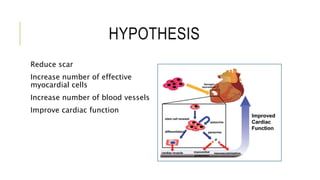
HYPOTHESIS
Reduce scar
Increase number of effective
myocardial cells
Increase number of blood vessels
Improve cardiac function
THUMBNAIL
Types of stem cells
Delivery techniques of various stem cell
Advances, challenges, and future directions of stem cell transfer for
heart failure
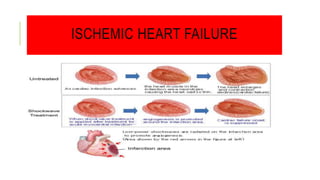
ISCHEMIC HEART FAILURE
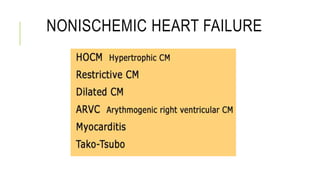
NONISCHEMIC HEART FAILURE
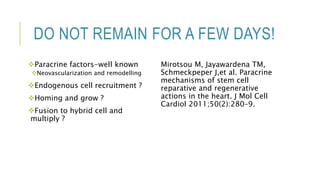
DO NOT REMAIN FOR A FEW DAYS!
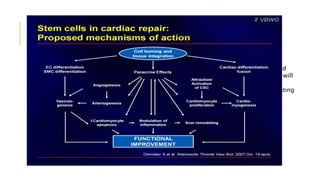
Paracrine factors-well known
Neovascularization and remodelling
Endogenous cell recruitment ?
Homing and grow ?
Fusion to hybrid cell and
multiply ?
Mirotsou M, Jayawardena TM,
Schmeckpeper J,et al. Paracrine
mechanisms of stem cell
reparative and regenerative
actions in the heart. J Mol Cell
Cardiol 2011;50(2):280–9.
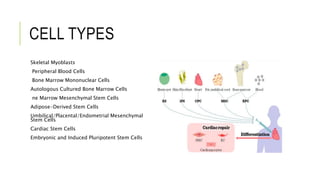
CELL TYPES
Skeletal Myoblasts
Peripheral Blood Cells
Bone Marrow Mononuclear Cells
Autologous Cultured Bone Marrow Cells
ne Marrow Mesenchymal Stem Cells
Adipose-Derived Stem Cells
Umbilical/Placental/Endometrial Mesenchymal
Stem Cells
Cardiac Stem Cells
Embryonic and Induced Pluripotent Stem Cells
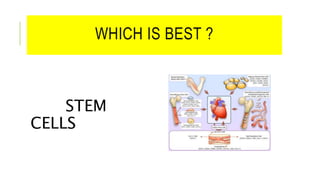
WHICH IS BEST ?
STEM
CELLS
SKELETAL MYOBLASTS
1. Progenitor cells from skeletal muscle
2. First cells to be tested in both preclinical and clinical studies
3. Early clinical studies reported engraftment and significant
improvement in cardiac function BUT subsequent clinical studies,
including a 97-patient phase II randomized, placebo-controlled,
double-blind trial, failed to reproduce these results
4. Ventricular tachyarrhythmia were noted after cell transplantation
5. A limited role in cell-based therapy for HF
PERIPHERAL BLOOD CELLS
1. CD34+ cells for ischemic HF with promising results
2. Issues
Granulocyte colony-stimulating factors for peripheral blood mobilization, apheresis,
and the costs associated with CD34+ selection have limited the use of this cell
product. The long-term benefits of using blood-selected cells in patients with acute
myocardial infarction have been shown to be less favourable compared with using
bone marrow cells. This finding has further limited the use of peripheral blood for
treating ischemic heart disease. The mechanism of possible benefit for peripheral
blood CD34+ cells in patients with nonischemic versus ischemic HF has not been
identified.
BONE MARROW MONONUCLEAR
CELLS
1. Heterogeneous
2. Early preclinical clinical studies
 Transdifferentiation into cardiomyocytes and supporting vasculature, resulting in improved left
ventricular function
 Angiogenesis but no vasculogenesis
 Faint improvent in EF with Autologous Stem Cells for
3. A recent trial (PreSERVE-AMI) : intracoronary bone marrow–selected CD34+ cell
delivery in patients with post–myocardial infarction LV dysfunction, demonstrating that
a minimum dose of 20 × 10 6 cells were required to show potential benefit
4. The purification of BMMNCs from bone marrow can be performed easily using density
gradient centrifugation, and now can be performed at bedside using commercial cell
processing systems
5. Processing bone marrow cell has non uniform standard world wide
6. BMMNCs in ischemic cardiomyopathy is safe and feasible
7. Significant positive clinical outcomes are limited
AUTOLOGOUS CULTURED BONE
MARROW CELLS
As a result of the many issues related to rapid processing of autologous
bone marrow, culture processes were developed to address issues with
BMMNCs, specifically donor age and comorbidities
Lxmyelocel-T is a product derived from a small sample of autologous bone
marrow that is cultured for 12 days. The culture process results in an
enhanced product of mesenchymal cells and M2 macrophages, which have
the potential for angiogenesis and remodelling of fibrosis
IMPACT-DCM trial :Benefit in only patients with ischemic HF
 C-CURE (C-Cure Clinical Trial) program harvested a small amount of
autologous bone marrow, which was cultured for several weeks in a
cardiopoetic cocktail of growth factors CHART-2 (Congestive Heart Failure
Cardiopoietic Regenerative Therapy), a global phase III study)
Benefits in patients with ischemic HF
BONE MARROW MESENCHYMAL STEM
CELLS
Potential
Easily harvested and cultured
Immune-modulating and anti-inflammatory properties, making them immune-privileged.
MSCs typically express CD105, CD73, and CD90, but lack hematopoietic markers (CD45,
CD34, and CD14/CD11b)
 Preclinical studies in ischemic and nonischemic cardiomyopathy
Angiogenesis, reduced fibrosis, and improved cardiac function
Clinical study in ischemic cardiomyopathy: improved patient functional capacity, quality
of life, and ventricular remodelling
Better than BMMNCs
Potential to be used as an allogeneic cell source, which leads to a very stable and reliable
cell source
Endocardial delivery of allogeneic bone marrow MSCs[DREAM-HF trial] in pipe line
ADIPOSE-DERIVED STEM CELLS
Adipose-derived stem cells (ADSCs) also are a form of MSCs but are
more abundant than bone marrow MSCs
 PRECISE trial (A Randomized Clinical Trial of adiPose-deRived stEm
& Regenerative Cells In the Treatment of Patients With Non
revaScularizable ischEmic Myocardium) used autologous ADSCs in
patients with HF demonstrating a modest potential benefit
 ADSCs are more difficult to process and have been used strictly in
an autologous manner, unlike bone marrow MSCs
Some preclinical models of allogeneic use of ADSCs have shown
benefit in cardiac models, which also resulted in allogeneic immune
responses
UMBILICAL/PLACENTAL/ENDOMETRIAL
MESENCHYMAL STEM CELLS
Several mesenchymal cells have been isolated from pregnancy and
gynecologic organs that have potential benefit in HF models. They are
all derived and used in an allogeneic manner. Limited information is
available, but many of these cells are being used in preclinical or
early clinical trials
CARDIAC STEM CELLS
Preclinical models using various CSC populations have demonstrated
their therapeutic potential
Intracoronary
SCIPIO- improvement in global and regional left ventricular function
and a reduction in infarct size
 CADUCEUS- benefit in scar reduction
Tseliou and colleagues-Cells can be made allogeneic from donor
hearts
ALLSTAR-Allogeneic CSCs in patients with myocardial ischemia and
decreased left ventricular function
 DYNAMIC-in pipe line
EMBRYONIC AND INDUCED
PLURIPOTENT STEM CELLS
 Engraftment in prehuman models of HF
 Sheets of cells have also been used in prehuman models showing
functional engraftment, but translation to humans has also been
difficult because of the scalability of manufacturing large sheets of
cells
First-in-man study (ESCORT) in pipe line
ANTEGRADE VS RETROGRADE
1. Intramyocardial via an endocardial or epicardial approach
2. epicardial patch
3. Intracoronary
4. Intravenous
5. coronary sinus
INTRAMYOCARDIAL
Epicardial
1. Epicardial and endocardial approaches
2. Direct injection of cells into the heart
muscle
3. Very accurate and reproducible but is
invasive, because it is typically
performed under direct vision either
during a median sternotomy, video-
assisted thoracoscopic surgery, or
pericardioscopy
4. Best suited for combined procedures in
patients who are undergoing surgery,
such as the delivery of cell therapy
during coronary artery bypass grafting,
valve surgery, ventricular assist device
implantation or transmyocardial laser
revascularization
Endocardial
1. Less invasive and direct
2. Delivery of cells to target peri-infarct
regions
3. Potential for cell loss during delivery.
4. Myocardial injury, inflammation, and
scarring, all of which disrupt the
conduction pathways and can
contribute to arrhythmias
5. Perforation of a thinned or damaged
ventricle. Endomyocardial delivery of
cells also results in localized islets of
cells rather than a homogeneous
distribution, and access to regions of
the heart other than the left ventricle
remains difficult.
ENDOCARDIAL : MOST USED
TECHNIQUE
Intramyocardial protocols
1. Electromechanical mapping catheters (NOGA,
Biologics Delivery Systems, Irwindale, CA, USA),
which allow real-time evaluation of myocardial
viability before cell therapy injection
2. BioCardia Helical Infusion Catheter (HIC-BioCardia
Inc, San Carlos, CA, USA)
3. C-Cath (Cardio3 Biosciences, Mont-Saint-Guibert,
Belgium), which has a curved end needle to
minimize the risk of perforation
INTRACORONARY
1. Infusing cells antegrade
2. Combined with open heart surgical procedure
3. Relies on cell migration through the endothelial layer of the artery, and
homing of cells to damaged tissue
4. Occluded vessels prevent infused cells from reaching the myocardium
5. Janus phenomenon : This double-edged sword of angiogenesis versus
accelerated atherogenesis has been termed the and has been seen in the
setting of accelerated stenosis within coronary stents after intracoronary
infusion of peripheral blood stem cells and bone marrow–derived stem
cells
6. Artery occlusion or embolization
7.
INTRACORONARY FOR RESEARCH ONLY
1. Infusion time is limited because of antegrade block
2. Repeated instrumentation of, or balloon inflation within, the
coronary arteries risks dislodging plaque or causing endothelial
damage that serves as a nidus for plaque formation
3. The muscular wall of the arteries (compared with thinner-walled
veins) presents a further distance through which delivered cells
must migrate to reach the target myocardium
4. Generally been considered safe, several papers highlight unique
risks of the procedure
5. Accelerated atherosclerosis or restenosis
6. TOPCARE-CHD –dissection
7. Less preferred to Endocardial cell delivery
INTRAVENOUS
1. Preclinical studies demonstrate low retention rates in the heart and
significant cell trapping in the lungs
2. The intravenous route relies entirely on the homing of stem cells
to the site of injury, and without means to augment or facilitate
localization, sufficient cells are unlikely to be delivered to injured
myocardium to demonstrate a clinical effect
3. Not currently used for clinical trials.
CORONARY SINUS
Less invasive and presents a lower risk than the left-sided arterial access
required for antegrade intracoronary delivery
 The retrograde route is well suited to “no-option” patients with significant
coronary disease or thin myocardial walls, and allows for the safe and
repeated delivery of cell therapy
 longer infusion and dwell times may be used than with antegrade coronary
delivery
 Uniform distribution of cells, avoids the islet-like clustering and
arrhythmias associated with intramyocardial delivery, and allows distribution
to ischemic zones that cannot be accessed via the antegrade route because
of diseased coronary arteries
 Cell delivery also possible with CRT (LV lead in situ)
This method of delivery can be used in patients with ischemic and
EPICARDIAL PATCHES
Prepare sheets of cell
Preclinical models
sternotomy or thoracotomy for implantation
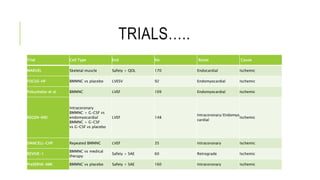
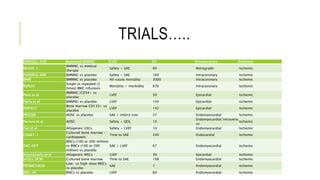
TRIALS…..
Trial Cell Type End No Route Cause
MARVEL Skeletal muscle Safety + QOL 170 Endocardial Ischemic
FOCUS-HF BMMNC vs placebo LVESV 92 Endomyocardial Ischemic
Pokushalov et al BMMNC LVEF 109 Endomyocardial Ischemic
REGEN-IHD
Intracoronary
BMMNC + G-CSF vs
endomyocardial
BMMNC + G-CSF
vs G-CSF vs placebo
LVEF 148
Intracoronary/Endomyo
cardial
Ischemic
DANCELL-CHF Repeated BMMNC LVEF 35 Intracoronary Ischemic
REVIVE-1
BMMNC vs medical
therapy
Safety + SAE 60 Retrograde Ischemic
PreSERVE-AMI BMMNC vs placebo Safety + SAE 160 Intracoronary Ischemic
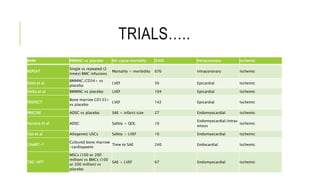
TRIALS…..
BAMI BMMNC vs placebo All-cause mortality 3000 Intracoronary Ischemic
REPEAT
Single vs repeated (2
times) BMC infusions
Mortality + morbidity 676 Intracoronary Ischemic
Patel et al
BMMNC/CD34+ vs
placebo
LVEF 50 Epicardial Ischemic
Patila et al BMMNC vs placebo LVEF 104 Epicardial Ischemic
PERFECT
Bone marrow CD133+
vs placebo
LVEF 142 Epicardial Ischemic
PRECISE ADSC vs placebo SAE + infarct size 27 Endomyocardial Ischemic
Parcero et al ADSC Safety + QOL 10
Endomyocardial/Intrav
enous
Ischemic
Yan et al Allogeneic USCs Safety + LVEF 10 Endomyocardial Ischemic
CHART-1
Cultured bone marrow
-cardiopoetic
Time to SAE 240 Endocardial Ischemic
TAC-HFT
MSCs (100 or 200
million) vs BMCs (100
or 200 million) vs
placebo
SAE + LVEF 67 Endomyocardial Ischemic
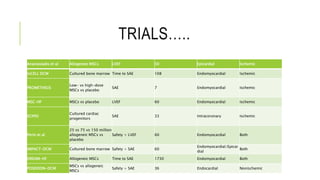
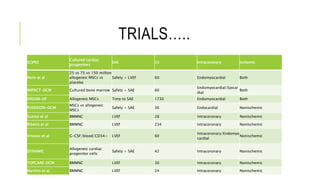
TRIALS…..
Anastasiadis et al Allogeneic MSCs LVEF 30 Epicardial Ischemic
IxCELL DCM Cultured bone marrow Time to SAE 108 Endomyocardial Ischemic
PROMETHEUS
Low- vs high-dose
MSCs vs placebo
SAE 7 Endomyocardial Ischemic
MSC-HF MSCs vs placebo LVEF 60 Endomyocardial Ischemic
SCIPIO
Cultured cardiac
progenitors
SAE 33 Intracoronary Ischemic
Perin et al
25 vs 75 vs 150 million
allogeneic MSCs vs
placebo
Safety + LVEF 60 Endomyocardial Both
IMPACT-DCM Cultured bone marrow Safety + SAE 60
Endomyocardial/Epicar
dial
Both
DREAM-HF Allogeneic MSCs Time to SAE 1730 Endomyocardial Both
POSEIDON-DCM
MSCs vs allogeneic
MSCs
Safety + SAE 36 Endocardial Nonischemic
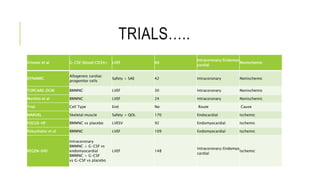
TRIALS…..
Vrtovec et al G-CSF/blood/CD34+ LVEF 60
Intracoronary/Endomyo
cardial
Nonischemic
DYNAMIC
Allogeneic cardiac
progenitor cells
Safety + SAE 42 Intracoronary Nonischemic
TOPCARE-DCM BMMNC LVEF 30 Intracoronary Nonischemic
Martino et al BMMNC LVEF 24 Intracoronary Nonischemic
Trial Cell Type End No Route Cause
MARVEL Skeletal muscle Safety + QOL 170 Endocardial Ischemic
FOCUS-HF BMMNC vs placebo LVESV 92 Endomyocardial Ischemic
Pokushalov et al BMMNC LVEF 109 Endomyocardial Ischemic
REGEN-IHD
Intracoronary
BMMNC + G-CSF vs
endomyocardial
BMMNC + G-CSF
vs G-CSF vs placebo
LVEF 148
Intracoronary/Endomyo
cardial
Ischemic
TRIALS…..
DANCELL-CHF Repeated BMMNC LVEF 35 Intracoronary Ischemic
REVIVE-1
BMMNC vs medical
therapy
Safety + SAE 60 Retrograde Ischemic
PreSERVE-AMI BMMNC vs placebo Safety + SAE 160 Intracoronary Ischemic
BAMI BMMNC vs placebo All-cause mortality 3000 Intracoronary Ischemic
REPEAT
Single vs repeated (2
times) BMC infusions
Mortality + morbidity 676 Intracoronary Ischemic
Patel et al
BMMNC/CD34+ vs
placebo
LVEF 50 Epicardial Ischemic
Patila et al BMMNC vs placebo LVEF 104 Epicardial Ischemic
PERFECT
Bone marrow CD133+ vs
placebo
LVEF 142 Epicardial Ischemic
PRECISE ADSC vs placebo SAE + infarct size 27 Endomyocardial Ischemic
Parcero et al ADSC Safety + QOL 10
Endomyocardial/Intraveno
us
Ischemic
Yan et al Allogeneic USCs Safety + LVEF 10 Endomyocardial Ischemic
CHART-1
Cultured bone marrow -
cardiopoetic
Time to SAE 240 Endocardial Ischemic
TAC-HFT
MSCs (100 or 200 million)
vs BMCs (100 or 200
million) vs placebo
SAE + LVEF 67 Endomyocardial Ischemic
Anastasiadis et al Allogeneic MSCs LVEF 30 Epicardial Ischemic
IxCELL DCM Cultured bone marrow Time to SAE 108 Endomyocardial Ischemic
PROMETHEUS
Low- vs high-dose MSCs
vs placebo
SAE 7 Endomyocardial Ischemic
MSC-HF MSCs vs placebo LVEF 60 Endomyocardial Ischemic
TRIALS…..
SCIPIO
Cultured cardiac
progenitors
SAE 33 Intracoronary Ischemic
Perin et al
25 vs 75 vs 150 million
allogeneic MSCs vs
placebo
Safety + LVEF 60 Endomyocardial Both
IMPACT-DCM Cultured bone marrow Safety + SAE 60
Endomyocardial/Epicar
dial
Both
DREAM-HF Allogeneic MSCs Time to SAE 1730 Endomyocardial Both
POSEIDON-DCM
MSCs vs allogeneic
MSCs
Safety + SAE 36 Endocardial Nonischemic
Suzrez et al BMMNC LVEF 28 Intracoronary Nonischemic
Ribeiro et al BMMNC LVEF 234 Intracoronary Nonischemic
Vrtovec et al G-CSF/blood/CD34+ LVEF 60
Intracoronary/Endomyo
cardial
Nonischemic
DYNAMIC
Allogeneic cardiac
progenitor cells
Safety + SAE 42 Intracoronary Nonischemic
TOPCARE-DCM BMMNC LVEF 30 Intracoronary Nonischemic
Martino et al BMMNC LVEF 24 Intracoronary Nonischemic
THE STEM CELL CONUNDRUM
Well-designed, large-scale, randomized
clinical trials with objective end points will
help to fully realize the therapeutic
potential of cell-based therapy for treating
heart failure
DIFFICULT ROAD OFTEN CARRIES TO A BEAUTIFUL
DESTINATION

Stem cell transplantation for heart failure

  • 1.
    STEM CELL TRANSPLANTATIONFOR HEART FAILURE WHICH CELL BEST?
  • 2.
    HEART FAILURE Inability ofthe heart to pump Cause Ischemic Nonischemic Pathogenesis  cell death/inflammation/scar/loss of contractility Natural history 5-year mortality of approximately 50% .  Financial Burdon HF creates a heavy burden on health care resources Medical Rx improve symptoms and can prolong life  but are unable to replace scar tissue or awaken hibernating myocardium via angiogenesis.
  • 3.
    HYPOTHESIS Reduce scar Increase numberof effective myocardial cells Increase number of blood vessels Improve cardiac function
  • 4.
    THUMBNAIL Types of stemcells Delivery techniques of various stem cell Advances, challenges, and future directions of stem cell transfer for heart failure
  • 5.
  • 6.
  • 7.
    DO NOT REMAINFOR A FEW DAYS! Paracrine factors-well known Neovascularization and remodelling Endogenous cell recruitment ? Homing and grow ? Fusion to hybrid cell and multiply ? Mirotsou M, Jayawardena TM, Schmeckpeper J,et al. Paracrine mechanisms of stem cell reparative and regenerative actions in the heart. J Mol Cell Cardiol 2011;50(2):280–9.
  • 8.
    CELL TYPES Skeletal Myoblasts PeripheralBlood Cells Bone Marrow Mononuclear Cells Autologous Cultured Bone Marrow Cells ne Marrow Mesenchymal Stem Cells Adipose-Derived Stem Cells Umbilical/Placental/Endometrial Mesenchymal Stem Cells Cardiac Stem Cells Embryonic and Induced Pluripotent Stem Cells
  • 9.
    WHICH IS BEST? STEM CELLS
  • 10.
    SKELETAL MYOBLASTS 1. Progenitorcells from skeletal muscle 2. First cells to be tested in both preclinical and clinical studies 3. Early clinical studies reported engraftment and significant improvement in cardiac function BUT subsequent clinical studies, including a 97-patient phase II randomized, placebo-controlled, double-blind trial, failed to reproduce these results 4. Ventricular tachyarrhythmia were noted after cell transplantation 5. A limited role in cell-based therapy for HF
  • 11.
    PERIPHERAL BLOOD CELLS 1.CD34+ cells for ischemic HF with promising results 2. Issues Granulocyte colony-stimulating factors for peripheral blood mobilization, apheresis, and the costs associated with CD34+ selection have limited the use of this cell product. The long-term benefits of using blood-selected cells in patients with acute myocardial infarction have been shown to be less favourable compared with using bone marrow cells. This finding has further limited the use of peripheral blood for treating ischemic heart disease. The mechanism of possible benefit for peripheral blood CD34+ cells in patients with nonischemic versus ischemic HF has not been identified.
  • 12.
    BONE MARROW MONONUCLEAR CELLS 1.Heterogeneous 2. Early preclinical clinical studies  Transdifferentiation into cardiomyocytes and supporting vasculature, resulting in improved left ventricular function  Angiogenesis but no vasculogenesis  Faint improvent in EF with Autologous Stem Cells for 3. A recent trial (PreSERVE-AMI) : intracoronary bone marrow–selected CD34+ cell delivery in patients with post–myocardial infarction LV dysfunction, demonstrating that a minimum dose of 20 × 10 6 cells were required to show potential benefit 4. The purification of BMMNCs from bone marrow can be performed easily using density gradient centrifugation, and now can be performed at bedside using commercial cell processing systems 5. Processing bone marrow cell has non uniform standard world wide 6. BMMNCs in ischemic cardiomyopathy is safe and feasible 7. Significant positive clinical outcomes are limited
  • 13.
    AUTOLOGOUS CULTURED BONE MARROWCELLS As a result of the many issues related to rapid processing of autologous bone marrow, culture processes were developed to address issues with BMMNCs, specifically donor age and comorbidities Lxmyelocel-T is a product derived from a small sample of autologous bone marrow that is cultured for 12 days. The culture process results in an enhanced product of mesenchymal cells and M2 macrophages, which have the potential for angiogenesis and remodelling of fibrosis IMPACT-DCM trial :Benefit in only patients with ischemic HF  C-CURE (C-Cure Clinical Trial) program harvested a small amount of autologous bone marrow, which was cultured for several weeks in a cardiopoetic cocktail of growth factors CHART-2 (Congestive Heart Failure Cardiopoietic Regenerative Therapy), a global phase III study) Benefits in patients with ischemic HF
  • 14.
    BONE MARROW MESENCHYMALSTEM CELLS Potential Easily harvested and cultured Immune-modulating and anti-inflammatory properties, making them immune-privileged. MSCs typically express CD105, CD73, and CD90, but lack hematopoietic markers (CD45, CD34, and CD14/CD11b)  Preclinical studies in ischemic and nonischemic cardiomyopathy Angiogenesis, reduced fibrosis, and improved cardiac function Clinical study in ischemic cardiomyopathy: improved patient functional capacity, quality of life, and ventricular remodelling Better than BMMNCs Potential to be used as an allogeneic cell source, which leads to a very stable and reliable cell source Endocardial delivery of allogeneic bone marrow MSCs[DREAM-HF trial] in pipe line
  • 15.
    ADIPOSE-DERIVED STEM CELLS Adipose-derivedstem cells (ADSCs) also are a form of MSCs but are more abundant than bone marrow MSCs  PRECISE trial (A Randomized Clinical Trial of adiPose-deRived stEm & Regenerative Cells In the Treatment of Patients With Non revaScularizable ischEmic Myocardium) used autologous ADSCs in patients with HF demonstrating a modest potential benefit  ADSCs are more difficult to process and have been used strictly in an autologous manner, unlike bone marrow MSCs Some preclinical models of allogeneic use of ADSCs have shown benefit in cardiac models, which also resulted in allogeneic immune responses
  • 16.
    UMBILICAL/PLACENTAL/ENDOMETRIAL MESENCHYMAL STEM CELLS Severalmesenchymal cells have been isolated from pregnancy and gynecologic organs that have potential benefit in HF models. They are all derived and used in an allogeneic manner. Limited information is available, but many of these cells are being used in preclinical or early clinical trials
  • 17.
    CARDIAC STEM CELLS Preclinicalmodels using various CSC populations have demonstrated their therapeutic potential Intracoronary SCIPIO- improvement in global and regional left ventricular function and a reduction in infarct size  CADUCEUS- benefit in scar reduction Tseliou and colleagues-Cells can be made allogeneic from donor hearts ALLSTAR-Allogeneic CSCs in patients with myocardial ischemia and decreased left ventricular function  DYNAMIC-in pipe line
  • 18.
    EMBRYONIC AND INDUCED PLURIPOTENTSTEM CELLS  Engraftment in prehuman models of HF  Sheets of cells have also been used in prehuman models showing functional engraftment, but translation to humans has also been difficult because of the scalability of manufacturing large sheets of cells First-in-man study (ESCORT) in pipe line
  • 19.
    ANTEGRADE VS RETROGRADE 1.Intramyocardial via an endocardial or epicardial approach 2. epicardial patch 3. Intracoronary 4. Intravenous 5. coronary sinus
  • 20.
    INTRAMYOCARDIAL Epicardial 1. Epicardial andendocardial approaches 2. Direct injection of cells into the heart muscle 3. Very accurate and reproducible but is invasive, because it is typically performed under direct vision either during a median sternotomy, video- assisted thoracoscopic surgery, or pericardioscopy 4. Best suited for combined procedures in patients who are undergoing surgery, such as the delivery of cell therapy during coronary artery bypass grafting, valve surgery, ventricular assist device implantation or transmyocardial laser revascularization Endocardial 1. Less invasive and direct 2. Delivery of cells to target peri-infarct regions 3. Potential for cell loss during delivery. 4. Myocardial injury, inflammation, and scarring, all of which disrupt the conduction pathways and can contribute to arrhythmias 5. Perforation of a thinned or damaged ventricle. Endomyocardial delivery of cells also results in localized islets of cells rather than a homogeneous distribution, and access to regions of the heart other than the left ventricle remains difficult.
  • 21.
    ENDOCARDIAL : MOSTUSED TECHNIQUE Intramyocardial protocols 1. Electromechanical mapping catheters (NOGA, Biologics Delivery Systems, Irwindale, CA, USA), which allow real-time evaluation of myocardial viability before cell therapy injection 2. BioCardia Helical Infusion Catheter (HIC-BioCardia Inc, San Carlos, CA, USA) 3. C-Cath (Cardio3 Biosciences, Mont-Saint-Guibert, Belgium), which has a curved end needle to minimize the risk of perforation
  • 22.
    INTRACORONARY 1. Infusing cellsantegrade 2. Combined with open heart surgical procedure 3. Relies on cell migration through the endothelial layer of the artery, and homing of cells to damaged tissue 4. Occluded vessels prevent infused cells from reaching the myocardium 5. Janus phenomenon : This double-edged sword of angiogenesis versus accelerated atherogenesis has been termed the and has been seen in the setting of accelerated stenosis within coronary stents after intracoronary infusion of peripheral blood stem cells and bone marrow–derived stem cells 6. Artery occlusion or embolization 7.
  • 23.
    INTRACORONARY FOR RESEARCHONLY 1. Infusion time is limited because of antegrade block 2. Repeated instrumentation of, or balloon inflation within, the coronary arteries risks dislodging plaque or causing endothelial damage that serves as a nidus for plaque formation 3. The muscular wall of the arteries (compared with thinner-walled veins) presents a further distance through which delivered cells must migrate to reach the target myocardium 4. Generally been considered safe, several papers highlight unique risks of the procedure 5. Accelerated atherosclerosis or restenosis 6. TOPCARE-CHD –dissection 7. Less preferred to Endocardial cell delivery
  • 24.
    INTRAVENOUS 1. Preclinical studiesdemonstrate low retention rates in the heart and significant cell trapping in the lungs 2. The intravenous route relies entirely on the homing of stem cells to the site of injury, and without means to augment or facilitate localization, sufficient cells are unlikely to be delivered to injured myocardium to demonstrate a clinical effect 3. Not currently used for clinical trials.
  • 25.
    CORONARY SINUS Less invasiveand presents a lower risk than the left-sided arterial access required for antegrade intracoronary delivery  The retrograde route is well suited to “no-option” patients with significant coronary disease or thin myocardial walls, and allows for the safe and repeated delivery of cell therapy  longer infusion and dwell times may be used than with antegrade coronary delivery  Uniform distribution of cells, avoids the islet-like clustering and arrhythmias associated with intramyocardial delivery, and allows distribution to ischemic zones that cannot be accessed via the antegrade route because of diseased coronary arteries  Cell delivery also possible with CRT (LV lead in situ) This method of delivery can be used in patients with ischemic and
  • 26.
    EPICARDIAL PATCHES Prepare sheetsof cell Preclinical models sternotomy or thoracotomy for implantation
  • 27.
    TRIALS….. Trial Cell TypeEnd No Route Cause MARVEL Skeletal muscle Safety + QOL 170 Endocardial Ischemic FOCUS-HF BMMNC vs placebo LVESV 92 Endomyocardial Ischemic Pokushalov et al BMMNC LVEF 109 Endomyocardial Ischemic REGEN-IHD Intracoronary BMMNC + G-CSF vs endomyocardial BMMNC + G-CSF vs G-CSF vs placebo LVEF 148 Intracoronary/Endomyo cardial Ischemic DANCELL-CHF Repeated BMMNC LVEF 35 Intracoronary Ischemic REVIVE-1 BMMNC vs medical therapy Safety + SAE 60 Retrograde Ischemic PreSERVE-AMI BMMNC vs placebo Safety + SAE 160 Intracoronary Ischemic
  • 28.
    TRIALS….. BAMI BMMNC vsplacebo All-cause mortality 3000 Intracoronary Ischemic REPEAT Single vs repeated (2 times) BMC infusions Mortality + morbidity 676 Intracoronary Ischemic Patel et al BMMNC/CD34+ vs placebo LVEF 50 Epicardial Ischemic Patila et al BMMNC vs placebo LVEF 104 Epicardial Ischemic PERFECT Bone marrow CD133+ vs placebo LVEF 142 Epicardial Ischemic PRECISE ADSC vs placebo SAE + infarct size 27 Endomyocardial Ischemic Parcero et al ADSC Safety + QOL 10 Endomyocardial/Intrav enous Ischemic Yan et al Allogeneic USCs Safety + LVEF 10 Endomyocardial Ischemic CHART-1 Cultured bone marrow -cardiopoetic Time to SAE 240 Endocardial Ischemic TAC-HFT MSCs (100 or 200 million) vs BMCs (100 or 200 million) vs placebo SAE + LVEF 67 Endomyocardial Ischemic
  • 29.
    TRIALS….. Anastasiadis et alAllogeneic MSCs LVEF 30 Epicardial Ischemic IxCELL DCM Cultured bone marrow Time to SAE 108 Endomyocardial Ischemic PROMETHEUS Low- vs high-dose MSCs vs placebo SAE 7 Endomyocardial Ischemic MSC-HF MSCs vs placebo LVEF 60 Endomyocardial Ischemic SCIPIO Cultured cardiac progenitors SAE 33 Intracoronary Ischemic Perin et al 25 vs 75 vs 150 million allogeneic MSCs vs placebo Safety + LVEF 60 Endomyocardial Both IMPACT-DCM Cultured bone marrow Safety + SAE 60 Endomyocardial/Epicar dial Both DREAM-HF Allogeneic MSCs Time to SAE 1730 Endomyocardial Both POSEIDON-DCM MSCs vs allogeneic MSCs Safety + SAE 36 Endocardial Nonischemic
  • 30.
    TRIALS….. Vrtovec et alG-CSF/blood/CD34+ LVEF 60 Intracoronary/Endomyo cardial Nonischemic DYNAMIC Allogeneic cardiac progenitor cells Safety + SAE 42 Intracoronary Nonischemic TOPCARE-DCM BMMNC LVEF 30 Intracoronary Nonischemic Martino et al BMMNC LVEF 24 Intracoronary Nonischemic Trial Cell Type End No Route Cause MARVEL Skeletal muscle Safety + QOL 170 Endocardial Ischemic FOCUS-HF BMMNC vs placebo LVESV 92 Endomyocardial Ischemic Pokushalov et al BMMNC LVEF 109 Endomyocardial Ischemic REGEN-IHD Intracoronary BMMNC + G-CSF vs endomyocardial BMMNC + G-CSF vs G-CSF vs placebo LVEF 148 Intracoronary/Endomyo cardial Ischemic
  • 31.
    TRIALS….. DANCELL-CHF Repeated BMMNCLVEF 35 Intracoronary Ischemic REVIVE-1 BMMNC vs medical therapy Safety + SAE 60 Retrograde Ischemic PreSERVE-AMI BMMNC vs placebo Safety + SAE 160 Intracoronary Ischemic BAMI BMMNC vs placebo All-cause mortality 3000 Intracoronary Ischemic REPEAT Single vs repeated (2 times) BMC infusions Mortality + morbidity 676 Intracoronary Ischemic Patel et al BMMNC/CD34+ vs placebo LVEF 50 Epicardial Ischemic Patila et al BMMNC vs placebo LVEF 104 Epicardial Ischemic PERFECT Bone marrow CD133+ vs placebo LVEF 142 Epicardial Ischemic PRECISE ADSC vs placebo SAE + infarct size 27 Endomyocardial Ischemic Parcero et al ADSC Safety + QOL 10 Endomyocardial/Intraveno us Ischemic Yan et al Allogeneic USCs Safety + LVEF 10 Endomyocardial Ischemic CHART-1 Cultured bone marrow - cardiopoetic Time to SAE 240 Endocardial Ischemic TAC-HFT MSCs (100 or 200 million) vs BMCs (100 or 200 million) vs placebo SAE + LVEF 67 Endomyocardial Ischemic Anastasiadis et al Allogeneic MSCs LVEF 30 Epicardial Ischemic IxCELL DCM Cultured bone marrow Time to SAE 108 Endomyocardial Ischemic PROMETHEUS Low- vs high-dose MSCs vs placebo SAE 7 Endomyocardial Ischemic MSC-HF MSCs vs placebo LVEF 60 Endomyocardial Ischemic
  • 32.
    TRIALS….. SCIPIO Cultured cardiac progenitors SAE 33Intracoronary Ischemic Perin et al 25 vs 75 vs 150 million allogeneic MSCs vs placebo Safety + LVEF 60 Endomyocardial Both IMPACT-DCM Cultured bone marrow Safety + SAE 60 Endomyocardial/Epicar dial Both DREAM-HF Allogeneic MSCs Time to SAE 1730 Endomyocardial Both POSEIDON-DCM MSCs vs allogeneic MSCs Safety + SAE 36 Endocardial Nonischemic Suzrez et al BMMNC LVEF 28 Intracoronary Nonischemic Ribeiro et al BMMNC LVEF 234 Intracoronary Nonischemic Vrtovec et al G-CSF/blood/CD34+ LVEF 60 Intracoronary/Endomyo cardial Nonischemic DYNAMIC Allogeneic cardiac progenitor cells Safety + SAE 42 Intracoronary Nonischemic TOPCARE-DCM BMMNC LVEF 30 Intracoronary Nonischemic Martino et al BMMNC LVEF 24 Intracoronary Nonischemic
  • 33.
    THE STEM CELLCONUNDRUM Well-designed, large-scale, randomized clinical trials with objective end points will help to fully realize the therapeutic potential of cell-based therapy for treating heart failure
  • 34.
    DIFFICULT ROAD OFTENCARRIES TO A BEAUTIFUL DESTINATION