SPRINGS
• DEFINATION:
The spiral springs are used to either
resist or to assist the force of muscular
contraction OR to produce passive movement of
joints.
FORMATION:
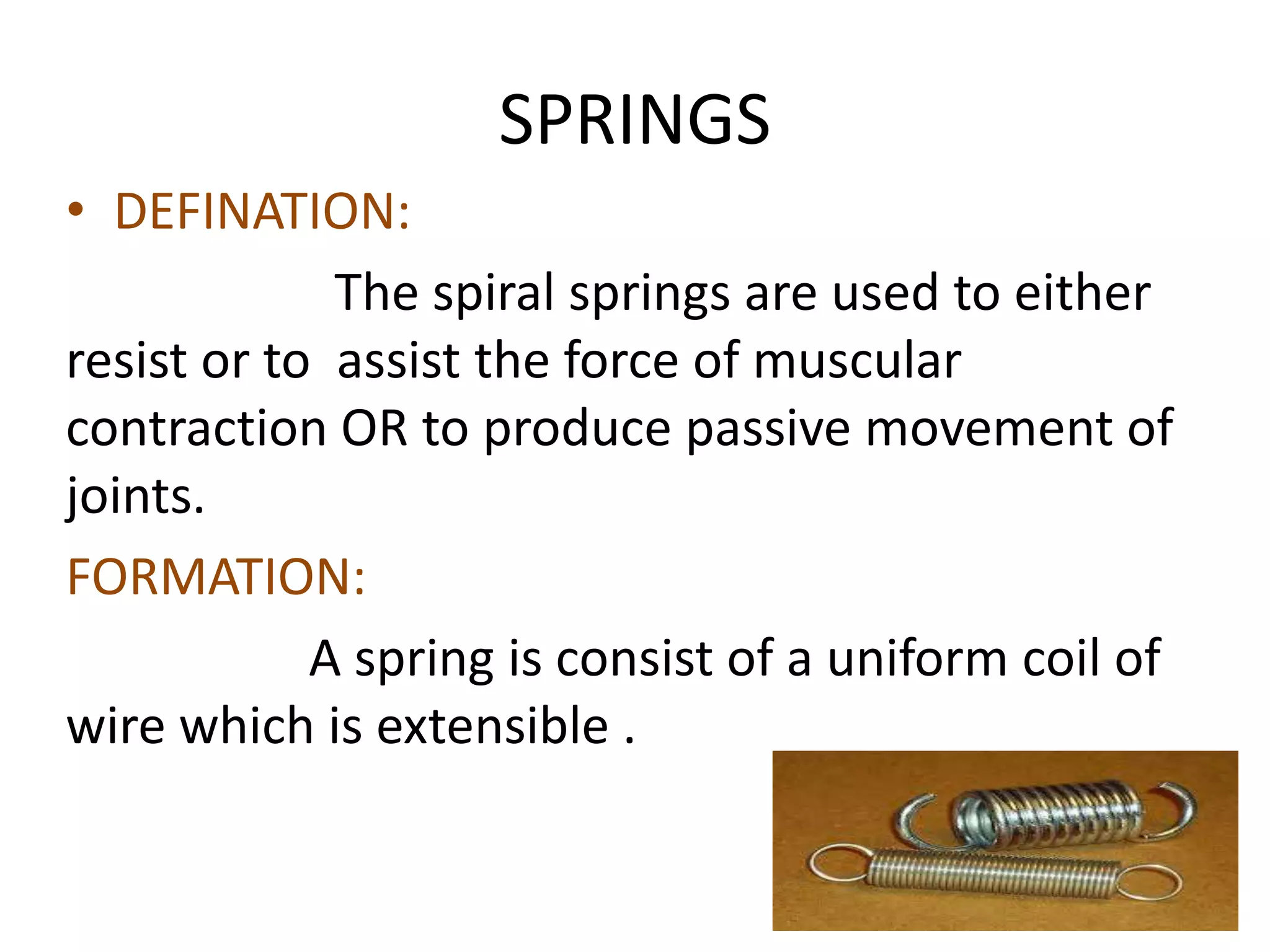
A spring is consist of a uniform coil of
wire which is extensible .
The Extensibility Of Spring:
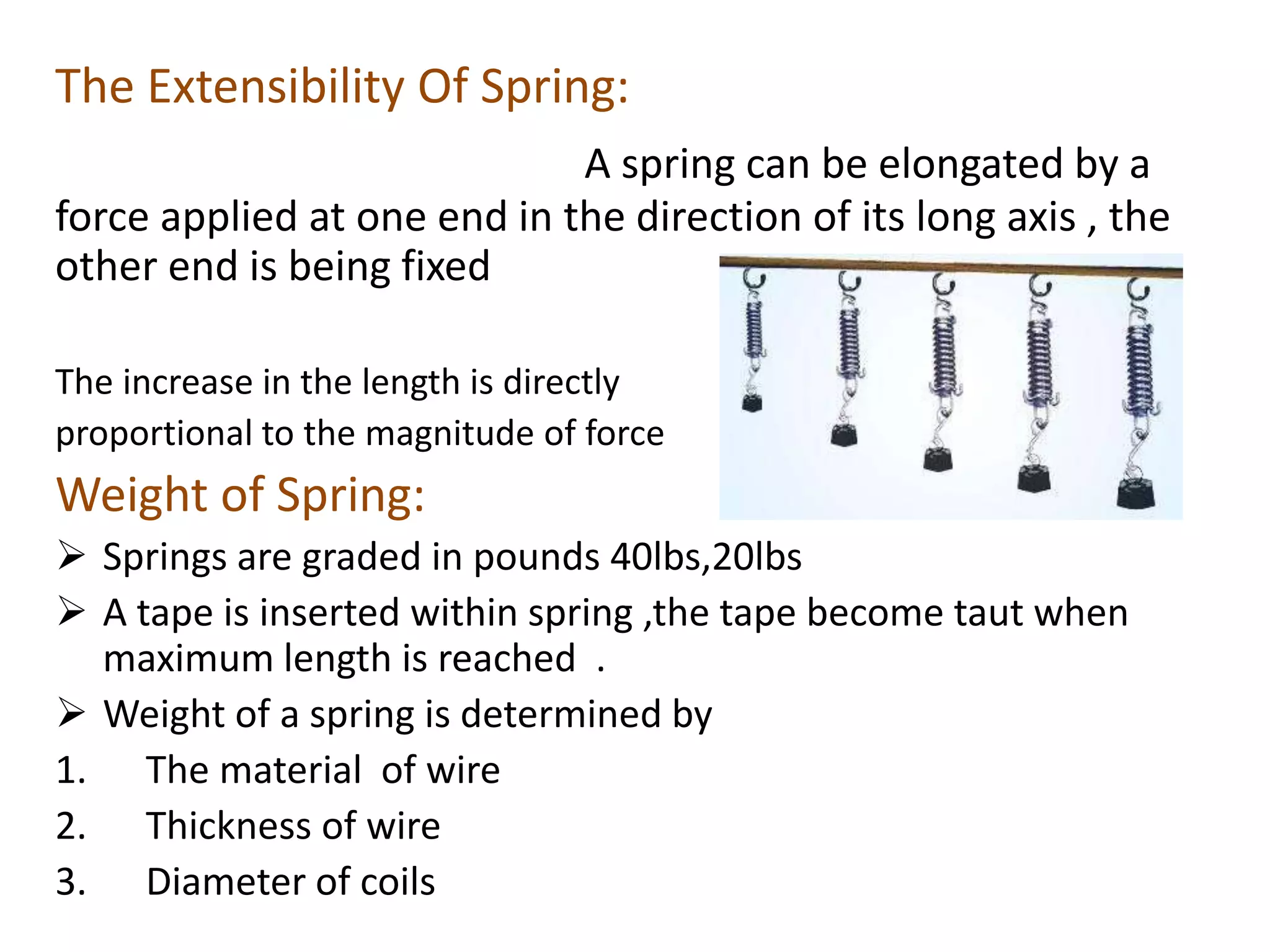
A spring can be elongated by a
force applied at one end in the direction of its long axis , the
other end is being fixed
The increase in the length is directly
proportional to the magnitude of force
Weight of Spring:
 Springs are graded in pounds 40lbs,20lbs
 A tape is inserted within spring ,the tape become taut when
maximum length is reached .
 Weight of a spring is determined by
1. The material of wire
2. Thickness of wire
3. Diameter of coils
The Recoil:
 when applied force is removed the spring will return to
its original length
 Potential energy is stored during extension
 Kinetic energy is released when spring return to its
original length
Oscillatory movements:
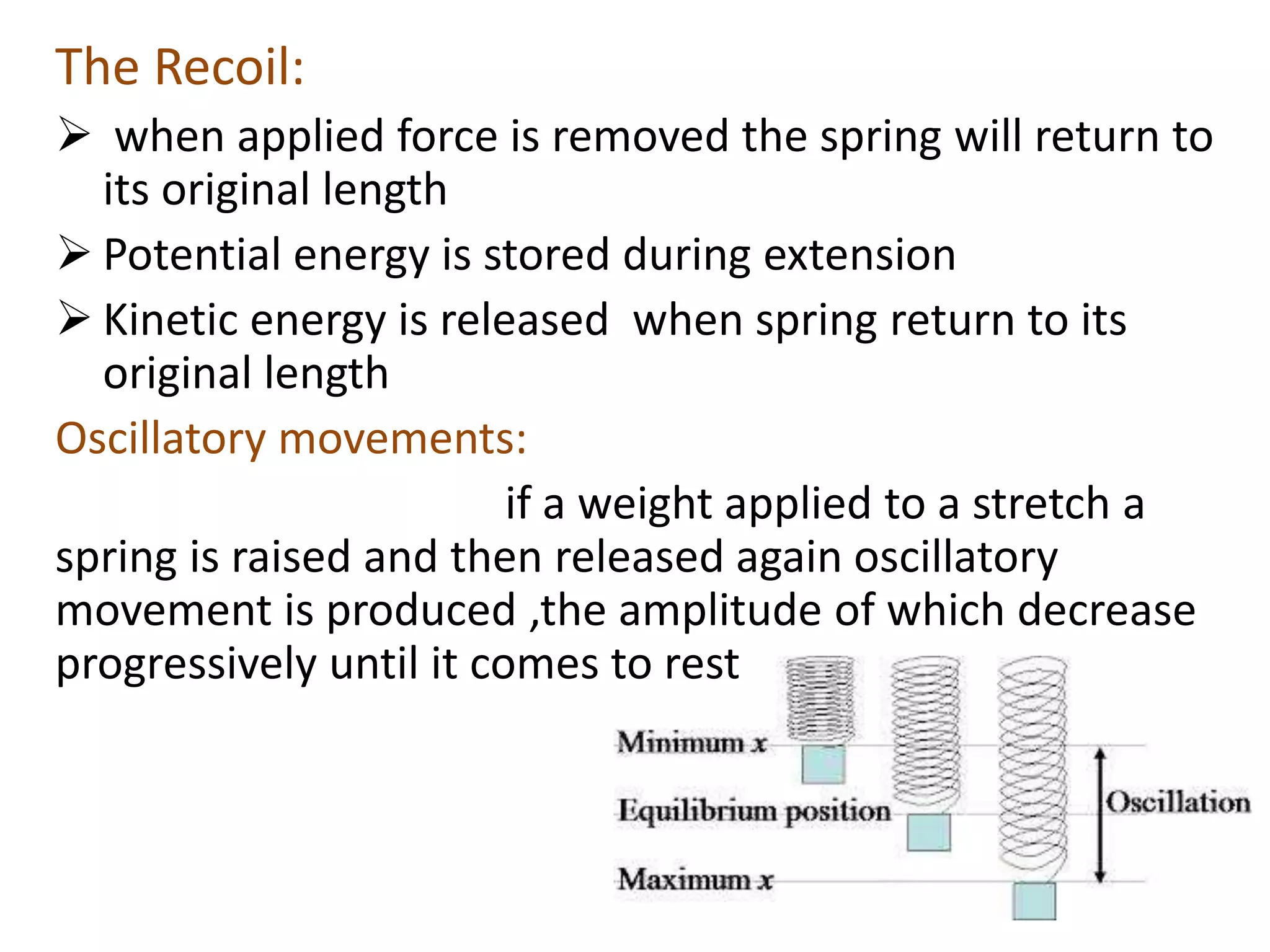
if a weight applied to a stretch a
spring is raised and then released again oscillatory
movement is produced ,the amplitude of which decrease
progressively until it comes to rest
Spring used In Parallel
 When a spring of a specific weight is not available two
springs of half the required weight may be used in
parallel
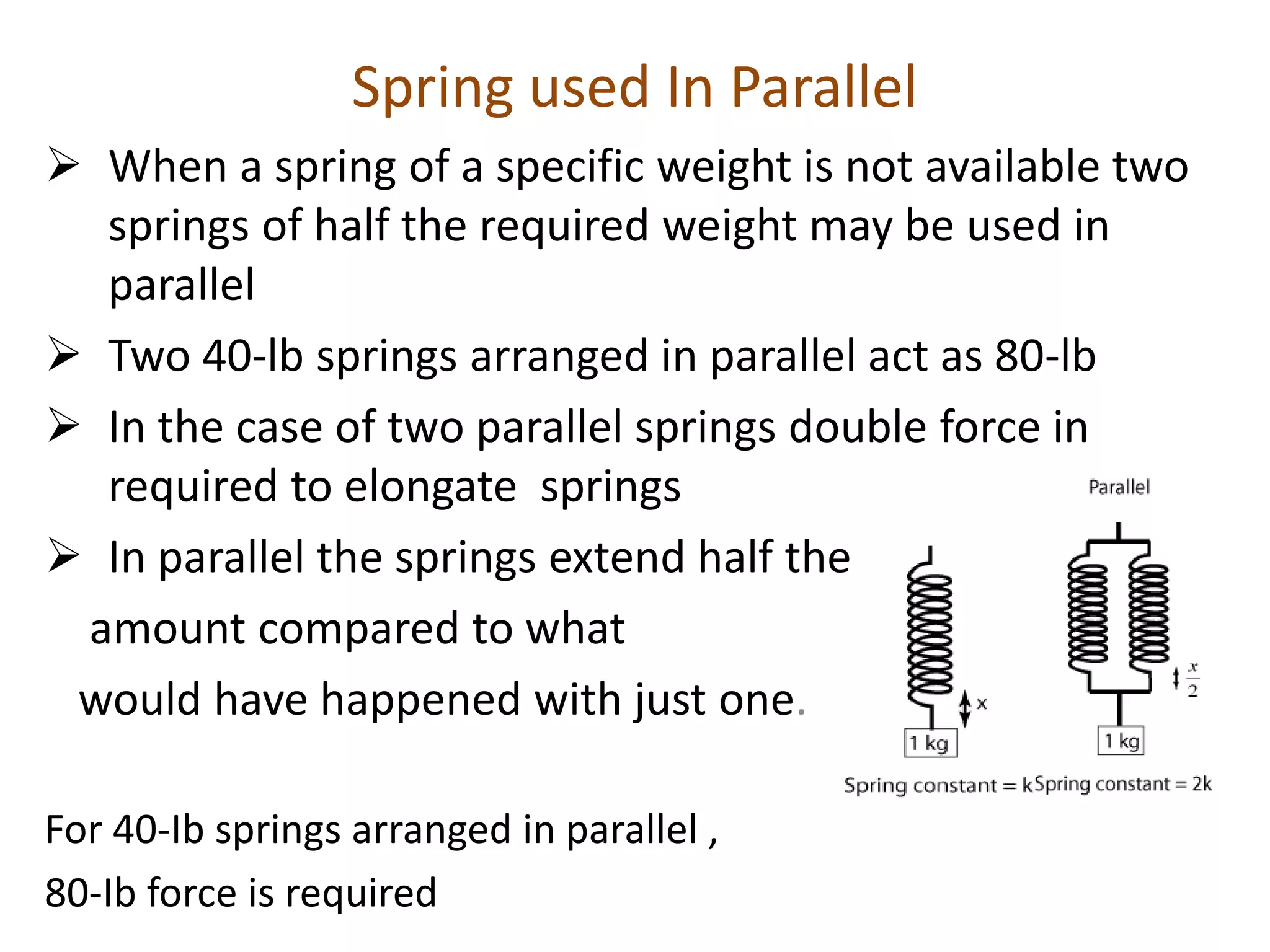
 Two 40-lb springs arranged in parallel act as 80-lb
 In the case of two parallel springs double force in
required to elongate springs
 In parallel the springs extend half the
amount compared to what
would have happened with just one.
For 40-Ib springs arranged in parallel ,
80-Ib force is required
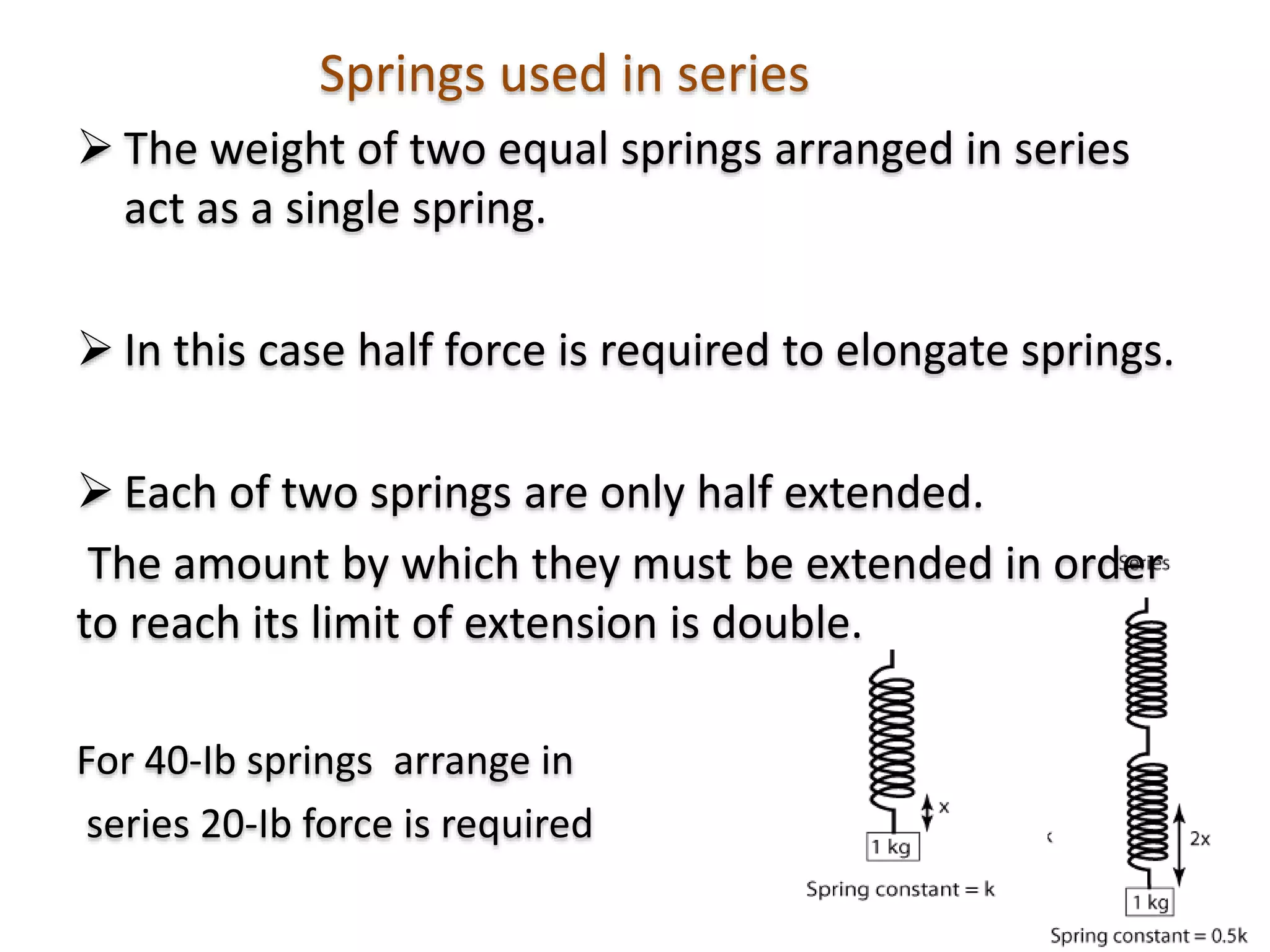
Springs used in series
 The weight of two equal springs arranged in series
act as a single spring.
 In this case half force is required to elongate springs.
 Each of two springs are only half extended.
The amount by which they must be extended in order
to reach its limit of extension is double.
For 40-Ib springs arrange in
series 20-Ib force is required

Springs presentation

  • 1.
    SPRINGS • DEFINATION: The spiralsprings are used to either resist or to assist the force of muscular contraction OR to produce passive movement of joints. FORMATION: A spring is consist of a uniform coil of wire which is extensible .
  • 2.
    The Extensibility OfSpring: A spring can be elongated by a force applied at one end in the direction of its long axis , the other end is being fixed The increase in the length is directly proportional to the magnitude of force Weight of Spring:  Springs are graded in pounds 40lbs,20lbs  A tape is inserted within spring ,the tape become taut when maximum length is reached .  Weight of a spring is determined by 1. The material of wire 2. Thickness of wire 3. Diameter of coils
  • 3.
    The Recoil:  whenapplied force is removed the spring will return to its original length  Potential energy is stored during extension  Kinetic energy is released when spring return to its original length Oscillatory movements: if a weight applied to a stretch a spring is raised and then released again oscillatory movement is produced ,the amplitude of which decrease progressively until it comes to rest
  • 4.
    Spring used InParallel  When a spring of a specific weight is not available two springs of half the required weight may be used in parallel  Two 40-lb springs arranged in parallel act as 80-lb  In the case of two parallel springs double force in required to elongate springs  In parallel the springs extend half the amount compared to what would have happened with just one. For 40-Ib springs arranged in parallel , 80-Ib force is required
  • 5.
    Springs used inseries  The weight of two equal springs arranged in series act as a single spring.  In this case half force is required to elongate springs.  Each of two springs are only half extended. The amount by which they must be extended in order to reach its limit of extension is double. For 40-Ib springs arrange in series 20-Ib force is required