Fixed pulley
Definition:
 A pulley changes the direction of the force,
making it easier to lift things.
 A pulley is a simple mechanical machine and
consists of a wheel that turns readily on an axle.
 The wheel is usually grooved for a rope or a wire
cable.
 In the human body when the tendon of a skeletal
muscle slides over a round bony surface, the
“system” acts like a simple pulley. A simple pulley
provides a change in the direction of the force or
muscle pull.There is no change in the amount of
force produced by the muscle.
 For example, the knee acts as a simple pulley by
which the quadriceps femoris M. extends the leg.
 Sesamoid bones, such as the patella (kneecap),
develop in tendons where pressure is applied to the
tendon
There are three types of pulleys:
 Fixed pulley
 Movable pulley
 Combined pulley
 In the human body, in most cases the pulley is
replaced by a bone, cartilage or ligament and the
cord is replaced by a muscle tendon .The tendon is
lubricated in a manner so that it may easily slide
over the pulley.
 Frequently, the fibers of a muscle or a muscle
tendon wrap around a bone or are deflected by a
bony prominence.When the direction of pull of a
muscle is altered, the bone or bony prominence
causing the deflection forms an anatomic pulley
 The function of any pulley is to redirect a force to
make a task easier.The “task” in human movement
is to rotate a body segment.
 Anatomic pulleys (in the majority of instances)
make this task easier by deflecting the action line
of the muscle away from the joint axis, thus
increasing the MA of the muscle force.
 By increasing the MA for a muscle force, a force of
the same magnitude (with no extra energy
expenditure) produces greater torque.
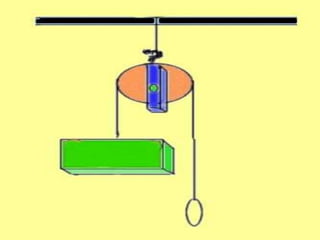
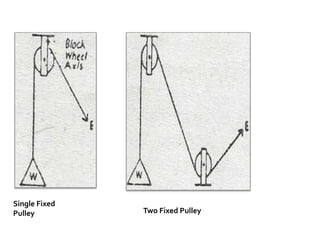
 These are used to alter the direction of force.The
pulley block is fixed and the rope which passes round
the wheel is attached to the weight at one end and the
effort is applied at the other .
 It uses more effort than the load to lift the load from
the ground.
 The fixed pulley when attached to an unmovable
object e.g. a ceiling or wall, acts as a first class lever
with the fulcrum being located at the axis but with a
minor change, the bar becomes a rope.
 A single fixed pulley: It changes the direction of
the force acting on it and its magnitude remains
the same on either sides of the pulley rope
irrespectively to the angle of pull of the force.
 It’s mechanical advantage is (1).
Single Fixed
Pulley Two Fixed Pulley
 Pulley-like arrangements in body
 Patella at knee
▪ pulled between the condyles of femur
▪ patellar tendon - patella - quadriceps arrangement
quadriceps muscle pull proximally toward their bellies
yet knee extension (from flexed position) cause leg to
move in opposite direction
 Lateral malleolus of ankle
 Epicondyle of femur
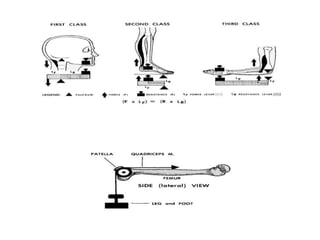
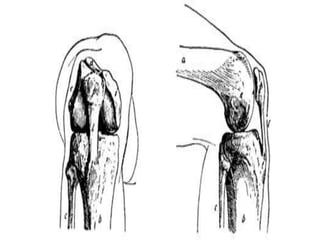
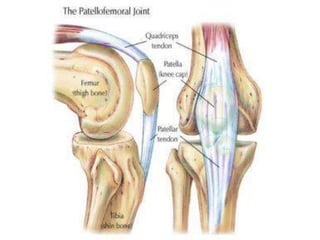
 The classic example of fixed pulley is that formed
by the patella.The presence of the patella ( the
pulley) improves the efficiency of the quadriceps
muscle as the pulley will increase the angle of
insertion of the patella ligament into the tibial
tuberosity .
 The action of the muscle at the joint is altered because of the
pulley. The quadriceps muscle belly lies parallel to the
femur.The tendon of the muscle passes over the knee joint
and attaches to the leg (tibia) via the patellar tendon at the
tibial tubercle. For knee joint extension, the joint axis is
considered to be located through the femoral condyles.
 The MA for the quadriceps muscle force lies in space
between the vector and the joint axis.Without the patella,
the line of pull of the quadriceps muscle on the leg-foot
segment would follow the patellar tendon at the tibial
tubercle and would lie parallel to the leg-foot segment
 However, the patella lies between the quadriceps
tendon and the femur, changing the angle that the
patellar tendon makes with the leg (tibia) and
changing the line of pull of the quadriceps muscle
away from the knee joint axis . The effect of
changing the line of pull of the quadriceps muscle
on the tibia is to increase the MA. Give the
increased MA, the same magnitude of force would
produce greater torque (and a greater angular
acceleration as the only force).
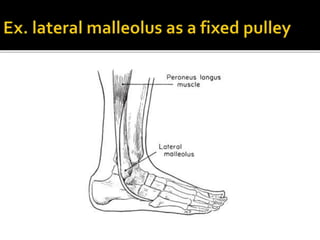
 Ex. lateral malleolus of the fibula acting as a pulley
around which tendon of peroneus longus runs. As
peroneus longus contracts, it pulls toward it belly
(toward the knee)
 If it was not for the malleolus, this muscle instead of
passing behind the lateral malleolus to be inserted in
the base of the first metatarsal and to produce ankle
plantar flexion and eversion, it would have produced
ankle dorsiflexion and eversion because of its
passage in front of the ankle joint.
 Using the lateral malleolus as a pulley, force is
transmitted to plantar aspect of foot resulting in
eversion/plantar flexion.
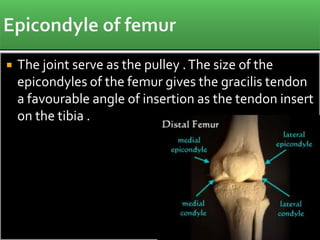
 The joint serve as the pulley .The size of the
epicondyles of the femur gives the gracilis tendon
a favourable angle of insertion as the tendon insert
on the tibia .
Thanks

Fixed pulley

  • 1.
  • 2.
    Definition:  A pulleychanges the direction of the force, making it easier to lift things.  A pulley is a simple mechanical machine and consists of a wheel that turns readily on an axle.  The wheel is usually grooved for a rope or a wire cable.
  • 4.
     In thehuman body when the tendon of a skeletal muscle slides over a round bony surface, the “system” acts like a simple pulley. A simple pulley provides a change in the direction of the force or muscle pull.There is no change in the amount of force produced by the muscle.  For example, the knee acts as a simple pulley by which the quadriceps femoris M. extends the leg.  Sesamoid bones, such as the patella (kneecap), develop in tendons where pressure is applied to the tendon
  • 6.
    There are threetypes of pulleys:  Fixed pulley  Movable pulley  Combined pulley
  • 7.
     In thehuman body, in most cases the pulley is replaced by a bone, cartilage or ligament and the cord is replaced by a muscle tendon .The tendon is lubricated in a manner so that it may easily slide over the pulley.  Frequently, the fibers of a muscle or a muscle tendon wrap around a bone or are deflected by a bony prominence.When the direction of pull of a muscle is altered, the bone or bony prominence causing the deflection forms an anatomic pulley
  • 8.
     The functionof any pulley is to redirect a force to make a task easier.The “task” in human movement is to rotate a body segment.  Anatomic pulleys (in the majority of instances) make this task easier by deflecting the action line of the muscle away from the joint axis, thus increasing the MA of the muscle force.  By increasing the MA for a muscle force, a force of the same magnitude (with no extra energy expenditure) produces greater torque.
  • 9.
     These areused to alter the direction of force.The pulley block is fixed and the rope which passes round the wheel is attached to the weight at one end and the effort is applied at the other .  It uses more effort than the load to lift the load from the ground.  The fixed pulley when attached to an unmovable object e.g. a ceiling or wall, acts as a first class lever with the fulcrum being located at the axis but with a minor change, the bar becomes a rope.
  • 10.
     A singlefixed pulley: It changes the direction of the force acting on it and its magnitude remains the same on either sides of the pulley rope irrespectively to the angle of pull of the force.  It’s mechanical advantage is (1).
  • 11.
  • 12.
     Pulley-like arrangementsin body  Patella at knee ▪ pulled between the condyles of femur ▪ patellar tendon - patella - quadriceps arrangement quadriceps muscle pull proximally toward their bellies yet knee extension (from flexed position) cause leg to move in opposite direction  Lateral malleolus of ankle  Epicondyle of femur
  • 14.
     The classicexample of fixed pulley is that formed by the patella.The presence of the patella ( the pulley) improves the efficiency of the quadriceps muscle as the pulley will increase the angle of insertion of the patella ligament into the tibial tuberosity .
  • 15.
     The actionof the muscle at the joint is altered because of the pulley. The quadriceps muscle belly lies parallel to the femur.The tendon of the muscle passes over the knee joint and attaches to the leg (tibia) via the patellar tendon at the tibial tubercle. For knee joint extension, the joint axis is considered to be located through the femoral condyles.  The MA for the quadriceps muscle force lies in space between the vector and the joint axis.Without the patella, the line of pull of the quadriceps muscle on the leg-foot segment would follow the patellar tendon at the tibial tubercle and would lie parallel to the leg-foot segment
  • 16.
     However, thepatella lies between the quadriceps tendon and the femur, changing the angle that the patellar tendon makes with the leg (tibia) and changing the line of pull of the quadriceps muscle away from the knee joint axis . The effect of changing the line of pull of the quadriceps muscle on the tibia is to increase the MA. Give the increased MA, the same magnitude of force would produce greater torque (and a greater angular acceleration as the only force).
  • 18.
     Ex. lateralmalleolus of the fibula acting as a pulley around which tendon of peroneus longus runs. As peroneus longus contracts, it pulls toward it belly (toward the knee)  If it was not for the malleolus, this muscle instead of passing behind the lateral malleolus to be inserted in the base of the first metatarsal and to produce ankle plantar flexion and eversion, it would have produced ankle dorsiflexion and eversion because of its passage in front of the ankle joint.  Using the lateral malleolus as a pulley, force is transmitted to plantar aspect of foot resulting in eversion/plantar flexion.
  • 20.
     The jointserve as the pulley .The size of the epicondyles of the femur gives the gracilis tendon a favourable angle of insertion as the tendon insert on the tibia .
  • 21.