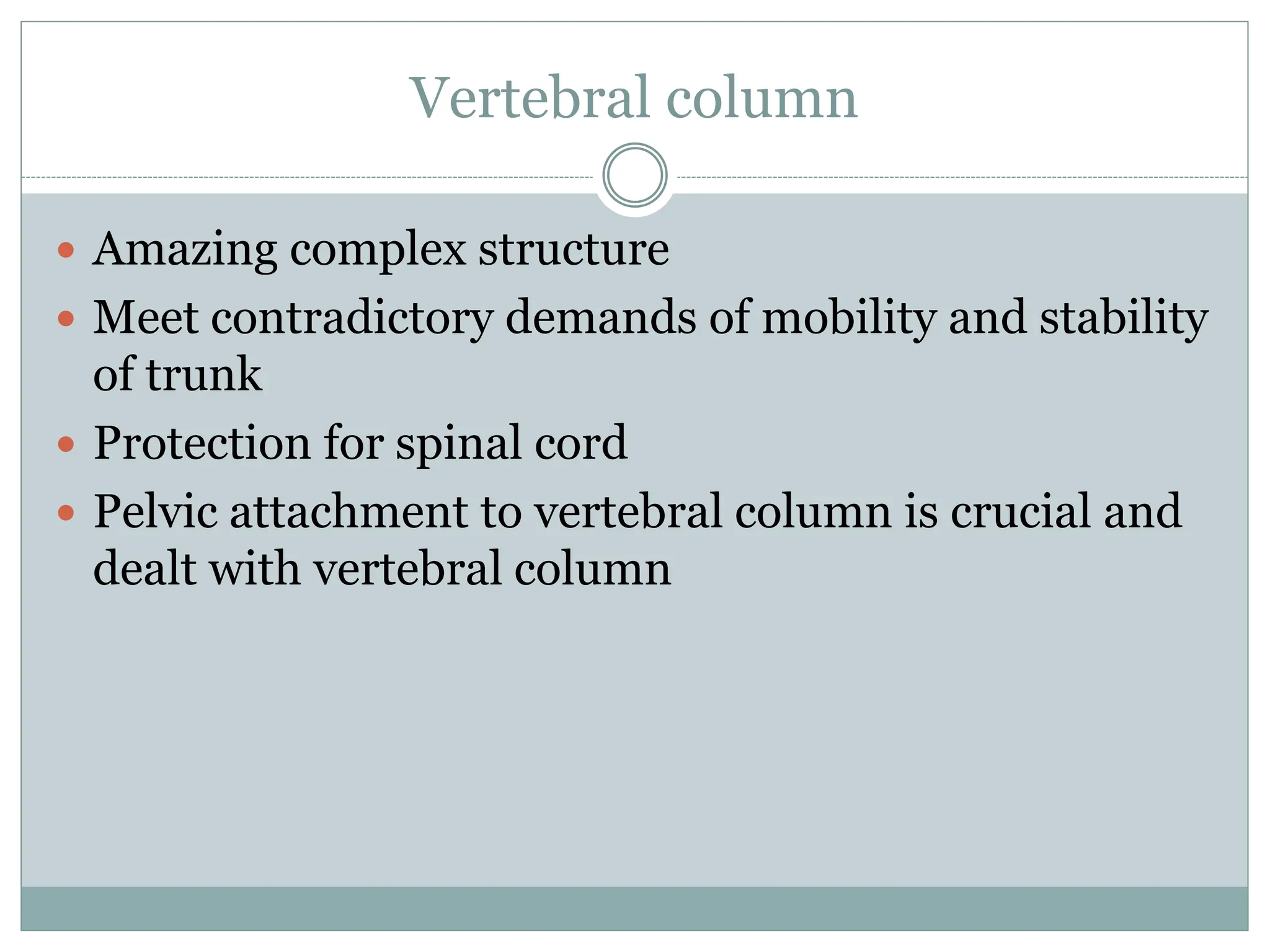
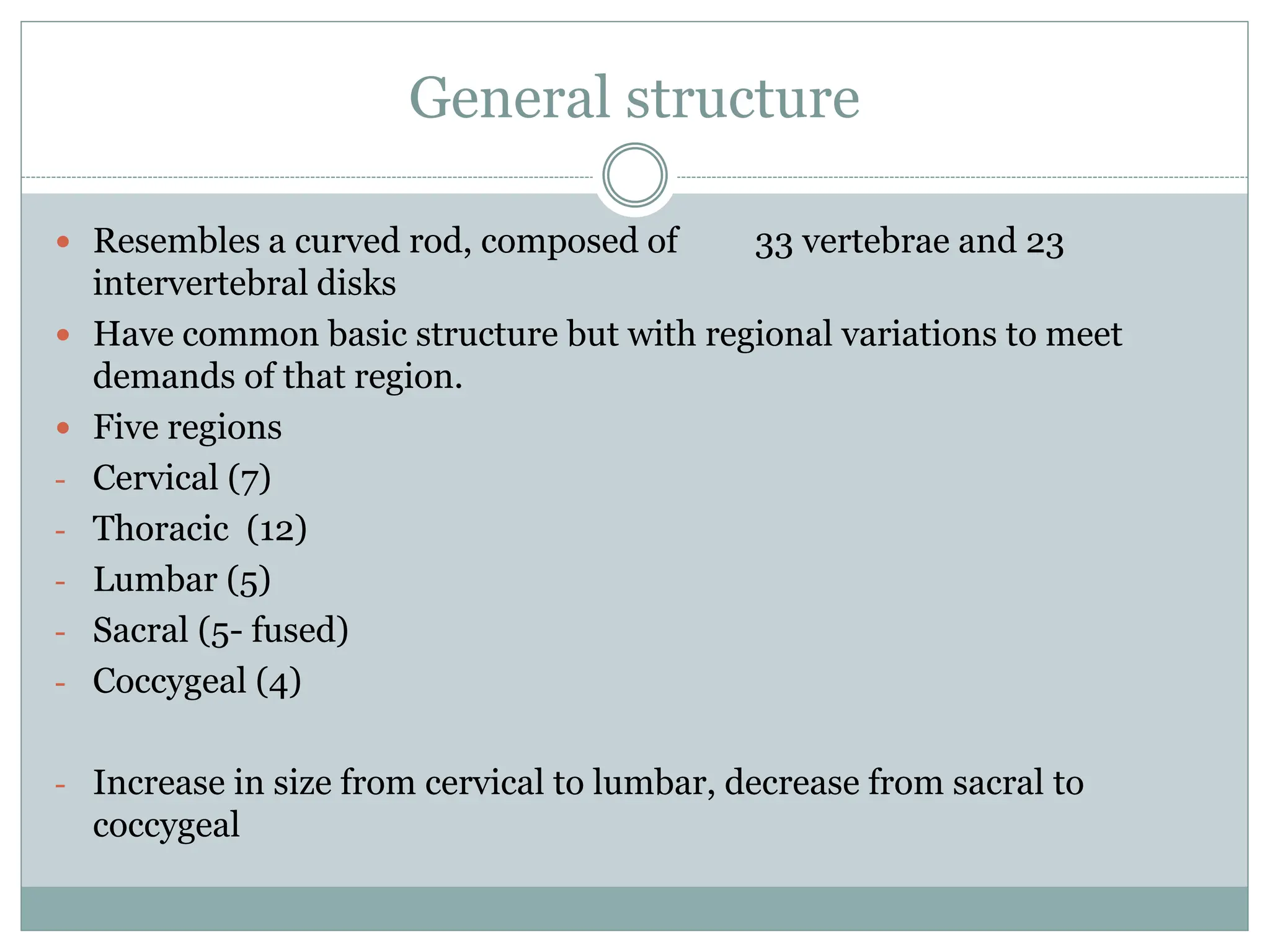
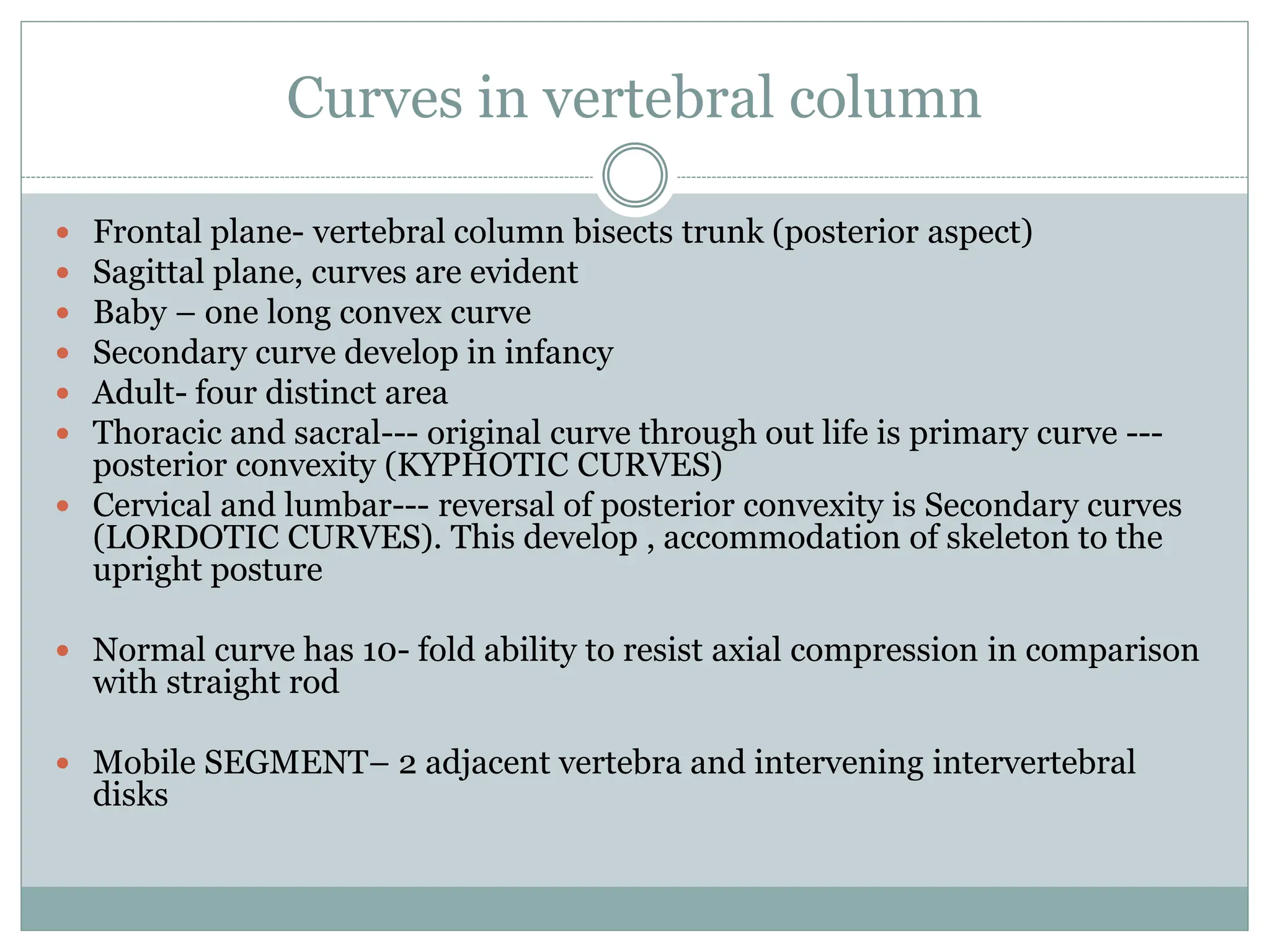
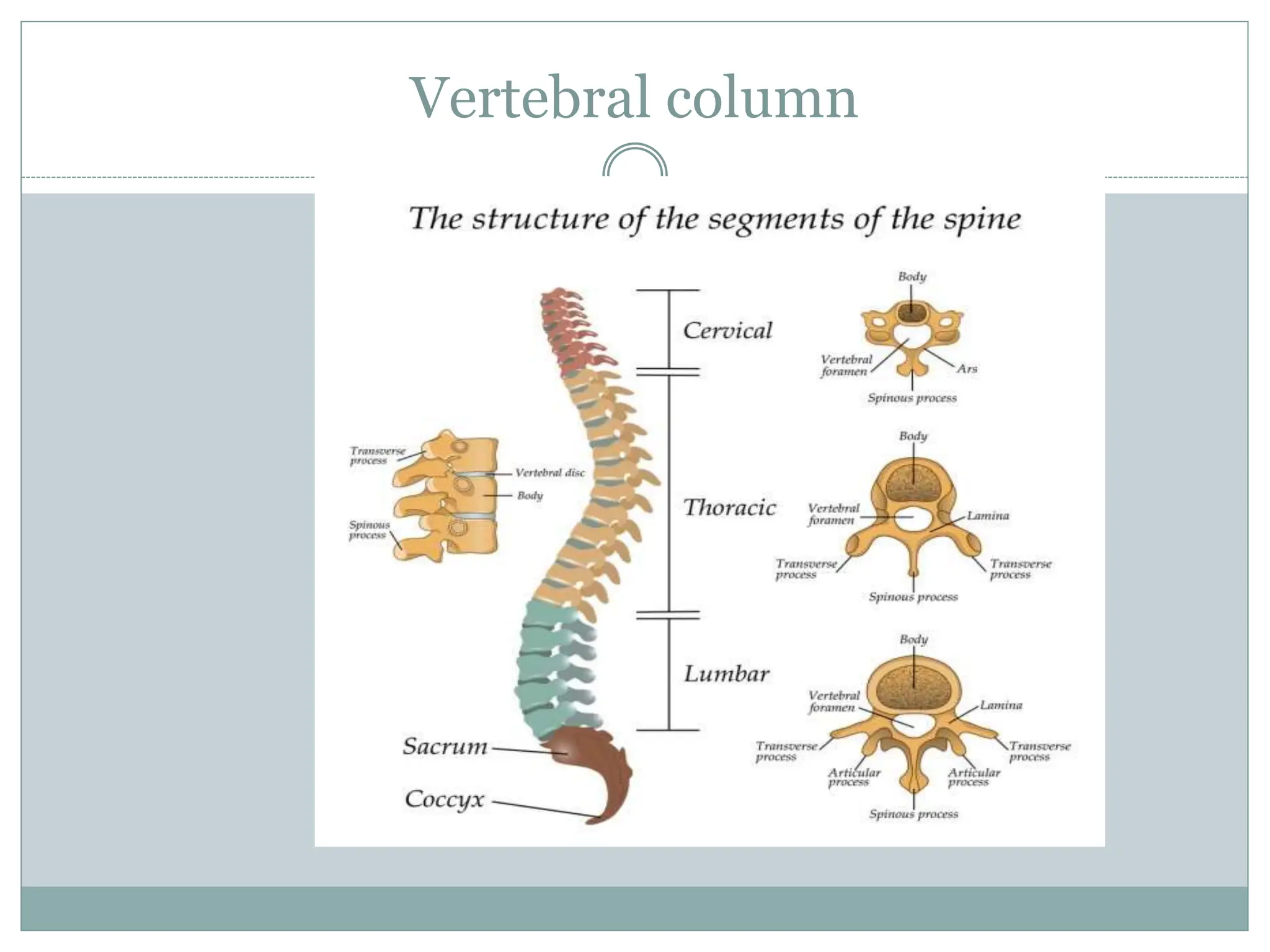
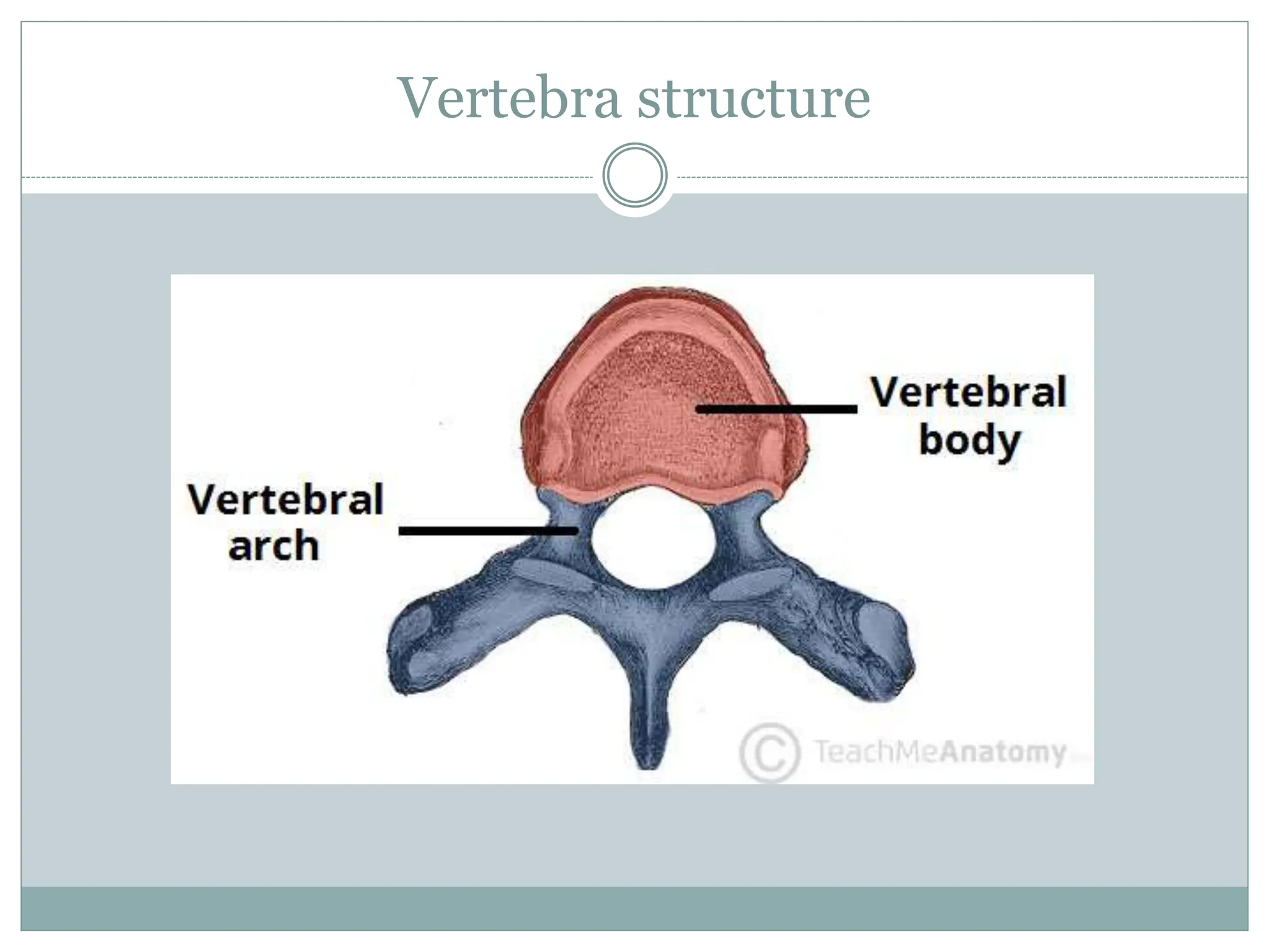
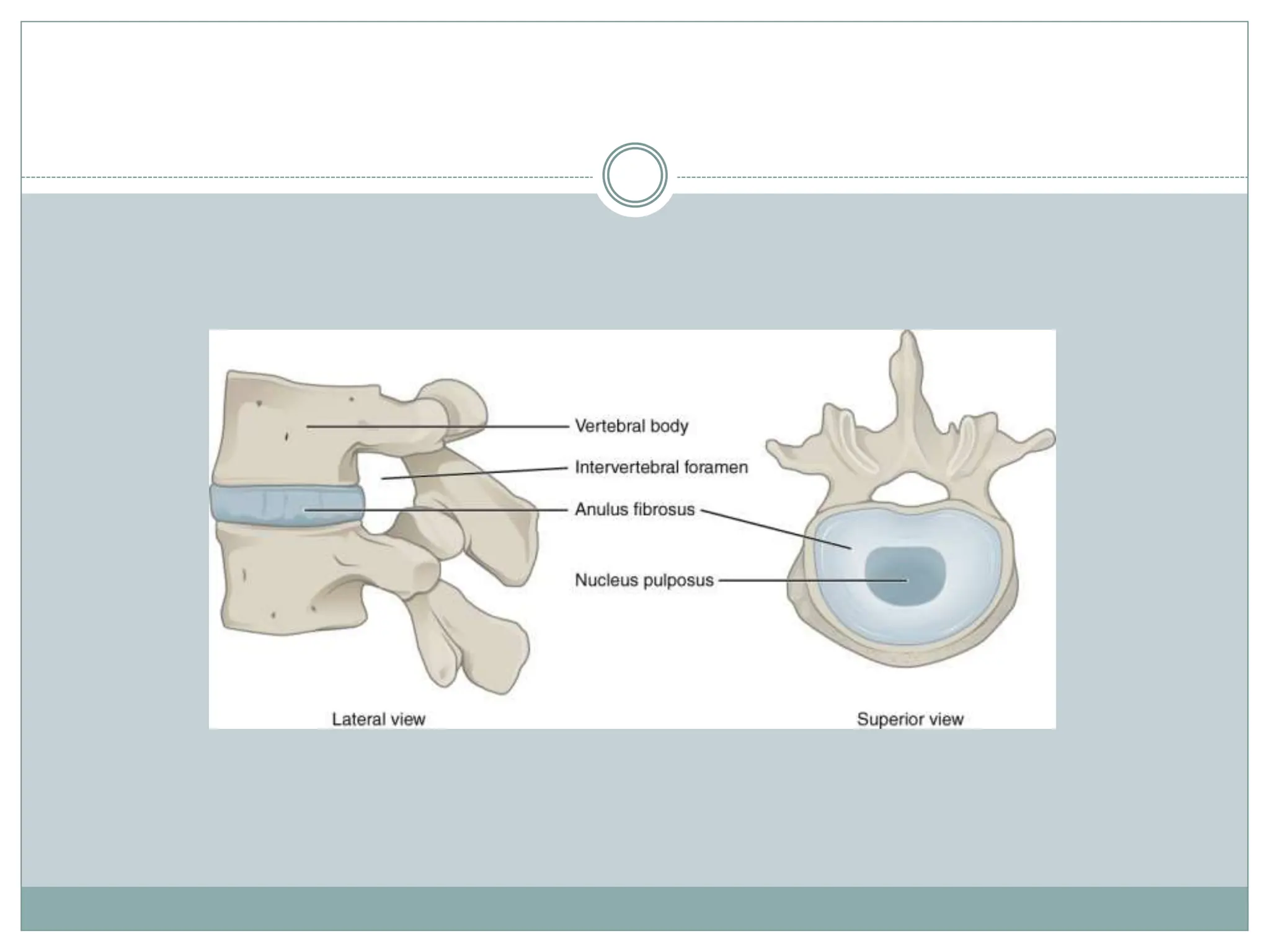
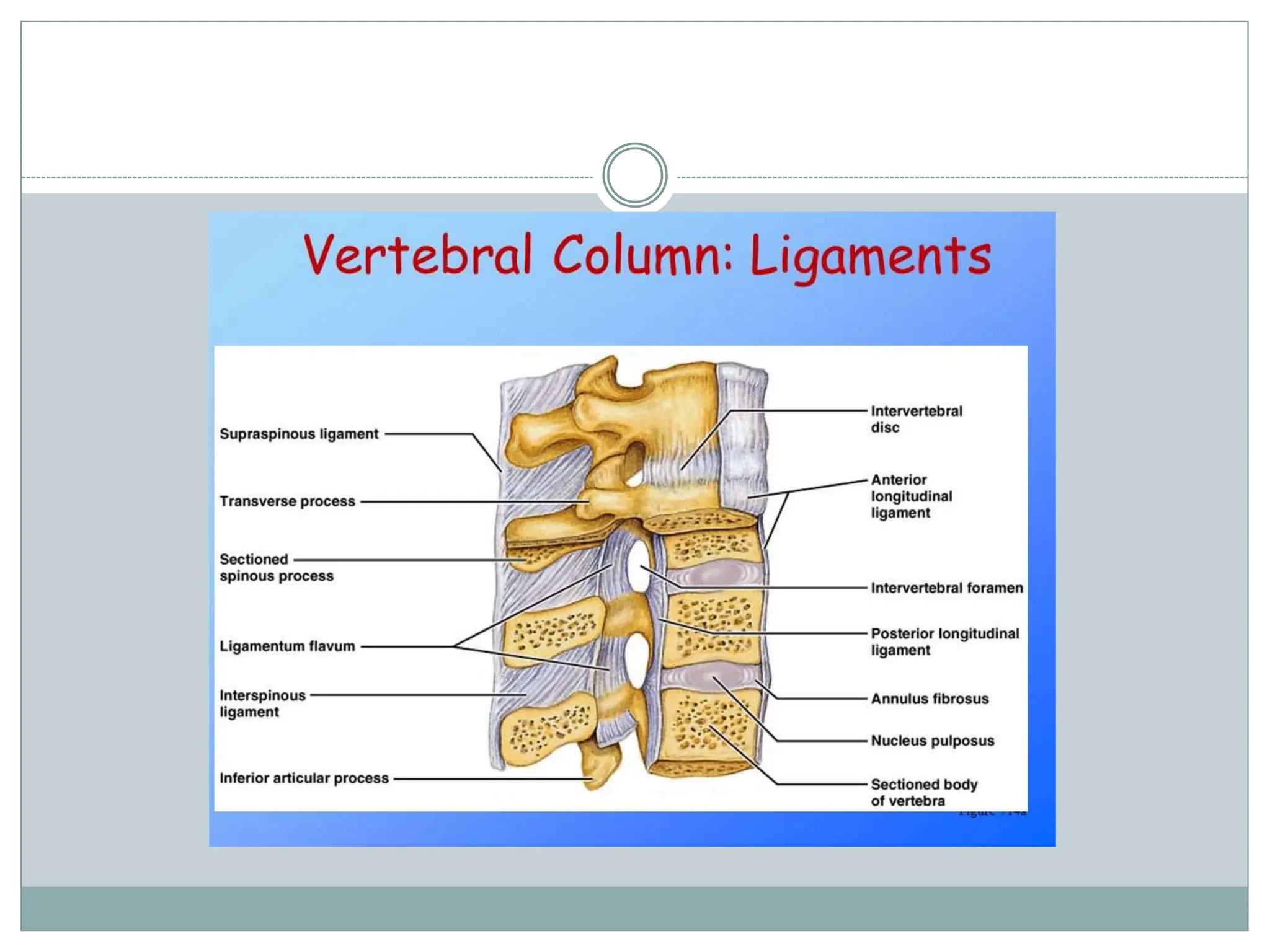
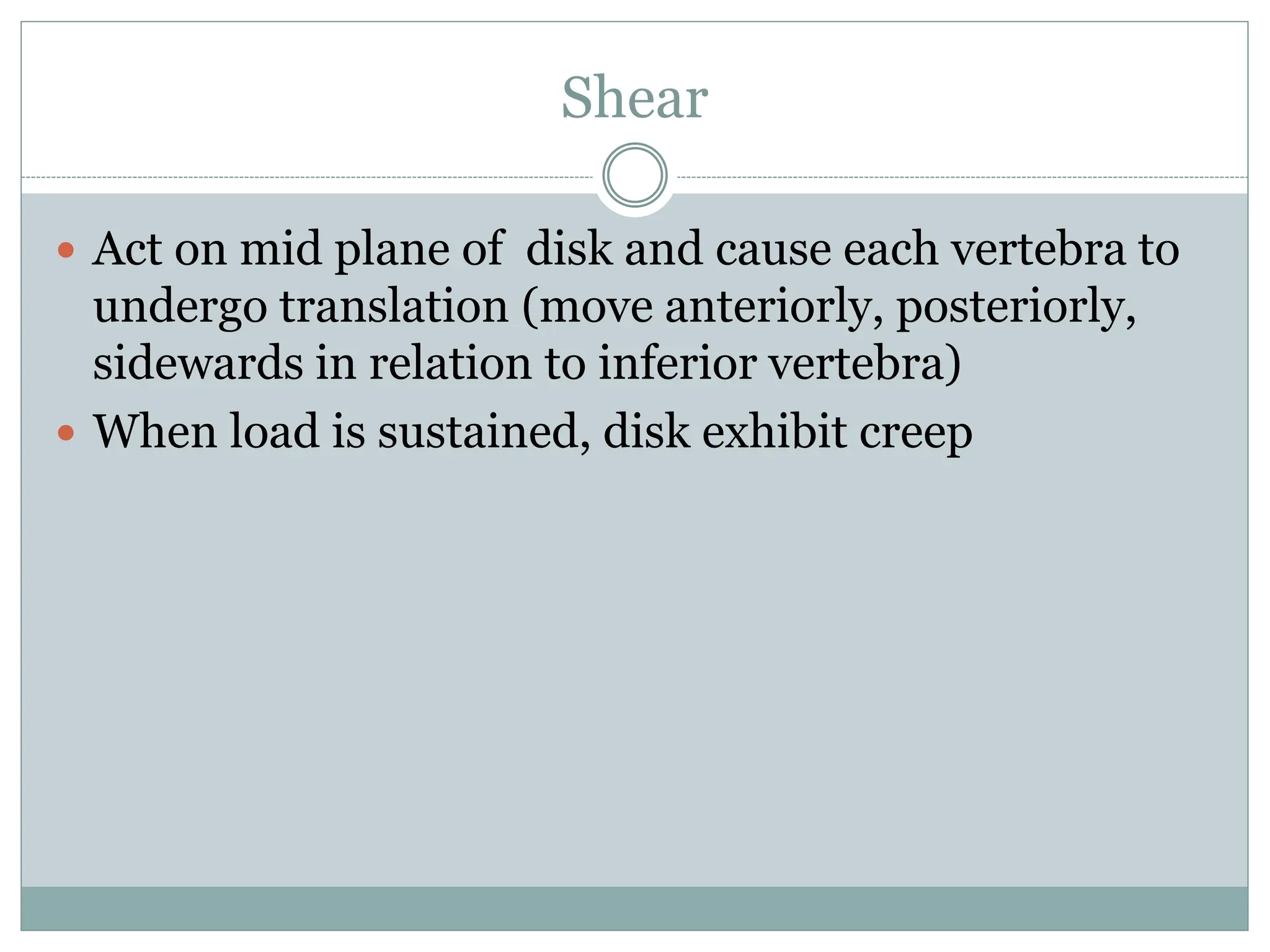
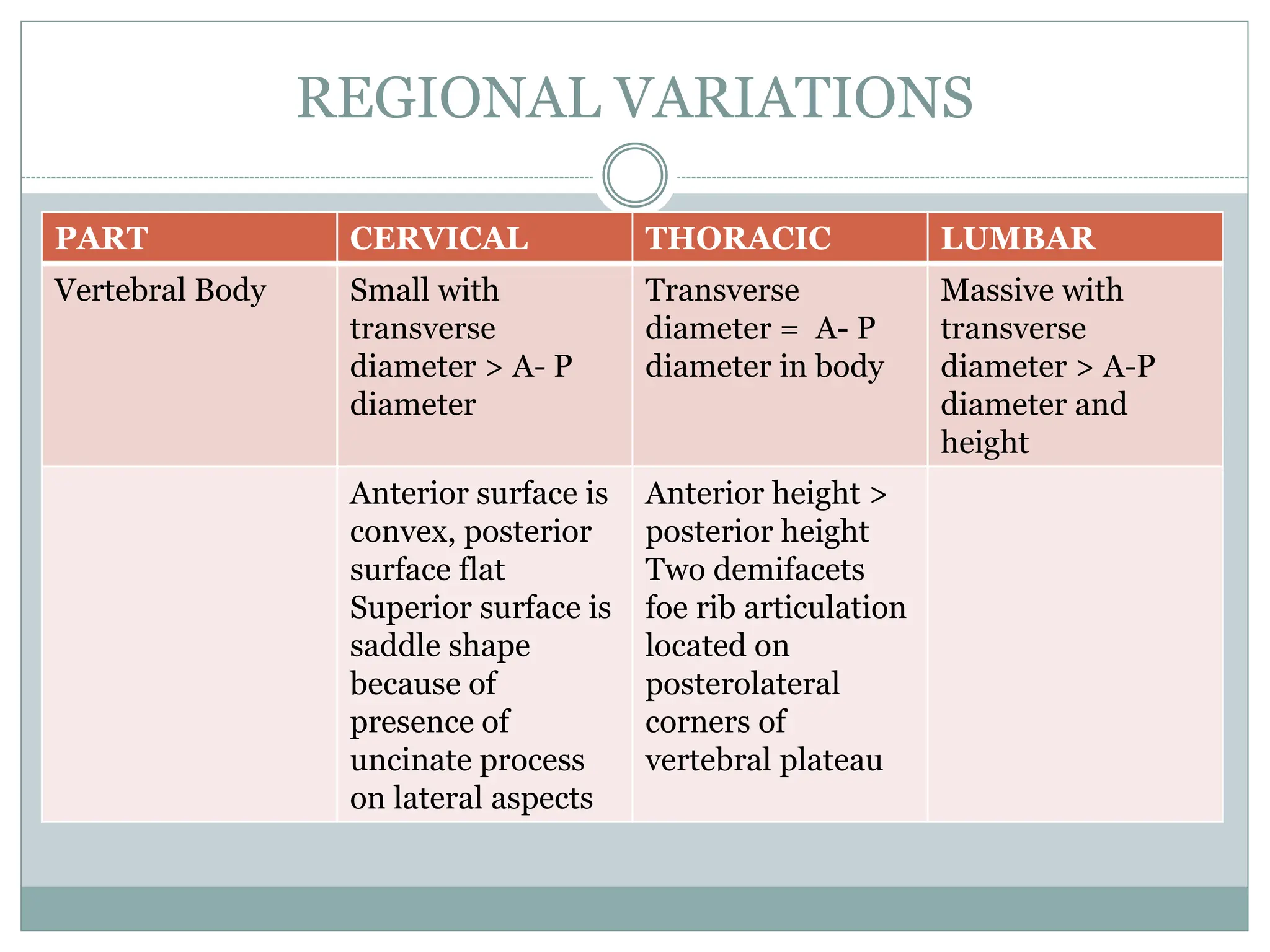
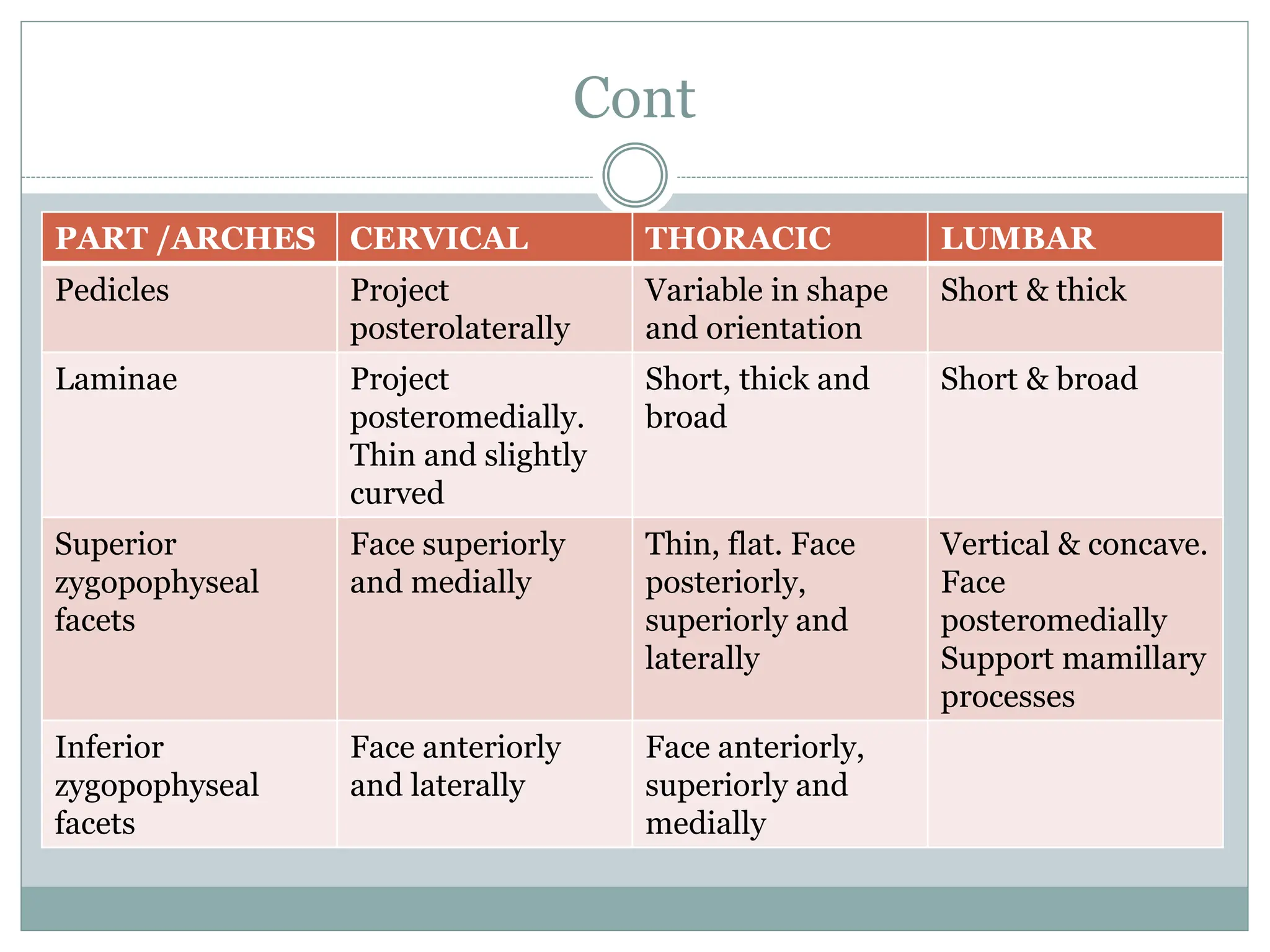
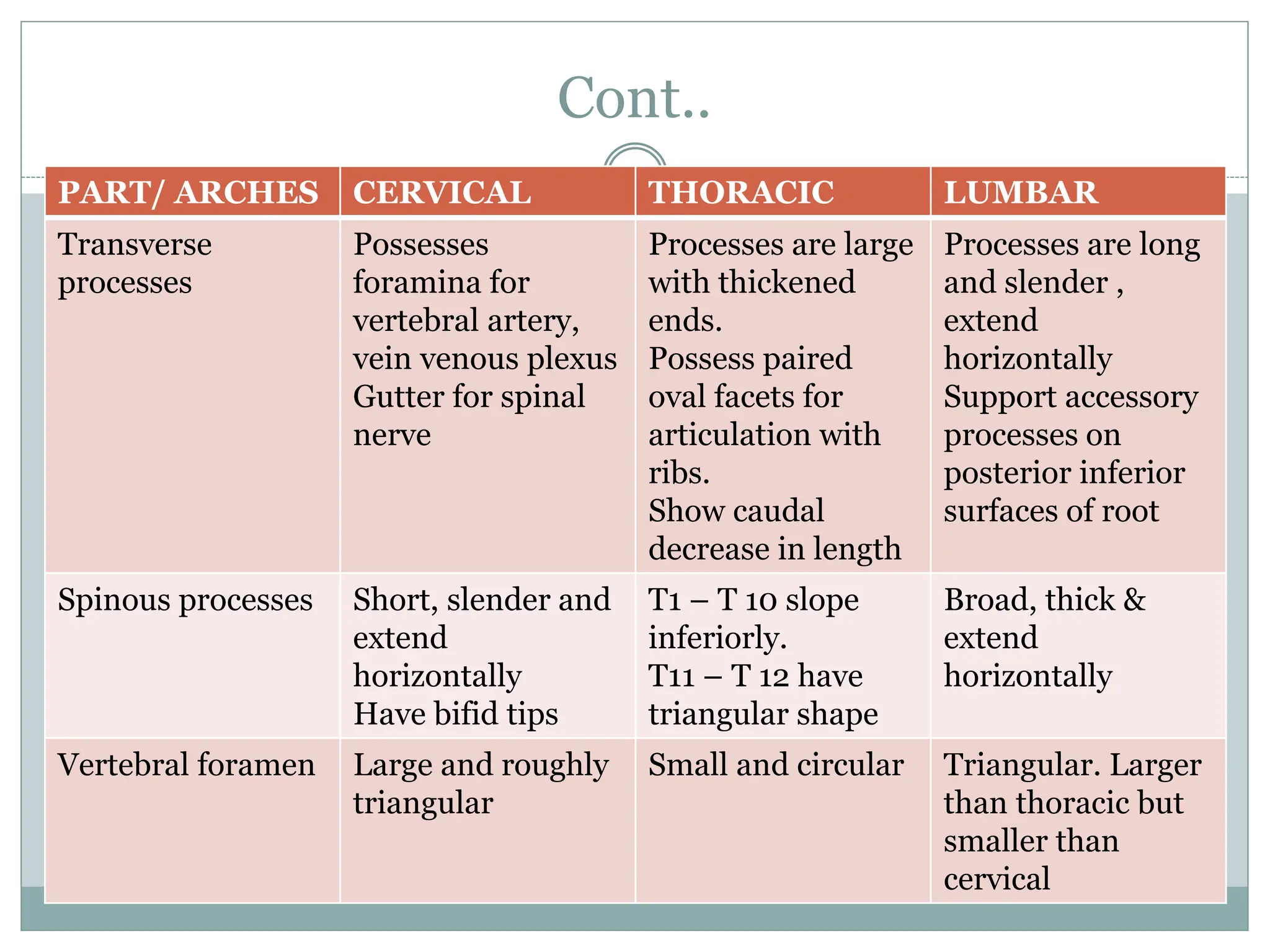
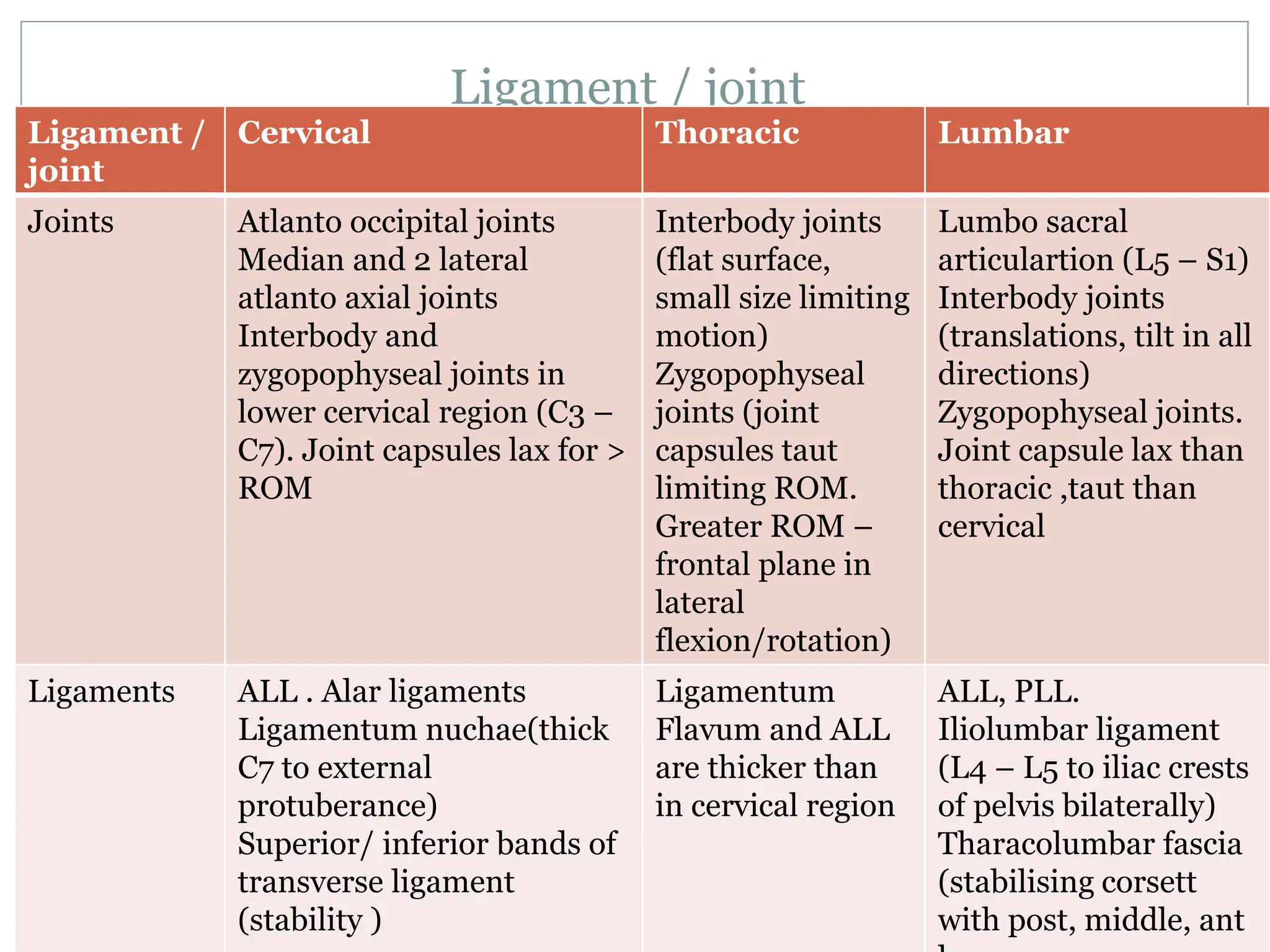
The vertebral column is a complex structure composed of 33 vertebrae and intervertebral disks that meets the demanding needs of mobility and stability. It protects the spinal cord and attaches the pelvis. Each vertebra has a cylindrical vertebral body anteriorly and an irregularly shaped neural arch posteriorly. The vertebrae are arranged into five regions with variations to meet functional demands. Curves in the vertebral column provide increased resistance to compression and change throughout development. Intervertebral disks separate and cushion vertebrae. The vertebral column undergoes motions of flexion, extension, lateral flexion, and coupled rotations which place structures under varying degrees of compression and tension resisted by ligaments, disks, and facets.




![Biomechanics_of_spine[1].pptx](https://cdn.slidesharecdn.com/ss_thumbnails/biomechanicsofspine1-230804185208-4b0b1a1a-thumbnail.jpg?width=640&height=640&fit=bounds)


